DSG325 - multi-axis milling and mill turn machines
 Call Kai
 Learn
Learn Practice Test
 Spaced Repetition
 Match
Match Flashcards
 Knowt Play
1/15

Earn XP
Description and Tags
lecture 7
Name | Mastery | Learn | Test | Matching | Spaced | Call with Kai | Chat |
|---|
No analytics yet
Send a link to your students to track their progress
16 Terms
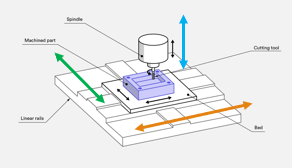
which axes are shown by each arrows below?
blue - Z
orange - X
green - Y


which axes are shown by each arrows below?
blue - Z
orange - X

What are the extra axes of a multi-axis mill?
A, B, C rotational axes

What axes are available for a 4-axis mill?
X, Y, Z, +1 rotational axis
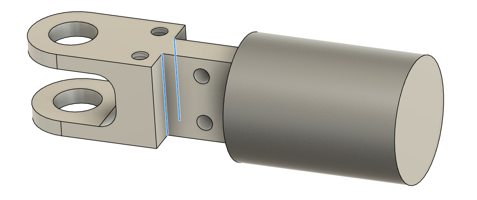
why are these vertical corners able to be sharp?
the part can rotate so that it is flat and the mill can run over it
what axes are available on a 5-axis mill?
X, Y, Z, +2 rotational axes Z
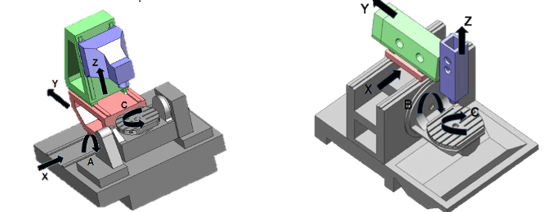
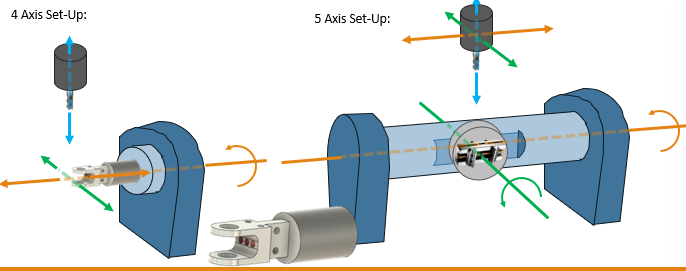
how can the example part be orientated in the 5-axis machine to drill the red holes
put the orange axis on the 4 to the green axis on the 5
what is the difference between a 3+2 (indexed 5-axis) and a simultaneous 5-axis
indexed 5-axis - the rotational axis will not move during the cutting process
simultaneous 5-axis - can move in all 5 axes simultaneously while cutting
all parts capable of being made by a 3+2 (5-axis indexed) milling can also be made with 3-axis milling, provided you’re willing to do multiple set-ups
true or false
true
What are the characteristics of a swiss lathe?
guide bushing supports workpiece
main spindle is behind guide bushing moves in Z
cutter moves in X, stationary in Z

what are the benefits of a swiss lathe?
higher rigidity - can machine very long/thin part
higher accuracy
can also have live tooling
What is a mill turn?
mixes turning and milling capability into one machine
allows turning and milling operations on a single machine with a single setup
what are some features of a mill turn?
C-axis
spins quickly for turning operations
spins slowly, indexing to specific locations for milling operations
tools
move in X and Z (unless swiss)
some machines can move in Y, not all
tool turret
stationary tools for turning
“Live tools” for milling
which characteristics distinguish Swiss lathe from a conventional lathe?
there is a guide bushing supporting the part and the tool moves in the X and the part moves in the Z
what is meant by the phrase “live tooling?
not only does the lathe itself spin but it can also perform milling operations when stationary
what is the difference between a cartesian and polar coordinates when machining a part on mill turn
cartesian can be done with X and Y
polar can be done with just X and C (C would be indexing slowly