KIN CHAPTER 29
 Call Kai
 Learn
 Practice Test
 Spaced Repetition
 Match
 Flashcards
 Knowt Play
1/133

There's no tags or description
Looks like no tags are added yet.
134 Terms
Prenatal period duration
Starts with fertilization and ends with birth (after around 38 weeks)

What are the three shorter periods of the prenatal period?
Pre-embryonic, embryonic, and fetal
Pre-embryonic period duration
Starts with 2 weeks after fertilization and ends with blastocyst implantation in the endometrial lining of the uterus
What is the baby called during the pre-embryonic period?
It goes from zygote to blastocyst
Embryonic period duration
3-8 weeks of development
What is the baby called during the embryonic period?
Embryo
What happens during the embryonic period?
First major organs appear
Fetal period duration
Remaining 30 weeks of development
What is the baby called during the fetal stage?
Fetus
What occurs during the fetal period?
The fetus continues to grow, and organs increase in complexity
Fertilization
When the secondary oocyte and sperm combine

What are some roles of fertilization?
Determine the sex of the baby
Restore the diploid number of chromosomes
Initiates cleavage
Where does fertilization occur?
Within the uterine line, specifically ampulla
How long is sperm viable for?
3-4 days

How long is a secondary oocyte viable for?
No more than 24 hours

Sperm must undergo what before fertilization?
Capacitation
What happens during capacitation?
A glycoprotein and some other proteins are removed from the sperm’s plasma membrane
How does the sperm know where to find the secondary oocyte?
The secondary oocyte and cumulus oophorus send chemical signals to attract the sperm
What does the cumulus oophorus specifically send out?
Progesterone binds to and opens calcium channels on the flagella of the sperm
What does the sperm do to get through the corona radiata?
It uses its motility to push through the layers
What does the sperm do to get through the zona radiata?
Sperm releases digestive enzymes to penetrate the glycoproteins forming the zona (acrosome reaction)
When one sperm successfully penetrates the zona radiata, what does the zona radiata do?
It hardens to prevent other sperm from entering
What happens when the sperm and secondary oocyte combine?
The secondary oocyte completes a meiotic division, forming an ovum and a second polar body
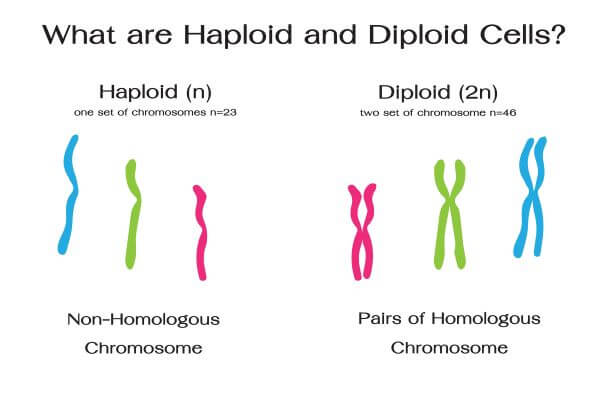
The nucleus of the sperm and ovum is referred to as
Pronuclei because they have a haploid number of chromosomes
Sperm and ovum come together to form
single nucleus that contains a diploid number of chromosomes (zygote)
Haploid cell contain
23 single chromosomes
Diploid cells contain
23 pairs of chromosomes
Cleavage stage
Followed after fertilization (zygote to blastocyst)
What are the 4 stages of cleavage?
2 cell-stage
4 cell-stage
8 cell-stage
morula
What happens during the first three stages of cleavage?
Mitotic division, cell count increases, not size
What is morula?
Compacted cells
Blastocyst cavity develops within the?
Morula
What are the two layers of a blastocyst?
Trophoblast and embryoblast
Trophoblast
Outer ring of cells on one side
What are the two layers of the trophoblast?
Cytotrophoblast (inner) and syncytiotrophoblast (outer)
What does syncytiotrophoblast produce?
hCG
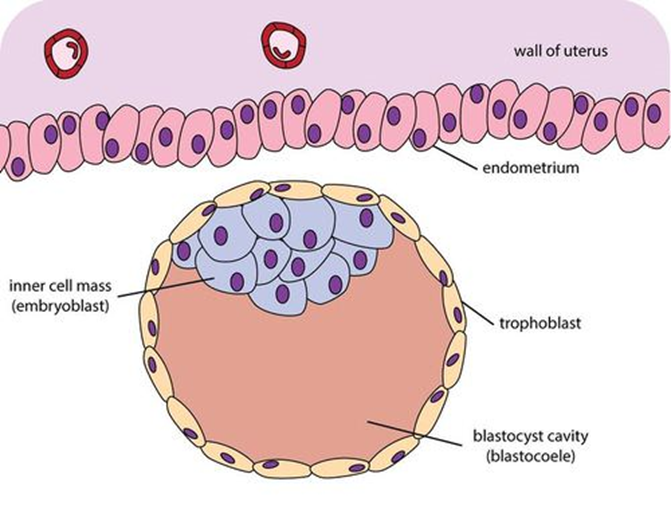
Embryoblast
Tightly packed cells on one side of the blastocyst
hCG signals
Corpus lumen of the ovary that fertilization and implantation have occurred
Pluripotent
Power to differentiate into any cell or tissue
Implantation
The process of the blastocyst burrows into and embeds within the endometrium
For three months, the corpus luteum produces what hormones?
Progesterone and estrogen
Progesterone and estrogen help with
Thickening and maintaining the uterine lining
hCG is produced to be detected in?
Urine
hCG high or low in the first three months?
High, after they decline
After hCG declines, the ___ degenerates
Corpus luteum
What produces progesterone and estrogen after the corpus luteum degenerates?
The placenta
Hypoblast
Layer of small cuboidal cells adjacent to blastocyst cavity

Epiblast
Layer of columnar cells adjacent to amniotic fluid
What do the epiblast and hypoblast make?
Bilaminar germinal disc
Extraembryonic membrane
Protect the embryo and assist in vital functions
Yolk sac
Important site for early blood cell and blood vessel formation
Amnion
Encloses the entire embryo in a fluid-filled sac called the amniotic cavity to protect the embryo from drying out
Chorion
Forms the placenta
What are the functions of the placenta?
Provides oxygen and nutrients; removes waste and carbon dioxide
Transmission of maternal antibodies to the fetus
Production of progesterone and estrogen
The early organism is connected to the placenta by
Connecting stalk
The connecting stalk is the future
Umbilical cord
What does the connecting stalk contain
Umbilical veins and arteries that transport blood from and to the fetus
Chorionic villi
Finger-like structure containing branches of umbilical vessels
Do fetal and maternal blood mix?
No
What is afterbirth?
Expelling of the placenta
Gastrostrulation
Epiblast cells migrate and form three primary germ layers
What are the three primary germ layers?
Ectoderm
Mesoderm
Endoderm
How do the three germ layers form?
Cells move through the primitive streak to form the ectoderm, mesoderm, and endoderm
What does the ectoderm form?
The nervous system, epidermis, and sensory structures
What does the mesoderm form?
The lining of the digestive tract, liver, pancreas, and lungs
When is the embryo most vulnerable to teratogens?
Organogenesis happens mainly in the embryonic period (3-8 weeks), when the first major organs form
What happens during the fetal period?
Maturation of tissues and organs, and rapid growth of the developing fetus
First trimester
1-3 months of pregnancy, the zygote develops into an embryo and then into an early fetus
Second trimester
4-6 months of pregnancy, growth of the fetus, and expansion of maternal tissues
Third trimester
7-9 months of pregnancy, the fetus grows more rapidly and gains weight, and the mother’s body prepares for labor and delivery
What trimesters are when the placenta is a major producer of progesterone and estrogen?
Second and third trimester
High levels of progesterone and estrogen suppress
FSH and LH secretion
Progesterone is responsible for
Continued growth and growth of the functional layer of the endometrium during pregnancy
Estrogen and progesterone are responsible for
Breast enlargement
Fetal growth
Uterine enlargement
Effect on the integumentary system
Estrogen is primarily responsible for
Relaxation of many ligamentous joints
Relaxin
Promotes blood vessel growth in the uterus
CRH
Regulates pregnancy length and childbirth timing. Also, for the rise in aldosterone in the mother, which promotes fluid retention
Edema
Swelling that may be experienced by the mother during later stages of pregnancy
HPL
Affect the metabolism of certain nutrients
Inhibits the effects of insulin
Mother metabolizes more fatty acids instead of glucose because
It leaves greater glucose reserves for the fetus
Prolactin
Responsible for milk production
Oxytocin
Milk expulsion from the mammary glands of the breast
When does the uterus begin to enlarge?
When implantation occurs
MSH
Responsible or darkening nipples and the areolae
Increased insulin resistance may lead to
Gestational diabetes in the mother
An increase in blood volume may cause
An increase in blood pressure during the first trimester
By the second trimester, blood pressure drops because
Decrease in peripheral vascular resistance
Pregnancy may cause the development of
Varicose veins, hemorrhoids, and edema in the lower limbs
Progesterone causes smooth muscle relaxation, which may cause
Expansion of the ureters and renal pelvis of the kidneys
Compression of the ureter or kidney by the uterus can result in
Urine drainage issues
What is the most common type of bacterial infection during pregnancy?
UTIs
What happens during inducing labor
A prostaglandin gel is applied to the cervix to assist with cervical dilation
Braxton-Hick’s contractions
False labor
Within about 10 seconds after being born
The baby takes its first breath
The first breath of a baby is thought to be caused by
The central nervous system responds to changes in the environment and temperature
Once the first breath is taken, the lungs become
Inflated, and the surfactant that is present in the alveoli keeps the alveoli open
When the baby takes its first breath, pulmonary resistance and the pulmonary arteries _
drops, dilates
After baby takes its first breath, pressure on the right side of the heart ___ and the pressure is ___ on the left side of the heart
Decreases, greater
After giving birth, ___ and ___ levels drop
Estrogen and progesterone
Baby blues
Feelings of varying degrees of sadness and depression are experienced by some mothers after giving birth