intro to dental materials/ biomaterials/ biomechanics
 Call Kai
 Learn
 Practice Test
 Spaced Repetition
 Match
 Flashcards
 Knowt Play
1/44

There's no tags or description
Looks like no tags are added yet.
45 Terms
dental material science (DMS)
science of all materials used in, around, by or for dentistry and associated/ adjunct procedures
DMS vs biomaterials
diff definitions:
material formed by living organisms
materials to be used in contact with internal environment of living systems as implant/ prosthesis (weak)
material to be used in contact with living tissue as prosthesis/ treatment device (weaker)
(synthetic biomaterials)

history of dental materials

metals
metallic bonding in s/l
metal alloy: combination of diff metallic elements melted together
or of metals + non-metals when result is metallic
importance of metals in dentistry

2 types of dental ceramics
ceramic = non-metal inorganic material
glass ceramics
aka silica-based (SiO2, Li2O5Si2)
2 subgroups: porcelain based/ non-porcelain based
oxide cermaics
</=15% silica with little/ no glass phase
Al2O3, ZrO2, TiO2, MgO, ZnO
higher strength
polymer
macromolecule consisting of large no. of primary structural units, not necessarily identical
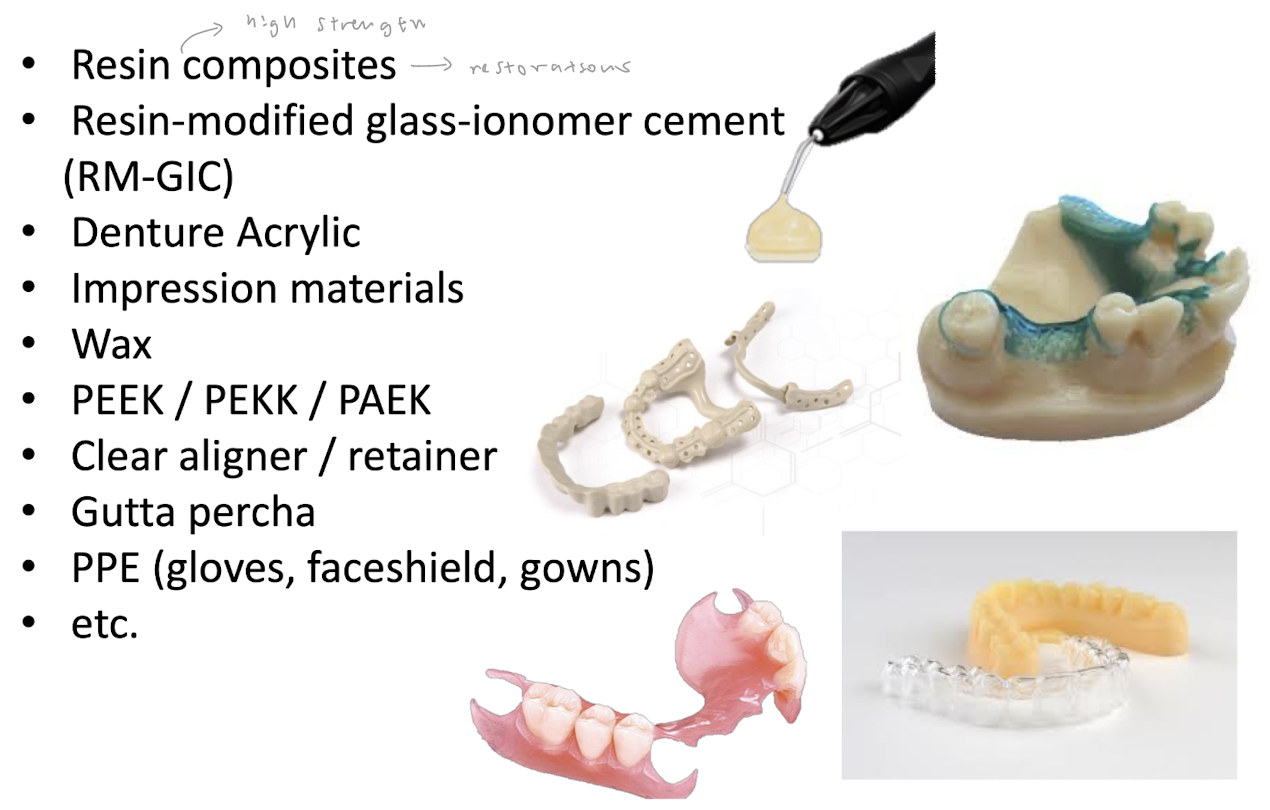
metal as dental material
metal typically crystalline → composed of crystals
many crystals would form grain structures → mechanical properties

oral environment
temp
affected by exposure to high temp e.g. drink
pH
water
masticatory force

requirements as ideal dental materials
biocompatible, biochemically non-corrosive
mechanically strong
physically stable/ durable
easy to handle, radiopaque
aesthetic (shade), tasteless/ odorless
cost effective
e.g. biomechanics consideration in occlusal forces
max occlusal force and response of underlying tissue change with
anatomic location
age and gender
occlusal scheme
placement of dental prosthesis
material/ design sufficient to withstand occlusal forces in anterior segment may be insufficient for posterior segment
situations (modes of loading) for dental materials
tension: 2 forces directed away from each other
or one end constrained and other with force directed away from constraint
compression: 2 forces directed towards each other in same direction
shear: 2 forces directed parallel to each other
torsion: twisting
bending

stress (σ)
(assume cross-sectional A of specimen remains constant during test)

strain

stress-strain
characterisation of mechanical properties
strength
stiffness (modulus)
max flexibility
ductility
brittleness
resilience
toughness
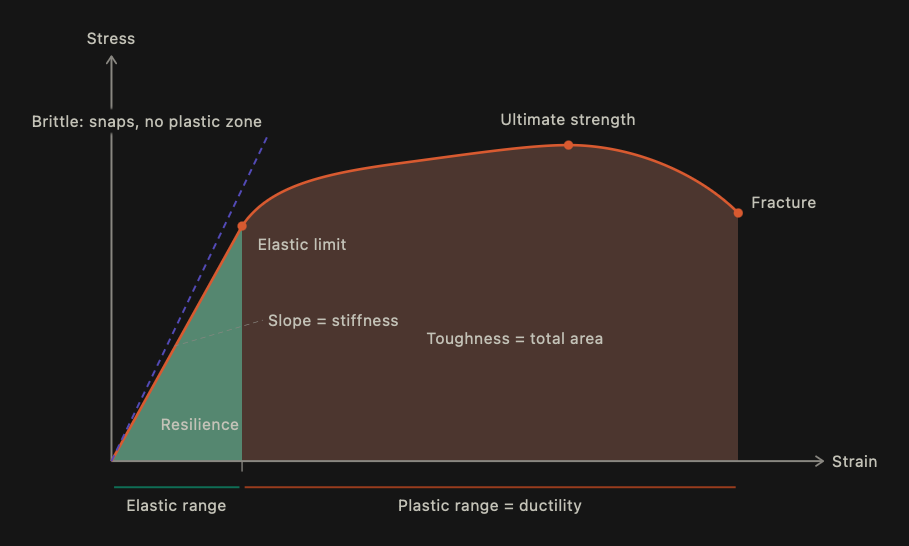
hooke’s law

stress-strain curve
use graph to calc elastic modulus

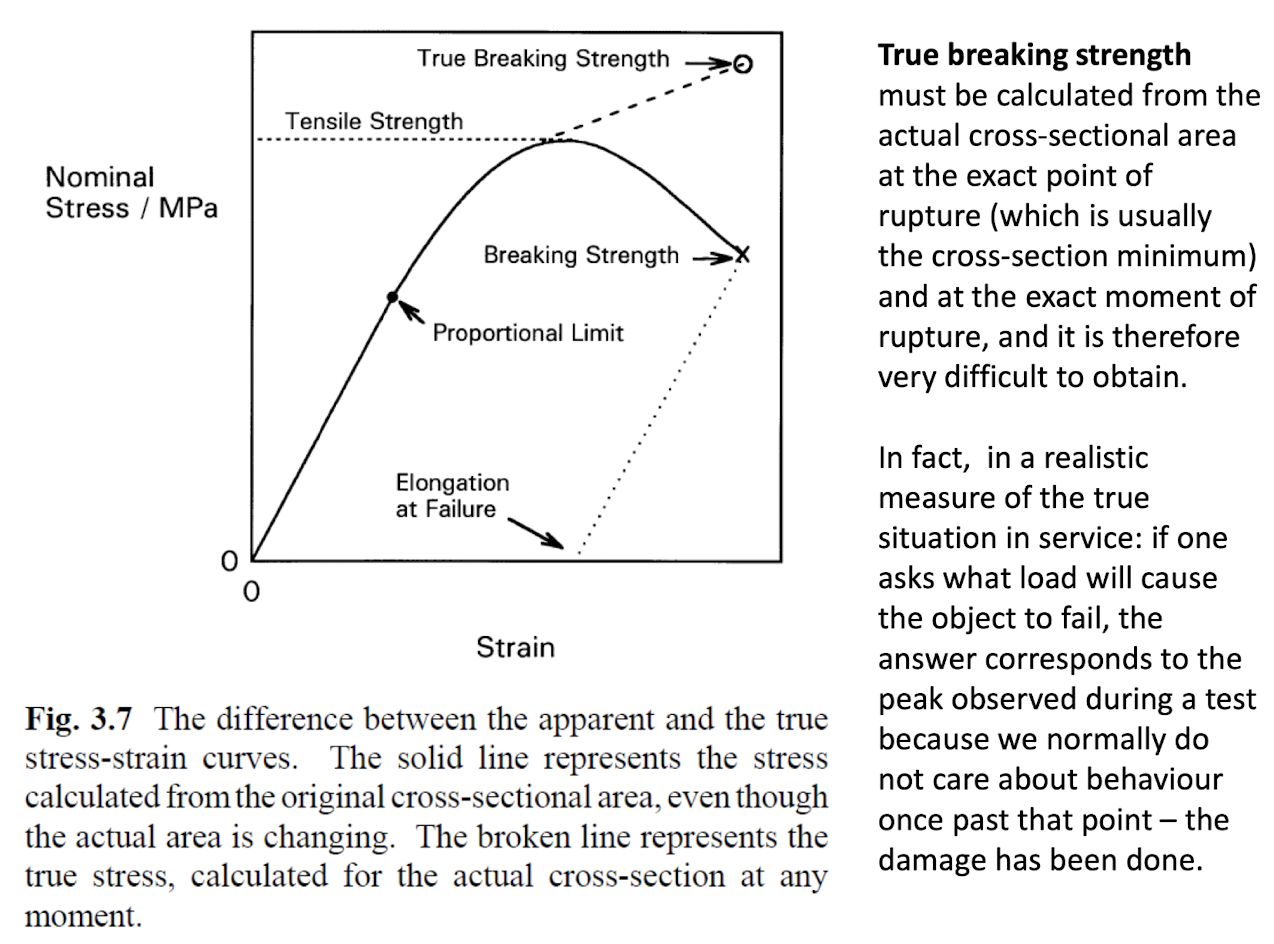
true breaking strength
uses cross-sectional area at exact point of rupture
usually cross-section min
so difficult to obtain
apparent uses original A
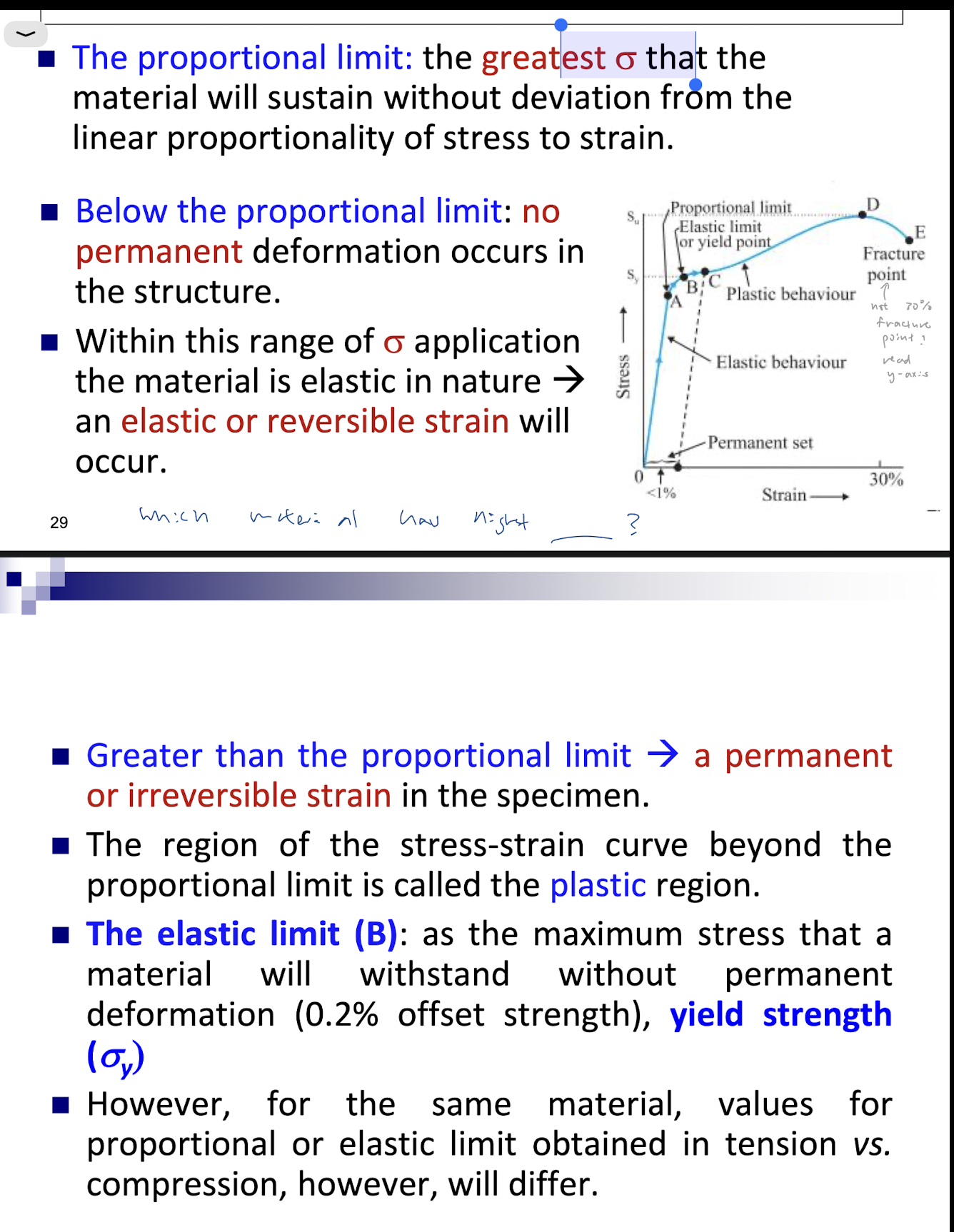
proportional limit
greatestσ that material will sustain without deviation from linear proportionality of stress to strain
(straight line section)
below prop limit
no permanent deformation occurs in structure
within this range ofσ application
material = elastic in nature
elastic/ reversible strain will occur
> prop limit
permanent/ irreversible strain
elastic limit (B)
as max stress that material will withstand without permanent deformation
= yield strength (σy)
comparing stress-strain curves between diff materials

key properties on stress-strain curve
Property | Where to look | High value means | Low value means |
Stiffness (elastic modulus, E) | Slope of the initial straight section | Stiff (steep) | Soft / flexible (shallow) |
Strength | Height of the curve (peak = tensile strength) | Strong | Weak |
Maximum flexibility | Strain at the elastic limit (elastic range) | Bends a lot and still springs back | Little elastic stretch |
Ductility | Length of the plastic region after the elastic limit | Ductile (bends before breaking) | Brittle |
Brittleness | Absence of a plastic region | Snaps at end of straight line | - |
Resilience | Area under the elastic section only | Absorbs much energy without permanent deformation | Absorbs little elastic energy |
Toughness | Total area under the whole curve (includes resilience) | Absorbs much energy before fracture | Fractures with little energy |
toughness
resistance of material to fracture
energy necessary to cause fracture
whole shaded area under curve (tough vs brittle)
plastic + elastic
resilience
green triangle area beneath elastic portion
resistance of material to permanent deformation
amount of energy necessary to deform material to proportional limit
brittleness
absence of plastic deformation (brittle vs plastic)
(dashed purple line)
ductility
length of plastic range (ductile vs brittle)
how far curve continues after plastic limit before fracture
max flexibility
elastic range, max elastic strain (flexible vs stiff)
how far along strain axis straight section reaches before elastic limit
stiffness (modulus)
slope of elastic portion (soft vs stiff)
steepness of 1st straight section
steeper = stifferslope of elastic portion (soft vs stiff)
steepness of 1st straight section
steeper = stiffer
strength
e.g. stress at failure (weak vs strong)
how high curve goes
higher = stronger
fracture toughness
fracture mechanics characterises behaviour of materials with cracks and flaws
(any defect weakens material
sudden fractures can arise at stresses below yield stress)
sudden, catastrophic fractures typically occur in brittle materials that don’t have ability to plastically deform and redistribute stresses
in polymer
(under stress) intrinsic flaws (void formation)
→ voids join together → fibrils
→ craze development → crack
(griffith’s law)
bigger crack = lower stress needed to break brittle material
some fracture toughness values for some dental materials

instrument - universal testing machine
(pulls and measures how hard object pulls back)


example - calc compressive strength

extra terms
indentation hardness - surface hardness
nanohardness - from nanoindentation
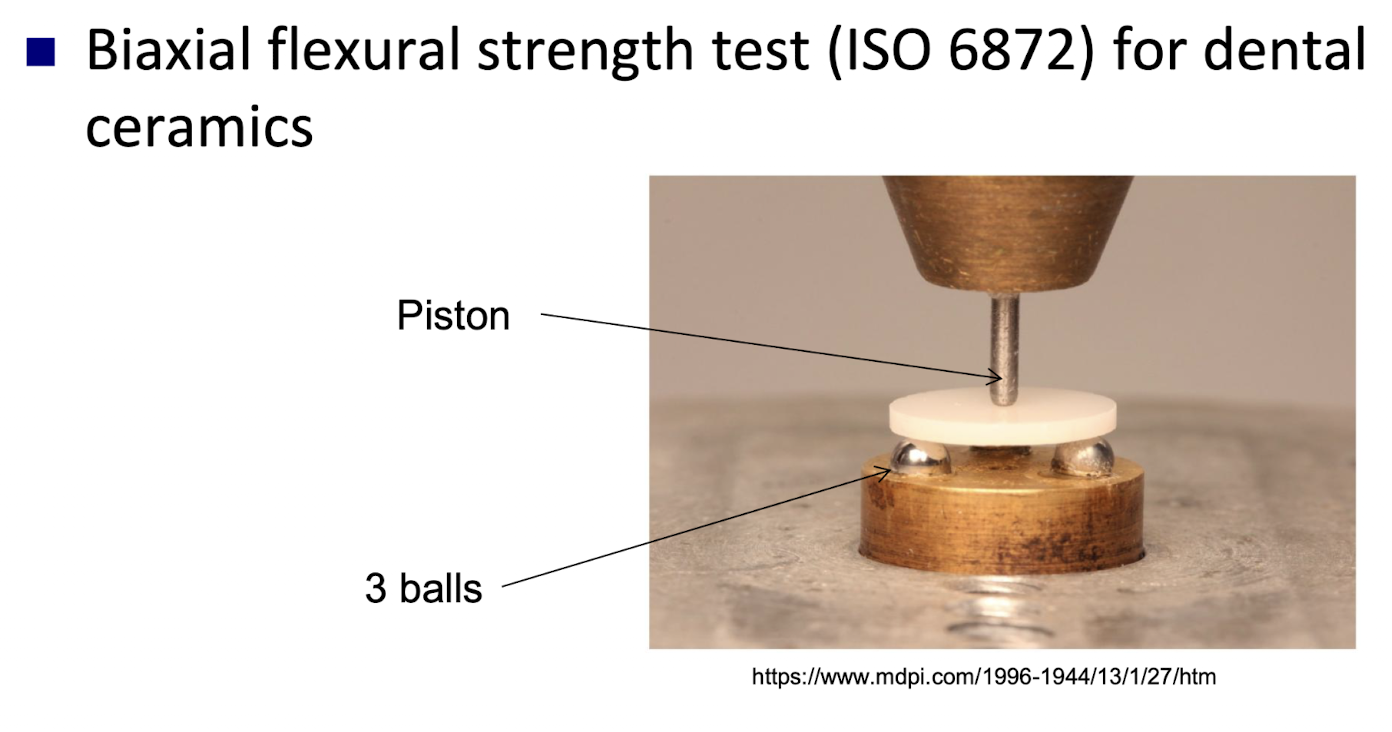
biaxial flexural strength test
pushes down to measure fracture point (force at moment of fracture)
fatigue strength
stress at which material fails under repeated loading until fracture
fatigue test
mechanical test for implants
performed by subjecting alternating stress applications below strength fracture occurs
viscoelasticity and fluids
elastic = independent of loading rate
viscoelastic = properties dependent on loading rate
faster loading rate
> elastic modulus (=stiffer)
> proportional limit
> strength

teeth
enamel
human enamel
96% minerals (CA-HAp)
1% org molecules (glycoproteins)
3% H2O
enamel rods (prisms) have specific orientation w each other
maximal strength
very hard, but soluble and > brittle than dentin (acid etching)
mirchomechanical retention
low permeability
enamel seals tooth to foreign molecules
BUT bleaching agents e.g. peroxides can penetrate
dentin
20% org
70% inorg
10% H2O
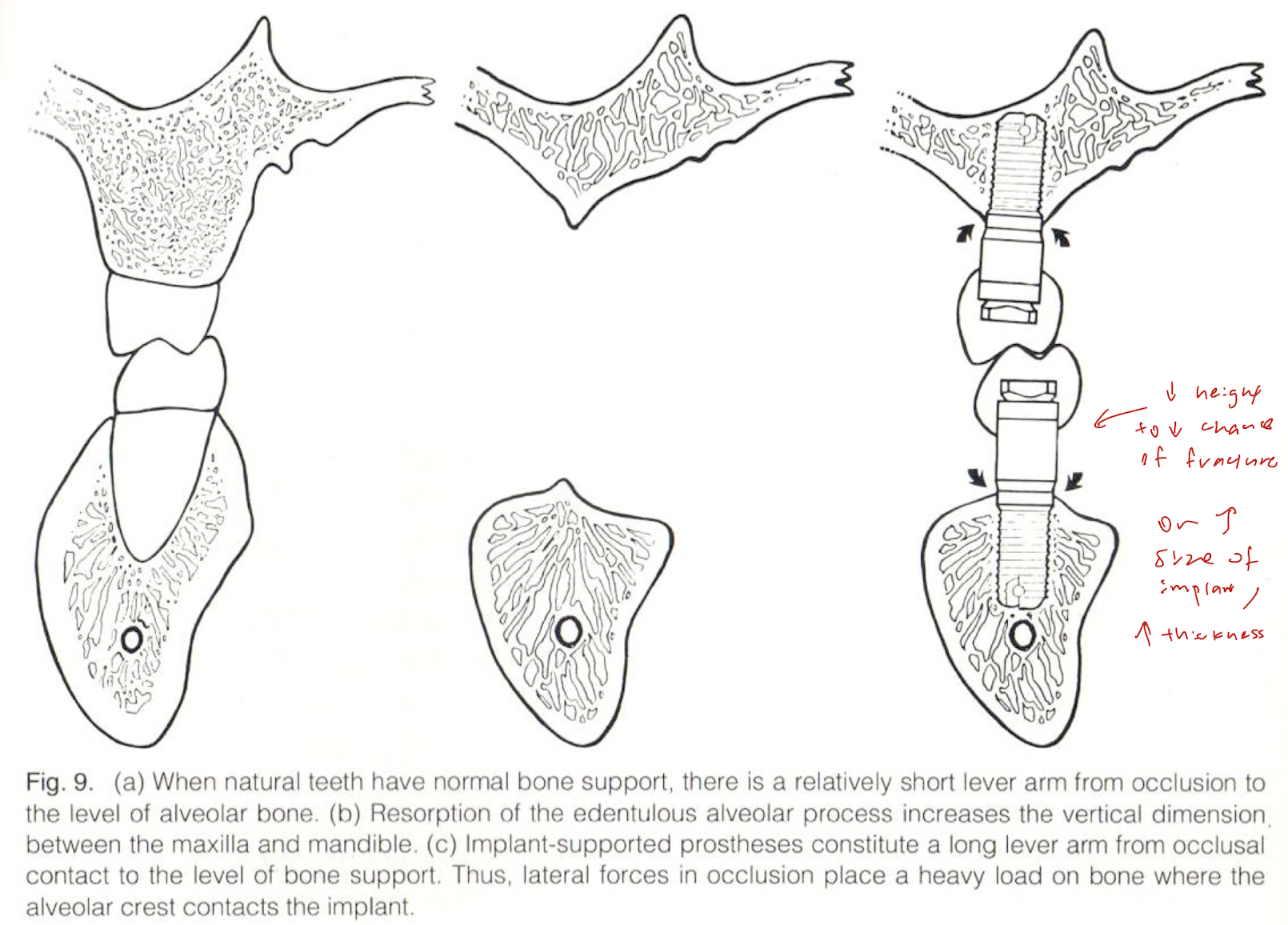
loaded tooth
decrease crown height to decrease chance of fracture
or increase size of implant/ increase thickness
enamel microstructure - crack propagation
multi-level microcracking
dissipates energy and delays catastrophic fractures
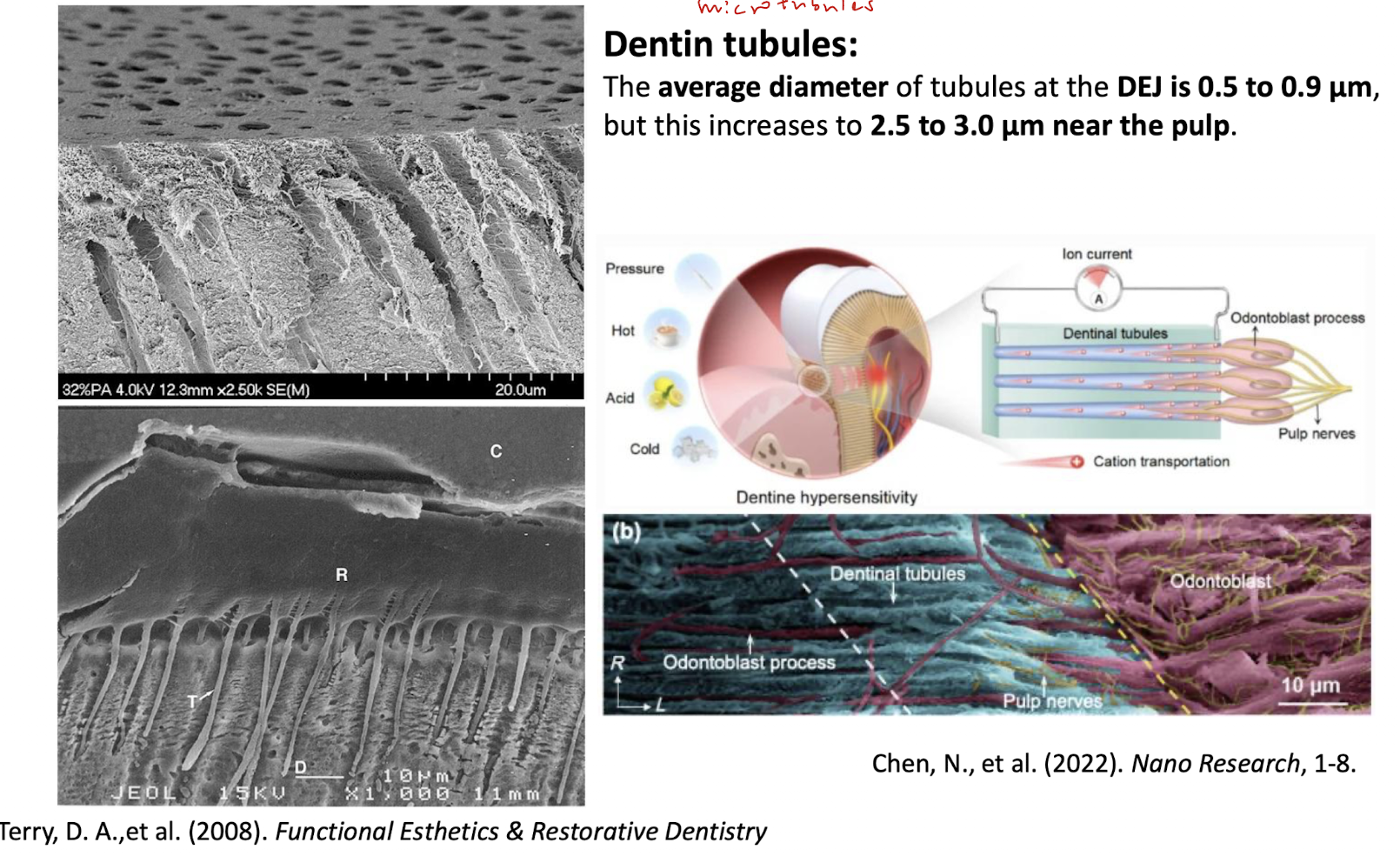
dentin microstructure
dentin tubules widen towards pulp
mechanical properties of enamel vs dentin
>org material in dentine

acid etching and degradation
remove inorg material
increase roughness for bonding to resin
resin penetrates into microscopic structure