CRITICAL CARE EXAM 3
 Call Kai
 Learn
 Practice Test
 Spaced Repetition
 Match
 Flashcards
 Knowt Play
1/138

There's no tags or description
Looks like no tags are added yet.
139 Terms
what is Acute respiratory failure (ARF)
a sudden inability of the respiratory system to provide approprate gas exchnage when supplying O2 and/or remove CO2 from the blood
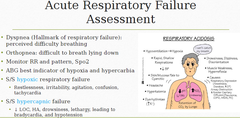
type 1 acute respiratory failure
oxygenation failure HYPOXEMIA!
(PaO2 is less than 60)
(paCO2 is normal or decreased).

What is the V/Q mismatch for type 1 ARF?
oxygenation problem/usually equals 1
type 2 Acute Respiratory Failure (ARF)
ventilation failure! (Respiratory acidosis)
Causes a rise in CO2.
Can be caused by CNS abnormalities, neuromuscular disorder, drug OD, chest wall abnormalities.
What is the V/Q mismatch for type 2 ARF?
ventilation mismatch!
volume of air that enters the upper airway but does not participate in gas exchange is considered the dead space.
what is acute respiratory distress syndrome (ARDS)?
most severe form of acute respiratory failure.
-inflammation of the alveoli that triggers an immune response to cause pulmonary edema (non cardiac)
what is acute respiratory distress syndrome (ARDS) caused by?
acute injury that leads to an aggressive immune response.
acute respiratory failure treatment
ABCD
maintain a patent airway
optimize o2 delivery
minimize the o2 demand
treat the cause
prevent complications
risk factors for ARDS?
obesity, disease severity, age, race, gender, season (winter) hypotension
ARDS s/s
1. respiratory alkalosis + retractions
2. respiratory acidosis + pulmonary edema
3. metabolic acidosis(hypo perfusion and lactic acid).
other: dyspnea, rapid and shallow breathing (Chaynee stokes) tachypnea, hypoxemia

What are the direct causes of ARDS?
1. Aspiration of gastric contents
2. pneumonia
3. fat embolism
4. near-drowning
5. multisystem trauma of the chest or lungs
6. inhalation of toxic gases

what are the indirect causes of ARDS?
burns
cardiopulm bypass
drug OD
fractures (pelvis or long bone),
multiple system transfusion
multisystem trauma (not involving chest or lungs),
pancreatitis & Sepsis

What is the Berlin criteria?
Mild: 201-300mmHg
Moderate: 101-200mmHg
Severe: less than or equal to 100mmHg.
How do we determine the ARDS scoring? Why is it important
divide the PaO2 by FiO2.
It is important to know this because it correlates with mortality.
What is the acute phase of ARDS?
happens in the first week.
uncontrolled inflammatory response
damage to the pulmonary capillary endothelium
Aggregation of platelets→ thrombi formation
Fluid leaks in during this phase and can cause pulmonary edema.
susceptible to pneumonia
What is the fibrotic phase of ARDS?
2-3 weeks after onset.
this is considered "the end," alveoli become extremely stiff
lungs cant expand due to benign stiff (become fibrotic)
inflammatory process throughout the body
there is severe shunting R to L.
widespread edema and MODS
what is the proliferative phase of ARDS?
1-3 weeks from onset.
resolution of pulmonary edema,
formation of fibrin matrix.
NOTE: overlaps with the fibrotic phase,
progressive hypoxemia
What is the treatment for ARDS?
adequate/non invasive oxygenation (CPAP or BIPAD),
intubation (lower tidal volumes or PEEP),
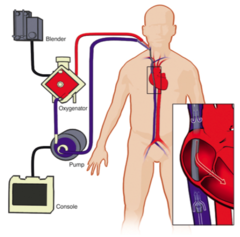
ECMO,
corticosteroids, sedation, prone positioning, and hypothermia.
pao2 greater than 60
Acute Lung Injury (ALI)
A slightly less severe form of acute respiratory distress syndrome.

what causes acute lung injury?
pneumonia, aspiration, smoke inhalation, sepsis
What are some evidence based practices that enhance outcomes in treating clients with impaired gas exchange?
FOR V.A.P
oral care q2-4hrs,
DVT prophylaxis,
pressure ulcer prophylaxis (PUD)
Turning q2hrs,
restraints on intubated patients.
sedation
HOB 30
Chlorohexidine
What is oxygenation?
Supplying oxygen to body's cells
What is ventilation?
INTAKE PROBLEM
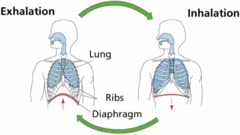
Movement of gasses in and out of alveoli
-Ex: asthma causes bronchoconstriction which leads to impaired ventilation
What is perfusion?
CARDIAC PROBLEM
movement of oxygenated blood to tissues

What is work of breathing (WOB)?
effort required to inspire and expire

What is diffusion?
EXCHANGE PROBLEM
Movement of O2/CO2 from higher to lower pressure
What is lung compliance?
lungs ability to change in volume (stretch) with inhalation and exhalation
What are some causes of respiratory acidosis?
low pH, high CO2
Hypoventilation,
CNS depression (anesthesia, overdose),
neuromuscular disorders,
trauma (spine, brain, chest wall),
restrictive lungs, COPD, acute airway obstruction

What are some causes of respiratory alkalosis?
high pH, low CO2
HYPERVENTILATION, hypoxemia,
anxiety, fear, fever, pain,
stimulants,
excessive ventilatory support (bag-valve mask or mechanical ventilation)
CNS irritation

What are some causes of metabolic acidosis?
low pH, low HCO3
Increase in acid DKA, renal failure, lactic acidosis, drug overdose,
Los of Base: diarrhea, pancreatic or small bowel fluid loss

What are some causes of metabolic alkalosis?
high pH, high HCO3
Gain Base: excessive antacids, sodium bicarb ,citrate in blood transfusions
Loss acids: vomiting, NG suction, diuretics, low K+ or CL

early s/s of hypoxemia
Skin: pallor, cool, dry
Cardiac: tachycardia, HTN, dysrhythmias, chest pain
Resp: Adventitious breath sounds, tachypnea
CNS: anxiety, restless, confusion, fatigue, agitation

What are the late signs of hypoxemia?
late to BED: Bradycardia, Extreme restlessness, Dyspnea
Skin: cyanosis + diaphoresis
Cardiac: hypotension + decreased o2 saturation
Resp: use of accessory muscles
CNS: coma

FiO2
fraction of inspired oxygen
concentration of oxygen delivered from 0.21 (room air) to 0.6 (21%-60%)
Can go up to 1.0 (100%) in emergencies
tidall volume
Amount of air delivered with each preset breath, based on ideal body weight (6-8 mL/Kg)
PEEP
positive end expiratory pressure
-allows for more surface area of the lungs to be oxygenated.
-Positive pressure into airways during expiration (5-20),
holds the alveoli open to increase oxygenation
prevent collapse maximizing gas exchange.

Volume Assist/Control (V-A/C)?
AC=Actively Control breathing!!
100% Full machine control over the patient's respiratory rate. Preset RR and preset VT
-"Full ventilatory support mode."

Who would benefit from Volume Assist/control?
pts who have a normal respiratory drive but are too weak to perform WOB
(post-surgery, sedation, paralyzed, pneumonia). NOT indicated for COPD pts
What is Volume Intermittent Mandatory Ventilation (V-IMV)?
Patient controls breathing mainly and the machine assists
-Preset RR and Vt for ventilator initiated breaths only
-pt will initiate their own breaths

What is CPAP?
Patient is breathing on their own the CPAP just provides pressure and keeps the alveoli open. positive airway pressure during expiration,No mandatory breaths given, they must have a good respiratory drive because patient performs WOB

Pressure Assist Control (P-A/C)?
pressure given with mandatory and spontaneous inspiration,
breaths with and without the ventilator.
Set RR, set at 15-25 H2O
Good for ARDS and noncompliant lungs. "Lung protective" to keep the alveoli open
What are some complications of ventilated patients?
high pressure alarms, low pressure alarms, tube displacement, unplanned extubation, Oral/Nasal mucosa damage, barotrauma, O2 toxicity, Respiratory acidosis or alkalosis, infection, Dysphagia, and aspiration
What is the nursing management for a patient on a ventilator?
Have ambu, suction equipment, trach supplies, and restraints at bedside, Auscultate for lung sounds, get chest x ray, monitor RR assessment/vitals, Change ETT position q4/daily, Perform, VAP bundle (DVT prophylaxis (heparin), PUD prophylaxis (PPI), HOB up, daily sedation vacation, assess ability to go off of vent, oral care q2), speak to them as if they are awake.
Barotrauma
alveolar rupture from excessive pressure
pneumothorax can occur
caused by having PEEP and tidal volume too high for too long.

Volutrauma
when the mode or settings on the ventilator lead to over distention of alveoli

What is oxygen toxicity?
prolonged exposure to high concentrations of FiO2 exposure,
can cause decreased lung compliance and atelectasis
(collapsed lung) can occur
What makes a high pressure alarm go off on a vent?
patient biting on tube, kinks in tube, secretions in airway, anxiety, fear, pain, coughing, gagging, mucous plugs, fighting vent, increased airway resistance, decreased lung compliance
What makes a low pressure alarm go off on a vent?
leaks in ventilation, disconnection from tubing or patient disconnection, cuff leak, tube out of position.SHOULD BE ASSESSED FIRST
What medications can be given to provide comfort and reduce stress in patients receiving mechanical ventilation?
Sedatives: propofol, Ativan, Versed, Precedex
Analgesics: Fentanyl, morphine
Paralytics: Cistracrium, Nimbex, vecuronium,
How do we know when a patient is ready to be weaned off the vent?
PaO2/FiO2 ratio >150-250,
PEEP < 5-8, FiO2 < 0.4,
Hemodynamically stable, no vasopressors/stable HR,
Able to initiate a breath,
Conduct a SBT to see if they can breathe for 30-120 minutes,
Chest Xray clear, Minimal secretions,
Normal breath sounds
type 1 ARF hypoventilation
-drug overdose that suppresses respirations
-neurologic disorders that decrease respirations
-abdominal/thoracic surgery (pain with respirations)
-may be associated with a rise in CO2 (the rise in CO2 is being produced in the tissues is delivered to the lungs but is not released from the body)

Type 1 ARF: intrapulmonary shunting
-normal for some blood to not engage in gas exchange
-but if large amount it can lead to decrease in PaO2
-inadequate ventilation with normal perfusion

causes of intrapulmonary shunting
-pneumonia
-atelectasis
-pulmonary edema
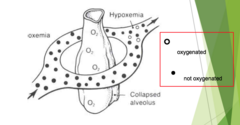
ARF type 1: V/Q mismatch
-there is a reduction in perfusion or ventilation
-should equal 1.0
if V is greater than Q then greater than 1.0 means....
pulmonary embolism
if V is less than Q and less than 1.0....
pneumonia or pulmonary edema

6 barriers to the diffusion of O2 and CO2
-surfactant
-alveolar epithelium
-interstitial fluid
-capillary endothelium'
-plasma
-RBC membrane (interstitial fluid or COPD)
what is the paCO2 in type 2 ARF
\greater than 50mmHg
ARF type 2: ventilation failure
-hypoventilation
-PaCO2 rises (hypercapnia)
-increases cerebral blood flow
-ICP increases
-level of consciousness decreases (restlessness, anxious, decreased LOC)
-coma
type 2 ARF: hypoventilation
decrease in breathing
CNS abnormalities
neuro disorder
drug overdose
chest wall abnormalities
resp acidosis (may need mechanical ventilation)
-Co2 accumulates and is not blown off
what causes a V/Q mismatch
emphysema,
V/Q mismatch of vent side (permanent enlargement of alveoli)
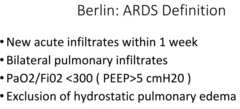
berlin criteria for ARDS
DIAGNOSTICS:
-acute onset within 1 week of insult
-bilateral clincal opacities not explained by other causes
-altered PaO2:FiO2 ratio
diagnostics for ARDS
-ABGs
-Chest x-ray
-CT
-bronchoscopy
lung elasticity
the lungs being able to return to normal size after expiration

Sao2
oxygen saturation, tells us how well the blood is being saturated with oxygen

How do we decipher full, partial compensation, uncompensated?
full: pH is normal
Partial: all abnormal
Uncompensated: abnormal PH + another value
Ventilator-associated pneumonia (VAP)
pneumonia that occurs 48 hours after intubation
-direct association to nursing care
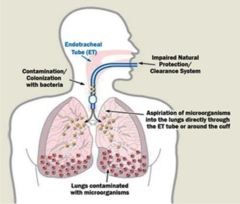
what causes ventilator assoc. pneumonia (VAP)
colonized gastric and oropharyngeal secretions

how can the nurse prevent ventilator associated pneumonia (VAP)?
-HOB 30 degrees
-sedation vacations
-prophylatic
-PUD (protonix + famotidine)
-DVT
-oral care (CHG). reposition EET daily Q4 hours

normal upper airway inspired volume
25-30%
what does CPAP prevent?
alveolar collapse

what kind of patients are put on CPAP?
people that can breathe independently
-sleep apnea, COPD, pulmonary edema
BiPAP
preset pressure suppor(inhalation)t + preset PEEP (exhalation)

what conditions cause ventilation issues?
over-sedation
CVA
obstruction
sleep apnea
what conditions cause perfusion problems?
MI, shock, CHF
vwhat conditions cause diffusion problems?
pulmonary edema, pneumonia, ARDS
what kind of patients are put on Volume Intermittent Mandatory Ventilation (V-IMV)
patients that need their lungs reconditioned to the WOB to regain respiratory muscle strength, hyperventilation patients
complication of V-A/C
respiratory alkalosis (hyperventilation)
pressure support
Spontaneous breath support!!
-used for weaning
-sets a pressure limit during inspiration, inhaling positive pressure
-Helps the patient breathe when they want to take a spontaneous breath
-pushes air into the lungs to help with spontaneous breathing
-patient must have their own respiratory drive
what type of ventilation can be used with other modes of ventilation?
PEEP
can CPAP be used with other modes of ventilation?
no
Pressure Regulated Volume Control (PRVC)
uses both pressure and volume control, very common ICU mode
- breaths are vent initiated OR patient initiated
-pressure during inspiration
what kind of patients is pressure regulated volume control (PRVC) used in?
weak resp muscles & ARDs
surgery then developed ARDs
This mode is good for a patient with weak respiratory muscles but normal respiratory drive
volume assist / volume control
this mode is good for patients in the process of weaning off the vent and supplies inspiratory positive pressure as the patient takes spontaneous breaths
pressure support
this mode is good for patients in the process of weaning off the vent but still needs end expiratory pressure to stablize the alveoli
continuous positive airway pressure
this mode is good for patients that need a set number of breaths and the vent controls the inspiratory pressure, increasing or decreasing to regulate the desired volume
pressure regulated volume control
medications to use for mechanically vented clients
sedatives
analgesics
paralytics
sedatives
-diprivan (Propfol)
-lorazepam (ativan)
-midazolam (versed)
-dexmedetomidine (precedex)
analgesics
fentanyl
morphine
paralytics
-curium and -curonium and nimbex
safety considerations for vented patients
-ambu bag with face mask
-suction and suction set up-trach:
additional trach and trach supplies; obterator-
restraints-
medications : sedative, analgesics, paralytics
should low or high pressure alarms be assessed first?
low
s/s of barotrauma/volutrauma
-high PIP and mean airway pressure
-decreased lung sounds
-tracheal hypoxemia and traacheal shift
-tachycardia
-hypotension
what is the goal of fiO2
less than .60/manipulate the PEEP to decrease the FiO2
what should the nurse do when weaning a patient off the vent?
check chest x-ray, ensure normal breath sounds, minimal secretions, limited use of pressers or no pressors, stable HR, adequate respiratory muscle strength, RR are less than 25, spontaneous tidal volume of 5ml/KG, minute ventilation 5-8 L/m
breaths in PRVC
ventilator initiated (control breath)
patient initiated (assist breath)
what does the PRVC monitor do?
-monitors each breath and compared the delivered tidal volume with the set tidal volume.
-if the delivered volume is too low it increases the inspiratory pressure on the next breath.
-if it is too high it decreases the pressure
what does barotrauma/volutrauma (alveoli burst) cause?
-subcutaneous emphysema
-pneumothorax
-tension pneumothorax
-pneumopericardium