Communicating with families
 Call Kai
 Learn
 Practice Test
 Spaced Repetition
 Match
 Flashcards
 Knowt Play
1/22

There's no tags or description
Looks like no tags are added yet.
23 Terms
Newborns
• Parents have a variety of emotions
Anxiety, fear, hope, happiness
• Transition to home very important for effective bonding
• Use active listening & open-ended questions
• Use reflecting & clarifying to ensure parents are heard
• Build rapport to have open communication with family
working with families

equipment

newborn health history
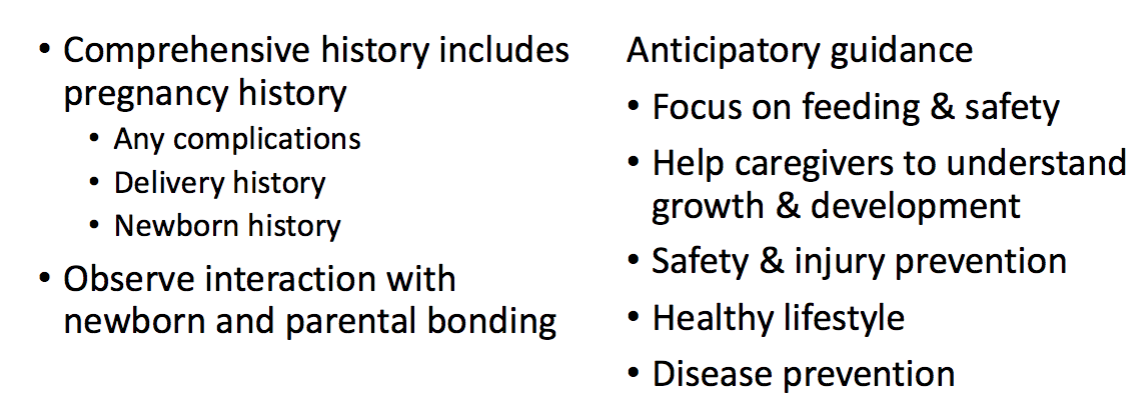
call health care provider

infants
• Hold the infant close and make eye contact while speaking in a calm, soothing voice
• Infants prefer higher-pitched voices and exaggerated facial expressions; these hold their interest as they like looking at faces
• Speak directly to the infant using a soft voice and animated expressions to support engagement’s interest as they like looking at faces
• Always be sure the parent remains within the direct sight of the infant to decrease the infant’s anxiety
infant health history
• Observe interaction
• Does parent respond to cues
• Is the parent response predictable or unpredictable
• Is the infant secure or anxious & fearful
• Developmental milestones attained
• "What is your baby doing now that is new since their last visit?" gives the parent an opportunity to describe the infant’s achievements
• Assess parental stressors: self care
• For 1 month, 2-month, 4- month, 6- month well visits assess for postpartum depression
toddler
• Development of autonomy
• Very mobile, curious
• Independent
• Use more receptive language (ability to comprehend spoken language) than expressive language (ability to communicate thoughts and feelings)
This causes frustration in toddler
• Toddlers communicate in 1-to-2-word sentences
• Provide only one concrete direction at a time
contact the provider

assessing toddler
• Have parent in view
• May want their ”security object”
• Parent’s lap may make some feel more secure
• Sit down or squat at eye level of toddler
• Some toddlers like to explore the equipment before using for examination
• Toddlers have negativism (say “no”)
Do not ask yes/no questions
Provide choices when feasible
• Distraction encourages toddler to cooperate (parent singing, reading a story)
toddler health history
• Immunization history
• Temper tantrums
• Toilet training
• Exposure to communicable diseases
• Lead poisoning risk
Toddlers & children <6, put everything in their mouth
• Toddlers communicate via pointing
• Listen carefully
• Observe body language

assess parental stress
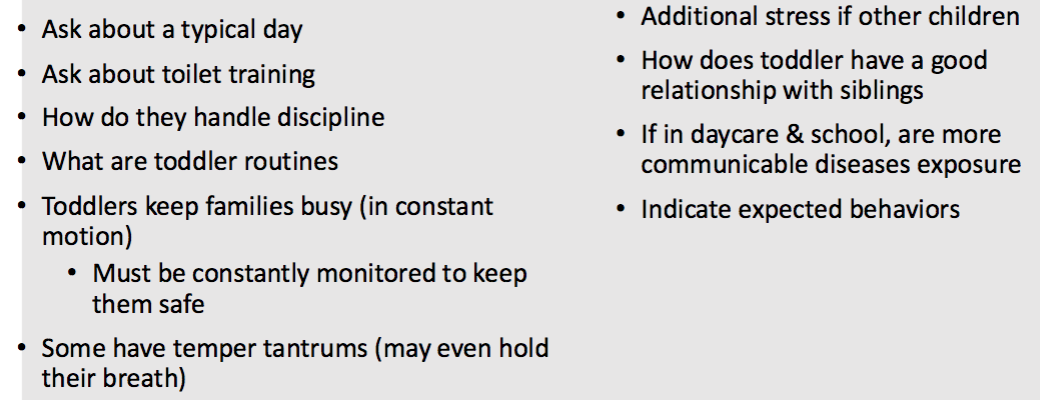
toddler information
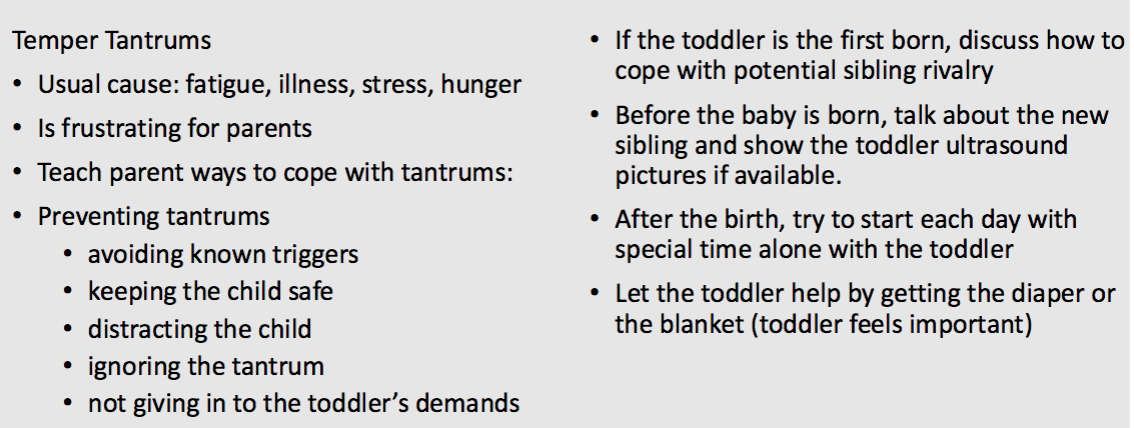
preschooler

parental stressors
• Work life balance may be difficult
Time & financial pressures may impact parent well being
Parent may have self doubt
• Child may be toilet trained but still have accidents
Is stressful
• Child may be very active
• Child may have difficult temperament
• These are challenging for parent
exam approach
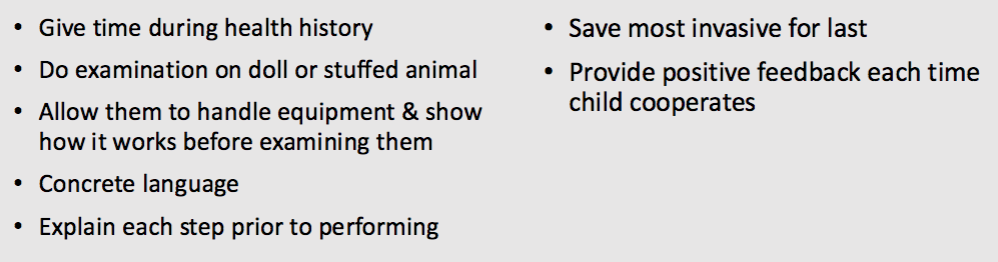
health history approach

school age
• Parent discipline preference
• Does child understand inappropriate touch
• Bowel movement pattern
Constipation, soiling (encopresis)

assess child stressors

building self esteem

adolescent
• Can be challenging
Hormonal changes, peer pressure, exerting independence
• Spend much time with peers
Can be + or - influence
May engage in risky behaviors (drugs, smoking, alcohol, shoplifting)
• Encourage honest, open communication, have 1 friend that can say no, help development self confidence

adolescent stressors
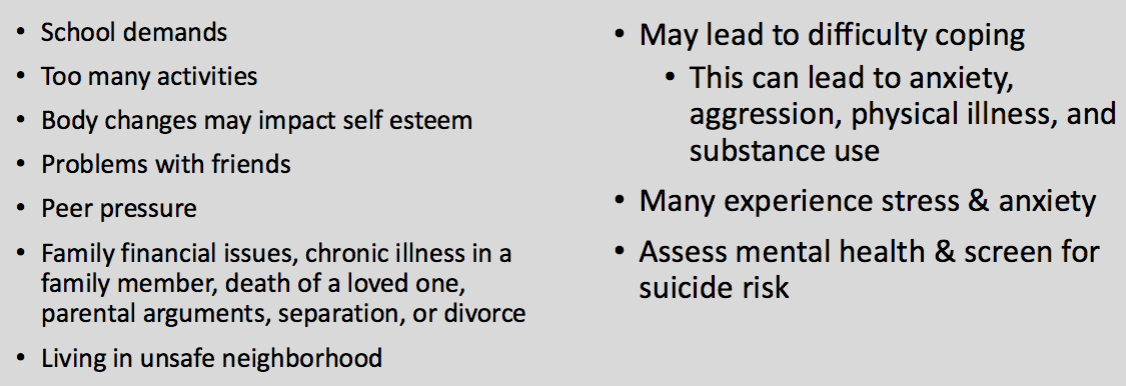
psychosocial screenings
