Topic 7: Economic Performance and Challenges
 Call Kai
 Learn
 Practice Test
 Spaced Repetition
 Match
 Flashcards
 Knowt Play
1/100

There's no tags or description
Looks like no tags are added yet.
101 Terms
Gross Domestic Product (GDP)
The dollar value of all final goods and services produced in a nation in a given year

intermediate goods and services
goods and services bought from one firm by another firm to be used as inputs into the production of final goods and services

durable goods
goods that last for a relatively long time, such as refrigerators, cars, and DVD players

nondurable goods
goods that last a short period of time, such as food, light bulbs, and sneakers

Nominal GDP
GDP measured in terms of the price level at the time of measurement; GDP not adjusted for inflation

Real GDP
GDP measured in terms of the price level in a base period, i.e. GDP that is adjusted for inflation

Real GDP per capita
real GDP divided by the total population of a country...indicates standard of living

Gross National Product (GNP)
The total value of all goods and services produced by a country's economy in a given year. It includes all goods and services produced by corporations and individuals of a country, whether or not they are located within the country.
Depreciation
A decrease or loss in value
price level
a measure of the average prices of goods and services in the economy

Aggregate Supply (AS)
The total amount of goods and services that all the firms in all the industries in a country will produce at various price levels in a given period of time.

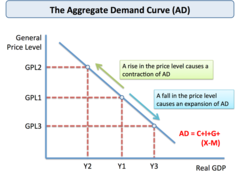
Aggregate Demand (AD)
The total amount that all consumers, business firms, and government agencies are willing to spend on final goods and services at various price levels at a given period of time.
Net Exports (NX or Xn)
exports - imports
Exports
goods produced domestically and sold abroad
Imports
goods produced abroad and sold domestically
trade deficit
the amount by which the cost of a country's imports exceeds the value of its exports.
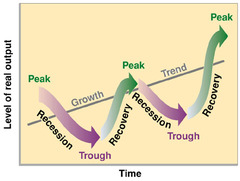
business cycle
a period of macroeconomic expansion followed by a period of contraction: expansion, peak, contraction, trough (repeat)

expansion
A period of economic growth as measured by a rise in real GDP; the phase of the business cycle in which output, income, and business activity rise

economic growth
1) an increase in real output (real GDP) or real GDP per capita , 2) an outward shift in the PPC (Production Possibilities Curve) that results from a) an increase in resource supplies or quantity or b) an improvement in technology

peak
the height of an economic expansion, when real GDP stops rising
contraction
a period of economic decline marked by falling real GDP

Economic Trough
a low turning point or a local minimum of a business cycle

Recession
a period of temporary economic decline during which trade and industrial activity are reduced, generally identified by a fall in real GDP in two successive quarters, accompanied by lower real income and higher unemployment

Depression
A long-term economic state characterized by unemployment and low prices and low levels of trade and investment

Stagflation
a period of slow economic growth and high unemployment (stagnation) while prices rise (inflation)

business investment
investment spending by businesses that creates additional output and jobs, helping to increase GDP and maintain the expansion

leading indicators
a set of key economic variables that economists use to predict future trends in a business cycle

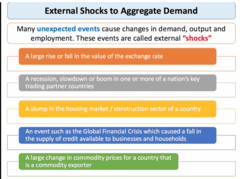
External shocks
Sudden, unexpected changes in demand (or aggregate demand) or supply (or aggregate supply); Unforeseeable and unexpected changes in the business environment that tend to affect all businesses in an economy (e.g. wars, natural disasters, terrorist attacks, oil shocks, pandemics)
Consumer Confidence Index
A measure of how optimistic or pessimistic consumers are about the nation's economy. This measure is usually reported on a monthly basis.

capital deepening
an increase by society in the average level of physical and/or human capital per person

savings rate
personal saving as a portion of disposable (after-tax) income
frictional unemployment
unemployment that results because it takes time for workers to search for the jobs that best suit their tastes and skills

structural unemployment
unemployment that occurs when workers' skills do not match the jobs that are available

seasonal unemployment
unemployment caused by seasonal changes in the demand for certain kinds of labor

cyclical unemployment
unemployment that rises during economic downturns and falls when the economy improves

unemployment rate
the percentage of the labor force that is unemployed

full employment
the level of employment reached when there is no cyclical unemployment

Underemployed
working at a job for which one is overqualified, or working part-time when full-time work is desired

discouraged workers
people who are available for work but have not looked for a job during the previous four weeks because they believe no jobs are available for them

Globalization
the process by which businesses or other organizations develop international influence or start operating on an international scale.

Inflation
a general increase in prices and fall in the purchasing value of money.

purchasing power
the ability to purchase goods and services

Consumer Price Index (CPI)
a measure of the overall cost of the goods and services bought by a typical consumer

market basket
representative group of goods and services used to compile the consumer price index

inflation rate
the percentage increase in the price level from one year to the next

core inflation rate
the rate of inflation excluding the effects of food and energy prices

headline inflation rate
the inflation rate that includes all prices

Hyperinflation
A very rapid rise in the price level; an extremely high rate of inflation.

quantity theory of money
hypothesis that the supply of money directly affects the price level over the long run

wage-price spiral
the process by which rising wages cause higher prices, and higher prices cause higher wages

fixed income
income that does not increase even when prices go up

Deflation
a sustained drop in the price level

cost-push theory of inflation
inflation caused by an increase in prices of inputs like labor, raw material, etc. The increased price of the factors of production leads to a decreased supply of these goods.
demand-pull inflation
increases in the price level (inflation) resulting from an excess of demand over output at the existing price level, caused by an increase in aggregate demand
money supply
the quantity of money available in the economy
Cost-of-living adjustment (COLA)
Automatic adjustments of nominal income to the rate of inflation
real rate of return
the nominal rate of return minus the inflation rate

poverty threshold
the income level below which income is insufficient to support a family or household

poverty rate
the percentage of people who live in households with income below the official poverty line

income distribution
The way the national income is divided into "shares" ranging from the poor to the rich.

Food Stamp Program (SNAP)
(supplemental nutrition assistance program)-provides low income household members with coupons that they can redeem for enough food to provide a minimally nutritious diet

Lorenz Curve
Graph showing how much the actual distribution of income differs from an equal distribution

enterprise zones
Specific geographic areas to which governments try to attract private business investment by offering lower taxes and other government support

block grants
Federal grants given more or less automatically to states or communities to support broad programs in areas such as community development and social services

Workfare
program requiring welfare recipients to work in exchange for benefits

cash transfers
direct payments of money by the government to poor, disabled, or retired people

in-kind benefits
non cash goods and services provided to needy individuals and families by the federal government

medical benefits
health insurance provided by the government for children and people who are elderly, disabled, or poor

Medicaid
A federal and state assistance program that pays for health care services for people who cannot afford them.

Medicare
A program added to the Social Security system in 1965 that provides hospitalization insurance for the elderly and permits older Americans to purchase inexpensive coverage for doctor fees and other health expenses.

Medi-Cal (Medicaid)
a joint federal and state insurance program that provides medical, dental and vision coverage for low income or indigent people.
-federal government pays for claims
-state pays for administration costs

Charities
an organisation set up to raise money to help people in need or to support causes that require funding

GDP = Gross Domestic PRODUCT =
= C + I + G + Xn = personal Consumption expenditures + gross private domestic Investment + Government purchases + net Exports

final goods and services
goods and services that have been purchased for final use and not for resale or further processing or manufacturing

personal Consumption expenditures
the expenditures of households for durable and nondurable consumer goods and services

gross private domestic Investment
Expenditures for newly produced capital goods (such as machinery, equipment, tools, and buildings) and for additions to inventories.

Government purchases
Expenditures by government for goods and services that government consumes in providing public goods and for public capital that has a long lifetime; the expenditures of all governments in the economy for those final goods and services.

labor productivity
Total output divided by the quantity of labor employed to produce it; the average product of labor or output per hour of work.

labor force participation rate
the percentage of the working-age population in the labor force

infrastructure
the capital goods usually provided by the public sector for the use of its citizens and firms, ex. highways, bridges, municipal water systems, airports, etc

human capital
the knowledge and skills that workers acquire through education, training, and experience that make a worker productive

economies of scale
Reductions in the average total cost of producing a product as the firm expands the size of plant (its output) in the long run; the economies of mass production.

Information Technology (IT)
Any computer-based tool that people use to work with information and support the information and information-processing needs of an organization

start-up firms
A new firm focused on creating and introducing a particular new product or employing a specific new production or distribution method.

network effects
increases in the value of a product to each user, including existing users, as the total number of users rises

demand shocks
sudden, unexpected change in aggregate demand

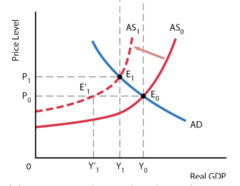
supply shocks
sudden, unexpected changes in aggregate supply
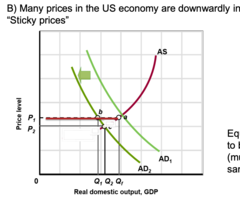
inflexible prices ("sticky prices")
Product prices that remain in place (at least for a while) even though supply or demand has changed; stuck prices or sticky prices.
labor force
Persons 16 years of age and older who are not in institutions and who are employed or are unemployed and seeking work.

unemployment rate
the percentage of the labor force that is unemployed

potential output
the real output (rGDP) an economy can produce when it fully employs its available resources

nominal income
The number of dollars received by an individual or group for its resources during some period of time; income that is NOT adjusted for inflation

real income
The amount of goods and services that can be purchased with nominal income during some period of time; nominal income adjusted for inflation.

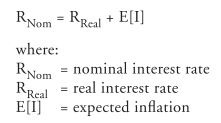
nominal interest rate
the interest rate expressed in terms of annual amounts currently charged for interest and NOT adjusted for inflation
real interest rate
The interest rate expressed in dollars of constant value (adjusted for inflation) and equal to the nominal interest rate less the expected rate of inflation.
aggregate-demand-aggregate-supply (AD-AS) model
the macroeconomic model that uses aggregate demand and aggregate supply to determine price level & real domestic output (rGDP)

Productivity
A measure of average output or real output per unit of input. For example, the productivity of labor is determined by dividing real output by hours of work.

equilibrium price level
The price level at which the aggregate demand curve intersects the aggregate supply curve.
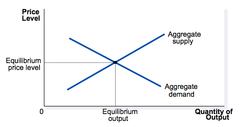
equilibrium real output
The gross domestic product (GDP) at which the total quantity of final goods and services purchased (aggregate expenditures) is equal to the total quantity of final goods and services produced (the real domestic output); the real domestic output at which the aggregate demand curve intersects the aggregate supply curve.

Lorenze Curve
Graphical/visual depiction of income distribution/inequality. It plots the cumulative % of total household income at each quintile (i.e., lowest 20%, lowest 40%, etc.)
