Chemistry - Science 8 review
0.0(0)
Studied by 0 people Call Kai
 Learn
Learn Practice Test
 Spaced Repetition
 Match
Match Flashcards
 Knowt Play
Card Sorting
1/58

Earn XP
Last updated 7:00 AM on 11/11/22
Name | Mastery | Learn | Test | Matching | Spaced | Call with Kai | Chat |
|---|
No analytics yet
Send a link to your students to track their progress
59 Terms
1
New cards
What is matter?
Anything that has mass and volume
2
New cards
What is mass?
The amount of matter in a substance
3
New cards
What are the units for mass?
Grams (g) and kilograms (kg)
4
New cards
What is volume?
The amount of space a substance or object occupies
5
New cards
What are the units for volume?
Liters (L)
6
New cards
What is the basic unit of matter?
The atom
7
New cards
What are atoms made of?
Neutrons, protons, and electrons
8
New cards
What are neutrons and protons made of?
Quarks
9
New cards
What is the difference between an atom and a molecule?
Atoms are singular particles and molecules are two or more atoms bonded together
10
New cards
What is an element?
A substance that contains one type of atom
11
New cards
Where can elements be found?
On the periodic table
12
New cards
What are elements (atoms, molecules, giant structures)?
Single atoms or molecules
13
New cards
What are examples of elements?
Gold, oxygen
14
New cards
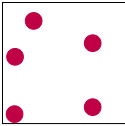
What is a compound?
A substance that contains two or more types of atoms
15
New cards
What are compounds (atoms, molecules, giant structures)?
Molecules or giant structures
16
New cards
What are some examples of compounds?
Salt, sodium chloride
17
New cards
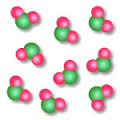
What is a chemical change?
A change in matter that happens when substances combine to form new substances and the properties of the new substance are different from those of the original substance
18
New cards
Most chemical reactions are ____________
Irreversible (not all)
19
New cards
Are physical changed reversible?
Yes
20
New cards
Is crumpling a sheet of paper a physical or chemical change?
Physical
21
New cards
Is an ice cube melting a physical or chemical change?
Physical
22
New cards
Is a match burning a chemical or physical change?
Chemical
23
New cards
Is dissolving sugar in water a physical or chemical change?
Physical
24
New cards
Is making toast a physical or chemical change?
Chemical
25
New cards
Is boiling an egg a physical or chemical change?
Chemical
26
New cards
Is iron rusting a physical change or a chemical change?
Chemical
27
New cards
Is digesting food a chemical or physical change?
Chemical
28
New cards
What are 5 signs that a chemical change has occured?
Precipitation, bubbles/fizzing, colour change, temperature change, light is given off
29
New cards
What is percipitation?
When a solid is formed from two liquids
30
New cards
What are the four common states of matter?
Solid, liquid, gas, and plasma
31
New cards
What are the characteristics of a solid?
It has a definite shape and volume
32
New cards
What are the characteristics of liquid?
It takes the shape of it's container or surroundings
33
New cards
What are the characteristics of gas?
Its shape and volume is determined by its surroundings and it fills its container completely
34
New cards
What are the characteristics of plasma?
It is an ionized gas. This means electrons are dissociated from their atomic nuclei
35
New cards
What are some examples of plasma?
Lightning, fluorescent and neon light, and the northern lights
36
New cards
How does a gas turn into plasma?
If the gas gets hot enough, the molecules separate into free roaming atoms. With even more heat, the ionization process begins. The electrons separate from the atoms and freely roam, leaving behind positively charged ions. The mixture of freely roaming negative and positive charges is plasma
37
New cards
How does plasma produce light?
Electric fields accelerate plasma and magnetic fields steer them in circular orbits. When particles in a plasma collide or are accelerated or magnetism, light is generated.
38
New cards
What do we humans use plasma for?
There are plasma TV's and it can be used in hospitals to kill pathogens
39
New cards
What are the four points of the particle model of matter?
1. All matter is made of very small particles
2. There are spaces between the particles and the amount of space depends on the state of matter
3. Particles are always moving
4. The particles are attracted to one another and the strength of the attraction depends on the type of particle
2. There are spaces between the particles and the amount of space depends on the state of matter
3. Particles are always moving
4. The particles are attracted to one another and the strength of the attraction depends on the type of particle
40
New cards
How is the kinetic molecular theory different than the particle model of matter?
The kinetic molecular theory (KMT) includes how matter behaves when the kinetic energy of the particle changes
41
New cards
What is kinetic energy?
The energy of motion
42
New cards
What are the four points in the KMT?
1. All matter is made up of very small particles
2. There is empty space between particles
3. Particles are constantly moving
4. Energy makes particles move
2. There is empty space between particles
3. Particles are constantly moving
4. Energy makes particles move
43
New cards
The more energy particles have...
The faster the particles will move and the further the particles will be from each other
44
New cards
How much energy does a solid have and what movement do the particles inside of a solid do?
Particles of a solid have less kinetic energy. They are so tightly packed together, they can only vibrate.
45
New cards
How much energy does a liquid have and what movement do the particles inside of a solid do?
Particles of a liquid have more kinetic energy. They are farther apart and can slide past each other
46
New cards
How much energy does a gas have and what movement do the particles inside of a solid do?
Particles of gasses have the most kinetic energy. They are far apart and can move around quickly. They are bouncing off everything.
47
New cards
What is it called when a solid becomes a liquid?
Melting
48
New cards
What is it called when a liquid becomes a gas?
Evaporation
49
New cards
What is it called when a gas becomes plasma?
Ionization
50
New cards
What is it called when a solid becomes a gas?
Sublimation
51
New cards
What is it called when plasma becomes a gas?
Deionization
52
New cards
What is it called when a gas becomes a liquid?
Condensation
53
New cards
What is it called when a liquid becomes a solid?
Solidification
54
New cards
What is it called when a gas becomes a solid?
Deposition
55
New cards
What are physical properties?
Properties or characteristics that can be observed or measured
56
New cards
What are qualitative properties?
Properties described, not measured
57
New cards
What are some examples of qualitative properties?
State, colour, malleability, and texture
58
New cards
What are quantitive properties?
Properties that can be measured numerically
59
New cards
What are some examples of quantitative properties?
Density, melting/freezing point, boiling/condensing point, and solubility