Herpetology Practical 1 List (Salamanders)

4.5(2)
Studied by 20 people
call kaiCall Kai
Locked
learnLearn
examPractice Test
spaced repetitionSpaced Repetition
heart puzzleMatch
flashcardsFlashcards
GameKnowt Play
Card Sorting

1/50

flashcard set

Earn XP

Description and Tags

Last updated 1:13 PM on 10/8/24
Name
Mastery
Learn
Test
Matching
Spaced
Call with Kai
Chat

No analytics yet

Send a link to your students to track their progress

51 Terms

1
New cards
<p>11.5 to 20 inches long. Small eyes in a large flattened head, slimy skin secretions, and loose folds of skin along the sides of the body contribute to the bizarre look of this salamander.&nbsp; &nbsp;</p><p>Coloration: Usually gray, it can vary yellowish-brown to nearly black and can also exhibit scattered and irregular spots that can be dark or light in color.</p>

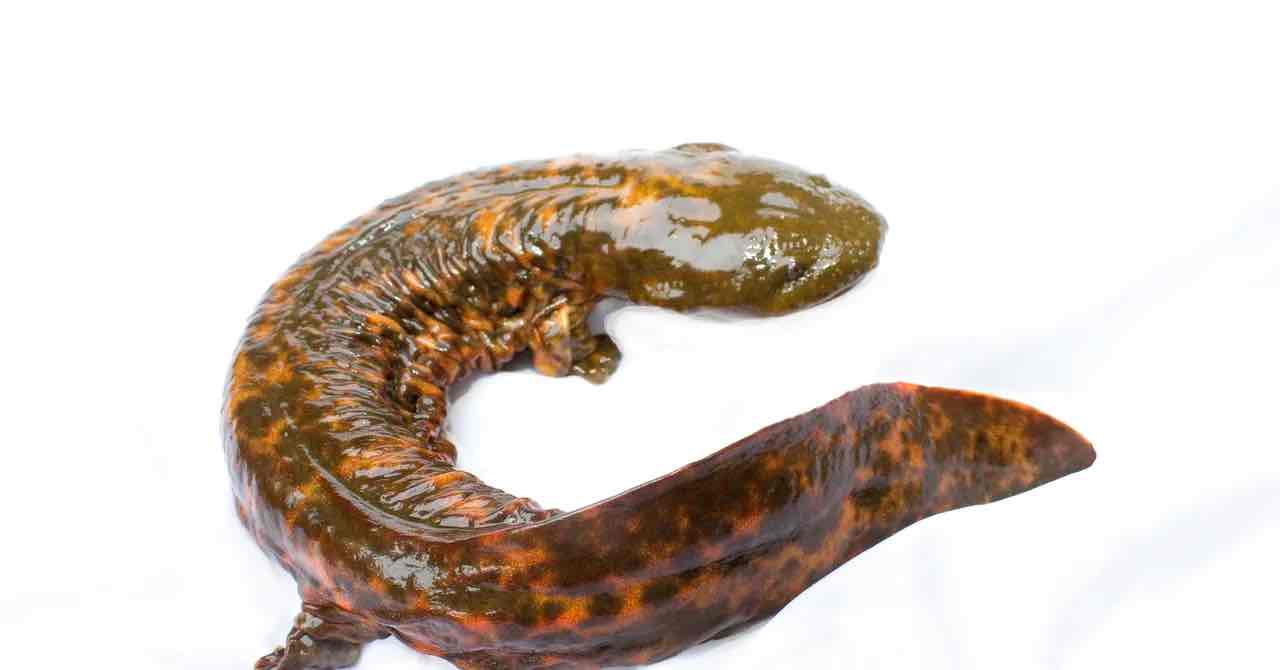
11.5 to 20 inches long. Small eyes in a large flattened head, slimy skin secretions, and loose folds of skin along the sides of the body contribute to the bizarre look of this salamander.   

Coloration: Usually gray, it can vary yellowish-brown to nearly black and can also exhibit scattered and irregular spots that can be dark or light in color.

Cryptobranchus alleganiensus
2
New cards
<p>long slender body, up to 27 inches in length, with a very small dorsal fin that runs from the vent to the tip of the tail.&nbsp; It has only a pair of front legs, each foot has four toes, which are greatly reduced in size.&nbsp; &nbsp;</p><p style="text-align: start">The rear legs are completely missing.&nbsp; The head is somewhat flattened, and there are bushy external gills located on each side of the head.&nbsp;</p><p style="text-align: start">Coloration: varies in color from light grayish green to olive or black; there are also small irregular dots that are visible on lighter-colored individuals.&nbsp;<span>Juveniles are more brightly marked and have a red band across the nose and along the side of the head.</span></p>

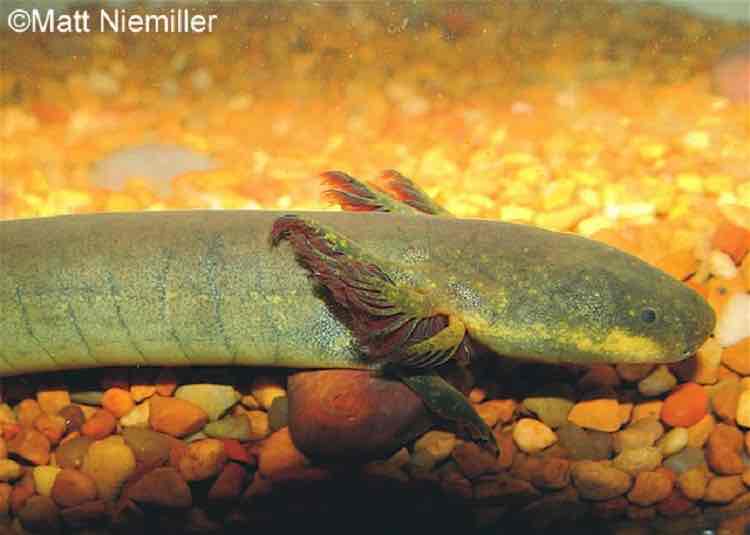
long slender body, up to 27 inches in length, with a very small dorsal fin that runs from the vent to the tip of the tail.  It has only a pair of front legs, each foot has four toes, which are greatly reduced in size.   

The rear legs are completely missing.  The head is somewhat flattened, and there are bushy external gills located on each side of the head. 

Coloration: varies in color from light grayish green to olive or black; there are also small irregular dots that are visible on lighter-colored individuals. Juveniles are more brightly marked and have a red band across the nose and along the side of the head.

Siren intermedia
3
New cards
<p>looks like it just came out of the chrome plating shop with its metallic silvery-white to gray bands on the dorsum of its black body.</p><p style="text-align: start">A medium-sized (3.75 to 4.75 inches), stout-bodied salamander, males, and females can be told apart by the color of their crossbands; males have silvery-white bands, while females have gray bands.</p>

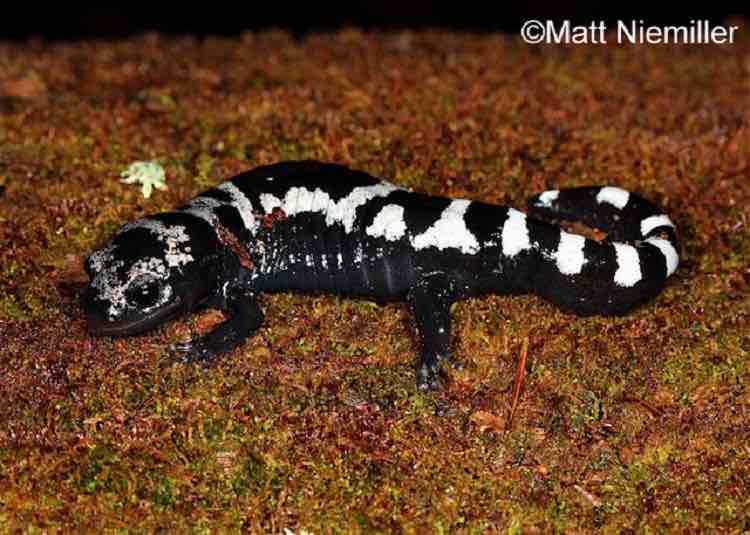
looks like it just came out of the chrome plating shop with its metallic silvery-white to gray bands on the dorsum of its black body.

A medium-sized (3.75 to 4.75 inches), stout-bodied salamander, males, and females can be told apart by the color of their crossbands; males have silvery-white bands, while females have gray bands.

Ambystoma opacum
4
New cards
<p>Typically 7 to 8 ½ inches, this salamander has a large stocky body with stocky limbs and a broadhead.</p><p style="text-align: start">The color and pattern of this species varies widely but consists of yellow, greenish, brown, or bronze spots or striations on a base color of dark brown or gray-black. The belly is olive-yellow and marbled with darker colors.</p>

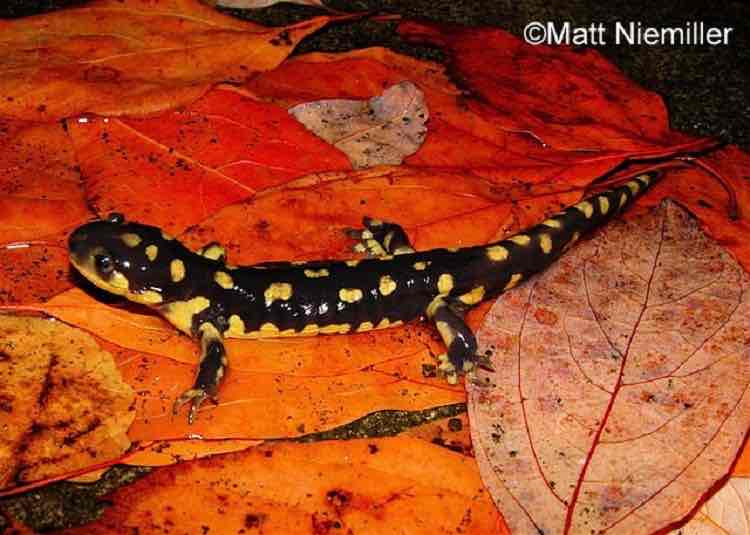
Typically 7 to 8 ½ inches, this salamander has a large stocky body with stocky limbs and a broadhead.

The color and pattern of this species varies widely but consists of yellow, greenish, brown, or bronze spots or striations on a base color of dark brown or gray-black. The belly is olive-yellow and marbled with darker colors.

Ambystoma tigrinum
5
New cards
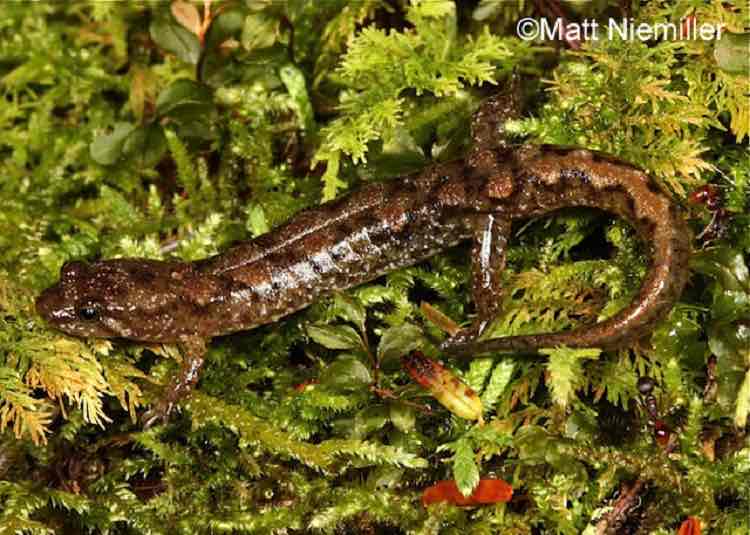
<p>Coloration in this species (2.5 to 4.5 inches in length) is highly variable. They have a round tail and a light line from the eye to the angle of the jaw. Some individuals may have a stripe down the back that can vary in color from yellow to orange, red, or brown. This stripe can be irregular or straight.&nbsp;</p><p style="text-align: start">Other individuals may have spotting or flecking on the back instead of a dorsal stripe and others, especially males, may be dark with little or no patterning. Some individuals may exhibit red legs or cheek patches.</p>

Coloration in this species (2.5 to 4.5 inches in length) is highly variable. They have a round tail and a light line from the eye to the angle of the jaw. Some individuals may have a stripe down the back that can vary in color from yellow to orange, red, or brown. This stripe can be irregular or straight. 

Other individuals may have spotting or flecking on the back instead of a dorsal stripe and others, especially males, may be dark with little or no patterning. Some individuals may exhibit red legs or cheek patches.

Desmognathus abditus
6
New cards
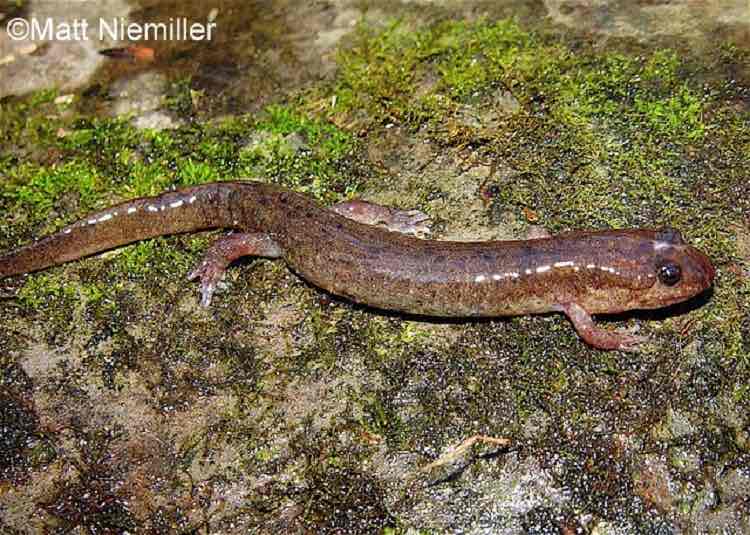
<p>coloration is variable from tan to brown to nearly black.&nbsp; It frequently has 6 to 8 pairs of golden or reddish dorsal spots, which are normally separated. This salamander is medium-sized (2.5-5 inches) and has a moderately keeled tail.</p>

coloration is variable from tan to brown to nearly black.  It frequently has 6 to 8 pairs of golden or reddish dorsal spots, which are normally separated. This salamander is medium-sized (2.5-5 inches) and has a moderately keeled tail.

Desmognathus conanti
7
New cards
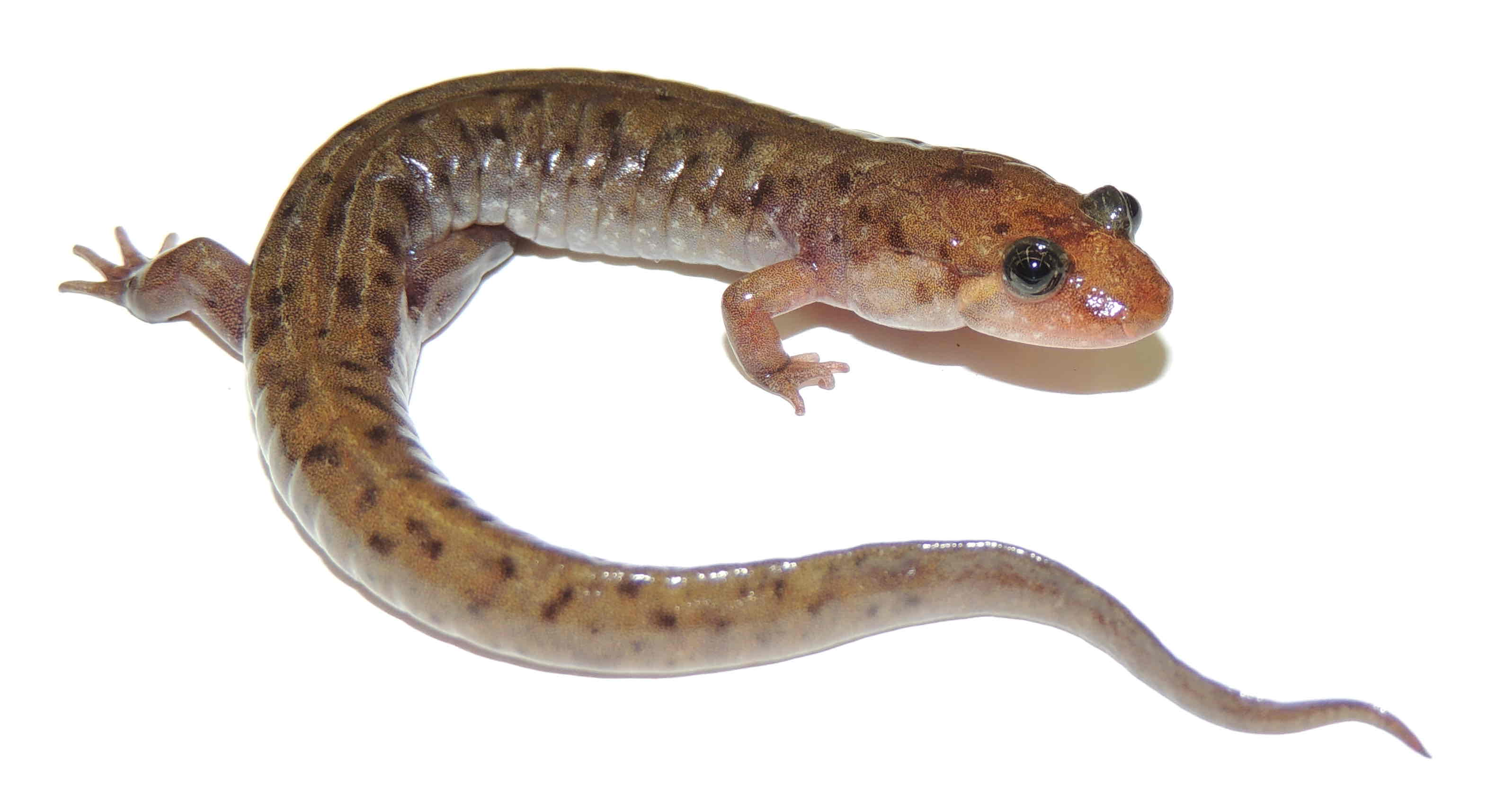
<p>A fairly large species (3.0 to 6.0 inches in length) has light brown to grayish dorsum with black or dark brown reticulated or irregular splotches (also described as "wormy" markings). The belly is very pale, often white, creating a sharp contrast with the back color. The tail is triangular in cross-section towards the end and is moderately keeled.</p>

A fairly large species (3.0 to 6.0 inches in length) has light brown to grayish dorsum with black or dark brown reticulated or irregular splotches (also described as "wormy" markings). The belly is very pale, often white, creating a sharp contrast with the back color. The tail is triangular in cross-section towards the end and is moderately keeled.

Desmognathus monticola
8
New cards
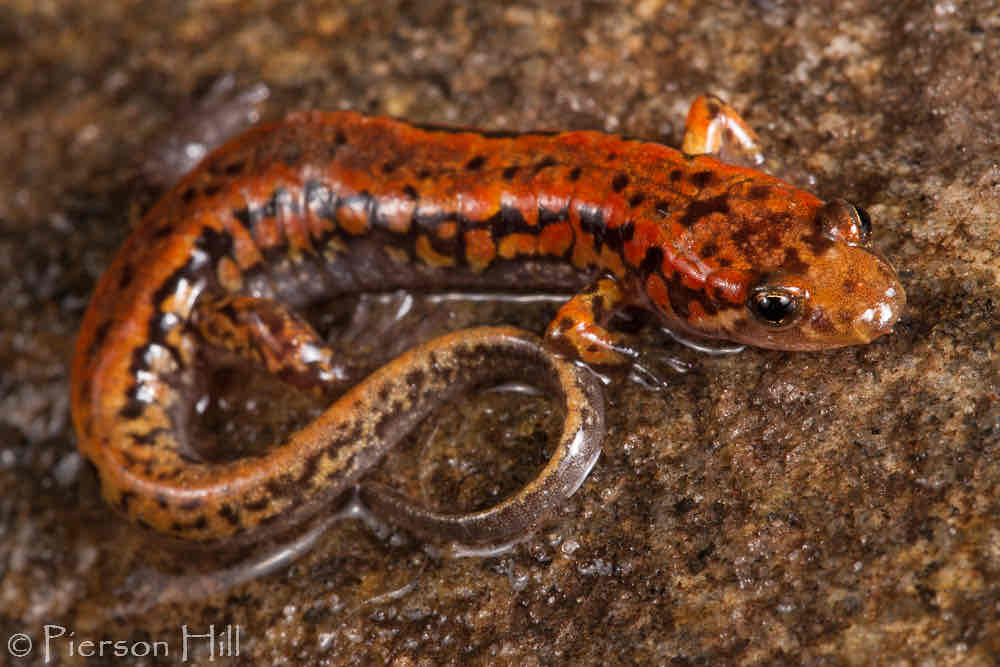
<p>Coloration in this species (2.5 to 4.5 inches in length) is highly variable.&nbsp; They have a round tail and a light line from the eye to the angle of the jaw. Some individuals may have a stripe down the back that can vary in color from yellow to orange, red, or brown.</p><p style="text-align: start">This stripe can be irregular or straight. Other individuals may have spotting or flecking on the back instead of a dorsal stripe and others, especially males, maybe dark with little or no patterning. Some individuals may exhibit red legs or cheek patches.</p>

Coloration in this species (2.5 to 4.5 inches in length) is highly variable.  They have a round tail and a light line from the eye to the angle of the jaw. Some individuals may have a stripe down the back that can vary in color from yellow to orange, red, or brown.

This stripe can be irregular or straight. Other individuals may have spotting or flecking on the back instead of a dorsal stripe and others, especially males, maybe dark with little or no patterning. Some individuals may exhibit red legs or cheek patches.

Desmognathus orestes
9
New cards
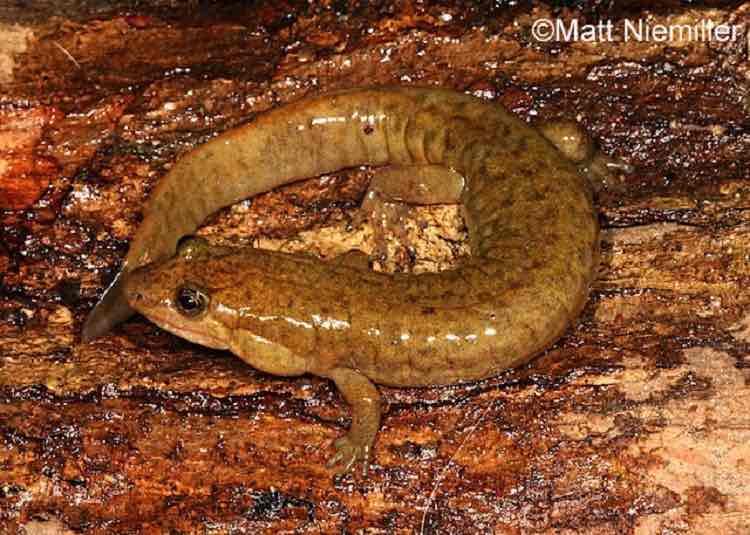
<p>This medium-sized, chubby salamander (3.0 to 5.0 inches in length) has a light brown dorsum patterned with small dark brown spots or streaks. Tips of toes are usually very dark. A light line usually extends from just behind the eye to the angle of the jaw. A line of weak, whitish dots occurs between legs on side of the body. The tail is flattened at the base and is strongly keeled.</p>

This medium-sized, chubby salamander (3.0 to 5.0 inches in length) has a light brown dorsum patterned with small dark brown spots or streaks. Tips of toes are usually very dark. A light line usually extends from just behind the eye to the angle of the jaw. A line of weak, whitish dots occurs between legs on side of the body. The tail is flattened at the base and is strongly keeled.

Desmognathus welteri
10
New cards
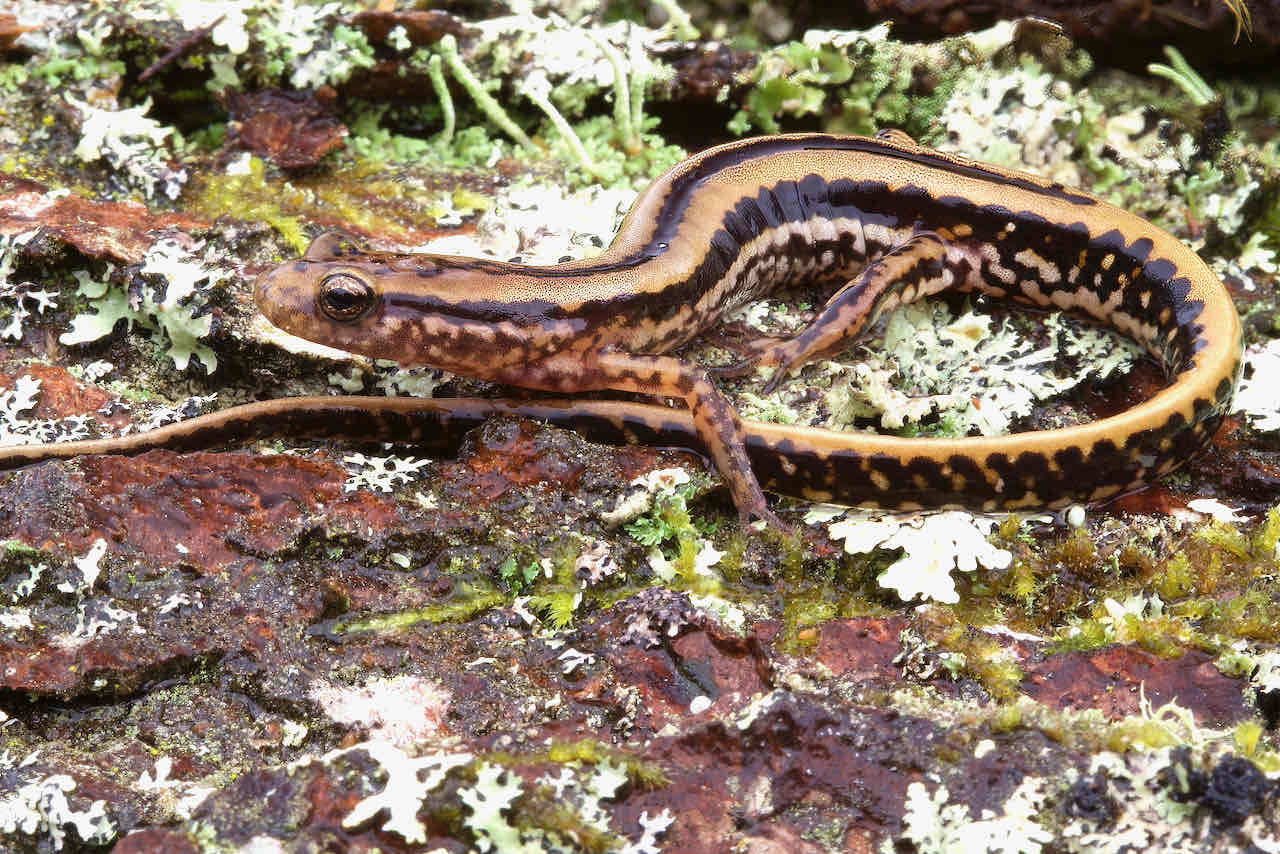
<p>A long, slender species (4.0 to 7.0 inches in length) having a&nbsp;yellowish to orangish dorsum with a black stripe along the spine and a black stripe along either side of the body.&nbsp;</p><p style="text-align: start">The tail is very long and the sides of the tail have vertical, black, parallel bars appearing as a wavy stripe. The belly is a mixture of greenish-gray and yellow.</p>

A long, slender species (4.0 to 7.0 inches in length) having a yellowish to orangish dorsum with a black stripe along the spine and a black stripe along either side of the body. 

The tail is very long and the sides of the tail have vertical, black, parallel bars appearing as a wavy stripe. The belly is a mixture of greenish-gray and yellow.

Eurycea guttolineata
11
New cards
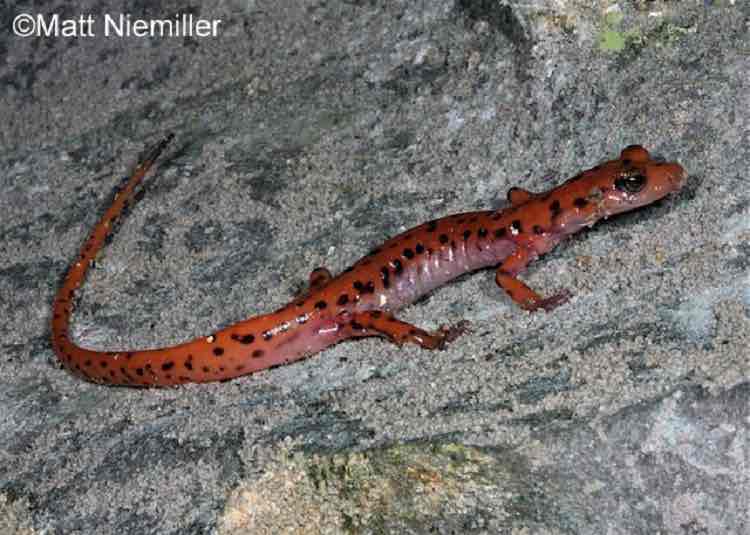
<p>An long (4.0 to 6.0 inches in length) bright orange to reddish salamander with black spots scattered over body, legs, and tail. The belly is yellow and unmarked.</p>

An long (4.0 to 6.0 inches in length) bright orange to reddish salamander with black spots scattered over body, legs, and tail. The belly is yellow and unmarked.

Eurycea lucifuga
12
New cards
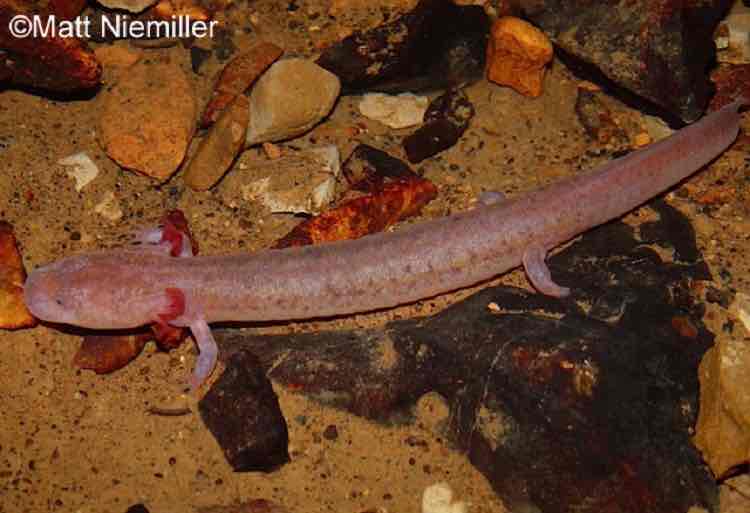
<p>A&nbsp;large salamander (4.0 to 7.5 inches in length) with small eyes, lack of eyelids, wide head, spatulate snout, and bright red feathery, external gills. Overall coloration is&nbsp;salmon to pale pink with a pale belly. This salamander is dark and heavily spotted and is pale flesh-pink in color.</p>

A large salamander (4.0 to 7.5 inches in length) with small eyes, lack of eyelids, wide head, spatulate snout, and bright red feathery, external gills. Overall coloration is salmon to pale pink with a pale belly. This salamander is dark and heavily spotted and is pale flesh-pink in color.

Gyrinophilus palleucus
13
New cards
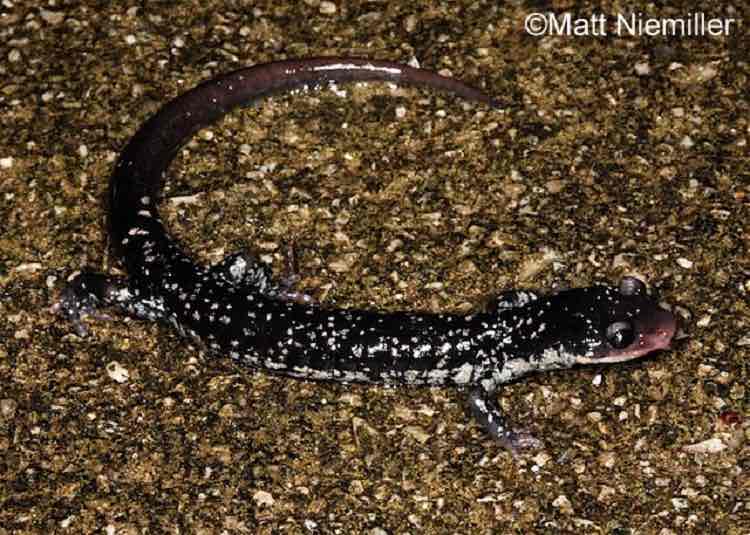
<p>A large, black salamander (4.0 to 6.0 inches in length) with many, brass-colored spots on the dorsum. Sides have white or yellowish spots. The belly is gray with a lighter chin. The tail is round in cross-section.</p>

A large, black salamander (4.0 to 6.0 inches in length) with many, brass-colored spots on the dorsum. Sides have white or yellowish spots. The belly is gray with a lighter chin. The tail is round in cross-section.

Plethodon aureolus
14
New cards
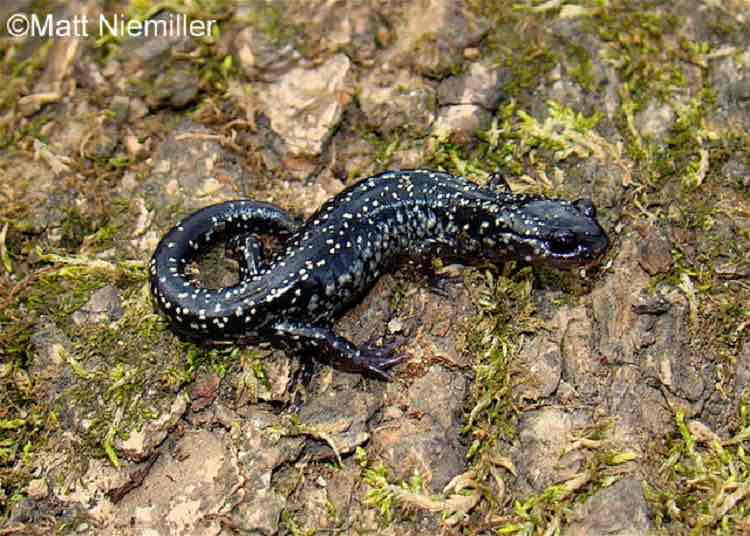
<p>A large salamander (4.5 to 8.0 inches in length) has black dorsum with small, white, or silver spots scattered over the body. The belly is lighter than the back and the tail is round.</p>

A large salamander (4.5 to 8.0 inches in length) has black dorsum with small, white, or silver spots scattered over the body. The belly is lighter than the back and the tail is round.

Plethodon glutinosus
15
New cards
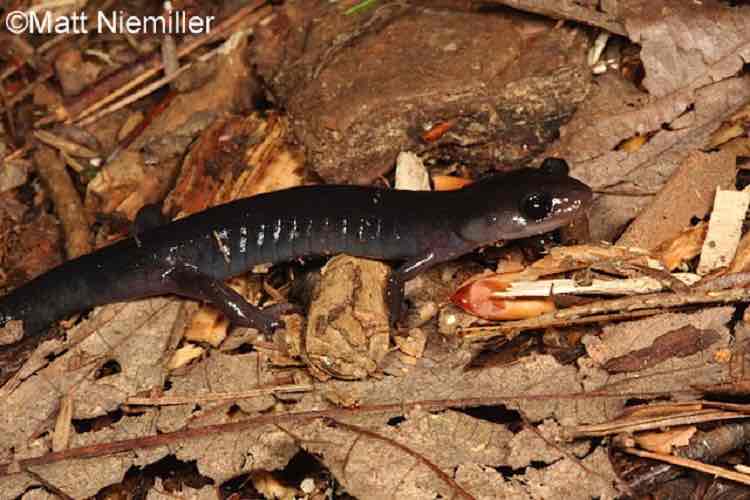
<p>A long, (3.5 to 5.0 inches in length)&nbsp;slate gray to bluish-black&nbsp;salamander with no distinguishing colors or markings. The belly is gray to black.</p>

A long, (3.5 to 5.0 inches in length) slate gray to bluish-black salamander with no distinguishing colors or markings. The belly is gray to black.

Plethodon montanus
16
New cards
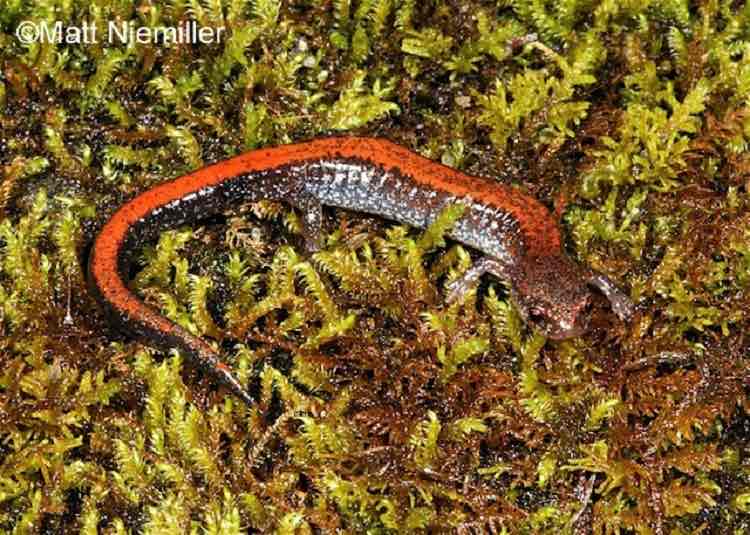
<p>A small, slender salamander (2.5 to 4.0 inches in length) with two color morphs, striped and lead-backed.&nbsp;The striped morph has a red to orangish-red broad stripe from the head to the tail, while the body color is brown to dark brown.</p><p style="text-align: start">Stripes in some specimens may have a serrated or saw-toothed edge. The lead-backed morph has no stripe on the back and is uniformly dark gray in color.&nbsp;Both the morphs have a black and white patterned belly producing a “salt-and-pepper” effect.</p>

A small, slender salamander (2.5 to 4.0 inches in length) with two color morphs, striped and lead-backed. The striped morph has a red to orangish-red broad stripe from the head to the tail, while the body color is brown to dark brown.

Stripes in some specimens may have a serrated or saw-toothed edge. The lead-backed morph has no stripe on the back and is uniformly dark gray in color. Both the morphs have a black and white patterned belly producing a “salt-and-pepper” effect.

Plethodon serratus
17
New cards
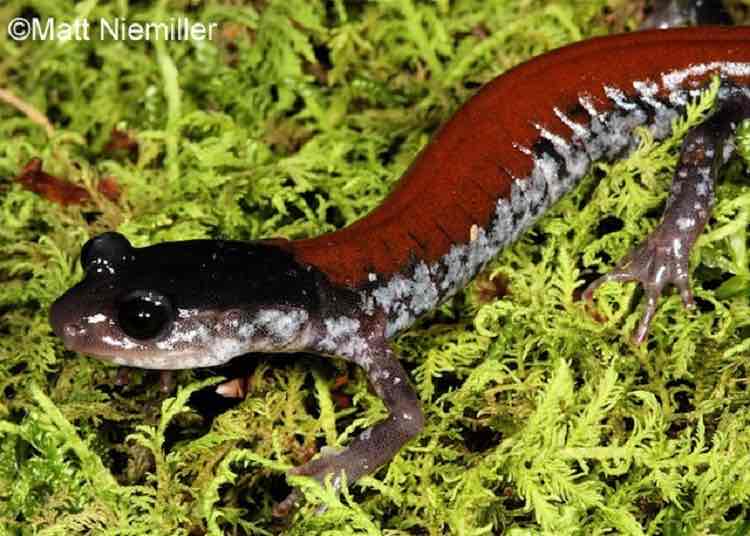
<p>A large (4.5 to 7.0 inches in length) and remarkably handsome salamander with a wide red or chestnut stripe, extending from the neck to the base of the tail, on top of a black dorsum. The sides of the body, head, and tail have white to light gray blotches. The belly is dark gray with scattered light spots.</p>

A large (4.5 to 7.0 inches in length) and remarkably handsome salamander with a wide red or chestnut stripe, extending from the neck to the base of the tail, on top of a black dorsum. The sides of the body, head, and tail have white to light gray blotches. The belly is dark gray with scattered light spots.

Plethodon yonahlossee
18
New cards
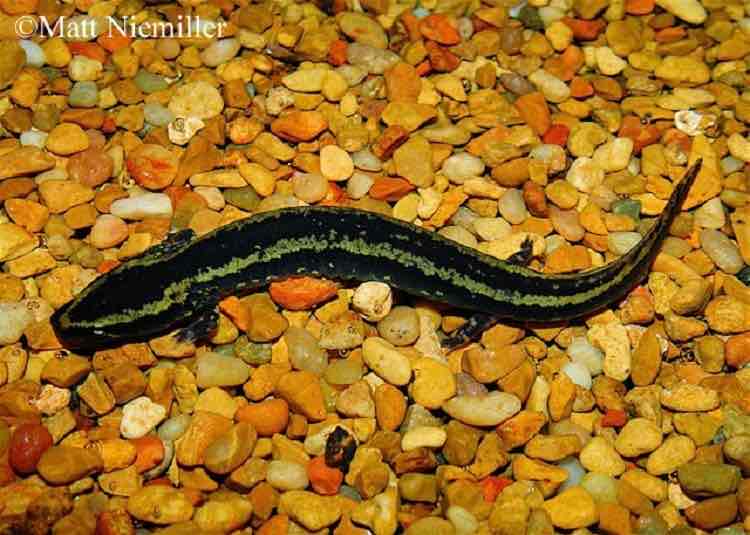
<p>Generally 8 to 13 inches long.&nbsp; &nbsp;They are permanent larvae, meaning they retain their dark red, bushy gills throughout their life.&nbsp; &nbsp;A dark line extends through the eye to the gills and the brown, rusty brown, gray or black body has large dark bluish-black to black splotches.&nbsp; &nbsp;The underbelly is whitish to gray and may also be spotted.&nbsp; &nbsp;It also has a very snubbed nose.</p><p><br></p>

Generally 8 to 13 inches long.   They are permanent larvae, meaning they retain their dark red, bushy gills throughout their life.   A dark line extends through the eye to the gills and the brown, rusty brown, gray or black body has large dark bluish-black to black splotches.   The underbelly is whitish to gray and may also be spotted.   It also has a very snubbed nose.


Necturus maculosus
19
New cards
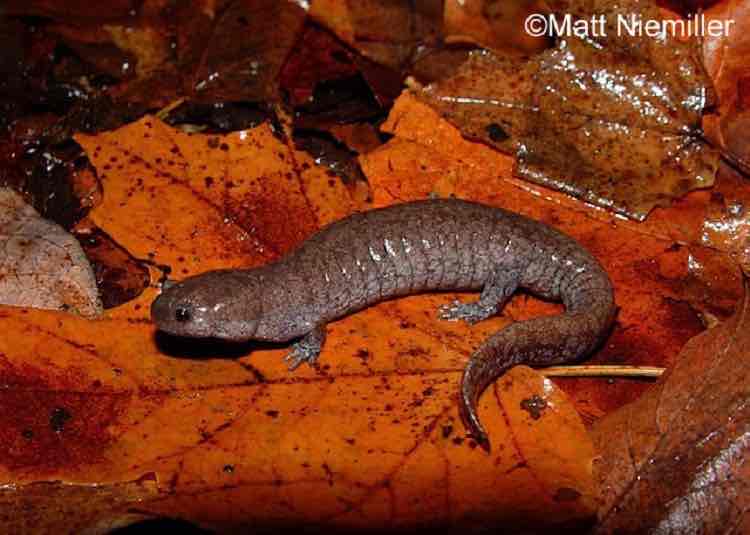
<p>usually brownish-gray to grayish-black with numerous small, light gray speckles that sometimes merge on the sides to form a lichen-like pattern. A medium-sized salamander at 4 to 5.5 inches, has a stocky body and a small head. </p>

usually brownish-gray to grayish-black with numerous small, light gray speckles that sometimes merge on the sides to form a lichen-like pattern. A medium-sized salamander at 4 to 5.5 inches, has a stocky body and a small head.

Ambystoma barbouri
20
New cards
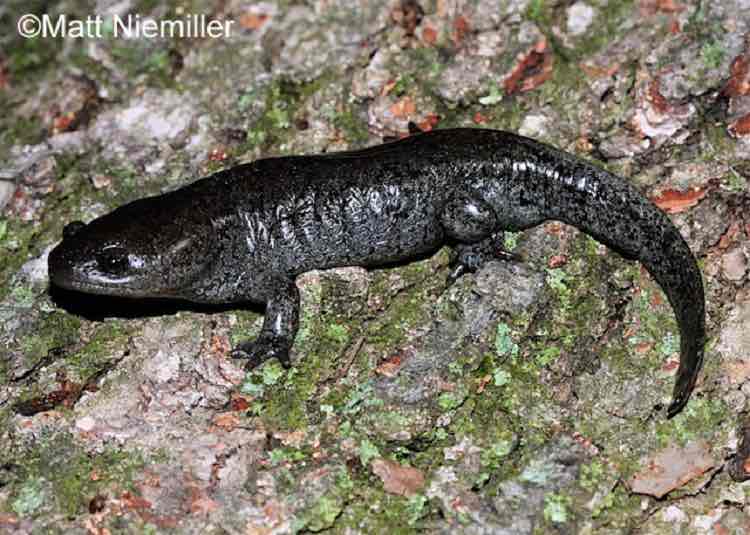
<p>short, stocky body (3 to 4 inches long), rounded head, short tail, and short, stocky legs. They may vary in color from light gray to light brown, dark gray, or black; light gray specks upon the back and sides may be unnoticeable in many specimens.</p>

short, stocky body (3 to 4 inches long), rounded head, short tail, and short, stocky legs. They may vary in color from light gray to light brown, dark gray, or black; light gray specks upon the back and sides may be unnoticeable in many specimens.

Ambystoma talpoideum
21
New cards
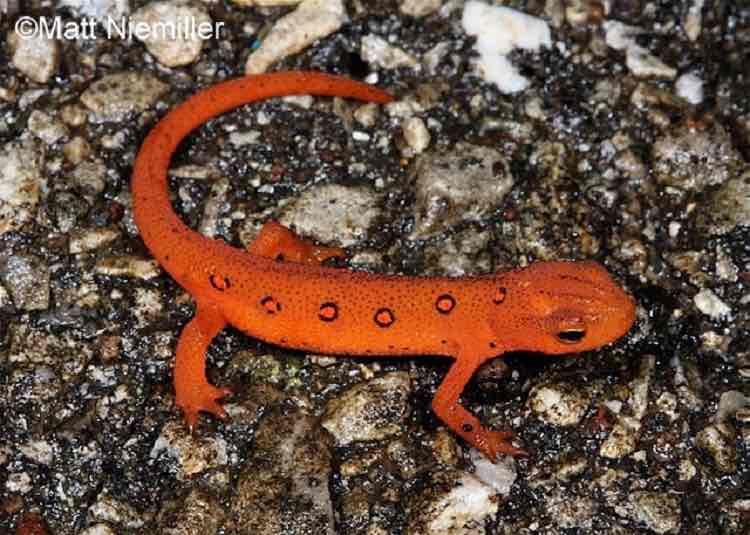
<p>This salamander’s body is blaring orange, bright to dull red or brownish with lighter spots encircled by black. It has small black specks scattered along the sides and back, and dry, granular skin. In the adult form, it is olive green above with regularly spaced orange spots encircled by black on the back and scattered small black specks along the back and sides.</p>

This salamander’s body is blaring orange, bright to dull red or brownish with lighter spots encircled by black. It has small black specks scattered along the sides and back, and dry, granular skin. In the adult form, it is olive green above with regularly spaced orange spots encircled by black on the back and scattered small black specks along the back and sides.

Notophthalmus viridescens
22
New cards
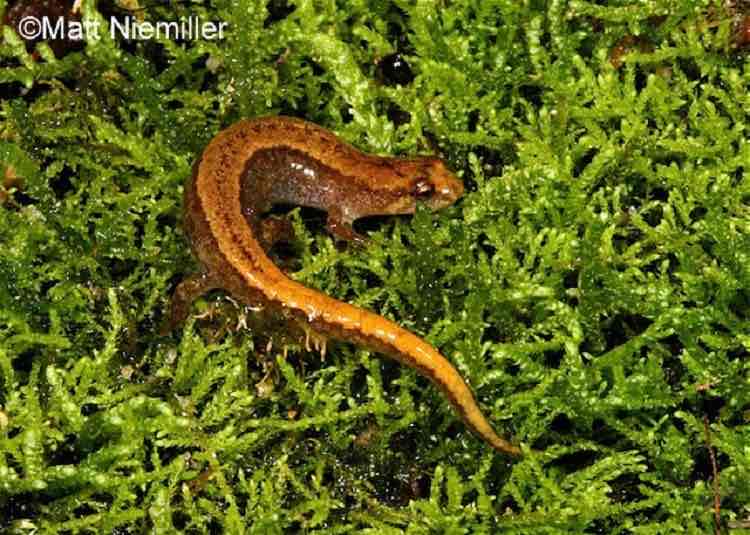
<p>This tiny (1.75 to 2.25 inches long) species has a yellowish to reddish-brown wavy, or sometimes straight, stripe going down the back. They often have a dark "Y" behind the head and extending onto the midline of the back either in a line or series of dots; they may also have a light circular patch on the top of each thigh.</p>

This tiny (1.75 to 2.25 inches long) species has a yellowish to reddish-brown wavy, or sometimes straight, stripe going down the back. They often have a dark "Y" behind the head and extending onto the midline of the back either in a line or series of dots; they may also have a light circular patch on the top of each thigh.

Desmognathus aeneus
23
New cards
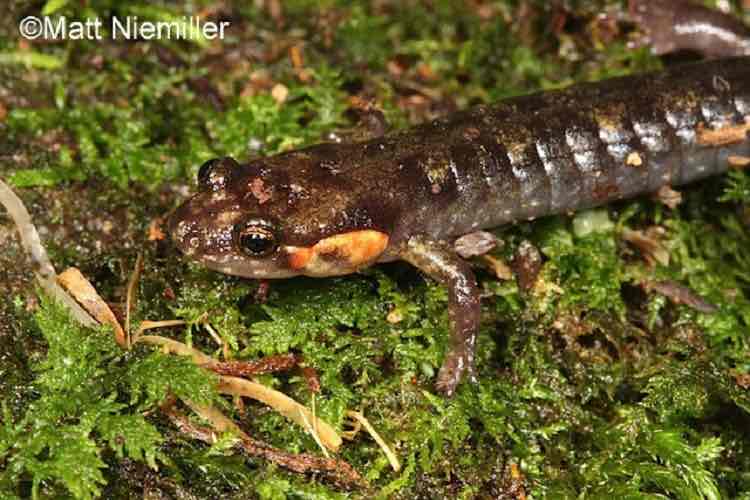
<p>A medium-sized species (2.5 to 4.0 inches in length) with a light line extending from the eye to the angle of the jaw. Adults are brown to nearly black with many individuals having yellow, orange, or red cheek patches. The belly is usually gray. Typically has wavy dorsolateral bands that may be broken, and that extend onto the back to enclose irregularly shaped light spots. Hind limbs are noticeably larger than forelimbs and the tail is round.&nbsp;</p>

A medium-sized species (2.5 to 4.0 inches in length) with a light line extending from the eye to the angle of the jaw. Adults are brown to nearly black with many individuals having yellow, orange, or red cheek patches. The belly is usually gray. Typically has wavy dorsolateral bands that may be broken, and that extend onto the back to enclose irregularly shaped light spots. Hind limbs are noticeably larger than forelimbs and the tail is round. 

Desmognathus imitator
24
New cards
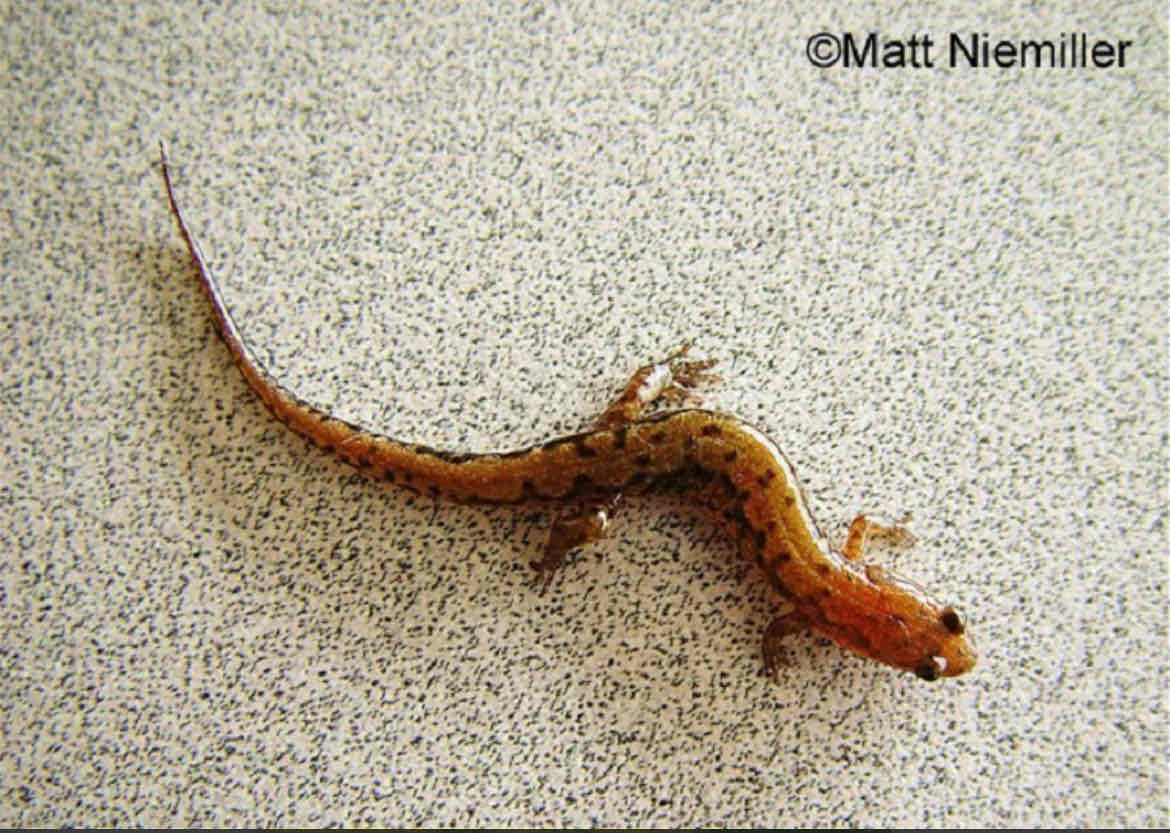
<p>Coloration in this species (2.5 to 4.5 inches in length) is highly variable. They have a round tail and a light line from the eye to the angle of the jaw. Some individuals may have a stripe down the back that can vary in color from yellow to orange, red, or brown. This stripe can be irregular or straight. Other individuals may have spotting or flecking on the back instead of a dorsal stripe and others, especially males, maybe dark with little or no patterning. Some individuals may exhibit red legs or cheek patches.</p>

Coloration in this species (2.5 to 4.5 inches in length) is highly variable. They have a round tail and a light line from the eye to the angle of the jaw. Some individuals may have a stripe down the back that can vary in color from yellow to orange, red, or brown. This stripe can be irregular or straight. Other individuals may have spotting or flecking on the back instead of a dorsal stripe and others, especially males, maybe dark with little or no patterning. Some individuals may exhibit red legs or cheek patches.

Desmognathus ochrophaeus
25
New cards
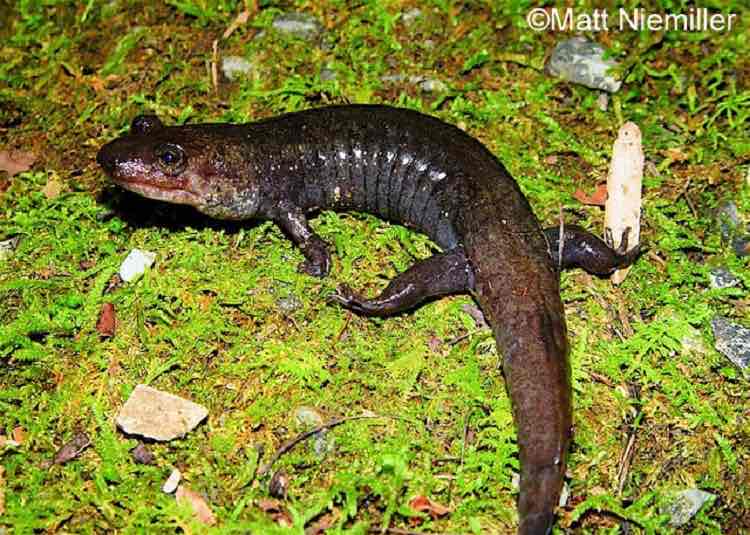
<p>A large, robust salamander (3.5 to 8.0 inches in length) having mottled dark brown to black dorsum with lighter rusty brown blotches. Two rows of small, whitish dots occur along the length of each side of the body. A light line occurs from the eye to the corner of the jaw. Bellies are jet black in adults. Tails are triangular in cross-section and are strongly keeled.</p>

A large, robust salamander (3.5 to 8.0 inches in length) having mottled dark brown to black dorsum with lighter rusty brown blotches. Two rows of small, whitish dots occur along the length of each side of the body. A light line occurs from the eye to the corner of the jaw. Bellies are jet black in adults. Tails are triangular in cross-section and are strongly keeled.

Desmognathus quadramaculatus
26
New cards
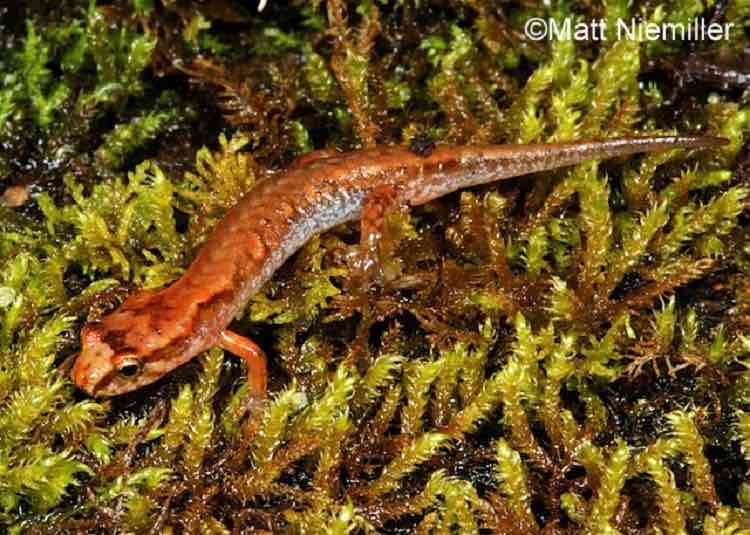
<p>A small species (1.5 to 2.0 inches in length) with a dark herringbone pattern on the back over a reddish-brown to coppery-colored stripe. The sides of the body are silver-colored and the eyelids are bronze. The belly is flesh-colored and the tail is short and round in cross-section.</p>

A small species (1.5 to 2.0 inches in length) with a dark herringbone pattern on the back over a reddish-brown to coppery-colored stripe. The sides of the body are silver-colored and the eyelids are bronze. The belly is flesh-colored and the tail is short and round in cross-section.

Desmognathus wrighti
27
New cards
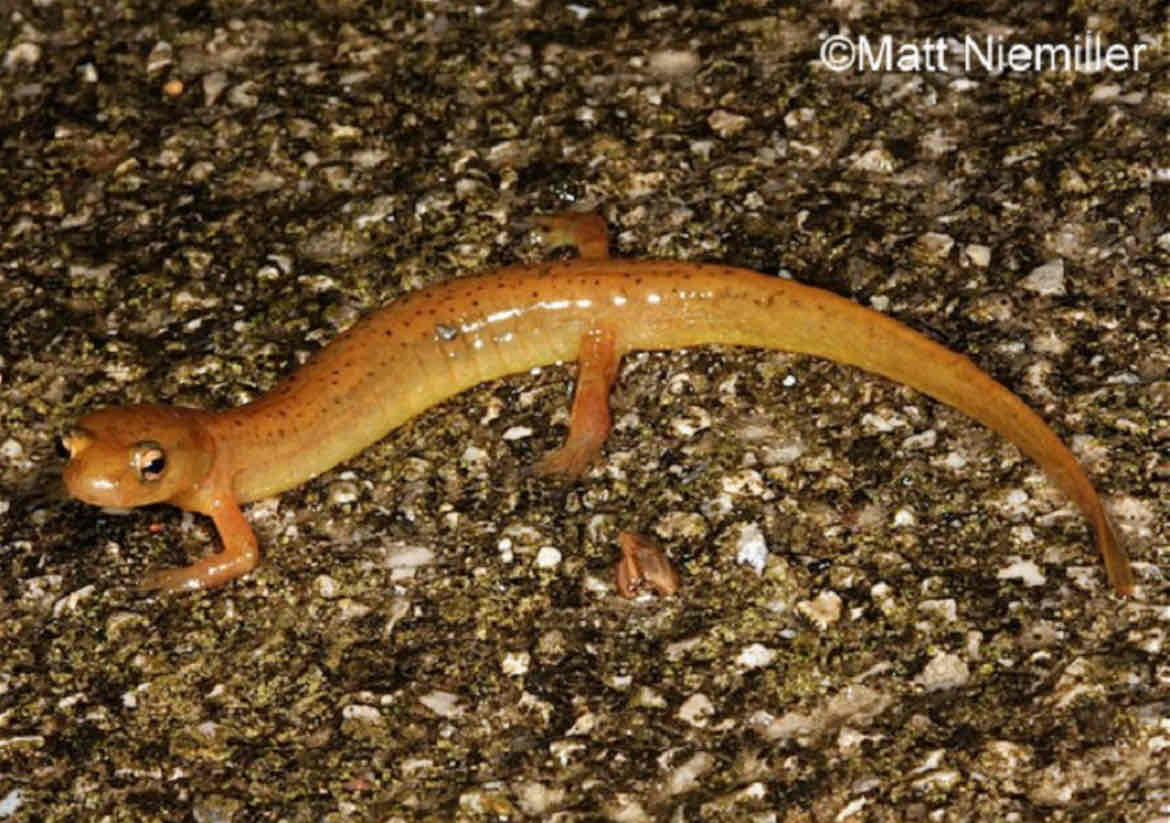
<p>A slender, small salamander (3.0 to 4.0 inches in length) with a yellowish-orange body covered with black flecks along the sides of the body and tail forming a vague wavy line. The tail is relatively short and limbs are long. The belly is light-colored.</p>

A slender, small salamander (3.0 to 4.0 inches in length) with a yellowish-orange body covered with black flecks along the sides of the body and tail forming a vague wavy line. The tail is relatively short and limbs are long. The belly is light-colored.

Eurycea junaluska
28
New cards
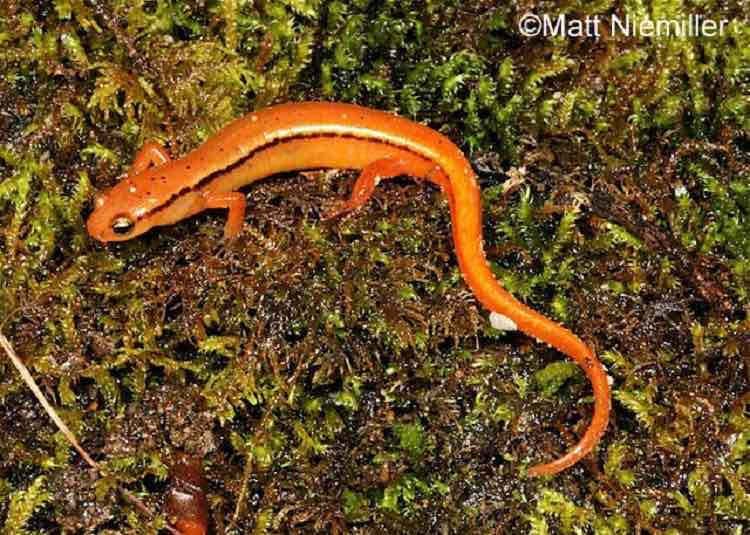
<p>A small, slender salamander (2.5 to 4.0 inches in length) having yellowish, or sometimes greenish or orangish, dorsum with&nbsp;two broad, black lines extending from the eye along the top of either side to the middle of the tail where line breaks into dots. Many individuals also have black spots along the back between the two lines. The belly is whitish to yellow.</p>

A small, slender salamander (2.5 to 4.0 inches in length) having yellowish, or sometimes greenish or orangish, dorsum with two broad, black lines extending from the eye along the top of either side to the middle of the tail where line breaks into dots. Many individuals also have black spots along the back between the two lines. The belly is whitish to yellow.

Eurycea wilderae
29
New cards
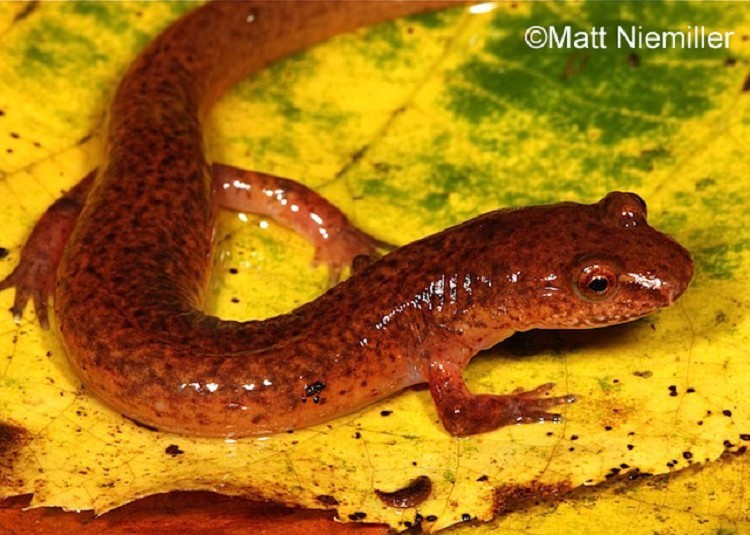
<p><span>A large (4.3 to 8.2 inches in length), a stout-bodied salamander with a salmon to an orangish-pink body covered in small black spots or flecks. A distinct ridge usually bordered with a light line, and sometimes shadowed by a dark line beneath it, extends from the eye to the nostril. The tail is moderately keeled.</span></p>

A large (4.3 to 8.2 inches in length), a stout-bodied salamander with a salmon to an orangish-pink body covered in small black spots or flecks. A distinct ridge usually bordered with a light line, and sometimes shadowed by a dark line beneath it, extends from the eye to the nostril. The tail is moderately keeled.

Gyrinophilus porphyriticus
30
New cards
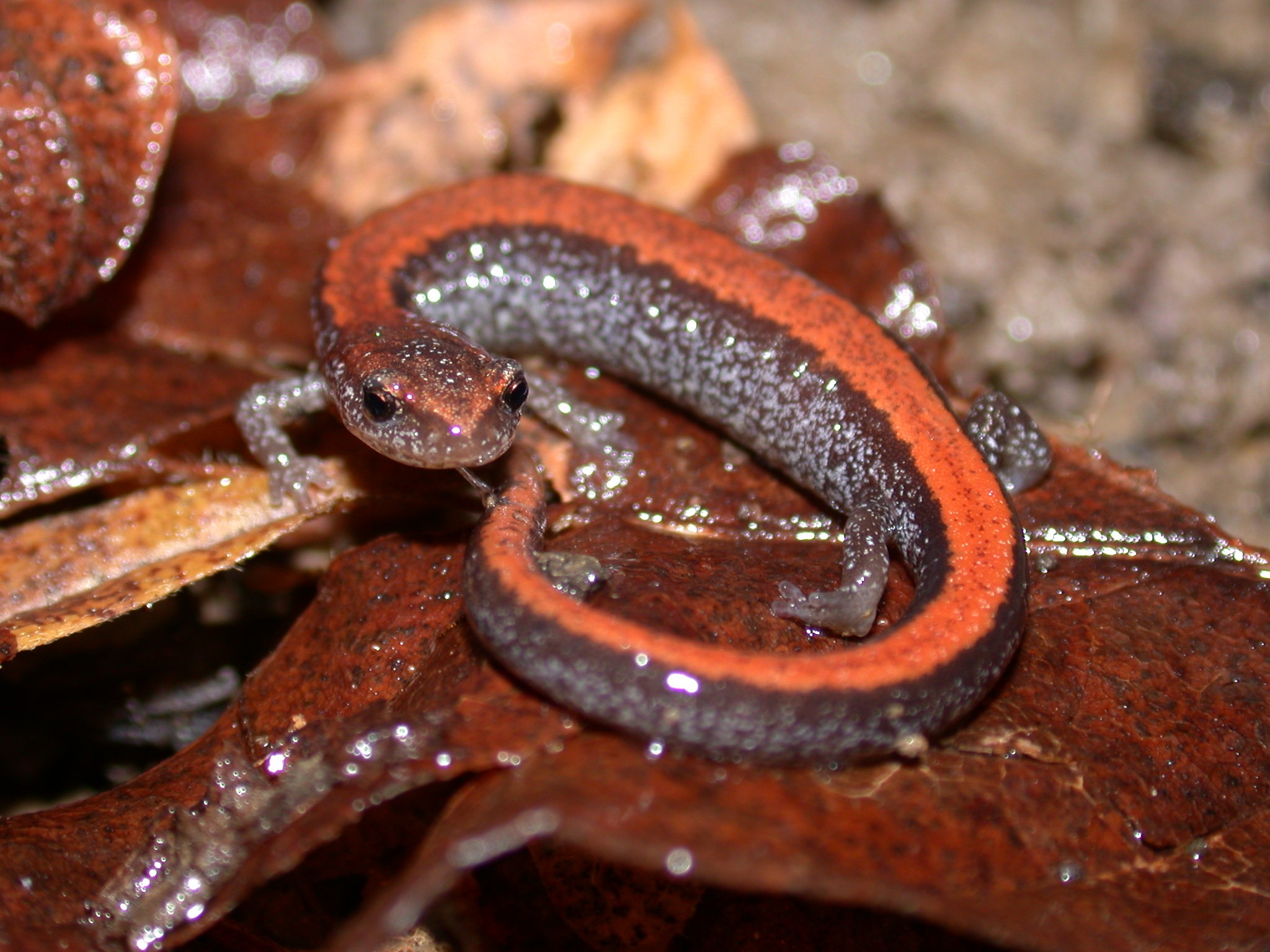
<p><span>The red-backed salamander has two different color phases. The "redback" phase consists of a gray or black body with a red or orange stripe down the back, extending from the neck onto the tail. The "leadback" phase lacks the red stripe, with a purely black or grey back instead. Its belly is a mottled white and gray in both phases, creating a salt and pepper pattern. </span></p>

The red-backed salamander has two different color phases. The "redback" phase consists of a gray or black body with a red or orange stripe down the back, extending from the neck onto the tail. The "leadback" phase lacks the red stripe, with a purely black or grey back instead. Its belly is a mottled white and gray in both phases, creating a salt and pepper pattern.

Plethodon cinereus
31
New cards
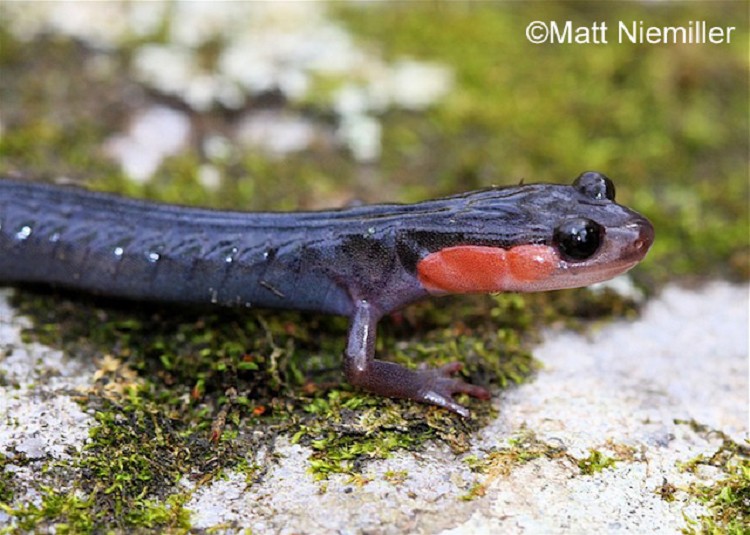
<p><span>A long, (3.5 to 5.0 inches in length)&nbsp;slate gray to bluish-black&nbsp;salamander with reddish cheek patches. The belly is gray to black. No other colors or patterns occur on the body.</span></p>

A long, (3.5 to 5.0 inches in length) slate gray to bluish-black salamander with reddish cheek patches. The belly is gray to black. No other colors or patterns occur on the body.

Plethodon Jordani
32
New cards
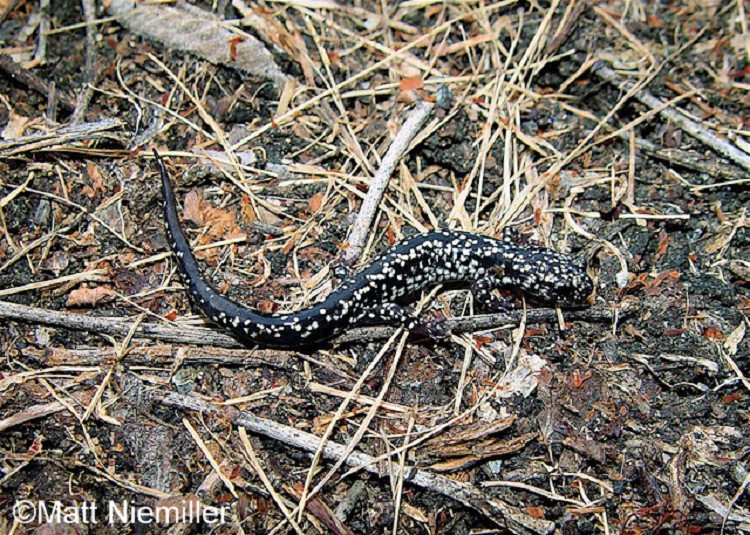
<p><span>A large salamander (4.5 to 8.0 inches in length) has black dorsum with small, white, or silver spots scattered over the body. The belly is lighter than the back and the tail is round.</span></p>

A large salamander (4.5 to 8.0 inches in length) has black dorsum with small, white, or silver spots scattered over the body. The belly is lighter than the back and the tail is round.

Plethodon mississippi
33
New cards
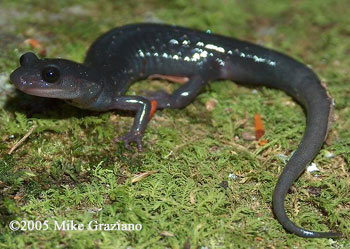
<p><span>A large, black salamander (4.75 to 6.75 inches in length)&nbsp;with scattered small white spots on the dorsum. White spots on the sides are larger than on the back. Small red spots may occur on the legs. Chin is lighter than the slate gray belly.</span></p>

A large, black salamander (4.75 to 6.75 inches in length) with scattered small white spots on the dorsum. White spots on the sides are larger than on the back. Small red spots may occur on the legs. Chin is lighter than the slate gray belly.

Plethodon teyahalee
34
New cards
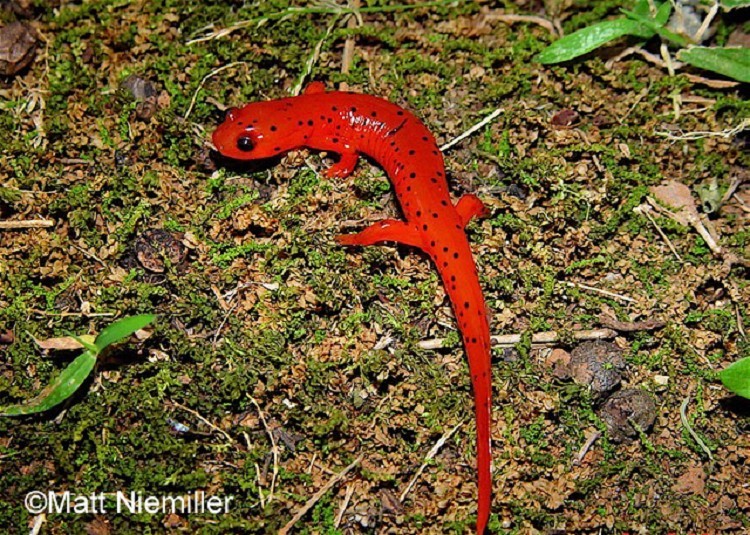
<p>A  large (3.0 to 7.0 inches in length), stout-bodied species with an orange-brown to reddish-brown dorsum covered with round, well-separated black spots on the back and sides. Young specimens are brightly colored, whereas older ones can develop into chocolate colors. The belly is a distinctly lighter orangish color, sometimes with dark flecking. Eyes are black or dark brown.</p>

A large (3.0 to 7.0 inches in length), stout-bodied species with an orange-brown to reddish-brown dorsum covered with round, well-separated black spots on the back and sides. Young specimens are brightly colored, whereas older ones can develop into chocolate colors. The belly is a distinctly lighter orangish color, sometimes with dark flecking. Eyes are black or dark brown.

Pseudotriton montanus
35
New cards
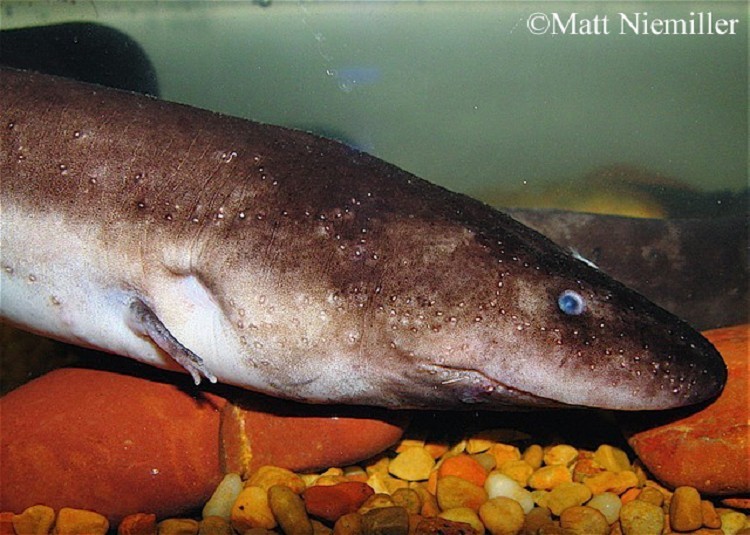
<p><span>Adults are bi-colored, with a black, slate, or brownish back and a lighter gray belly. The four limbs are extremely thin and elongated and each foot has three toes.&nbsp; &nbsp;The tail is laterally compressed to aid in swimming and there are no external gills.</span></p>

Adults are bi-colored, with a black, slate, or brownish back and a lighter gray belly. The four limbs are extremely thin and elongated and each foot has three toes.   The tail is laterally compressed to aid in swimming and there are no external gills.

Amphiuma tridactylum
36
New cards
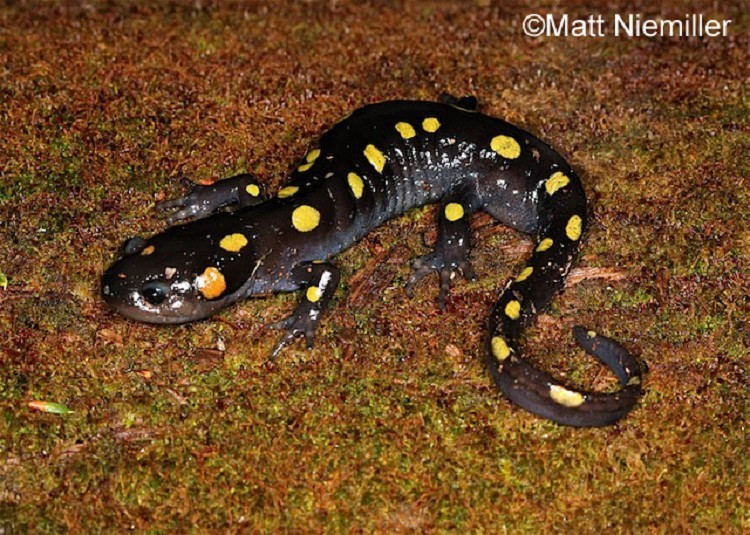
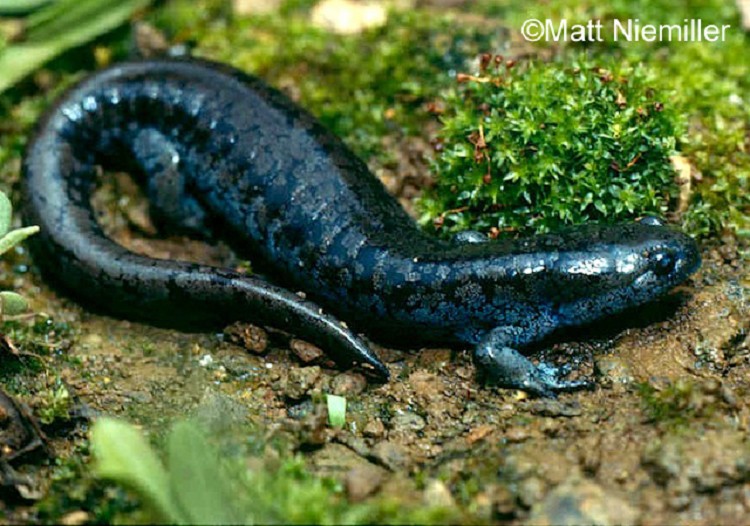
<p><span>This large (as long as 7.75 inches) attractive salamander has a dark purplish-black, steel gray, or black body. There are two irregular rows of bright yellow to yellowish-orange spots starting on the head and extending down the back to the tip of the tail.</span></p>

This large (as long as 7.75 inches) attractive salamander has a dark purplish-black, steel gray, or black body. There are two irregular rows of bright yellow to yellowish-orange spots starting on the head and extending down the back to the tip of the tail.

Ambystoma maculatum
37
New cards
<p>Brownish-gray to grayish-black with many small, light gray specks that sometimes merge on the sides to form a lichen-like pattern which is extremely variable in intensity. It is medium-sized (4-5 ½ inches long) with a stocky body and a small head.</p>

Brownish-gray to grayish-black with many small, light gray specks that sometimes merge on the sides to form a lichen-like pattern which is extremely variable in intensity. It is medium-sized (4-5 ½ inches long) with a stocky body and a small head.

Ambystoma texanum
38
New cards
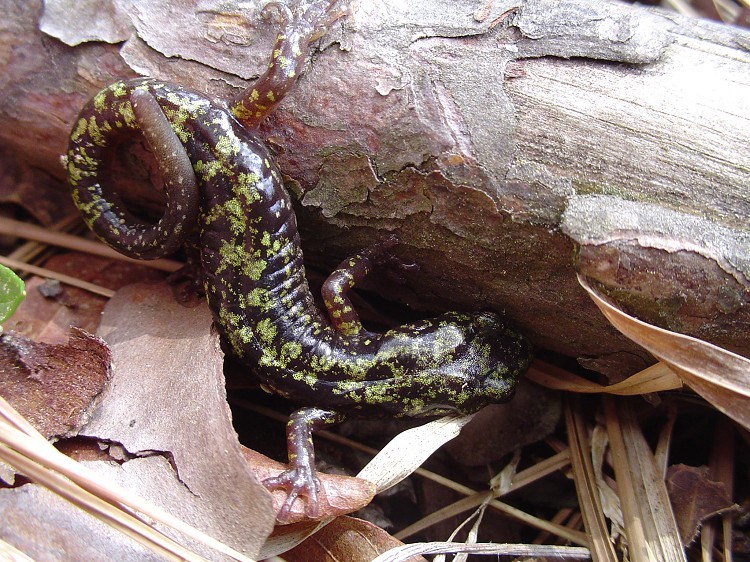
<p>This salamander has a black base color with a yellowish-green, lichen-like pattern on its back. It has a flattened body (3.25 to 5 inches), long legs, and square toe tips, all adaptations for living on cliffs.</p>

This salamander has a black base color with a yellowish-green, lichen-like pattern on its back. It has a flattened body (3.25 to 5 inches), long legs, and square toe tips, all adaptations for living on cliffs.

Aneides aeneus
39
New cards
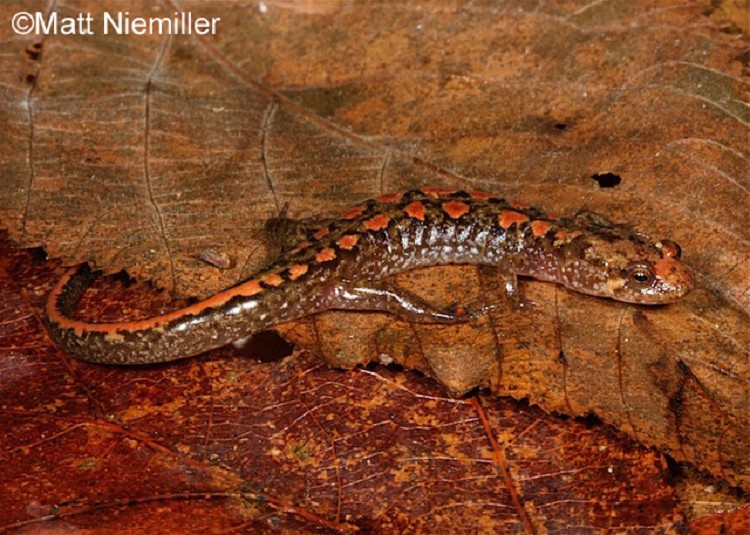
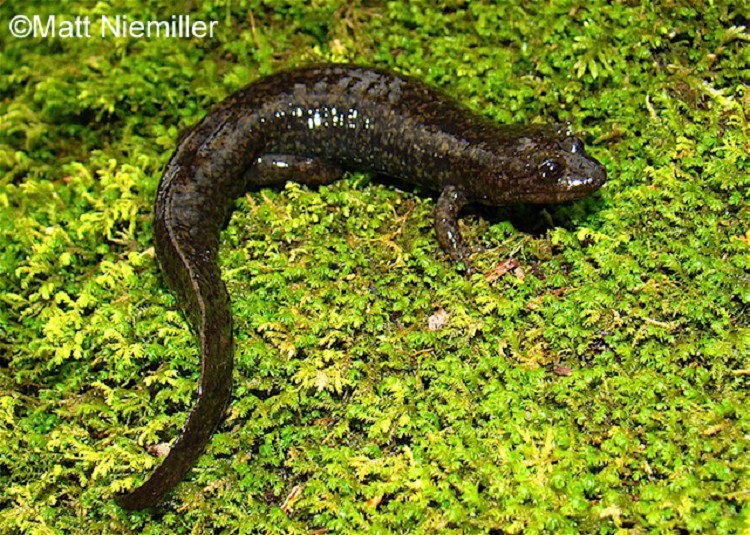
<p>Coloration in this species (2.5 to 4.5 inches in length) is highly variable. They have a round tail and a light line from the eye to the angle of the jaw. Some individuals may have a stripe down the back that can vary in color from yellow to orange, red, or brown. This stripe can be irregular or straight.</p>

Coloration in this species (2.5 to 4.5 inches in length) is highly variable. They have a round tail and a light line from the eye to the angle of the jaw. Some individuals may have a stripe down the back that can vary in color from yellow to orange, red, or brown. This stripe can be irregular or straight.

Desmognathus carolinensis
40
New cards
<p>A large species (3.5 to 5.0 inches in length) with black, brown, or gray back is typically marked with two rows of irregular yellowish to grayish blotches. The tail is laterally compressed and strongly keeled above. The Head is flattened and wedge-shaped.</p>

A large species (3.5 to 5.0 inches in length) with black, brown, or gray back is typically marked with two rows of irregular yellowish to grayish blotches. The tail is laterally compressed and strongly keeled above. The Head is flattened and wedge-shaped.

Desmognathus marmoratus
41
New cards
<p> Coloration in this species (2.5 to 4.5 inches in length) is highly variable. They have a round tail and a light line from the eye to the angle of the jaw. Some individuals may have a stripe down the back that can vary in color from yellow to orange, red, or brown. This stripe can be irregular or straight.</p>

Coloration in this species (2.5 to 4.5 inches in length) is highly variable. They have a round tail and a light line from the eye to the angle of the jaw. Some individuals may have a stripe down the back that can vary in color from yellow to orange, red, or brown. This stripe can be irregular or straight.

Desmognathus ocoee
42
New cards
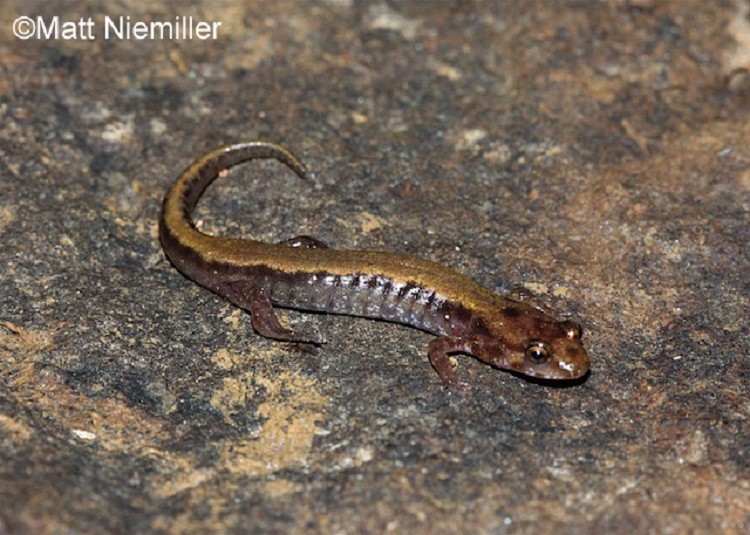
<p>A medium-sized salamander (2.5 to 4.0 inches in length) with greenish-brown dorsum. Some specimens have a subdued pattern while others have small red spots enclosed by dark borders. A light yellow wash on the belly and under limbs and tail. Also, has a yellow line from the eye to the angle of the jaw. Tails are moderately keeled.</p>

A medium-sized salamander (2.5 to 4.0 inches in length) with greenish-brown dorsum. Some specimens have a subdued pattern while others have small red spots enclosed by dark borders. A light yellow wash on the belly and under limbs and tail. Also, has a yellow line from the eye to the angle of the jaw. Tails are moderately keeled.

Desmognathus santeetlah
43
New cards
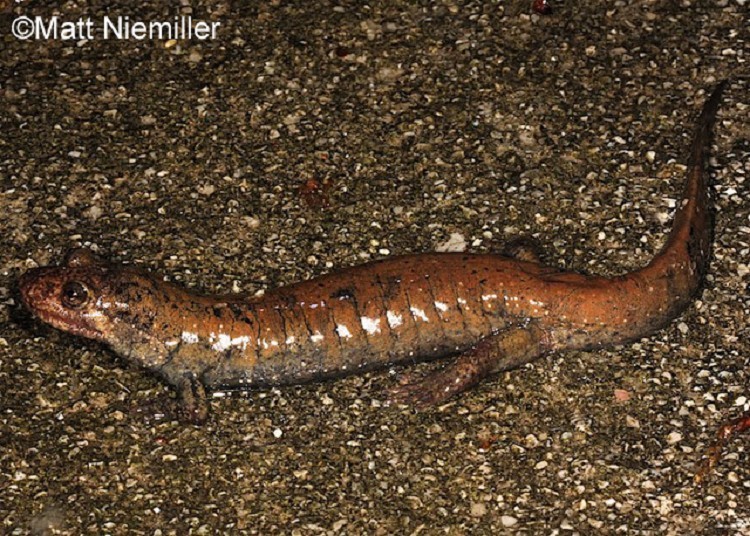
<p><span>This species has 14 costal grooves; dorsolateral dark stripe usually continued on the tail to its tip; adult males with prominent circi; sides below dark stripe often brown and white, mottled or with a series of white spots in a line above the legs; belly yellowish; length to 98 mm.</span></p>

This species has 14 costal grooves; dorsolateral dark stripe usually continued on the tail to its tip; adult males with prominent circi; sides below dark stripe often brown and white, mottled or with a series of white spots in a line above the legs; belly yellowish; length to 98 mm.

Eurycea cirrigera
44
New cards
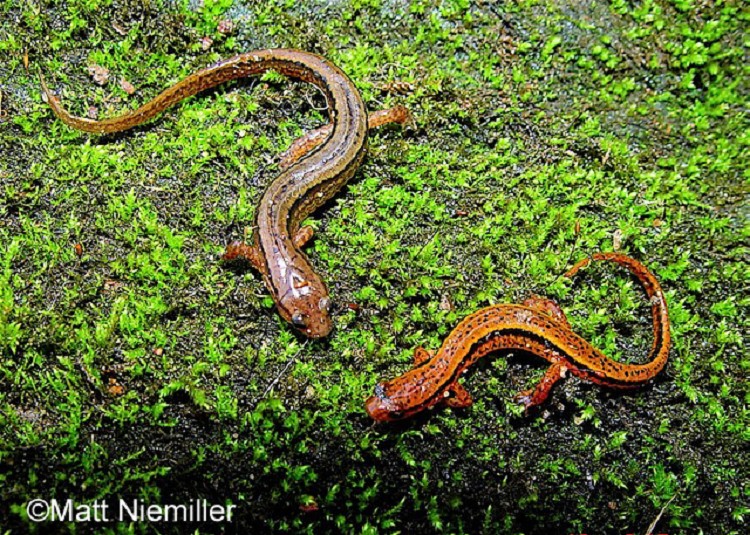
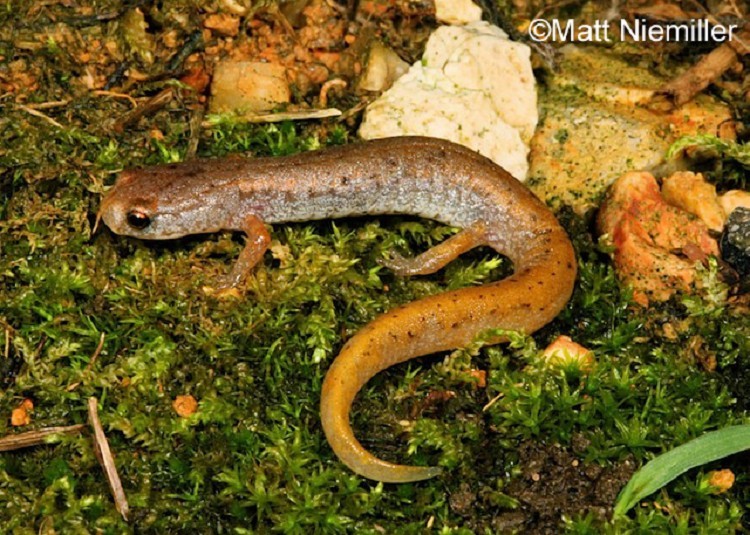
<p> A slender, long salamander (4.0 to 6.5 inches in length) having yellowish-orange to yellowish-brown dorsum marked with numerous black spots. Along each side, the spots may fuse to form an irregular stripe and often fuse on the tail to form a herringbone pattern. The belly is pale yellow.</p>

A slender, long salamander (4.0 to 6.5 inches in length) having yellowish-orange to yellowish-brown dorsum marked with numerous black spots. Along each side, the spots may fuse to form an irregular stripe and often fuse on the tail to form a herringbone pattern. The belly is pale yellow.

Eurycea longicauda
45
New cards
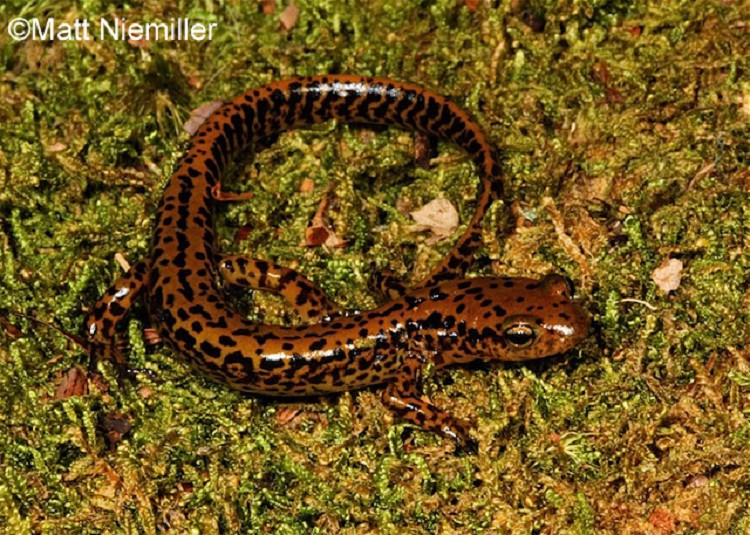
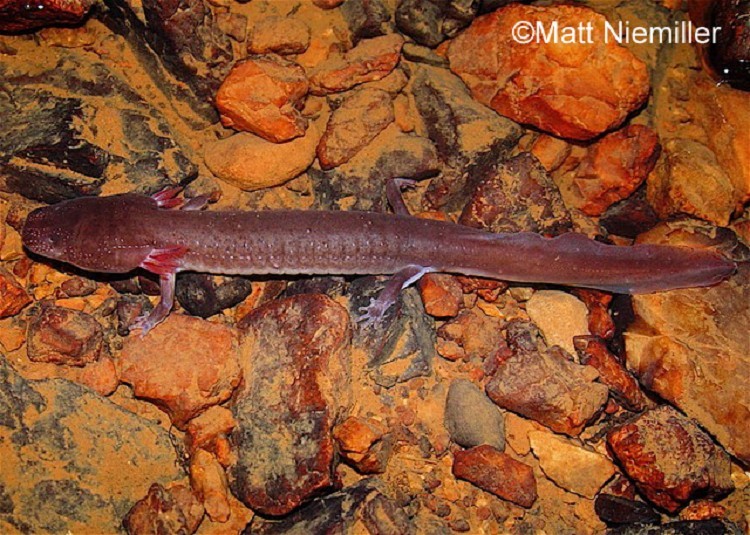
<p>A long-bodied salamander (4.0 to 9.0 inches in length) with small eyes, lack of eyelids, wide head, spatulate snout, and bright red feathery, external gills. Overall coloration is salmon to pale pink with a pale belly. Also, has a unique dark stripe on forward half of the throat.</p>

A long-bodied salamander (4.0 to 9.0 inches in length) with small eyes, lack of eyelids, wide head, spatulate snout, and bright red feathery, external gills. Overall coloration is salmon to pale pink with a pale belly. Also, has a unique dark stripe on forward half of the throat.

Gyrinophilus gulolineatus
46
New cards
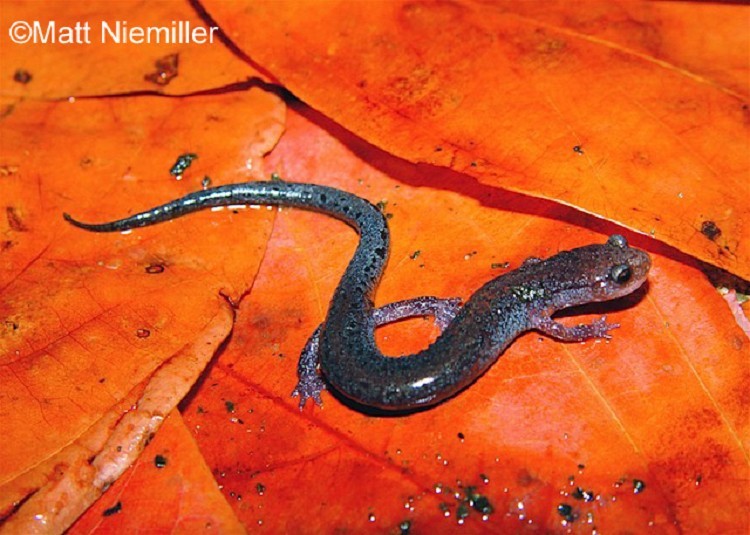
<p>A small salamander (2.0 to 4.0 inches in length) with a noticeable constriction at the base of the tail and four toes on each foot. The dorsum is rusty brown to grayish with small dark flecks. The belly is white with conspicuous black spots.</p>

A small salamander (2.0 to 4.0 inches in length) with a noticeable constriction at the base of the tail and four toes on each foot. The dorsum is rusty brown to grayish with small dark flecks. The belly is white with conspicuous black spots.

Hemidactylium scutatum
47
New cards
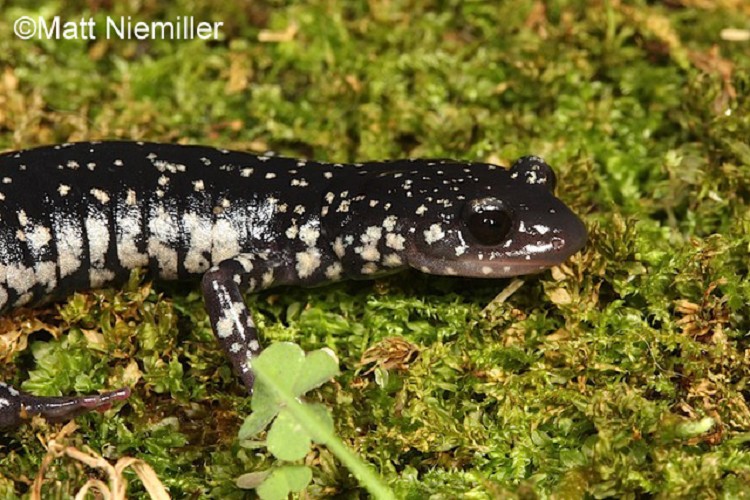
<p> A small, dark-colored salamander (2.5 to 3.5 inches in length) with a red or orangish wavy pattern, or “zigzag”, extending from the neck down the back to the base of the tail where it straightens out. This species also occurs in a brownish-gray color morph without the zigzag. Small white flecks occur on the back and sides giving a metallic appearance. The belly is gray or black with orange or reddish speckles.</p>

A small, dark-colored salamander (2.5 to 3.5 inches in length) with a red or orangish wavy pattern, or “zigzag”, extending from the neck down the back to the base of the tail where it straightens out. This species also occurs in a brownish-gray color morph without the zigzag. Small white flecks occur on the back and sides giving a metallic appearance. The belly is gray or black with orange or reddish speckles.

Plethodon dorsalis
48
New cards
<p> A medium salamander (3.75 to 6.75 inches in length) has a black dorsum with small white spots that increase in size on the sides. The belly is uniformly slate gray transitioning into a lighter chin.</p>

A medium salamander (3.75 to 6.75 inches in length) has a black dorsum with small white spots that increase in size on the sides. The belly is uniformly slate gray transitioning into a lighter chin.

Plethodon kentucki
49
New cards
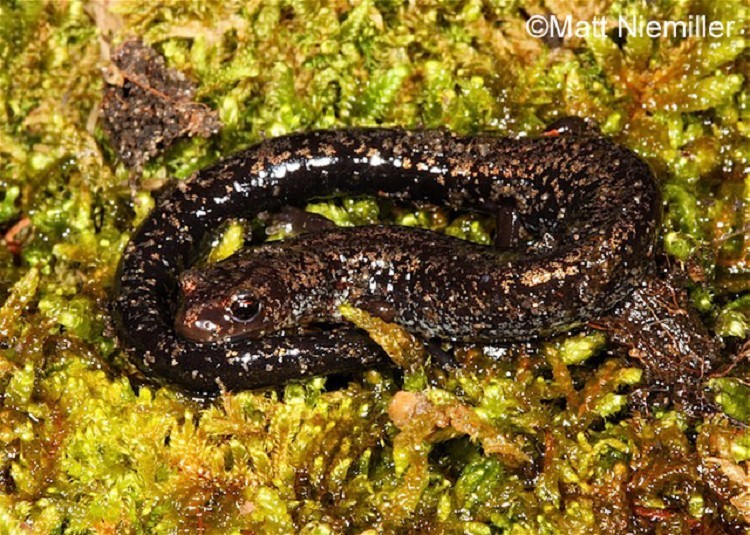
<p>A long, slender salamander (3.0 to 5.0 inches in length) with short legs and a long tail. The back color is dark brown to black with very fine silvery-white to brassy specks. The belly is uniformly dark with a lightly mottled chin.</p>

A long, slender salamander (3.0 to 5.0 inches in length) with short legs and a long tail. The back color is dark brown to black with very fine silvery-white to brassy specks. The belly is uniformly dark with a lightly mottled chin.

Plethodon richmondi
50
New cards
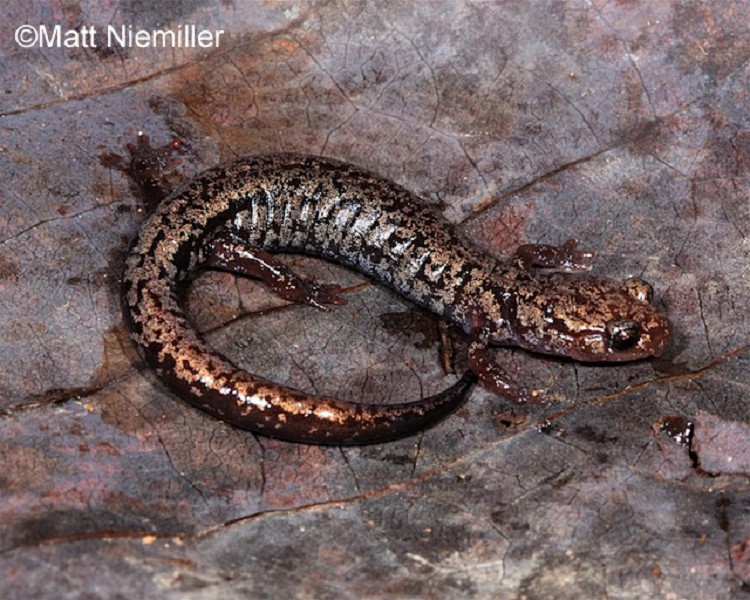
<p> A small salamander (2.5 to 3.2 inches in length) with a black dorsum washed with gold or silver colored blotches, suggestive of a metallic look. The belly is black with numerous small white spots.</p>

A small salamander (2.5 to 3.2 inches in length) with a black dorsum washed with gold or silver colored blotches, suggestive of a metallic look. The belly is black with numerous small white spots.

Plethodon welleri
51
New cards
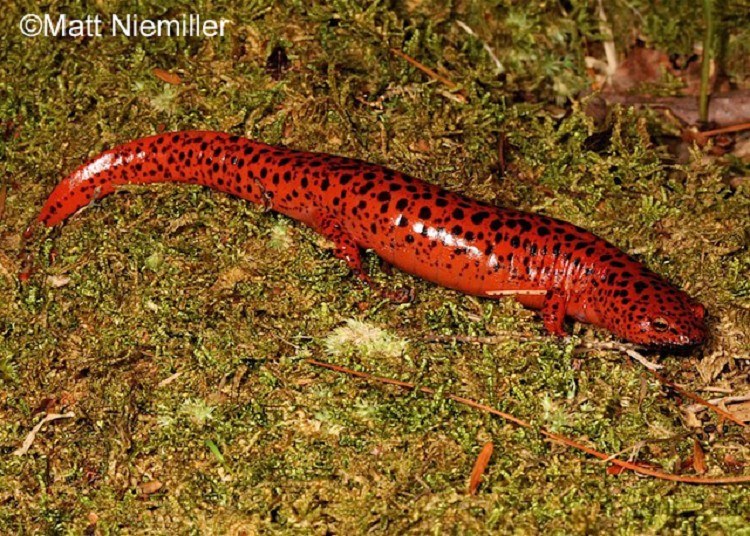
<p>A stout, bright red or orangish-red salamander (4.0 to 6.0 inches in length) with many, irregular black spots on the dorsum and sides. Some black flecking on the chin and belly color is a lighter red. Iris's color is yellow. Color fades on older specimens to a purplish brown.</p>

A stout, bright red or orangish-red salamander (4.0 to 6.0 inches in length) with many, irregular black spots on the dorsum and sides. Some black flecking on the chin and belly color is a lighter red. Iris's color is yellow. Color fades on older specimens to a purplish brown.

Pseudotriton ruber