cognitive development
 Call Kai
 Learn
 Practice Test
 Spaced Repetition
 Match
 Flashcards
 Knowt Play
1/23

There's no tags or description
Looks like no tags are added yet.
24 Terms
what is cognitive development?
how children/people think, learn, explore, remember and solve problems
involves perception, attention, language, problem solving, reasoning, memory, conceptual understanding, intelligence
takes time to develop
theories of cognitive development
psychological frameworks that explain how our cognitive skills develop
piaget’s theory
children take on an active role in the way they interact with the world, discontinuous change
4 stages
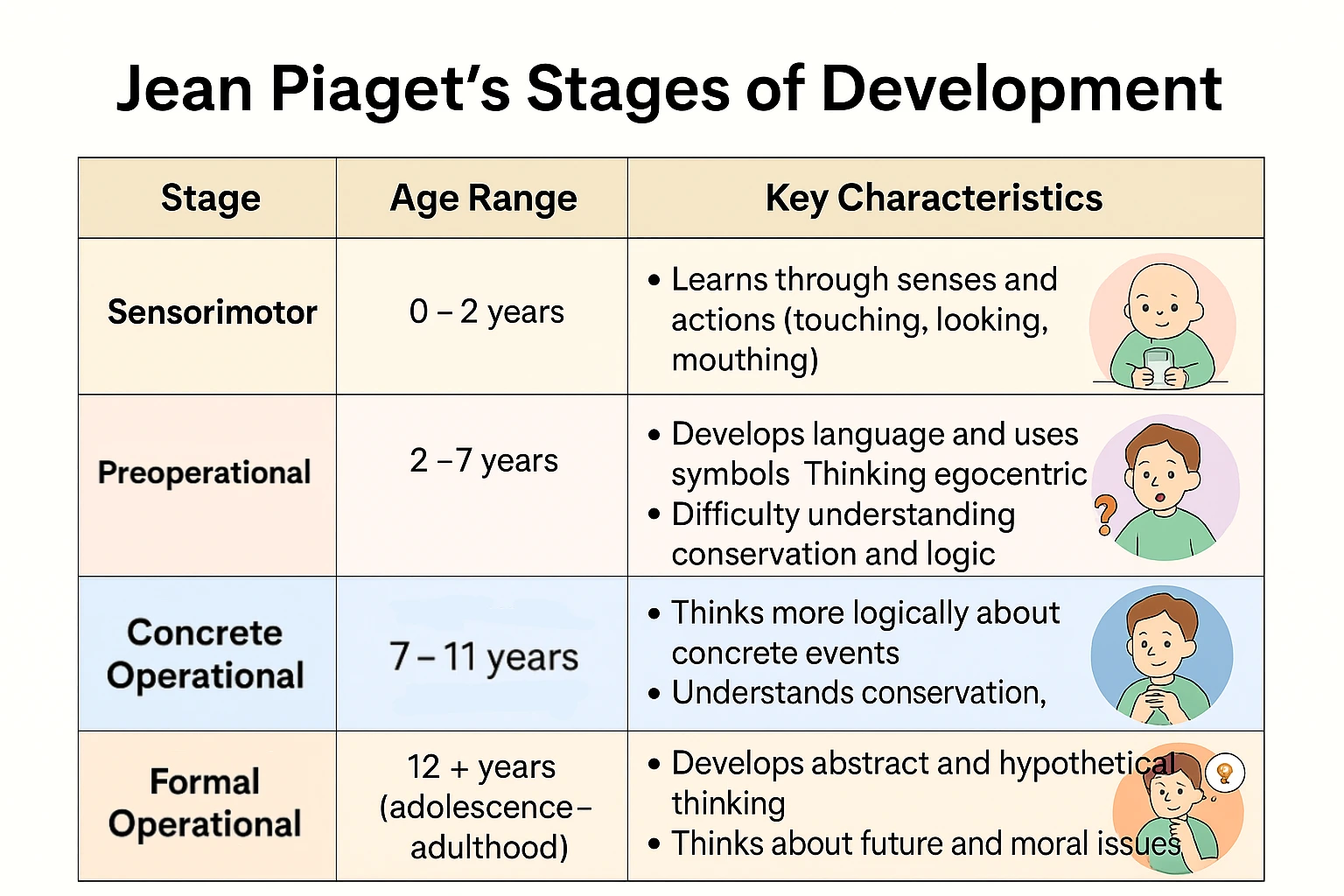
piaget’s theory stage 1 - sensorimotor stage
infants can only know about the world through senses/actions
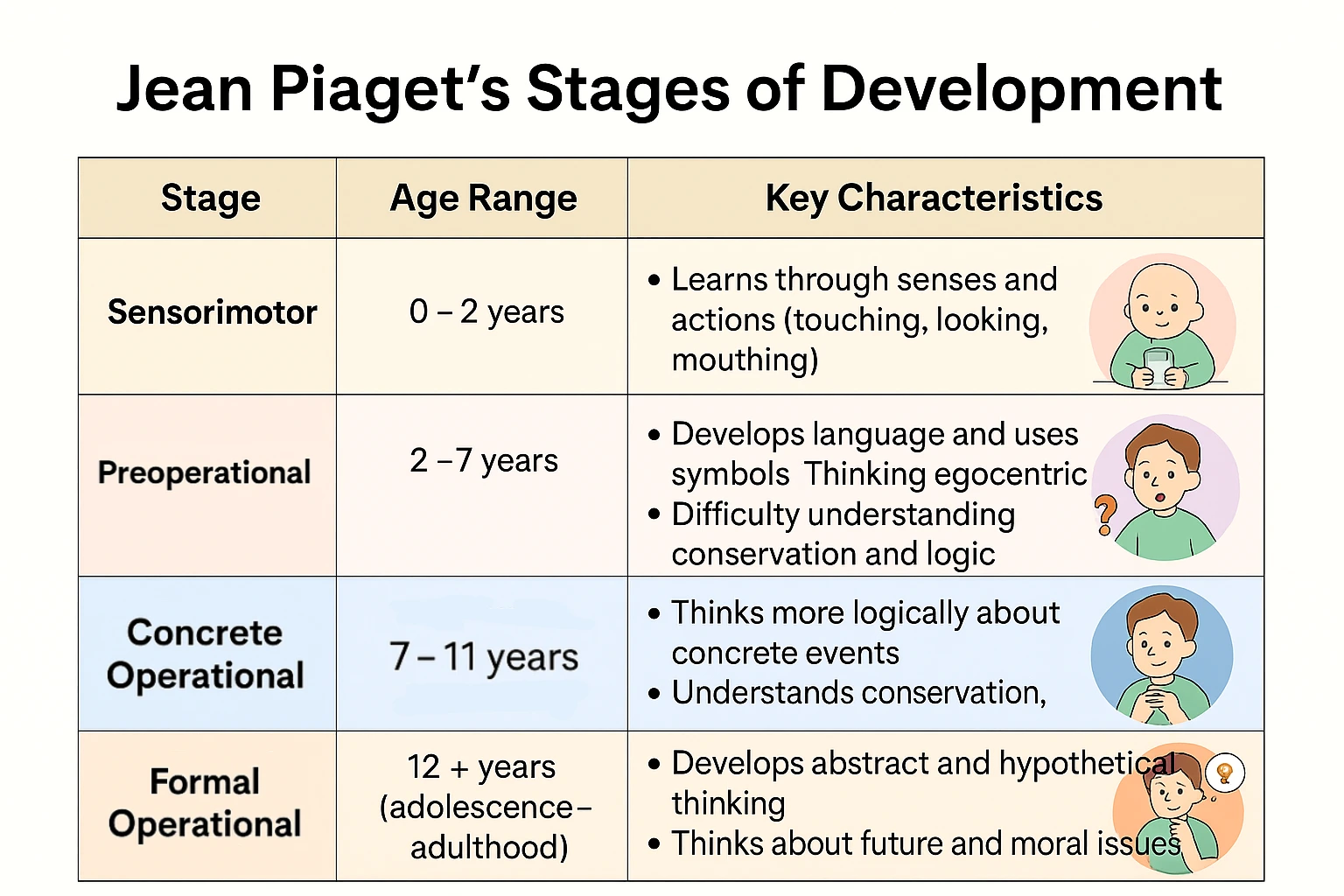
piaget’s theory stage 2 - pre-operational stage
young children have some ability to internally represent their environment through a mental image. Very simple thinking, related to the child’s needs/wants
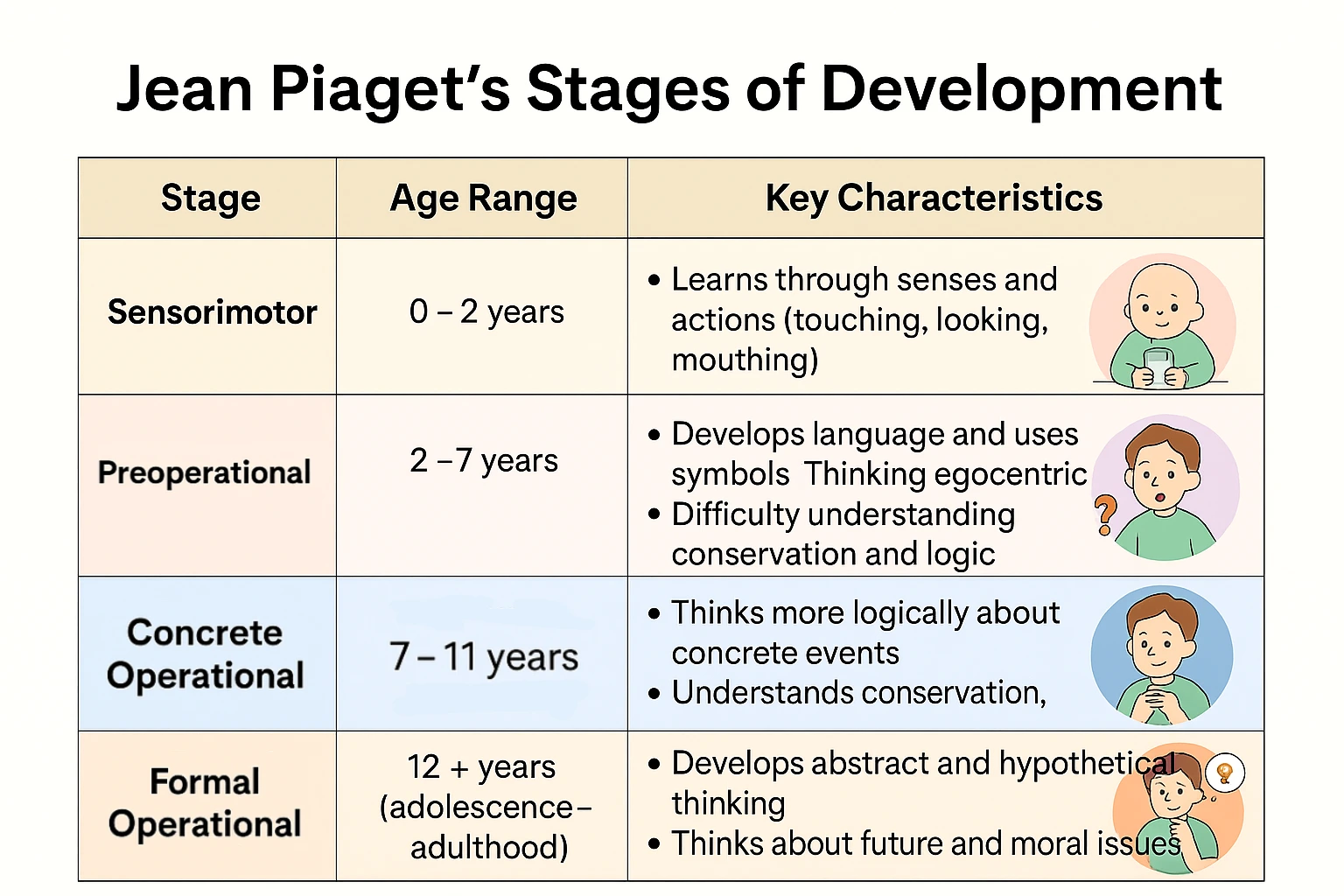
piaget’s theory stage 3 - concrete-operational stage
children become able to think logically, can understand that events are influenced by multiple factors
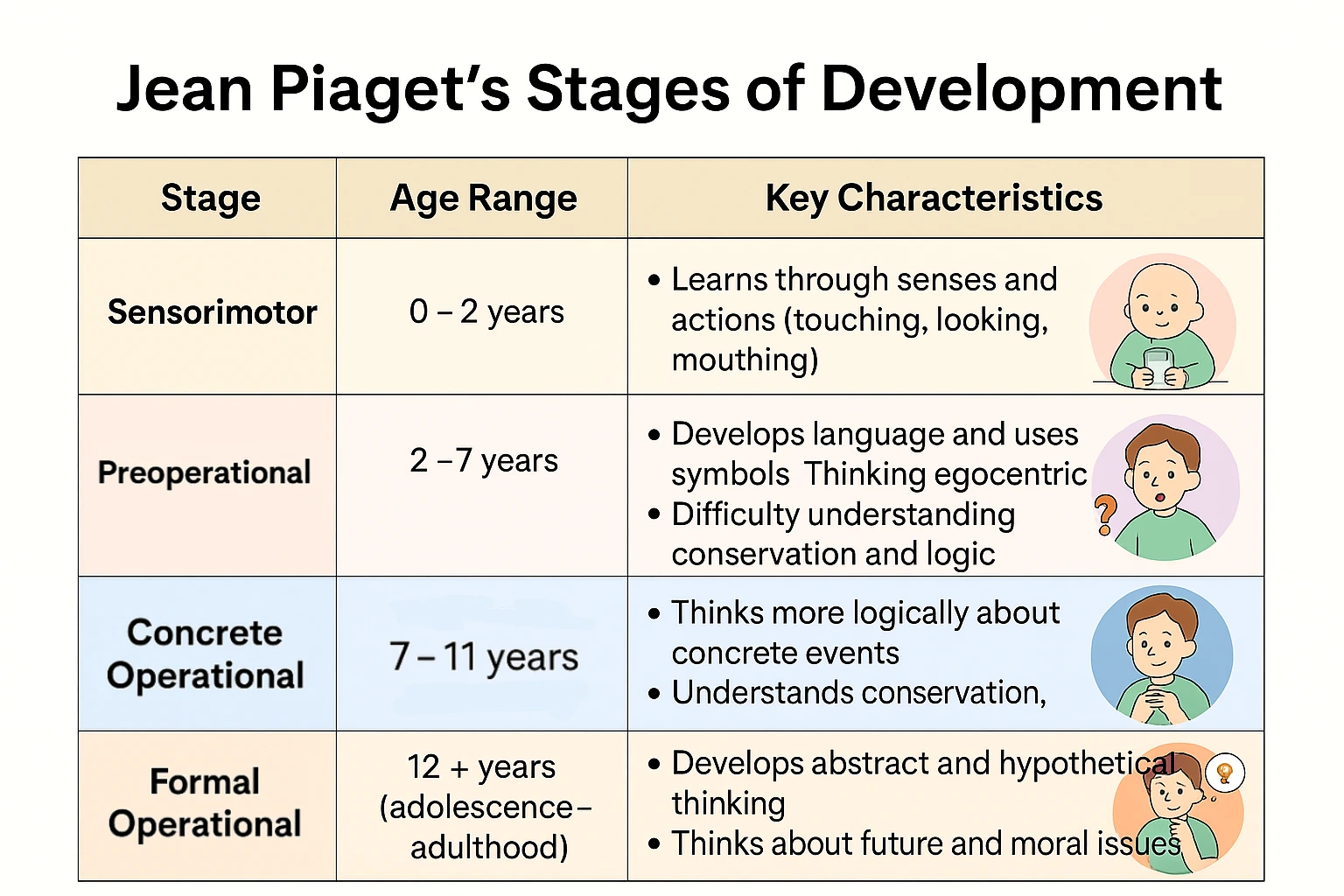
piaget’s theory stage 1 - formal operational stage
adolescents can think systematically and hypothetically
limitations of piaget’s theory
doesn’t talk about underlying mechanisms (does not tell us the causes of change)
underestimates the cognitive abilities of young children and infants
social/environment impact ignored
lacks understanding about individual differences within children
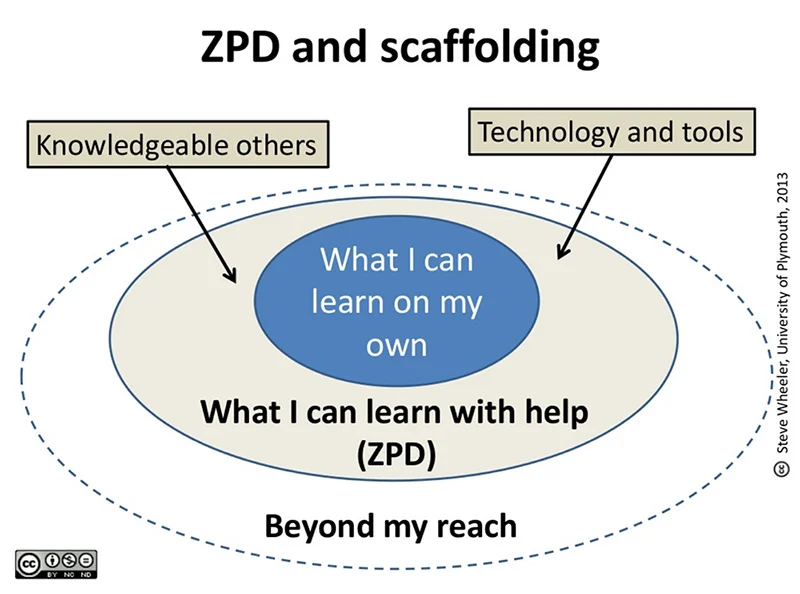
lev vygotsky's sociocultural theory of cognitive development
children are social learners, lacks the stages that piaget’s theory has
Infants have basic cognitive skills (attention, sensation, perception, memory)
as infants interact with others, these skills become more sophisticated
ZPD - zone of proximal development
information processing theories
human mind is a complicated information processing system like a computer. mechanisms of change rather than how change happens
popularised as computers started to become more accessible/mainstream

what is intelligence?
the capacity to learn from experience and adapt to one’s environment
developmental concept
means different things at different ages
definition could vary in different contexts/cultures
general intelligence
a person posses acertain amount of general intelligence (g) that influences their ability on all intellectual tasks
limitation of general intelligence theory
focuses on a person’s performance on individual tasks doesn’t really focus on real-life observations
Intelligence can be measured as
one dimension (IQ)
two dimensions (crystallised and fluid)
three dimensions (thurstone 7 and gardener 7)
many dimensions (carrol’s 3-statum model)
one common limitation of measures of intelligence
not developmental measures
intelligence as one dimension
mental age/iq
intelligence as one dimension - mental age
average age at which children achieve a given score on a binet and simon’s test

intelligence as many dimensions
three-stratum theory of intelligence
intelligence as many dimensions - three-stratum theory of intelligence
hierarchical integration of
g: general intelligence
eight generalised abilities
many specific processes
stanford binet scales
five cognitive abilities
fluid reasoning
knowledge
quantitative reasoning
visual-spatial processing
working memory
popular in US from ages 2-24, uses MA to calculate IQ
british ability scale
three domains
verbal ability
non-verbal reasoning
spatial ability
wechsler intelligence test for children (WISC)
most widely used instrument for children +6 years old
two main sections
verbal: general knowledge, language skills
performance: spatial and perceptual abilities
WISC - performance section
block design: arrange 9 blocks to match a picture
coding: identifying patterns from series of simple shapes or numbers, each paired with a simple symbol
mazes: a set of increasingly difficult mazes printed in a response booklet, no pencil lifting of entering blind alleys
object assembly: assemble puzzle parts to form a meaningful whole
picture completion: describe what is missing from a picture
picture arrangement: arrange cartoon frames to tell a coherent story
overall evaluation of all tests of intelligence
