1- Iron Age - Celts? // Iron Age Ireland
 Call Kai
 Learn
 Practice Test
 Spaced Repetition
 Match
 Flashcards
 Knowt Play
1/53

Earn XP
54 Terms
ireland’s early quick overview
• early mesolithic (8000 - 6000 BC) first settlers arrive
• late mesolithic (5500 - 4000 BC) survive until here; stone age; hunter-gatherer
• neolithic (4000 - 2500 BC) introduction to faming, animals; no longer nomadic; permanent housing; pottery; ritual and burial stone monuments (megalithic)
• bronze age (2500 - 600 BC) intro to metal, copper, gold, tin; creation of weapons; emergence of hostility;
• iron age (6th century BC - 5th century AD) warrior elite; era of ‘celts’; royal sites
• early medieval (5th - 12th century AD) Christianity and early monasteries; anglonormans arrive later - era of written records; golden age - great treasures, overglorified by people trying to create a glorious past during fight for independence
• viking era (late 8th century)
• medieval ireland (high medieval 1100-1380 , late 1380-1580/1600, post 1580 - 1600) anglonormans arrive 1169-1350

‘celts’ and ‘vikings’ eras
celts → iron age
vikings → early medieval
the iron age time
6th century BC - 5th century AD
two main frameworks for irish iron age
halstatt, austria
earlier phase
la tene, switzerland
later phase, more aligned with typical ‘celtic’ design
origin of the word ‘celt’
• greeks would use the word to describe any outsider
the idea of a unified celtic people was developed in the __ century when significant discoveries of distinctive material were made at __ and __
17th - 19th
halstatt
la tene
the celtic revival
• late 19th century
• in 18th - 10th century, Ireland sought independence from Britain and chose ‘Celtic’ as a distinct identity opposed to English identity
iron age settlement
not visible above ground
excavated along roadways (linear findings)
varied, diverse evidence
iron age enclosures
• single hosue
• ordinary famers
• circular (dug ditch defining space or fence)
• named after townland names / where excavated

garretstown 2, lismullin 1, meath

morett 4, parknahown, laois
hill tara
royal site
filled with lots of burial and ritual sites
also has rath of the synods (habitat and craft activity)

rath of the synods
rath = enclosure
synods = meeting of bishops
3rd/4th century AD
phase 4
most royal sites are for burial and ritual, but not this one
this one points to habitation and craft activity
it is disturbed because of British Israelite excavation when they tried to find the Ark of the Covenant here
goods were found here
bracelets, roman seals for documents (suggests contact w roman empire and outside world [makes sense bc of water] and suggests literacy)

object findings at Rath of the Synods
unenclosed houses
round houses (family homes)
popular in england
stone walls, stone ovens
good findings for excavations because stone lasts; wood houses w organic roofs aren’t found but ovens are

roundhouse

roundhouse

oppida
continental europe style house
NOT in ireland
they’re large, many houses,
‘early towns of europe’
you’d expect that if celts invaded from europe you’d see some of this, but we don’t see this in ireland
field systems
show evidence for farming in the iron age
enclosed spaces used for growing crops and keeping animals
animal husbandry and cereal cultivation
more proof that farming was the main way of life
evident in corn-drying kilns!
@ least 27 in iron age excavated
proof of cereal cultivation
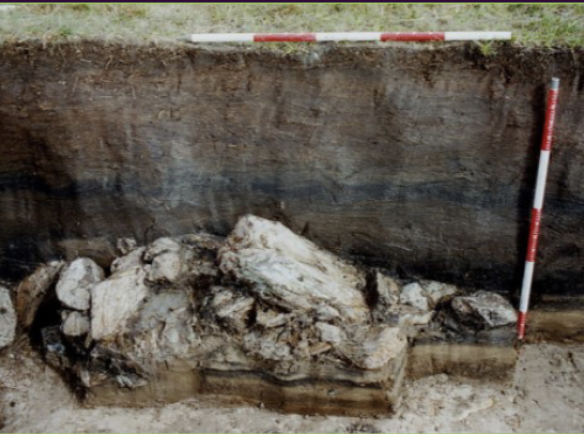
field systems (barrees, cork)


corn-drying kilns
iron age proof of cereal cultivation!


unenclosed metalworking pits, hearths (furnace), charcoal-production
at least 36!
dug in the ground
found scattered
probably because they are built where metal is harvested

burnt spreads/mounds
minimum 16 excavated
originated in bronze age! shows continuity
used for cooking outside
giant fire, put stones, dig hole for water, boil w/stones, cook, toss rocks,
the mound forms from the built up stones

pottery
disappears in the iron age
this is uncommon compared to other places
rather, wood, leather, metal vessels were used
more durable
continued into the medieval period
quern stones
used for grinding cereal
beehive quern

beehive quern
more than 200 examples
we know it’a iron age because of the carvings and art on it which is obvious at this time
la tene


horse bit
metal object (mainly bronze) for horses
put in horses mouth
for weathy
decorated in iron age art
decorated for showing off
mainly warrior elite ornamenting themselves and their horses
weapons
swords
spearheads + butts
shields

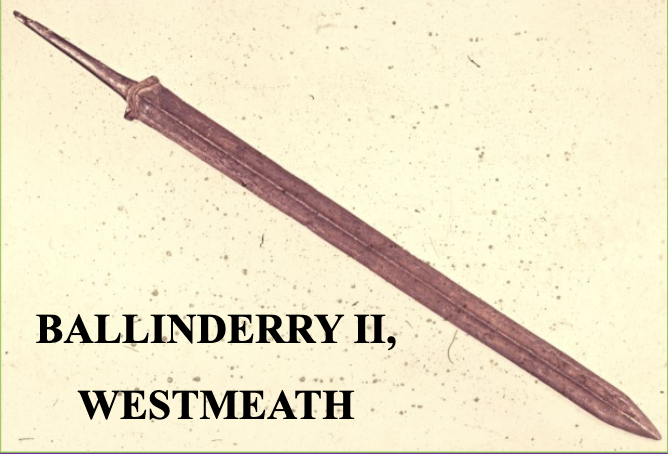
swords
30 known examples
Irish Blades
short compared to british
probably because fighting on foot in ireland vs on horse in britain
bronze handles survive as proof
spears
spearbutt + spearhead
for military and hunting
mostly plain, some decorated

shields
clonoura shield
alder, oak handle, covered in leather (to absorb blows)
found preserved in a bog
littleton bog, tipperary
personal ornaments
torcs
fibulae
swan-necked and ring pins
torc
neck ornament
not unique to Ireland, but Irish design is unique
In Ireland, it’s mainly gold and worn by the wealthy
disappear w/Christianity

the dying gaul
a statue which portrays a torc, showing that the torc isn’t unique to ireland
roman marble copy of greek statue

fibulae
brooches
found across Europe

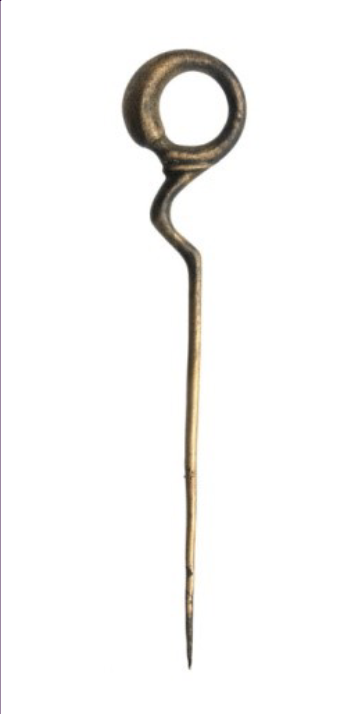
pins of iron age
not unique to ireland
not the same as ringed pins
swan necked and ring pins

La Tene Art
appears after mid 5th century BC
origins in Rhineland and eastern france
characterized by
palmettes, tendrils, lotus flowers, spirals, S and C scrolls, lyre and trumpet shapes
interpretations found across europe (not a copy but a version)

classical elements of la tene art
vegetal and foliage designs

etruscan elements of la tene art
human faces or masks

scythian elements of la tene art
elements of oriental animal art

Iron Age Hoards
Shows ritual activities
burying valuables/offerings
thanksgiving / asking for something
broighter hoard
all gold objects
found in 1896 at Broighter, Co Derry
found in bog land (originally a lake)
offering into water
gold objects:
small gold boat, small model of cauldron, complete torc, 2 necklaces (not made in ireland!), the great torc,
somerset hoard
found in galway near clontuskert
torc, pin, fibulae (?), small decorated disks, container decorated?
BRONZE
contrasting from Broighter which is all gold!
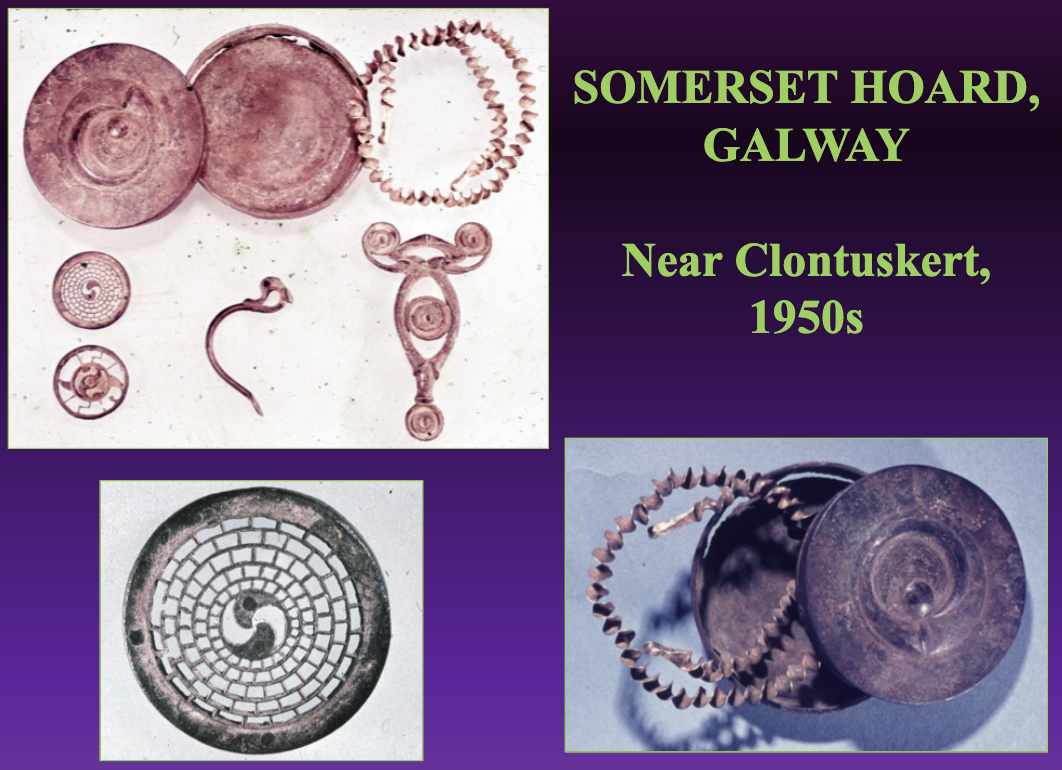
‘celtic’ cult of the head
found throughout europe
iron age obsession w heads
many carved stone heads found
maybe shows shared culture / religious beliefs
corleck head, cavan
3 heads on one
maybe a depiction of a deity

tanderagee idol, armagh
another head statue, arm grasping the other
similar figure is found in holzgerlingen, germany
shows another continental link

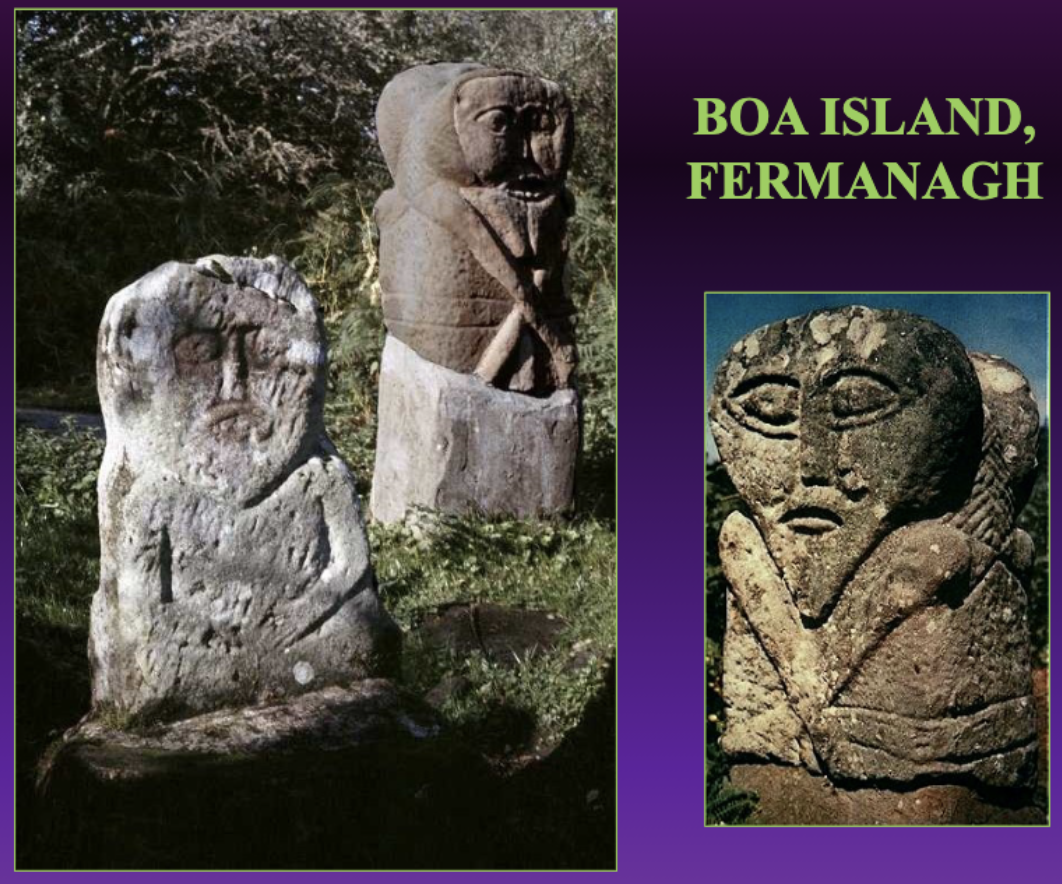
boa island, fermanagh
two faced stone statue
shows head statuev
carved stone pillars
unique to ireland!
turoe stone, galway
castlestrange, roscommon
Kermaria Stone, Brittany

Turoe Stone, Galway
example of carved pillar stone
unique to ireland
carved in granite
decorated in la tene art
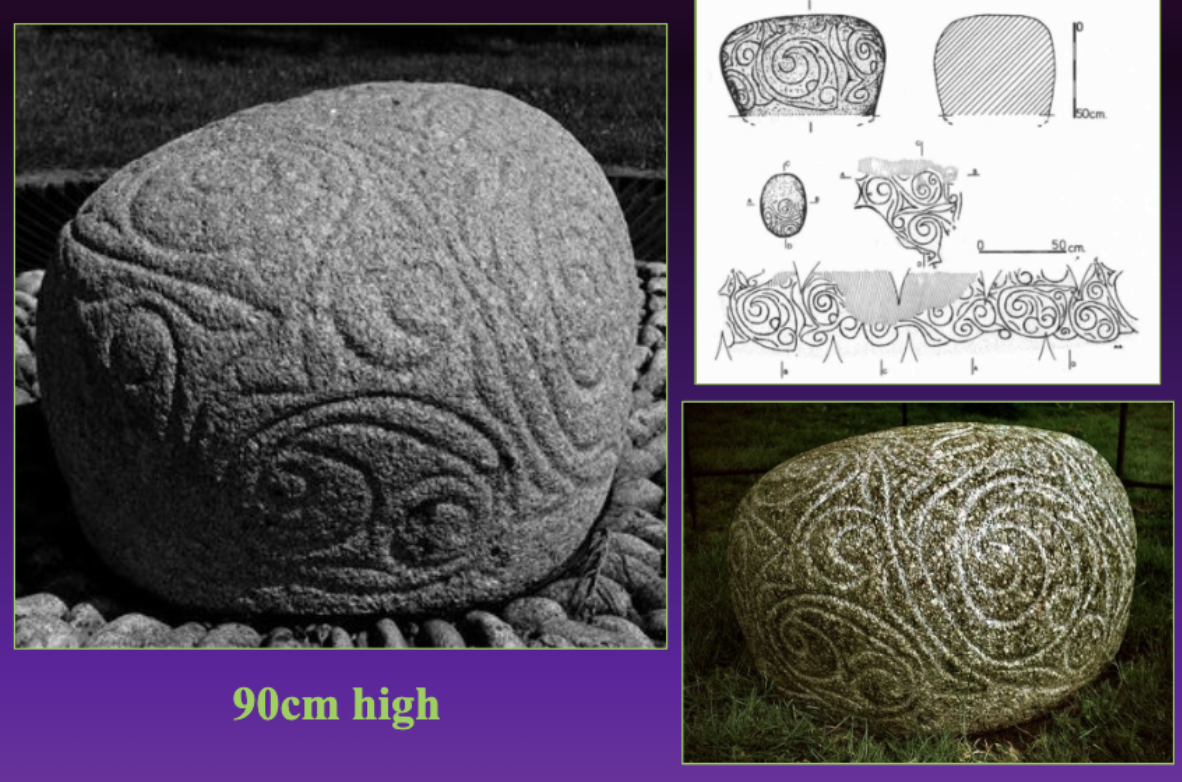
castlestrange, roscommon
rounded boulder
also decorated in la tene art
example of carved pillar stone

kermaria stone, France
another example of carved pillar stone
semi similar but different art style
so we know the others are unique to ireland

continental europe burials vs ireland
continental→
had princely burials
deceased laid on vessels
ireland →
ring barrows
more modest
circular burials, mound, ditch
maybe cremations

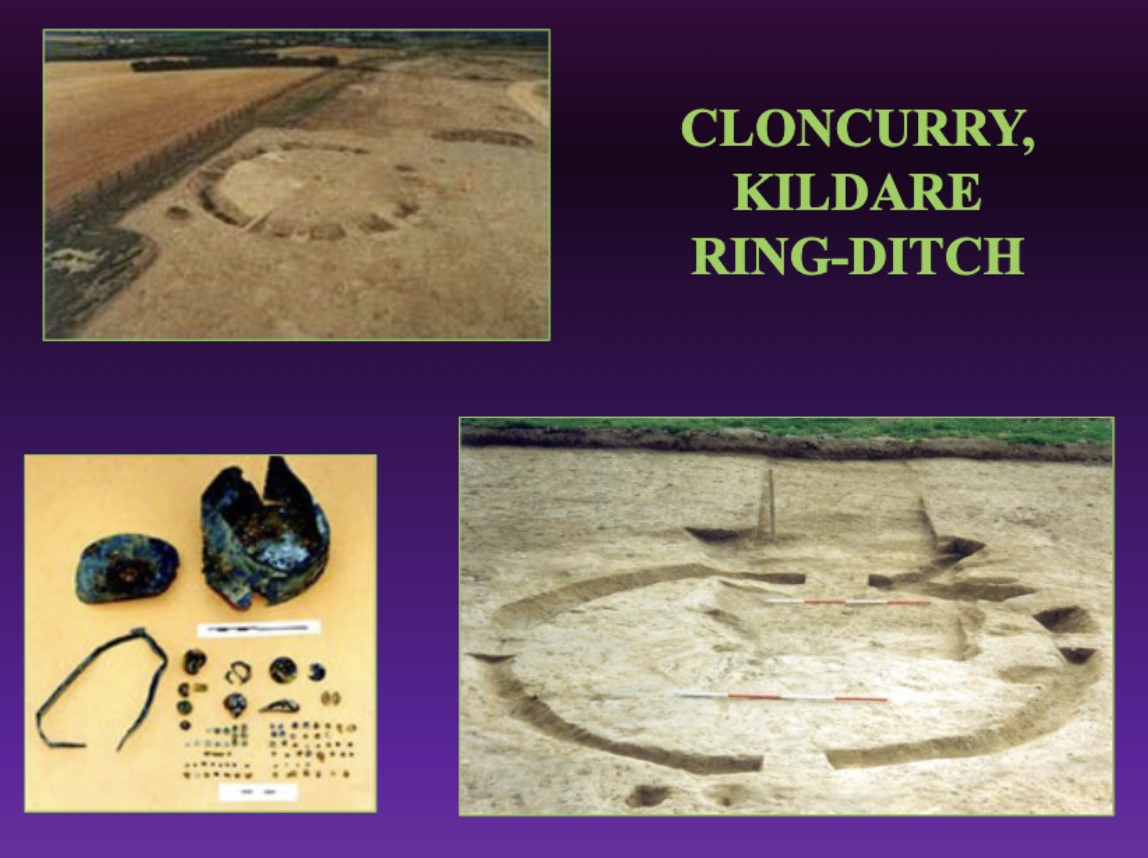
cloncurry, kildaire ring ditch
cremations
example of ring barrow

burnt/cremated and unburnt/inhumation
there were both burnt / cremated remains
as well as unburnt and skeleton remains
this could be a sign of differing religious beliefs