A&P Unit 3
 Call Kai
 Learn
 Practice Test
 Spaced Repetition
 Match
 Flashcards
 Knowt Play
1/163

There's no tags or description
Looks like no tags are added yet.
164 Terms

What is #1 and its action
Epicranius: raises eyebrows, wrinkles forehead

What is #2 and its action
Orbicularis Oculi: closes eye, squints eye
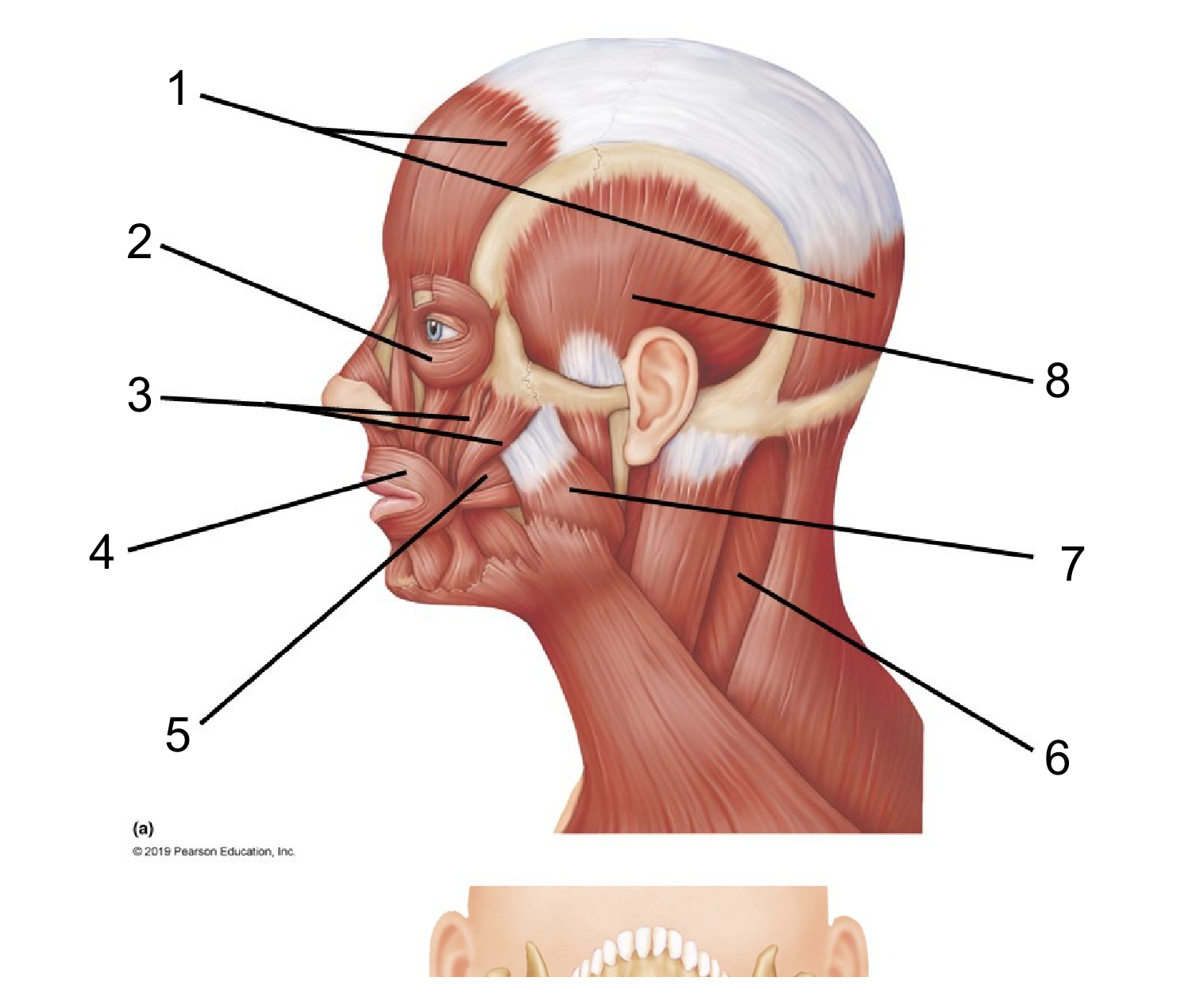
What is #3 and its action?
Zygomaticus: Elevates lateral corner of mouth (smile)

What is #4 and its action?
Orbicularis Oris: closes mouth, purses lips

What is #5 and its action?
Buccinator: compresses cheeks

What is #6 and its action?
Splenius: extension of head

What is #7 and its action?
Masseter: elevates mandible

What is #8 and its action?
Temporalis: elevates mandible

What is #1 and its action?
Diagastic: depresses mandible
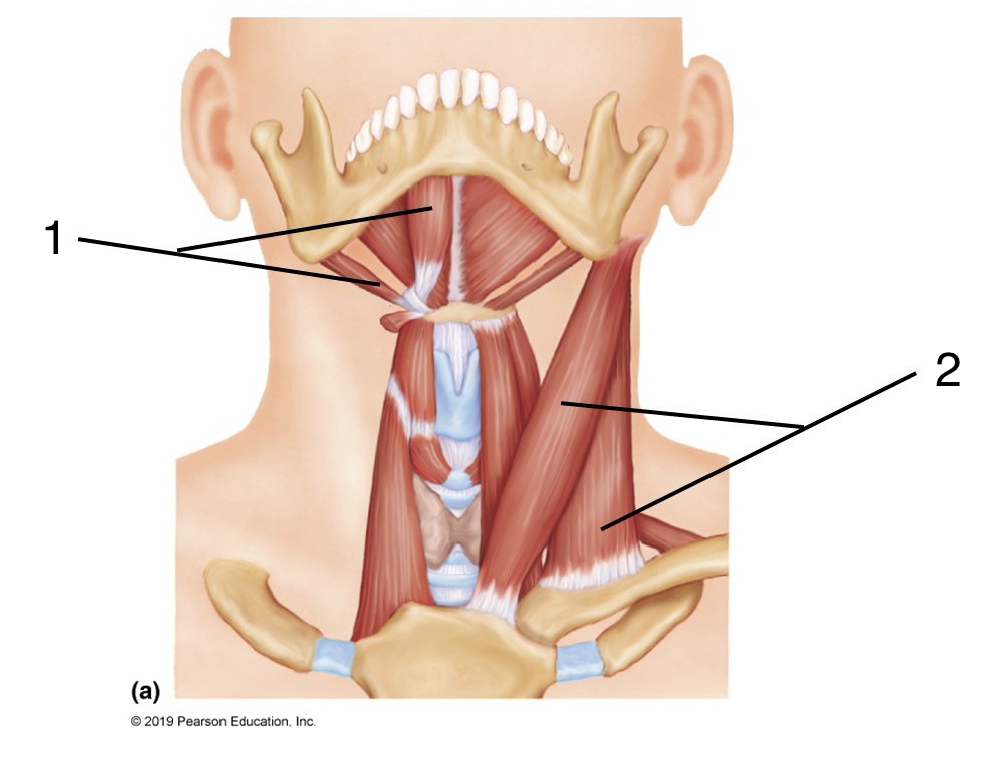
What is #2 and its action?
Sternocleidomastoid: flexion of head, turn head to opposite side

What is this and its action?
Splenius: extension of head

What is #1 and its action?
Sternocleidomastoid: flexion of head, turn head to opposite side

What is #2 and its action?
Deltoid: flexion of arm, abduction of arm, extension of arm

What is #3 and its action?
Biceps brachii: flexion and supination of forearm

What is #4 and its action?
Serratus Anterior: protracts scapulae

What is #1 and its action?
External intercostal: Elevates ribs to increase thoracic volume

What is #3 and its action?
Internal intercostal: depresses ribs to decrease thoracic volume
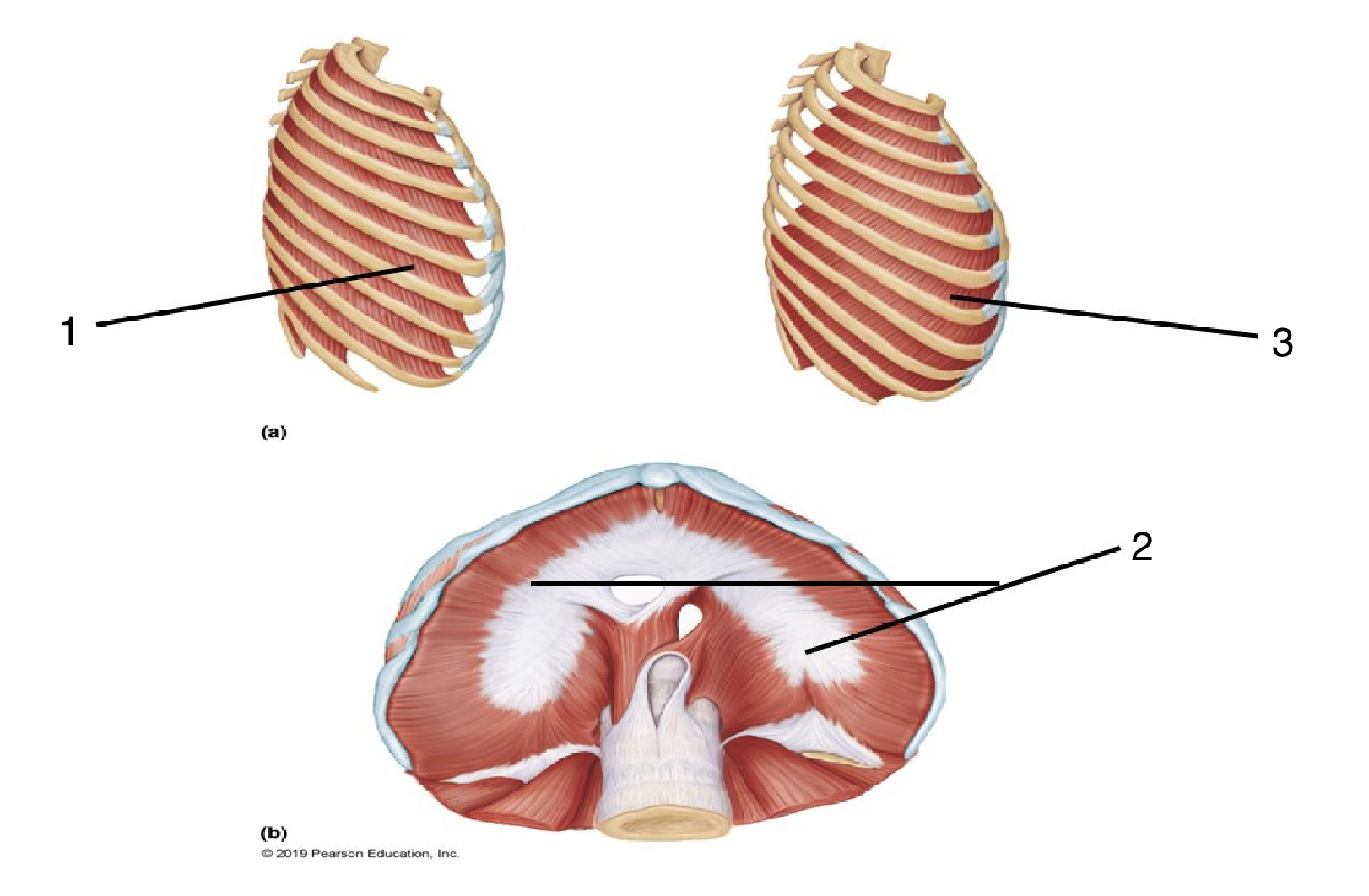
What is #2 and its action?
Diaphragm: flattens when contracts to increase thoracic volume

What is #1 and its action?
Pectoralis major: flexion of arm, adduction of arm, medial rotation of arm

What is #2 and its action?
Serratus Anterior: protracts scapulae

What is #3 and its action?
Transverse abdominis: compress abdominal contents

What is #4 and its action?
Internal obliques: lateral flexion of trunk
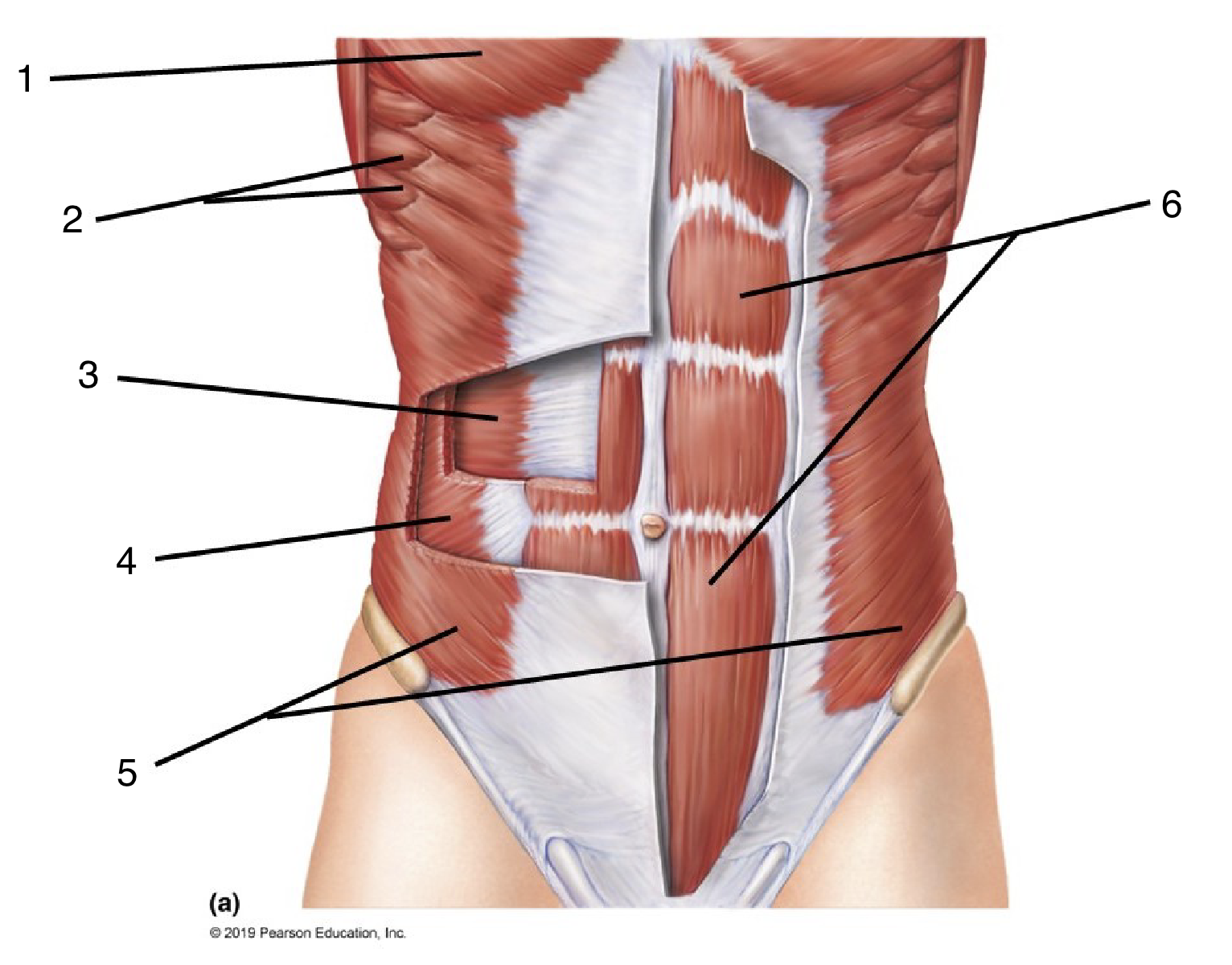
What is #5 and its action?
External obliques: lateral flexion of trunk
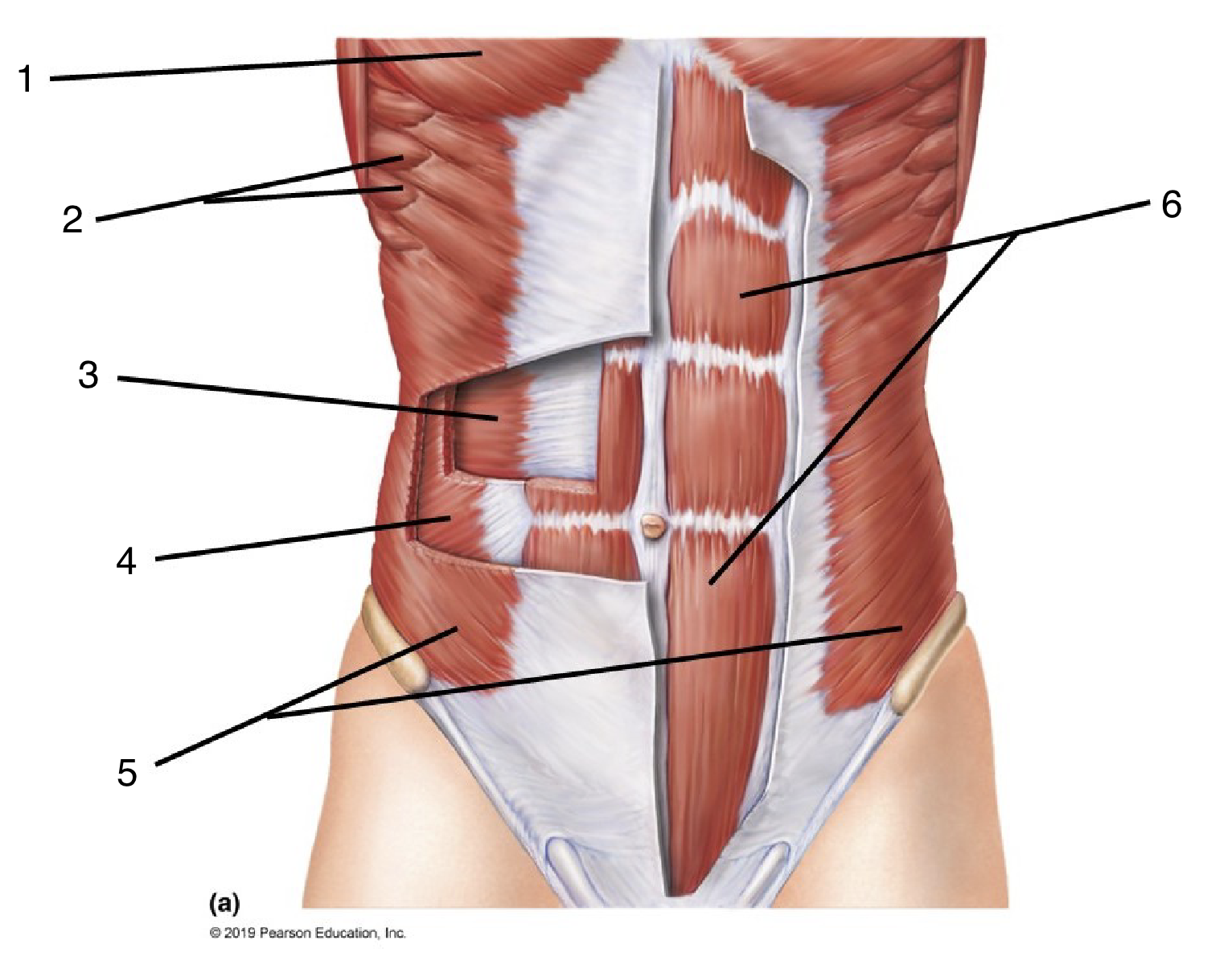
What is #6 and its action?
Rectus abdominis: flexion of trunk (sit-ups)
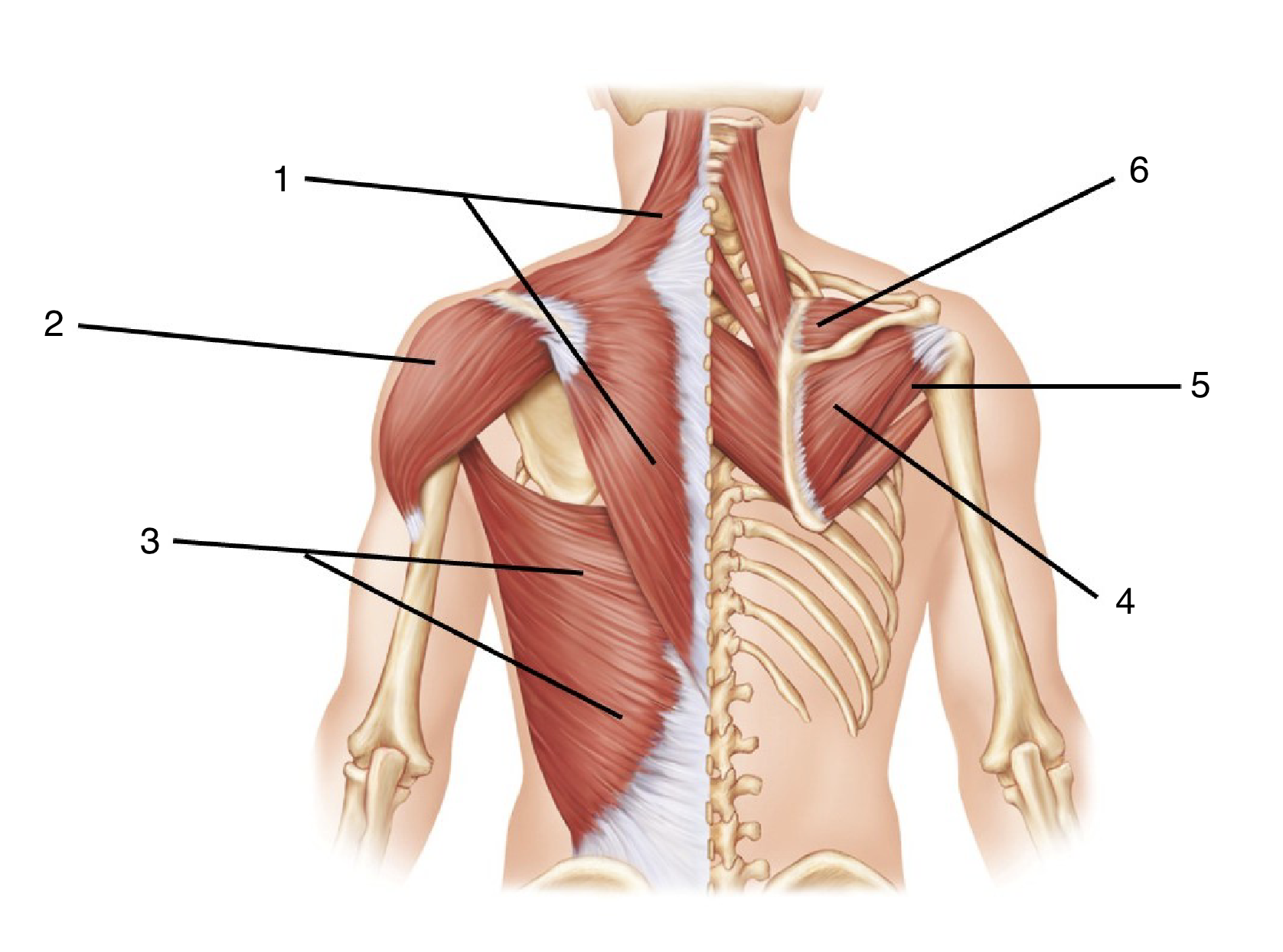
What is #1 and its action?
Trapezius: elevate scapulae, extend head, retract scapulae

What is #2 and its action?
Deltoid: Flexion of arm, abduction of arm, extension of arm

What is #3 and its action?
Latissimus dorsi: extension of humerus

What is #4 and its action?
infraspinatus: stabilize glenohumeral joint

What is #5 and its action?
Teres minor: stabilize glenohumeral joint

What is #6 and its action?
Supraspinatus: stabilize glenohumeral joint

What is #1 and its action?
Sternocleidomastoid: flexion of head, turn head to opposite side

What is #2 and its action?
Deltoid: flexion of arm, abduction of arm, extension of arm
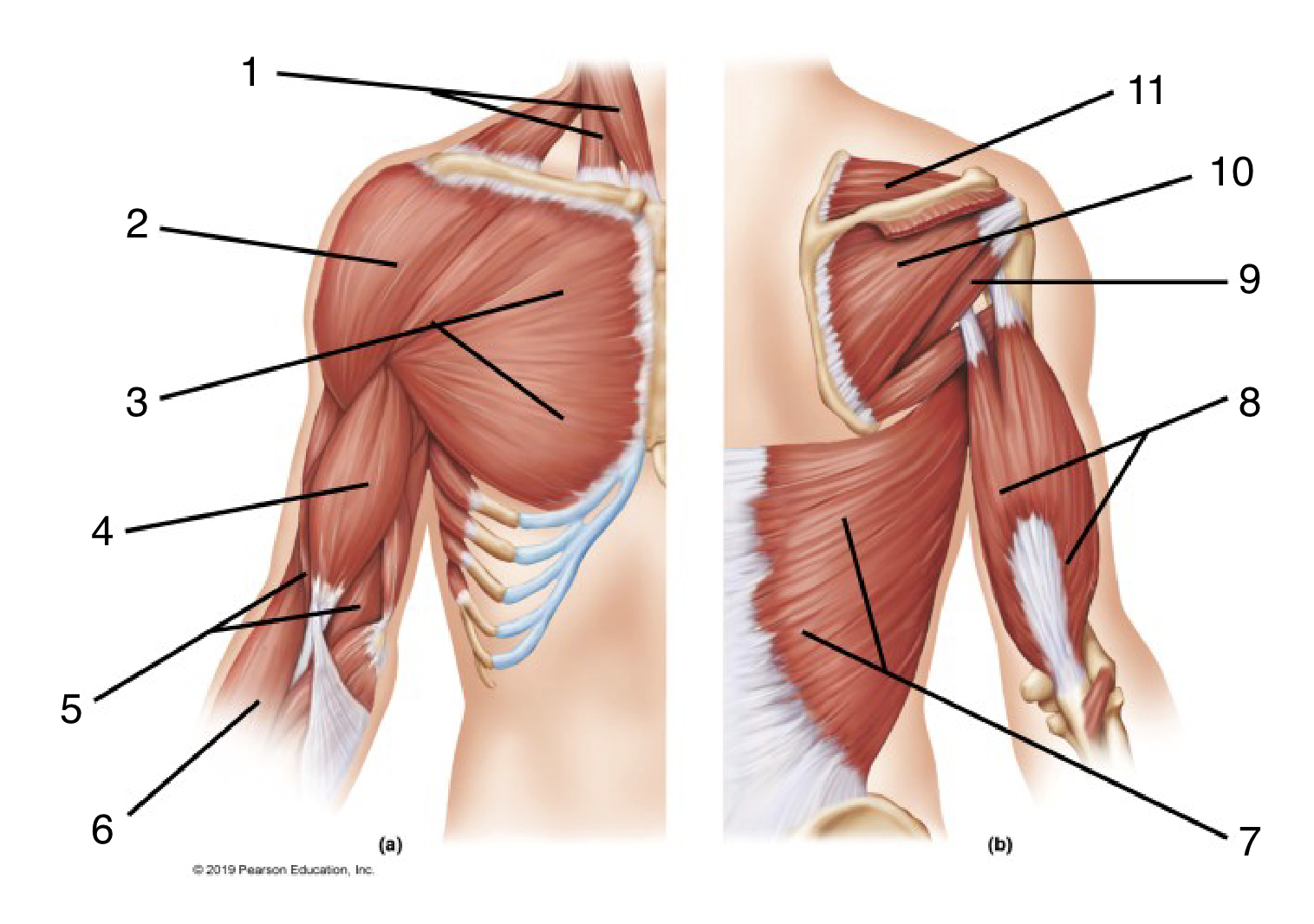
What is #3 and its action?
Pectoralis Major: flexion of arm, adduction of arm, medial rotation of arm

What is #4 and its action?
Biceps brachii: flexion and supination of forearm

What is #5 and its action?
Brachialis: flexion of forearm

What is #7 and its action?
Latissimus dorsi: extension of humerus

What is #8 and its action?
Triceps brachii: extension of forearm

What is #9 and its action?
Teres minor: stabalize glenohumeral joint
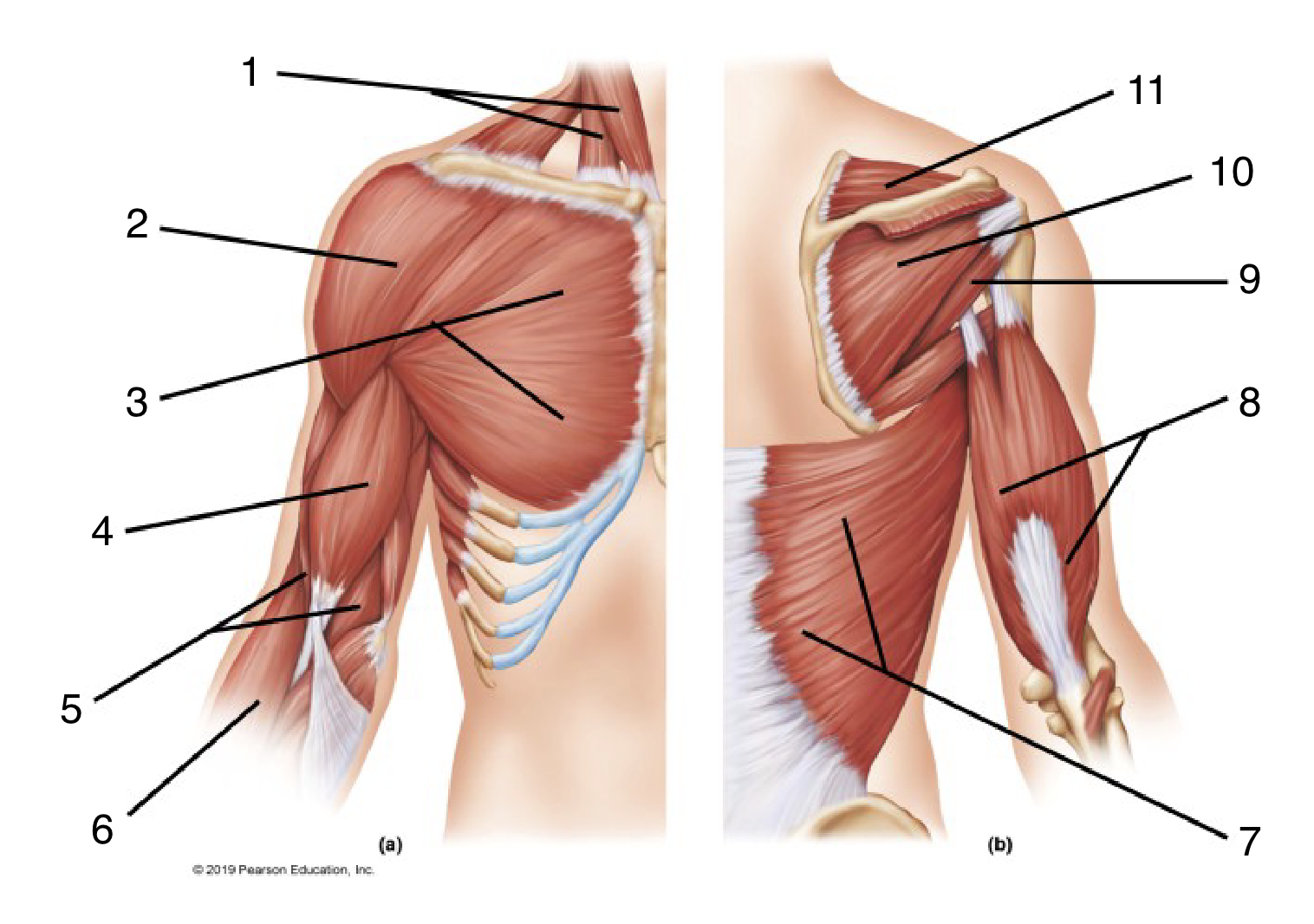
What is #10 and its action?
Infraspinatus: stabilize glenohumeral joint
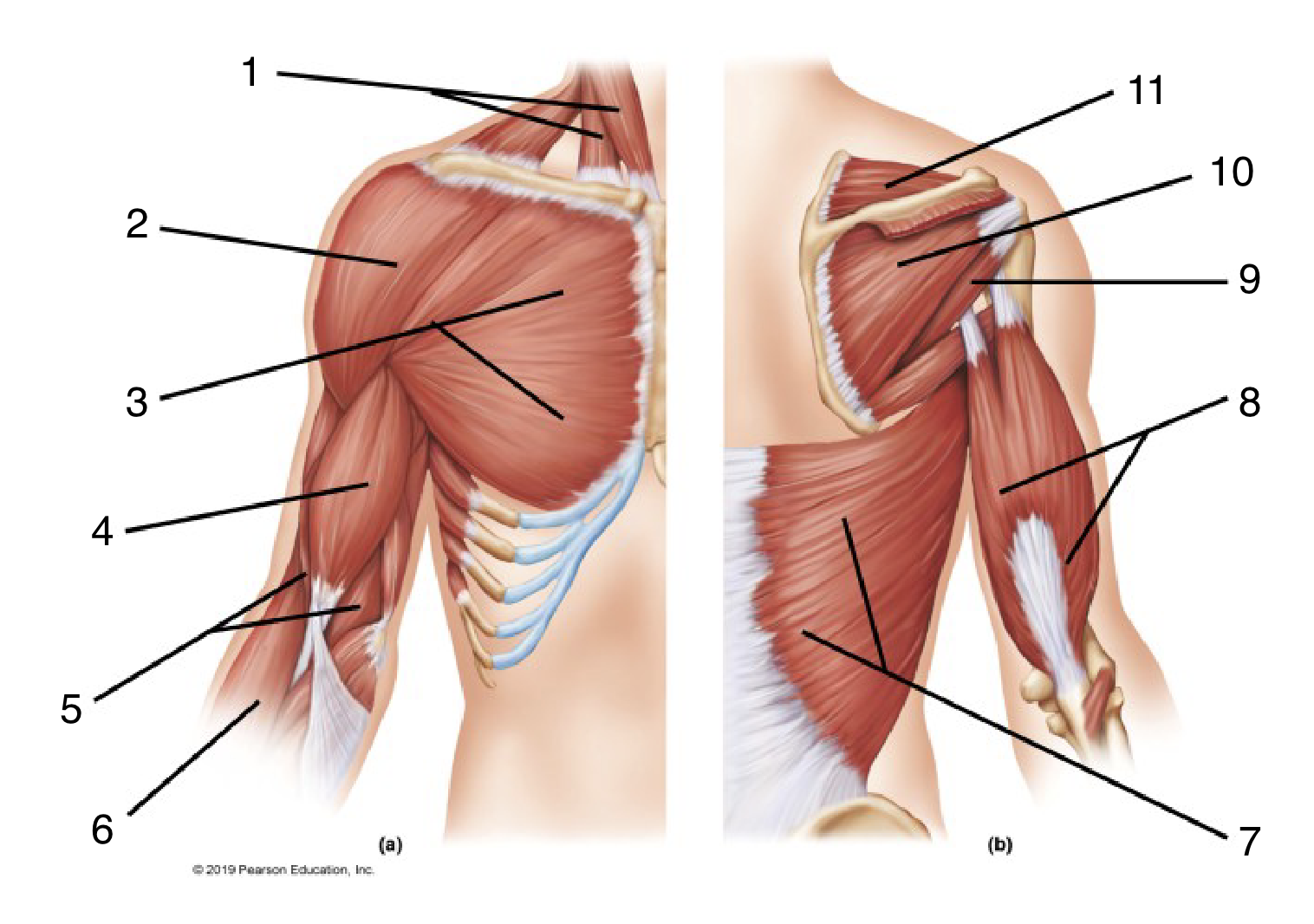
What is #11 and its action?
Supraspinatus: stabalize glenohumeral joint

What is #1 and its action?
Sartorius: cross your legs

What is #2 and its action?
Rectus femoris: extension of leg, flexion of thigh/femur

What is #3 and its action?
Vastus lateralis: extension of leg, flexion of thigh/femur

What is #4 and its action?
Vastus medialis: extension of leg, flexion of thigh/femur
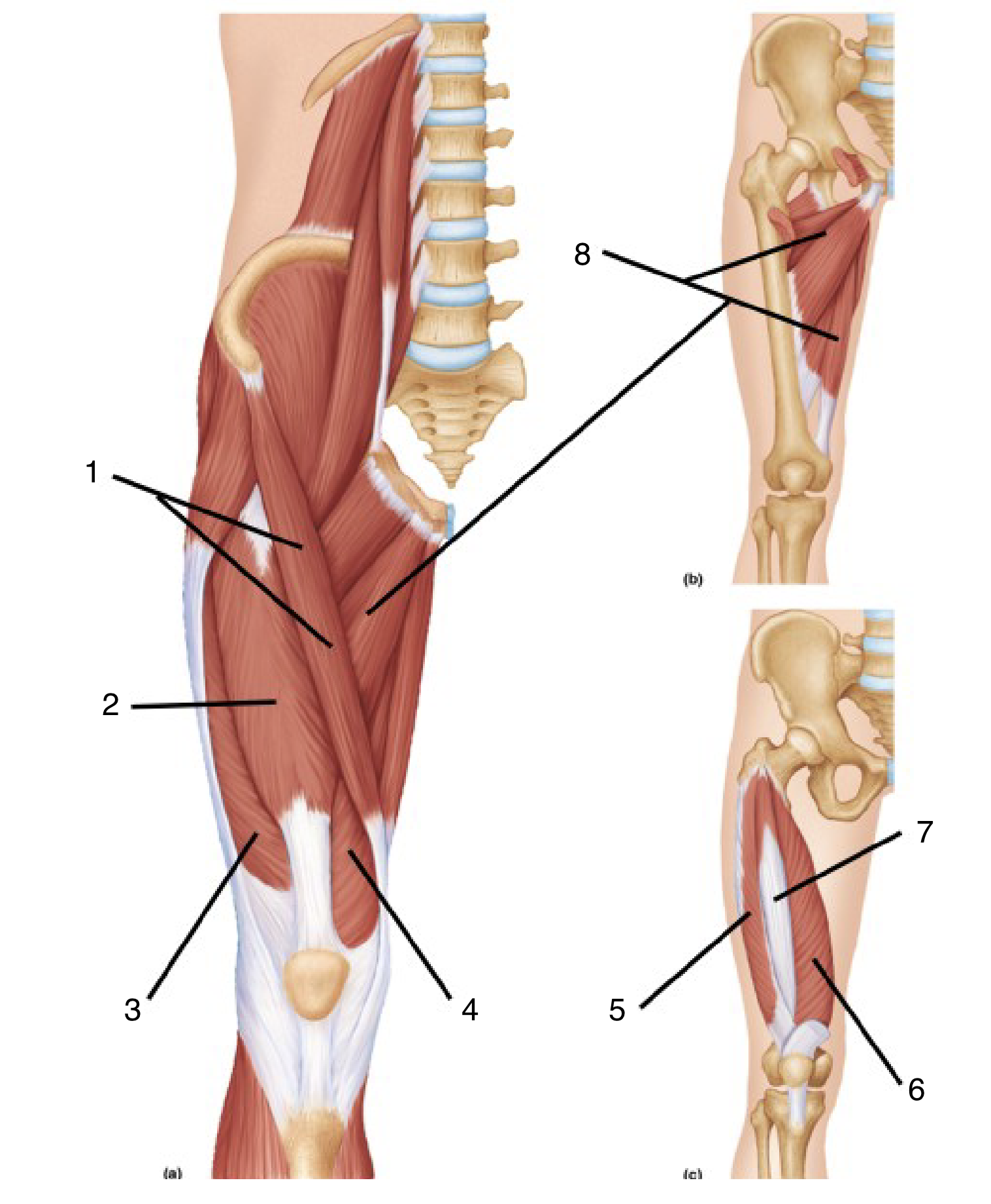
What is #5 and its action?
Vastus lateralis: extension of leg, flexion of thigh/femur

What is #6 and its action?
Vastus medialis: extension of leg, flexion of thigh/femur

What is #7 and its action?
Vastus intermedius: extension of leg, flexion of thigh/femur
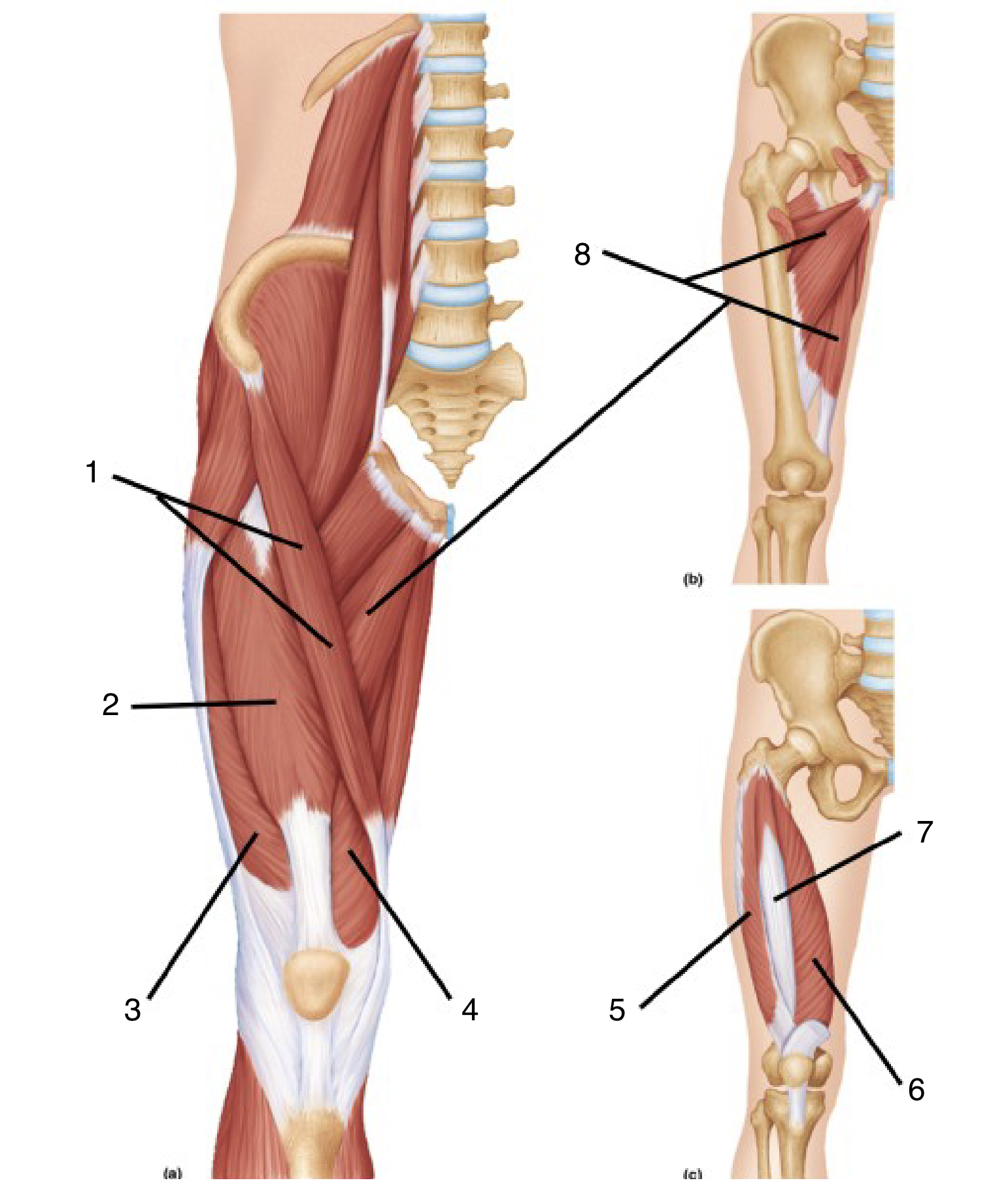
What is #8 and its action?
Adductor: adduction of thigh/femur

What is #1 and its action?
Semitendinosus: flexion of leg, extension of thigh/femur

What is #2 and its action?
Semimembranosus: flexion of leg, extension of thigh/femur

What is #3 and its action?
Biceps femoris: flexion of leg, extension of thigh/femur
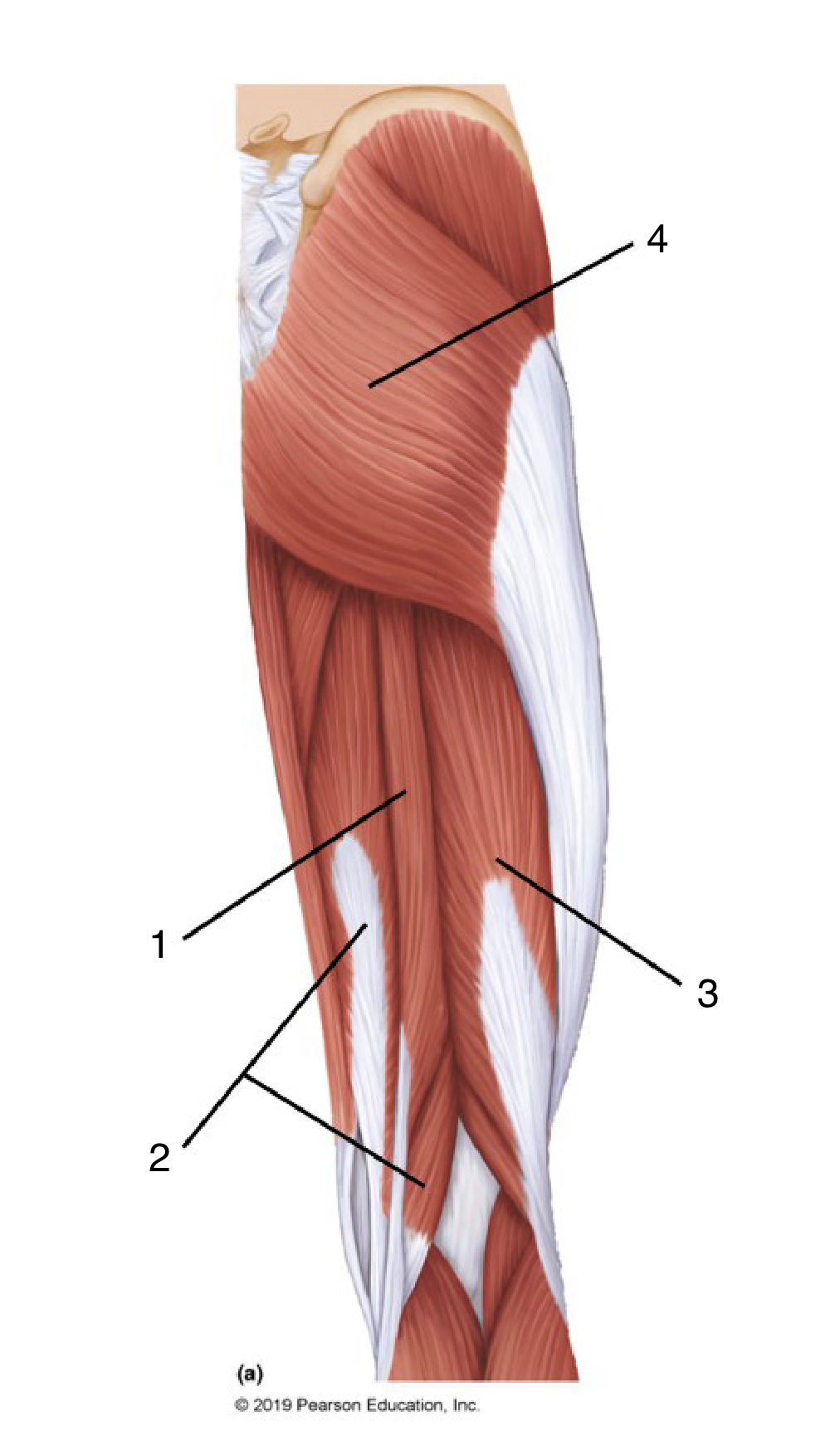
What is #4 and its action?
Gluteus maximus: extension of thigh/femur but only when thigh is already flexed
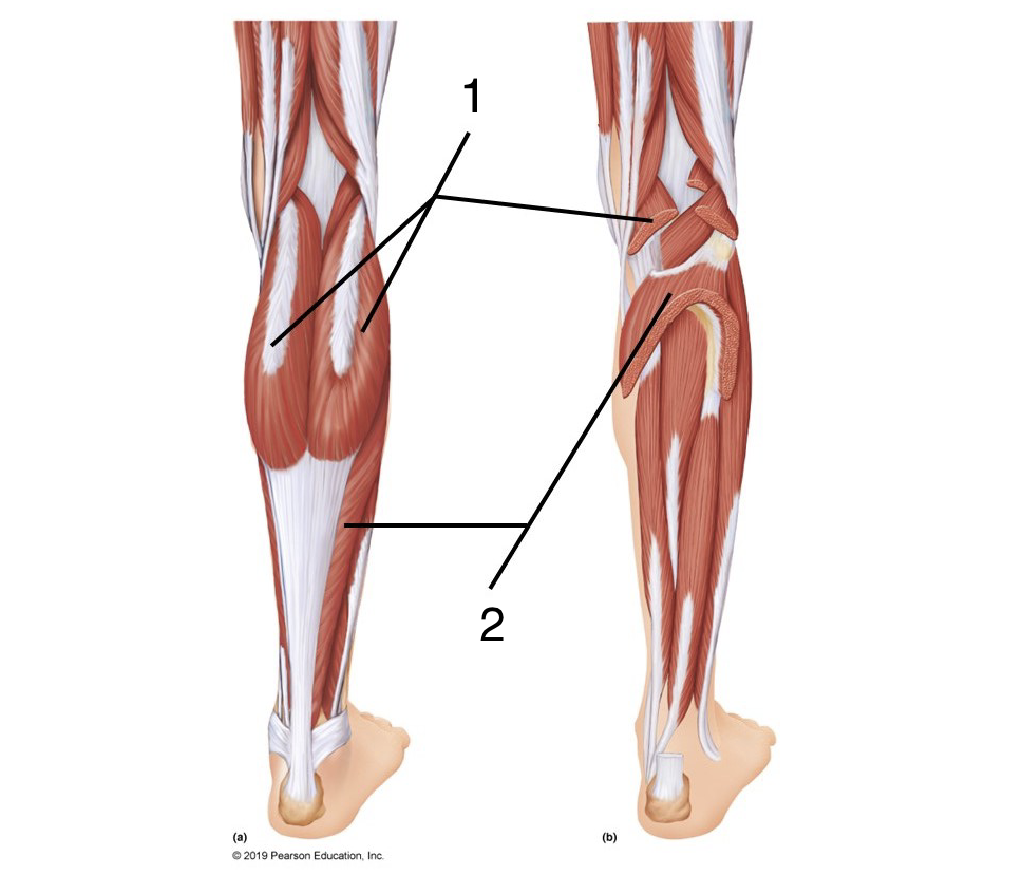
What is #1 and its action?
Gastrocnemius: plantar flexion of foot (jumping)

What is #2 and its action?
Soleus: plantar flexion of foot (standing)

What is #1 and its action?
Gastrocnemius: plantar flexion of foot (jumping)

What is #2 and its action?
Soleus: plantar flexion of foot (standing)

What is #3 and its action?
Tibialis anterior: dorsiflexion of foot

What is #1?
Nasal Concha

What is #2?
Soft Palate
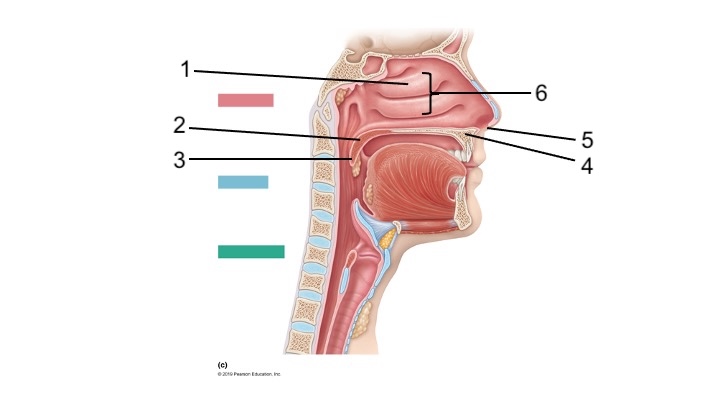
What is #3?
Uvula

What is #4?
Hard Palate

What is #5?
Nostril

What is #6?
Nasal Cavity
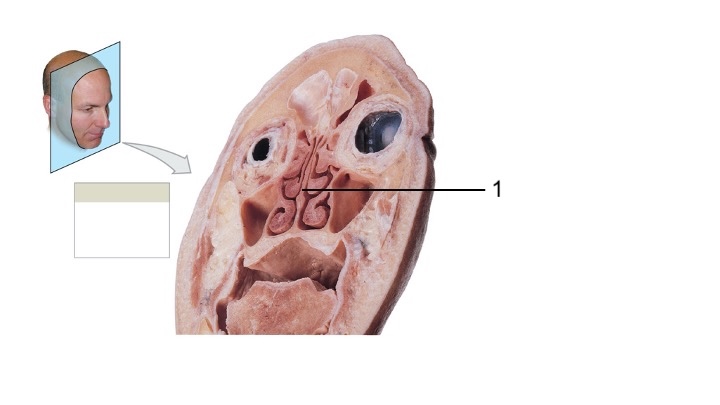
What is #1?
Nasal Septum

What is #1?
Paranasal Sinuses

What is #1?
Nasopharynx
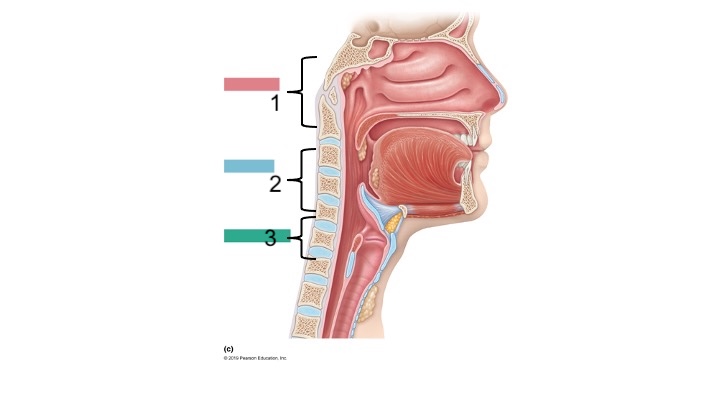
What is #2?
Oropharynx

What is #3?
Laryngopharynx

What is #1?
Eustachian Tube

What is #1?
Thyroid Cartilage

What is #2?
Cricoid Cartilage

What is #1?
Epiglottis

What is #2?
Vestibular Folds

What is #3?
Vocal Folds

What is #1?
Glottis

What is #1?
Trachea

What is #2?
Primary Bronchus

What is #3?
Secondary Bronchus

What is #4?
Tertiary Bronchus

What is #1?
Respiratory Bronchioles

What is #2?
Terminal Bronchioles

What is #3?
Alveolar Sac

What is #4?
Alveoli

What is #1?
3 Lobes in Right

What is #2?
2 Lobes in Left

What is #1?
Parietal Pleura
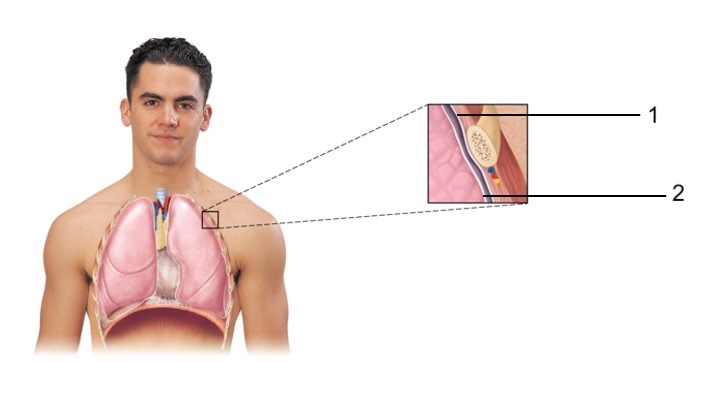
What is #2?
Visceral Pleura

What is #1?
Diaphragm

What is #2?
Mediastinum

What is #1 and where is it found?
Simple Squamous Epithelium: walls of alveoli

What is #2 and where is it found?
Pseudostratified Columnar Epithelium: lining of trachea and bronchi

What is #3 and where is it found?
Elastic Cartilage: epiglottis

What is #1?
Kidney

What is #2?
Ureters

What is #3?
Urinary Bladder

What is #1?
Renal Artery

What is #2?
Renal Vein

What is #1?
Cortex

What is #2?
Medulla

What is #3?
Renal Pelvis