Nuclear 200 Midterm 3
 Call Kai
 Learn
 Practice Test
 Spaced Repetition
 Match
 Flashcards
 Knowt Play
1/15

Earn XP
Description and Tags
Covers all of midterm 3 content
16 Terms
RBMK
Generation II BWR from the USSR
Moderator: Graphite
Coolant: Light Water
Fuel: Low enriched
has no pressure vessel, fuel assemblies located in channelized pressure tubes. This allows for it to be refueled while online

VVER
Generation II PWR from USSR
Has Hexagonal fuel assemblies
Coolant: light water

Advanced Gas Reactor (AGR)
Moderator: Graphite
Coolant: CO2
Fuel: Low enriched UO2
Has a very high thermal efficiency, and is more chemically stable due to the CO2. Was expensive to operate so not very popular

Canadian Deuterium Uranium Reactor (CANDU)
Moderator & Coolant: Heavy Water
slightly worse moderator but much worse absorber
Fuel: Natural Uranium
uses horizontal pressure tubes instead of a vessel
can be refueled online

Advanced BWR (ABWR)
Generation III BWR
Moderator & coolant: light water
Has no external recirculation pumps
vessels contains centrifugal pumps
no recirculation piping so lower risk of a LOCA (less points of failure)
Uses fine motion control rods for better fuel management

AP1000
Generation III+ PWR
moderator & coolant: light water
containment is the ultimate heat sink for decay heat in a LOCA
uses 80% less piping compared to similar 2-loop plant

Economic Simplified BWR
Gen III+ BWR
Uses natural circulation instead of pumped circulation of coolant
less power to run plant
no recirculation piping (lowers LOCA)
Passive system in case of LOCA
gravity forces water into core
Moderator & coolant: light water
Evolutionary Power Reactor (EPR)
Gen III+ PWR’
Coolant & Moderator: Light water
developed as a response to Chernobyl
Passive features limit accident consequences: double-walled containment, core catcher & spreading area
High Temperature Gas Reactor (HTGR)
Moderator: Graphite
Coolant: Helium c
Fuel: U-233, Th-232 mix
Helium can be used directly in gas turbine which eliminate the need for steam cycle, it also rejects heat at a very high temperature which can be used in other applications

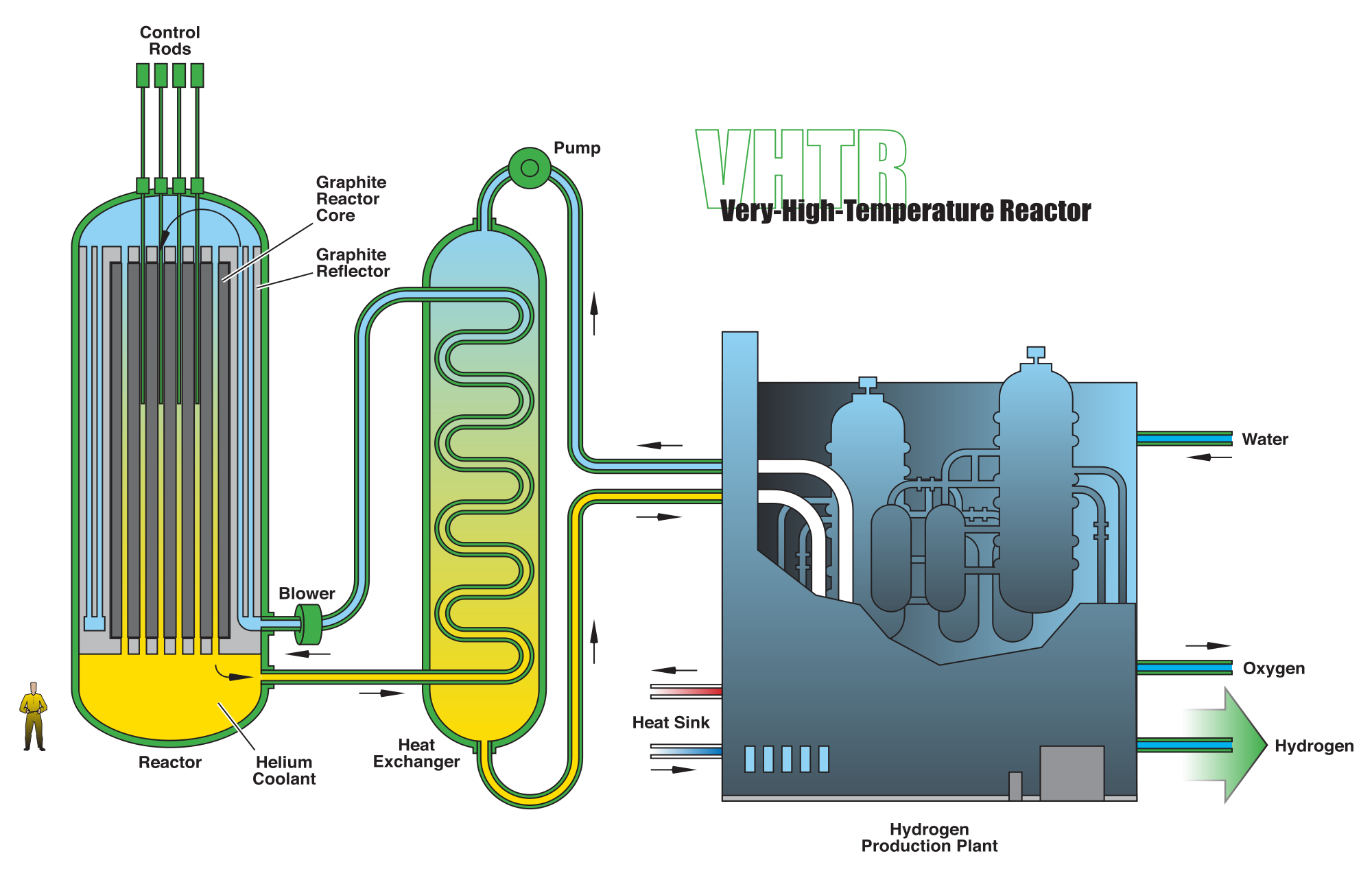
Very High Temperature Reactor (VHTR)
Gen IV based on HTGR
Moderator: graphite
Coolant: helium
Core set ups with TRISO fuel:
pebble bed: fuel in graphite spheres that flow through core
prismatic: fuel compacted in hexagonal blocks
core produces very high temperatures which can produce heat for other applications
Gas-Cooled Fast Reactor (GFR)
Moderator: None (its a fast reactor)
Coolant: Helium
Fuel: mix carbide fuel
uses exhaust from gas turbine to heat coolant in the secondary loop and can generate process steam for industrial applications
Hexagonal fuel lattice with ceramic-clad fuel roids

Sodium Fast Reactor (SFR)
Gen IV liquid metal reactor
Moderator: none (fast reactor)
Coolant: liquid sodium
excellent heat transfer ability in core and can operate at high temperature to improve efficiency
does not moderate neutrons, keeps them in the fast regimes
is highly reactive with water

Lead-Cooled Fast Reactor (LFR)
Moderator: none (fast reactor)
Coolant: molten lead
operates at high temperatures but low pressures, does not react to water or air
is very corrosive to stainless steal piping

Molten-Salt Reactor (MSR)
Fuel is not solid but mixed into a molten salt (fuel coolant mixture)
molten salt allows for online reprocessing of fuel to extract plutonium and uranium from breeding process

Small Modular Reactors (SMRs)
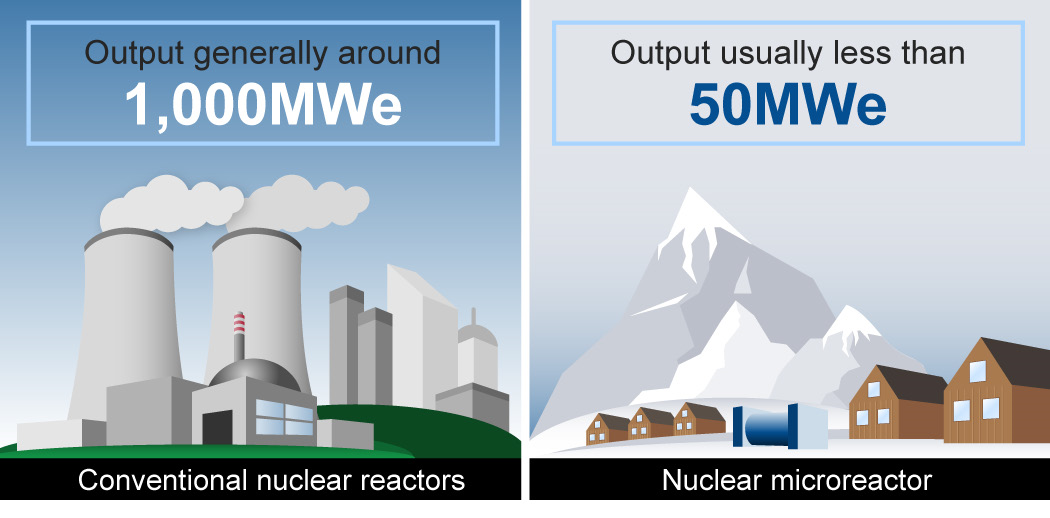
Small: 300 MWe
Modular: factor made parts for easier reproducibility (mass produced reactors)
Good for places not suitable for a large power plant (rural areas)
can take advantage of existing infrastructure
small designs allows for simpler and safer system (less piping, less points of failure)

Microreactors
About 10 MWe
very small carbon footprint
can serve as back power supply
built in rural communities