Chem 203 Dr. Weinschenk pKa Table
 Call Kai
 Learn
 Practice Test
 Spaced Repetition
 Match
 Flashcards
 Knowt Play
1/37

Earn XP
Description and Tags
Comprehensive vocabulary flashcards covering acid names, pKa values, conjugate base identities, and structural notes from the Chem 203 Dr. Weinschenk pKa Table.
38 Terms
Hydroiodic Acid (HI)
The strongest acid on the table with a pKa of −10, whose conjugate base is the iodide anion (I−).
Hydrobromic Acid (HBr)
A strong hydrohalic acid with a pKa of −9, forming the bromide anion (Br−) as its conjugate base.
Hydrochloric Acid (HCl)
A strong hydrohalic acid with a pKa of −7, whose conjugate base is the chloride anion (Cl−).
Protonated Alcohol (ROH2+)
An oxonium acid with a pKa of −3, which deprotonates to give an alcohol (ROH) conjugate base.
Sulfuric Acid (H2SO4)
A strong diprotic mineral acid with a pKa of −3, yielding the hydrogen sulfate anion (HSO4−) as its conjugate base.

p-Toluenesulfonic Acid (TsOH)
A strong organic sulfonic acid with a pKa of −3 , which deprotonates to form the tosylate conjugate base.

Hydronium Ion (H3O+)
The hydrated proton acid species with a pKa of −1.7 , whose conjugate base is neutral water (H2O).
Nitric Acid (HNO3)
A strong mineral acid whose deprotonation yields the resonance-stabilized nitrate anion (NO3−). pka= -1.4

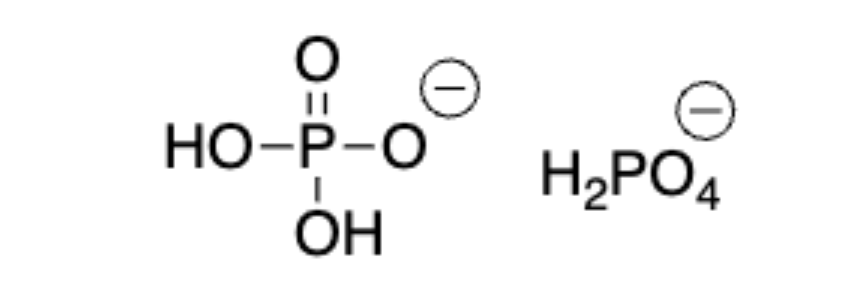
Phosphoric Acid (H3PO4)
A triprotic acid characterized by stepwise pKa values of 2.12, 7.21, and 12.32, forming dihydrogen phosphate (H2PO4−) upon initial deprotonation.
Hydrofluoric Acid (HF)
A weak hydrohalic acid with a pKa of 3, whose conjugate base is the fluoride anion (F−).

Carboxylic Acid (RCOOH)
An organic acid class with a pKa of 4, whose conjugate base is a resonance-stabilized carboxylate anion (RCOO−).
Hydrazoic Acid (HN3)
An inorganic acid with a pKa of 4.6, which forms the azide anion (N3−) as its conjugate base.
Hydrogen Sulfide (H2S)
A diprotic sulfur acid with a pKa of 7, whose conjugate base is the hydrogen sulfide anion (HS−).

β-Dicarbonyl
A compound with a pKa of 9, whose conjugate base benefits from "double" resonance stabilization between two flanking carbonyl groups.

Ammonium Ion (NH4+)
A positively charged nitrogen acid with a pKa of 9.25, whose conjugate base is ammonia (NH3).
Hydrogen Cyanide (HCN)
A weak acid with a pKa of 10, which deprotonates to give the cyanide anion (CN−).

Phenol
An aromatic alcohol with a pKa of 10, whose conjugate base is the phenoxide anion.
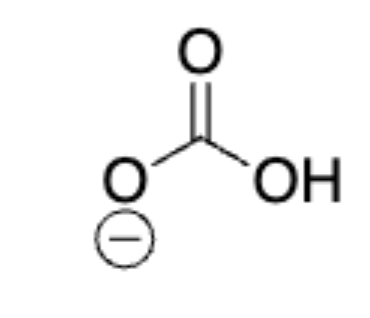
Bicarbonate (HCO3−)
An oxyanion acid with a pKa of 10.2, which deprotonates to form the carbonate anion (CO32−).

Thiol (RSH)
A sulfur-containing organic compound with a pKa of 12, forming a thiolate conjugate base (RS−).

Cyclopentadiene
A cyclic hydrocarbon with an unusually low pKa of 16 because its deprotonation produces an aromatically stabilized conjugate base.


Amide (H3C−CONH2) (look arrow)
An amide compound with a pKa of 15, whose deprotonation yields an amidate anion ("nitrogen enolate").

Water (H2O)
A neutral amphoteric molecule with an acid pKa of 15.7, whose conjugate base is the hydroxide anion (HO−).
Alcohol (ROH)
An organic hydroxy compound with a pKa of 17, which deprotonates to form an alkoxide conjugate base (RO−).
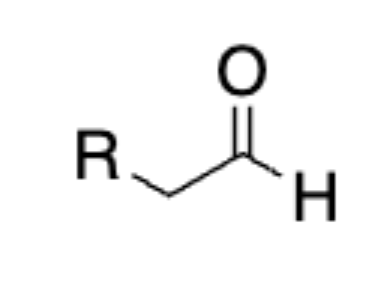
Aldehyde (R−CHO)
A carbonyl compound having an α-hydrogen with a pKa of 17, yielding an enolate conjugate base.


Ketone (RCOCH3)
A carbonyl compound having an α-hydrogen with a pKa of 19, yielding an enolate conjugate base.

Chloroform (HCCl3)
A haloalkane with a pKa of 15 , whose conjugate base is the trichloromethyl anion (CCl3−).

Esters (H3C−COOR)
Carboxylic acid derivatives with an α-carbon pKa of 24, forming an ester enolate conjugate base.

Acetylene (RC≡CH)
A terminal alkyne with an sp-hybridized carbon pKa of 24, forming an acetylide anion (RC≡C−).

Tertiary Amide (H3C−CONR2)(look arrow)
An amide whose α-carbon hydrogens possess a pKa of 25, deprotonating to form an amide enolate.

Acetonitrile (H3C−CN)
A nitrile compound with a pKa of 25, whose deprotonation gives the conjugate base H2C−CN−.
Molecular Hydrogen (H2) (hydride)
A diatomic gas with a pKa of 35, whose deprotonation forms the hydride anion (H−).
Ammonia (NH3)
A neutral nitrogen hydride with a pKa of 35, whose conjugate base is the strongly basic amide anion (NH2−).
Benzene
An aromatic hydrocarbon with a pKa of 43, forming the phenyl anion upon deprotonation.


Propene (Allylic C-H)
A hydrocarbon with an allylic pKa of 43, which upon deprotonation produces the resonance-stabilized allyl anion.
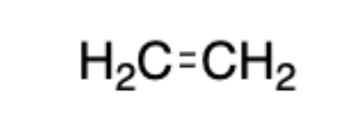
Ethylene (H2C=CH2)
An alkene with a pKa of 45, whose conjugate base is the vinyl anion (H2C=CH−).
Methane (CH4)
A saturated alkane with a pKa of 48, which deprotonates to give the methyl anion (CH3−).

Isobutane ((CH3)3CH)
The weakest acid on the table with a pKa of 65, whose conjugate base is the strongest base.


Cyclopropane C3H6
pKa=45
