Metabolism
 Call Kai
 Learn
 Practice Test
 Spaced Repetition
 Match
 Flashcards
 Knowt Play
1/155

There's no tags or description
Looks like no tags are added yet.
156 Terms
Absorptive state
State that follows right after a meal (and up to 4 hours after) that is characterized by glucose use and storage molecule synthesis
Process of triglyceride storage
circulate in chylomicrons until they reach adipose tissue
Lipoprotein lipase breaks down triglycerides into fatty acids and monoglycerides in the adipose tissue capillaries
fatty acids and monoglycerides diffuse across adipocyte membrane
fatty acids and monoglycerides recombined for storage
Process of amino acid storage
Some amino acids are taken up for protein synthesis but many are deaminated and used as substrates for the formation of storage fuels
If the amino acids are used for protein synthesis, what tissues take them up?
Skeletal muscle
If amino acids are to be deaminated, what tissues take them up?
Liver
Circulation of amino acids in the blood
Circulate freely
Process of amino acid deamination
Amino acids broken down into NH3 and alpha-keto acids
NH3 is detoxified into urea
alpha ketoacids are turned into CO2, H2O, and ATP via entry into the TCA cycle, or can be turned into fatty acids
What is the primary fuel during the absorptive state?
Glucose is used to meet the current metabolic needs of tissues
Circulation of carbohydrates in the blood
Circulate freely
What tissues uptake excess glucose?
Skeletal muscle, adipose tissue, and liver
What skeletal muscle does with excess glucose
Makes glycogen
What the liver does with excess glucose
make glycogen
turn glucose into fatty acids and alpha-glycerol phosphate, which can be turned into triglycerides
Fate of liver-synthesized fatty acids
Packaged to VLDLs and exported to adipocytes for storage
Metabolism of glucose
Can be made into glycogen or pyruvate
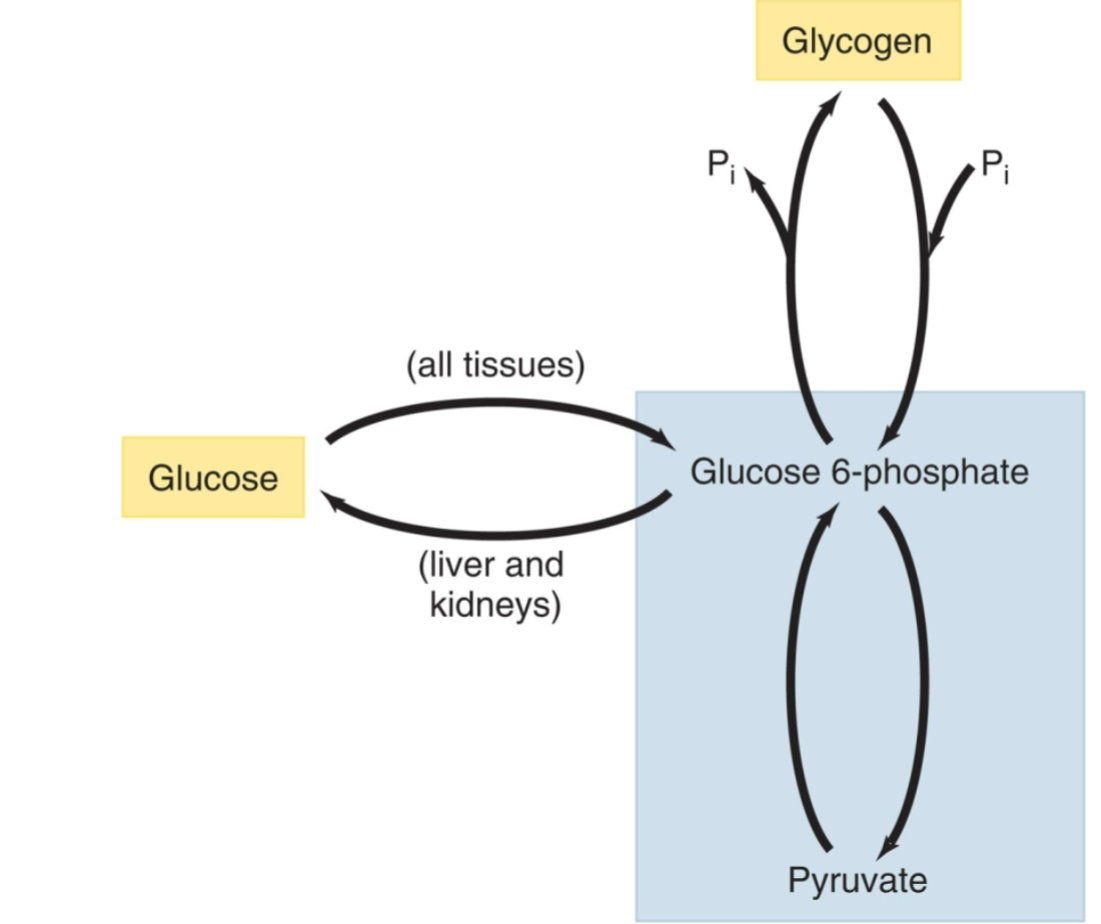
Fate of pyruvate
Go onto be made into Acetyl-CoA, then TCA cycle, then NADH/FADH2, the oxidative phosphorylation, then ATP
Oxidative deamination
The process of removing an ammonia and producing an alpha-ketoacid
Transamination
Removing ammonia from an existing amino acid, adding it to an existing alpha-ketoacid to form a new amino acid and a new alpha ketoacid
Basic process of the TCA cycle
2-carbon molecule is added to a 4-carbon molecule, forming a 6-carbon molecule. This then passes through the TCA cycle, producing NADH, FADH2, and CO2. The electron carriers proceed to oxidative phosphorylation to make ATP
Post-absorptive state
A state that start 3.5-4 hours after a meal and is characterized by the breakdown of storage fuels
What is the major source of energy for most tissues in the post-absorptive state?
Fatty acids
What is the major source of energy for the brain in the post-absorptive state?
Glucose!
can use some ketones
What happens in adipocytes during the post-absorptive state?
Triglycerides are cleaved into fatty acid and glycerol, which diffuse out for transport
Fate of adipose tissue derived glycerol
Can be taken up by the liver for gluconeogenesis
Fate of fatty acids derived from adipose tissue
Taken up by other tissues for fuel. Taken up by the liver to be turned into ketones
Breakdown of proteins for energy
breakdown proteins into amino acids
amino acids taken up by the liver
deaminate the amino acids into NH3 and alpha-ketoacids
alpha-ketoacids undergo gluconeogenesis
When are proteins used for energy?
As a last resort
Can muscles do gluconeogenesis?
No!
What products is glycogen broken down into in muscle cells?
Lactate and pyruvate
Fate of lactate
Lactate is taken up by the liver for gluconeogenesis
Glucose sparing
The idea that most tissues prefer fatty acids during the fasting state in order to preserve glucose for the brain
Basic steps of glycogenolysis
Glycogen→glucose-6-Phosphate→glucose
Basic steps of gluconeogenesis
lactate/amino acid intermediates→pyruvate→OAA→PEP→glucose-6-P→glucose
What is the most common type of fatty acid?
Even-numbered fatty acids
Basic steps of fatty acid oxidation
Fatty acids→fatty acyl-CoA→oxidation reaction→acetyl-CoA, NADH, FADH2
What is the fate of Acetyl-CoA from beta oxidation
Goes into the TCA cycle
What increments are fatty acids shortened by?
2 carbon increments
What is favored during the post-absorptive state: anabolism or catabolism?
Catabolism
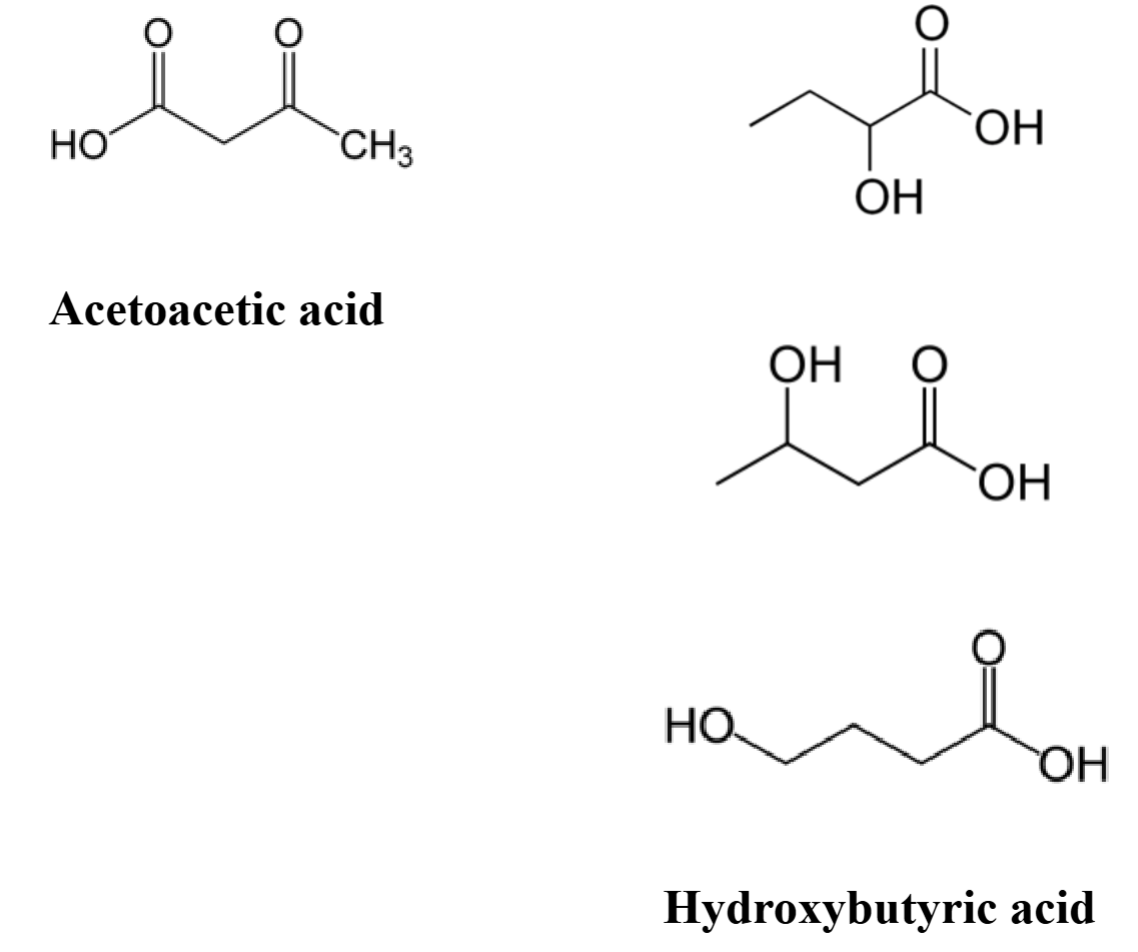
Ketones
Acetoacetate, hydroxybutarate, acetone
Levels of insulin in absorptive state vs postabsorptive state
high during absorptive state
low during post-absorptive state
Effects of insulin on skeletal muscle
increase glucose uptake and utilization
increase glycogen synthesis
increase net amino acid uptake
increase protein synthesis
Effects of insulin on adipocytes
increase glucose uptake and utilization
increase triglyceride synthesis
Effects on insulin on liver
increase glucose uptake
increase glycogen synthesis
increase triglyceride synthesis
shut off ketone synthesis
Molecular mechanism of action of insulin on cells
insulin binds to RTK
RTK dimerize and autophosphorylate due to the conformational change (receptor itself is a kinase)
Phosphoryl group serves as a docking site for proteins
Kinase cascade ensues after docked protein is activated
Molecular mechanism of increasing glucose uptake in muscles and adipocytes
insulin binds to RTK
signal transduction
intracellular vesicles with GLUT4 receptors fuse with the plasma membrane
GLUT4 receptors inserted into the plasma membrane
cells can move more glucose down its concentration gradient
Specific reactions that insulin upregulates in skeletal muscle
upregulate GLUT4 receptors (and therefore glucose uptake)
upregulate glycolytic enzyme
upregulate rRNA and ribosomal protein genes (to increase protein synthesis)
upregulate glycogenesis enzymes
upregulate amino acid transporters
INHIBIT proteolytic enzymes and glycogenolytic enzymes
INHIBIT glycogenolysis enzymes
Specific reactions that insulin upregulates in adipocytes
upregulate lipoprotein lipase
upregulate fatty acid synthesis enzymes
upregulate GLUT4 receptors (and therefore glucose uptake)
INHIBIT fatty acid breakdown enzymes
Specific reactions that insulin upregulates in liver
upregulate GLUT2 transporters (and therefore glucose uptake)
upregulate glucokinase
upregulate glycogenesis enzymes
upregulate glycolytic enzymes
upregulate PDH complex
upregulate fatty acid synthesis
downregulate glucose-6-phosphatase
downregulate gluconeogenic enzymes
downregulate ketone-producing enzymes
Inputs that stimulate insulin secretion
elevated amino acids in plasma
elevated glucose in plasma
parasympathetic activity
incretins like GIP and GLP1
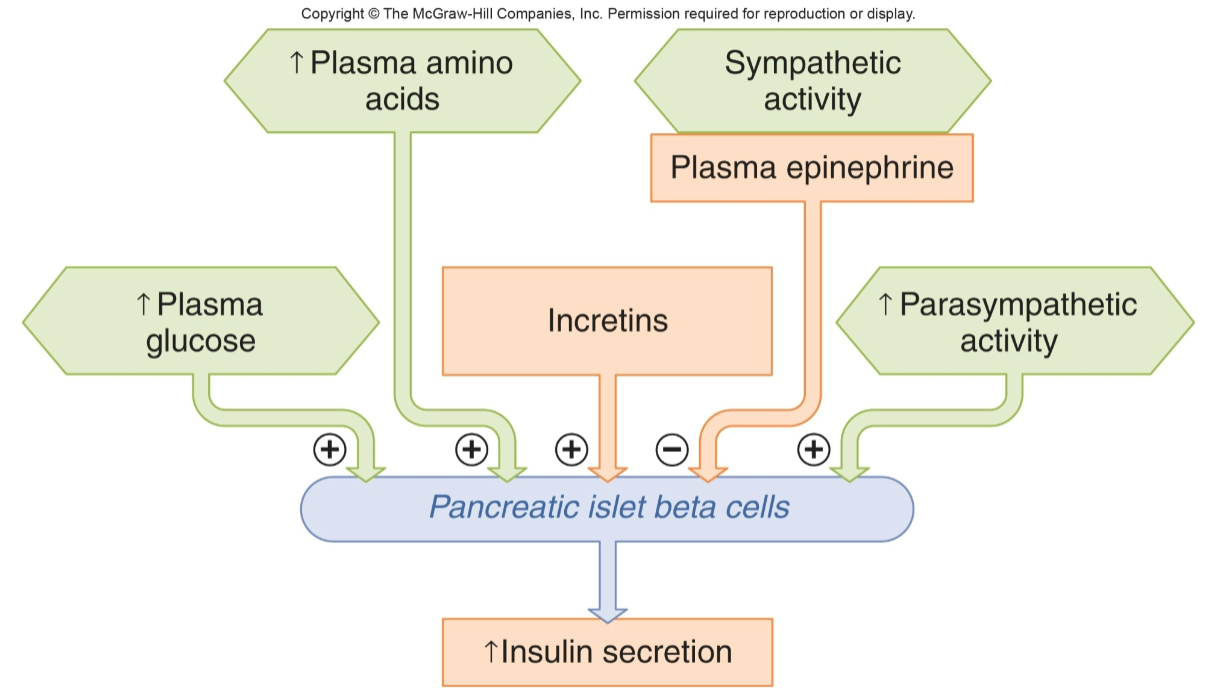
Inputs that downregulate insulin secretion
epinephrine
Actions of incretins on beta-islet cells
act in a feed-forward fashion
act as a preparatory signal telling pancreas that BGL hasn’t risen yet but it will
Where are incretins made?
Made in small intestine upon food arrival
How low plasma glucose triggers glucagon response
decreased plasma glucose causes increased glucagon synthesis, which increases glycogenolysis, gluconeogenesis, and ketone synthesis

How do pancreatic alpha islet cells know when to secrete glucagon?
Sensed directly by the alpha cells
Flow chart of how low blood glucose triggers a sympathetic response
decreased plasma glucose is sensed by the adrenal medulla AND central chemoreceptors, which eventually stimulates epinephrine/norepinephrine output and increased rates of lipolysis, glycogenolysis, and gluconeogenesis

Central sensing of low glucose
Central chemoreceptors can sense low BGL in the CSF
Permissivity of T3 on glucose level regulation
Upregulate beta-adrenergic receptors on adipocytes, which increases fatty acid release
Effect of constitutive levels of cortisol on glucose level regulation
constitutive levels are permissive for lipolysis and gluconeogenesis in the fasting state→do this by upregulating glucagon and epinephrine receptors
Effect of stress-induced levels of cortisol on glucose level regulation
stress levels induce protein catabolism, increase gluconeogenesis, decrease glucose uptake in muscle and adipose tissue, and increase triglyceride breakdown→remove GLUT4 receptors
Effects of growth hormone of glucose level regulation
increases adipocyte sensitivity to glucagon and epinephrine
stimulate gluconeogenesis
directly reduce the ability of insulin to upregulate glucose uptake
Causes of type I diabetes
autoimmune destruction of beta islet cells
Causes of type II diabetes
obesity, insulin insensitivity, downregulate insulin receptors
Onset of type I diabetes
childhood
Onset of type II diabetes
adulthood
Frequency of hypoglycemia in type I vs type II diabetics
frequent hypoglycemia in type I, infrequent hypoglycemia in type II
Treatment for type I
insulin replacement therapy
Treatment for type II
exercise, lifestyle modification→completely reversible early on
Percentage of type I vs type II diabetes cases out of all diabetes cases
5% type I
95% type II
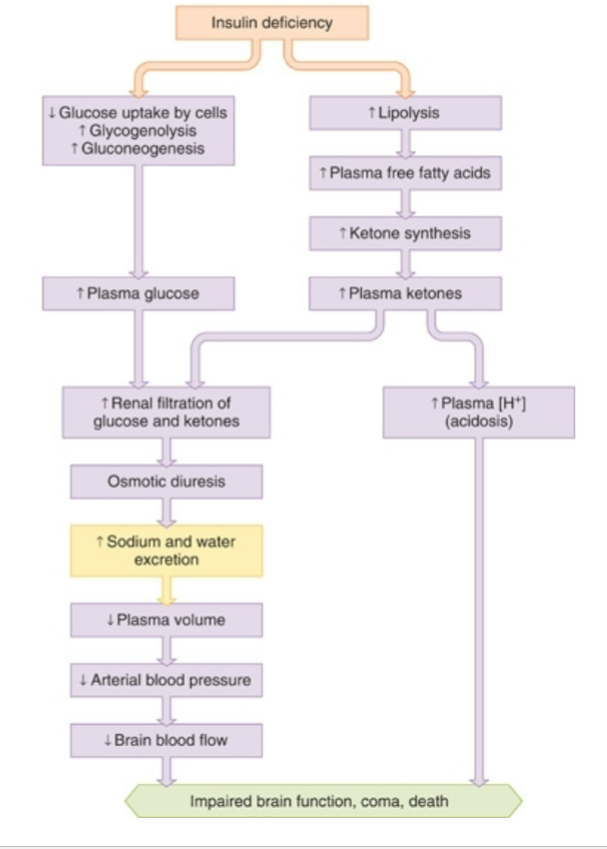
Effect of inability to secrete/recieve insulin
body thinks its in fasting state
Effects of inability to uptake glucose on cells
increased glycogenolysis and gluconeogenesis
increase ketone synthesis and metabolic ketoacidosis
increased BGL
increased renal excretion of glucose and ketone bodies
increased solute and water content in urine
increased sodium and water loss
decreased plasma volume
decreased BP
decreased blood flow to brain
impaired brain function, coma, death
What process does most energy come from?
catabolism
How energy comes from catabolism
Energy is liberated from chemical bonds to do work such as active transport, cross-bridge cycling, anabolism, etc
First law of thermodynamics
energy is neither created nor destroyed
Calculating internal energy liberated
deltaE=H+W
How much energy is lost as heat during metabolism?
~60% of energy is lost as heat. The rest is used for work
Immediate energy source for work
ATP
Basal metabolic rate
the metabolic rate at rest of someone who hasn’t consumed a meal in the last 12 hours
Factors affecting basal metabolic rate
age, sleep, gender, growth, body temp, food, stress, etc
What tissues do metabolism during the fasting state?
Skeletal muscle, kidney, brain, heart, liver
Most important factor for determining basal metabolic rate
T3 levels
How T3 levels regulate metabolism
Has a calorigenic effect that upregulates Na/K ATPase, which burns more ATP, increasing O2 consumption and heat production
T3 levels during starvation
Decreased in order to conserve energy stores
Effect of a meal on basal metabolic rate
Eating food increases the basal metabolic ~10-20% for a few hours after eating
What macromolecule increases basal metabolic rate the most?
proteins
Diet-induced thermogenesis
Heat production increases after a meal due to processing of nutrients by liver and energy use of GI tract for digestion, and the energy used for synthesizing storage molecules
How small changes in skeletal muscle activity affects energy expenditure
Even small changes in activity greatly increases energy expenditure
What burns the most number of calories?
Skeletal muscle activity
Does sitting burn calories?
Yes
What must be true to maintain body weight?
energy expenditure and energy taken in must be equal
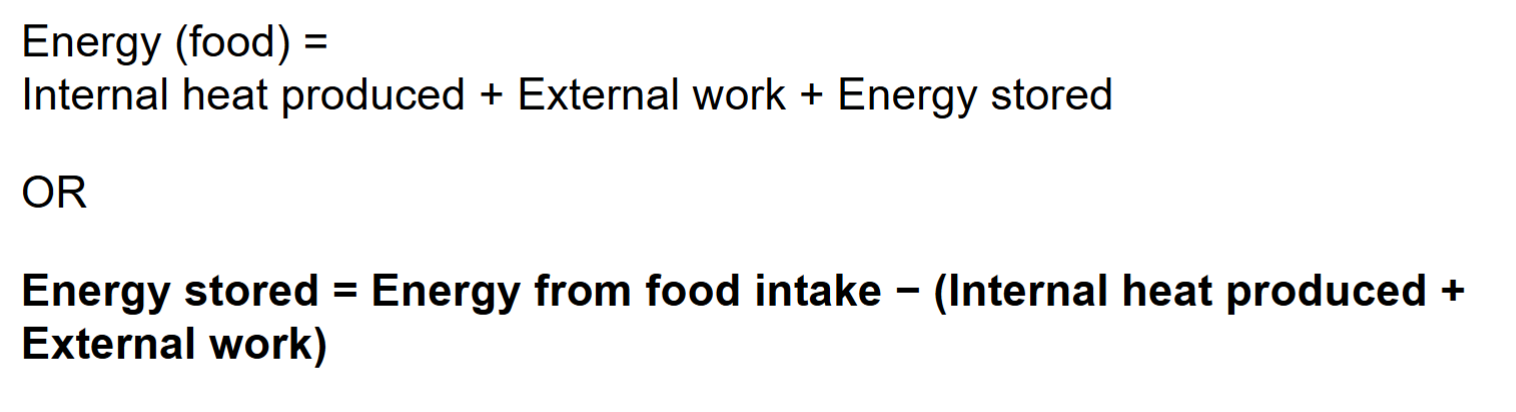
Equation that related energy obtained from food to body’s energy use
Energy consumption=energy expenditure
Leptin
Main regulatory hormone that connects energy intake and expenditure
Flow chart of stimuli that increase leptin secretion and the effects
When energy consumption exceeds energy expenditure, fat stores increase, which triggers the release of leptin from adipose tissue

How altered hippocampal activity specifically decreases energy intake and increases metabolic rate
inhibits the release of neuropeptide Y
promotes the release of POMC
Neuropeptide Y
Stimulates hunger
POMC
Processed into ACTH and alpha-MSH
alpha-MSH
inhibits hunger
Leptin and SNS input stimulation
increase SNS input to brown fat
increase SNS input to skeletal muscle
Effect of leptin-induced SNS input to brown fat
activates uncoupling proteins, which wastes the proton gradient on heat production instead of ATP generation
What type of hormone is leptin?
peptide
Leptin mediated SNS input to skeletal muscle
increases metabolic output
Is leptin a short term or long term regulator of metabolism?
Long term