AQA A-Level Biology 3.1.4.2: Enzymes, Inhibition and Activity
 Call Kai
 Learn
Learn Practice Test
 Spaced Repetition
 Match
Match Flashcards
 Knowt Play
1/92

There's no tags or description
Looks like no tags are added yet.
Name | Mastery | Learn | Test | Matching | Spaced | Call with Kai | Chat |
|---|
No analytics yet
Send a link to your students to track their progress
93 Terms
What are enzymes?
Biological catalysts that speed up chemical reactions essential to living organisms.
What are intracellular enzymes?
Enzymes that are secreted inside cells and catalyze metabolic reactions within those cells.
Give an example of an intracellular enzyme.
Catalase, which breaks down hydrogen peroxide into water and oxygen.
What are extracellular enzymes?
Enzymes that are secreted by cells and catalyze reactions outside the cell.
Provide an example of an extracellular enzyme.
Amylase, which hydrolyzes starch into maltose in the mouth.
What is the active site of an enzyme?
A specific region on the enzyme where the substrate fits.
What happens when a substrate enters the active site?
An enzyme-substrate complex forms, and the active site molds around the substrate.
What effect does the enzyme-substrate complex have on the substrate?
It puts stresses on the bonds inside the substrate and lowers the activation energy required for the reaction.
What is denaturation in enzymes?
The process where the enzyme's structure changes due to high temperature or pH, affecting the active site.
What are competitive inhibitors?
Compounds that compete with the substrate for the active site and block it temporarily.

What are non-competitive inhibitors?
Compounds that bind to an allosteric site, changing the shape of the active site so the substrate cannot bind.
What is activation energy?
The energy required to bring about a reaction.
Describe the induced fit model of enzyme action.
The active site of the enzyme changes shape to allow an enzyme-substrate complex to be formed.

What is the lock and key model?
An analogy for how enzymes work, where only the correctly sized substrate fits into the active site.

What is metabolism?
All the chemical processes that take place in living organisms.
What is the relationship between the active site and the substrate?
They are complementary, meaning they fit together specifically.
What happens to enzymes at temperatures above their optimum?
The bonds holding the tertiary structure together are broken, leading to denaturation.
How does pH affect enzyme activity?
Changing the pH can disrupt bonds and lead to denaturation of the enzyme.
What is kinetic energy?
The energy of motion, observable as the movement of an object or particles.
What is the significance of amylase in cooking sweet potatoes?
Amylase breaks down starch into simple sugars, increasing sweetness during baking.
What effect does freezing sweet potatoes have before baking?
It ruptures plant cell walls, concentrating flavor and enhancing sweetness during baking.
Why is baking preferred over boiling or microwaving sweet potatoes?
Baking allows for higher temperatures that activate amylase enzymes, enhancing sweetness and aroma.
What is the effect of temperature on amylase activity?
Amylase is most active at 75°C (167°F); higher temperatures can inactivate the enzyme.

What is the role of the Maillard reaction in baking?
It creates characteristic flavors of roasted foods by heating sugars and amino acids above 100°C.
What is the formula for calculating pH?
pH = - log10 [H+] ions.
What is the pH of a neutral solution?
pH 7.
What indicates an acidic solution?
A pH less than 7.
What indicates an alkaline solution?
A pH greater than 7.
What does pH measure?
The acidity or alkalinity of a solution on a logarithmic scale.
What is the rate of reaction in chemistry?
The speed of a chemical reaction, determined by the change in concentration of reactants or products over time.
What does it mean when an enzyme is described as specific?
Each enzyme catalyzes only a certain chemical reaction.
What is a substrate in enzymatic reactions?
A substance that is acted on by an enzyme, fitting into the active site.
How do enzymes speed up chemical reactions?
By acting as catalysts and lowering the activation energy required for the reaction.
What is the Lock and Key Model of enzyme action?
The original model stating that the active site is exactly complementary to the substrate, allowing for precise binding.
What is the Induced-fit Model of enzyme action?
An updated model suggesting that the active site changes shape slightly to fit around the substrate upon collision.
How does increasing enzyme concentration affect the rate of reaction?
It increases the number of active sites available, leading to more enzyme-substrate complexes until substrate becomes limiting.
What happens to the rate of reaction when substrate concentration is increased?
It increases until all enzyme active sites are occupied, after which further increases have no effect.
How does temperature affect enzyme activity?
Increased temperature raises kinetic energy, increasing reaction rate until the optimum temperature is reached; beyond that, enzymes may denature.
What is the effect of pH on enzyme activity?
Each enzyme has an optimum pH; deviations can disrupt ionic and hydrogen bonds, changing the active site's shape and potentially denaturing the enzyme.

What are enzyme inhibitors?
Molecules that bind to enzymes and slow or prevent their activity.
What is competitive inhibition?
When an inhibitor competes with the substrate for binding to the active site, blocking substrate access.
What is non-competitive inhibition?
When an inhibitor binds to an allosteric site, changing the enzyme's shape and preventing substrate binding, regardless of substrate concentration.
How can you differentiate between competitive and non-competitive inhibition?
Competitive inhibitors can be outcompeted by increased substrate concentration, while non-competitive inhibitors cannot.
What is an enzyme-substrate complex?
The intermediate formed when an enzyme binds to its substrate.

What happens to an enzyme at high temperatures?
It may denature, losing its specific shape and functionality due to broken bonds maintaining its tertiary structure.
What are the three types of bonds that maintain the tertiary structure in proteins?
Hydrogen bonds, ionic bonds, and disulfide bridges.
What is meant by the term 'saturation point' in enzyme reactions?
The point at which all active sites of the enzyme are occupied by substrate, and increasing substrate concentration no longer increases the reaction rate.

What is the role of kinetic energy in enzyme reactions?
Increased kinetic energy from higher temperatures leads to more frequent collisions between enzymes and substrates.
How does an enzyme's structure relate to its function?
The specific 3D structure of an enzyme determines its active site shape, which is crucial for substrate binding and catalytic activity.
What is the significance of the optimum temperature for enzymes?
It is the temperature at which an enzyme functions most efficiently; beyond this, activity decreases due to denaturation.
What is the effect of extreme pH on enzyme activity?
It can lead to denaturation, altering the active site shape and preventing substrate binding.
What is the relationship between enzyme concentration and substrate concentration?
Increasing enzyme concentration increases reaction rate until substrate becomes limiting; increasing substrate concentration increases rate until enzymes are saturated.

What is the primary role of enzymes in biological reactions?
Enzymes speed up the rate of chemical reactions by acting as catalysts.
What is a substrate?
A substrate is a specific molecule that an enzyme binds to and acts upon.
What happens to the enzyme after the reaction has occurred?
The enzyme is not used up and can catalyze more reactions.

Why do enzymes catalyze only one specific reaction?
Enzymes have a specific tertiary structure that allows them to bind only to a certain substrate.
What effect does a decrease in temperature have on enzyme-controlled reactions?
A decrease in temperature reduces the kinetic energy of molecules, leading to a slower rate of reaction.
What is the role of allopurinol in treating gout?
Allopurinol inhibits xanthine oxidase, reducing the production of uric acid and alleviating gout symptoms.
How does urea affect enzyme activity?
Urea breaks hydrogen bonds, which can disrupt the enzyme's structure and decrease its activity.
What is the significance of the active site in enzymes?
The active site is the region of the enzyme that binds to the substrate, and its shape is complementary to the substrate.
What is the relationship between enzyme shape and function?
The specific shape of an enzyme allows it to bind to its substrate, facilitating the chemical reaction.
What happens to potassium ion concentrations in the presence of a respiration inhibitor?
The concentration of potassium ions decreases due to reduced respiration and energy production.
What is the effect of competitive inhibitors on enzyme activity?
Competitive inhibitors reduce enzyme activity by blocking the active site, preventing substrate binding.
What is the effect of non-competitive inhibitors on enzyme activity?
Non-competitive inhibitors decrease enzyme activity regardless of substrate concentration by altering the enzyme's shape.
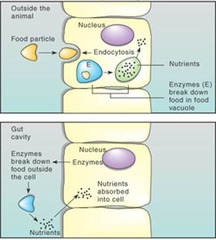
How do enzymes facilitate digestion in mammals?
Enzymes catalyze the breakdown of food substances into smaller, absorbable molecules during digestion.
What is the impact of acidic conditions on bacterial enzymes?
Acidic conditions can denature bacterial enzymes, preventing them from catalyzing reactions that lead to food decay.
What is the relationship between enzyme specificity and tertiary structure?
The specific tertiary structure of an enzyme determines its specificity for a particular substrate.
What can happen to an enzyme if it is exposed to extreme temperatures?
Extreme temperatures can lead to denaturation, altering the enzyme's shape and rendering it inactive.
How does the addition of an inhibitor affect enzyme activity over time?
The addition of an inhibitor can lead to a decrease in enzyme activity, stabilizing at a lower rate of reaction.
What is the effect of enzyme concentration on reaction rate?
Increasing enzyme concentration generally increases the reaction rate, provided substrate is available.
How does substrate concentration affect enzyme activity?
Increasing substrate concentration increases enzyme activity up to a saturation point, beyond which the rate levels off.
What is the significance of enzyme inhibitors in metabolic pathways?
Enzyme inhibitors regulate metabolic pathways by controlling the rate of specific reactions.
What is the function of proteases?
Proteases are enzymes that catalyze the breakdown of proteins into smaller peptides or amino acids.

What is the primary function of enzymes in metabolic reactions?
Enzymes speed up the rate of metabolic reactions by lowering the activation energy.
How do enzymes affect the temperature of reactions?
Enzymes allow reactions to occur at lower temperatures than they would without the enzyme.
What is the Induced-fit Model?
The Induced-fit Model suggests that the active site of an enzyme can change shape slightly to fit around the substrate upon collision, forming an ES complex.
What happens to enzyme activity when enzyme concentration increases?
Increasing enzyme concentration increases the number of active sites available, leading to more ES complexes and an increased rate of reaction until substrate becomes the limiting factor.
What is a limiting factor in enzyme reactions?
A limiting factor is a condition that restricts the rate of reaction, such as substrate concentration or enzyme concentration.
What is the optimum temperature for most enzymes?
Most enzymes have an optimum temperature around 37°C, but some, like pepsin, work best at lower pH levels.
What occurs when an enzyme is denatured?
Denaturation results in the active site changing shape, preventing substrate binding and stopping the reaction.
How can the effects of competitive inhibitors be reversed?
Increasing substrate concentration can outcompete the inhibitor for the active sites, reversing the effects of competitive inhibition.
What is the difference between competitive and non-competitive inhibition?
Competitive inhibitors bind to the active site, while non-competitive inhibitors bind to a different site, altering the enzyme's shape.
What effect does increasing substrate concentration have on non-competitive inhibition?
Increasing substrate concentration does not affect the rate of reaction in non-competitive inhibition because the inhibitor does not compete for the active site.
What role do protons (H atoms) play in enzyme activity?
Protons allow for tunneling through energy barriers, facilitating enzyme reactions beyond just lowering the activation energy.
What is meant by the term 'enzymes are specific'?
Enzymes are specific because they catalyze only certain reactions due to the unique shape of their active site.
How do pH levels affect enzyme activity?
Extreme pH levels can disrupt ionic and hydrogen bonds in the enzyme, altering its tertiary structure and preventing substrate binding.
What is the saturation point in enzyme reactions?
The saturation point is reached when all enzyme active sites are occupied, and increasing substrate concentration no longer affects the rate of reaction.
What happens to enzyme activity when the temperature exceeds the optimum level?
Exceeding the optimum temperature can lead to denaturation, where the enzyme's active site changes shape and no longer fits the substrate.
What is the significance of the tertiary structure of an enzyme?
The tertiary structure determines the shape of the active site, which is crucial for the enzyme's specificity and function.
What is an allosteric site?
An allosteric site is a site on an enzyme where non-competitive inhibitors can bind, causing a change in the enzyme's shape.
Why are enzymes not used up in reactions?
Enzymes are not consumed in reactions; they can catalyze multiple reactions without being permanently altered.
What is the effect of increasing substrate concentration on enzyme activity?
Increasing substrate concentration generally increases the rate of reaction until the enzyme becomes saturated.
What happens to enzyme activity at extreme pH levels?
Extreme pH levels can denature the enzyme, changing its active site shape and preventing substrate binding.