4b diversity and selection
 Call Kai
 Learn
 Practice Test
 Spaced Repetition
 Match
 Flashcards
 Knowt Play
1/22

There's no tags or description
Looks like no tags are added yet.
23 Terms
diploid cells
diploid cells contain two of each chromosomes (2n). the chromosomes are the same size and have the same genes but can have different alleles
humans have 23 homologous pairs of matching chromosomes. therefore the diploid number for humans is 46
gametes in fertilisation
gametes are the sperm cells in males and egg cells in females. they have a haploid number of chromosomes (n)
two gametes join together at fertilisation to form a zygote. half of the chromosomes are from the father, and half from the mother. zygotes are diploid
fertilisation and how it increases genetic diversity
a haploid sperm fuses with a haploid egg, making a diploid cell.
during sexual reproduction, fertilisation is random, meaning zygotes with different combinations of chromosomes are made. this increases genetic diversity within a species
meiosis definition
meiosis is a type of cell division which happens in the reporductive organs of multicellular, eukaryotic organisms. the cells begin diploid and finish haploid. it is used to create gametes
the stages before meiosis
dna unravels and replicates so there are two copies of each cheomosome
the dna condenses to form double armed chromosomes, made from two sister chromatids. they are joined by a centromere

meiosis 1
the chromosomes arrange themselves into homologous pairs
the pairs are separated, halving the chromosome number

meiosis 2
the paire of sister chromatids that make up each chromosome are divided
four genetically different haploid cells are produced

crossing over (chiasmata)
during meiosis 1, homologous chromosomes come together and pair up. thr chromatids twist around each other and bits of chromatids swap over. the chromosomes still contain the same genes but now have a different combination of alleles
independent segregation
each homologous pair of chromosomes in your cells is made up of maternal and one paternal chromosome. when the homologous pairs are separated in meiosis 1, the chromosomes that end up in each daughter cell is random. therefore, each daughter cell has a different combination of maternal and paternal chromosomes
base substitution
one base is substituted with another
ATGCCT → ATTCCT
not all substitutions with change the amino acid sequence
base deletion
one base is deleted
ATGCCT → ATCCT
it will shift all of the bases to the left, changing the amino acid sequence
mutagenic agents
mutagenic agents increase rate of genetic mutation, e.g. uv radiation, ionising radiation
chromosome non-disjunction
a chromosome fails to separate properly during meiosis 1, so one cell gets an extra copy of it. when the gamete with an extra chromosome fuses with another, the zygote has three copies of the chromosome
genetic diversity
the number of different alleles in genes in a species or population
genetic bottlenecks
an event that causes a big reduction in a population, reducing the number of different alleles in a gene pool and reducing genetic diversity

how natural selection works
not all individuals are as likely to reproduce as each other. individuals that have an allele that increases their chances of survival will reproduce more
so a greater proportion of the next generation inherits the beneficial allele
so they ard more likely to survive, and pass on their genes. the freqeuncy of the allele continues increasing
over generations this leads to evolution
behavioural adaptations
ways an organism acts to increase its chance of survival
physiological adaptations
processes inside an organism’s body that increase its chance of survival
anatomical adaptations
structual features of an organisms body that increase its chance of survival
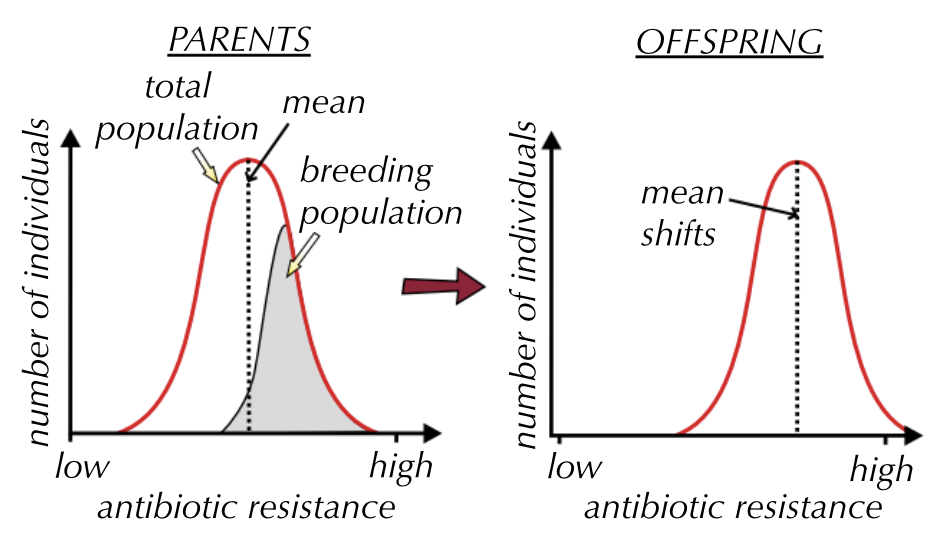
directional selection
individuals with alleles for characteristics of an extreme type are more likely to survive and reproduce
stabilising selection
individuals with alleles for characteristics towards the middle of the range are more likely to survive and reproduce

required practical 6
testing the effects of antibiotics
the bacteria are grown in a liquid broth
using a sterile pipette, bacteria is transferred from the broth to an agar plate
sterile forceps are used to place paper discs soaked with different antibiotics onto the plate
a lid is taped onto the petri disc. it is placed upside down and incubated at around 25°C for 48 hours
anywhere the bacteria can’t grow is seen as a clear patch, called the inhibition zone. the larger the zone, the better the antibiotic
required practical 6
aseptic techniques
disinfect work surfaces and put contaminated utensils in a beaker of disinfectant to minimise contamination
use sterile equipment and discard safely after use
work near a bunsen flame so microbes in the air are drawn away from the plate
keep the agar plate lid on as much as possible to reduce airborne microbes getting in
flame the neck of the glass container of broth after it’s opened and before it’s closed to prevent unwanted organisms falling in