BIOL 300- Chp. 18: Cell Division (EXAM 4)
 Call Kai
 Learn
 Practice Test
 Spaced Repetition
 Match
 Flashcards
 Knowt Play
1/49

There's no tags or description
Looks like no tags are added yet.
50 Terms
What is the essential mechanism by which living things reproduce?
A. Cell cycle
B. Apoptosis
C. Necrosis
D. Quiescence
A. Cell cycle

Which phase of the cell cycle includes mitosis?
A. G₀
B. S
C. M
D. G₁
C. M

What is a sister chromatid?
A. One replicated chromosome copy joined to its partner
B. An entire centrosome
C. A protein-degrading enzyme
D. A nuclear membrane fragment
A. One replicated chromosome copy joined to its partner

Where are replicated sister chromatids joined?
A. Centrosome
B. Centromere
C. Golgi apparatus
D. Nuclear membrane
B. Centromere

What does an active Cdk-cyclin complex do?
A. Phosphorylates cell-cycle proteins
B. Degrades all DNA
C. Forms a cell wall
D. Digests mitochondria
A. Phosphorylates cell-cycle proteins

What regulates cell-cycle progression through changes in its cellular concentration?
A. Cyclin
B. Cytochrome C
C. Myostatin
D. Cohesin
A. Cyclin
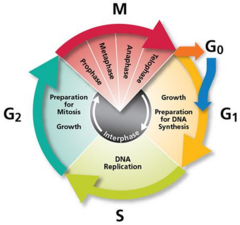
Which processes control cellular cyclin concentrations?
A. Translation and protein degradation
B. DNA replication and cytokinesis
C. Phagocytosis and necrosis
D. Chromosome separation and condensation
A. Translation and protein degradation

What is the general role of cell-cycle checkpoints?
A. Hold progression until conditions are suitable
B. Permanently stop all cells
C. Directly divide mitochondria
D. Stimulate necrosis
A. Hold progression until conditions are suitable
What may an intra-S checkpoint do when DNA is severely damaged?
A. Slow replication for repair
B. Immediately start cytokinesis
C. Release cytochrome C
D. Eliminate all cyclins
A. Slow replication for repair

What is another name for the G₀ phase?
A. Quiescence
B. Prometaphase
C. Apoptosis
D. Anaphase
A. Quiescence
What is required for a cell to transition out of G₀?
A. Accumulation of G₁ cyclins
B. Cleavage of cohesin rings
C. Formation of a new cell wall
D. Release of cytochrome C
A. Accumulation of G₁ cyclins
Approximately how often do gut cells divide, according to the source?
A. Every 12 hours
B. Every year
C. Every week
D. Never
A. Every 12 hours

What major event occurs during S phase?
A. DNA replication
B. Chromatid separation
C. Nuclear membrane breakdown
D. Cell-wall formation
A. DNA replication
What holds sister chromatids together after DNA replication?
A. Cohesins
B. Caspases
C. Growth factors
D. Myostatin
A. Cohesins

What can result from defective cohesin rings?
A. Chromosome segregation errors
B. Increased nutrient availability
C. Suppression of DNA replication origins
D. Reduced protein translation
A. Chromosome segregation errors

What triggers entry into M phase?
A. M-Cdk
B. Myostatin
C. Cytochrome C
D. A survival factor
A. M-Cdk

How does M-Cdk promote chromosome condensation?
A. It phosphorylates condensin subunits
B. It cleaves the nuclear membrane
C. It destroys spindle microtubules
D. It releases survival factors
A. It phosphorylates condensin subunits
What can influence Cdc25 activity through MAPK cascades?
A. Environmental signals
B. Random protein inheritance
C. Cell-wall formation
D. Golgi fragmentation alone
A. Environmental signals
What is the major microtubule-organizing center described in the source?
A. Centrosome
B. Centromere
C. Apoptosome
D. Contractile ring
A. Centrosome

Why must the centrosome duplicate before division?
A. So each daughter cell receives one
B. To release cytochrome C
C. To break down DNA
D. So caspases can be activated
A. So each daughter cell receives one
What is microtubule dynamic instability?
A. Continuous growth and shrinkage
B. Permanent attachment to DNA
C. Irreversible protein degradation
D. Division of chloroplasts
A. Continuous growth and shrinkage
What forms when microtubules from opposite centrosomes interact and stabilize?
A. Interpolar microtubules
B. Cohesin rings
C. Nuclear pores
D. Apoptosomes
A. Interpolar microtubules
What helps crosslink and stabilize interpolar microtubules?
A. Large motor proteins
B. Survival factors
C. Caspases
D. G₁ cyclins
A. Large motor proteins
What happens to the nuclear membrane during prometaphase?
A. It breaks down
B. It forms a cell wall
C. It divides mitochondria
D. It releases mitogens
A. It breaks down

What connects chromosomes to the mitotic spindle in prometaphase?
A. Kinetochores
B. Caspases
C. Growth factors
D. Phagocytes
A. Kinetochores
Where do chromosomes line up during metaphase?
A. Halfway between the spindle poles
B. Inside the Golgi apparatus
C. At one cell pole
D. Outside the cell
A. Halfway between the spindle poles

What separates during anaphase?
A. Sister chromatids
B. Cyclin subunits
C. Growth factors
D. Survival receptors
A. Sister chromatids
What must happen to cohesin rings for sister chromatids to separate?
A. They must be cleaved
B. They must become growth factors
C. They must form a cell wall
D. They must bind cytochrome C
A. They must be cleaved
Which complex triggers chromosome separation?
A. Anaphase-promoting complex
B. Bcl-2 family
C. Nuclear membrane
D. Condensin complex
A. Anaphase-promoting complex
What divides an animal cell in two during cytokinesis?
A. Contractile ring
B. Apoptosome
C. Centrosome
D. Nuclear pore
A. Contractile ring

What forms during cytokinesis in plant cells?
A. A new cell wall
B. A new mitochondrion
C. A cohesin ring
D. A survival factor
A. A new cell wall
How do mitochondria and chloroplasts duplicate?
A. By division
B. By Golgi fragmentation
C. By caspase activation
D. By cyclin degradation
A. By division
What happens to the Golgi apparatus during M phase?
A. It fragments and associates with spindle microtubules
B. It becomes the contractile ring
C. It replicates the chromosomes
D. It forms the nuclear membrane
A. It fragments and associates with spindle microtubules
How are soluble cytoplasmic proteins inherited during cytokinesis?
A. Randomly
B. Only by one daughter cell
C. Through the nuclear membrane
D. Only through chloroplast division
A. Randomly
What is apoptosis?
A. Programmed cell death
B. Uncontrolled cell growth
C. DNA replication
D. Chromosome condensation
A. Programmed cell death

Approximately what fraction of nerve cells die during development, according to the source?
A. One-half
B. One-tenth
C. One-quarter
D. All
A. One-half
What determines organ size according to the source?
A. The balance between cell birth and cell death
B. Cell birth alone
C. Cell death alone
D. Centrosome size alone
A. The balance between cell birth and cell death
What can phenobarbital exposure cause in the human liver?
A. Enlargement through stimulated cell division
B. Permanent cessation of division
C. Immediate loss of all liver cells
D. Formation of a new cell wall
A. Enlargement through stimulated cell division
What commonly causes necrosis?
A. Injury
B. Normal developmental signaling alone
C. G₁ cyclin accumulation
D. Spindle formation
A. Injury
Which consequence is associated with necrosis?
A. Inflammation and damage to neighboring cells
B. No effect on surrounding cells
C. Guaranteed organ regeneration
D. Formation of sister chromatids
A. Inflammation and damage to neighboring cells
What clears cells undergoing apoptosis?
A. Phagocytes
B. Condensins
C. Kinetochores
D. Cyclins
A. Phagocytes
What are caspases?
A. Proteases important in apoptosis
B. Chromosome-joining rings
C. Microtubule-organizing centers
D. Inhibitory growth factors
A. Proteases important in apoptosis
How is the apoptotic proteolytic cascade described?
A. Irreversible and tightly controlled
B. Reversible and uncontrolled
C. Restricted to liver cells
D. Independent of proteins
A. Irreversible and tightly controlled
How do pro-survival Bcl-2 family proteins block caspase activation?
A. By blocking cytochrome C release
B. By cleaving cohesin rings
C. By fragmenting the Golgi
D. By activating necrosis
A. By blocking cytochrome C release
What do the pro-death proteins Bax and Bak promote?
A. Formation of the apoptosome
B. Formation of a plant cell wall
C. Accumulation of G₁ cyclins
D. Inhibition of mitochondrial division
A. Formation of the apoptosome
What limits proliferation in unicellular organisms such as bacteria and yeast?
A. Nutrient availability and space
B. Survival factors from target cells alone
C. Myostatin alone
D. The number of neighboring neurons
A. Nutrient availability and space
What do survival factors suppress?
A. Apoptosis
B. DNA replication
C. Centrosome duplication
D. Chromosome condensation
A. Apoptosis
How do mitogens stimulate cell division?
A. By overcoming cell-cycle checkpoints
B. By cleaving all DNA
C. By preventing cyclin production
D. By inducing necrosis
A. By overcoming cell-cycle checkpoints
How do growth factors promote increased cell size and mass?
A. They promote gene expression and suppress protein degradation
B. They suppress gene expression and activate necrosis
C. They cleave cohesin and separate chromatids
D. They block all environmental signals
A. They promote gene expression and suppress protein degradation
What is the function of myostatin described in the source?
A. It inhibits muscle growth
B. It triggers chromosome separation
C. It stimulates caspase production
D. It forms interpolar microtubules
A. It inhibits muscle growth