Exam 2 Art History
 Call Kai
 Learn
 Practice Test
 Spaced Repetition
 Match
 Flashcards
 Knowt Play
1/106

There's no tags or description
Looks like no tags are added yet.
107 Terms
African Kingdoms: Ethiopia and Benin
Ethiopia
By the European Middle Ages, much of North Africa had become Christian and was now Islamic - it had been part of Rome
Spread South
(North) Ethiopia (and South Eretria) was the first official Christian kingdom outside of Europe - before Rome was declared Christian
Benin
Benin City: Large, elite within walls; Sprawling palace with a central courtyard
Looted by British in 1897, many artifacts stolen
Age of Exploration
Trade and travel reflected in art
Lost-wax (cire-perdue) bronze casting
A technique for casting a metal sculpture in which a model of the sculpture is first made from wax. The model is used to make a mold and the wax is melted out, leaving the mold ready for casting the sculture.
Oba
Sacred King
The traditional ruler and the custodian of the culture of the Edo people of the Kingdom of Benin
Iyoba
Queen Mother
An important female titleholder in the chieftaincy system of the Kingdom of Benin
Ikegobo
Altar to the hand - marker of accomplishment
Created to celebrate a person’s accomplishments and successes
Cylindrical

Garima Gospels
Portrait of St Mark
Manuscript
Ethiopia, Africa (4th-6th century, Aksumite Kingdom)
Earliest surviving illuminated Christian manuscript
Illumination - represents Mark the evangelist - author portrait
Presentation of figure and drapery, halo
Gesture of Blessing
Leopard Throne - Christian Bishop of Alexandria sat on one; tie to their contemporary culture
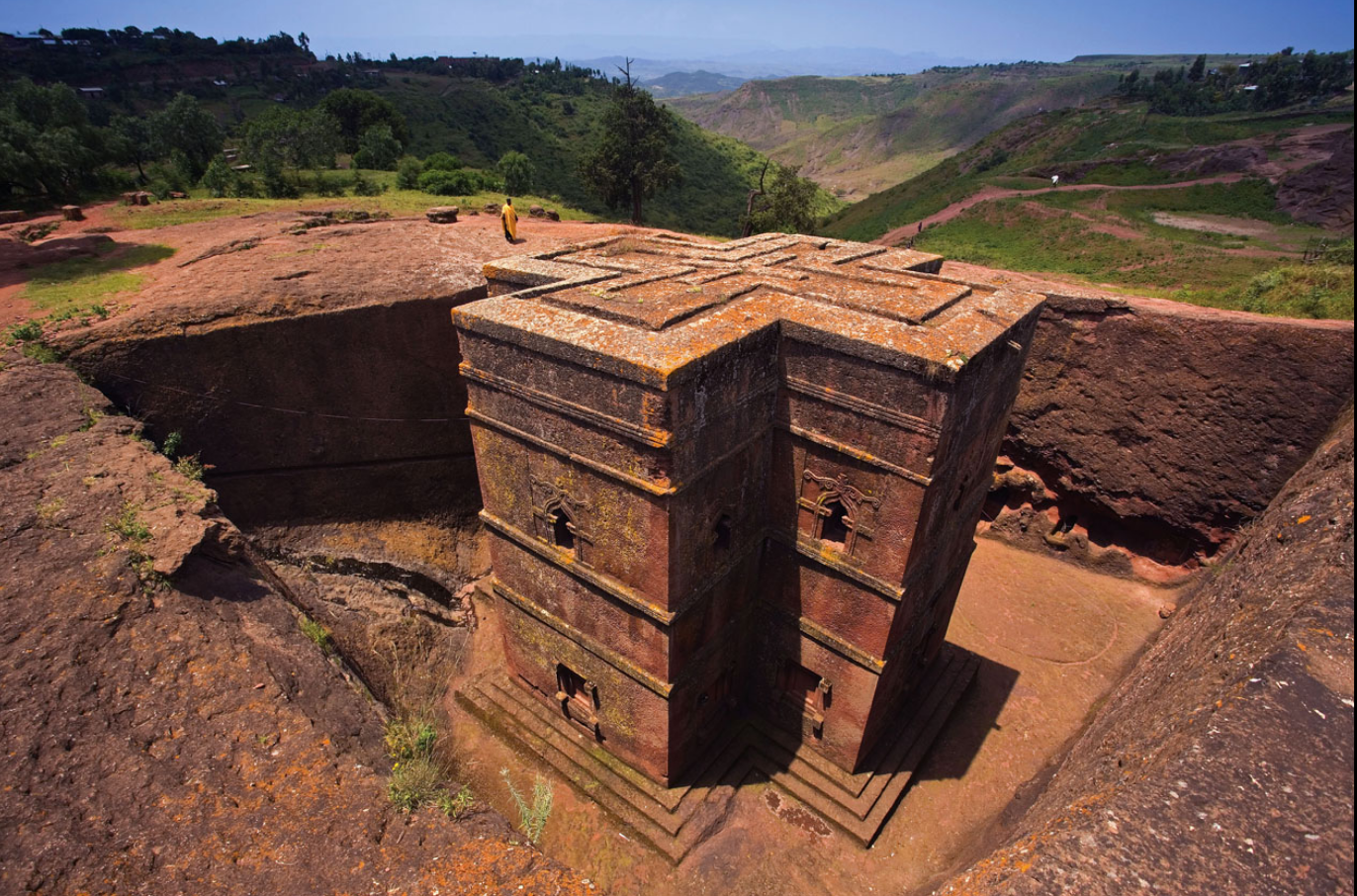
Rock-cut church of St. George
Lalibela, Ethiopia, Africa (12th-14th century)
One of the buildings commissioned by King Lalibela to mirror a pilgrimage to Jerusalem
Still an important pilgrimage site - has not been preserved/forzen in time
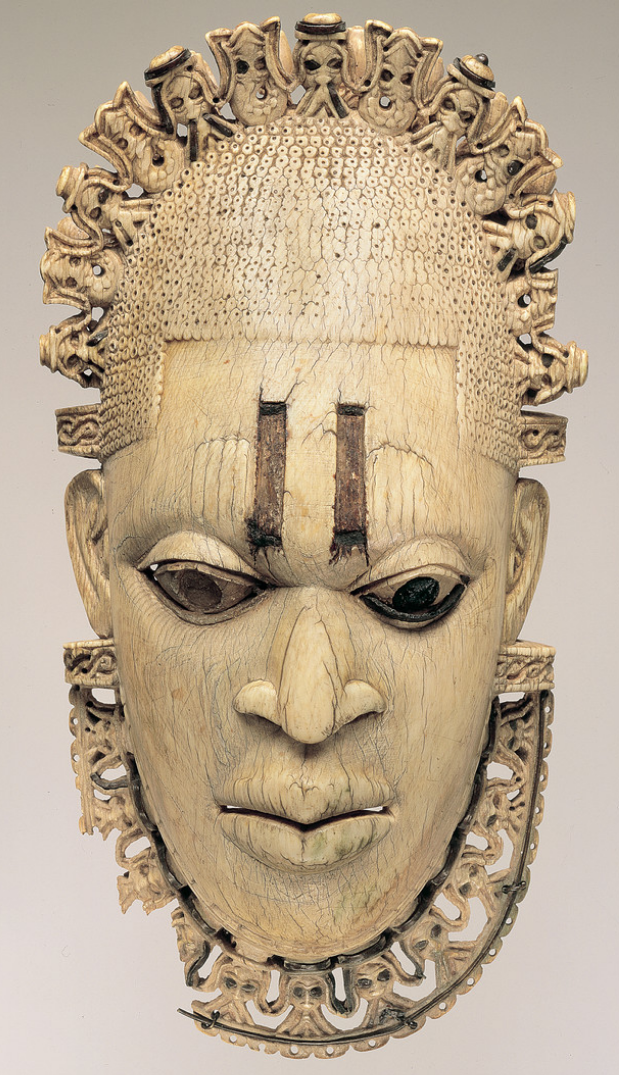
Ivory waist pendant of Queen Mother Ida
Benin, Nigeria, Africa (16th century)
King Esigie’s mother helped him negotiate with the Portuguese
Crown and Collar: rectangle beards represent Portuguese traders; fish/mudfish are a symbol of prosperity
Forehead Bars: scars that were marks of great wisdom
Iron in her Eyes: authoritative gaze, inner strength
Elephant Ivory: material and symbolic value - ritual purity
First of Representations of Queen Mother
Naturalistic
Worn at ceremonies of spiritual renewal and purification

Seated figure
Tada, Nigeria, Africa (13th-14th centuries)
Copper, Tin, Arsenic
Tin from Nigeria, Copper from Europe
Lost wax casting
Ife culture
Naturalistic rather than stylized
Dressed and used in ceremony

Portuguese Soldier
Benin, Nigeria, Africa (16th century)
Bronze
Indicative of contact with Europe - how are they being represented?

Oba plaque
Benin, Nigeria, Africa (16th century)
Bronze
Sophisticated metalwork
Not naturalistic - more interested in representing an idea - medieval Europe
Figure riding side-saddle, coral beads representing significance, power, magic, very adorned
Background figurers carrying guns - interaction with Europeans
Looting in Benin City 1897
Many of these taken by the British - Benin Bronzes

Memorial head of an Oba
Benin, Nigeria, Africa (17th century)
Stacks of coral beads around his neck, coral beads in his hair, headdress of coral and gold beads
Would have been “glowing”
Wearing wealth
On Benin Royal Ancestral Altar of King Eweka II
Head is proportionally larger - head of government
Stylization - supposed to represent the person, family, and office simultaneously

Altar to the Hand - Ikegobo
Benin, Nigeria, Africa (18th century)
An altar to celebrate worldly accomplishments of an Oba
Bronze/Copper Alloy
Altar to the Hand of a Queen Mother
Female Figures
Gold and Coral beads, embroidered clothing

Altar Tusk
Benin, Nigeria, Africa (19th century)
On Benin Royal Ancestral Altar
Tusks carved with narrative image
Cities and Wealth in the Americas
South American cities: La Venta, Teotihuacan, Chichen Itza - full written language, Tenochtitlan - Aztec
Codex
A manuscript in the form of a bound book (as opposed to a scroll)
Mexica
aka Aztecs
A Mesoamerican civilization that flourished from 1300 to 1521
Founded the city-state of Tenochtitlan on small islands in Lake Texcoco in the Valley of Mexico
Superimposition
The placement of one thing over another, typically so that both are still evident
Lintel
In architecture a horizontal block that spans the space between two vertical supports (posts)
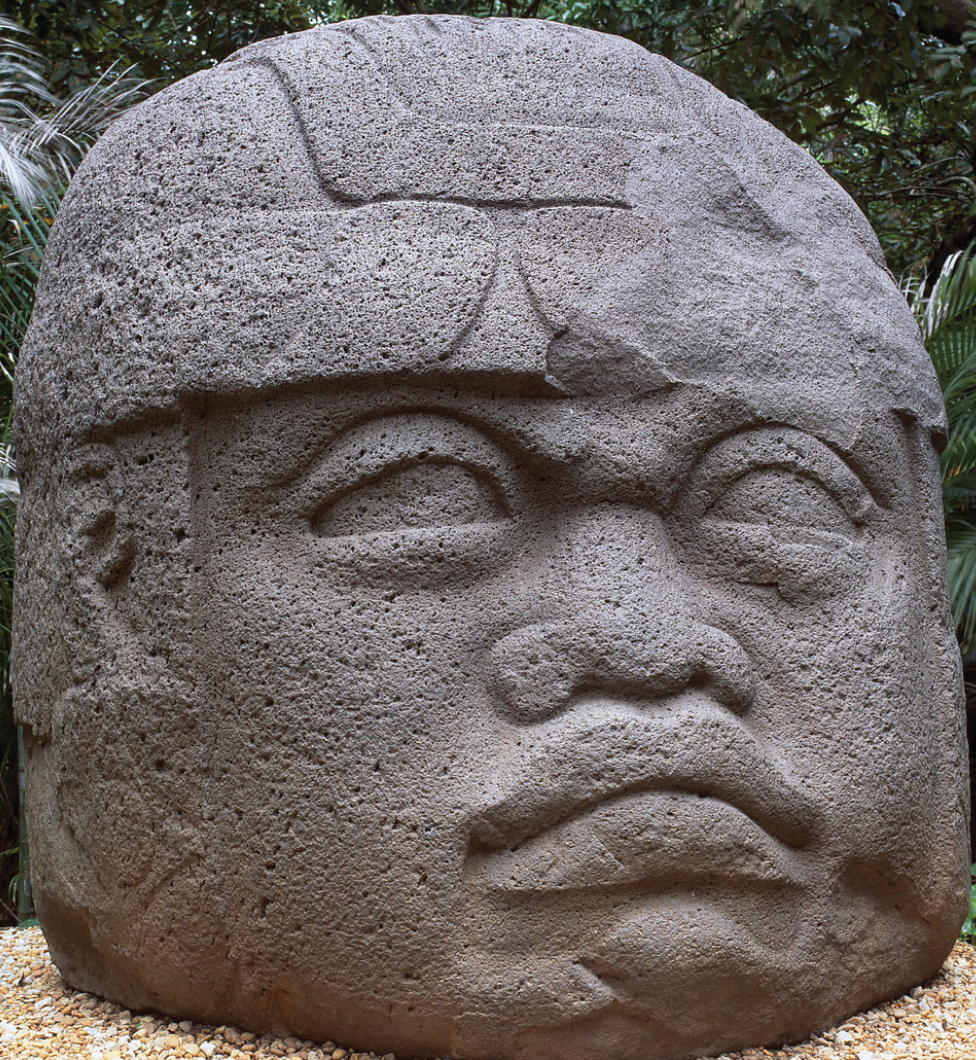
Olmec Colossal Head
La Venta, Mexico (1st millennium BCE)\
Olmec, Mesoamerica - Ceremonial center
Likely represent rulers
All individualized: facial features, helmets, possibly color
Found in city outskirts - protecting areas of ingress

Teotihuacan
Mexico (1st millennium)
Early Mesoamerica
pre-Aztecs, claimed as “the palace of the Gods” - one of the largest cities
Central axis, gird layout, large pyramids
Plazas with platforms off each
City Planning:
about 2000 multistory apartments
200,000 people estimate
seasonal occupation (likely) or year-round
No written or pictural records

Shield Jaguar and Lady Xooc
Mexico (8th century)
Maya, Mesoamerica
Both dressed very ornamentally
Lady Xooc kneeling before him
pulling rope to induce bloodletting
blood=precious substance, induce visions
celebrate the birth of a son from another wife
Story told in writing
Each about 4 feet tall, would have been painted
Mayans: earliest Mesoamericans to write everything down

El Castillo (Temple of Kukulkan)
Chichen Itza
Yucatan (800-900CE)
Maya, Mesoamerica
Stepped Pyramid, stairs on all 4 sides/cardinal directions, steps add to 365
Certain times of the day/year the sun creates a slithery shadow (from the stairs) down to a serpent’s head statue at the base of the steps
Moving down the steps
Brought out meaning of statue
Liminal moment

Great Temple (Templo Mayor) of Tenochtitlan
Mexico City/Tenochtitlan (1400-1500)
Aztec, Mesoamerica

Coatlicue
Tenochtitlan, Mexico (1500)
Aztec, Mesoamerica
Female Figure
Depicted standing upright with hands curved
Skirt of rattle snakes, snakes sprouting from her neck
Large & frightening: 8 feet of solid tock
recorded and reburied twice
Leaning forward slightly: looming presence
Carved on the bottom
depiction of her son: earth and rain God
would have only been seen by that god - not only human audience in Aztec art
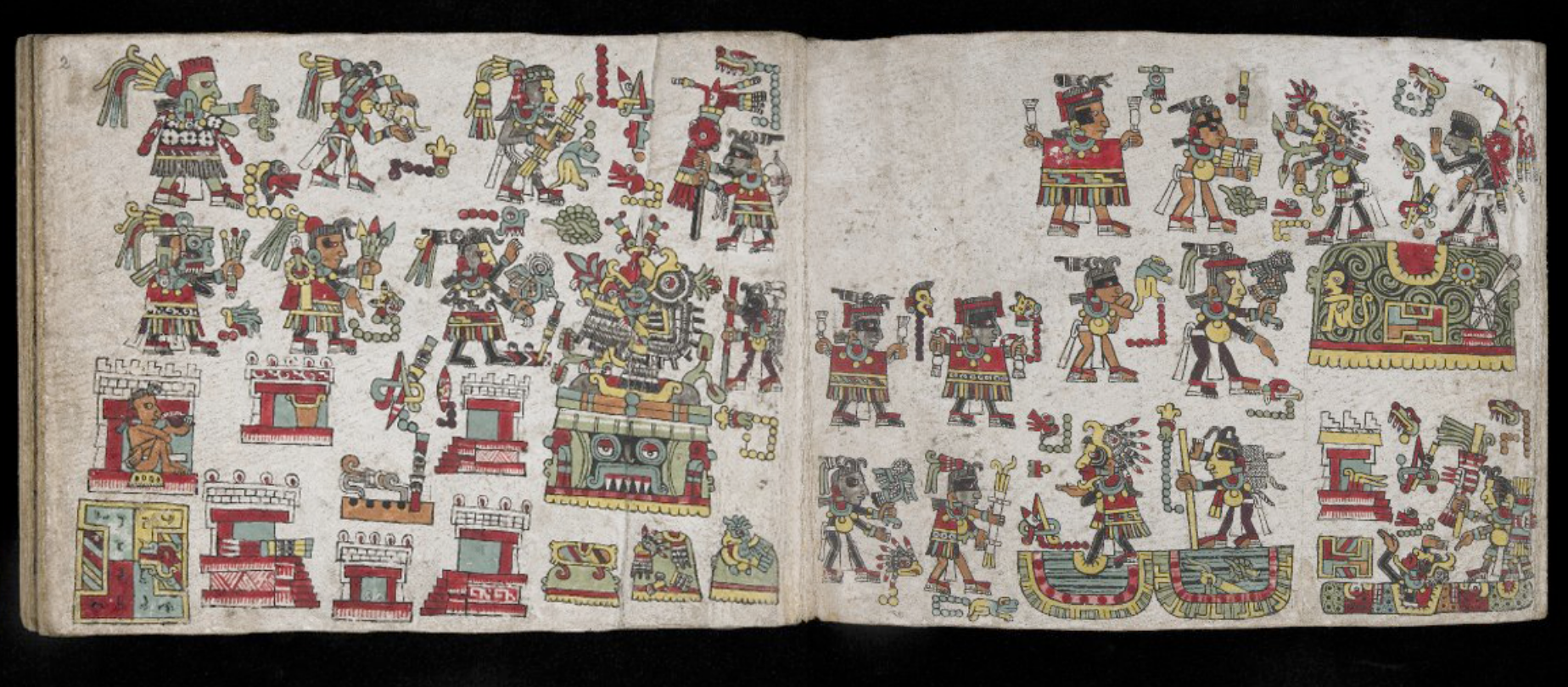
Codex Zouche-Nuttall
Mixtec, Mesoamerica (13th-14th century)
Deer skin, 47 leaves
Ruler Eight Deer Jaguar-Claw sitting on a throne with his name next to him
2 stories: 1 side tells the history of important centers, the other contains genealogy, politics, military feats starting on the opposite end
Picture writing

Codex Borgia
(15th century)
Aztec, Mesoamerica
Screen fold manuscript
One of a massive 12 volume manuscript
New Spain
Images of the Gods
Color pallet: different from Europe, colors depend on location
dye is a powerful export for Mesoamerica
Mesoamerican manuscripts are much more difficult to decipher
no specific language between text and image
all information presented graphically - assembled forms are their image vocabulary
Dense imagery, human and god figures dominate
May contain celestial, historical, ritual, mythological, and botanical info
Helped us understand Indiginous thought/culture

Codex Mendoza (frontispiece)
New Spain (16th century)
Commissioned by Antonio de Mendoza - 1st Viceroy of New Spain
Worked with a “translator”
Intended as a gift for Roman Emperor Charles V
Huge source of information
Frontpeice:
capital city divided into 4 parts - mirrors the organization of the universe (cardinal directions)
Eagle and cactus: cities origin story
Other symbols of foundation and early history
Tenoch: 10 men who led Aztecs to this island location

Mach Picchu
Peru (15th century)
Inka, South America
“Country Villa” for some elite members
Terraced earth and massive rocks
NO mortar
Terraces: farming/ranching, plazas, apartments, temple complexes
Nobility/vacation lifestyle compared to Europe’s

Jaguar Gorget
Found in Benton Country, MO (1st millennium)
Woodland Culture, North America
Pendant
Connection between Mesoamerica and N America

Serpent Mound
Ohio (11th century)
Mississippian, North America
Largest surviving prehistoric effigy mound in the world
Serpent’s head and body curves align with major astronomical events

Monk’s Mound, Cahokia
Illinois (11th-14th century)
Mississippian, North America
Series of platforms raising the temple
More populated than London at the time
Trade nexus: evidence of wide trade networks

Cliff Palace, Mesa Verde
Colorado (12th-13th century)
Pueblan, North America
Largest cliff dwelling in North America
Advanced masonry
Communal organization

Eagle Transformation Mask
Canada (19th century)
Kwakwaka’wakw, North America
N American art not always recognizable to Europeans as “art”
Transforms: open vs closed
Face of a deity
Wearable art and religion

Blackware jar: Maria Montoya Martinez
New Mexico (1940)
Pueblo, North America
Redefinition of Native Arts
Created public interest in Pueblo art/pottery
Art and Illusion in Early Renaissance Europe
Trade networks booming, everywhere is connected
Warming climate leads to more food and more people
Money based economy taking root
As people become wealthier, individual faces/representation becomes more important- lots of portraits commissioned during this time
Age of renewal and rebirth
Art focuses on Illusion, texture
Depiction of the individual object (especially in the North
Oil paints: allow artists to deepen color, blend and layer, manipulate surface translucence
Emotion is the message: growing interest in art as emotional
Suffering of Christ
Development and manipulation of illusionistic techniques
Engaging with viewer’s emotion and intellect
Reflection of classical antiquity
Leveraging art to underline status
Development of print makes art more accessible and allows for a wider audience
Altarpiece
A work of painting or sculpture places on, above, or behind the altar in a Christian church
Wealthy people often pay for one for their church that somehow depicts themselves so everyone know and remembers who paid for it
Triptych
A picture made up of three panels. The outer panels are often hinged so they fold over the center panel like doors
Polyptych
A painting or other work consisting of four or more separate panels that are hinged or held together in a framework. Typically functioned as altarpieces.
Glazing
A technique used in oil painting in which thin, translucent layers of paint (glazes) are used to build depth of color in the painted surface.
Illusionism
the tradition of art that appears to share the physical space with the viewer or attempts to represent physical appearances precisely
Trompe l’oeil
French: fool the eye
A style of painting that imitates reality so closely that it might momentarily fool a viewer into thinking a painted object or scene is real
Extreme Illusion
Atmospheric Perspective
Also known as aerial perspective
A technique for creating the illusion of depth in a two-dimensional picture by gradually decreasing the color intensity, contrast, and texture in apparently distant objects
One-point Linear Perspective
A system used to create the illusion of three-dimensional depth on a flat, two-dimensional surface, where all parallel lines recede and meet at a single vanishing point located on the horizon line
Woodcut
Relief Printing
A print made by carving out a design on a block of wood, applying ink to the raised surfaces that remain, and transferring the inked image to paper
Engraving
Intaglio Printing
A print made by incising an image into a smooth copper plate. The image is then inked, a sheet of paper is placed on the plate, and it is run through a press to transfer the image to the paper.
Contrapposto
A way of representing the human body so that the weight appears to be supported on one leg
Foreshortening
A technique for creating the illusion of depth in a two-dimensional picture by distorting figures and objects so they appear to recede or project sharply into space
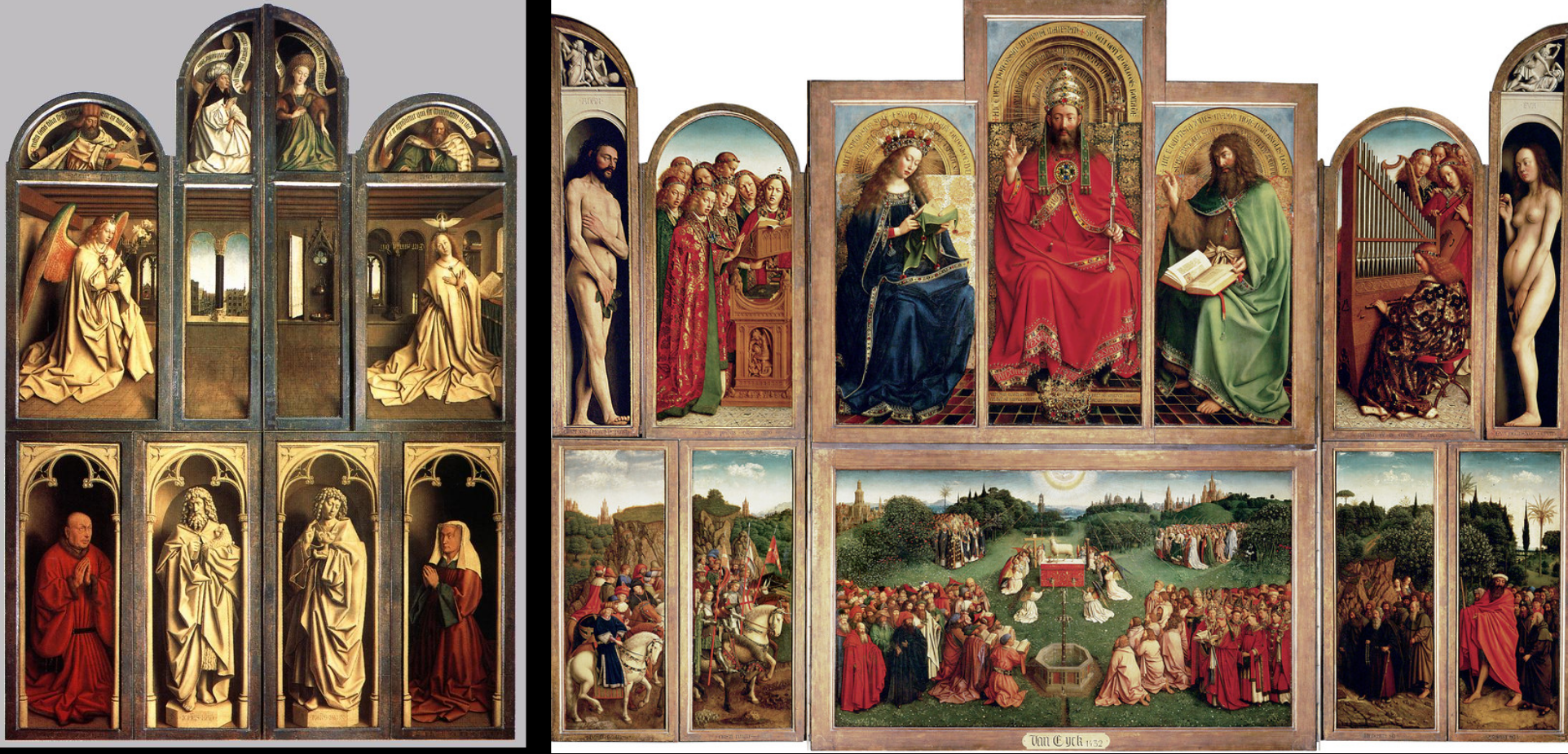
Ghent Altarpiece
Hubert and Jan van Eyck
Ghent, Belgium (15th century)
Renaissance
Folding Altarpiece
Outside-
Top: Mary and the angel
Bottom: Saints and donors
Inside
Top: God the Father, Adam and Eve
Bottom: Sacrifice of the holy lamb - allegory about Jesus
While this is 17 feet by 12 feet

The Arnolfini Double Portrait
Jan van Eyck, oil (on wood)
Belgium (15th century)
Renaissance
One of the most famous of this era
Man is likely and Italian banker
Once thought to represent a wedding: Iconographic analysis
Left and Right hands
Outside shoes are off
Dog represents fidelity
Sculpture of the Childbirth Saint
Historians have since pulled back from this interpretation
Memorial Image
First artist to seems to have realized the potential of oil paints (Jan van Eyck)
Artist observing light, shadow, illusion, texture
Zoom in on the pin in the background (^)
reflecting the scene
extreme illusion - Tromp l’oeil
signature above it
Extremely expensive and lavish clothing
Furnishing and details - fruit
Image of extreme wealth

Deposition
(Rogier van der Weyden)
Belgium (15th centruy)
Renaissance
Deposition iconography
Mary has fainted, John is supporting her: notice how her pose reflects Christ’s
8.5 feet wide
Crucifixion - outdoor scene
Floor matches - grass, moss, bones
Wall background creates a boxed-in scene/feeling
Creates a shallow space that compresses your view
Cannot look past the grief - keeps you focused on the details and pain
Intensifies emotional effect
“Frame” is painted: within the wood grain are tiny crossbows - reminds viewers it was commissioned by the crossbowman’s guild of Louvain

Avignon Pieta
(Enguerrand Quarton?)
France (15th century)
Renaissance
Dead Christ supported by his grieving mother (pieta)
Attention to the anatomy of the body: ribcage, ribs needs
Artists observe and study
Growing interest in emotion
Separation of the figures: slightly restrained
Realism of the face of the donor
City in the back: Islamic/Ottoman context
Composition and attention to detail

Buxheim Saint Christopher
Woodcut
Germany (1423)
Early Northern Renaissance
Earliest Dated European Woodblock Print
Using the stem of a date palm as a staff
Infant Christ on his shoulders: gesture of blessing
Landscape is diminutive in scale, hierarchy of scale
Hermit on the left is holding a lantern to guide the saint
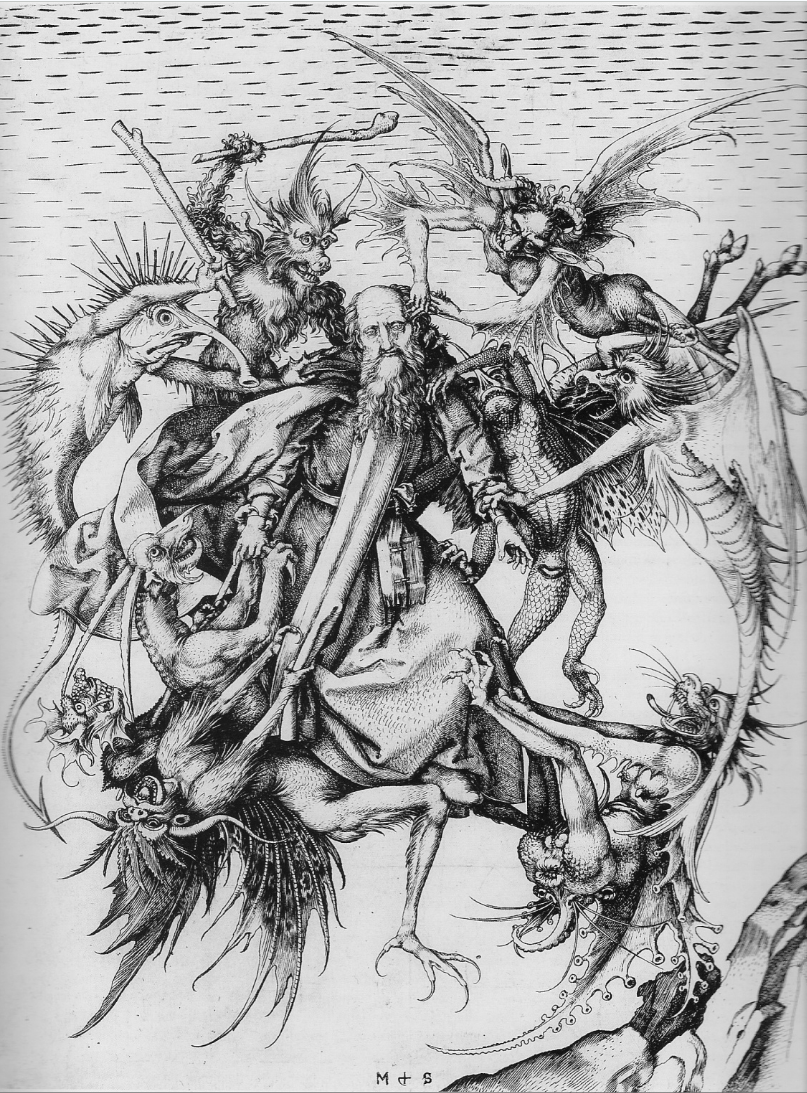
Saint Anthony Tormented by Demons
(Martin Schonguar), engraving
Germany (15th century)
Renaissance
Saint Anthony: an Egyptian hermit know for establishing the ideal of monasticism, seclusion, and meditation in Christianity
Depicts him being assaulted by demons during his retread to the Easter Desert of Egypt
Composition of the monsters
Anthony is stiff and indifferent
Epitomizes the Christian’s struggle to resist evil temptations

Florence Baptistery, “Gates of Paradise”
(Lorenzo Ghiberti) (15th century)
Renaissance
Detail: Isaac and his sons
“Could be the doors of heaven itself”
Doors and sculptural attention
Bronze doors, classical antiquity
Depth of space, illusion
Transition from sculptural to drawing enforcing perspective/depth
Narrative
Contrapasso, arches - classical tradition with renaissance technique

Palazzo Medici
Michelozzo
Florence, Italy (15th century)
Renaissance
Designed to give impression of solidity, impermeability, stability - banker family
Home and place of business
Exterior is a block
Many courtyards: get natural light and air inside, filled with art- sculptures, frescos, reliefs
Each level has an increasingly smooth facade
Entry level: public/business
rusticated stonework interrupted by obvious arches
Second level: family business
Smooth stone, visible joints, family crest
Third level: family residence
almost smooth stonework, barely visible arches, family crest
Top cornice is heavy, solid, impressionable

David
Donatello, Bronze
Florence, Italy (15th century)
Renaissance
Commissioned by the Medici family
In one of the Palazzo Medici courtyards
David and Goliath: shepherd boy uses a slingshot to defeat a giant
Standing on a pile of armor and the head of Goliath
Nude:
refusal to take armor
depicted very young
skin- gleam and glow for bronze in the shifting light of the courtyard- illusionism
Nude figure regains significance in Europe during the Renaissance- Classical antiquity (began depicting Gods and Goddesses)
David is a symbol of the city of Florence- fighting off larger political powers

Holy Trinity, Santa Maria Novella
Masaccio, fresco
Florence, Italy (15th century)
Renaissance
Patrons: Lorenzo Lenzi and wife
Commissioned for a church
Inside the niche/arch: Holy Trinity, Mary
Outside the arch: the patrons
Bottom portion:
Inscription: “what you are, I once was, what I am, you will be”
Skeleton
We will all be bones
Prompt viewers to think about the non-tangibles and getting into heaven
One-point perspective

Birth of Venus
Sandro Botticelli, tempera (on canvas)
Florence, Italy (15th century)
Renaissance
Commissioned by the Medici Family
Venus’s birth story: created from the sea/seafoam
begin depicting classical Gods and Goddesses
First monumental depiction of a full-length nude goddess since antiquity
begin to see female nudes depicted much more
Compare to classical Venus sculpture
Bits and pieces of ancient art turning up around this time: this is what people are surrounded by and drawing from

Foreshortened Christ
Andrea Mantegna, tempera (on wood)
Renaissance
Foreshortened/feet up view draws attention to his wounds
Details show the passage of time
No bleeding signifies he has been dead for a while
Skin has lost color and is peeling back around his wounds
Halo around his head
Human physicality of Jesus- simultaneously fully human and fully divine
Art and Status in the High Renaissance
16th century Europe
Transatlantic Influences
Trade and art signify wealth
Narrative tends to frame this era around Italy and artist’s lives
Giorgio Vasari, “The Lives of the Most Excellent Italian Painters, Sculptures, and Architects
Perspective: viewers feel as though they could step into the painting
Search for perfection and meaning
Important for defining standards for subsequent Western art
Illusionistic methods used to create ideal, not necessarily illusionistic spaces, forms, architecture
Cartoon
A full scale drawing for a painting or tapestry, used to transfer the composition to the final medium
Chiaroscuro
Italian: Light-Dark
The skillful handling of value to create the illusion of three-dimensional forms in a drawing or painting
Sfumato
Italian: Smoky
A painting technique, largely developed by Leonardo da Vinci, in which the transitions from light to dark are so gradual that they are almost imperceptible.
Softens lines, creating a hazy or soft-focus effect
Putti
Chubby, naked, and often winged male infant figures frequently found in art

Iconoclasm
The intentional destruction of images, especially the religiously motivated destruction of sacred images
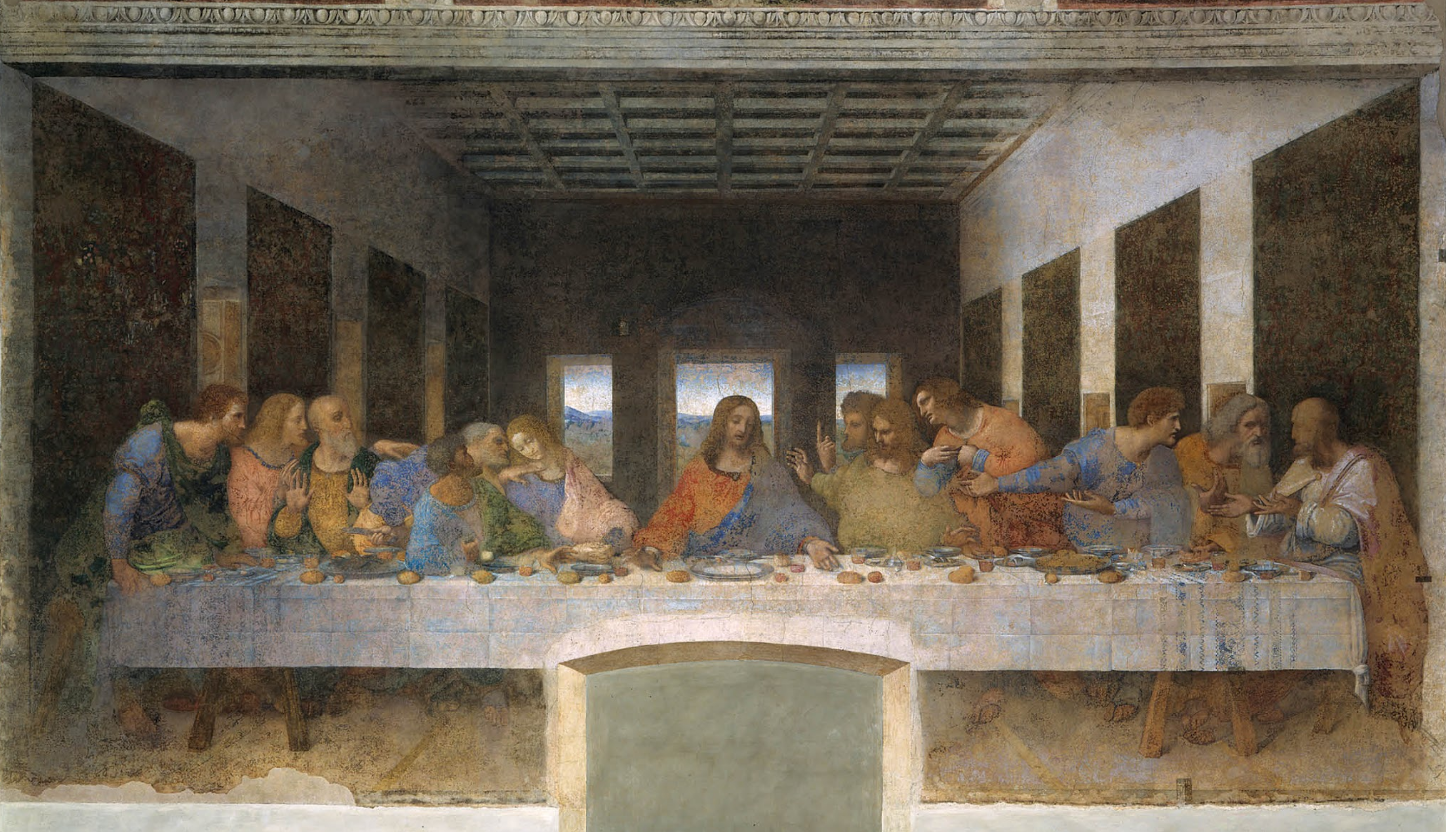
Last Supper
Leonardo da Vinci, fresco
Sta. Maria della Grazia
Milan, Italy (early 16th century)
High Renaissance
Patron: Ludovico Sforza
Illusionistic techniques but not at eye level
On the wall of a Monetary dining hall: watched over them as they sat in silence listening to readings
Ideal Illusion: not keyed to our eye level
More typical of 16th century art and architecture
Focuses on ideal
Perspective used for focus rather than illusion

Mona Lisa
Leonardo da Vinci, Oil (on wood)
Italy (early 16th century)
Renaissance
Da Vinci used light glazes to unify his paintings and create a smokey look
Ambiguous smile
Portrait of the wife of a Florentine merchant
Growth of the merchant class
Half length as opposed to bust, ¾ turn: new formula for the portrait
Much more natural pose that becomes popular
Made for private use, but never delivered to commissioner
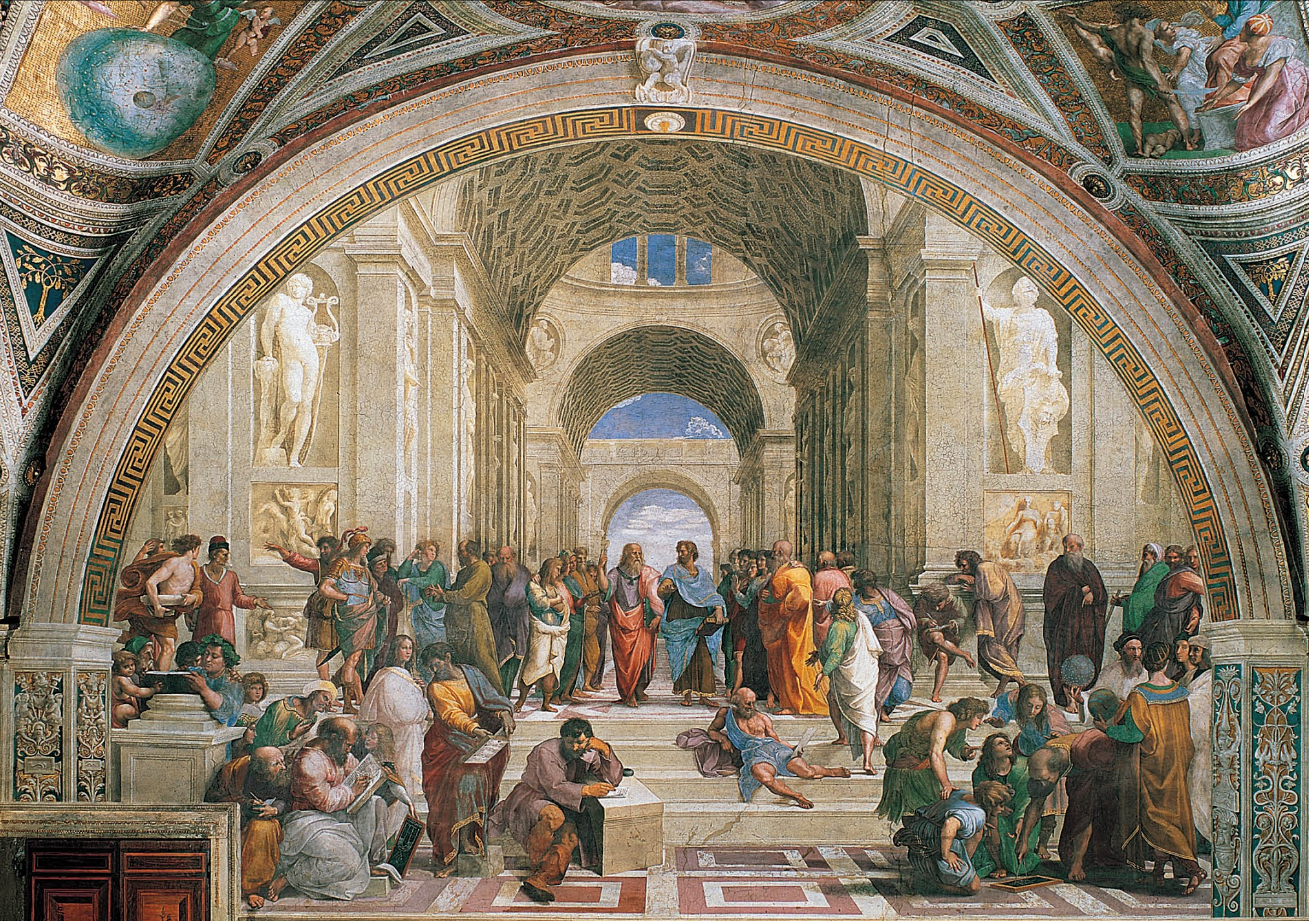
School of Athens
Raphael, fresco
Vatican, Rome, Italy (early 16th century)
Renaissance
“School” = Group of intellectuals
Inside the Stanza Della Signatura in the Vatican: a n important room the pope conducts important business in - signs things, etc
Figures represent the main characters of classical learning
Center: Plato and Aristotle
All the ancient intellectuals
Portraits of people- Raphael, Michel-Angelo, etc
Ideal Space

David
Michelangelo, marble
Florence, Italy
Renaissance
Perfect geometry, idea figure
Lots of ancient sculptures are being found as Rome is being rebuilt
Created for a public exterior roofline: large, proportioned to be seen from the ground
Commissioned by the Florence government
Compare to bronze David: preparatory vs relaxed stance

The Tempietto
Donato Bramante
Rome, Italy (16th century)
Renaissance
Patrons: Ferdinand and Isabella of Spain
Central Plan
Lantern supported by the Dome supported by the Drum
Focuses on ideal forms
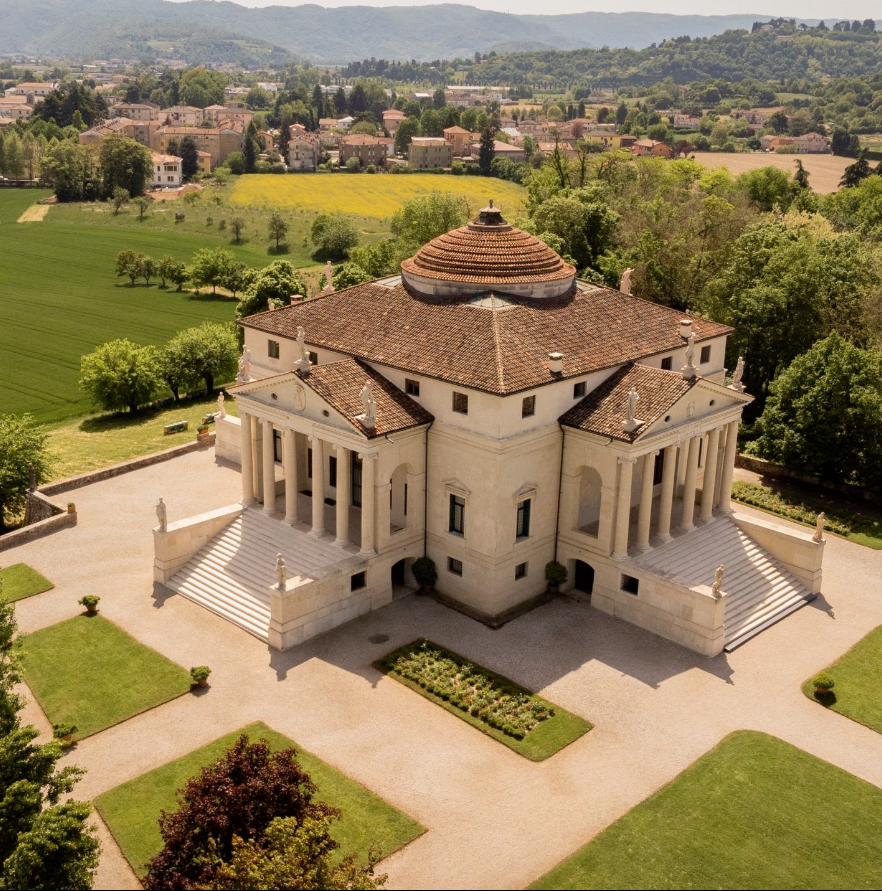
Villa Rotonda
Andrea Palladio
near Vicenza, Italy (early 16th century)
Renaissance
Patron: Paolo Almerico
Ideal forms in residential architecture
Inspired by the Pantheon
On top of a hill
45 degree angle: there will always be sunlight coming in somewhere
Windows along the dome
Compare w/ Machu Pichu
Perfect geometry

Venus of Urbino
Titian, oil (on canvas)
Italy (16th century)
Renaissance
Patron: Guidobaldo II of Urbino
Greek Goddesses reappearing in art, though we don’t know if this actually depicts Venus
One of the most influential nudes of later art
Ideal female body
Iconography:
Dogs- loyalty and faith
Peals- purity
Rich fabrics, bouquet, bed curtain, hope/wedding chest
Depicting marriage, ideal bride, goddess?
Looking straight at the viewer: engaging

Self-Portrait in a Mirror
Sofonisba Anguissola, watercolor (on parchment)
Italy (16th century)
Renaissance
Emphasize her literacy and social/intellectual connections
One of the most sought-after portrait makers
Came from a noble family, studied under other artists

Self-Portrait in a Convex Mirror
Parmigianino, oil (on wood) (at age 21)
Renaissance
Base of the painting actually is convex
Early mannerist painting, leading into next era
Showing off technique
Foregrounding hand, his instrument
Details in background: door, frame of the painting
Observation

Isenheim Altarpiece
Matthias Grunewald, oil (on wood)
Isenheim, Germany (early 16th century)
Renaissance
Intended for a monastery
Grotesque, graphic exterior
Crucifixion: Virgin Mary, Mary Magdalen, John the Baptist pointing
Most horrific scene of the crucifixion
Opening the panel cuts off the arm of Jesus: amputation and sickness
Inside: beautiful scenes of the birth and resurrection
People suffering see this and know God understood: promise of salvation
Contrast of interior and exterior

Adam and Eve (the Fall of Man)
Albrecht Durer, engraving
Germany (early 16th century)
Renaissance
Adam and Eve eating the apple
Ideal proportions
Sign contains the artist’s name and date; telling us he is well traveled and reinforcing the classical influence

Portrait of Mary, Lady Guildford
Hans Holbein the Younger, oil (on wood)
England (16th century)
Renaissance
Holding her prayer book\
Facing the viewer
Matronly respectability, serious
Vines and Leaves: symbols of wealth
Beautiful background

Garden of Earthly Delights Triptych
Hieronymus Bosch, oil (on wood)
Netherlands (early 16th century)
Renaissance
Unconventional
Exterior:
shades of gray
eternal darkness
crystalline globe=Earth
upper corner: God the Father
holding a book
“for he spake and it was done”
“for he commanded and they were created”
when God separated the land and the sees
Interior:
full of color
Garden of Eden
God represented as Christ with Adam and Eve: Adam looking at Eve- desire, Eve does not return, Christ looks at us
we don’t see the actual temptation
fountain: growth and life, owl in the middle
Garden of Earthly Delights
fore, middle, back ground
natural forms, animals, young healthy people
alternate story? if the temptation had not taken place
his society would have looked at this as extremely sinful
riotous, sensual pleasure
owls frame the panel: symbolize evil
viewers implicated in activities
Hell
“tree man” - standing on boats, instability, pierced by its own branches, tavern scene
oversized musical instruments as instruments of torture
pleasures in life become instruments of suffering
not what you would expect from an extremely religious artist
Intended to be seen in a domestic setting, very large
Elevate the visual arts to the level of creativity in literature
Follow gazes

Hunters in the Snow
Pieter Bruegel the Elder, oil (on wood)
Netherlands (16th century)
Renaissance
Patron: Nicolaes Jongelinck
Study of the labors of the months, one in a series
Details show the stresses of winder
Hunters: tired and unsuccessful
Background: playfulness and wonder of winter
Given meaning by the labors of the people in it
Draws the viewer into the painting- want to join it
Lots of details to discover- typical of Northern Europe
Different things happening and being represented simultaneous
Cold landscape warmed by human inhabitance
Expansion and Global Contacts in 17th Century Europe
The Baroque
Shift in religion post-reformation
Wider range of people and classes who could commission art and therefore wider interests
baroque vs Baroque
Wider range of style, not ALL Baroque is so dramatic
spiritual and everyday reality
expansiveness and expressiveness
strong light and dark contrasts: draw focus
lots of diagonals
The Reformation
Protestants concerned with use of images in religion, period of iconoclasm
Europe redrawn according to religious differences
Counter-reformation: Catholics re-examine and re-affirm their won faith
Use of art, art as a bridge for faith
The art of persuasion: to instruct, to delight, to move
Ornate as a means of celebration
In N Europe: smaller scale art for private homes and contemplation
Baroque realism, Baroque classism, Theatrical Baroque
Dutch Republic becomes incredibly wealthy
Prosperous middle class, homes are decorated to impress
Late 16th-17th centuries, open art markets emerge
Competition, artists often specialized in one type of painting
Subjects from the world around them
Colonial Expansion: artists in Europe are very interested in what is going on in the rest of the world and vise versa
Naturalism
A style of art that seeks to represent objects or living beings as they appear to the eye
Tenebrism
Italian: “shadowy”
The extreme use of contrast of light and shadow to create a dramatic effect in a painting, drawing, or print
Genre Painting
Painting that depicts aspects of everyday life, such as domestic interiors, tavern scenes, and street scenes
Still Life
A category of subject matter in the arts consisting of arrangements of inanimate objects, such as glassware, food, fruit, or flowers
Etching
A printmaking process in which lines or areas are incised using acid into a metal plate in order to hold ink
Drypoint
A printmaking process in which a design is drawn directly on a soft metal plate with a sharp, needle-like tool. The plate is then inked and prints are pulled from it
Camera Obscura
Latin: “dark room”
An apparatus that enables an image to be projected onto a surface inside a light-sealed chamber and then traced
Precursor to the development of photography

St. Peter’s
Bramante (1506), Raphael (1513), Michelangelo (1547)
Vatican City (16th century)
Renaissance
Plan shifted from central to basilican
Very sculptural forms, many objections and recessions
Tall drum and dome
Took over 100 years to build - redesigned many times
Commissioned by Pope Julius II, demolished Old St Peter’s
Each artist took over after the last died

St Peter’s Piazza
Gianlorenzo Bernini
Vatican City (17th century)
Baroque
St Peter’s extended into the plaza
Basilican length expanded with a colonnades reaching around the plaza
Symbolizes the reach of the church

David
Gianlorenzo Bernini, marble
Italy (17th century)
Baroque
Patron: Cardinal Scipio Borghese
Created for a domestic setting, meant to be viewed in the round
Compare to Michelangelo’s
Moment of action, tension unleashed
Activates the space around the statue
Body crosses itself, forming a diagonal line
Facial expression
Sense of energy
Understanding of the human body
Baroque: Bring the bible into our would
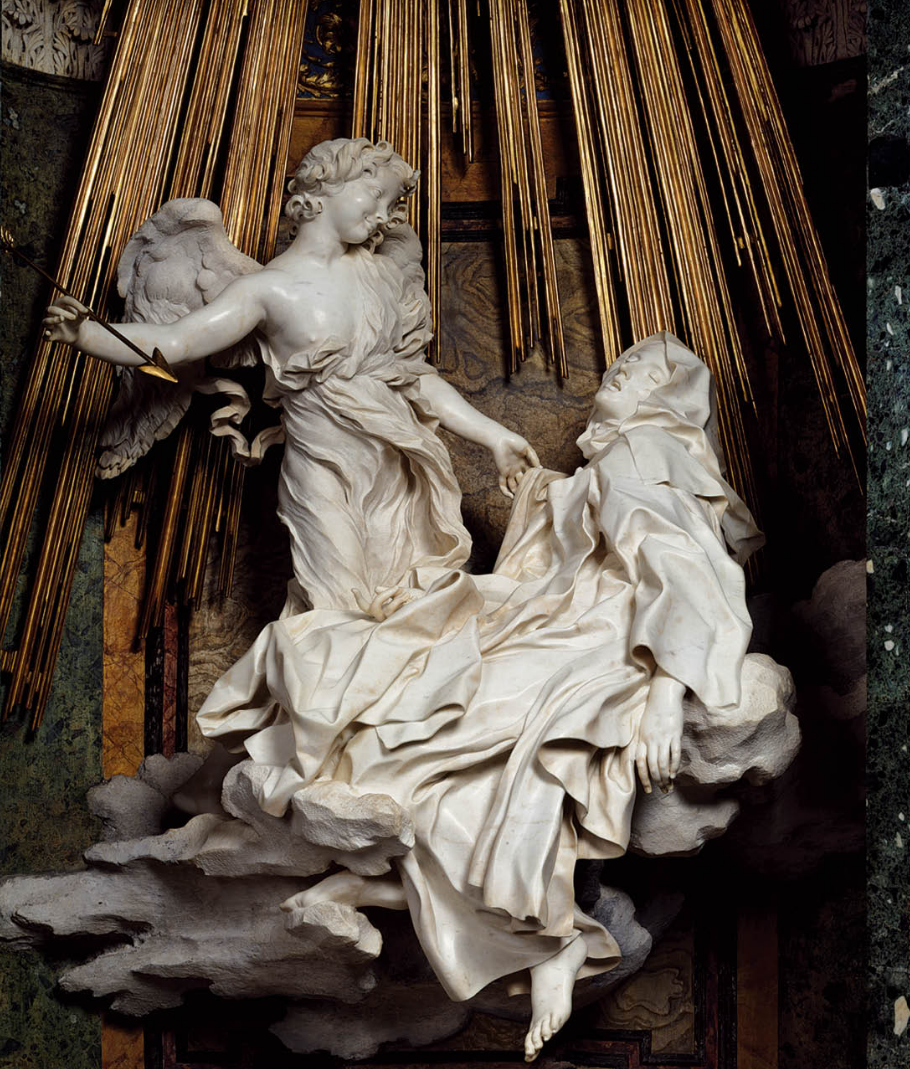
Ecstasy of St. Teresa
Gianlorenzo Bernini, marble
Rome, Italy (17th century)
Baroque
When light comes in, it reflects down the metal bars creating a glow/beam of light
St Teresa: wrote of her visions
being stabbed/pulling out her intestines by a high angel
“utterly consumed by the great love of God”
extreme sweetness caused by intense pain, spiritual pain
Different textures created by the marble
Clouds are rough, figures are polished
Light reflects of each differently
Religious art should convey emotion

Calling of St. Mathew
Caravaggio, oil (on canvas)
Rome, Italy (1600)
Baroque
Extreme light and dark creates a strong dramatic contrast and guides the eye
Moment of spiritual awakening
Only simplest implication of the spiritual: halo over Jesus
Figures identified by light and gesture
Figures dressed in contemporary clothing
Set in a tavern, a lowly place
Pay attention to what each figure is doing, pointing and attention - those who are aware and those who are not
Torn between money and Jesus

Judith Slaying Holofernes
Artemisia Gentileschi, oil (on canvas)
Italy (17th century)
Baroque
Gentileschi: famous for wining an SA trial, first woman admitted to academy of design in Florence
One of the artists credited for spreading the style of Caravaggio past Italy
This is one of her best known works
Caravaggesque, Tenebrism: EXTEME light and dark
Composition:
Judith’s maid/lady helping her
Facial expressions
Spray of blood
Emphasizes intersection of forms
Focalizes her grasp on the sword
6 ft tall: confronted with Holoferne’’s horrified face
Pulls viewer into the emotional moment

Glorification of St. Ignatius
Andrea Pozzo, fresco
Sant’Ignazio, Rome, Italy (17th century)
Baroque
Groups of figures represent the 4 main continents: represents global reach of the Catholic church
Great example of counter-reformation art
Ceiling painting of St. Ignatius ascending into heaven, angels taking him to Jesus
Architectural framework extends the church and disappears into the sky/heavens
Trompe L’oeil: perspective, foreshortening, creating a scene where there is no ceiling
Transport the viewer

Las Meninas
Diego Velazquez, oil (on canvas
Spain (17th century)
Baroque
“The Ladies in Wating”
Netherlands and Spain are very closely related; the King of Spain had many Flemish works
Interior from the palace that shows the princess surrounded by her ladies (caretaker, teachers, entertainers, nun, etc)
On the side, painting with the artist looking at us, self-portrait, shows himself in his finery - member of the court
Background
doorway with someone entering or exiting
mirror reflecting the audience: the king and queen of Spain
The way the paint is applied: objects not outlined and colored in, but rather represented by light
Whiteness emphasized in the princess
Compare to Arnolfini Portrait

Elevation of the Cross
Peter Paul Rubens, oil (on wood)
Antwerp, Flanders (17th century)
Baroque
Diagonal across and in depth, leaning away
Intended to involve the viewer
Details pull us into the image
Both baroque and Baroque

Self Portrait
Judith Leyster, oil (on wood)
Holland (17th century)
Baroque
Lavish clothing
Showing what a successful artist she is, how fun and approachable she is
Sense of spontaneity; look at her posing
Closeness, foreshortening
Breaking the barrier between audience and art
Painting the type of painting she was know for: selling herself and her work

Self Portrait
Rembrandt van Rijn, oil (on canvas)
Holland (17th century)
Baroque
Older in this portrait, late in his career
Pay attention to the way the paint is laid on and not smoothed out
built up in heavy layers as opposed to light glazing
Holding a paint palette and brushes
Right edge of the painting reveals the edge of the painting the artist is working on
Thick paint and dark colors build up a complex and engaging piece
Light background emphasizes the circles on the “wall”

The Anatomy Lesson of Dr. Tulp
Rembrandt van Rijn, oil (on canvas)
Holland (17th century)
Baroque
Guild of surgeons, group portrait for their meeting space
Would have been a much more public event
Professional and middle class
Show off the brilliance of Dr. Tulp
Book at the feet of the cadaver: interest in anatomy
Sense of a shared moment, intimacy
Each figure doing something slightly different
Asymmetrical pyramid composition
Science has replaced the spiritual
Draws viewer’s eye intentionally