Ch. 9 The Consumer Decision Making Process
 Call Kai
 Learn
 Practice Test
 Spaced Repetition
 Match
 Flashcards
 Knowt Play
1/26

There's no tags or description
Looks like no tags are added yet.
27 Terms
aida model
awareness, interest, desire, action (and then ideally retention)
ideal decision making process
identify a problem or desire
search for relevant information
form a brand consideration set
information integration and evaluation (AIDA part)
choice
post choice evaluation
universal set
all possible choices for a product category
overwhelming
consumers hace limited time, cognitive capacity, motivation, etc.
consideration set
the subset of brand from which a consumer will actually choose from
derived from:
evoked set: internal search, the info stored in memory
external information search
point of purchase: situational, products and information available
usually 7+-2 brands
goal of marketers
marketers want to make sure they are in the consideration set
also need to make sure that they are evaluated favourable when compared to others in a set
part list cuing
marketers try to influence which and how many other brands are in the consideration set
providing a partial list of brands makes it more difficult to recall all brands from memory
people will focus their attention and choice on the brands presented while ignoring others
marketers will choose other brands that they compare favourable with
comparative advertising
eg. burger king subtle hinting at Mcdonalds in their ad
retail environment
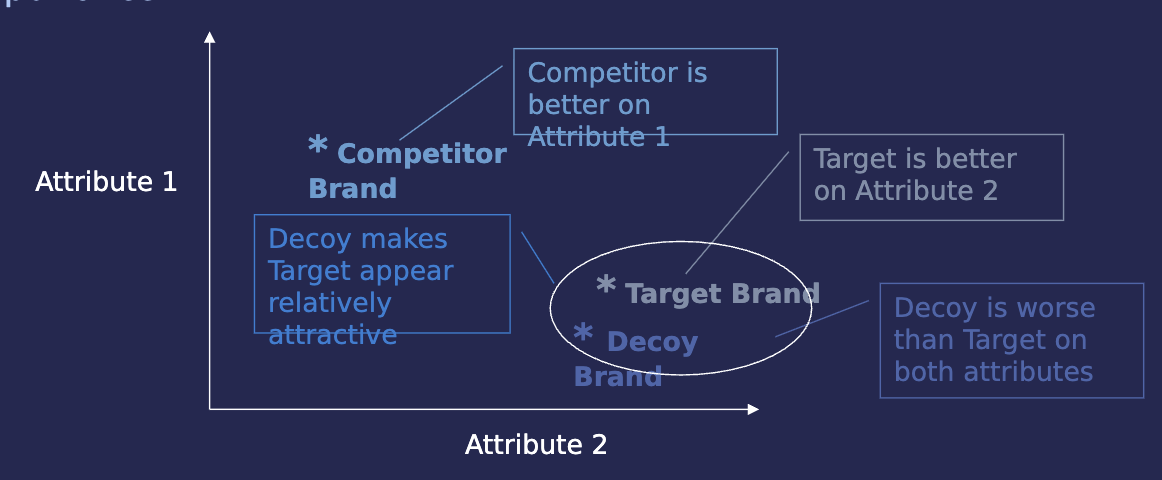
the attraction effect
brand appears more attractive when compared to inferior brands and less attractive when compared to superior brands
by managing comparisons, marketers can increase attraction
more brands in a specific cluster often signals attribute importance
the compromise effect
a target brand appears more attractive when it is viewed as a “good compromise”
compromise brands are seen as average on all important attributes
eg. 10 and 15 dollar wines on the menu, add a 20 dollar bottle and more people choose the 15 as a compromise

constructing evaluation
information for evaluation comes from internal (memory) and external sources (stimulus)
memory based choice: none of the considered brands are physically or directly observable (eg. choosing a restaurant)
stimulus based choice: consumers directly and physically observe all relevant brands in the consideration set (eg. choosing a beverage at a grocery store)
mixed choice: consumers can see some brands but must remember others
consumer choice - attitude based
choice can be made based on existing attitudes or by comparing attributes. attitude:
all info about a brand is combined into an overall evaluation (attitude) and stored in memory
the overall evaluation is used for choice
can only occur if you have an overall evaluation
commonly used for memory-based choice
attitudes are more accessible than attributes
consumer choice - attribute based
consumers compare the specific attributes or features of each brand
select the brand that performs the best on the key attributes
commonly used for stimulus based choice
attributes are more diagnostic (relevant) than attitudes
choice deferral
decision to choose nothing
too many options requiring too many trade offs
missing information
uncertainty encourages consumers to postpone decision making and search for additional information
heuristics
mental shortcuts that simplify decision making
three general types are persuasion, prediction, and influence (choice)
persuasion heuristics
influence consumers beliefs and attitudes
length implies strength
lots of info is more compelling
brands that list more favourable attributes are better than brands that list less (eg. theory of reasoned action - additive model(
liking agreement heurisitc
consumers generally agree with people they like (eg. balance theory)
consensus implies correctness (bandwagon effect)
if everyone is buying it, it must be good (social validation)
prediction heuristics
used to form likelihood judgements or predictions about future product performance
representativeness
availability
simulation
anchoring and adjustment
representative heuristics
making predictions based on perceived similarities between a specific target and a general category
different brands with similar names, packaging, appearance, etc.
eg. private label appearing to be representatice of national brands
brand extensions (you like oreos, you assume you like oreo ice cream)
brand associations
availability heuristic
makes predictions based on how easily information can be retrieved from memory (accessibility)
memorable, frequent, recent exposure is more easily recalled
easy to recall events are overestimated
difficult to recall events are underestimated
eg. easier to recall words that start with T than words with T as the third letter, but that doesn’t mean there are less
ease of recall can suggest preference (eg. strong brands)
can be influenced by media, TV, and advertising
simulation heuristic
easy to imagine events are overestimated
difficult to imagine events are underestimated
eg. product performance (demonstrational ads), winning the lottery
anchor and adjustment heuristic
makes predictions based on an initial judgement or reference
starting point affects the final decision
suggesting a larger quantity can result in larger purchases even without a quantity discount
multi unit pricing (10 for $9.99)
price quantity limits (max 10 per customer)
now instead of starting your consideration at 1 product and going up, you start at 10 and go down, and you’re likely to end with a larger number
or show the more expensive price of a product, compared to sale price
influence (choice) heuristics
directly influence consumer choice
lexicographic
elimination by aspects
additive difference
conjunctive and disjunctive
frequency of good and bad features
difference heuristics can result in different choices
lexicographic (single attribute) heuristic
compare brands on one key attribute and choose the brand that performs best on this single attribute
generally, a determinant attribute (matters a lot to consumer, eg. price, safety, flavour, etc.)
elimination by aspects heuristic
choose an important feature and reject all brands that don’t have this feature
choose the next most important feature and reject all brands that do not have that feature, and so on
commonly used to reduce the choice set
additive difference heuristic
compare brands two at a time (A and B)
assign importance weight to all relevant attributes (w)
compute a difference score for each attribute (Ai - Bi)
sum them up, and a positive score means preference for A
conjunctive heuristic
set a minimum value for all relevant attributes
analyze one brand at a time
select the first brand that meets the minimum on all attributes
disjunctive heuristic
set an acceptable value (higher than minimum) for all relevant attributes
chooses the first product that meets this value on one particular attribute
frequency of good and bad features
count the number of good and bad product features
choose the brand with the greatest positive difference
post purchase evaluation
consumers continue to process information about attributes and brands after purchase and consumption to determine satisfaction
expectancy disconfirmation model
compares perceptions of a brand’s performance with their expectations
dissonance reduction
dissatisfaction results in dissonance
strategies for reducing dissonance
increasing the perceived attractiveness of chosen alternative
decreasing the perceived attractiveness of rejected alternative
increasing the perceived similarity between alternatives
revoking the decision