Lab Exam II
 Call Kai
 Learn
 Practice Test
 Spaced Repetition
 Match
 Flashcards
 Knowt Play
1/128

Earn XP
Description and Tags
Platyhelminthes, Annelida, Mollusca, Arthropoda, & Echinodermata
129 Terms
The Phylum Platyhelminthes contains what classes?
Class Turbellaria (Free-living flatworms)
Class Trematoda (Flukes)
Class Cestoda (Tapeworms)
The Phylum Annelida contains what classes?
Class Polychaeta (Polychaete worms)
Class Clitellata
The Class Clitellata contains what subclasses?
Subclass Oligochaeta (ex. earthworm)
Subclass Hirudinea (Leeches)
The Phylum Mollusca contains what classes?
Class Polyplacophora (many plate bearing)
Class Scaphopoda (spade foot)
Class Gastropoda (stomach foot)
Class Bivalvia (two-halved)
Class Cephalopoda (head foot)
The Phylum Arthropoda contains what Subphylum?
Subphylum Trilobitomorpha (trilobites)
Subphylum Chelicerata (Horseshoe Crabs & Water Scorpions)
Subphylum Crustacea
Subphylum Myriapoda
Subphylum Hexapoda
The Subphylum Chelicerata contains what classes?
Class Merostomata “Mouth” “Parts” (Horseshoe crabs & water scorpions)
Class Pycnogonida (Sea Spiders)
Class Arachnida (Scorpions, Spiders, Ticks, & Mites)
The Subphylum Crustacea contains what classes?
Class Malacostraca
Class Maxilopoda
Class Branchiopoda (water fleas, fairy shrimp, brine shrimp etc.)
Class Ostracoda (seed shrimp)
Class Malacostraca contains what orders?
Order Decapoda (crayfish, shrimp, crabs, lobster)
Order Isopoda (pillbugs and woodlice)
Order Amphipoda
Class Maxillopoda contains what sub-classes?
Sub-class Branchiura (fish lice)
Sub-class Copepoda (copepods)
Sub-class Cirripedia (barnacles)
The Subphylum Myriapoda contains what classes?
Class Diplopoda (millipedes)
Class Chilopoda (Centipedes)
The Subphylum Hexapoda contains what class?
Insecta
The Class Insecta contains what orders?
Thysanura
Hemiptera
Orthoptera
Odonata
Ephemeroptera
Blattodea
Phasmida
Plecoptera
Isoptera
Lepidoptera
Hymenoptera
Coleoptera
Diptera
The Phylum Echinodermata contains what classes?
Class Stelleroidea
Class Echinoidea
Class Holothuroidea
Class Crinoidea
The Class Stelleroidea contains what subclasses?
Subclass Asteroidea
Subclass Ophiuroidea

What is this specimen? What is its Phylum and Class? What is its movement method? What symmetry does it posses?
Planaria
Phylum Platyhelminthes & Class Turbellaria
Uses cilia to move
Bilateral symmetry
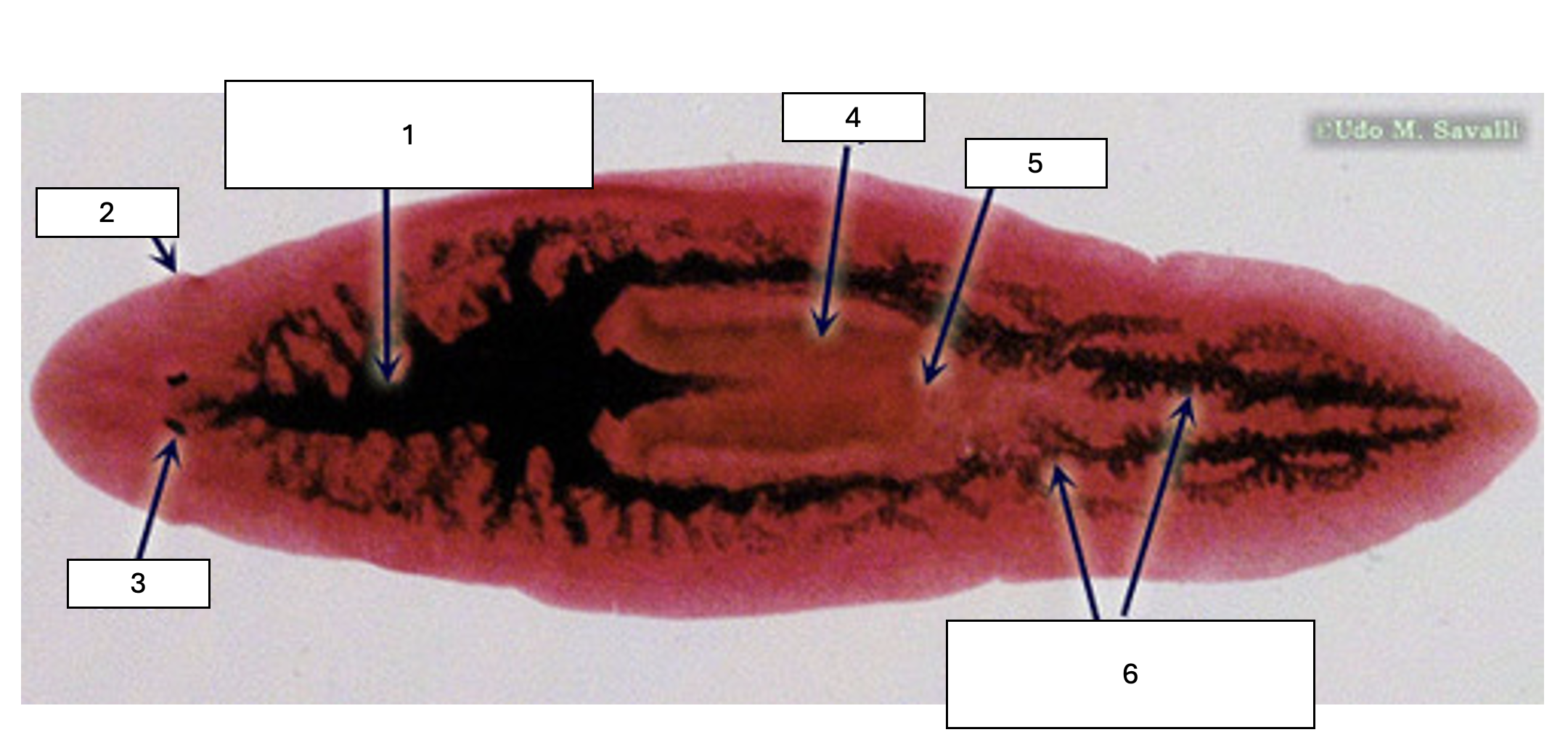
What is structure 1?
Rami
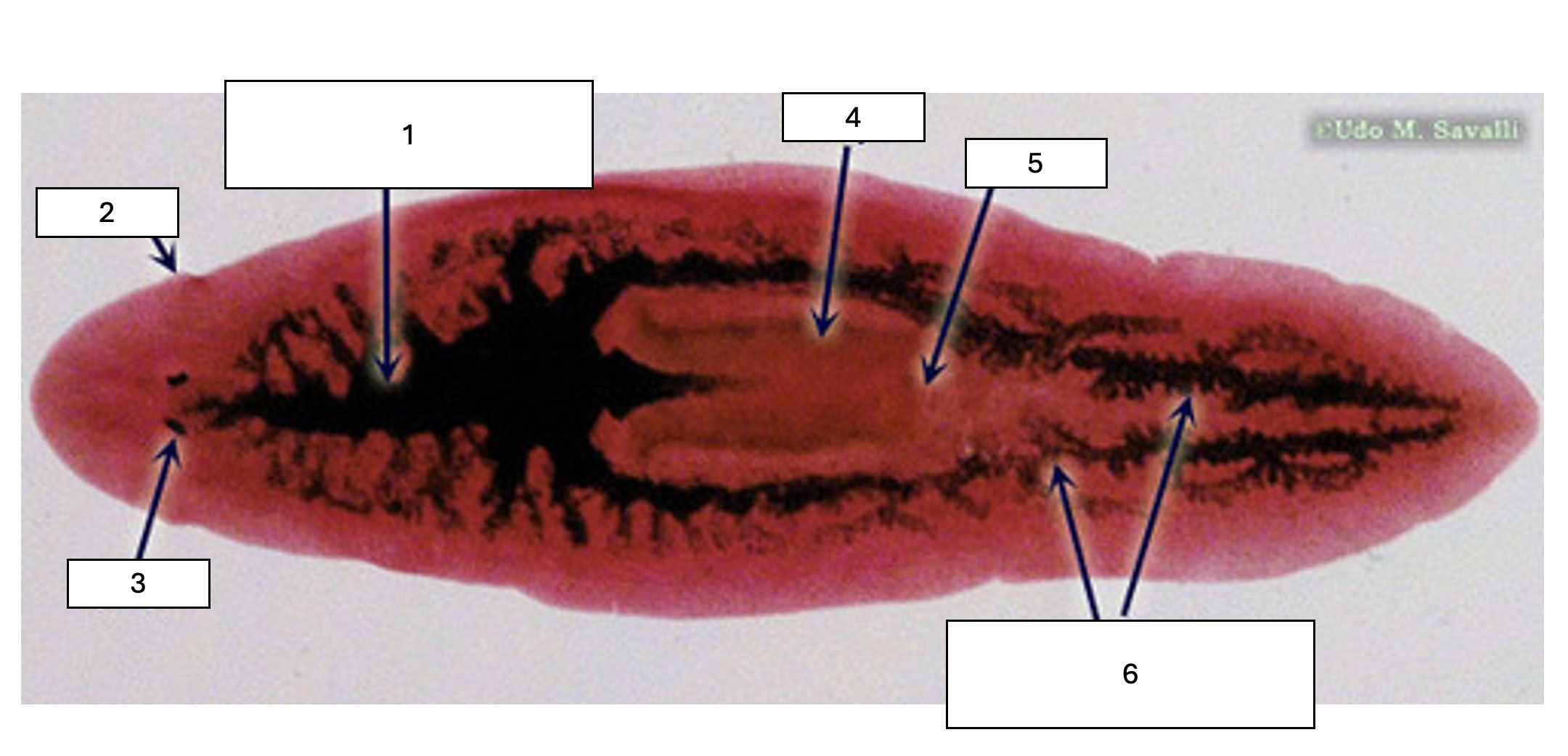
What is structure 2?
Auricle

What is structure 3?
Eye Spots

What is structure 4?
Pharynx

What is structure 5?
Mouth

What is structure 6?
Ceca

What is this specimen? What is its Phylum & Class?
What specific environment does the adult form live in?
Does the organism produce sperm, eggs, or both?
Does it have a complete or incomplete digestive system?
What is its lifecycle?
Fluke - Phylum Platyhelminthes and Class Trematoda
Lives in the Liver
Produces both sperm and eggs
Has a incomplete digestive system
Fish (infected) → Human → Eggs w/ Feces → Snail —> Snail ingested by Fish → Infected Fish

What is structure one?
Mouth/Anterior sucker

What is structure 2?
Ceca

What is structure 3?
Genital Pore

What is structure 4?
Ventral sucker
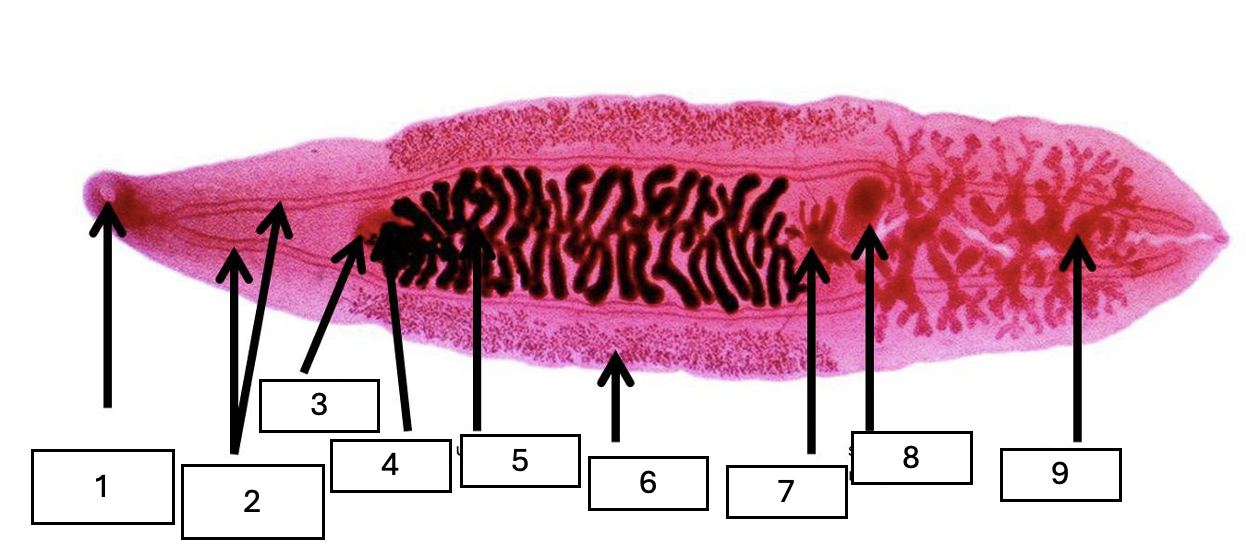
What is structure 5?
Uterus
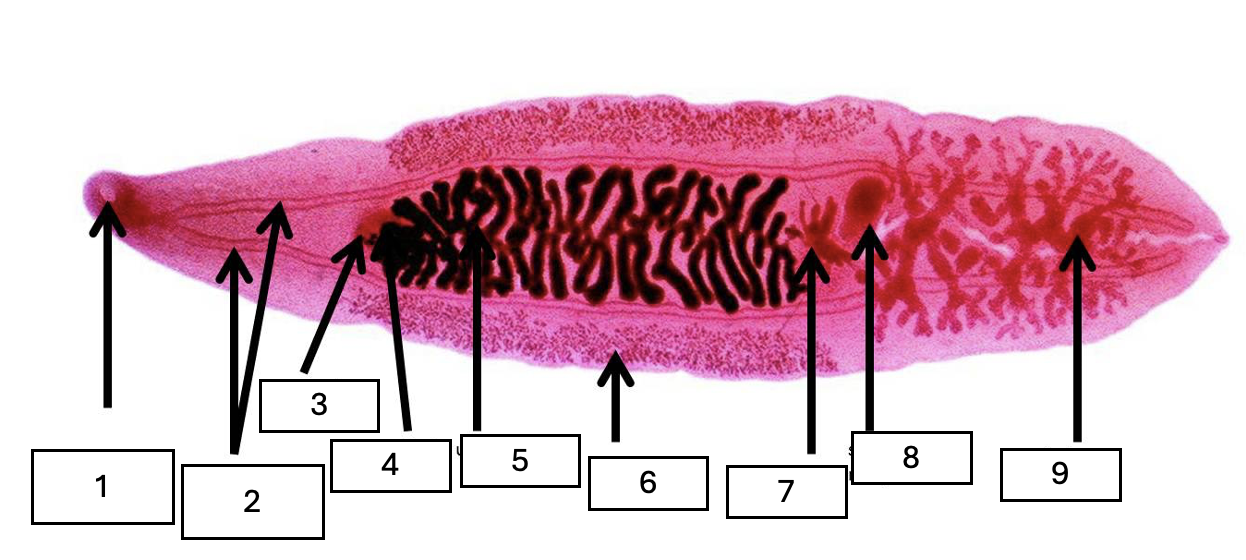
What is structure 6?
Yolk Gland

What is structure 7?
Ovary

What is structure 8?
Seminal Receptacle

What is structure 9?
Testes
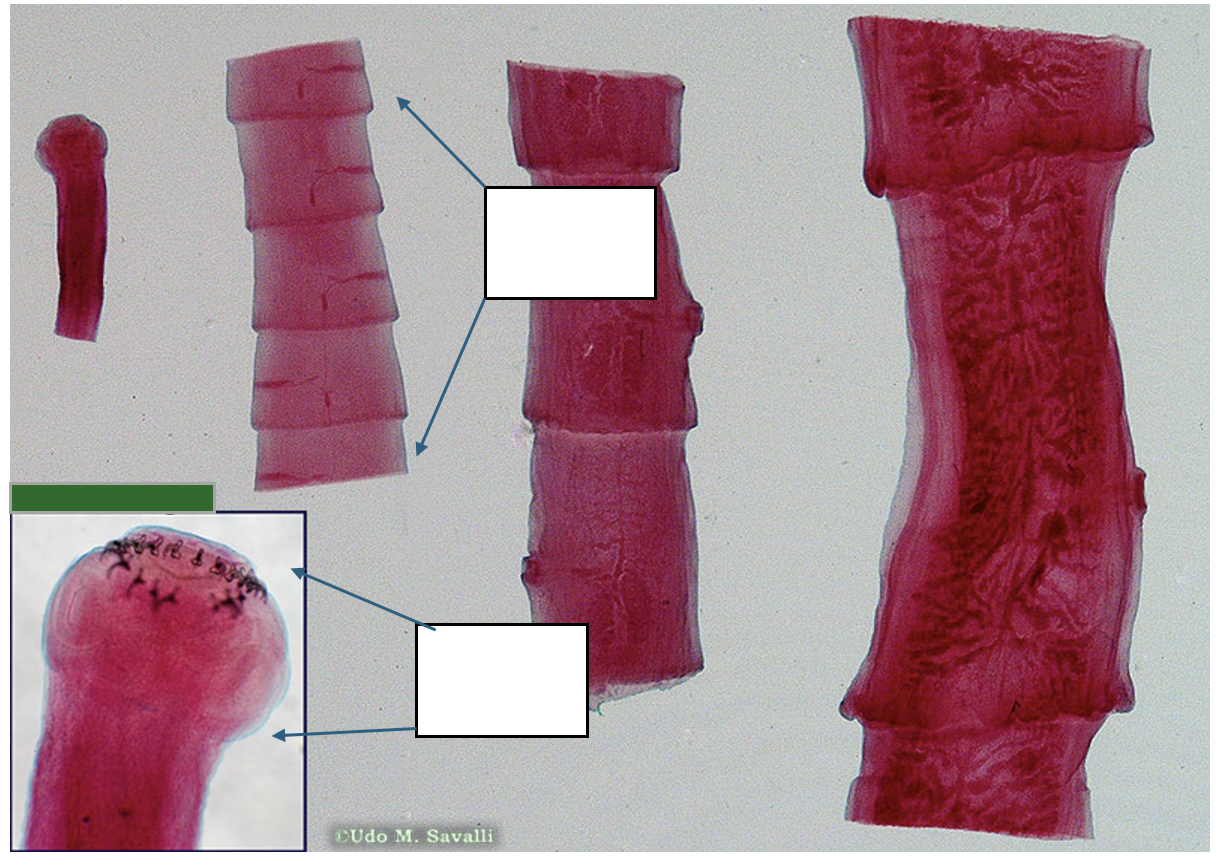
What is this specimen? What is its Phylum & Class? What is its environment?
Tape Worm
Phylum Platyhelminthes and Class Cestoda
Intestines of a host
Lacks a mouth and digestive system therefore, obtains nutrients from diffusion

What is structure 1?
Proglottids
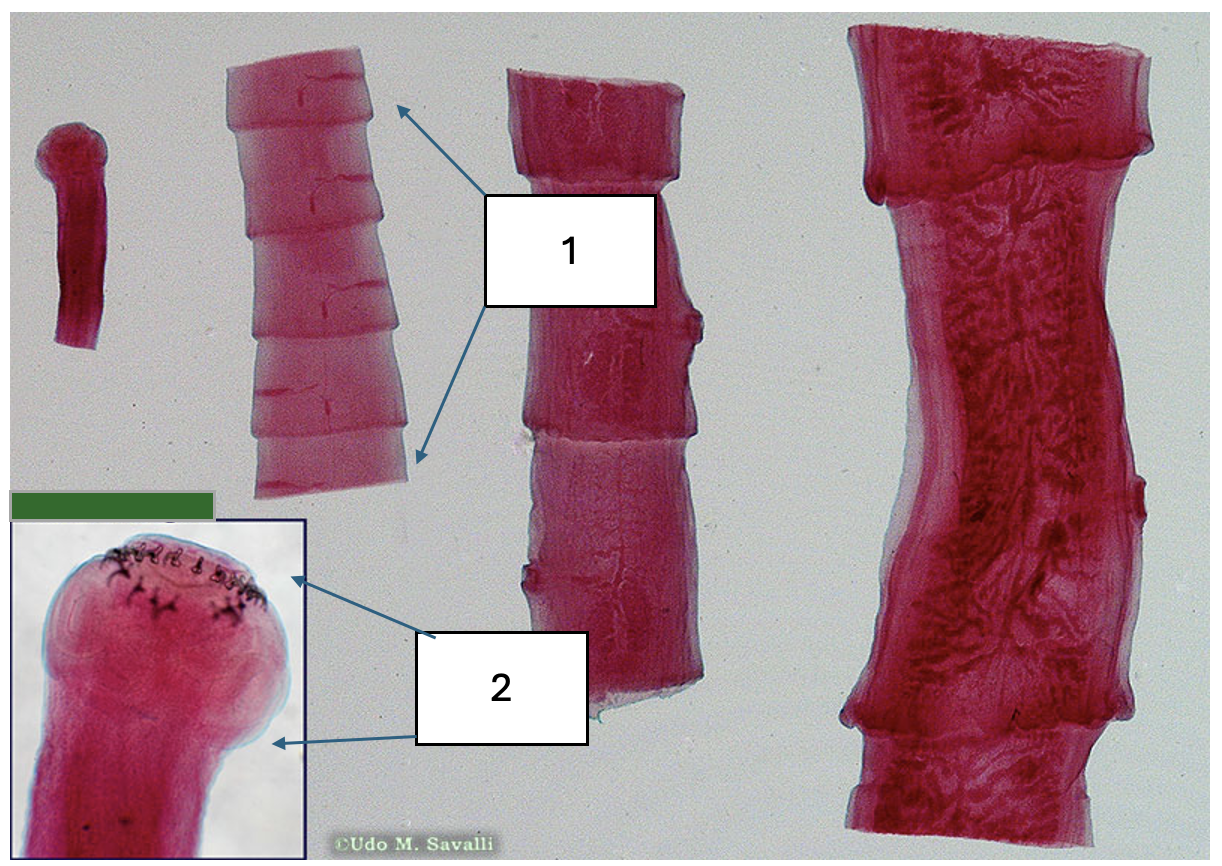
What is structure 2?
Scolex
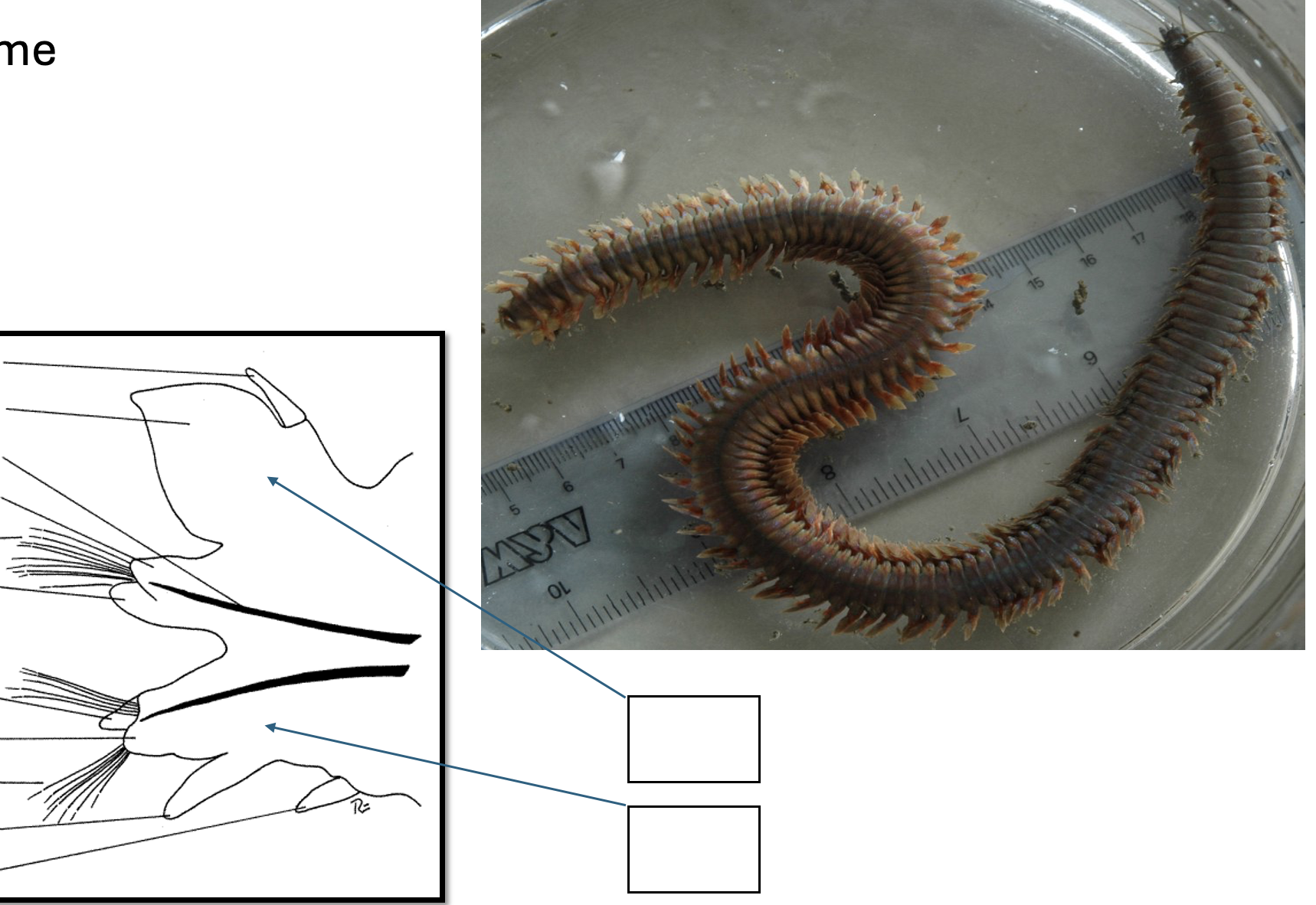
What specimen is this? What is its phylum and class? What aspects of the parapodia’s physical structure appear to be advantageous for these functions (locomotion and breathing)? Environment?
Clamworm
Phylum Annelida and Class Polychaeta
The bristles and its flat “flipper” like structures are good for diffusion of oxygen and advantageous for movement.
Marine animal that lives in sand or in mud bottoms.

What is structure 1?
Notopodium (significantly larger)

What is structure 2?
Neuropodium
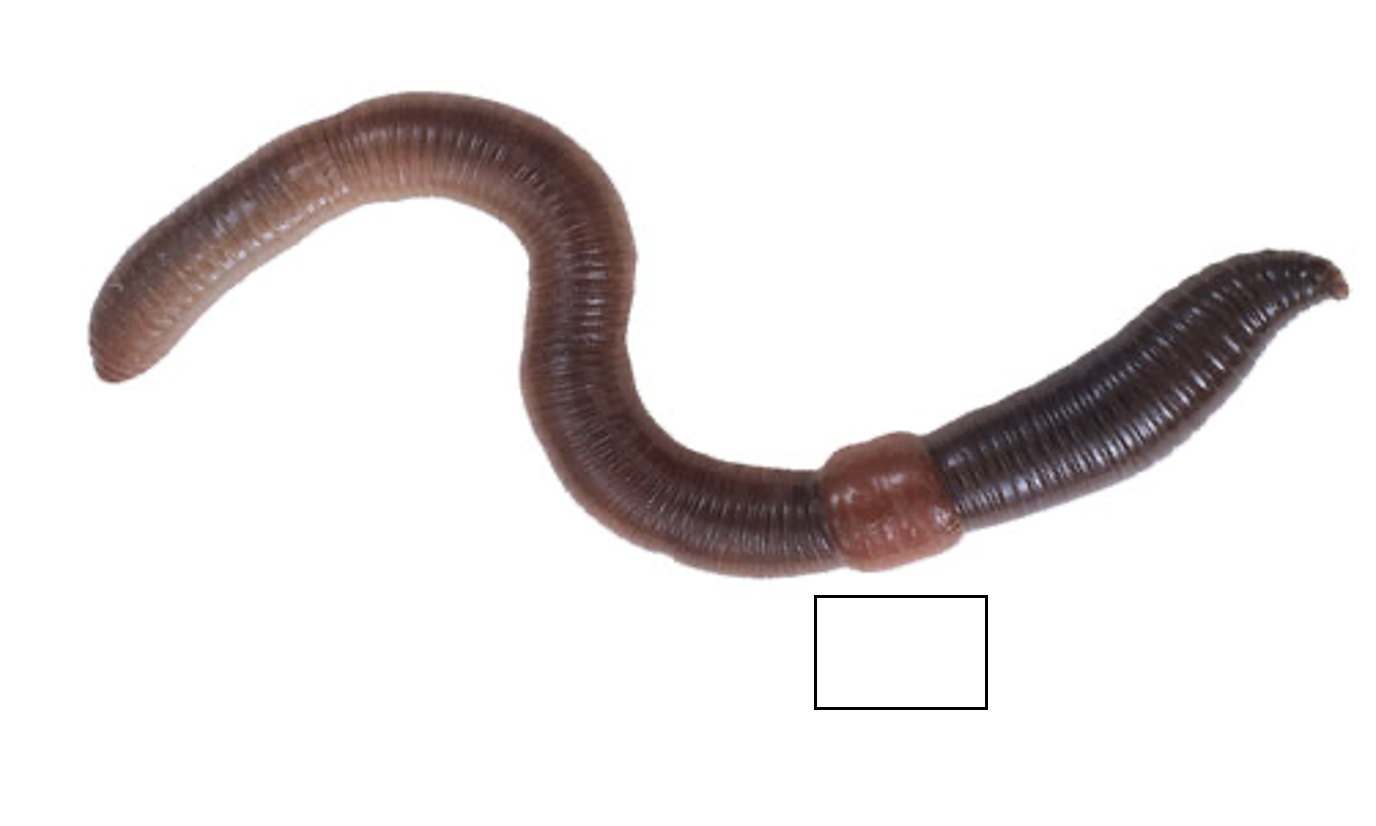
What is this specimen? What is its Phylum, Class, & Subclass? What is its feeding method? Are they separate sexes or hemaphroditic? What does the box indicate?
An Earthworm
Phylum Annelida, Class Citellata, Subclass Oligochaeta
Deposit feeding
Hemaphrodites
The box indicates the clitellum
Complete digestive tract

What is one?
Mouth

What is two?
pharynx

What is three?
Crop

What is four?
Gizzard

What is five?
dorsal blood vessel
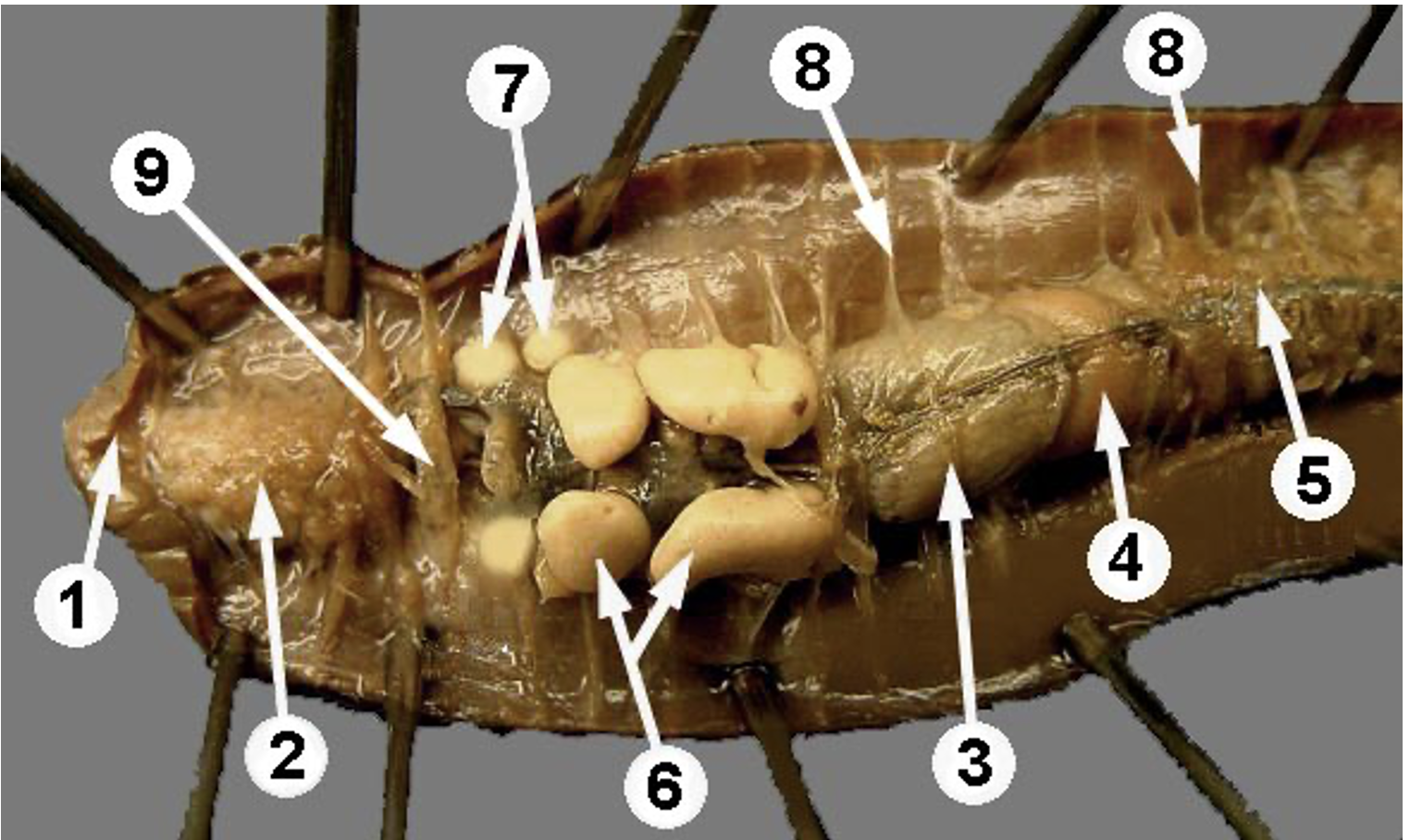
What is 6?
Seminal vesicles

what is 7?
Seminal receptacles
What is 8?
Septa
What is 9?
heart(s)

What is this specimen? What Phylum, Class, & Subclass does it belong to?
Leech
Phylum Annelida, Class Clitella, & Hirudinea
Parasitic
Freshwater ponds, lakes, streams
Can be used medically

What is this specimen? What phylum and class does it belong to?
Toothshells or spade foots
Phylum Mollusca and Class Scaphopoda
Catch food from the bottom (fat end) by using their tentacles (captacula)
Burrow in sand and muddy sea bottoms

What is this specimen? What phylum and class does it belong to?
Chiton
Phylum Mollusca and Class Polyplacophora
7-8 dorsal calcareous plates

What is this specimen? What Phylum and Class does it belong to?
Snail
Mollusca & Gastropoda

What is this specimen? What phylum and class does it belong to? Dextral or sinestral?
Whelk
Phylum Mollusca and Class Gastropoda
Sinestral
Has a muscular foot that moves with muscular contractions called pedal waves
Has a radula that scraps algae using its tiny tiny teeth

What is this specimen? What phylum and class does it belong to?
Scallop
Phylum Mollusca and Class Bivalvia

What is structure 1?
Nacreous layer

What is structure 2?
Umbo

What is structure 3?
Hinge Ligament

What is structure 6?
Anterior adductor muscle
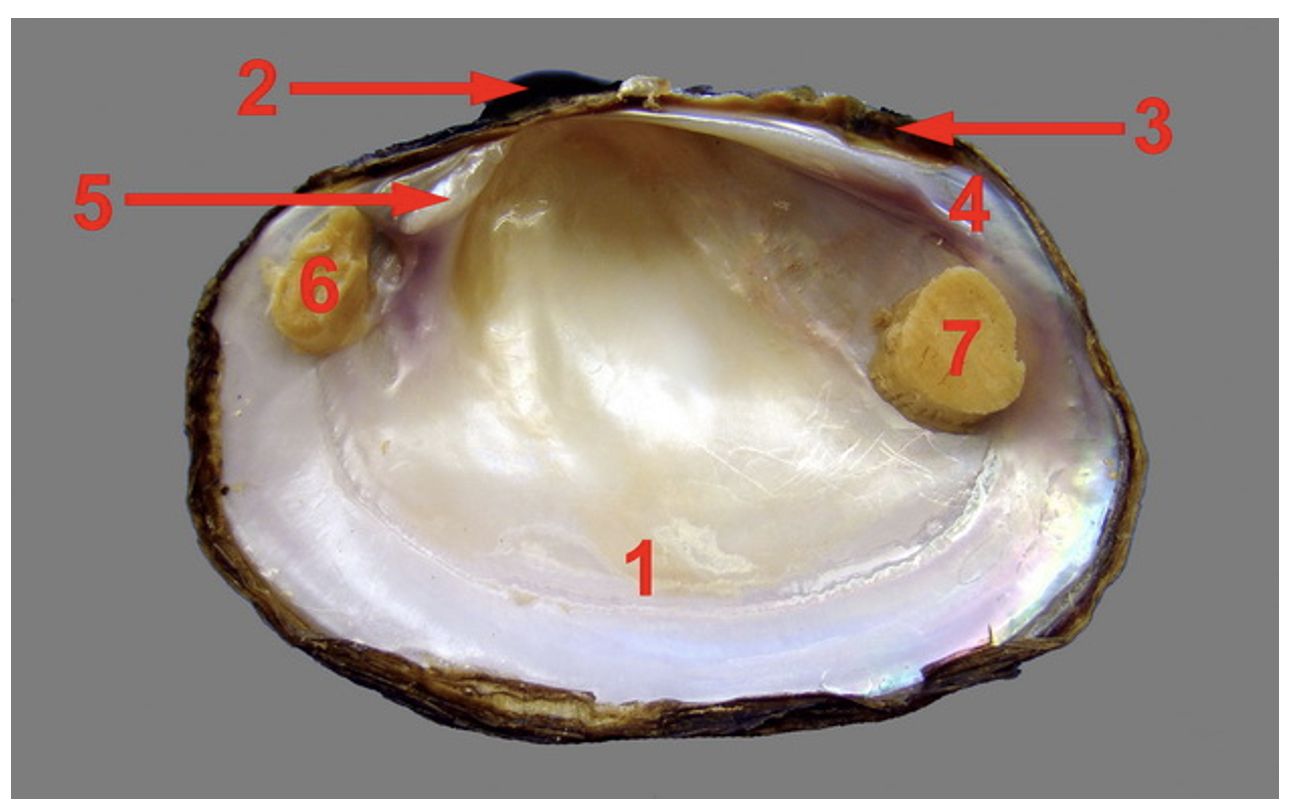
What is structure 7?
Posterior adductor muscle

What is the top box pointing at? What are their purpose?
Gills
Filter water and obtain nutrients

What is the very right box indicating?
The foot

What is the middle box indicating?
The palps

What is the very left box indicating?
The mantle that helps builds the shell

What is structure 6? Does this organism have an open or closed circulatory system?
The structure is the heart
This organism have a closed circulatory system
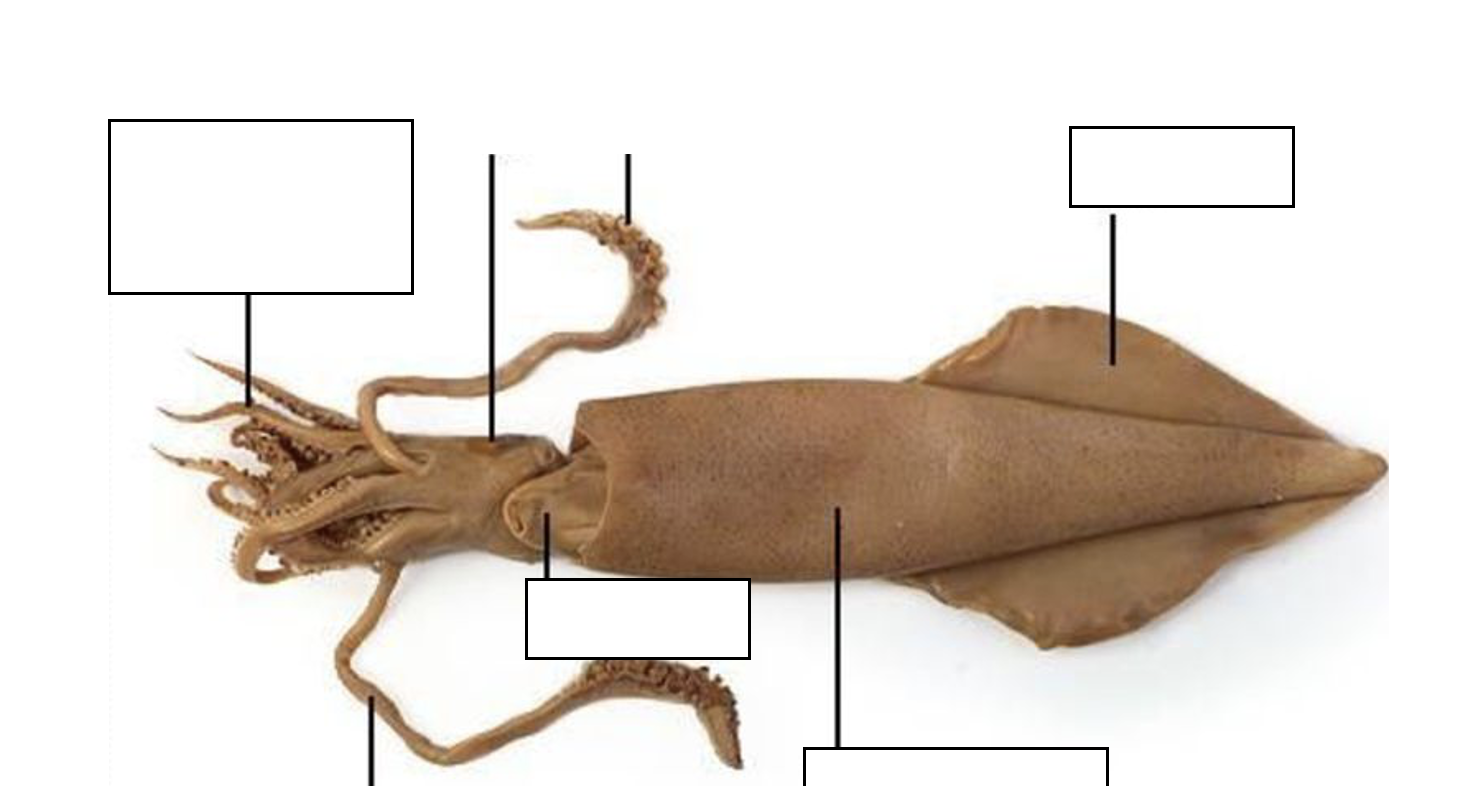
What is this organism? What phylum and class does it belong to? Lifestyle?
Squid
Mollusca and Cephalopoda
Predatory, uses ink to hide

What is one?
Arms

What are 2?
Tentacles

What is structure 3?
The siphon to help propel itself quickly to evade predators

What is structure 4?
Mantle cavity

What is structure 5?
The fin
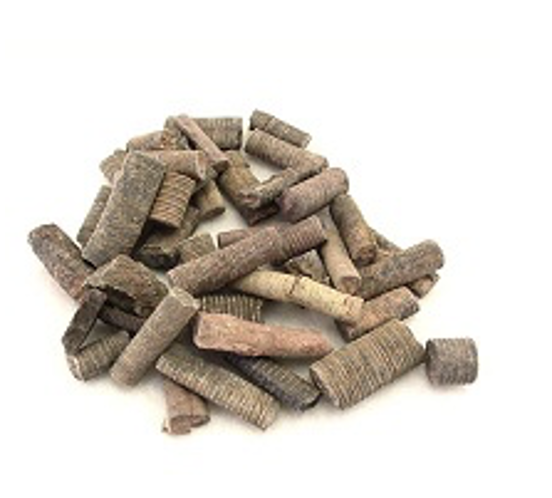
What is this fossil organism and what phyla does it belong to?
Crinoids
Echinodermata

What is this organism and what phyla does it belong to?
Ammonites and Mollusca
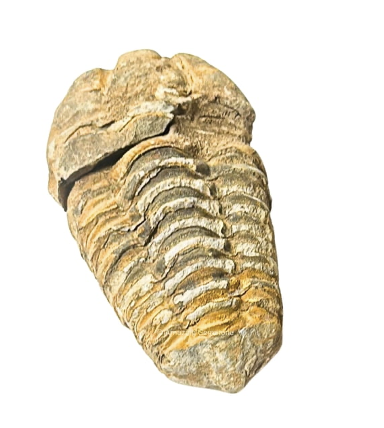
What organism is this and what phyla does it belong to?
Trilobite and Arthropoda
Subphylum Chelicerate anatomical features
Two body regions divided (cephalothorax and abdomen
No Antennae
First pair of appendages are modfied for eating (chelicerae)

What is this organism? What Phylum, Subphylum, and class does it belong to?
Horseshoe crab
Arthropoda, Chelicerate, & Merostomata

What is structure one?
Chelicerae

What is structure two?
Chelate

What is structure three?
mouth

What is structure four?
Chilaria

What is structure five?
Genital Opperculum

What is structure 6?
Gnathobase

What is this organism? What Phylum, Subphylum, and class does it belong to?
Arthropoda, Chelicerate, & Arachnida
Along with spiders and ticks

What specimen is this? What phylum, what subphylum, class, & order?
Roly Polies
Arthropoda, Crustacea, Malacostraca, & Isopoda

What specimen is this? What phylum, what subphylum, class, & order?
Small shrimp like crustaceans
Arthropoda, Crustacea, Malacostraca, & Amphipoda

What specimen is this? What phylum, subphylum, Class, & subclass does it belong to?
Seed Shrimp
Arthropoda, Crustacea, Maxillopoda, Sub class Copepoda

What specimen is this? What phylum, subphylum, and class does it belong to?
Seed shrimp
Arthropoda, Crustacea, and Ostracoda

What specimen is this? What phylum, what subphylum, class, & order?
Crayfish
Arthropoda, Crustacea, Malacostraca, & Decapoda

What is the name of this structure or crayfish?
Cheliped
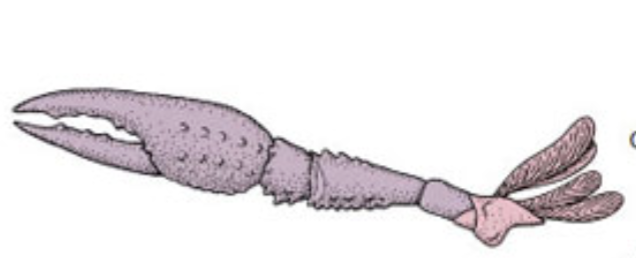

What is the name of this structure or crayfish?
Second Walking Leg


What is the name of this structure or crayfish?
Fourth walking leg


What is the name of this structure or crayfish?
First swimmeret

What is the name of this structure or crayfish?
Second Swimmeret


What is the name of this structure or crayfish?
third swimmeret


What is the name of this structure or crayfish?
uropod


What is the name of this structure or crayfish?
Antenna


What is the name of this structure or crayfish?
Antennule


What is the name of this structure or crayfish?
Mandible
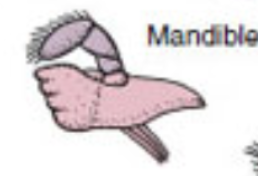

What is the name of this structure or crayfish?
first maxilla


What is the name of this structure or crayfish?
second maxila


What is the name of this structure or crayfish?
first maxilliped
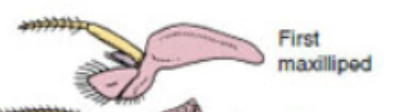

What is the name of this structure or crayfish?
second maxilliped
