BIOL 2403 Ch.6
 Call Kai
 Learn
Learn Practice Test
 Spaced Repetition
 Match
Match Flashcards
 Knowt Play
1/87

There's no tags or description
Looks like no tags are added yet.
Name | Mastery | Learn | Test | Matching | Spaced | Call with Kai | Chat |
|---|
No analytics yet
Send a link to your students to track their progress
88 Terms
What does integumentary mean?
covering
What are the components of the integumentary system?
skin and its derivatives
What are other words for "skin"
integument, cutaneous
what are skin derivatives?
hair, nails, sweat glands, sebaceous glands
what does sebaceous mean?
oily
What is the largest organ?
skin
Skin contains ________ tissue types
all four
How many layers of skin are there and what are they called?
1. epidermis
2. dermis
What type of cells make up the epidermis?
stratified squamous epithelium
What type of tissue makes up the dermis?
connective
What does epi mean?
above
What does hypo mean?
below
What is the fatty area underneath the dermis called?
hypodermis or subcutaneous
What are the layers of the epidermis called?
strata
What is the first layer (bottom layer) of the epidermis called?
stratum basale
What is the second layer of the epidermis called?
stratum spinosum
What is the third layer of the epidermis called?
stratum granulosum
What is the fourth layer of the epidermis called?
stratum lucidum
What is the fifth layer (top layer) of the epidermis called?
stratum corneum
What three cell types does the basale layer contain?
keratinocytes, melanocytes, and tactile cells
What are keratinocytes?
-most abundant
-synthesize the tough protein keratin (STRENGTH).
-keratinocytes STEM CELLS constantly DIVIDE to produce cells
What are melanocytes?
-produce protein PIGMENT (melanin) in response to UV light
-transfers pigment granules into the keratinocytes to SHIELD the nucleus
What are tactile cells?
-sensitive to TOUCH
-when compressed, release chemicals that stimulate sensory nerve endings
Stratum spinosum contains which two types of cells?
keratinocytes and epidermal dendritic cells
in stratum spinosum, keratinocytes are interconnected by junctions called _________
desmosomes
What do epidermal dentritic cells do?
help INITIATE IMMUNE RESPONSE in case of invasion of pathogens or development of cancer
What does "dendra" mean?
branches
What happens to keratinocytes in the stratum granulosum?
keratinocytes undergoing keratinization: cells fill with keratin - causing nucleus and organelles to disintegrate
The properties of stratum corneum originate from which strata?
strata lucidum
What composed the stratum corneum?
20-30 layers of dead, flat, interlocking keratinocytes
How does the stratum corneum develop?
dead skin cells are pushed through various strata for about 4 weeks while undergoing structural changes and are eventually shed
Which protein can be found in certain areas of the skin? (palms and soles) and why?
eledin; to create callouses
What is the difference between thick and thin skin?
thick skin has 5 layers, thin skin has 4 layers. THIN SKIN DOES NOT HAVE LUCIDUM
red pigment in skin is a result of...
hemoglobin
black, brown, tan, yellow-brown, reddish pigment is skin is due to...
melanin - the specific color depends on age, heredity, and light exposure
_______ pigment is aquired from yellow-orange veggies
carotene
carotene is converted to ______ within the body
vitamin A
what is the medically scientific term for moles and birthmarks?
nevus
What are friction ridges
fingerprints - increases friction on contact (think of grip)
How thick is the dermis?
0.5mm - 3.0mm
What type of tissue composes the dermis
connective
What two layers make up the dermis?
papillary and reticular
papillary means
nipples
dermal papilae contain what?
capillaries and nerve endings
What are epidermal ridges?
the nipple looking protrusions
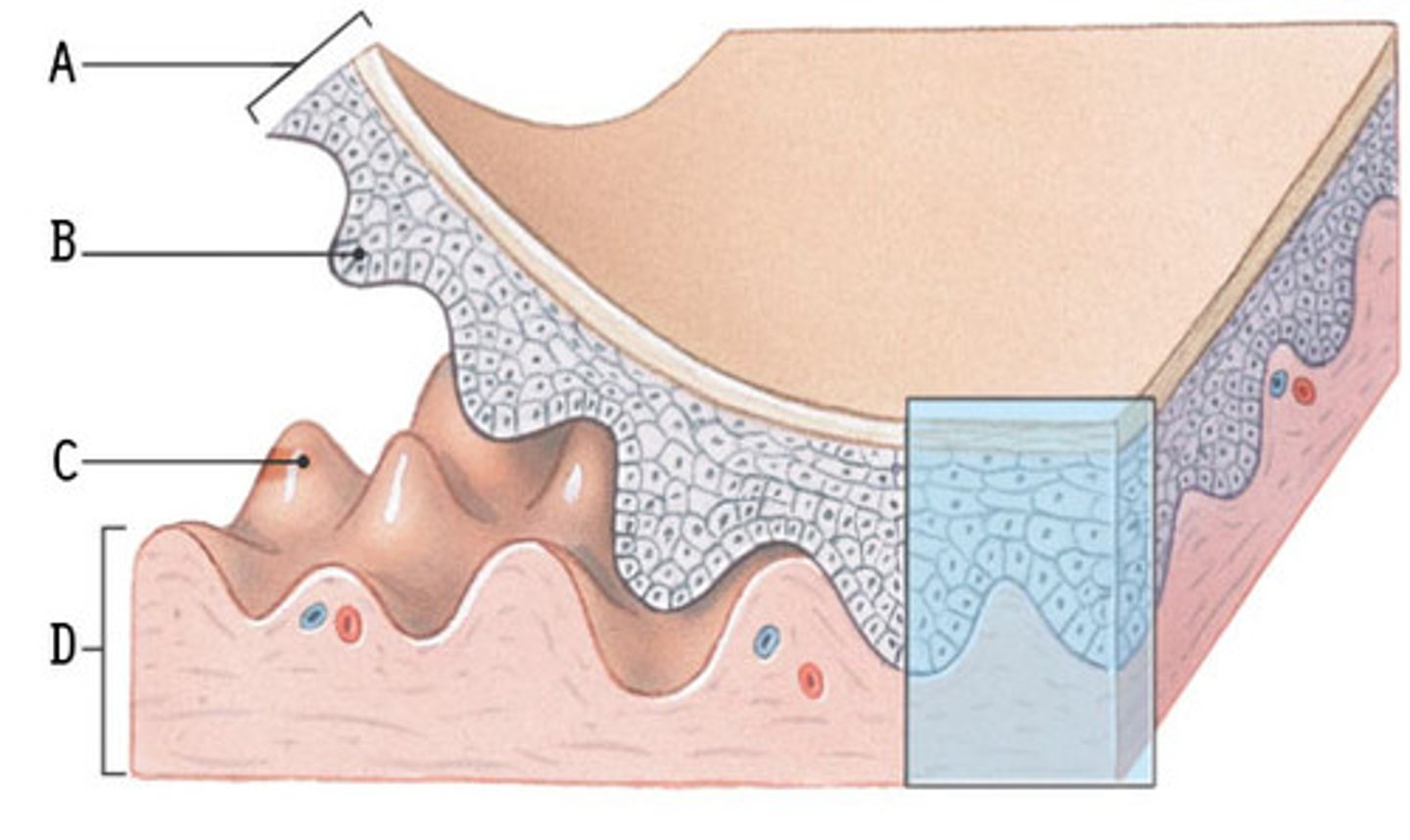
What is the function of epidermal ridges?
interlock and increase the area of contact between the layers
What is the reticular layer (in the dermis)
deeper, major portion of the dermis
What does the reticular layer mostly consist of?
dense irregular connective tissue with bundles of collagen fibers and elastic fibers with other stuff (blood vessels, nerve endings, glands, hair follicles)
What are the two types of dermal nerves?
sensory and motor
What do sensory nerve fibers do?
collect info (about your surroundings), senses pain, temp, touch, and pressure (think TOUCH)
What do motor nerve fibers do?
regulate blood flow and gland secretions
What are the functions of dermal blood vessels?
1. supply nutrients and O2, while removing waste
2. regulate body temp and blood pressure
What are the two process that regulate body temp and BP in dermal blood vessels?
vasocontriction and vasodilation
The subcutaneous layer ________ part of the integument
is NOT
What types of CT is in the subcutaneous layer
areolar and adipose
What are the functions of the subcutaneous layer?
1. stabilize and bind the body
2. energy reservoir
3. thermal insulation
4. rich in blood vessels
WHat are the funtions of the integument
1. protection
2. prevention of water loos and gain
3. metabolic regulation
4. secretion (ex: sebum)
5. absorption (ex: nicotine patch)
6. immune function (epidermal dendritic cells)
7. temp regulation
8. sensory reception
What are the three epidermal derivatives?
nails, hair, and exocrine glands
Nails are ______ of tightly packed _______________________________
plates; keratinized epidermal cells
What are the function of nails?
1. protect the tips (of fingers and toes)
2. assist in grabbing objects
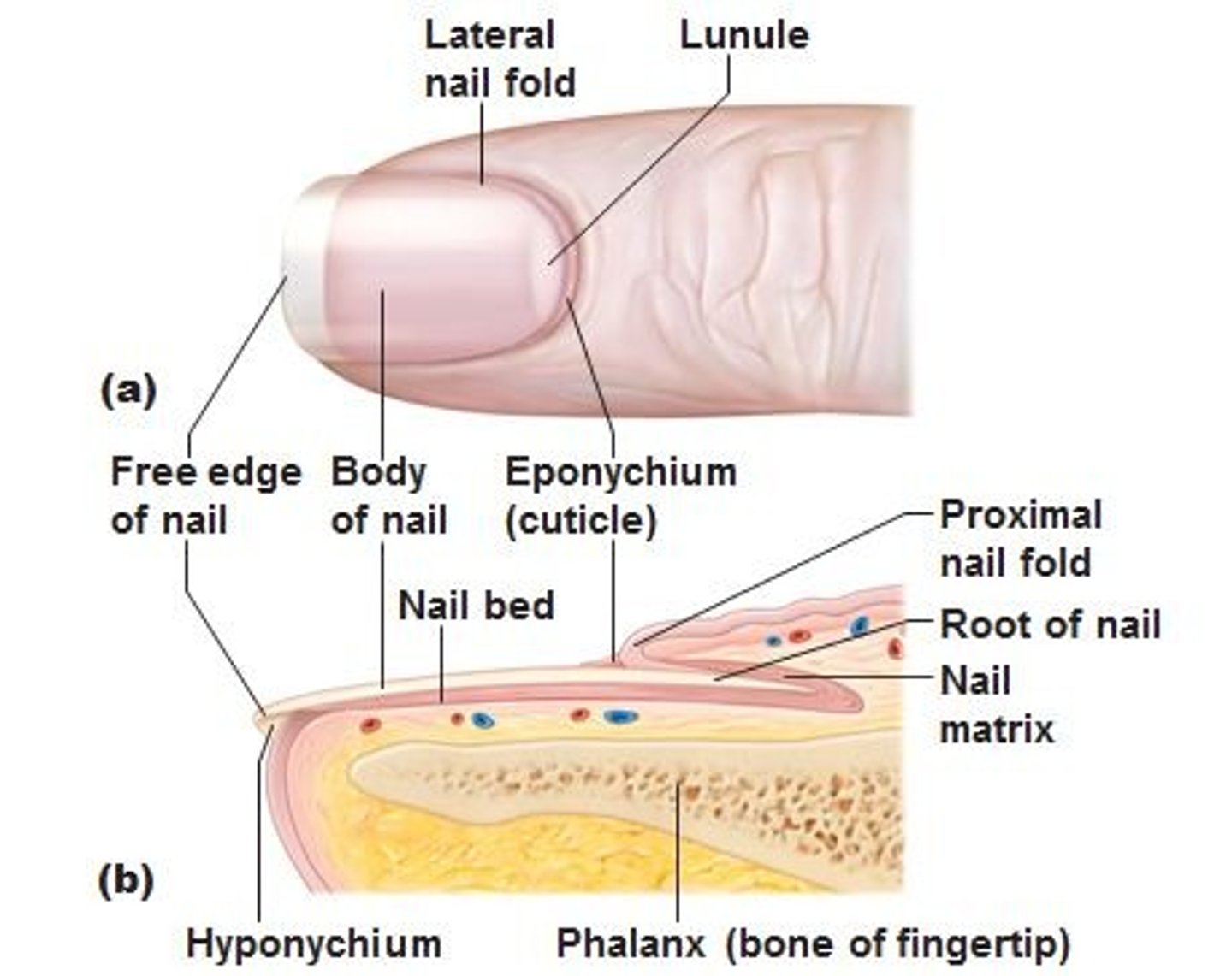
What is the structure of the nail?
Nail plate (the nail itself)
nail bed (below the plate)
nail matrix (where the nail plate comes out)
Hair strands are _______ packed _________________________
tightly; karatinized epidermal cells (KERATINOCYTES)
where is hair located
everywhere except palms, soles, and lips
What are the two types of hair?
vellus and terminal
What is vellus hair
short, fine, and unpigmented (almost everywhere)
What is terminal hair?
coarser, pigmented, longer (scalp, brows, pubes)
What are the three zones of hair?
Shaft (the exposed hair)
root (the hair below the skin surface)
hair bulb (swelling at the base)
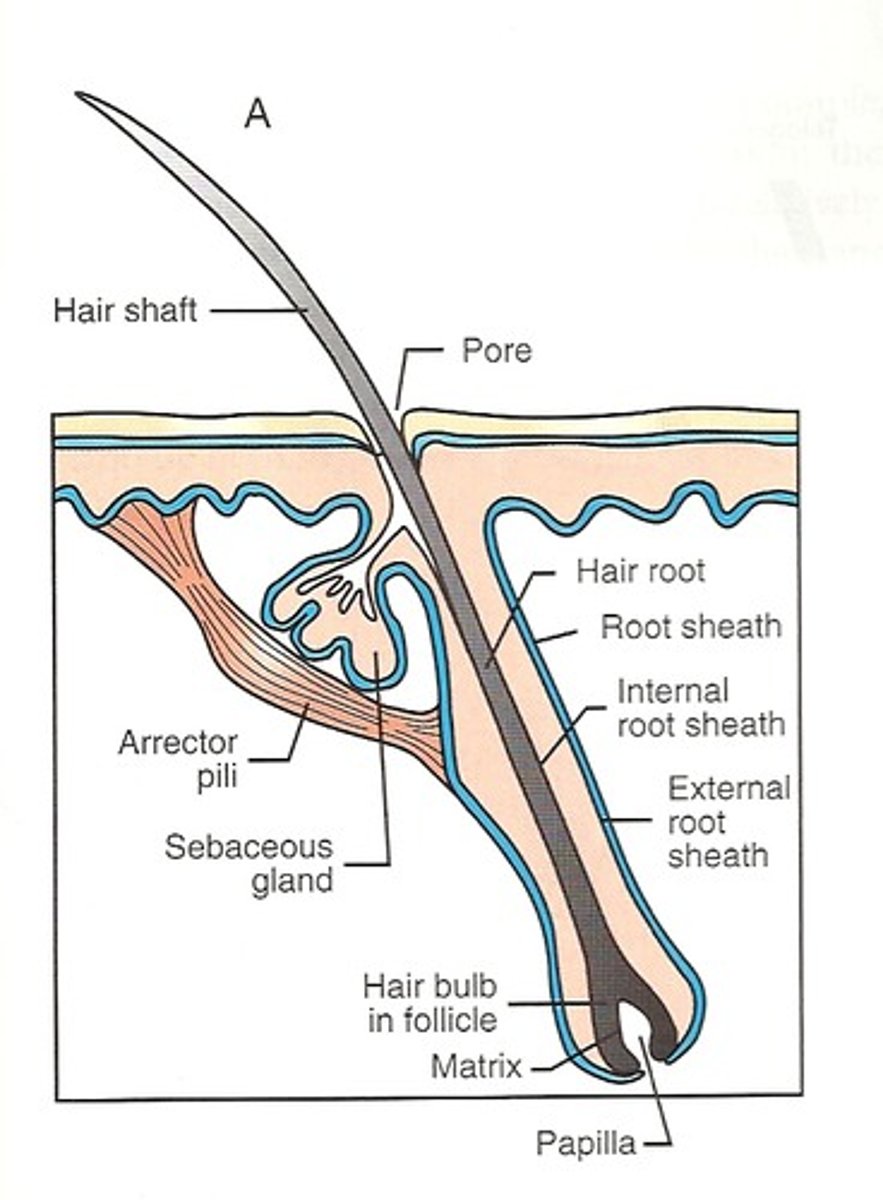
What two things does the hair bulb contain?
hair papilla (vessels and nerves)
hair matrix (actively dividing cells)
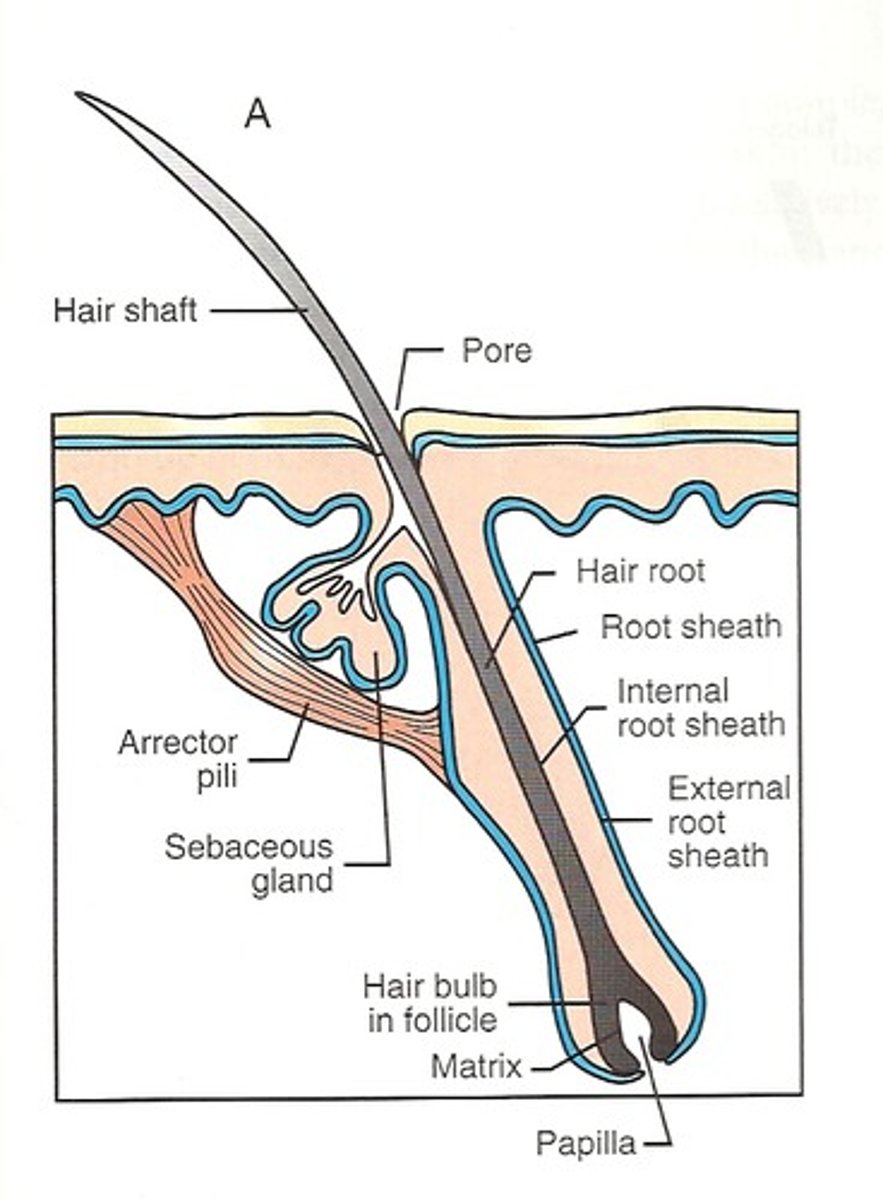
What are the structures that are associated with hair?
hair follicle (tube surrounding hair root)
arrector pili (smooth muscle that elevates hair)
sebaceous gland (sebum)
Functions of hair
protection (physical or chemical damage)
visual identification
chemical dispersal (pheromones)
What are the two types of exocrine glands?
merocrine sweat glands and apocrine sweat glands
Merocrine sweat glands are the ________ numerous and ______ distributed
most; widely
What is the shape of merocrine sweat glands?
simple coiled shape
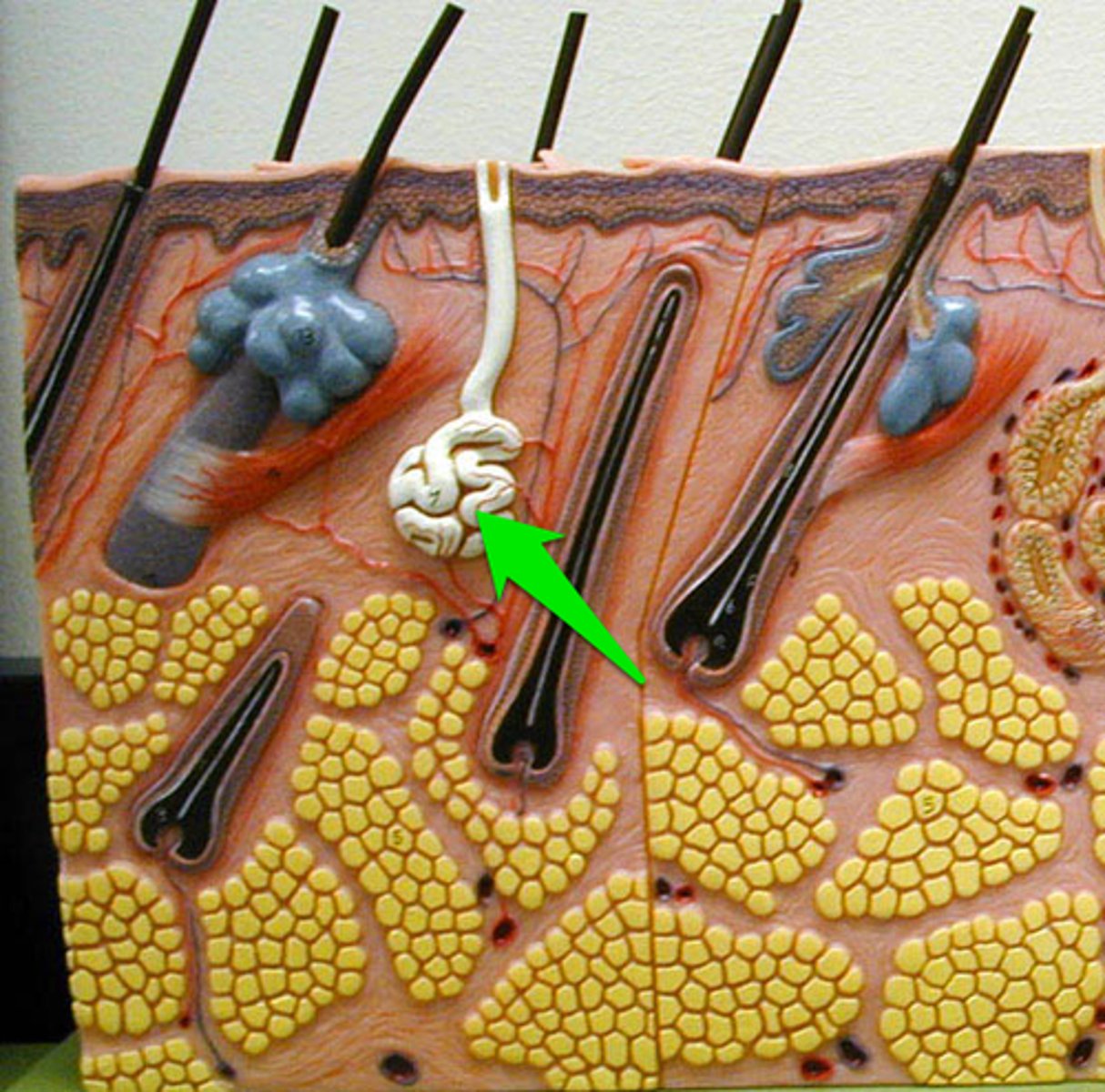
merocrine discharge
discharges sweat through sweat PORES
What are the functions of merocrine sweat glands?
1. thermoregulation
2. removal of waste
3. antibacterial activity (creates acidic envrionment)
Where are apocrine sweat glands found?
axillae, around nipples, genital region
What is the shape of apocrine sweat glands
simple coiled shape
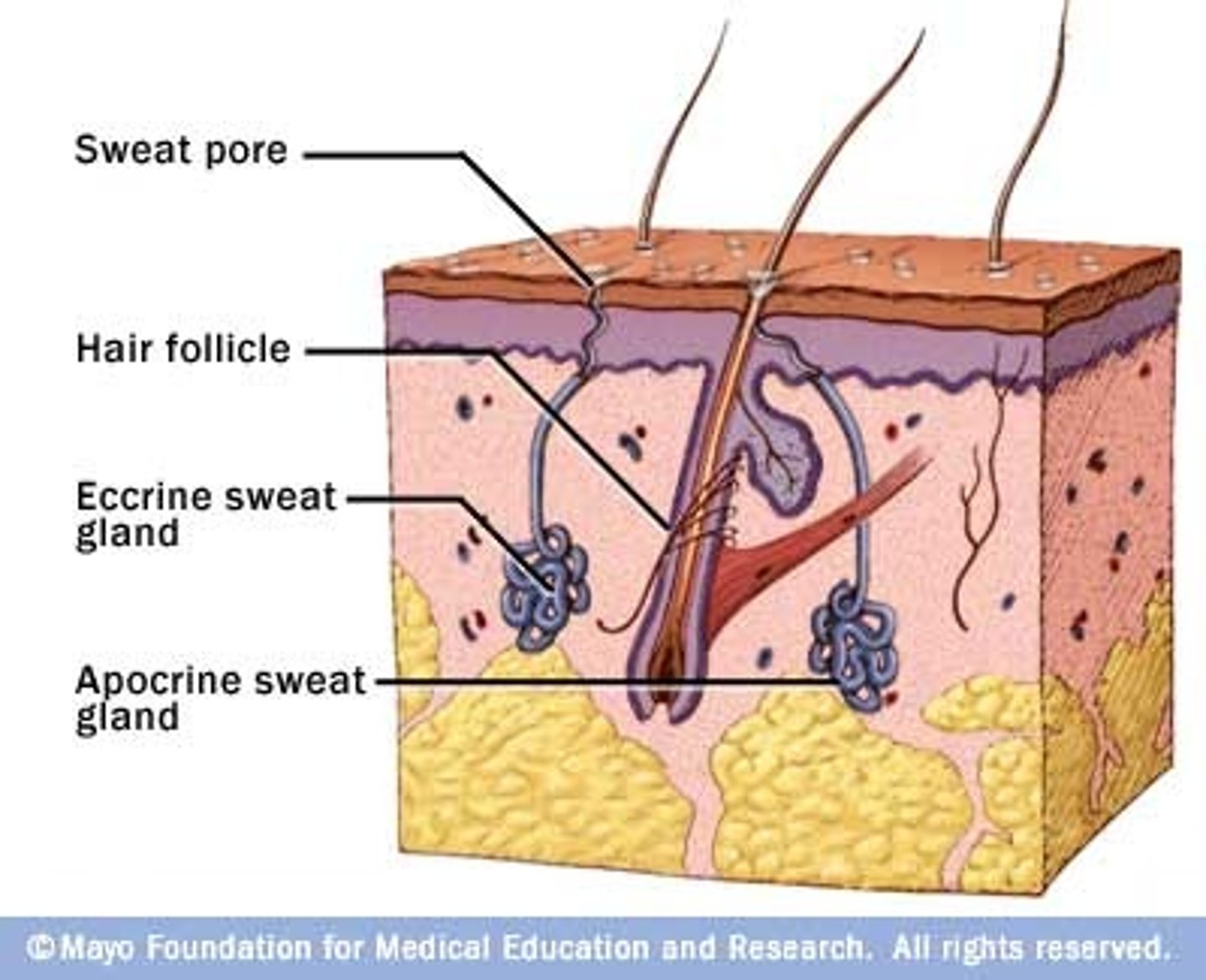
When do apocrine sweat glands activate?
puberty
apocrine sweat gland secretion
exocytosis; viscous and cloudy; contains proteins and lipids that produce odor when acted on bacteria; secretes through hair follicles
What is the function of apocrine sweat glands
attract sexual partners
What is the difference between apocrine and merocrine sweat glands?
apocrine is attached to a hair follicle while merocrine is attached to a pore
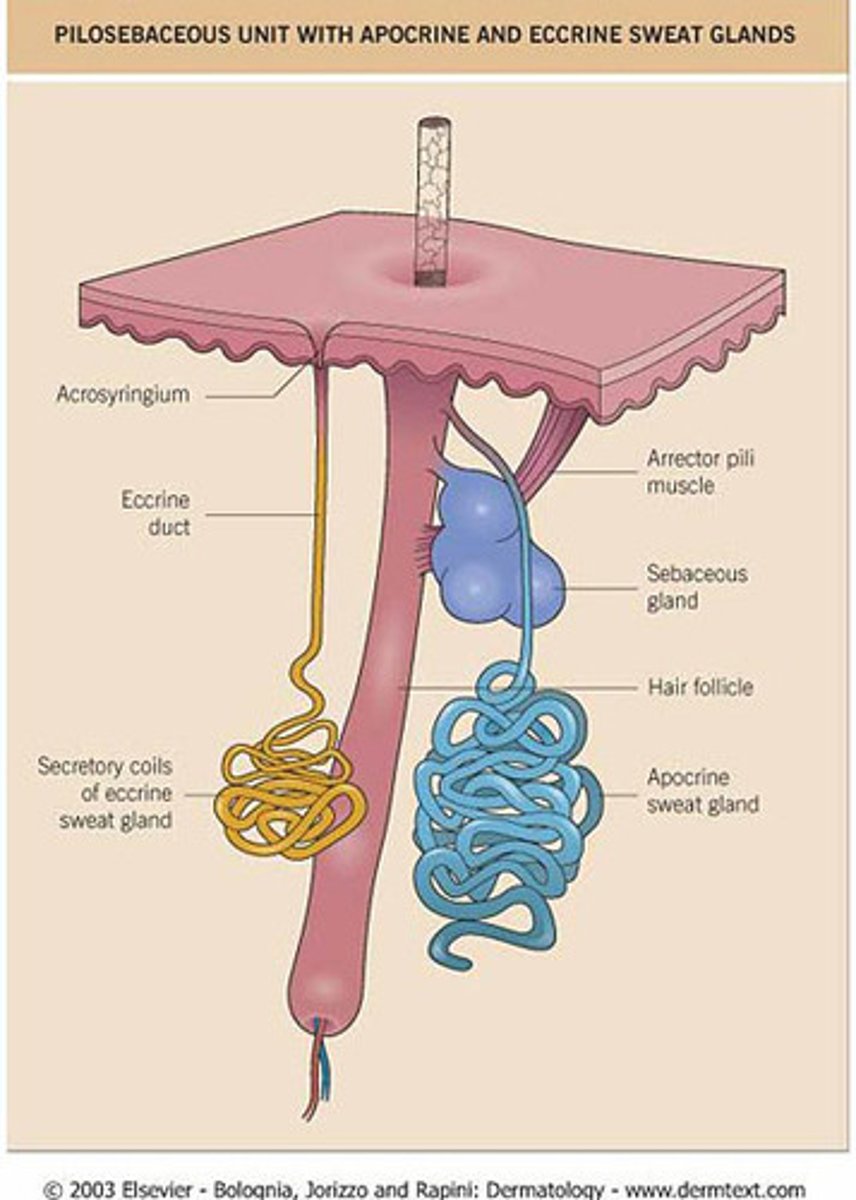
sebaceous glands produce _____
sebum
Sebaceous glands discharge into ______
a hair follicle
What are the functions of sebaceous glands?
lubricant for skin and hair, bactericidal properties
where are ceruminous glands located
external ear canal (meatus)
What do ceruminous glands secrete?
cerumen (ear wax)
What is the function of cerumen (ear wax)
trap foreign material
mammory glands are located in the _______ and are only activated during ________. They secrete ________
breast, pregnancy, milk