ESC1000 Unit 2 Exam Study Prep
0.0(0)
Studied by 1 person Call Kai
 Learn
Learn Practice Test
 Spaced Repetition
 Match
Match Flashcards
 Knowt Play
Card Sorting
1/46

Earn XP
Description and Tags
Last updated 8:01 PM on 2/15/23
Name | Mastery | Learn | Test | Matching | Spaced | Call with Kai | Chat |
|---|
No analytics yet
Send a link to your students to track their progress
47 Terms
1
New cards
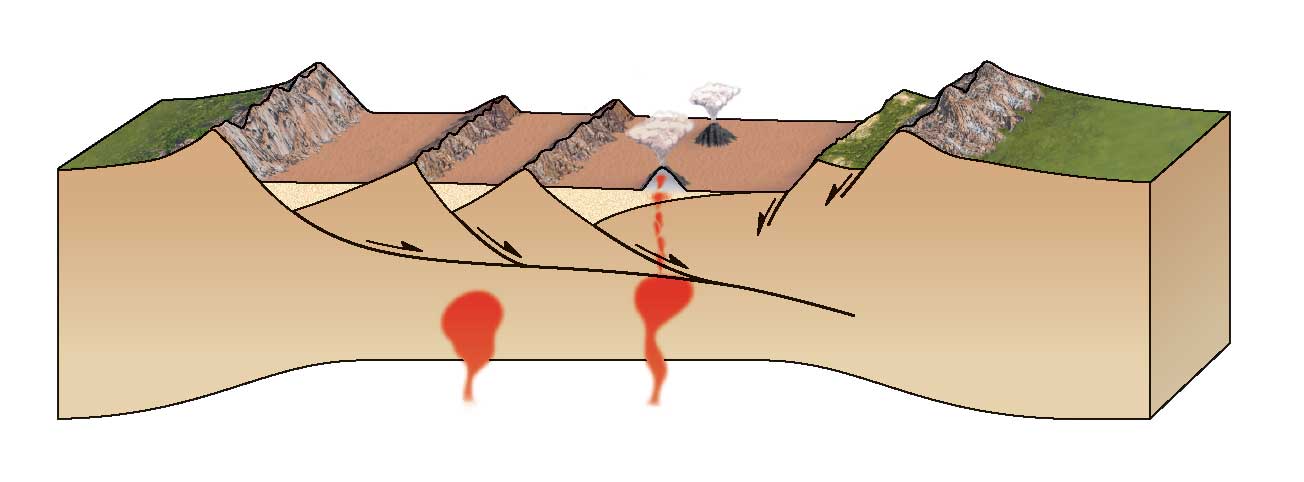
The Basin and Range Province in the United States is a rift-related orogeny. What types of faults are most likely to be present in such an area?
normal
2
New cards
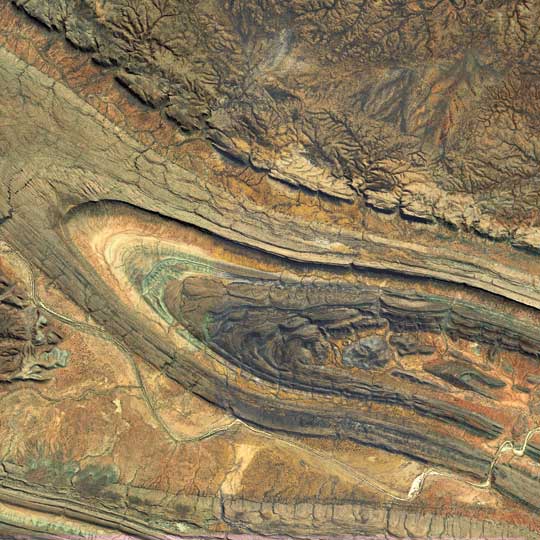
What type of deformation formed this structure?
plastic
3
New cards
**G**enerated during orogeny, can be different at various locations.
stress
4
New cards
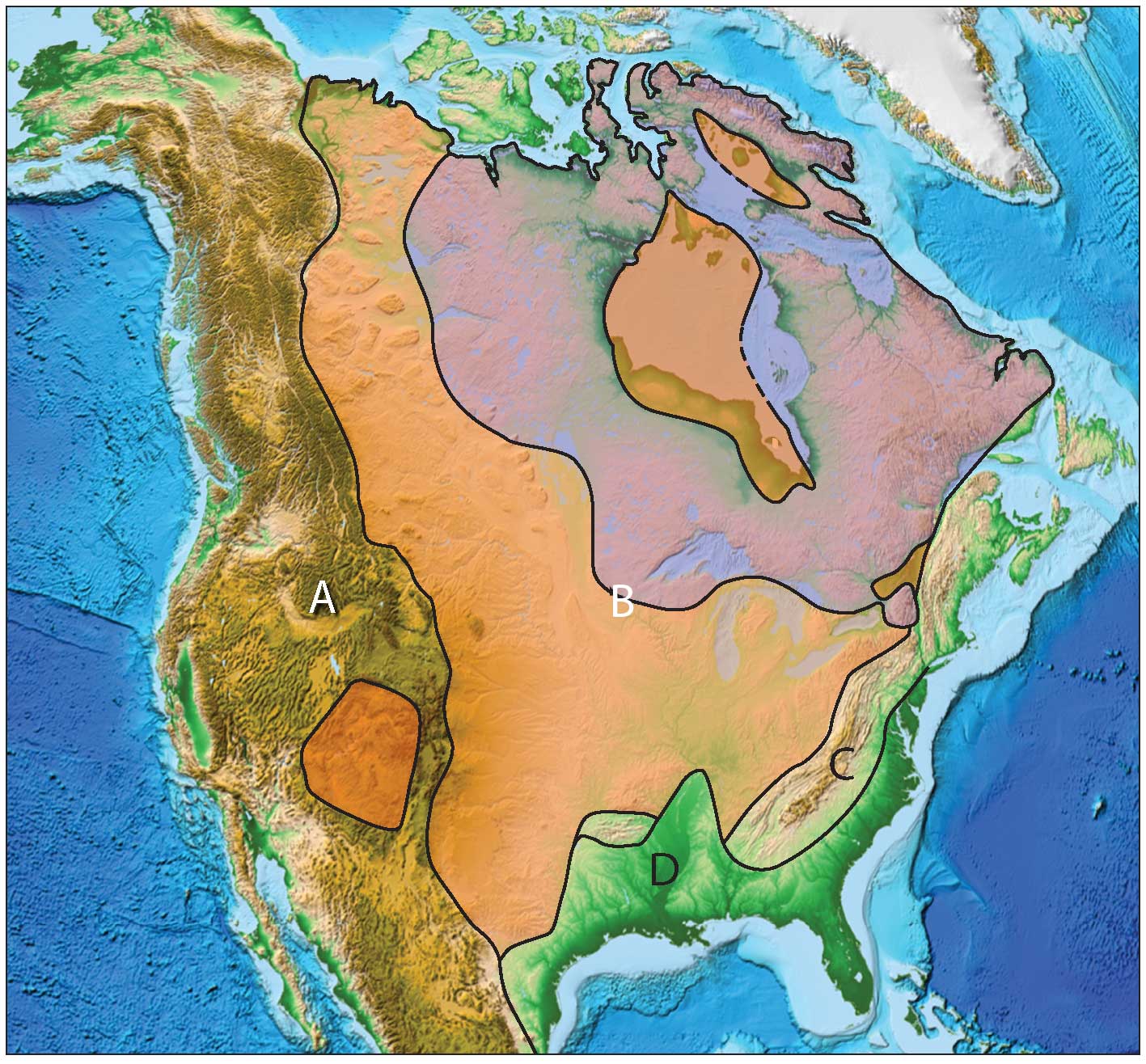
Which area is a craton?
B
5
New cards
You're looking at a fault trace in the field. You observe a polished surface with linear grooves on it, and fine powder next to it. In more technical terms, what are you seeing?
slickensides, slip lineations, and fault gouge
6
New cards
If you see small, angular fragments of shattered rock along a linear boundary between two masses of rock, you are looking at
fault breccia
7
New cards
The crust in the Basin and Range Province of Nevada, Utah, and Arizona is stretching; therefore, fault movement in this region must generally be
normal
8
New cards
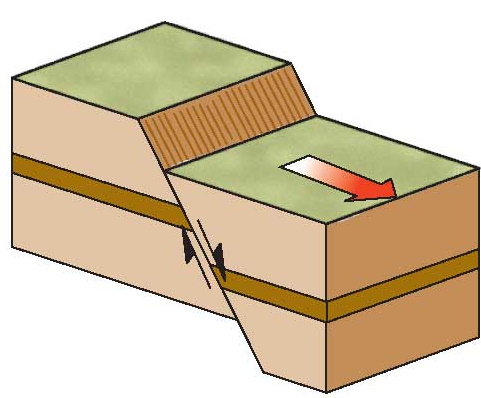
What type of fault does the diagram show?
dip-slip fault, normal
9
New cards
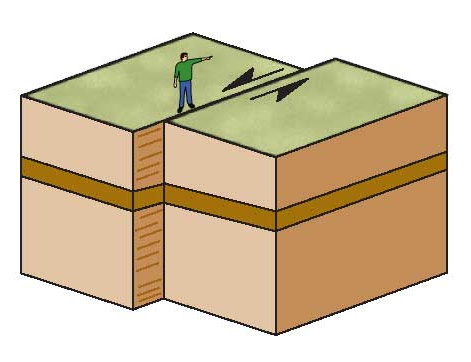
What type of fault does the diagram show?
left-lateral strike-slip fault
10
New cards
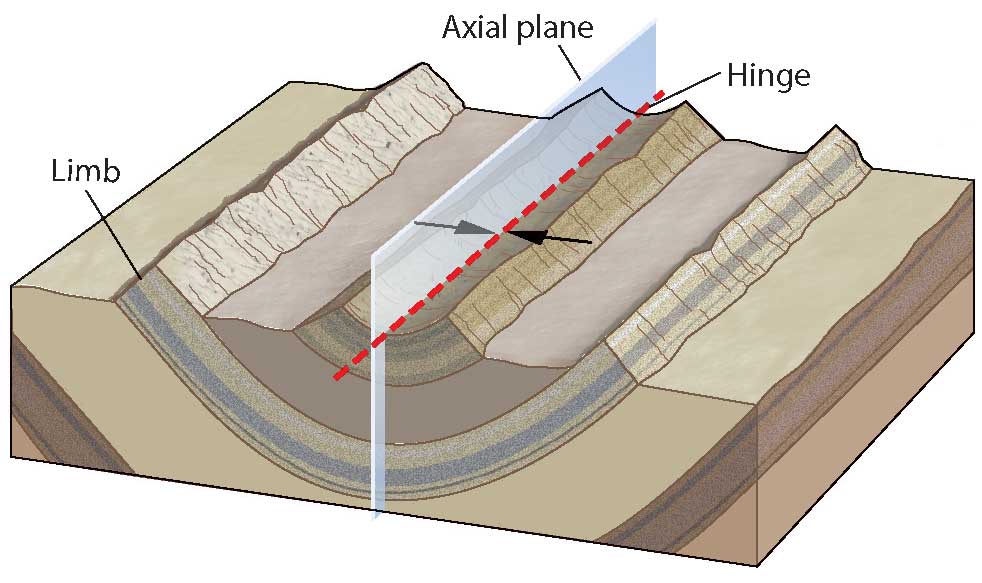
Identify the structure in the image.
syncline
11
New cards
The Andes Mountains are an example of mountains formed by
subduction
12
New cards
The Himalayas formed by
collision
13
New cards
As material that once covered the Sierra Nevada eroded, rock that had been buried deep within the crust rose toward the surface. What process has helped enable the Sierra Nevada range to reach such high elevations?
isostasy
14
New cards
The Sierra Nevada is a linear chain of mountains, whereas the Basin and Range Province is composed of multiple linear ranges. What accounts for this difference?
The Basin and Range area has undergone stretching of the crust.
15
New cards
Igneous rock can form during mountain building when
flux melting occurs at convergent boundaries
16
New cards
Continental lithosphere that has not experienced a mountain-building event in at least one billion years is called a
craton
17
New cards
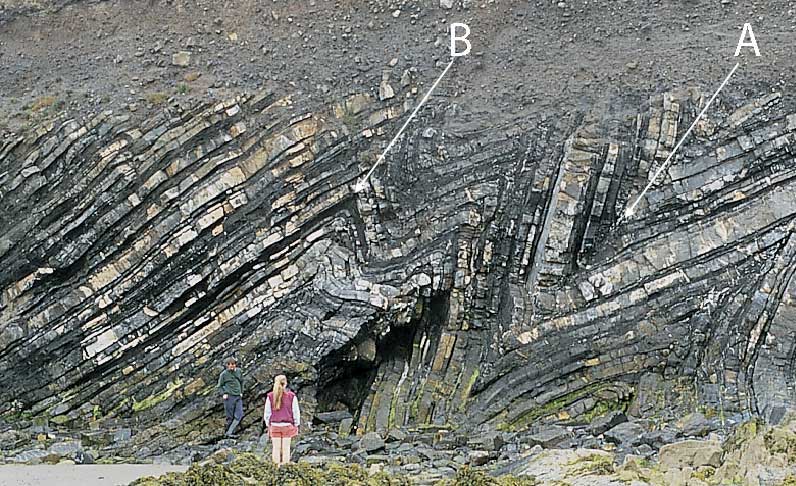
The structure labeled B in the figure is
an anticline
18
New cards
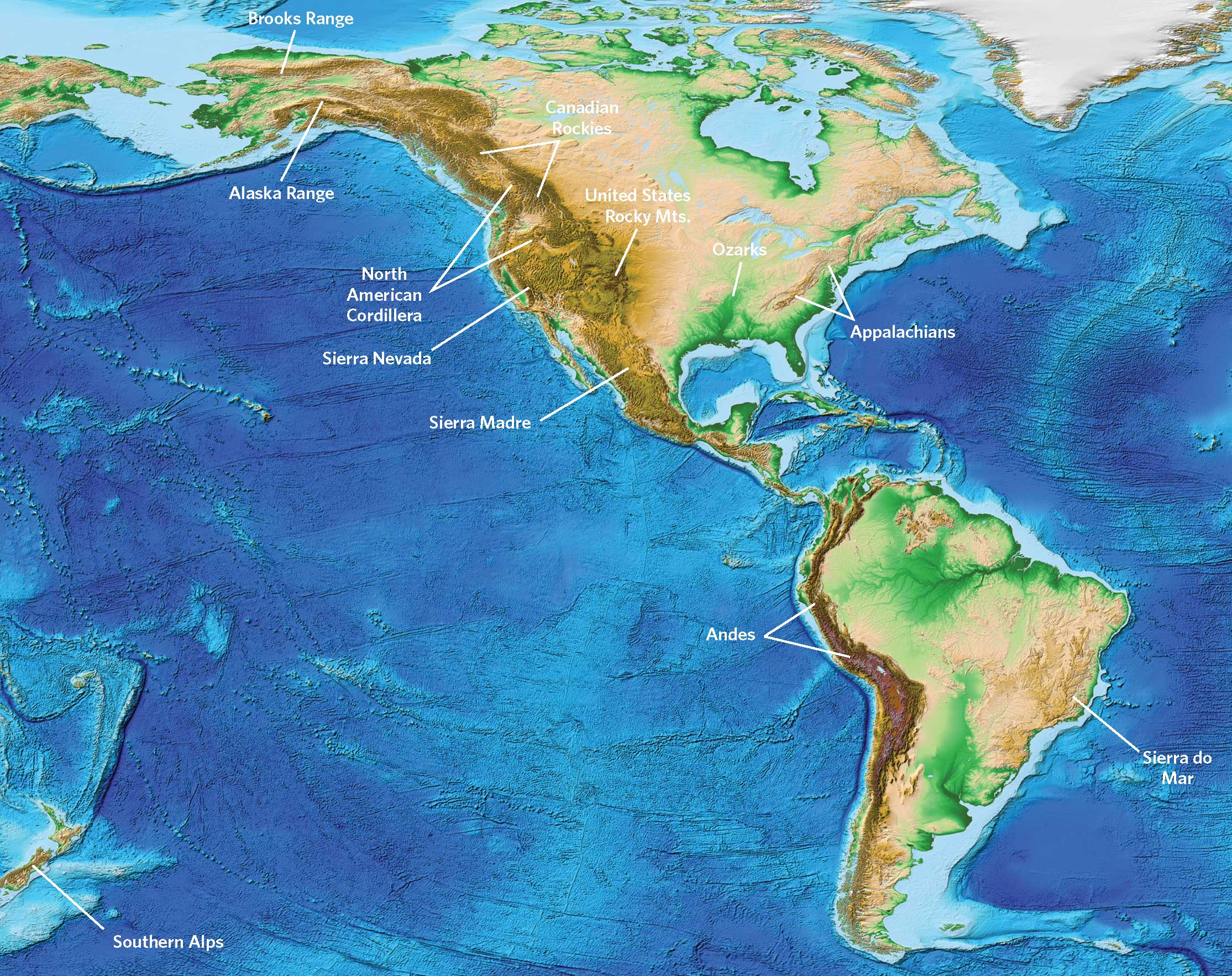
Observe the west coasts of North and South America. Mountain ranges dominate the landscape along these coastlines. What is the most likely tectonic boundary to have created these ranges?
convergent
19
New cards
The North American craton consists of a
shield and platform
20
New cards
The process of mountain belt formation is called
orogeny
21
New cards
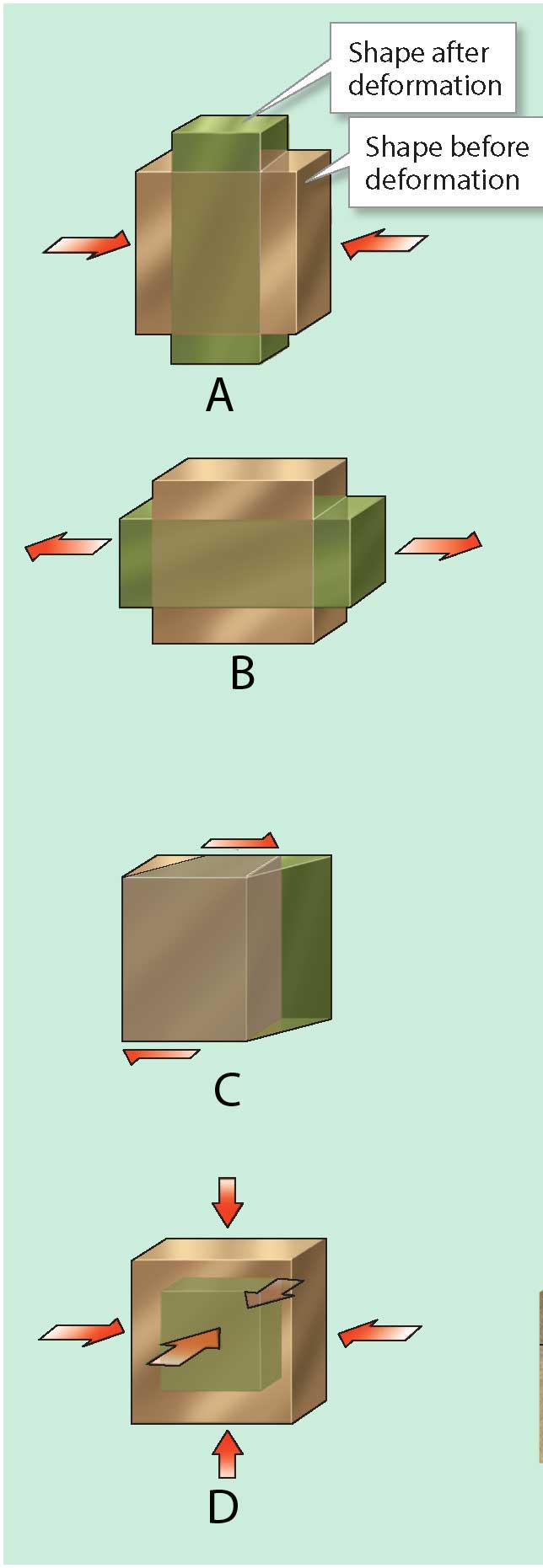
Depending on the direction of force (red arrows in the diagrams), stress is categorized as compression, tension, shear, or pressure. Which of the following diagrams shows tension?
B
22
New cards
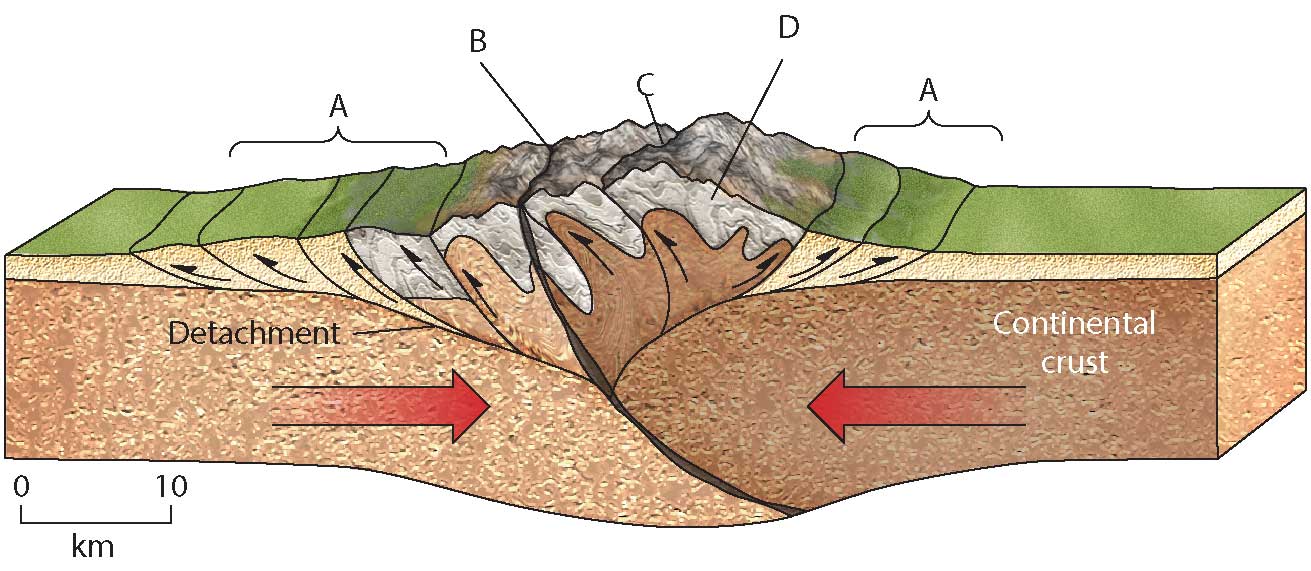
Mountain building at convergent margins produces several distinct geologic settings. This diagram represents an orogeny in which one continent has already collided with another continent. Where on the image is a suture located?
B
23
New cards
A series of anticlines and synclines forms as a result of
compression
24
New cards
According to the principle of isostasy, tall mountains
have deep roots
25
New cards
What is the change in shape produced by stress called?
strain
26
New cards
Aftershocks are
much weaker than the mainshock.
27
New cards
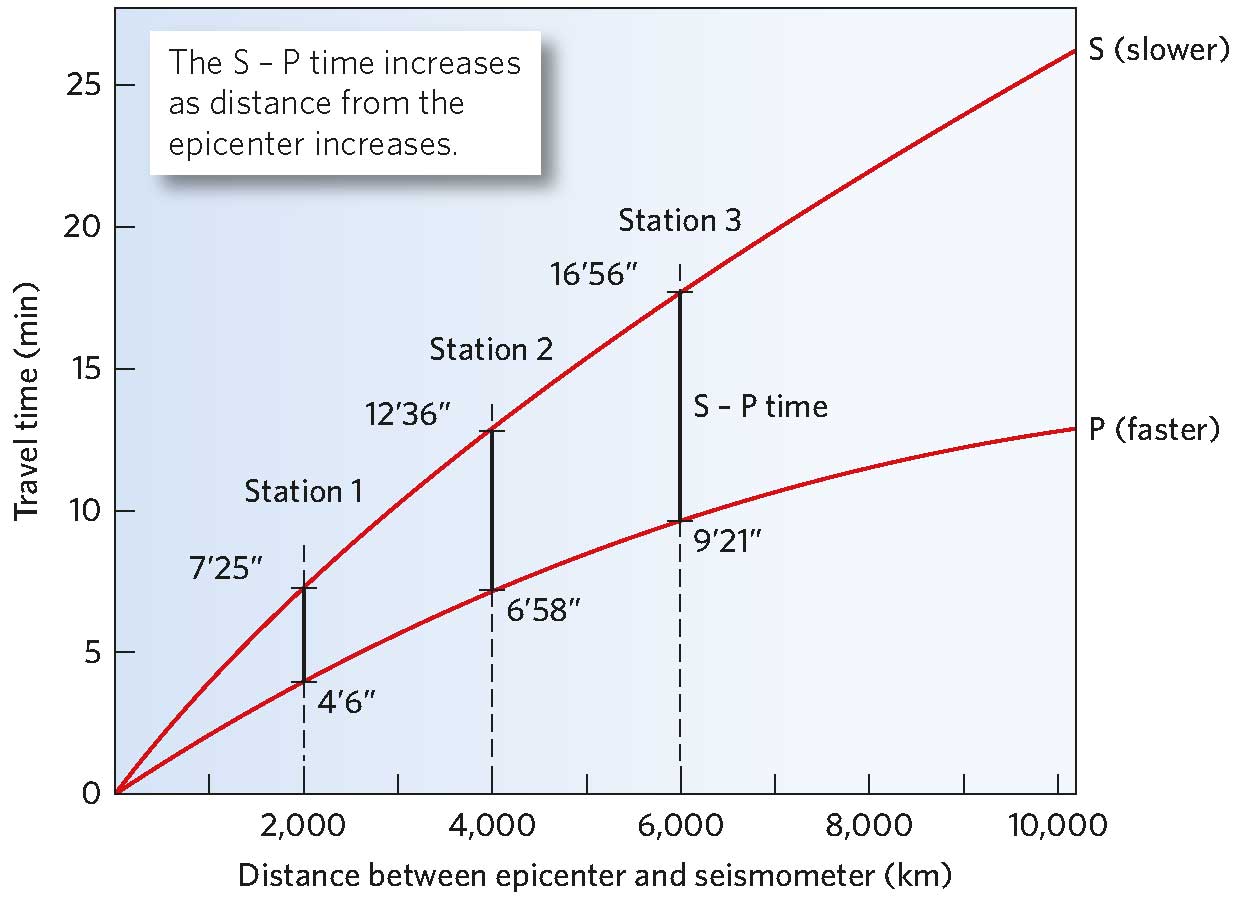
Interpret the travel-time curve shown. Approximately how many minutes elapsed between the arrival of the first P-wave and the arrival of the first S-wave at Station 3?
7
28
New cards
The locations of major earthquakes
are usually along plate boundaries.
29
New cards
A tsunami
may be just a broad, gentle swelling out at sea but grows as it approaches shore.
30
New cards
Liquefaction
can affect sand layers below the ground surface and cause them to erupt as sand volcanoes or sand boils.
31
New cards
Earthquake prediction is not highly reliable, but geologists do know that
more earthquakes happen along plate boundaries than happen at intraplate locations.
32
New cards
Long-term earthquake predictions
are based on the study of historic recurrence intervals.
33
New cards
Examining sedimentary bedding in a particular geologic area reveals disrupted layers that formed 260, 820, 1,200, 2,100, and 2,300 years ago.
Assuming that all the earthquakes that have occurred in this area are represented by these disrupted layers, what is the recurrence interval of earthquakes in this area?
Assuming that all the earthquakes that have occurred in this area are represented by these disrupted layers, what is the recurrence interval of earthquakes in this area?
510 years
34
New cards
The 2010 Haiti earthquake was so destructive because
of poor construction standards that caused many buildings to collapse.
35
New cards
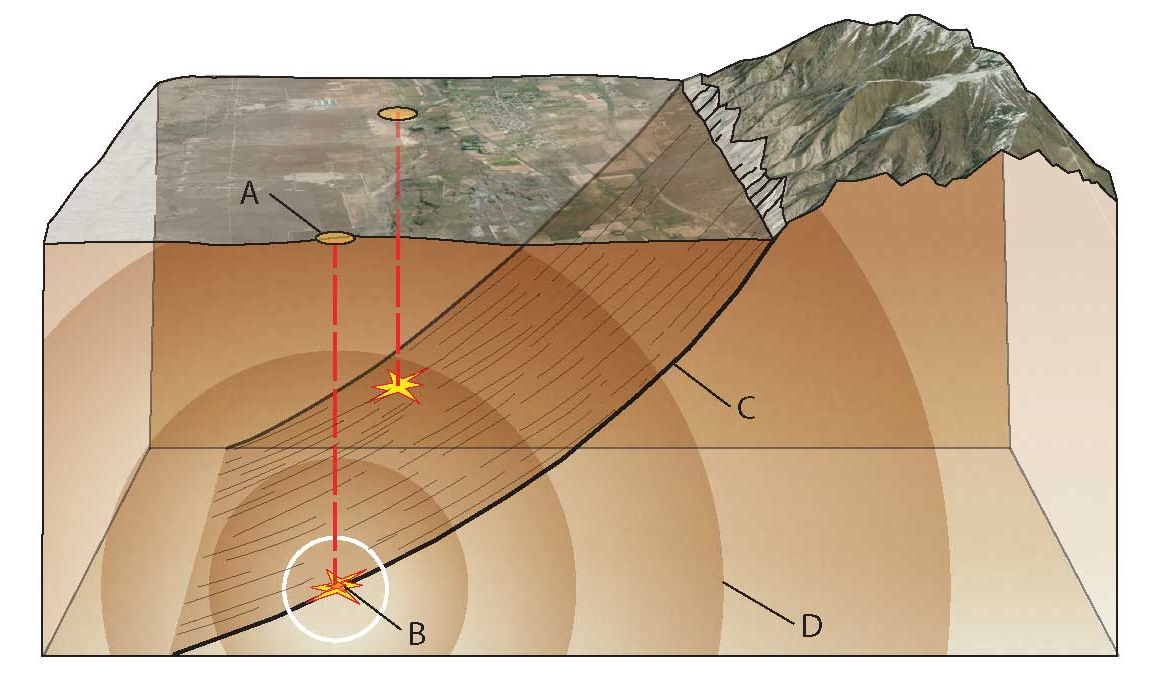
Which represents the epicenter of the earthquake?
A
36
New cards
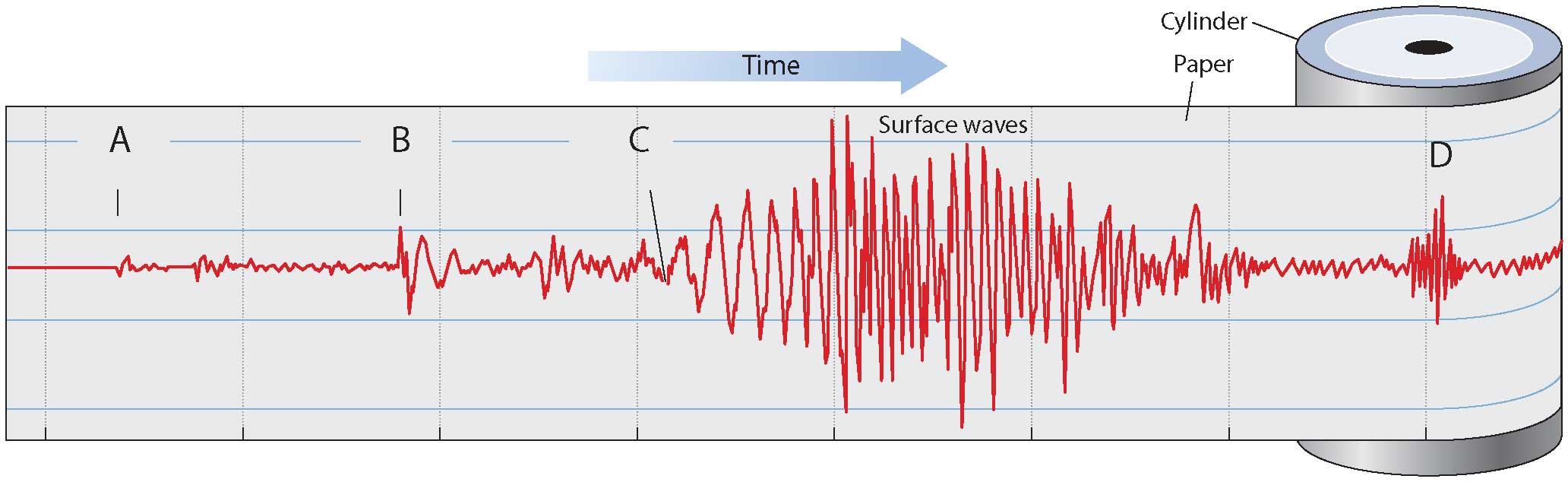
Which letter represents the P-wave arrival?
A
37
New cards
When a fault slips and the rock units on either side return to their original shape by generating vibrations, it is called
elastic rebound.
38
New cards
The Modified Mercalli Intensity scale measures
earthquake damage.
39
New cards
Which type of wave is a compressional body wave?
P-wave
40
New cards
Which of the following is a good technique for building safer structures in an earthquake zone?
use wood-frame construction
41
New cards
To find the location of an earthquake’s epicenter, you need to calculate the distance from the epicenter to ____ different seismometer stations.
3
42
New cards
How does the time between P- and S-wave arrival correlate to distance from the epicenter?
The longer the time between P- and S-wave arrival, the farther the distance from the epicenter.
43
New cards
Andrija Mohorovičić discovered the crust-mantle boundary, which is now named after him, because he realized that
P-waves were refracted at the boundary.
44
New cards
The S-wave shadow zone indicates
the outer core is liquid.
45
New cards
An earthquake occurs! Figurines fall from shelves and break. The ceiling fans sway and a bookshelf falls over. What is the most likely MMI for this experience?
V: Most people awakened; some dishes and windows break; unstable objects tip over; trees and poles sway.
46
New cards
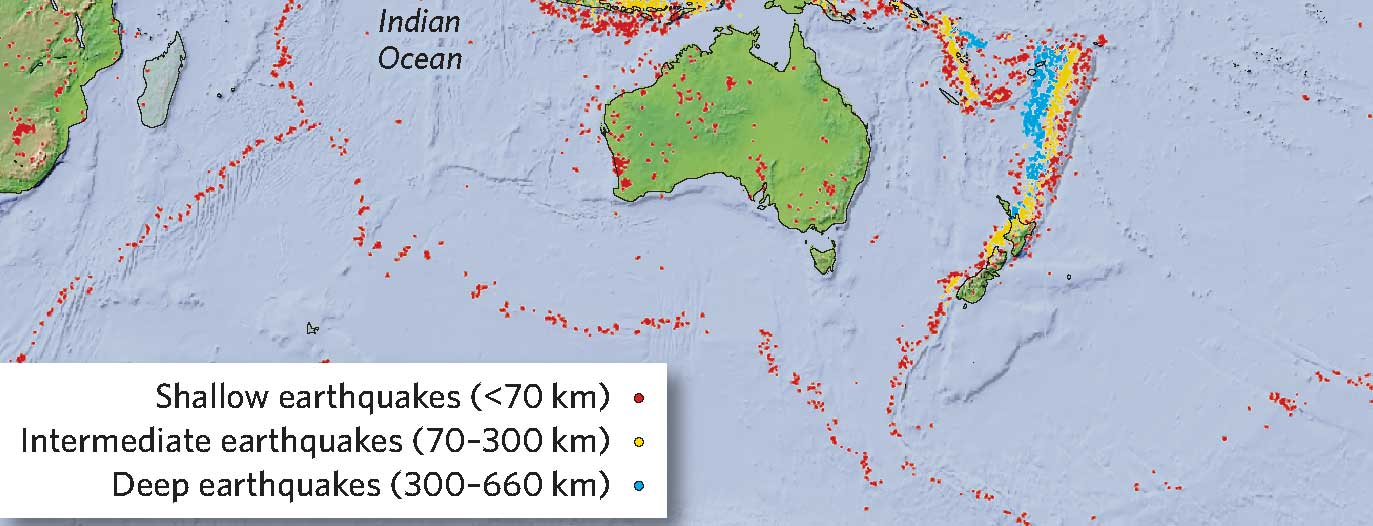
The earthquake foci pattern east of Australia and just north of New Zealand indicates which tectonic setting?
convergent plate boundary
47
New cards
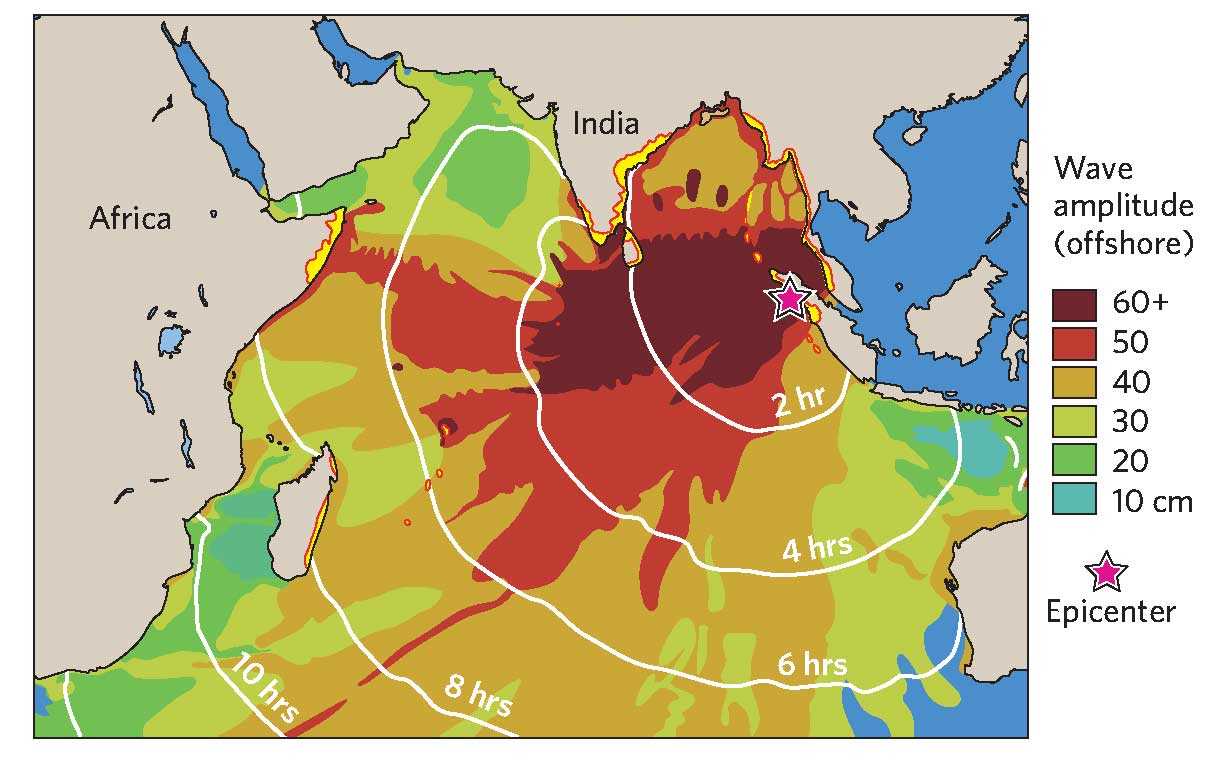
How long did it take the 2004 tsunami to reach Africa?
7 hours