Lab 9 (Ecdysozoans: FINAL EXAM MATERIAL)
 Call Kai
 Learn
 Practice Test
 Spaced Repetition
 Match
 Flashcards
 Knowt Play
1/49

There's no tags or description
Looks like no tags are added yet.
50 Terms

This is Phylum ___, Subphylum ___, Class ___, Genus ___. Common name is horseshoe crab.
Arthopoda; Chelicerata; Merostomata; Limulus

Name the structures in the purple boxes starting from the left structure.
Simple eye, Compound eye, Cephalothorax, Abdomen, Telson
Chelicerae, pedipalp, mouth, book gills

Merostomata (Horseshoe Crab) functions:
1. Simple eye senses ___
2. Compound eye helps see ____
3. Cephalothorax (prosoma) is the front body region holding major ___
4. Abdomen (opisthosoma) is the ___ body region holding ___ ___
5. Chelicerae ___ onto food
light
surroundings
appendages
rear; book gills
grasp
Merostomata (Horseshoe Crab) functions:
6. Pedipalp helps with handling and moving ___ and detect ___
7. Mouth takes in ___
8. Book gills are responsible for ___ ___
9. Telson helps with ___ and ___ itself over.
food; touch
food
gas exchange
movement; flipping

The shape of pedipalps shape are ___-___, the shape of chelicerae are ___, the tail type and function is a ___ and used to assist ___, and the sensory structures are the ___ and ___ eyes.
claw-like; pinchers; telson; movement; simple; compound
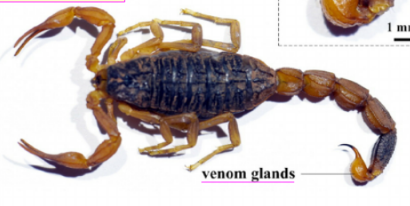
Phylum ___, Subphylum ___, Class ___
Arthropoda; Chelicerata; Arachnida
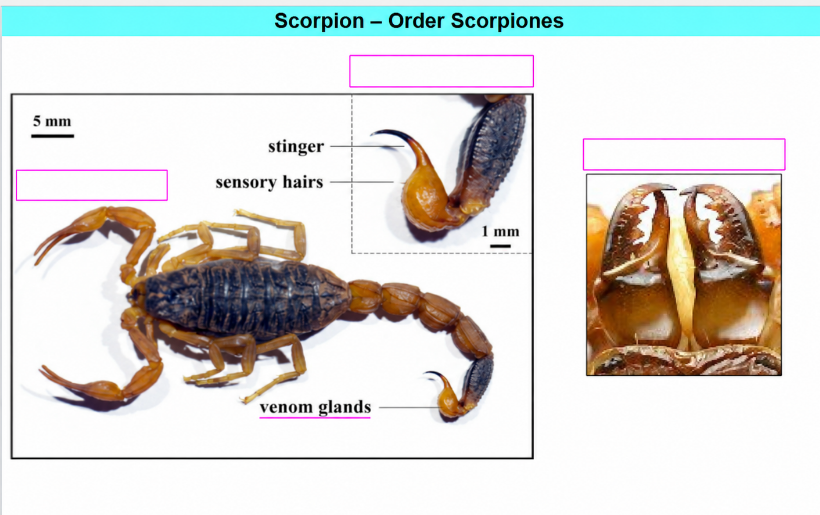
Name the structures
Pedipalps - Claw; Telson with stinger; Chelicerae - pincher
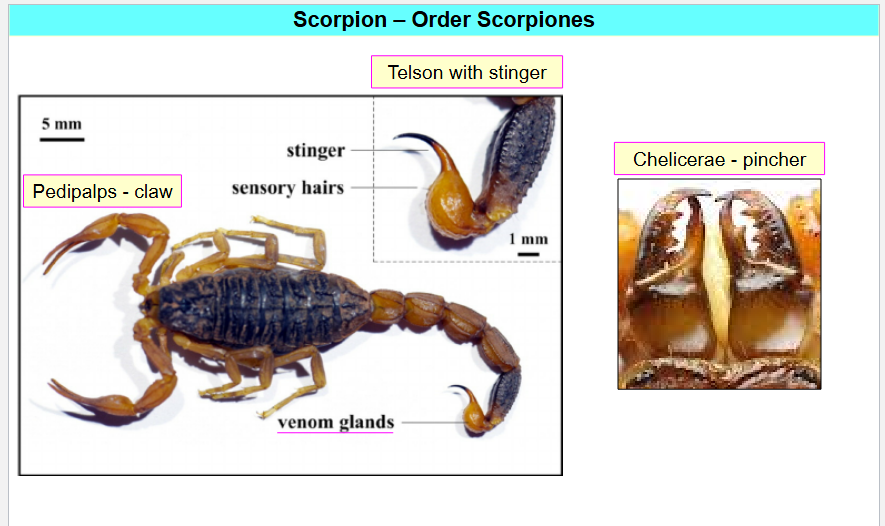
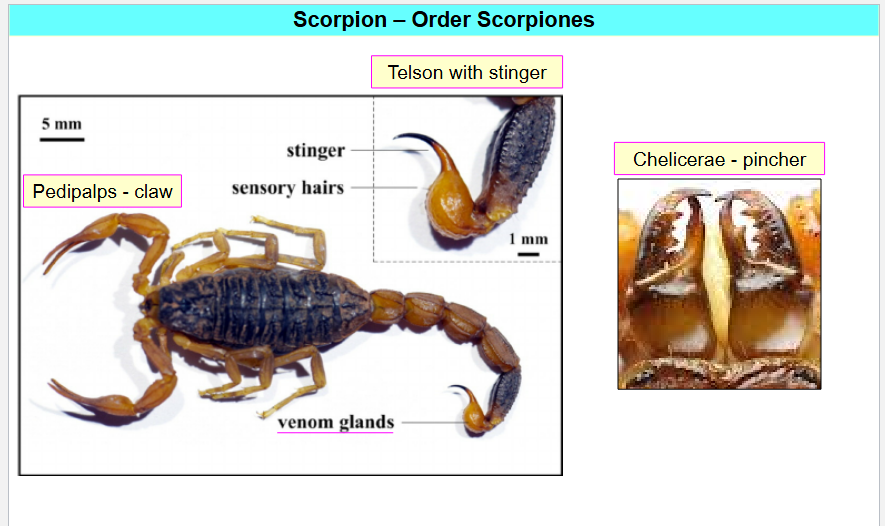
The shape of pedipalps are ___, shape of chelicerae are ___, the tail type is a ___ with a stinger, function is venom to ___ prey. Its sensory structures are ___ eyes and ___ hairs
claw-like; pinchers; telson; immobilize; simple; sensory
Spider is in Phylum ___, Subphylum ___, Class ___. The shape of their pedipalps are ___, shaped of chelicerae are ___, tail type is ___, and sensory structures are ___ and ___ hairs
Arthopoda; Chelicerata; Arachnida; lobed; fangs; none; eyes; sensory
Spiders have ___ legs, their eyes detect ___ and movement, chelicerae bite ___ and inject ___, pedipalps help sense ___ and handle ___, book lungs are for ___ ___, and silk glands produce ___
eight; light; prey; venom; touch; food; gas exchange; webs
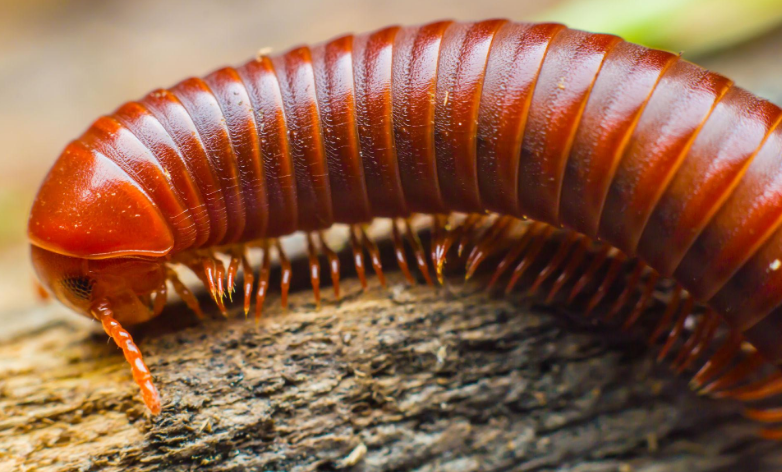
Millipedes are in Phylum ___, Subphylum ___, and Class ___
Lifestyle is ___/___ (eats plants/dead leaves), has ___ legs (so 2 pairs) per body segment and approximately ___-___ thorax body segments. Has a ___ head
Feeding structures include ___ and ___. Sensory structures are short ___ and simple ___
Arthopoda; Myriapoda; Diplopoda
herbivore/detritivore; 4; 25-100; round
mandibles; gnathochilarium; antennae; eyes
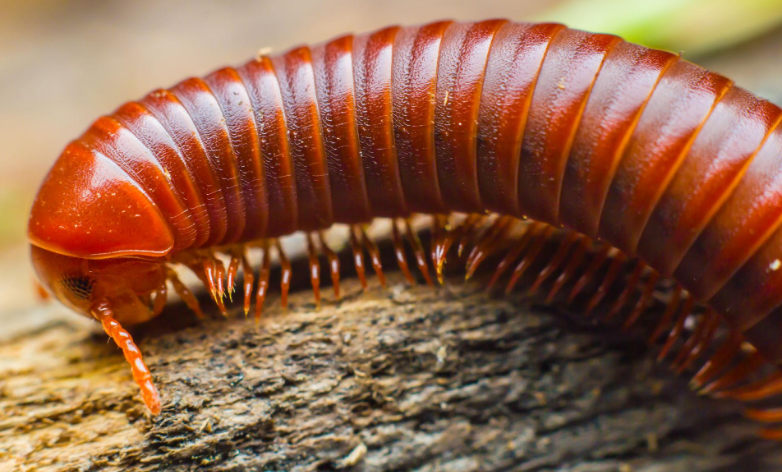
Diplopoda has gas exchange using ___ through ___, body segments are ___ and ___ trunk, sensory structures are ___ and simple ___, and notable features include ___ pairs of legs per segment and it’s ___
tracheae; spiracles; head; segmented; antennae; eyes; two; nonvenomous
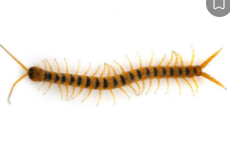
Phylum ___, Subphylum ___, Class ___.
Life style is ___ (predator), has ___ legs (one pair) per segment, ___-___ thorax body segments, shape of head is ___.
Feeding structures include ___, ___, and ___ claws. Sensory structures are ___ antennae and ___ eyes.
Arthopoda; Myriapoda; Chliopoda
carnivore; two; 15-191; flat
mandibles; maxillae; venom; long; simple
Chilpoda’s gas exchange is ___ through ___, body segments is ___ and ___ trunk, sensory structures is long ___ and simple ___, notable features are ___ pair of legs per segment and is ___
trachae; spiracles; head; segmented; antennae; eyes; one; venomous

Crayfish is Phylum ___, Subphylum ___, Class ___, Genus ___
Number of walking legs is ___ total (5 pairs), feeding mouth parts are the ___, ___, and ___. Abdominal structures include ___, ___, and ___. Sensory structures include ___ eyes and ___
Arthropoda; Crustacea; Malacostraca; Procambarus
10; mandibles; maxillae; maxillipeds; swimmerets; uropods; telson; compound; antennae
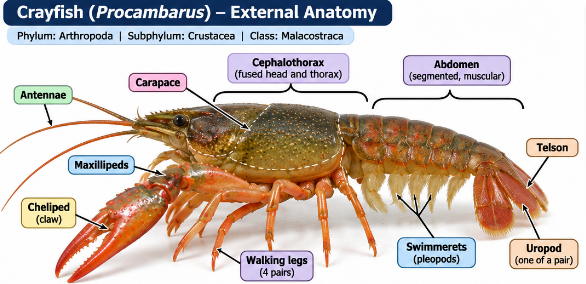
Antennae detect ___ and ___ (which is a mechano/chemo receptor
Cephalothorax is fused ___ and ___, holds major organs
Carapace protects the ___, made out of ___ and ___
Abdomen is a muscular region used for ___
Telson helps with ___, ___ of tail
Uropods help with ___, ___ of the tail
Swimmerets are for ___ and ___, females carry ___
Cheliped is the claw, grabs ___ and provides ___
Maxillipeds help handle ___
touch; chemicals
head; abdomen
cephalothorax; chitin; calcium carbonate
swimming
swimming; center
swimming; sides
swimming; reproduction; eggs
food; defense
food

Name the boxed structures and their functions
female genital opening - releases eggs
seminal receptacle - receives sperm
feathery swimmerets - for swimming and to protect eggs
male copulatory appendage - transfer sperm to female


Is this male or female?
Female

Is this male or female?
Male
Crayfish have biramous appendages, meaning two branches. But their walking legs are ___. They also go through ecdysis, which is ___ their ___
uniramous; shedding; exoskeleton


Identify structures going top to bottom
Brain
Green gland
Circum-esophageal connection
Ventral nerve cord
Heart
Digestive Gland
Gills
Stomach
Intestine

Crayfish:
Brain is the ___ center
Green gland is for water ___, pushing ___/___ out of organisms
Circum-esophageal connection connects ___ to ___ nerve cord
Ventral nerve cord sends nerve signals throughout the ___
Stomach breaks down ___
Heart pumps ___
Intestine moves digested ___
Digestive gland produces digestive ___
Gills are for ___ ___
control
balance; water/waste
brain; ventral
body
food
blood
nutrients
enzymes
gas exchange
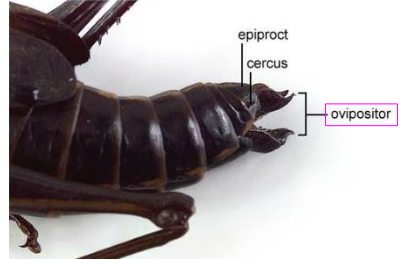
Is this a male or female grasshopper
Female

Is this a male or female grasshopper
Male

Name each structure from left to right and then go back to the left from the bottom
Antenna, head, compound eye, ocelli, prothorax, mesothorax, metathorax, wings, abdomen, spiracle, walking legs

Head contains ___ organs
Thorax supports ___ and ___
Prothorax holds ___ pair of legs, mesothorax holds ___ pair and ___, metathorax holds ___ pair and ___.
Abdomen contains ___ and ___ organs
Walking legs used for ___
Spiracles are for ___
Compound eyes are for detecting ___ (which is a ___)
Ocelli (simple eyes) detect ___ (also a ___)
Forewings protect ___ which provide flight
Antennae detect ___ and ___ (which is a ___ and a ___
sensory
legs; wings
1st; 2nd; forewings; 3rd; hindwings
digestive; reproductive
walking
breathing
movement; photoreceptor
light; photoreceptor
hindwings
touch; chemicals; mechano/chemoreceptor
Grasshoppers are in Phylum ___, Subphylum ___, and Class ___. They have ___ pairs of uniramous legs, ___ legs on each segment or thorax.
Grasshoppers are ____, meaning heats plants. Some flies are ___, meaning eating dead matter. Praying mantis is ___, meaning eats other animals.
It is generally ___ (meaning it lays eggs), whereas a scorpion is ___, meaning gives birth to live young.
Arthopoda; Hexapoda; Insecta; three; 2
phytophagous; saprophagous; predaceous
oviparous; viviparous
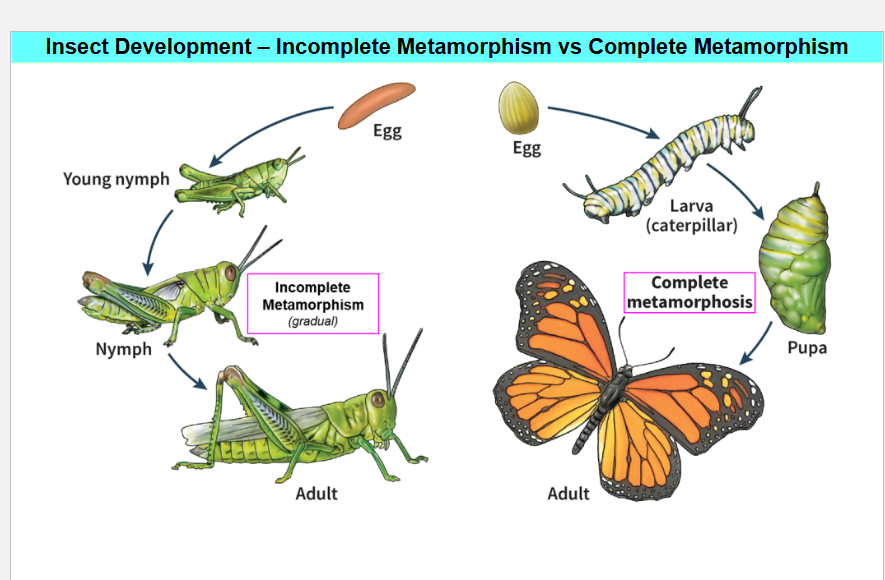
Grasshoppers go under ___ metamorphosis, also known as gradual, whereas butterflies and moths go through ___ metamorphosis.
incomplete; complete

Phylum ___, Subphylum ___, Class ___. Gas exchange is ___ ___, body segments is the ___ (prosoma) and the ___ (opisthosoma), sensory structures are ___ and ___ eyes, notable features include ___ that assists in movement
Arthopoda; Chelicerta; Merostomata; book gills; cephalothorax; abdomen; simple; compound; telson

Phylum ___, Subphylum ___, Class ___. Gas exchange is ___ ___, body segments are ___ and ___, sensory structures include ___ eyes and ___ hairs, notable features include venomous stinger on ___
Arthopoda; Chelicerata; Arachnida; book lungs; cephalothorax; abdomen; simple; sensory; telson
Spider is in Phylum ___, Subphylum ___, Class ___.
Gas exchange is ___ ___, body segments are ___ and ___, sensory structures include ___ eyes, ___ hairs, and ___ (detect touch/help handle food)
Features include ___ type chelicerae, ___ pairs of walking legs, ___ pedipalps
Arthopoda; Chelicerata; Arachnida
book lungs; cephalothorax; abdomen; simple; sensory; pedipalps
fang; 4; lobed
Millipedes are in Phylum ___, Subphylum ___ Class ___.
Gas exchange is ___ system through ___, body segments include ___ and ___ trunk, sensory structures include ___ antennae (chemo and mechano) and ___ eyes (photo).
Features include ___ legs per segment, ___/___ (nutritional type), and ___
Arthropoda; Myriapoda; Diplopoda
Tracheal; spiracles; head; segmented; short; simple
two; herbivore/detritivore; nonvenomous
Centipede is in Phylum ___, Subphylum ___, Class ___.
Gas exchange is ___ system through ___, body segments include ___ and ___ trunk, sensory structures include ___ antennae (chemo/mechano) and ___ eyes (photo)
Features include ___ pair of legs per segment, ___ (nutrition), and ___ claws
Arthopoda; Myriapoda; Chilopoda;
Tracheal; spiracles; head; segmented; long; simple
one; carnivorous; venomous
Crayfish are in Phylum ___, Subphylum ___, and Class ___.
Gas exchange is ___, body segments include ___ and ___, sensory structures include ___ eyes (photo) and ___ (chemo/mechano)
Features include ___ pairs of walking legs, generally ___ appendages, and tail is like a ___,
Arthopoda; Crustacea; Malacostraca
Gills; cephalothorax; abdomen; compound; antennae
five; biramous; fan
Grasshopper is in Phylum ___, Subphylum ___, and Class ___
Gas exchange is ___ system through ___, body segments are ___, ___, and ___, sensory structures include ___ eyes, ___ (simple eyes), and ___ (chemo/mechano)
Features include ___ pairs of uniramous legs; ___ pair of wings; and ___ metamorphosis
Arthropoda; Hexapoda; Insecta
tracheal; spiracles; head; thorax; abdomen; compound; ocelli; antennae
three; two; incomplete
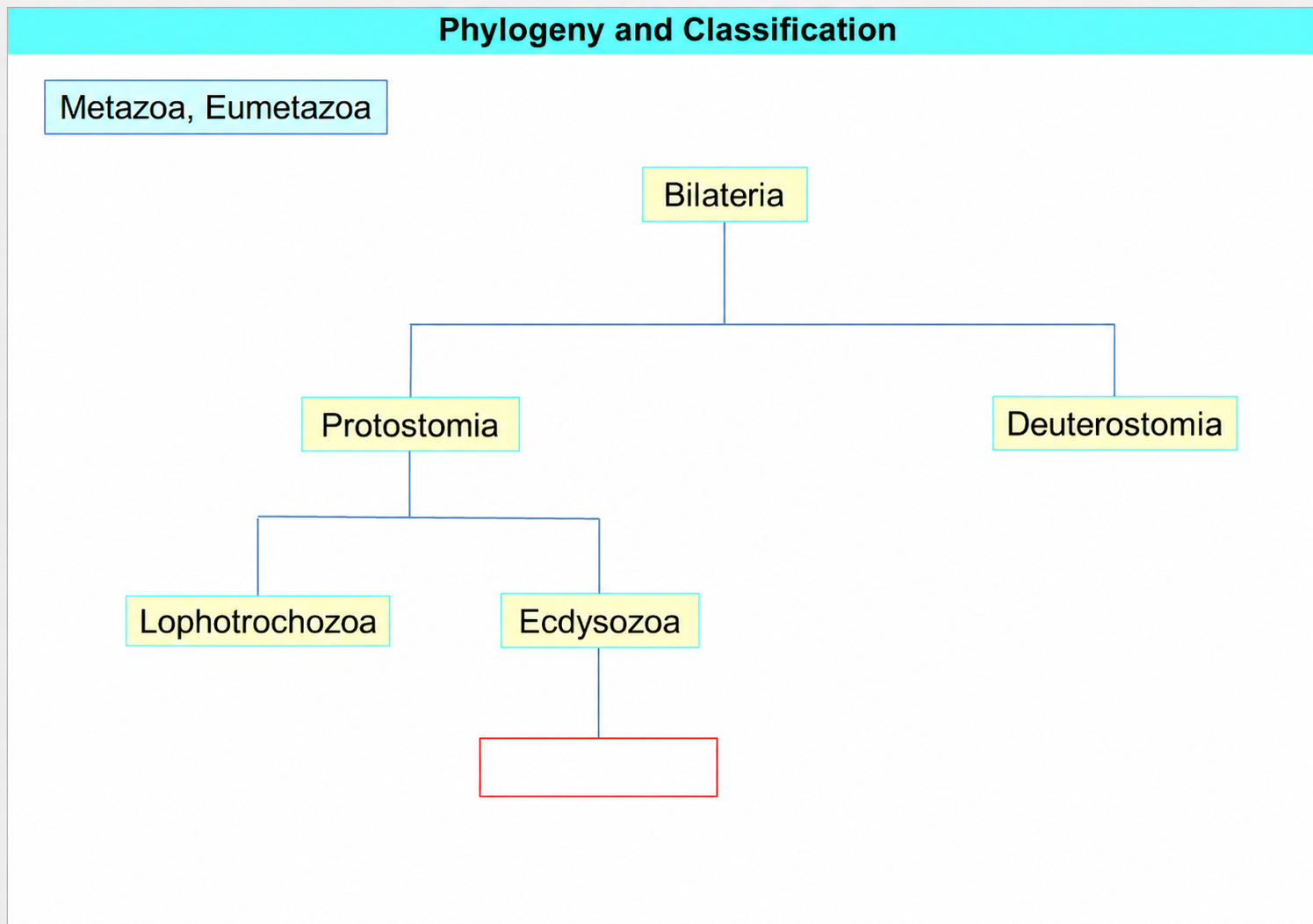
What is the text in the red box


What is the subphylum for each group of arthopods?

Ecdysozoas grow by molting, which is classified as ___, shedding their exoskeleton. Lophotrochozoas do not do this and may have a ___ (feeding structure)
ecdysis; lophophore
The exoskeleton of Crustacea is ___ reinforced by ___ ___, whereas Hexapoda is mainly ___ and proteins.
chitin; calcium carbonate; chitin
Arthopods generally have three main regions, which is the ___, ___, and ___. The cephalothorax is the ___ and ___ fused together.
head; thorax; abdomen; head; thorax
Merostomata have ___ ___ for gas exchange, whereas Arachnida have ___ ___. Merostomata also have ___ and ___ eyes, whereas Arachnida only have ___ eyes.
book gills; book lungs; simple; compound; simple
Order Araneae (spiders) have ___ pedipalps and ___ type chelicerae, whereas order Scorpiones have ___-___ pedipalps and ___ type chelicerae.
lobed; fang; claw-like; pincher
Diplopoda have ___ pairs of legs per segment and are considered ___, whereas Chilopoda have ___ pair per segment and are considered ___
2; herbivores/detritivores; 1; carnivores
Female crayfish have a ___ receptacle and have feathery ___, while males have stiff swimmerets and ____ appendages that transfer sperm
seminal; swimmerets; copulatory
Walking legs: used for ___
Pedipalps: help grasp ___ and detect ___
Chelicerae: ___ or ___ food
Chelipeds: Large ___ to grab ___ or ___
Mandibles: ___ and ___ food
Maxillae: Help handle ___
Maxillipeds: Move ___ toward mouth
movement
food; touch
bite; tear
claw; food; defense
bite; chew
food
food
Telsons in Merostomata help with ___, injects ___ with scorpions, and helps with ___ in crayfish.
movement; venom; swimming
Predaceous: Hunts and eats other ___ (Centipede)
Phytophagous: Eats ___ (Grasshopper)
Saprophagous: Eats ___ material (Millipede)
Parasitic: Obtains nutrients from ___
Animals
plants
decaying
hosts
Oviparous lays ___, as seen with grasshoppers, crayfish, and spiders. However, viviparous means ___ ___, seen in scorpions.
eggs; live birth
Incomplete metamorphosis has a ___ stage but no ___ stage. Complete metamorphosis has a ___ and a ___ stage.
nymph; pupal; larva; pupa
Name the type of receptors:
Compound eyes are ___ that detect light and movement
Ocelli are ___ to detect light intensity
Antennae are ___/___ that detect chemicals and touch
Sensory hairs are ___ that detect touch and vibrations
Statocysts in crayfish are ___ and detect balance
Tympanic membrane in grasshopper is ___ and detects sound waves (located near the base of the hind leg)
photoreceptors
photoreceptors
chemo/mechano
mechano
mechano
mechano