Head and Facial expression muscles
 Call Kai
 Learn
 Practice Test
 Spaced Repetition
 Match
 Flashcards
 Knowt Play
1/49

There's no tags or description
Looks like no tags are added yet.
50 Terms

Occipitofrontalis (epicranius)
A broad muscle covering the top of your skull, made of two muscle bellies connected by a flat tendon sheet.
Frontalis belly: front muscle on your forehead
occipitals belly: back muscle at the base of your skull.
Galea aponeurotic: the smooth, flat tendon sheet across the top of your head connecting them.
action: frontalis raises your eyebrow and wrinkles your forehead; occipitals your scalp backward.
Memory tip: frontalis= front/ forehead; occipitals=back /occipital bone

corrugated supercilii
a small, narrow muscle located deep right above your inner eyebrows.
action: pulls your eyebrows together and down (creates vertical frowning lines between your eyes)
memory tip: think corrugator=wrinkler of the eyebrows

Orbicularis Oculi
the ring-shaped muscle that circles around your eye socket.
palpebral part: the inner part on your eyelid( gently closes eye/blinking)
orbital part: the outer ring around the bone (squeezes eye shut tightly)
action: closes your eyes, blinks and winks.
memory tip: orbit= circle around eye; oculi=ocular/eye

Procerus
A small muscle sitting on your bridge of your nose between your eyebrows.
Action: pulls the skin between your eyebrows down to create horizontal wrinkles across the bridge of your nose.
memory tip: precerus sits on top of the nose.

Nasalis
the main muscle covering the sides of your nose.
action: flares( widens) and compresses (narrows) your nostrils.
memory tip: nasal=nose.

zygomaticus major
a diagonal muscle running from your cheekbone down to the corner of your mouth.
action: pulls the corners to your mouth upward and outward ( the main smiling muscle).
memory tip: zygomatic= cheekbone; Major= Larger smiling muscle.

zygomaticus Minor
A thin muscle running from the cheekbone to the upper lip, sitting just above zygomaticus major.
Action: pulls your upper lip upward to show top teeth
memory tip: minor= Smaller helper muscle next to zygomaticus major.
Levator Labii superioris
A vertical muscle between your lower eye socket and upper lip.
action: lifts (elevates) your upper lip.
memory tip: levator=Lifts; labii=lip; superioris=upper lip


Risorius
a narrow horizontal muscle running flat across the side of your cheek to the mouth corner. pulls the mouth corner straight sideways (fake smile or grimace).
memory tip: Rigorous sounds like laughter/ grin

Depressor Anguli oris
a triangular muscle at the corner of your mouth pointing down to your jawline.
action: pulls the corners of your mouth downward (frowning muscle).
memory tip: depressor=pulls down; Anguli=angle/corner or mouth; Oris=Mouth.

Depressor Labii Inferioris
A small muscle located between your lip and chin.
Action: pulls your lower lip straight down.
Memory tip: Depressor= pulls down; Labii=lip; inferioris=lower
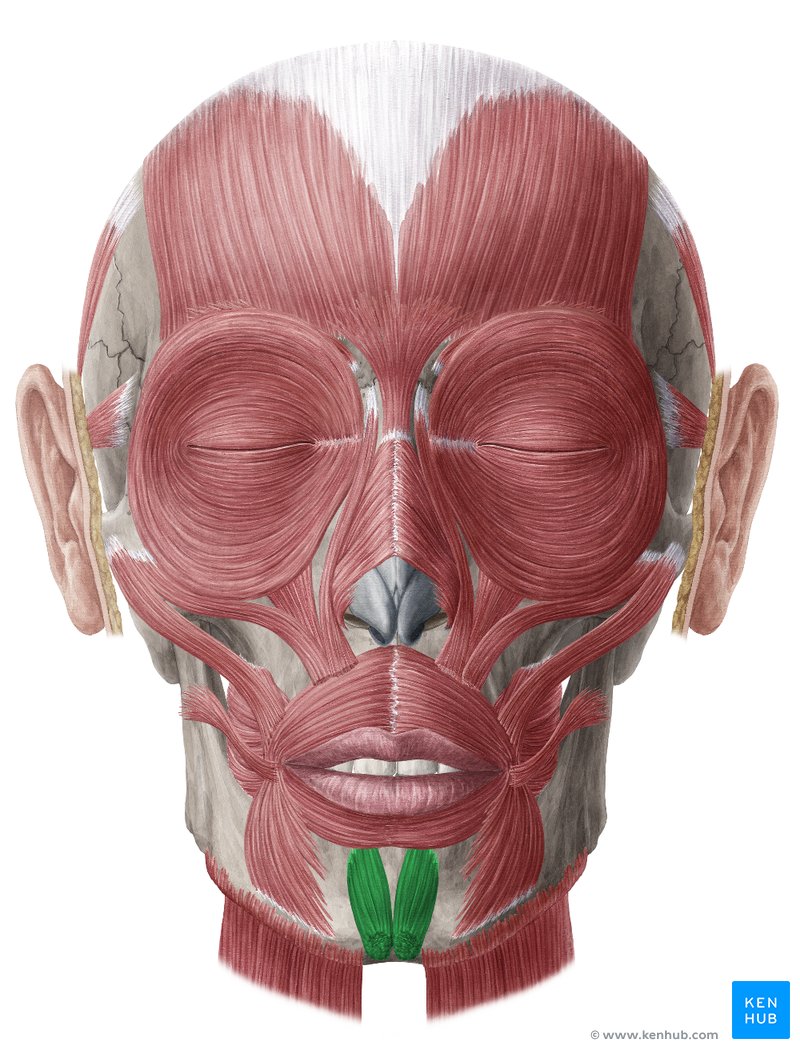
Mentalis
The V-shaped muscle covering your chin tip.
Action: pouts your lower lip out and wrinkles the skin on your chin.
memory tip= Mental region=chin
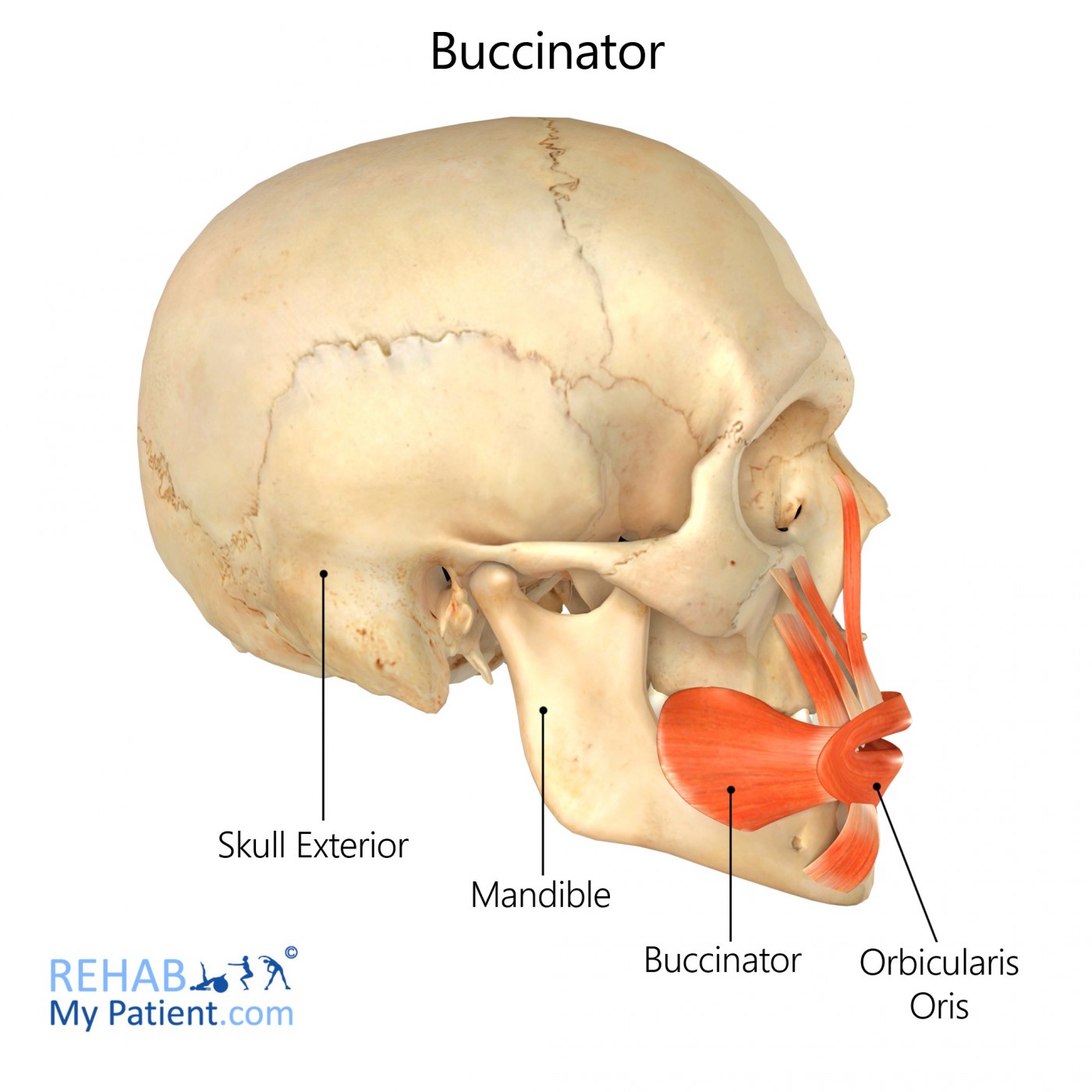
Buccinator
The deep horizontal wall muscle inside your cheek.
Action: Flattens cheek against teeth so food stays between teeth while chewing; helps blow air out (whistling/playing trumpet).
Memory Top: Think Buccal=cheek wall
Orbicularis Oris
The circular muscle ring surrounding your lips.
Closes, puckers, and pouts your lip (“kissing muscle”)
Memory tip: Oris= oral/ Mouth lips

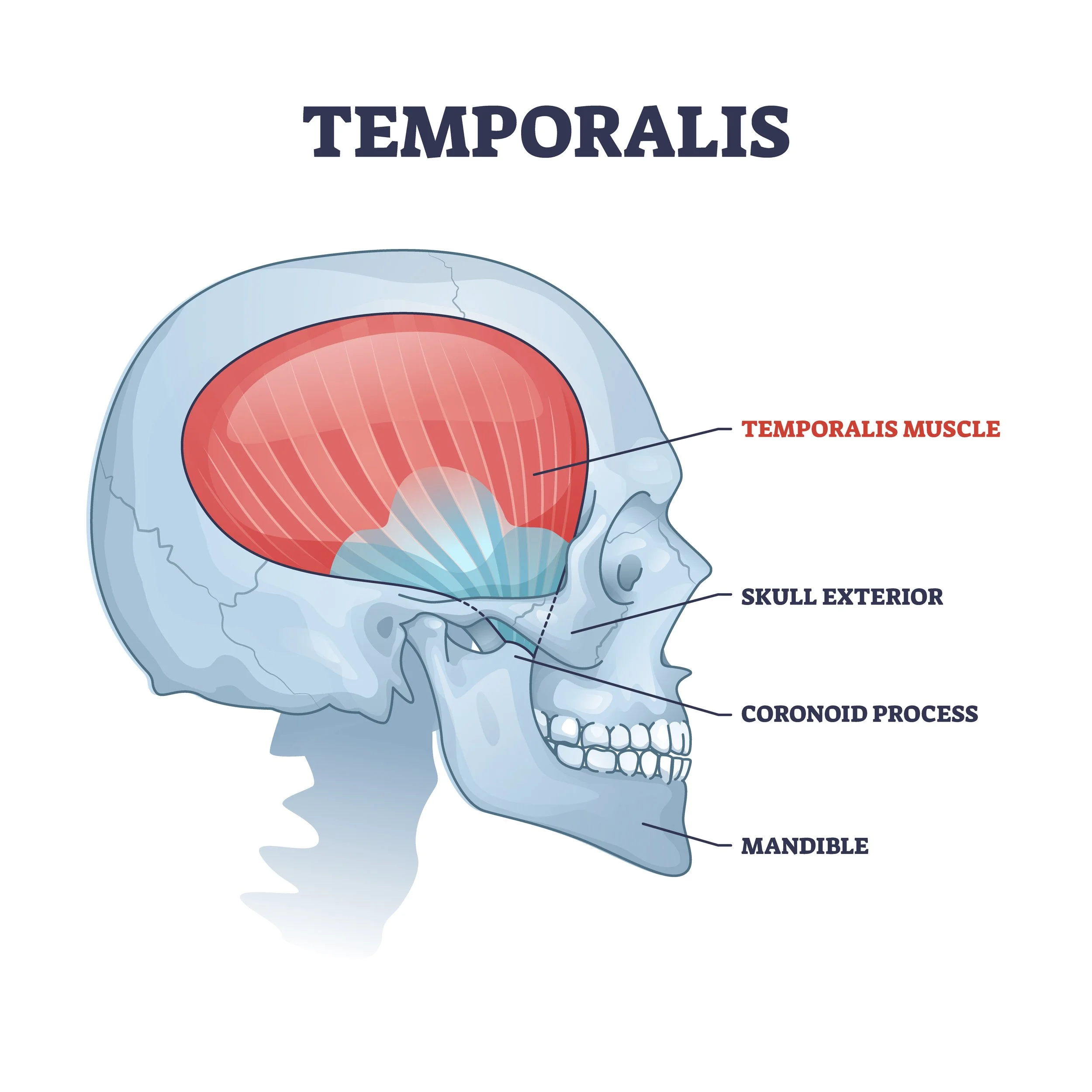
Temporalis
A large fan-shaped chewing muscle covering the temple bone on the side of your skull.
Action: Lifts and closes your lower Jaw.
Memory Tip: Temporalis= Temple bone

Masseter
The thick, powerful rectangular muscle on the outer angle of your jaw.
Action: closes your jaw forcefully for biting and chewing.
Memory tip: Think Masseter= “mass-Eater” (chewing food).

Digastric
A V-shaped muscle under your chin with two parts: Anterior belly: front part under chin tip. Posterior belly: back part near ear/hyoid
Action: pulls jaw open and lifts and hyoid bone when swallowing.
Memory Top: Di=Two; Gaster=Bellies

Stylohyoid
A thin, slating muscle running from the styloid peg near your ear down to the hyoid bone.
Action: Lifts hyoid bone up and backward when swallowing.
Memory tip: style (styloid process) to hyoid bone.

Mylohoid
A flat muscle sheet that forms the main floor under your tongue.
Action: lifts floor of mouth and tongue up when swallowing
Memory Tip: Mylo= Floor of mouth.

Sternothyroid
A deep front neck muscle running from breastbone up to thyroid cartilage.
Action: pulls larynx (voice box) down after swallowing.
Memory tip: Sterno (sternum) to thyroid cartilage

Sternohyoid
A long surface strap muscle running from breastbone up to hyoid bone.
Action: Pulls hyoid bone down after swallowing
Memory Tip: stereo (sternum) to hyoid bone

Thyrohyoid
A short vertical muscle connecting thyroid cartilage to hyoid bone.
Action: Pulls hyoid down or lifts larynx up.
Memory tip: thyro (thyroid) to Hyoid bone.

Omohyoid
A long strap muscle running from shoulder blade across neck to hyoid bone.
Action: pulls hyoid bone down and back.
Memory Top: omo= shoulder blade region

Sternocleidomastoid (SCM)
The large diagonal band on each side of you neck. Action: both sides together: flexes neck forward (chin to chest) One side alone: turns head toward opposite shoulder.
Memory tip: connects sternum+ Clavicle (cleido) to Mastoid process being ear.

Anterior Scalene
The front muscle of the three scalene muscles on the side of the neck.
Actin: flexes neck sideways and lifts rib during deep breathing.
Memory tip: Anterior=Front scalene.

Middle Scalene
The largest, middle muscle of the scalene group on the neck side.
Action: Bends neck sideways and lifts 1st rib.
Memory tip: Middle=Between anterior and posterior.
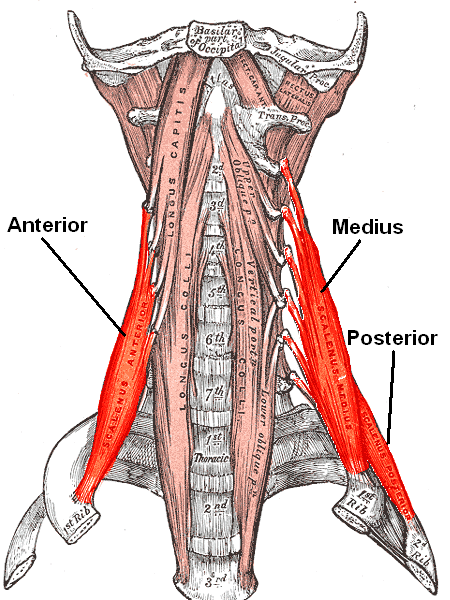
Posterior Scalene
The back muscle of the scalene group attached to rib 2.
Action: bends neck sideways and lifts 2nd rib.

Pectoralis Major
the large fan-shaped muscle covering the front chest wall.
Action: Flexes, adducts (pulls arm across chest) and rotates arm inward.
Memory Tip: Pecs+largest chest muscle.

Pectoralis Minor
A small triangular muscle sitting deep underneath Pectoralis major.
Action: Pulls shoulder blade forward and down.
Memory tip: Minor= smaller chest muscle underneath.

Serratus Anterior
A saw-tooth shaped muscle on the side ribcage under armpit.
Action: pulls shoulder blade forward around chest wall (“boxer’s muscle” for throwing punches).
memory tip: serrates= serrated/Saw-tooth edge.

Levator Scapulae
A back-neck muscle running down from neck vertebrae to shoulder blade top corner.
Action: lifts (elevates) shoulder blade.
Memory Tip: Levator=Lifts; Scapulae= scapula/shoulder blade.

Rhomboid Major
The larger lower slant muscle between spine and shoulder blade.
Action: pulls shoulder blades backward toward spine (pinching shoulders together)
Major tip: major = bottom larger rhomboid block.

Rhomboid Minor
The smaller upper slant muscle sitting right above rhomboid major.
action: pulls shoulder blades backward toward spine.
Memory tip: minor= top smaller rhomboid block.
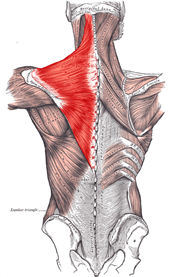
Trapezius
A large diamond-shaped muscle covering upper back and neck.
Superior part: upper nech region (lifts shoulder)
middle part: mid-back region (pulls shoulders back)
inferior part: lower region ( pulls shoulder down)
actions: moves, elevates, restricts and depresses shoulder blades.
memory tip: trapezius= trapezoid/Dimond shape

Latissimus Dorsi
Broad, flat muscle covering lower back (“lats”)
action: extends and pulls arm backward and down (swimmers muscle)
Memory tip: latissimus= wide; dorsi=back
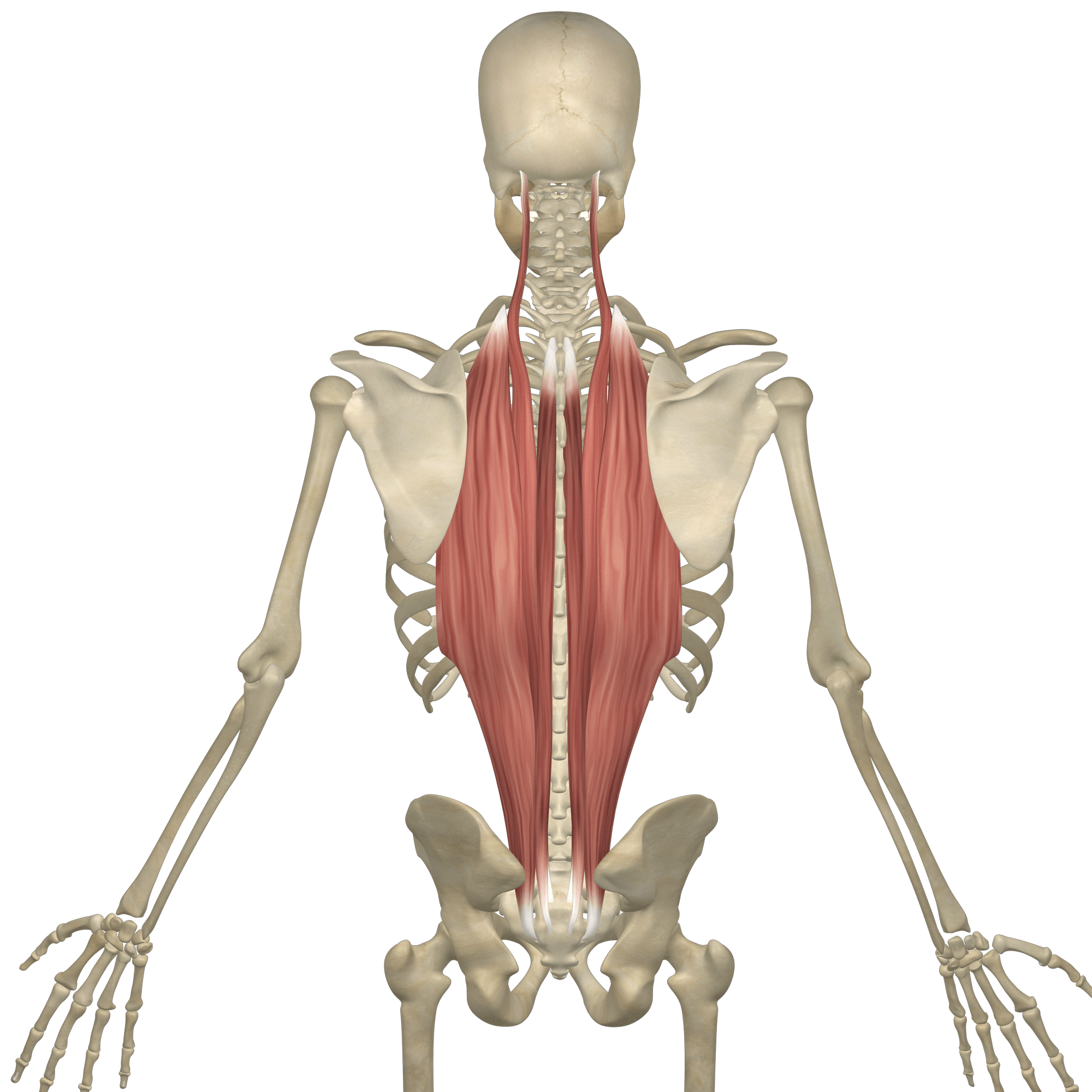
Erector Spinae (general group on model)
Deep muscle columns running vertically along both sides of your spine.
action: straightens (extends) and keeps spine upright.
Memory top: erector= hold spine erect/upright

External oblique
outer layer of abdominal wall with fibers slanting down like hands in pockets.
Action: flexes spine and rotates trunk to opposite side.
memory tip: external=outside; oblique=slanted
internal oblique
Middle layer of abdominal wall with fibers slanting upward
Action: flexes spine and twists trunk.
memory tip: internal= middle layer under external oblique.


Transversus abdominis
Deepest abdominal layer with horizontal belt-like fibers.
Action: compresses stomach contents inward (acts like a corset)
memory tip: transversus= Traverse/ horizontal direction.

Rectus abdominis
Vertical from stomach muscle divided by tendon lines (“six-pack”).
Action: bends spine forward (doing crunches/sit-ups)
memory tip: rectus= straight vertical; abdominis= abdomen

External intercostal
outer layer of muscles sitting between ribs.
action: lifts ribcage up and out during inhalation ( breathing in)
Memory tip: external=outside rib layer; helps breath IN.

internal intercostal
middle layer of muscles sitting between ribs under external intercostal.
Action: pulls ribcage down during fateful exhalation (breathing out)
memory tip: internal=middle rib layer; helps push air OUT

Innermost intercostal
deepest muscle layer inside ribcage wall.
Action: helps depress ribcage during exhalation.
memory tip: innermost=deepest rib muscle wall layer.
Transversus Thoracis
Fan-shaped muscle layer on the inside back surface of the front sternum/ribs.
Action: depresses ribs during exhalation
memory tip: thoracis=inside chest cavity wall.

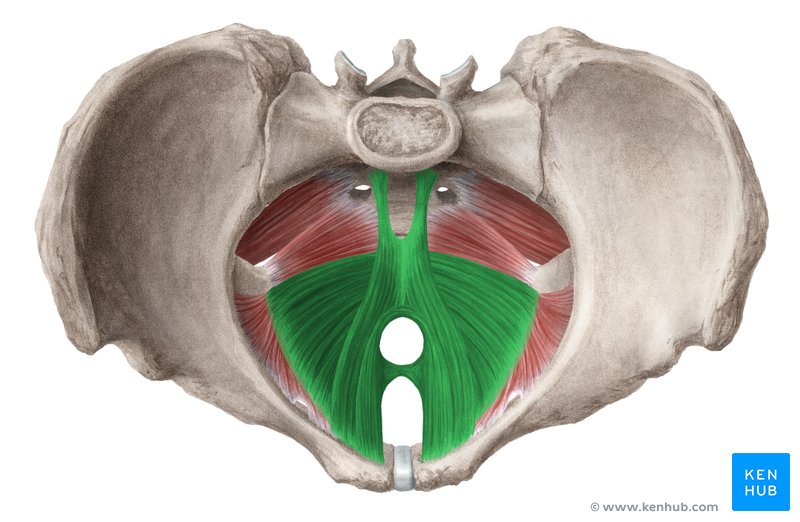
Levator Ani
Broad muscle sheet forming the main floor of the pelvic bowl.
action: support pelvic organs and resists abdominal pressure.
Memory tip: Levator= holds up/ lift pelvic organs

coccygeus
triangular muscle sitting behind elevator ani near tailbone. Action: supports pelvic floor and pulls tailbone forward.
Memory tip: coccygeus= attaches to coccyx (tailbone)

Platysma
very thin flat muscle sheet right under neck skin.
action: tenses neck skin and pulls lower lip/jaw down
memory tip: platysma=flat sheet on front neck ( not on models)

Spinalis
most medial (innermost) column of the erector spine group lying right against spine processes
Action: extends spine
memory tip: spinalis= closest to spine ( not on models)

Longissimus
middle, longest column of the erector spinae group.
nation: extends and rotates spine.
memory tip: longissimus=longest column ( not on models)

lliocostalis
most lateral(outermost) column of erector spine group running from hip to ribs.
action: extends and bends sideways
memory tip: Ilio (hip) to costal (ribs) ( not on models)