R&U Systems 3
 Call Kai
 Learn
Learn Practice Test
 Spaced Repetition
 Match
Match Flashcards
 Knowt Play
1/10

There's no tags or description
Looks like no tags are added yet.
Name | Mastery | Learn | Test | Matching | Spaced | Call with Kai | Chat |
|---|
No analytics yet
Send a link to your students to track their progress
11 Terms
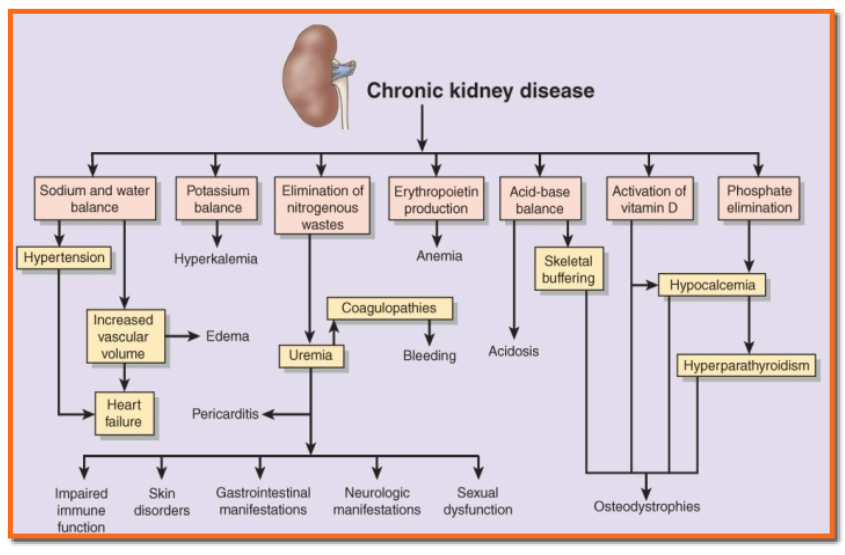
Chronic Renal Failure: Vitamin D Analogs: calcitriol
Vitamin D Analogs
Prototypes: calcitriol (Rocaltrol)
Indications for use
Hypoparathyroidism and management of hypocalcemia in patients undergoing chronic renal dialysis
Mechanism of action
Binds to vitamin D receptors in the kidneys, parathyroid, intestines, and bones to raise serum calcium by enhancing intestinal absorption, renal reabsorption, and release from bone.
Adverse Drug Reactions
Hypercalcemia: overshooting
Interventions/Nursing Actions
Monitor Ca+ levels
Client Instructions
Notify MD for any fast or Irregular heartbeat
Confusion, increased thirst,
Muscle or joint pain (may indicate Ca+ too high)
Contraindications
Hypercalcemia
Use caution with calcium supplements
Drug Interactions
Corticosteroids, ketoconazole, digoxin, Phosphate binding agents, thiazide diuretics
Precautions
pregnant/breastfeeding
know how to educate patient
Renal Diet
• Limit proteins to high biologic value proteins.
• May need a fluid restriction as well

Chronic Renal Failure: Calcium Free Phosphate Binders: sevelamer hydrochloride
Calcium Free Phosphate Binders
Prototypes: sevelamer hydrochloride (Renvela)
Indications for use
• Hyperphosphatemia in end-stage renal disease
Mechanism of action
• Binds to phosphate in the gut and reduces it’s absorption
Adverse Drug Reactions
GI intolerance, N/V/D, Dyspepsia, abd pain, nasopharyngitis, Limb pain, pruritus, arthralgia, and bronchitis
Interventions/Nursing Actions
Do not crush
Monitor bicarbonate, calcium, Phosphorus, parathyroid hormone, and chloride labs
Client Instructions
Take with EVERY meals (~4x a day). Bind up phosphate while in GI tract before it gets absorbed.
Do not crush or separate
Contraindications
Presence of hypersensitivity
Bowel obstruction
Drug Interactions
Administer separate from other medication due to risk for decreased bioavailability
Precautions
GI disorders such as UC
Stages of Chronic Kidney Disease


Dialysis
DIALYSIS = USUALLY WHEN GFR IS 15% OR LESS + S/S
Peritoneal dialysis
hyperosmolar dialysate with dextrose & sodium
reducing workload going to kidneys

Renal Dosing Across the lifespan: KID SAFE
Why it matters
• Kidneys remove many drugs from the body
• Impaired kidney function → drug build-up → toxicity
• Dosing must be adjusted to: patient’s age, renal function, clinical condition
How do we keep patients SAFE?
• Size dose to kidney function + age (pharmacy and provider will do this, but you need to report the information in front of you).
• Age extremes (neonates/elderly) = most risk.
• Follow levels + labs.
• Evaluate + be ready to adjust often
Neonates and Infants
Kidneys immature at birth → ↓ clearance
Drug half-life prolonged
Require smaller doses or longer intervals (e.g., antibiotics)
By ~1 year, renal function approaches adult levels
Children
After infancy, renal clearance may be faster than adults
Often require weight-based or body surface area dosing
Careful monitoring essential
Adults
Typically stable renal function if healthy
Adjust dosing if kidney disease or acute illness (e.g., dehydration, sepsis)
Older Adults
Normal aging → ↓ GFR and renal blood flow
BEERS Criteria*
“Normal” creatinine can be misleading (low muscle mass)
Higher risk of accumulation (digoxin, aminoglycosides, lithium)
Start low, go slow

Case Study
1) Renal Status: Based on the GFR of 38 mL/min, what stage of Chronic Kidney disease is the patient in?
The patient is at stage 3B of Chronic Kidney Disease
2) BEERS Criteria ID: Identify the one medication on his list that is considered a Potentially Inappropriate Medication (PIM) for the elderly according to the BEERS criteria. What is the specific class of this drug, and why is it flagged (i.e., what risk does it pose)?
Digoxin
3) What is the primary risk associated with this PIM in the elderly?
The primary risk associated with this PIM is toxicity.
4) Considering Mr. Franklin's GFR of 38 mL/min, which renally-cleared medication should have its dose immediately reduced to prevent accumulation and toxicity?
digoxin
5) What is the most critical pre-administration lab value a nurse must check before giving a renally-cleared drug like Digoxin or Allopurinol?
Glomerular Filtration rate