Equine Anemia: Evaluation and Management
 Call Kai
 Learn
 Practice Test
 Spaced Repetition
 Match
 Flashcards
 Knowt Play
1/31

There's no tags or description
Looks like no tags are added yet.
32 Terms
What is the difference between cold and hot-blooded horses?
What is unique about their blood parameters?
Cold-Blooded Horses
Temperament: Calm, steady, patient, and laid-back ("gentle giants"), making them reliable for heavy tasks and less reactive to sudden stimuli.
Build: Heavy-boned, muscular, and compact, designed to retain heat in cooler climates and pull heavy loads.
Hot-Blooded Horses
Temperament: Energetic, spirited, sensitive, and quick to react. They are fast learners, but often better suited to experienced riders.
Build: Slender, athletic, and refined with fine skin and prominent veins.
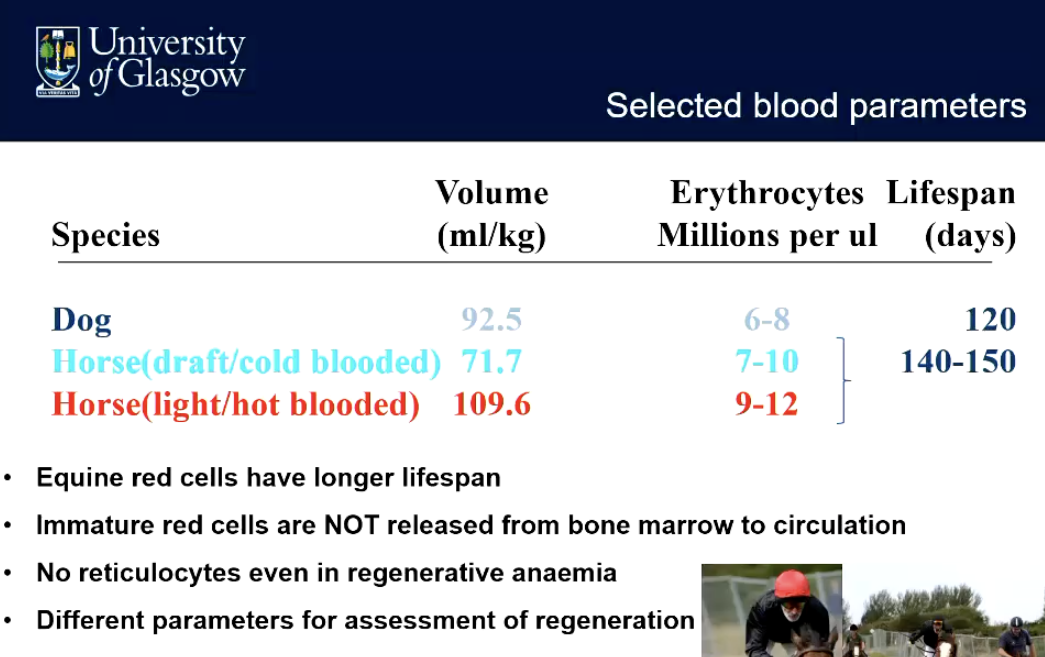
What are the normal red cell parameters in adult horses?

Horses do not normally have ___ _____ in circulation.
Band Neutrophils
**Present in infections

What is the difference between MCH and MCHC?
MCH (mean corpuscular hemoglobin) measures the average amount (weight) of hemoglobin in a single red blood cell, whereas MCHC (mean corpuscular hemoglobin concentration) measures how densely packed (concentrated) that hemoglobin is within a given volume of red blood cells.
What do we need to consider when determining if a horse is anemic?
Need to consider the normal PCV’s in that particular breed

What are the clinical signs of anemia in horses?
• Extremely variable depending on cause and RATE of blood loss
• Acute blood loss/haemolysis, physiological response due to low circulating volume and loss of oxygen carriage
Tachycardia
Tachypnoea & hyperpnoea indicative of significant hypovolaemia and hypoxaemia
Mucous membrane colour depends on severity of loss
• Chronic blood loss/haemolysis
Exercise intolerance
Weight loss (Due to metabolic requirement not met with blood)
Pallor of mucous membranes only clinically evident at <20-24 |/
Adaptive tachycardia at <20 l/
Haemic murmur due to decreased viscosity of the blood, increased turbulence
What are the features of regeneration?
DO not happen: Reticulocytes, Macrocytosis, Polychromasia
DO SEE: Anisocytosis
• Howell jolly Bodies
• MCV in regeneration
• Anisocytosis more marked
How do we tell if anemia is regenerative?
• Sequential samples for PCV and TSP, with constant sampling conditions
• SLOW regeneration in response to severe acute haemorrhage
Increase of 0.32 - 0.42% per day ie ~ 3 days to increase by 1%
Splenic contraction will occur in acute blood loss
• Albumin recovers within 5-10 days
• Globulins within 3-4 weeks
• Cytological findings plus sequential cell counts used to assess response in chronic anaemia
• Facial venous plexus useful sampling site
Don’t want to damage equine jugular vein, by continual use
What are some diagnostic differences to remember in horses.
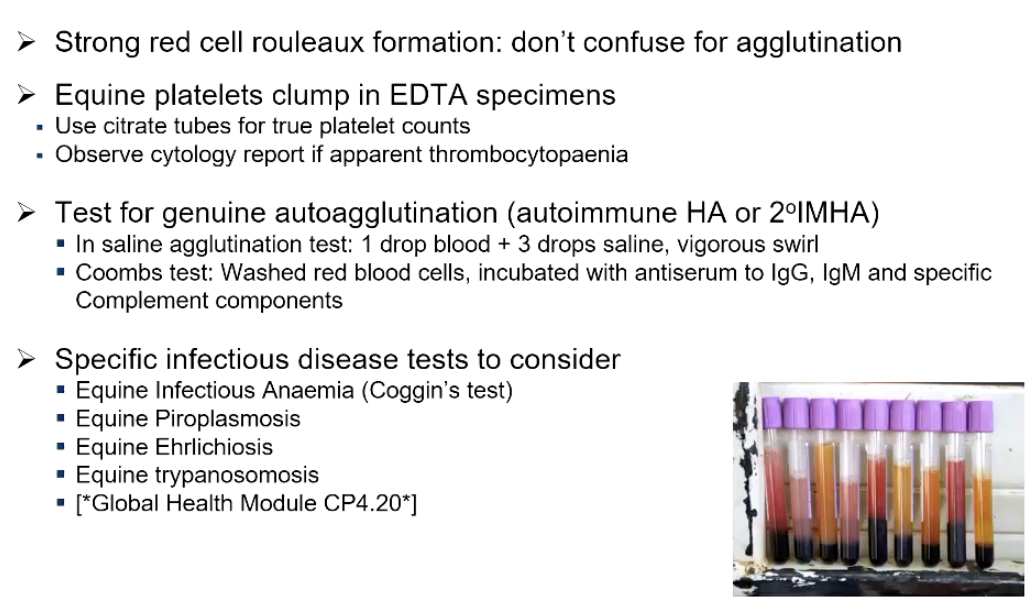
Describe how to evaluate equine bone marrow.
• Collected from equine sternum with Jamshidi needle
Local anaesthesia and stab incision
Multiple smears made immediately
Fragments of marrow used to make impression smears -
Better for diagnosis of myeloproliferative disorders, good to figure out if there is regeneration
• Myeloid:erythroid ratio
- Normal M:E = 0.5 - 2.4
- < 0.5 M:E ratio with >5% reticulocytes indicates adequate regenerative response to anaemia
• Nonresponsive VS Responsive anaemias
Most IMHA cases are regenerative unless precursor cells are targeted
• Myeloproliferative disorders
When a horse is anemic, what are the main questions to ask?
• Has there been acute/chronic erythrocyte loss?
Internal/external haemorrhage
Decreased survival in anaemia of chronic disease
?haemorrhage into chest, abdomen, gut, bladder
• Is there Terythrocyte breakdown?
Intra-/extra-vascular haemolysis
Primary vs secondary
• Is there decreased red blood cell production?
What are some causes of acute blood loss in horses?
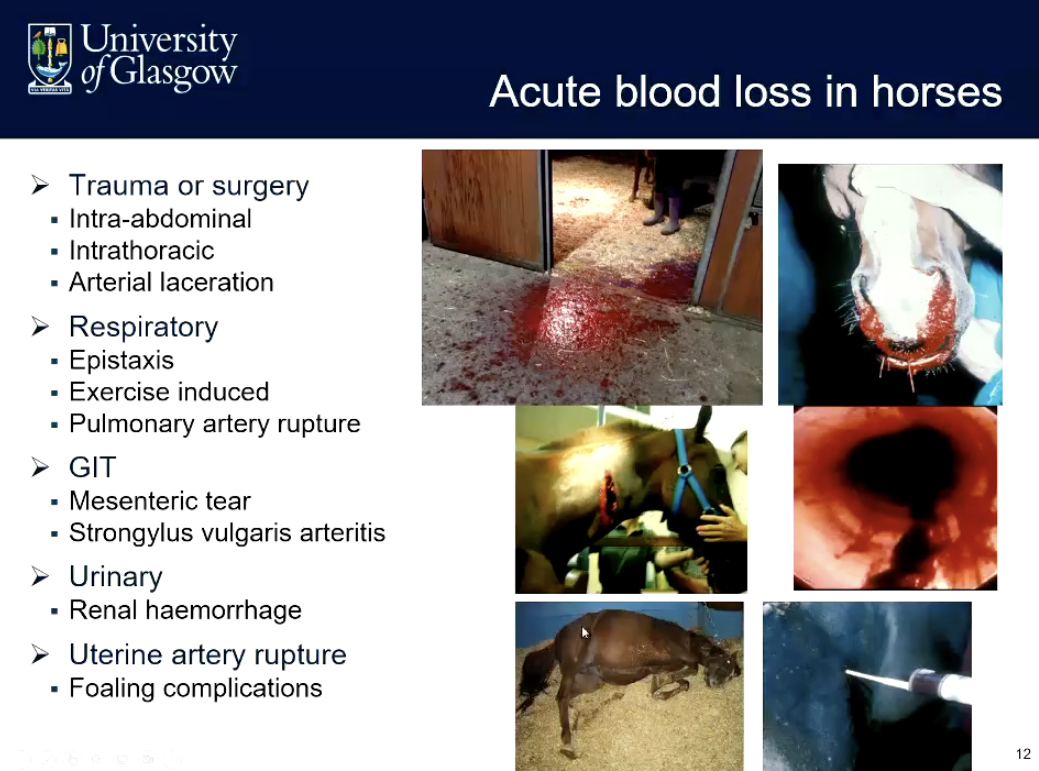
Describe the main features of acute hemorrhage in horses.
Often better to apply a compression bandage (If limbs)
Or pack the horse nostrils / meatus

Describe the main donor selection protocols in horses.
Blood in emergency - get ANY blood, horse is usually fine first transfusion, but try to avoid a non-arab breed
Mare with foals - not ideal donors
Ideally - large, healthy gelding

How is cross matching performed?
Major and minor crossmatching are pre-transfusion compatibility tests that check whether antibodies in one person's plasma or serum will attack the other person's red blood cells (RBCs). The major crossmatch tests recipient plasma/serum against donor RBCs, while the minor crossmatch tests donor plasma/serum against recipient RBCs.
The blood donor should ideally be…?
> Donor must be negative for piroplasmosis and other blood borne infections, with PCV/TSP within reference
12G catheter placed upward in jugular after sterile preparation
Acid citrate dextrose most common anticoagulant
May collect 1L/100 kg as approximate rule - can weigh
Describe the blood administration process in equines.
• Given via filter containing blood transfusion set
Jugular vein
Up to 15 ml/kg depending on blood volume lost
• 1 drop/5s for first 5 mins, monitoring heart rate & potential signs of anaphylaxis or severe transfusion reaction
Increased rate of administration if no reaction
• Shelf-life of 3w for refrigerated blood, more if rbcs separated
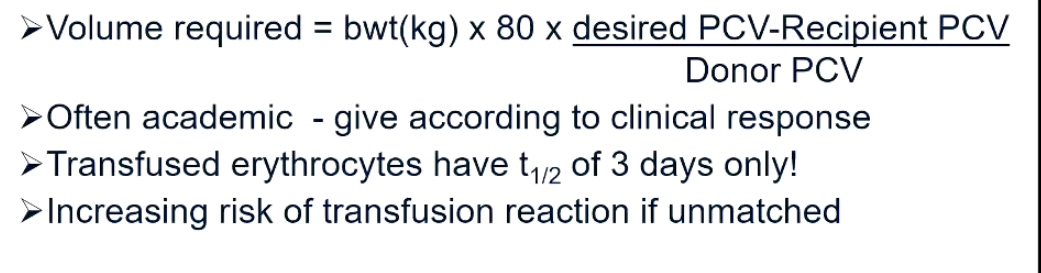
How do we determine how much blood is required?
Only three day half life - increasing risk of transfusion reactions, and poor half life means another transfusion might be indicated
Summarize some causes of chronic blood loss in horses.

How do we know (Based on blood tests), whether or not chronic hemorrhage or loss has stopped?

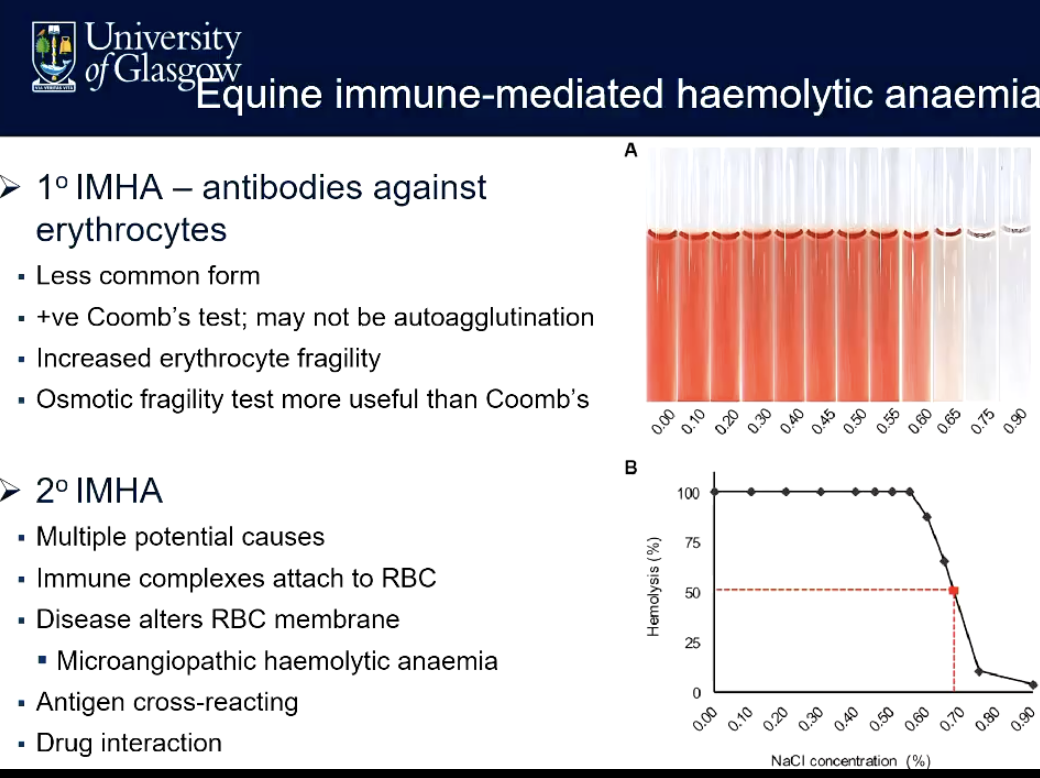
Describe the main features of Equine immune-mediated hemolytic anemia?
**Most common form in horses is the secondary form, red cells coated with antigen → taken out by the immune system
Diseases can alter the RBC membrane (Viral cause, tumours)
Primary = true autoimmune condition, do fragility test to determine when they lyse
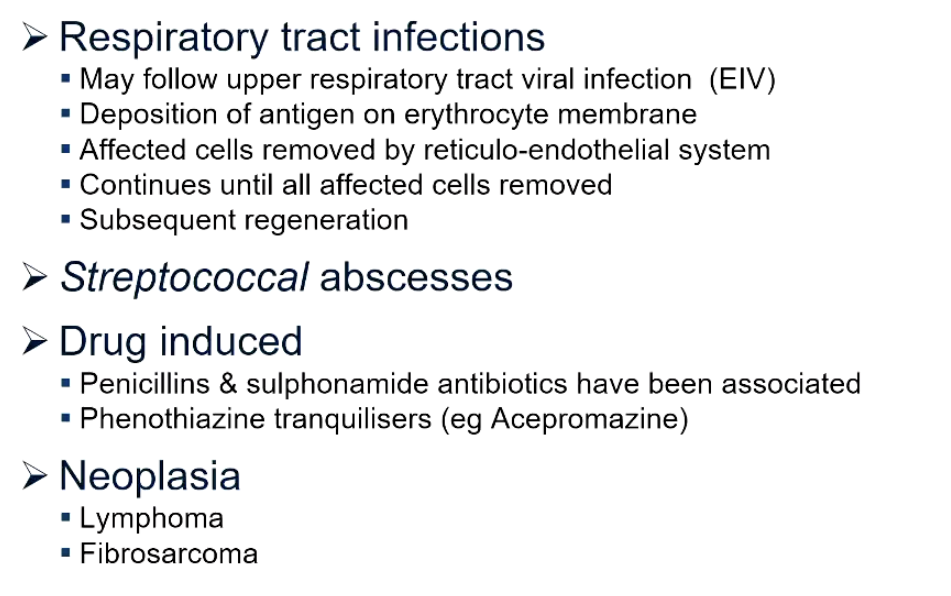
Summarize the causes of secondary IMHA in equines.
Outline the treatment options for Equine IMHA.
• Identify & discontinue suspected medications
If caused by drug, should return to normal, but if underlying problem, may not
• Dexamethasone if severe haemolysis
0.1 mg/kg IV daily, decreasing to 48h interval
Change to prednisolone 1 mg/kg SID if longer term requirement
• Blood transfusion from compatible donors if clinical evidence of requirement
Cross matching prior to transfusion
• Rate of blood loss is key factor
Tachycardia, tachypnoea and hyperpnoea may indicate hypoxaemia
Describe neonatal isoerythrolysis in equines.
Neonatal isoerythrolysis is caused by a blood-type mismatch between a newborn and its mother, where maternal antibodies in colostrum attack and destroy the newborn's red blood cells.
• Immune-mediated haemolysis
• Due to RBC Ag incompatability
Colostral antibody to foal's rbc antigen
Most often in multiparous mares
• Anaemia, icterus, weakness
Increases RR, HR, pale mm's
• Onset/severity variable
Usually 2-3 days
• Diagnosis
• Signs, haematology
• Rule out DDx
• Immunological testing
• Foal RBCs + mare serum/colostrum - to look for a cross reaction
• Treatment
• Supportive care (stall rest, nutrition)
• Blood transfusion
• Suitable donor?
How can you prevent Neonatal isoerythrolysis.
• Check compatibility of pairing between mare and stallion, particularly if mare Aa/Qa negative, determine likelihood of foal being an at risk blood group
• Blood typing service available to assess compatibility
• Aa/Qa negative stallion less likely to cause NIE in foal
• At risk foal (previous mare Hx, mare-stallion incompatibility)
• Immunological testing but false negatives possible
• Multiparous mares increasingly likely to have foal that develops NIE
• Prevent nursing for 24 h as no antibody passed transplacentally
First 24hr high risk, then much easier to manage
• Alternative source of colostrum
• Easier to prevent than treat if advanced case
Outline some of the (rarer) causes of non-regenerative anemia in horses.

What do the diagnostic workups for non-regenerative anemias in horses look like?

What is one of the most common cause of non-regenerative anemias in horses?
Chronic inflammation - increased metabolic rate → lowered red cell survival → maintain low red cell count until disease process subsides or is managed

What may cause inadequate erythropoiesis?
• Nutritional deficiencies
Prolonged administration of sulphonamides
Decreased folate & Vit B12 production by GIT flora
• Myelophthisic anaemia
Much rarer than anaemia of chronic disease
Bone marrow aspirate/biopsy required
Cytology and M:E ratio assessed
• Bone marrow aplasia
Neoplastic infiltrate detected on bone marrow aspirate from sternum
Likely to have pancytopaenia with decreased neutrophils & decreased platelets if myeloid stem cell involved
= Least common form of non regenerative anaemia in the horse

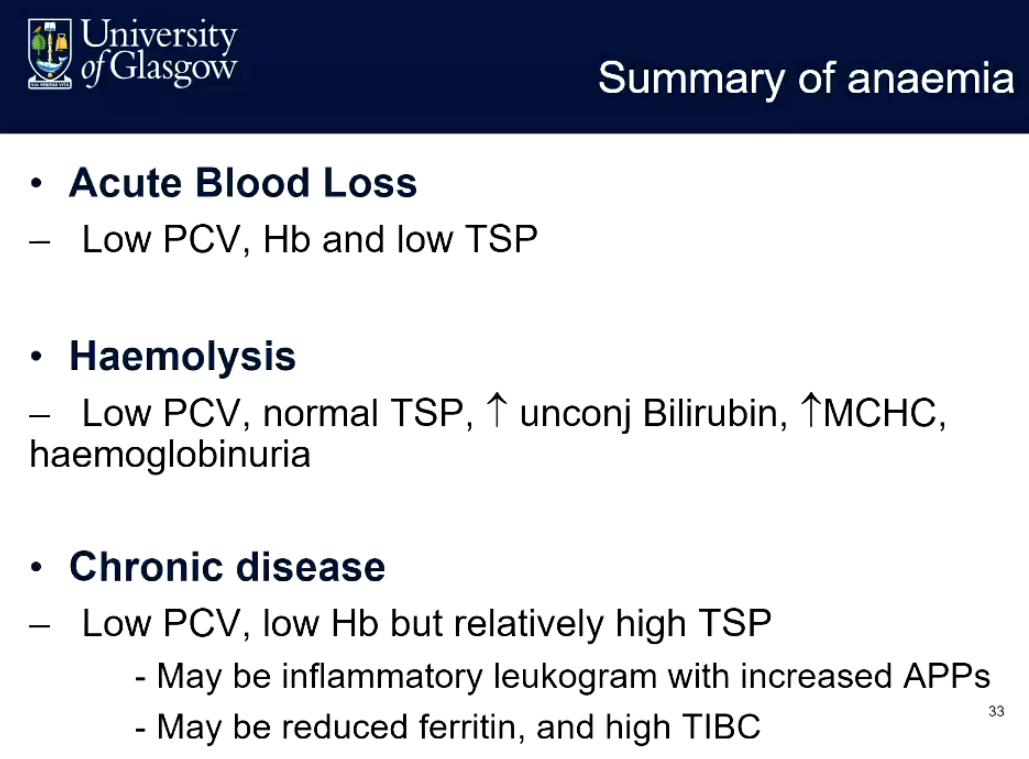
Summarize the etiology of anemia.

Summarize Equine Piroplasmosis.
Parasite-mediated cause of equine anemia


Describe the pathogenesis of piroplasmosis.
> Tripartite agreement: free movement of horses between UK, France and ROl without border inspection
> No specific guidelines re pre-import tick treatment
> No requirement to test horses moving within EU
• Tick species likely to be capable of transmission present in UK eg Dermacentor reticulatus
> AHVLA results April - June 2013:
