AP Psyc Cahpter 8
 Note
 Call Kai
 Learn
 Practice Test
 Spaced Repetition
 Match
 Flashcards
 Knowt Play
1/35

There's no tags or description
Looks like no tags are added yet.
36 Terms
Motivation
A need or desire that energizes and directs behavior.
Instinct
A complex behavior that is rigidly patterned throughout a species and is unlearned.
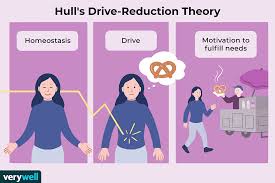
Drive-Reduction Theory
The idea that a physiological need creates an aroused tension state (a drive) that motivates an organism to satisfy the need.
Homeostasis
A tendency to maintain a balanced or constant internal state; the regulation of any aspect of body chemistry, such as blood glucose, around a particular level.
Incentive
A positive or negative environmental stimulus that motivates behavior.
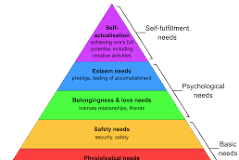
Hierarchy of Needs
Maslow's pyramid of human needs, beginning at the base with physiological needs that must first be satisfied before higher-level safety needs and then psychological needs become active.
Glucose
The form of sugar that circulates in the blood and provides the major source of energy for body tissues.
Set Point
The point at which an individual's 'weight thermostat' is supposedly set; when the body falls below this weight, an increase in hunger and a lowered metabolic rate may act to restore the lost weight.
Basal Metabolic Rate
The body's resting rate of energy expenditure.
Anorexia Nervosa
An eating disorder in which a person diets and becomes significantly underweight, yet continues to starve.
Bulimia Nervosa
An eating disorder characterized by episodes of overeating, followed by vomiting, laxative use, fasting, or excessive exercise.
Binge-Eating Disorder
Significant binge-eating episodes, followed by distress or guilt, without compensatory purging.
Sexual Response Cycle
The four stages of sexual responding described by Masters and Johnson—excitement, plateau, orgasm, and resolution.
Refractory Period
A resting period after orgasm, during which a man cannot achieve another orgasm.
Estrogens
Sex hormones secreted in greater amounts by females than by males, contributing to female sex characteristics.
Testosterone
The most important male sex hormone, stimulating growth of male sex organs and characteristics.
Emotion
A response of the whole organism, involving physiological arousal, expressive behaviors, and conscious experience.
James-Lange Theory
The theory that our experience of emotion is our awareness of our physiological responses to emotion-arousing stimuli.
Cannon-Bard Theory
The theory that an emotion-arousing stimulus simultaneously triggers physiological responses and the subjective experience of emotion.
Two-Factor Theory
The Schachter-Singer theory that to experience emotion one must be physically aroused and cognitively label the arousal.
Polygraph
A machine used to detect lies by measuring physiological responses accompanying emotion.
Facial Feedback
The effect of facial expressions on experienced emotions, intensifying feelings.
Catharsis
Emotional release; the catharsis hypothesis maintains that releasing aggressive energy relieves aggressive urges.
Feel-Good, Do-Good Phenomenon
People's tendency to be helpful when already in a good mood.
Well-Being
Self-perceived happiness or satisfaction with life.
Adaptation-Level Phenomenon
Our tendency to form judgments relative to a neutral level defined by our prior experience.
Relative Deprivation
The perception that we are worse off relative to those we compare ourselves.
Behavioral Medicine
An interdisciplinary field that integrates behavioral and medical knowledge to apply to health and disease.
Health Psychology
A subfield of psychology that contributes to behavioral medicine.
Stress
The process by which we perceive and respond to stressors that we appraise as threatening or challenging.
General Adaptation Syndrome (GAS)
Selye's concept of the body's adaptive response to stress in three phases—alarm, resistance, exhaustion.
Coronary Heart Disease
The clogging of the vessels that nourish the heart muscle; the leading cause of death in North America.
Type A
Competitive, hard-driving, impatient, verbally aggressive, and anger-prone people.
Type B
Easygoing, relaxed people.
Psychophysiological Illness
Mind-body illness; any stress-related physical illness, such as hypertension.
Psychoneuroimmunology (PNI)
The study of how psychological, neural, and immune processes interact.