plant responses
 Call Kai
 Learn
 Practice Test
 Spaced Repetition
 Match
 Flashcards
 Knowt Play
1/74

There's no tags or description
Looks like no tags are added yet.
75 Terms
what can plants respond to, to increase their chance of survival?
changes in environment
abiotic stress
herbivory
what changes in environment can plants respond to?
grow towards light
sense gravity: shoots grow up, roots grow down
sense of touch: climbing plants take hold to climb and reach sunlight
what is abiotic stress?
a non-living factor that can cause harm
what are examples of abiotic stress?
drought / too much water
high / low temperatures
crane in light intensity maybe to do with seasons
why do deciduous trees lose leaves?
changes in day length causes changes in light and temperature
during autumn, glucose needed to release the energy to protect the plant from freezing is greater than glucose produced by photosynthesis so trees lose leaves and remain dormant until spring
what are features of auxin in related to leaf loss in deciduous trees?
inhibits leaf loss
is produced by young leaves
less produced as leaf gets older
what are features of ethene related to leaf loss in deciduous trees?
stimulates leaf loss
older leaves produce more ethene
causes formation of abscission layer by causing cells to expand break cell wall
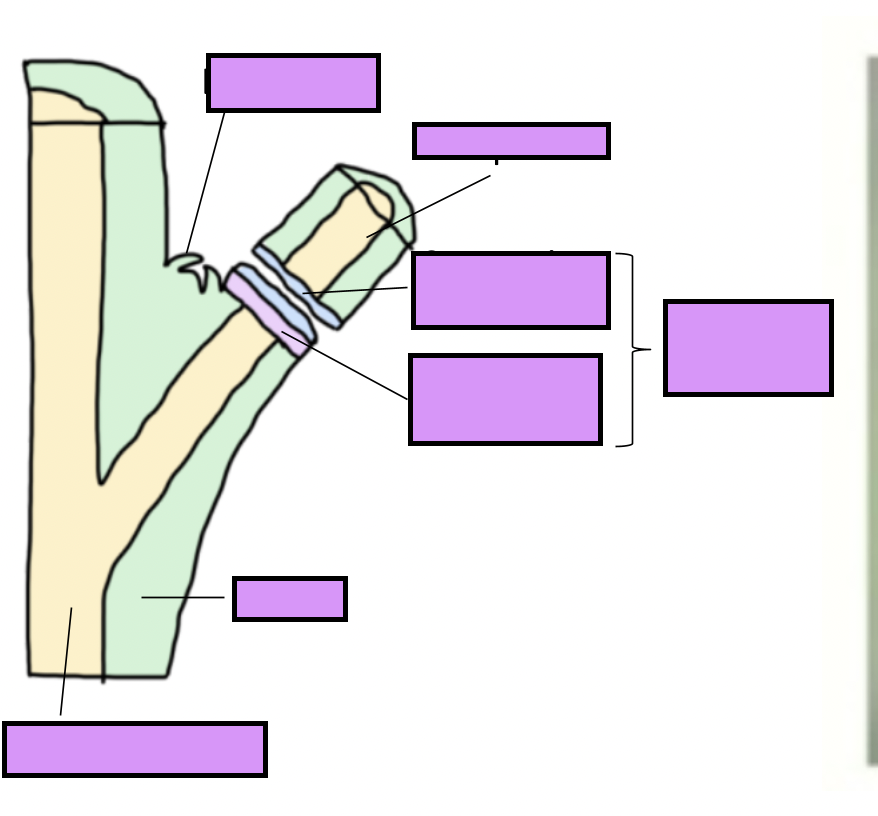
label


what is this part?
where phloem and xylem have been sealed to prevent entry of pathogens and water loss
what is wrong with plants freezing?
if cells freeze they die as their membranes are disrupted
what do some plant cells have to counteract freezing?
produce ‘anti-freeze’ which lower freezing point of cytoplasm
what controls stomatal closing?
controlled by hormone Abscisic acid (ABA) which is released when there is abiotic stress causing the closure
how does ABA work?
when there isn’t enough water
ABA bind to receptors on guard cell membranes
Causes Ca2+ ion channels to open
Ca2+ diffuse into guard cells and cause K+ ion channels to open and K+ to leave the guard cells
water leaves the guard cell by osmosis
guard cells becomes flaccid so stoma closes
what are 4 physical defences to herbivory?
cellulose cell wall
waxy cuticle
guard cells
callose
how does cellulose cell wall protect against herbivory?
physical barrier
signing thickening of cell walls so waterproof and indigestible
how does waxy cuticle protect against herbivory?
prevents water from collecting on surface and pathogens need water
how does guard cells prevent against herbivory?
close stomata
how does callous prevent against herbivory?
large polysaccharides that deposited in sieve tubes at the end of growing season
blocks the flow so that pathogens can’t spread
what are 3 chemical responses to herbivory?
tannins
alkaloids
terpenoids
what are tannins?
toxin to microorganisms and larger herbivores
and are bad tasting
what are alkaloids?
found in growing tips and flowers and taste bitter
what are terpenoids?
antibacterial and anti fungal properties
some create a sent that’s why some plants smell minty
what are pheromones?
chemicals which when released affect the behaviour of other of same species
what is an example of pheromones?
maple trees release a pheromone which is absorbed by other nearby leaves
they make calls to protect themselves if they are attacked
what is example of Volatile Organic Compounds (VOC)?
when cabbages are attacked by caterpillars they produce a VOC that attracts a certain parasitic wasp that lays eggs inside the caterpillars and they are eaten alive
what is tropism?
directional growth towards an external stimulus
what is nastic response?
non-directional responses to external stimuli
what happens with shoots during phototropism and geotropism?
towards light so positive phototropism
away from gravity so negative geotropism
how do roots grow related to geotropism?
towards gravity so positive geotropism
what is chemotropism?
pollen tubes grown down the style towards the ovary where fertilisation happens
what is thigmotropism?
shoots wind around other plants or solid structure to gain support
what are the 5 main plant growth regulators?
auxin
gibberellins
cytokinins
abscisic acid
ethene
what is tropism?
directional growth towards an external stimulus
what is nastic response?
a non-directional response to external stimulus
what is nastic responses caused by?
caused by rapid inward movement of water into cells at base of the fronds and water moving out of the leaflets causing them to collapse
what are features of plant hormones?
produced in small quantities
are active at side of production, or move by diffusion, active transport or mass flow
effects are different depending on concentration, tissues they act on and whether there is another substance present as well
what are the 2 meristems?
apical meristems
lateral meristems
what are features of Auxin e.g IAA?
plant hormone
made in the tip of growing shoots and roots
unequally distributed in response to light or gravity
the effect of Auxin will depend on its concentration and the interactions it has with other hormones
what happens if light is distributed at top?
auxins produced at tip are spread out evenly in shoot
the entire shoot grows at same rate
grows straight up
what happens in directional light when light is only on one side?
auxins aren’t evenly distributed in shoot
more auxins on shaded side of shoot
shaded side grows faster (by cell elongation) making the right side bend towards the light
how is auxin present in the root ?
produced in root tip and small mount of auxin reach the roots
what does low concentration of auxin in root do?
stimulates growth
what does high concentration of auxin in root do?
inhibits root growth
how does auxin and positive geotropsim’s work in root?
auxin produced at bottom of root due to gravity
auxins prevent growth of root cells so opposite side continues to grow and elongate causing curve
what type of bud is dominant, lateral or apical?
apical
what happens if apex bud I cut?
plant grows from lateral buds
why does plant grow from lateral when apical bus is cut?
auxins from the apical bud inhibit lateral buds from growing
so when the shoot is cut auxin levels drop and the buds grow
how can you prove the apical dominance?
auxin paste can be applied to a cut shoot, the lateral buds didn’t grow
when an auxin inhibitor is put below the apex of the shoot, the lateral buds grew
so low levels of auxin promotes growth, high to normal levels inhibit growth
what are the other 2 hormones other than auxin involved in plant growth and apical dominance?
abscisic acid
cytokinins
how does abscisic acid affect growth?
high auxin keeps abscisic acid high
when auxin is removed, abscisic levels drop and lateral buds start to grow
how is cytokinins involved in growth?
hight levels of auxin cause cytokinins to move to shoot apex
when apex is removed, cytokinins spread evenly around the plant and causes bud growth
what does gibberellins important for?
initiating seed germination
end seed dormancy
promote flowering
increase fruit size
how is gibberellins related to seed germination?
when seed absorbs water, the embryo releases gibberellins which stimulates the production of amylase which breaks down starch into glucose ready for respiration
how is gibberellins related to promoting growth?
stimulates the stems of plants to grow by cell elongation so that they grow very tall
what is synergistic relationship between auxin and gibberellins?
they can work together to make plants very tall
what is antagonistic relationship between auxin and gibberellins?
they can work against one another
gibberellins promotes side shoots
auxin inhibits side shoots
how could you investigate effect on gibberellins concentration on stem growth?
serial dilutions
so by growing plants hydroponically, without soil and using s series of move dilute concentrations of hormone, allows you to see the effect of hormone
what did Darwin and Darwin’s experiment confirm?
that the shoot tip was responsible for phototropic responses by causing cell elongation on the shaded side of the shoot which made the shoot bend towards the light
what did Boysen-Jensen find?
that signal was mobile chemical
as when permeable block was inserted, the shoot still showed positive phototropism
with an impermeable block, no phototropism was observed
this showed that the cell stimulus for cell elongation must be a chemical that comes from the tip and diffuses down
what was another of Boysen-Jensen’s experiment?

what were the conclusions of Boysen-Jensen’s second experiment?

what was Went’s experiment?

what was Went’s conclusions?
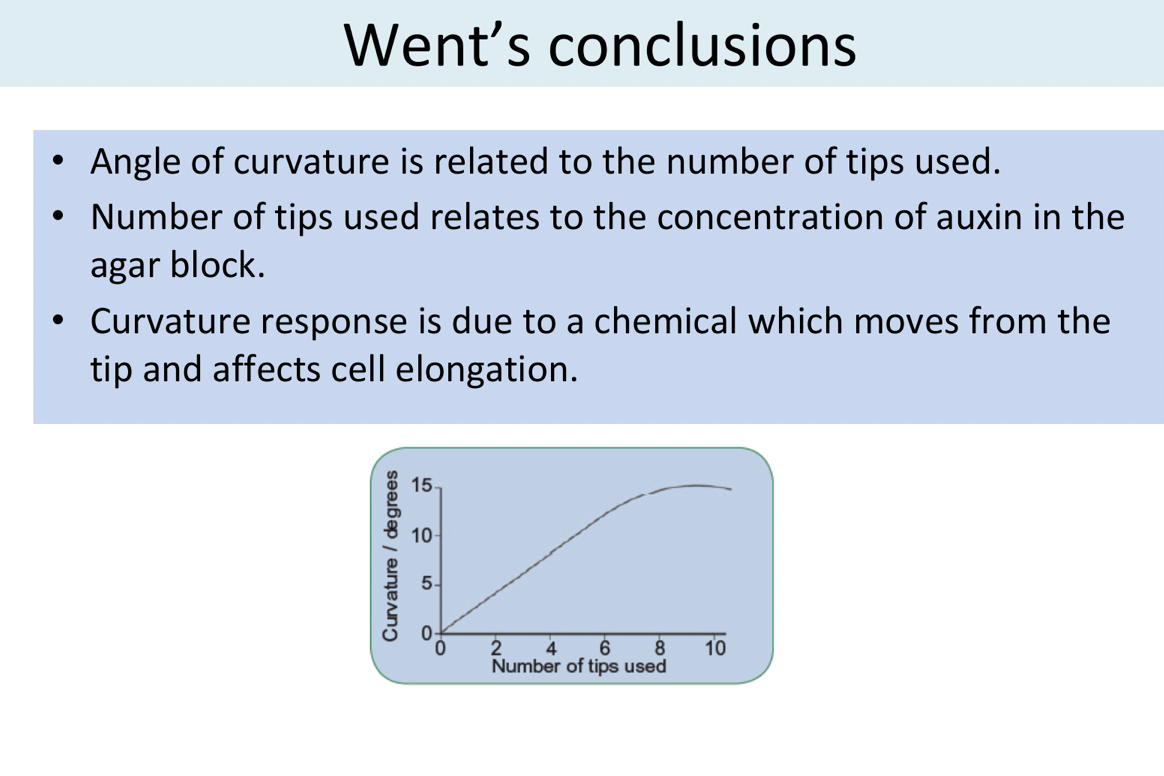
what is the mechanism of Auxin?
promotes the active transport of H+ by ATPase into the cell wall
this lowers the pH and enables optimum conditions for enzymes to break the bonds with cellulose
H+ also disrupts the hydrogen bonds within cellulose so the walls becomes less rigid and expands as it taken in water
how can you investigate geotropic responses?
constantly spinning a plant in a clinostat
this ensures that gravity is acting on all sides equally, compared to no spinning so gravity is only acting on one side
how is gibberellins related to fruit production?
when sprayed onto grapes they develop bigger fruits
stalks elongate which allows grapes space to grow bigger
acting with cytokinins can make apples elongate and improve shape
how is gibberellins related to brewing?
during germination, amylase breaks down starch to maltose usually due to gibberellin
adding gibberellin makes this faster
then malt is produced by drying and grinding the seeds (germinated cereal grains)
how is gibberellins related to sugar production?
gibberellin stimulates growth between the nodes, making the stems elongate
sugar cane stores sugar in these cells therefore more sugar is available from each plant
how is gibberellins related to stem elongation?
gibberellin works synergistically with auxin to increase stem length
increases the length of internodes, simulates cell division, stimulates cell elongation
what is evidence for gibberellins and cell elongation?
dwarf beans are dwarf because lack green producing gibberellins
plants with higher concentrations of are taller
how does auxin work as a herbicide?
auxin promotes rapid shoot growth so that the stem can’t support itself, buckles and dies
they are often used on broadleaf plants as their growing point is at tip of shoot so easily accessible
what can dipping plant cutting in auxin do?
encourages root growth
so plants can be cloned quickly and for cheap
what happen is large amounts of auxin is sprayed on flowers?
promote ovule growth
what are features of ethene?
causes climacteric fruit to ripen
fruit harvested before its fully ripe, cooled, stored and transported
harder fruit less likely to be damaged
exposed to ethene under controlled conditions to ripen at the right moment
ethene will activate enzymes which help in the ripening process
what do cytokinins do?
delay leaf senescence by preventing degradation of chloroplasts
they also be used in tissue culture to help mass produce plants by encouraging cell division