Digestive System
 Call Kai
 Learn
 Practice Test
 Spaced Repetition
 Match
 Flashcards
 Knowt Play
1/82

83 Terms
functions of the digestive system
hydrolyze (break down) macromolecules found in food
5 processes of digestion
ingestion, digestion, movement, absorption, elimination
lumen
open area of a hollow organ/vessel, in GI tract it contains food or feces
4 layers of GI tract wall
mucosa, submucosa, muscularis, serosa
mucosa
innermost layer of lumen, produces mucus for protection, produces digestive enzymes
submucosa
loose connective tissue, contains blood vessels, lymphatic vessels, nerves
muscularis
made of 2 layers of smooth muscle (inner circular layer, outer longitudinal layer) that move food along the GI tract
serosa
outer lining of GI wall, secretes lubricating fluid, part of peritoneum
peritoneum
membrane that lines the inside of your abdomen and pelvis
diverticulosis
condition where the mucosa of any part of the GI tract pushes through other layers, forms pouches where food collects
diverticulitis
when pouches formed in diverticulosis become infected
tonsils
back of mouth on either side of tongue, made of lymphatic tissue, helps protect from disease
adenoids
single pharyngeal tonsil in the nasopharynx
salivary glands
3 pairs, secretes saliva
3 pairs of salivary glands
side of face below ears
beneath tongue
beneath floor of oral cavity
salivary amylase
in saliva, enzyme that begins carbohydrate chemical digestion, digests starch
lysozyme
in saliva, antibacterial enzyme
tongue
covered in tastebuds, assists w/ mechanical breakdown, forms a bolus (mass of chewed food) and moves it towards pharynx
teeth
mechanically digest food, 20 smaller deciduous (baby) teeth, 32 adult teeth
pharynx
commonly called the throat, opens into both the food passage (esophagus) and trachea (air passage)
trachea and esophagus
parallel to each other, trachea in front of esophagus
swallowing
starts off voluntary, becomes involuntary when food/drink is pushed into pharynx
peristalsis
contractions that push food through the digestive tract
sphincter
muscles that encircle tubes and act as valves
tubes close when sphincter contracts, open when it relaxes
vomiting
occurs when strong contractions of abdominal muscles and the diaphragm force the contents of the stomach into the esophagus and mouth
stomach
thick-walled, J-shaped organ that lies on the left side of the body beneath the diaphragm
functions of the stomach
stores food, starts chemical digestions of proteins, controls movement of food into small intestine. does not absorb nutrients.
stomach wall
has usual 4 layers w/ 2 modified
muscularis contains three layers of smooth muscle
oblique layer: allows the stomach to stretch and to mechanically break down food into smaller fragments that are mixed with gastric juice.
rugae
deep folds in the mucosa of the stomach
disappear as the stomach fills to about one liter
gastric glands
within gastric pits, produce gastric juice
gastric juice
contains an enzyme called pepsin, which digests protein, plus hydrochloric acid (HCl) and mucus.
chyme
partially digested food mixed w/ gastric juice that leaves the stomach and enters the small intestine
small intestine
main digestive organ
3 regions of small intestine
duodenum, jejunum, ileum
pancreas
secretes digestive enzymes through a duct in the duodenum
emulsification
a form of mechanical digestion that causes fat droplets to disperse in water. bile emulsifies fat.
enzymes in small intestine
secreted by the pancreas and enter via a duct at the start of the small intestine (duodenum). digest the carbohydrate, protein, and fat content of food
lipase enzyme
hydrolyzes fats to form glycerol (monoglyceride) and fatty acids
pancreatic amylase
begins the digestion of carbohydrates
trypsin
begins the digestion of proteins to amino acids
pH of small intestine
slightly basic, because pancreatic juice contains sodium bicarbonate (NaHCO₃), which neutralizes chyme.
nutrients are absorbed in the ____
small intestine
wall of the small intestine absorbs ____
sugar, amino acid, glycerol, and fatty acid molecules produced by the digestive process
mucosa of small intestine
modified for absorption
villi (sing. villus)
fingerlike projections in mucosa, helps in absorption of food
microvilli
cells that cover the villi. contain brush border enzymes that complete digestion. contain blood capillaries and lacteal that absorbs products of digestion.
lacteal
small lymphatic capillary in a villus
lactose intolerance
characterized by diarrhea, gas, bloating, and abdominal cramps after ingesting milk and other dairy products. people who do not have the brush border enzyme lactase cannot digest lactose.
celiac disease
autoimmune response against a protein called gluten, which is naturally found in grains such as wheat, barley, and rye. presence of gluten in the small intestine results in an inflammatory response, which damages the villi and microvilli of the small intestine.
pancreas
fish-shaped, spongy, grayish-pink organ that stretches across the back of the abdomen behind the stomach
most pancreatic cells produce pancreatic juice
also an endocrine gland; secretes the hormone insulin when the blood glucose levels rise
pancreatic juice
contains sodium bicarbonate (NaHCO₃) and digestive enzymes for all types of nutrients
insulin
the pancreas produces an overload of this when the blood glucose level rises rapidly, maintains homeostasis
type 1 diabetes
not enough insulin
type 2 diabetes
body’s cells are insulin-resistant
liver
lies mainly in the upper right section of the abdominal cavity, under the diaphragm
100,000 lobules serve as its structural and functional units
major metabolic gland
removes poisonous substances from the blood and detoxifies them
removes iron and the vitamins A, D, E, K, and B12 from blood and stores them
involved in blood glucose homeostasis
produces bile
hepatic portal vein
brings blood to the liver from the GI tract capillary bed. capillaries of the lobules (in liver) filter this blood to remove poisonous substances.
urea
usual nitrogenous waste product in humans. forms when the liver combines their amino groups with carbon dioxide.
bile
a solution of bile salts, water, cholesterol, and bicarbonate. also contains bilirubin. made in liver, stored in gallbladder.
gallbladder
pear-shaped organ just below the liver
hepatitis
inflammation of the liver
Hepatitis A: usually acquired from sewage-contaminated drinking water and food
Hepatitis B: usually spread by sexual contact, can also be spread by blood transfusions or contaminated needles
jaundice
a yellowish tint to the whites of the eyes and to the skin of persons who are light-pigmented
can result from hepatitis
caused by bile pigments leaking into the blood
cirrhosis
liver becomes fatty, and then liver tissue is replaced by inactive, fibrous scar tissue
often seen in people with alcohol use disorder
secretin
produced by duodenal wall. release is stimulated by acid, especially the HCl present in chyme.
cholecystokinin
released by the duodenum when proteins and fat are present
causes the liver to increase production of bile and causes the gallbladder to contract and release stored bile
large intestine
includes the cecum, the colon, the rectum, and the anal canal
cecum
first portion of large intestine, joins w/ end of small intestine
has a small projection called the vermiform appendix
colon
includes
ascending colon: goes up the right side of the body
transverse colon: crosses the abdominal cavity
descending colon: passes down the left side
sigmoid colon: enters the rectum, the last portion of the large intestine
functions of the large intestine
absorbs water to prevent dehydration
absorbs vitamins produced by intestinal flora, the bacteria that inhabit the intestine
forms feces
nutrient
a required component of food that performs a physiological function in the body
provides energy, promotes growth and development, and regulates cellular metabolism
includes carbohydrates, proteins, lipids, minerals, and vitamins
carbohydrates
either simple or complex
complex carbohydrates are digested to glucose
glucose
simple sugars
brain cells require it
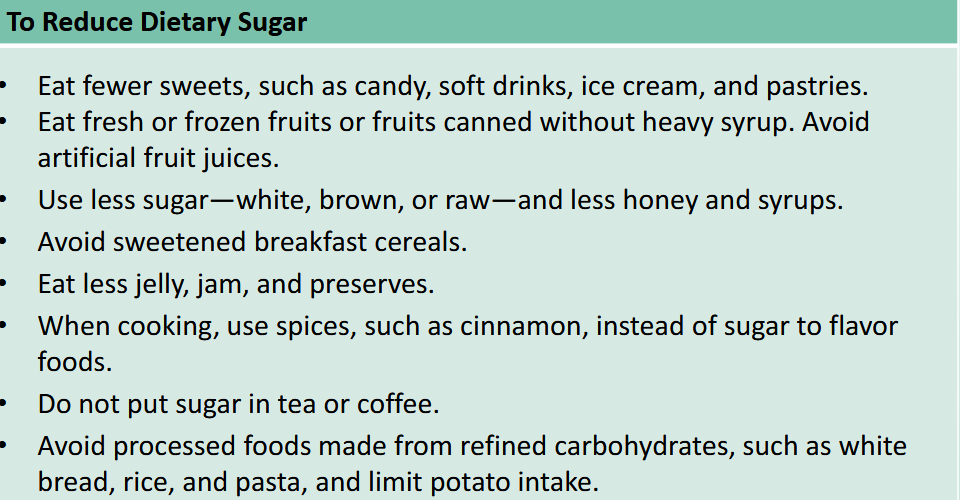
proteins
made of 20 different amino acids
complete proteins: contain all essential (8) amino acids, usually derived from animal sources
incomplete proteins: plant sources; need to combine them to get all essential amino acids
lipids
include fats, oils, cholesterol

saturated fats
usually of animal origin.
solid at room temperature
butter, fat in meat, coconut oil, and palm oil.
unsaturated fats
don’t promote cardiovascular disease.
usually liquid at room tempurature
corn oil and safflower oil are high in polyunsaturated fatty acids.
minerals
inorganic compounds
major minerals
needed at quantities greater than 100 mg per day; such as calcium, sodium
trace minerals
needed at quantities less than 100 mg per day; like iron
calcium
major mineral needed for the construction of bones and teeth
also necessary for nerve conduction, muscle contraction, and blood clotting
sodium
plays an important role in the movement of materials across the plasma membrane
plays a major role in regulating the body’s water balance
helps conduct nerve impulses

vitamins
organic compounds used for metabolism
often parts of coenzymes
fat soluble: A, D, E, K
water soluble: B complex, C

antioxidants
decrease the rate of oxidation or transfer of electrons
cellular metabolism generates free radicals, which damage cells and tissues
most common free radicals in cells are superoxide (O²⁻) and hydroxide (OH⁻)
vitamin C, E, and A are considered antioxidants because they defend the body against free radicals
common in fruits and vegetables
basal metabolism
the number of calories a body burns at rest to maintain normal body functions