psych exam 3
 Call Kai
 Learn
 Practice Test
 Spaced Repetition
 Match
 Flashcards
 Knowt Play
1/88

There's no tags or description
Looks like no tags are added yet.
89 Terms
learning
relatively permanent change in behavior/mental process resulting from practice/experience
Classical/Pavlovian conditioning
Operant conditioning
Observational learning
classical conditioning (pavlovian conditioning)
Learning process where to stimuli become associated + caused change in behavior; ivan pavlov’s dogs
unconditioned stimulus
unconditioned response
conditioned stimulus
conditioned response
conditioned response
learned response to conditioned stimulus (ex: salivating to sound of the bell)
conditioned stimulus
neutral stimulus (ex: bell ringing)
unconditioned response
natural response to stimulus (ex: salivating at food)
unconditioned stimulus
meaningful stimulus (ex: food)
acquisition
the learning of a new stimulus
extinction
the gradual disappearance of a learned stimulus
spontaneous recovery
when conditioned response that used to be extinct comes back again
stimulus generalization gradient
a stimulus most similar to the original stimulus —> bigger similar conditioned response
a stimulus most different from the original stimulus —> smaller similar conditioned response
stimulus generalization
stimuli similar to the conditioned stimulus will elicit the same conditioned response to a certain degree
innate
reflexive responses to stimuli
learned fear
feeling of fear from stimulus
phobia
irrational, extreme fears
can get rid of fear by: extinction training, systematic desensitization, flooding
systematic desensitization
slowly introducing what you’re scared of (exposure therapy)
flooding
sudden/ big exposure to phobia
taste aversion learning
learning to dislike food from bad experience w/ it
distinct flavor + sickness —> doesn’t like/ want food
taste acquisition
learning to like food bc of how it makes you feel
operant conditioning (instrumental conditioning)
Learning process in which behavior becomes associated with consequence
consequence influences the probability of behavior occurring again —> law of effect
discovered by Edward L. Thorndike, further defined by B.F. Skinner
positive and negative reinforcement
positive and negative punishment
law of effect
if behavior is followed by a pleasurable consequence, it will tend to be repeated; unpleasant consequence = not repeated
reinforcement
response is followed by a pleasant consequence —> more likely to be repeated
positive reinforcement
negative reinforcement
negative reinforcement
remove/ escape something bad (ex: holds railing on stairs so you don’t fall)
positive reinforcement
get something good (ex: gets $20 when scores well on test)
punishment
Response is followed by unpleasant consequence —> less likely to be repeated
positive punishment
negative punishment
negative punishment
remove something good (ex: no watching tv until grades go up)
positive punishment
get something bad (ex: getting speeding ticket)
shaping
rewarding portions of behavior in bits/ over and over until goal behavior has been mastered
continuous reinforcement
reinforcement occurs after every target response
partial reinforcement
reinforcement happens sometimes after target response
fixed ratio
fixed interval
variable ratio
variable interval
fixed ratio
set number of times you must make the response before your reinforced
predictable, actually has to do behavior to get reward
fixed interval
set amount of time that must pass before you can make the response and get reinforced
variable ratio
amount of times you must make the response before you reinforced varies each time
variable interval
amount of time that passes before you get reinforced varies each time
partial reinforcement extinction effect
a behavior that has been reinforced only intermittently (partial reinforcement) takes much longer to extinguish compared to a continuous reinforced behavior
instinctive drift
the tendency to stop performing a learned, conditioned behavior and instead revert to an innate, species-specific behavior, even when doing so interferes with rewards
observational learning
acquiring knowledge, skills, rules, strategies, beliefs, attitudes by watching others
Attention
Retention/ memory
imitation
Reinforcement/motivation
Albert Bandura’s Bobo Doll Experiment
One group of kids saw a woman beating up Bobo doll in video
Other group of kids did not see video of woman beating up bubble doll
Kids who saw the video = beats up Bobo doll
Memory
retention of information/ experiences overtime
Encoding
Storage
Retrieval
encoding
Taking info in through the 5 senses + translating it into a form that your brain can retain it
Selective attention + Cocktail party effect
shallow processing: physical features were analyzed
Intermediate processing: recognition and labeling, but not understanding what it meant
Deep processing: meaningful characteristics were processed
Elaboration
Mental imagery
cocktail party effect
Stimuli compete for your attention, but brain is still aware of surrounding stimuli that could get your attention
selective attention
focusing on a specific stimulus while ignoring others
elaboration
“web” of connections, associations, relevant meanings given to stimulus
mental imagery
creating a mental story such seen around stimuli we want to remember
Dual code hypothesis
dual code hypothesis
Memory stored in verbal code + picture code —> helps create mental image
storage
how info is retained overtime and represented in memory
Sensory memory
Short-term memory
Long-term memory
atkinson-shiffrin/ box model
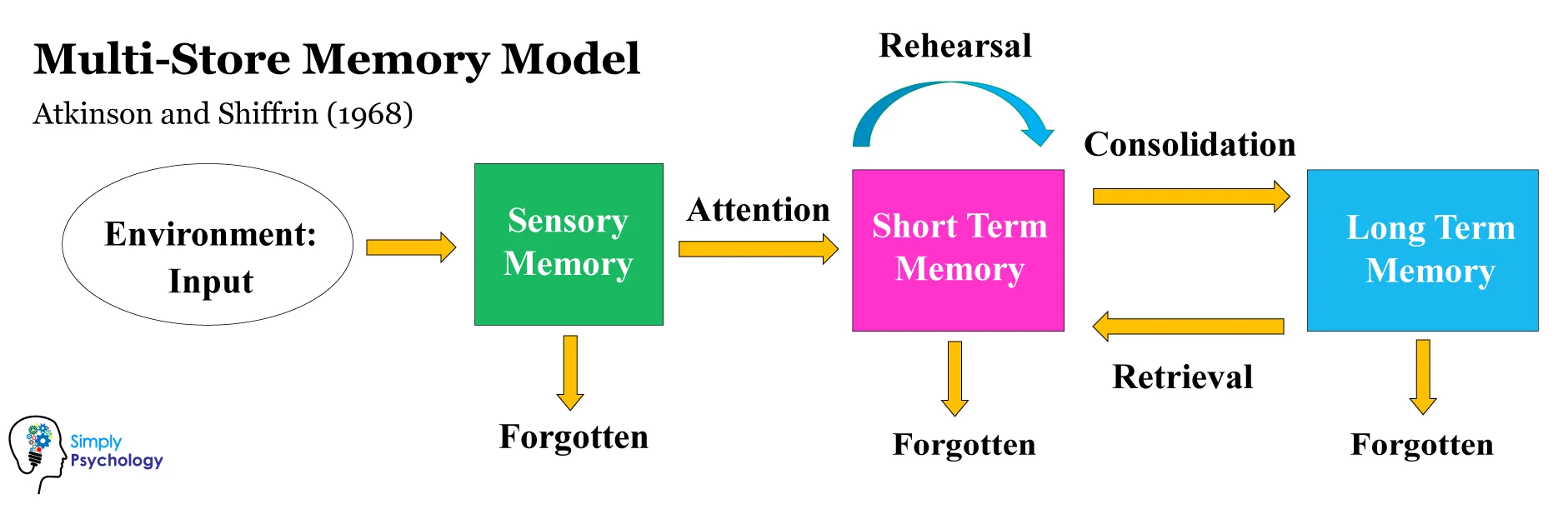
retrieval
process of bringing info out of long-term storage and into conscious awareness
sensory memory
hold info in your mind for a brief moment at subconscious level
Echoic sensory memory: auditory sensory memory, last several seconds
Iconic sensory memory: visual sensory memory, last quarters of a second
short term memory
Limited capacity memory system which stores info for about 30 seconds without effort; working memory
can remember 7 +/- 2 chunks of information
12 – 30 seconds without maintenance rehearsal
can be forgotten bc of distractions during 30 secs
long term memory
can store unlimited amounts of information for a long time
Declarative/explicit memory
Episodic memory
semantic memory
Nondeclarative/implicit memory
declarative/ explicit memory
obvious, very clear details of memory; hippocampus
episodic memory
memory of events in your life/experiences
nondeclarative memory/ implicit memory
implied, hidden memories, not aware that we learned something, but body remembers, classically conditioned responses, skills/procedures; cerebellum
semantic memory
memory about the world/general common knowledge
retrieval cues
labels in long-term memory that help retrieve the info for later
the more cues there are the easier the info is to remember
context specific memory
recalling info better if context is the same as when the info was learned
Context shift affect: changes context —> can't remember as accurately
serial position effect
Primary effect: remembering the beginning of lists through lots of rehearsals and attention
Recency effect: remembering last portions of lists bc most recent and in the short-term memory
flashbulb memories
vivid memories for highly significant, traumatic, emotional experiences/events
Why: amygdala is next to hippocampus and they work together —> can remember better with emotional connection to memory
forgetting
not being able to retrieve information from long-term memory
Interference
Proactive interference: old info interferes with new info
Retroactive interference: new info interferes with old info
false memories: in accuracy/distortions of our reconstructed memories that occur overtime; can become more inaccurate by newly presented info
anmesia
partial or total loss of long-term memory info that affects explicit memories (events + personal experiences)
retrograde amnesia
anterograde amnesia
infantile amnesia
retrograde amnesia
Can't remember past memories before injury
anterograde amnesia
Can't remember new memory information after injury
infantile amnesia
no early memories before age 3
cognition
mental activity that goes in brain when processing, organizing, understanding, communicating info
what do cognitive psychologists study
concept formation, problem solving, decision-making, language, reading, creativity, decision-making, motivation
Artificial (Formal) concepts
categories that have “strict rules” abt what belongs
if doesn’t fit criteria, then not accepted in mind
learned in school, science
Natural concepts
categories that have “general rules” abt what belongs
prototype: ideal version of object in mind
learned naturally as you grow up
problem solving
moving from given state (problem) to a goal state (solution)
algorithms
heuristics
insight
algorithms
step by step procedures that will always result in the solution
heuristics
educated guess, shortcut to solutions based on past knowledge/ experience (not always right)
insight
sudden solution pops into mind (AHA!! 💡 moment)
incubation
problems that require time to marinate in order to come up with a solution
barriers of problem solving
mental sets
functional fixedness
confirmation bias
mental set
approaching a problem using a strategy, model, or rule that has worked well in the past; inability to see a fresh perspective
functional fixedness
viewing objects as only for their intended function, not being able to view object for different function
confirmation bias
favoring evidence that supports our preconceived ideas
errors of decision making
availability heuristics
overconfidence
belief perseverance
framing
availability heuristic
making decisions on what is in your mind at the present moment, whatever comes to mind easiest
belief perseverance
clinging to a belief despite being presented with evidence that contradicts it
framing
how an issue is presented can change perception/ judgement/ decision of issue
intelligence
general capacity to benefit from experience, to acquire knowledge, and adapt to changes in the environment
hypothetical construct
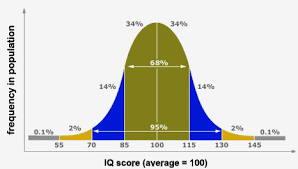
normal distribution of IQ
developmentally delayed: behavioral and cognition skills is at earlier developmental stage than others of same age
gifted: behavioral and cognition skills are more than 2 standard deviations above the mean (130 IQ)
Spearman theory of intelligence
g factor: general intelligence, ability to reason and problem solve
s factor: specific intelligence, special gift in particular area
sternberg theory of intelligence
triarchic theory of intelligence
analytic
creative
practical
analytic triarchic theory of intelligence
absorbs info by algorithms/ step by step procedures
creative triarchic theory of intelligence
absorbs info by art, music, divergent thinking
practical triarchic theory of intelligence
hands on learning
gardner theory of intelligence
9 different intelligence types
intelligence tests
started w/ Alfred Binet
stanford-binet —> wechsler IQ test
now has both a verbal score, performance (nonverbal) score, and IQ score
for adults AND children
intelligence quotient: mental age/ chronological age x100 = IQ