Gilded Age and Progressive Era Review
 Call Kai
 Learn
 Practice Test
 Spaced Repetition
 Match
 Flashcards
 Knowt Play
1/55

There's no tags or description
Looks like no tags are added yet.
56 Terms
Americanization
This process was designed to make immigrants more "Americanized". It included learning to dress, speak, and act like other Americans. This was done through the schools.

Assimilation
is the process by which a person or a group's language and/or culture come to resemble those of another group.

Andrew Carnegie
This man was the founder of the Carnegie Steel Company & promoted philanthropy among wealthy industrialists known as the Gospel of Wealth.

Big Business
During the Gilded Age, the economy saw a rise in this, often seen as more efficient but also as unfair competition.

Chinese Exclusion Act
This was the first (1882) to limit the immigration of a specific group.

Collective Bargaining
Negotiations between employees and employers regarding the conditions of employment. This can prevent strikes.
New Immigrants
This group of people who came to America were opposed by Nativists and attributed to urbanization. Mainly from South East Europe after 1880
Industrialization
New inventions led to the growth of industry in the United States. This in turn led to a move to urban centers (cities) where individuals often found themselves living in crowded conditions.

Labor Unions
These are formed in response to poor working conditions and low wages. (Ex: Knights of Labor, American Federation of Labor)

Laissez Faire
This theory refers to a lack of government interference in American business through regulations. It is known as a "Hands Off Approach"

Monopoly
total control of a type of industry by one person or one company

Nativist
a policy of favoring native inhabitants as opposed to immigrants.

Philanthropy
The practice of giving money to help make life better for others. This was practiced by Captains of Industry during the Gilded Age.

Rural
Americans move from this to the urban areas because of increased job opportunities in the cities.
Standard of Living
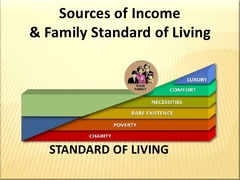
The new technological innovations in both transportation and communication saw an improvement of material comfort available to a person or community.
Urban
This term has to do with cities.

Urbanization
This is caused by the increase of immigrants and individuals locating to the cities & can lead to overcrowding, tenements, poor sanitation).

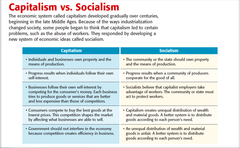
Capitalism
Economic system based on private ownership of means of production

Reform
make changes in (something, typically a social, political, or economic institution or practice) in order to improve it

Socialism
economic theory of social organization that advocates that the means of production, distribution, and exchange should be owned or regulated by the community as a whole
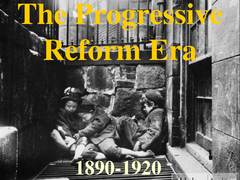
Progressive Movement
an early 20th century reform movement seeking to return control of the government to the people, to restore economic opportunities, and to correct injustices in American life
16th Amendment
Established a federal income tax

17th Amendment
1913, provides for the direct election of US senators by the people rather than by state legislatures.

Prohibition
the banning of the manufacture, sale, and possession of alcoholic beverages.
The 18th amendment made prohibition the law. The 21st amendment ended prohibition.

19th Amendment
Gave women the rights to vote

Pure Food and Drug Act & Meat Inspection Act
Halted the sale of contaminated food and drugs and to ensure truth in labeling.
-established strict cleanliness requirements for meat-packers and created a federal meat-inspection program.

W.E.B. DuBois
Co-founded the NAACP to help secure legal equality for minority citizens. Spoke out against lynchings

Cornelius Vanderbilt
A railroad owner who built a railway connecting Chicago and New York. He popularized the use of steel rails in his railroad, which made railroads safer and more economical.

Alexander Graham Bell
Invented the telephone

Thomas Edison
American inventor best known for inventing the electric light bulb, acoustic recording on wax cylinders, and motion pictures.
John D. Rockefeller
Established the Standard Oil Company, the greatest, wisest, and meanest monopoly known in history

Theodore Roosevelt
26th president, known for: conservationism, trust-busting, Hepburn Act, safe food regulations, "Square Deal," Panama Canal, Great White Fleet, Nobel Peace Prize for negotiation of peace in Russo-Japanese War

Upton Sinclair
muckraker who shocked the nation when he published The Jungle, a novel that revealed gruesome details about the meat packing industry in Chicago. The book was fiction but based on the things Sinclair had seen.

American Federation of Labor
1886; founded by Samuel Gompers; sought better wages, hrs, working conditions; skilled laborers, arose out of dissatisfaction with the Knights of Labor, rejected socialist and communist ideas, non-violent.
Knights of Labor
Led by Terence V. Powderly; open-membership policy extending to unskilled, semiskilled, women, African-Americans, immigrants; goal was to create a cooperative society between in which labors owned the industries in which they worked
Pullman Strike
in Chicago, Pullman cut wages but refused to lower rents in the "company town", Eugene Debs had American Railway Union refuse to use Pullman cars, Debs thrown in jail after being sued, strike achieved nothing

Homestead Strike
1892 steelworker strike near Pittsburgh against the Carnegie Steel Company. Ten workers were killed in a riot when "scab" labor was brought in to force an end to the strike.

Haymarket Affair
1886 incident that made unions, particularly the Knights of Labor, look violent because a bomb exploded during a protest of striking workers.

Old Immigrants
immigrants who had come to the US before the 1880s from Britain, Germany, Ireland, and Scandenavia, or Northern Europe
Tenement
A building in which several families rent rooms or apartments, often with little sanitation or safety
Capitalism
an economic and political system in which a country's trade and industry are controlled by private owners for profit, rather than by the state.
Communism
a form of government where there is no private ownership, everyone is equal, often run by a totalitarian leader.
Helen Hunt Jackson
A writer. Author of the 1881 book A Century of Dishonor. The book exposed the U.S. governments many broken promises to the Native Americans. For example the government wanted Native Americans to assimilate, i.e. give up their beliefs and ways of life, that way to become part of the white culture.
Progressive demands
1-government involvement in social issues
2-more power to the people
3-woman voting
4-end child labor
5-government regulation of business
Ida Tarbell
Leading muckraking journalist whose articles documented the Standard Oil Company's abuse of power
John Spargo
Wrote, The Bitter Cry of the Children in 1906 which was about abuses of child labor.
Jacob Riis
Early 1900's muckraker who exposed social and political evils in the U.S. with his novel "How The Other Half Lives"; exposed the poor conditions of the poor tenements in NYC and Hell's Kitchen
Lincoln Steffens
Early muckraker who exposed the political corruption in many American cities
Teddy Roosevelt
Twenty-sixth president of the United States; he focused his efforts on trust busting of corporations, environment conservation, and consumer protections .
Northern Securities Case
Roosevelt's legal attack on the Northern Securities Company, which was a railroad holding company owned by James Hill and J.P. Morgan. In the end, the company was "trust-busted" and paved the way for future trust-busts of bad trusts.
Wobblies (Industrial Workers of the World)
union which developed to protect the needs of unskilled labor and was ok to use violence if necessary.
Coal Strike of 1902
1902 T. Roosevelt set the precedent by settling this strike using arbitration - 1st time government took the side of the worker over management.
2nd Industrial revolution (ROSE)
RR - Oil - Steel - Electricity
Rockefeller
Captain of industry that created a monopoly in oil refineries
Significance of the year 1890?
end of the frontier and Native American lifestyle as they had known it.
Dawes Severalty Act
The act passed with the intent to assimilate Native Americans into mainstream of American life by dissolving tribes as legal entities and eliminating tribal ownership of land.