MT T FL CC2 ALL QUIZ (copy)
 Call Kai
 Learn
 Practice Test
 Spaced Repetition
 Match
 Flashcards
 Knowt Play
1/1583

There's no tags or description
Looks like no tags are added yet.
1584 Terms
Apoenzyme
The protein part of an enzyme without the coenzyme
Activator
An effector molecule that increases the catalytic activity of an enzyme when it binds to a specific site
Inhibitor
substance that diminishes the rate of a chemical reaction
Catalytic Activity
property of a catalyst that is measured by the catalyzed rate of conversion of a specified chemical reaction produced in a specified assay system
Coenzyme
LMW diffusible, heat-stable substance, when combined with an inactive protein (apoenzyme), forms an active and complete enzyme (holoenzyme)
Apoenzyme
inactive protein
Holoenzyme
active and complete enzyme
Enzyme
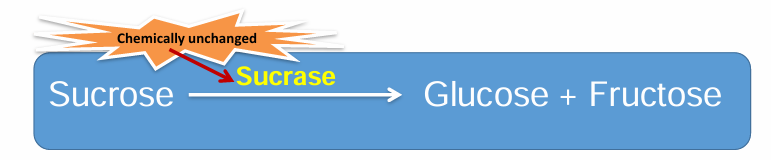
A protein molecule that catalyzes chemical reactions without itself being destroyed, altered, consumed
Enzyme
specific for a substrate that it converts to a defined product
Enzyme
Large molecules normally confined within cells unless increased membrane permeability allows them to enter the blood
Enzyme
appear in serum after cellular injury and cell degradation
normally confined within cells
Enzyme
Large molecules — unless increased membrane permeability allows them to enter the blood
cellular injury and cell degradation
Enzyme
appear in serum after — and —
Isoenzyme
group of related enzymes catalyzing the reaction but having different molecular structures same and physical, biochemical, and immunological properties .
International Unit
amount of enzyme that catalyzes the conversion of one micromole of substrate per minute under the specified conditions of the assay method
one micromole of substrate per minute
International Unit: amount of enzyme that catalyzes the conversion of — under the specified conditions of the assay method
Substrate
A reactant in a catalyzed reaction
Product
substance produced by the enzyme catalyzed conversion of a substrate
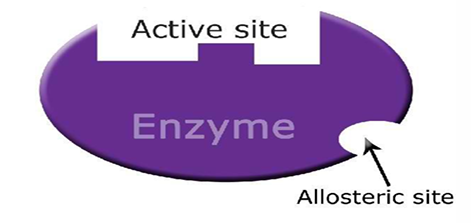
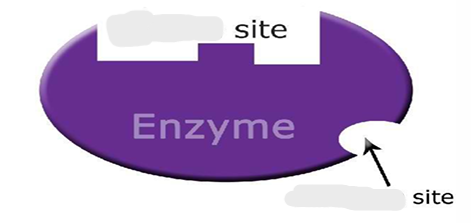
ACTIVE SITE
ALLOSTERIC SITE
General Properties of Enzymes
Each enzyme contains
ACTIVE SITE
General Properties of Enzymes
water-free cavity
ACTIVE SITE
General Properties of Enzymes
specific portion of enzyme that binds on the substrate
ALLOSTERIC SITE
General Properties of Enzymes
a cavity other than the active site which may bind with molecules .
Emil Fisher’s/ Lock & Key Theory
Enzyme Theories
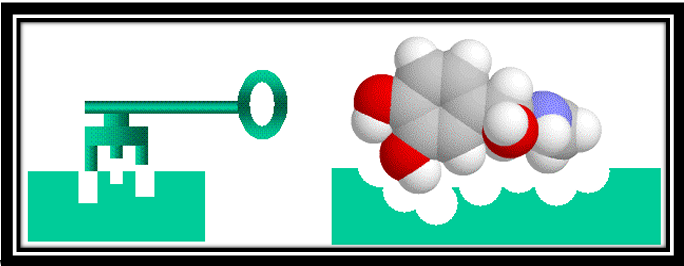
Enzyme have a rigid active site
Emil Fisher’s/ Lock & Key Theory
Enzyme Theories
The shape of the substrate must fit into the lock (enzyme)
Emil Fisher’s/ Lock & Key Theory
Enzyme Theories
Kochland/ Induced Fit Theory
Enzyme Theories
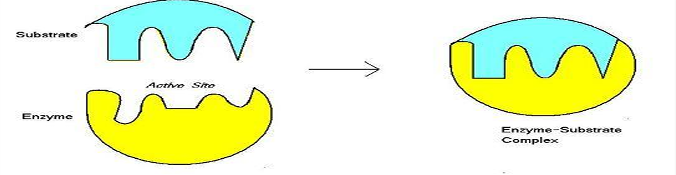
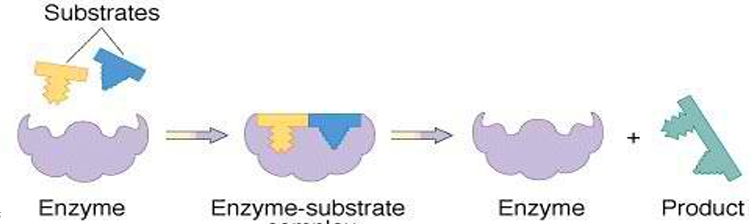
Enzyme has a flexible active site
Kochland/ Induced Fit Theory
Enzyme Theories
Based on the substrate binding to the active site of the enzyme
Kochland/ Induced Fit Theory
Enzyme Theories
Kochland/ Induced Fit Theory
Enzyme Theories

Emil Fisher’s/ Lock & Key Theory Model
Enzyme Theories
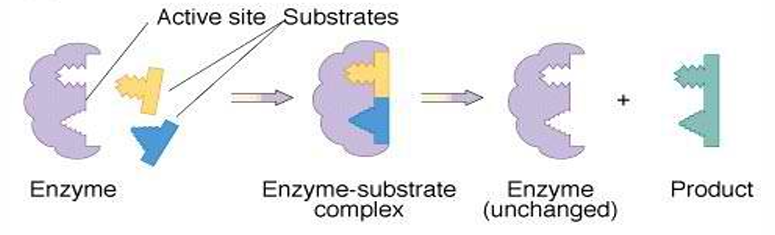
Kochland/ Induced Fit Theory Model
Enzyme Theories
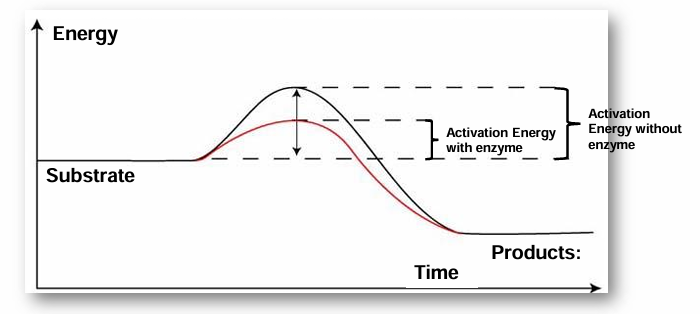
lowering activation energy
Enzyme Kinetics
Enzymes work by —
Activation energy
Enzyme Kinetics
the minimum energy input needed for a reaction to occur and convert the substrates into products.
Absolute specificity
Types of Specificity
combines with only one substrate and catalyzes only one reaction
Group specificity
Types of Specificity
combine with all the substrates in a chemical group
Bond specificity
Types of Specificity
react with specific chemical bonds
Stereoisomers
Types of Specificity
Isoenzyme/Isoforms
Michaelis Menten Kinetics
If the reaction reached the maximum velocity, no reaction will happen
Michaelis Menten Kinetics
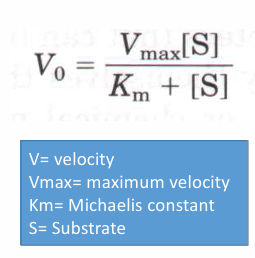

Michaelis Menten Kinetics


Michaelis Menten Kinetics

Zero-order reaction
Enzymatic Reaction Orders
reaction rate depends only on enzyme concentration
First-order reaction
Enzymatic Reaction Orders
reaction rate is directly proportional to the substrate concentration
Zero-order reaction

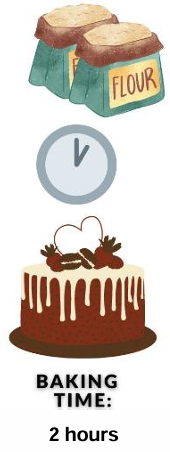
First-order reaction


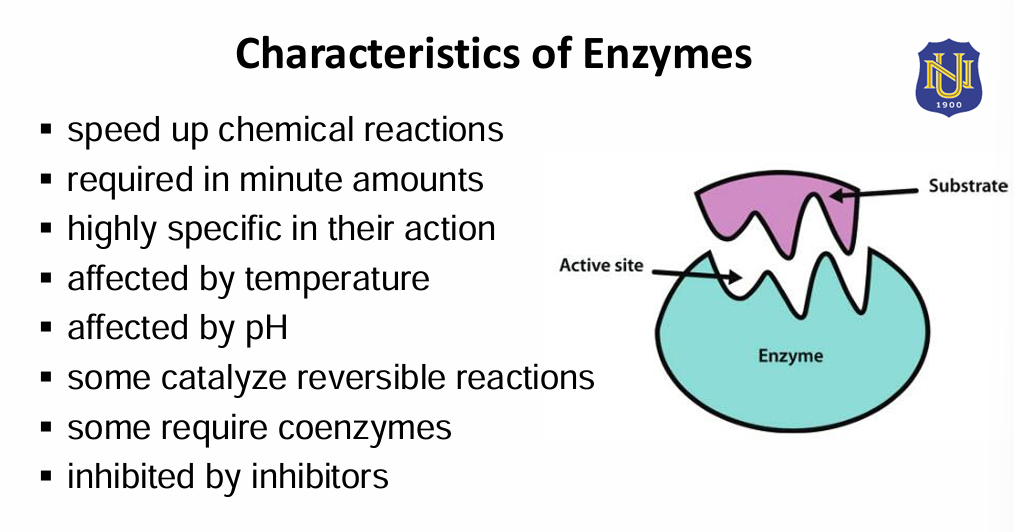
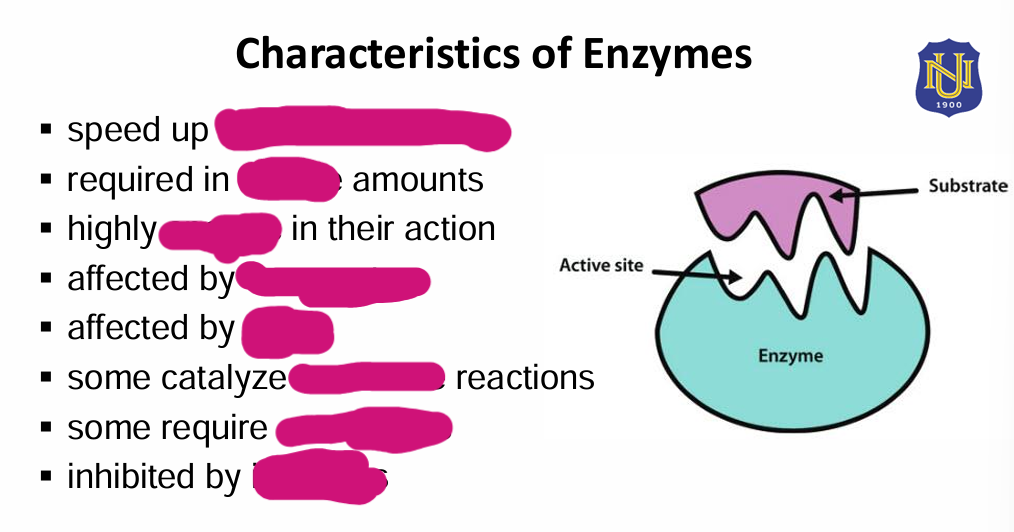
lowering the activation energy
Enzymes speed up chemical reactions by — needed to start the reaction
Enzymes speed up chemical reactions
remain chemically unchanged
Enzymes are required in minute amounts
They — after catalysing the reactions
enzyme molecules can be reused
small amount of enzyme
— over again
only a — is required to catalyze a large number of reactions
Enzymes are required in minute amounts
Enzymes are highly specific
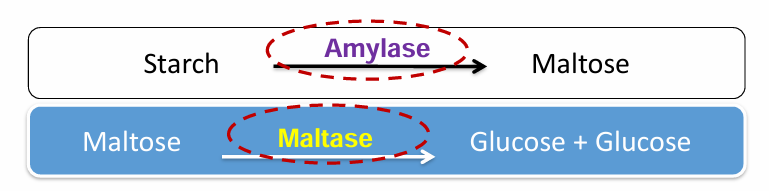
its own specific, unique enzyme
specific 3D configuration
Enzymes are highly specific
Each chemical reaction is catalysed by —
due to enzyme’s —
Active sites
depressions on the surface of enzyme molecules with specific shapes and specific charges
Every — has its own specific shape and charges
Active sites
formed due to the way the proteins are folded and held together by H-bonds
Active sites
It only allows substrates with a COMPLEMENTARY shape and charge to bind with it to form an Enzyme-Substrate Complex
COMPLEMENTARY shape and charge to bind
Active sites
It only allows substrates with a — with it to form an Enzyme-Substrate Complex
Enzyme-Substrate Complex
Active sites
It only allows substrates with a COMPLEMENTARY shape and charge to bind with it to form an —
enzyme-substrate complex
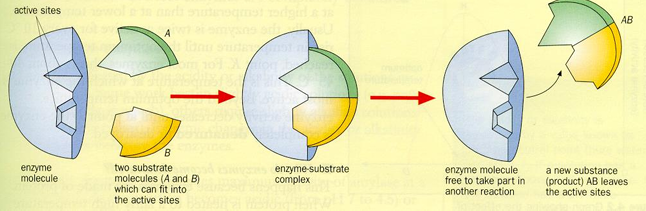
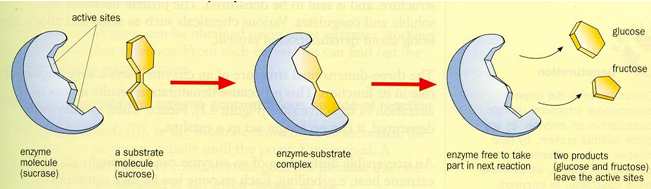
The — brings about the necessary reactions
product separates from the enzyme
The —, leaving the enzyme molecule unchanged and free to bind more substrate molecules
Anabolic Reaction - Synthesis
Catabolic Reaction - Hydrolysis
Enzymes are affected by temperature
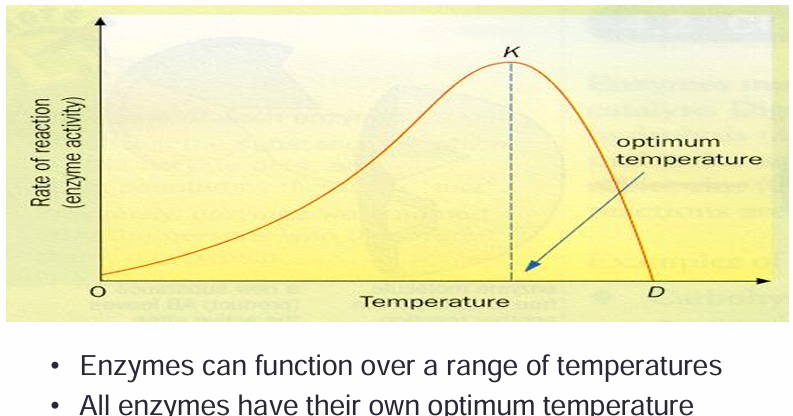
Optimum Temperature
the temperature at which the enzyme is most active, catalyzing the largest number of reactions per second
Optimum Temperature
most enzymes in the human body function best at about 37C
Optimum Temperature
Enzymes of thermophilic bacteria that live in hot springs will have very high —
Increase in temperature
How Temperature Affects Enzymatic Activity?
= increases the vibrations of the atoms in the enzymes
Increase in temperature
How Temperature Affects Enzymatic Activity?
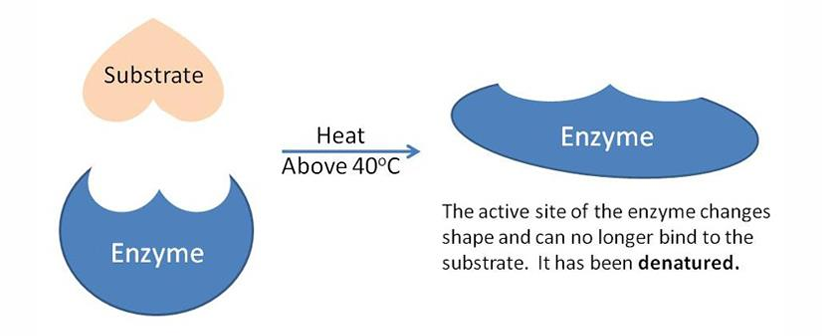
→ breaking of the hydrogen bonds that hold the 3D structure in place
shape and active site (Denaturation)
How Temperature Affects Enzymatic Activity?
The enzyme loses its —
decreases
How Temperature Affects Enzymatic Activity?
Beyond the OT = enzyme activity —
Denatured proteins
= looser, more random structure, and becomes insoluble
Denaturation
How Temperature Affects Enzymatic Activity?
65C
How Temperature Affects Enzymatic Activity?
Most enzymes are INACTIVATED at —
NOT usually
-20C
4C
How Temperature Affects Enzymatic Activity?
Low temperature or FREEZING does — destroy enzymes Except:
a. LD – Freezing at —
b. CK – Storing at —
acidity or alkalinity
Enzymes are affected by pH
Different enzymes have different optimum pH (M)
Enzymes are affected by the — of the solutions
Enzymes are affected by pH
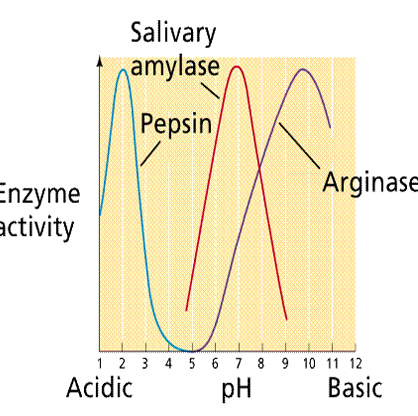
➢Renin and Pepsin (stomach)
Enzymes are affected by pH
Enzymes that work best at ACIDIC conditions
➢Intestinal Enzymes
Enzymes are affected by pH
Enzymes that work best at ALKALINE conditions
➢Amylase
Enzymes are affected by pH
Enzymes that work best at NEUTRAL conditions
reduces
Enzymes are affected by pH
At pH slightly above or below the optimum
Enzyme activity —when the conditions are slightly more acidic or alkaline than the optimum pH
At pH slightly above or below the optimum
Enzymes are affected by pH
reversible changes
restored by bringing the enzyme back to the optimum pH
DENATURED
Enzymes are affected by pH
At extreme pH conditions
Enzymes are —
At extreme pH conditions
Enzymes are affected by pH
change in the charges at the active sites → repels the substrate molecules
➢ irreversible alteration to the bonds that hold the shape of the enzyme
➢ loses its original 3D structure (active site loses its shape)
Some enzymes catalyze reversible reactions
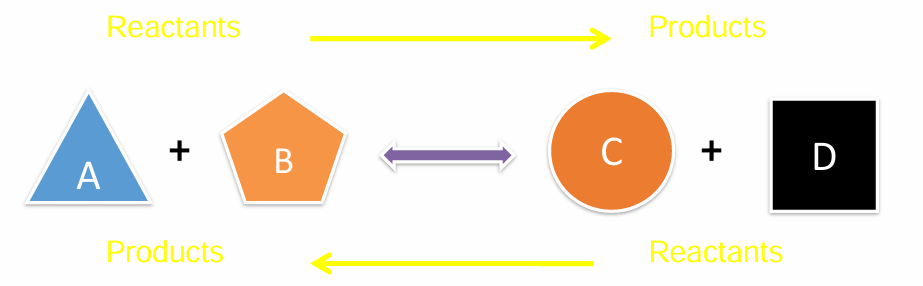
Some enzymes require co-enzymes
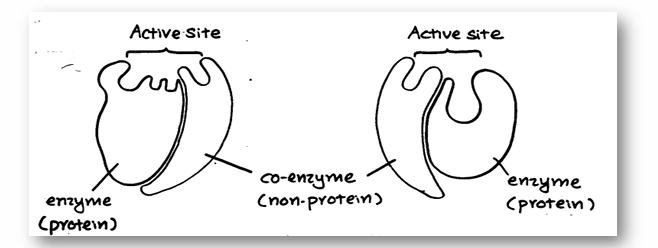
Coenzyme
Small, non-protein, organic “helper” molecules
Ex. NAD
Competitive
Enzymes require co-enzymes
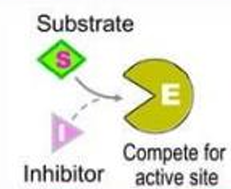
Non-competitive
Enzymes require co-enzymes
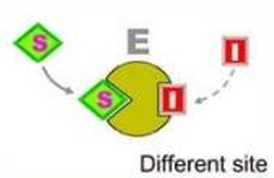
Uncompetitive
Enzymes require co-enzymes
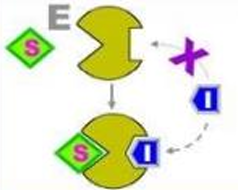
Competitive
Enzymes require co-enzymes
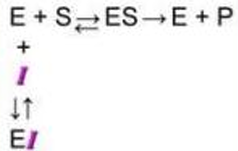
Non-competitive
Enzymes require co-enzymes
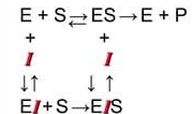
Uncompetitive
Enzymes require co-enzymes
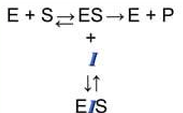
Competitive
Enzymes require co-enzymes
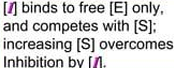
Non-competitive
Enzymes require co-enzymes
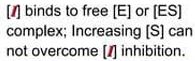
Uncompetitive
Enzymes require co-enzymes
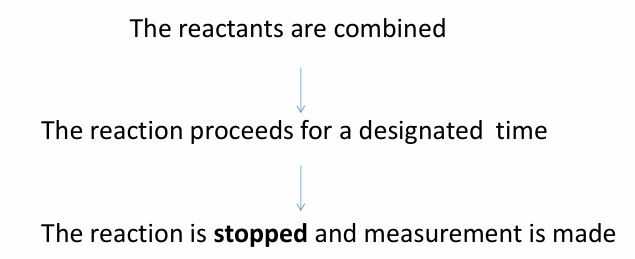
Fixed-time (End point Method)
General Methods in Measuring Enzymatic Reactions
Reaction takes place at a certain period
Fixed-time (End point Method)
General Methods in Measuring Enzymatic Reactions
Continuous monitoring (Kinetic Assay)
General Methods in Measuring Enzymatic Reactions
Measured absorbances at a certain period
Continuous monitoring (Kinetic Assay)
General Methods in Measuring Enzymatic Reactions
Multiple measurements of change in absorbance are made during the reaction