PHGY 170 mod1
 Call Kai
 Learn
 Practice Test
 Spaced Repetition
 Match
 Flashcards
 Knowt Play
1/69

There's no tags or description
Looks like no tags are added yet.
70 Terms
List 3 tenets of cell theory
all living organisms are made of 1 or more cells
all cells come from preexisting cells
cells are the basic unit of structure and organization in organisms
Compare prokaryotes and eukaryotes
Prokaryotes
no true nucleus or membrane bound organelles
smaller cell size (1-5 um)
unicellular
binary fission (cell division)
asexual reproduction
Eukaryotes
nucleus and membrane bound organelles
larger (10-30 um)
usually multicellular
mitosis/meiosis for cell division
sexual or asexual reproduction
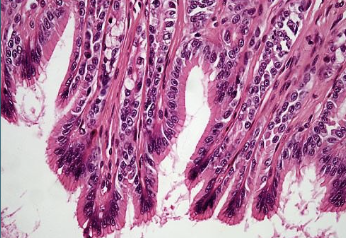
What cell type is this? describe
Epithelial cell
forms protective barrier in tissues
can specialize to absorb or secrete compounds
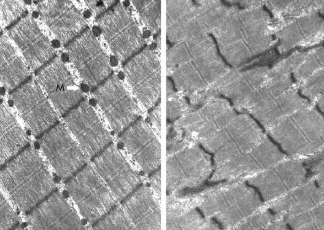
what cell type is this? describe
muscle
for movement
has special structures/proteins for movement

what cell type is this? describe
nerve cells
conducts electrical signals
controls muscle contraction and senses

What cell type is this? describe
connective tissue cells
creates extracellular material that holds cells together in tissue
can specialize to absorb or resist external forces
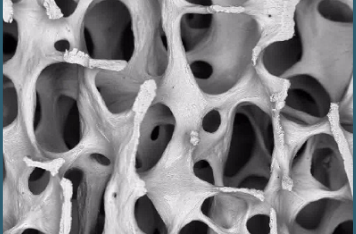
what cell type is this? describe
bone cells
includes osteoclast cells (that either degrade bone or create new bone)
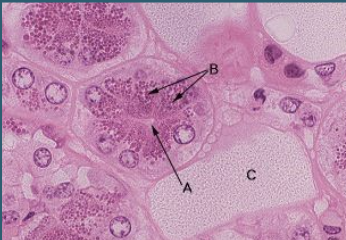
what cell type is this? describe
forms glands
secretes substances

what cell type is this? describe
adipose cells
stores fat in triglycerides
Are RBCs pro or eukaryotic?
Eukaryotic
they are just matured stem cells (but once had all organelles)
are formed from stem cells
Describe the 6 big organelles
plasma membrane
semipermeable phospholipid bilayer
regulates what enters/leaves the cell using proteins
contains all the cell’s organelles
“border control”
nucleus
protects DNA using structures (double membrane, nuclear pores, nucleoplasm)
mito
makes ATP
ER
carries molecules around the cell “highway”
makes lipids, proteins, stores ions “factory warehouse”
golgi
processes and packages proteins “post office”
endosomes, lysosomes, peroxisomes
1. for waste collection
starts sorting/breaking stuff down stuff that comes from out of cell
2. for recycling
breaks down proteins, lipids, nucleic acids
3. deals with haxardous waste like H2O2
2 properties of H2O that supports cells
polarity
since water is polar, its a good solvent
helps deliver nutrients, remove wastes
provides environment allowing movement of chemical messengers for cells
high specific heat capacity
allows for thermoregulation (H2O is a heat sink for chemical reactions, exchanges heat between liquid & air for warm blooded animals)
What molecule is the building block of life? why?
carbon
its flexibility in bond formation makes lots of important molecules
describe 4 of the building blocks of life
lipids
makes up oils/fats
usually hydrophobic, commonly amphipathic
made of hydrocarbon chains
ex. cholesterol (cell membrane fluidity, precursor for steroid hormones/bile acids/vitamins), phospholipids, triglycerides (body fat in animals for energy)
amino acids
makes up proteins/peptides
carbohydrates
monosaccharide: 1 carb molecule
disaccharide: 2 x monosaccharides + glycosidic bond
oligosaccharide: 3-10 monosaccharides (ex. raffinose)
polysaccharide: long & complex chains
nucleotides
phosphate group + sugar + N-base
Structure of AA
*Remember to mention what all the side groups are bonded to
Has amino group, central alpha carbon with R-group, and carboxylic acid group

What are R groups? List them
AA side chains, grouped into categories based on chemical properties?
hydrophobic AA
charged hydrophilic AA
polar AA
aromatic AA
What are hydrophobic AAs?
hydrophobic AA
nonpolar
either:
alipathic: has carbon chains which can be straight, branched, or non-aromatic rings
aromatic: has an aromatic ring w/double bonds like benzene
usually found in protein core or interacting with hydrophobic molecules in a membrane

what are charged hydrophilic AA?
either:
positively charged
negatively charged
charge is outside the protein, so can interact with water

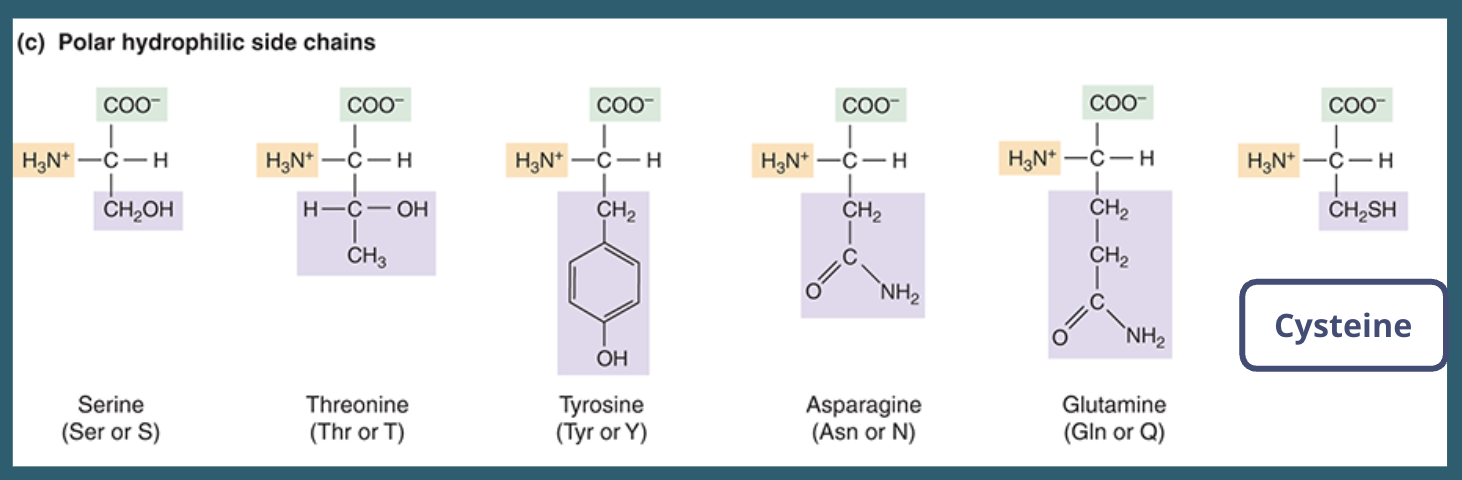
What are polar AA?
polar hydrophilic side chains can form H-bonds to stabilize proteins
usually on outside of protein
*note: cysteine has a thiol (has sulfur) which can form disulfide bond for 3D structure
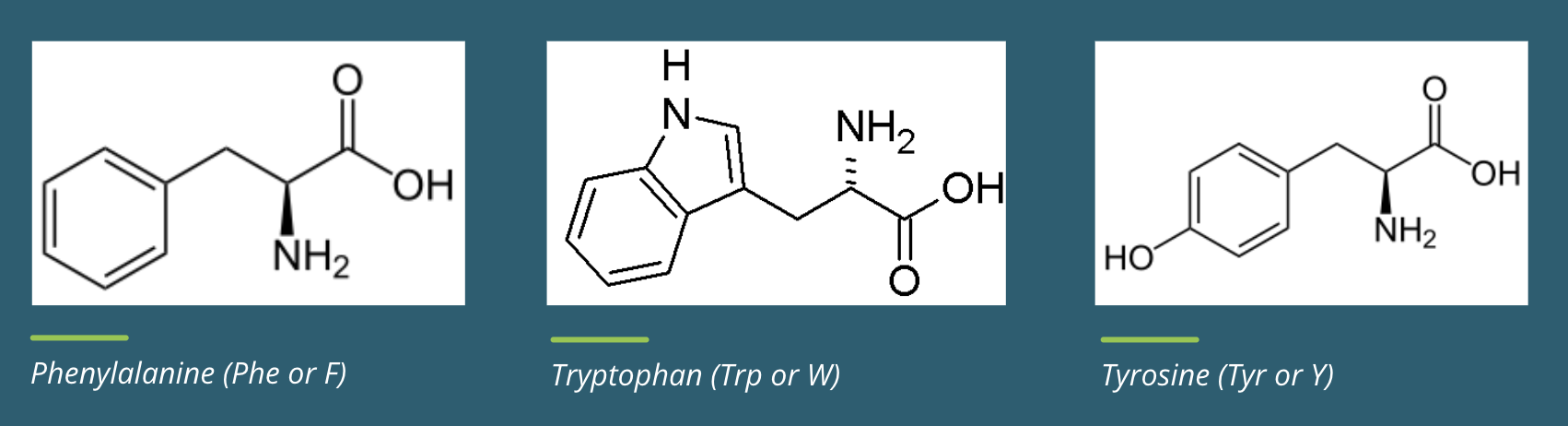
what are aromatic AA?
has ring and double bonds
very large
the gain/loss of these AA can cause protein deformations
define proteins
a chain of +20 AAs, folded into 3D structure
Where can you find a complete genome
in every body cell

describe nucleotide structure
phosphate group
usually, there are 1-3 phosphates atttached to 3’ C
are high energy bonds
are part of sugar phosphate backbone
5C sugar
5’ end attached to a phosphate group
a different nucleotide’s phosphate group attaches to 3’, to form a bond
Ribose has an extra O on the 2’ carbon
N-base
either pyrimidine (1 ring, C, T, U) or purine (2 ring, A, G)
How is a new nucleotide connected?
to 3’ end of existing strand
it will be connected to the other nucleotide using one phosphate
the 2 other phosphates are released as energy for bond formation

Why is DNA a double stranded helix?
since N-base is hydrophobic, and sugar-phosphate backbone is hydrophilic, when put in water (a cell), bases stack in center while backbone is outside
this forms a helix (to minimize base contact with water)
The most common form of DNA double helix is called…
B form
The 2 strands of DNA are sometimes called…
Watson —> 5’ to 3’
Crick —> 3’ to 5’
each turn of the DNA helix…
is around 10 bp
how is double helix DNA stabilized?
hydrogen bonds
the stacking of bases

what are pi-pi interactions
form when N-bases’ aromatic rings stack next to each other and share electron probabilities
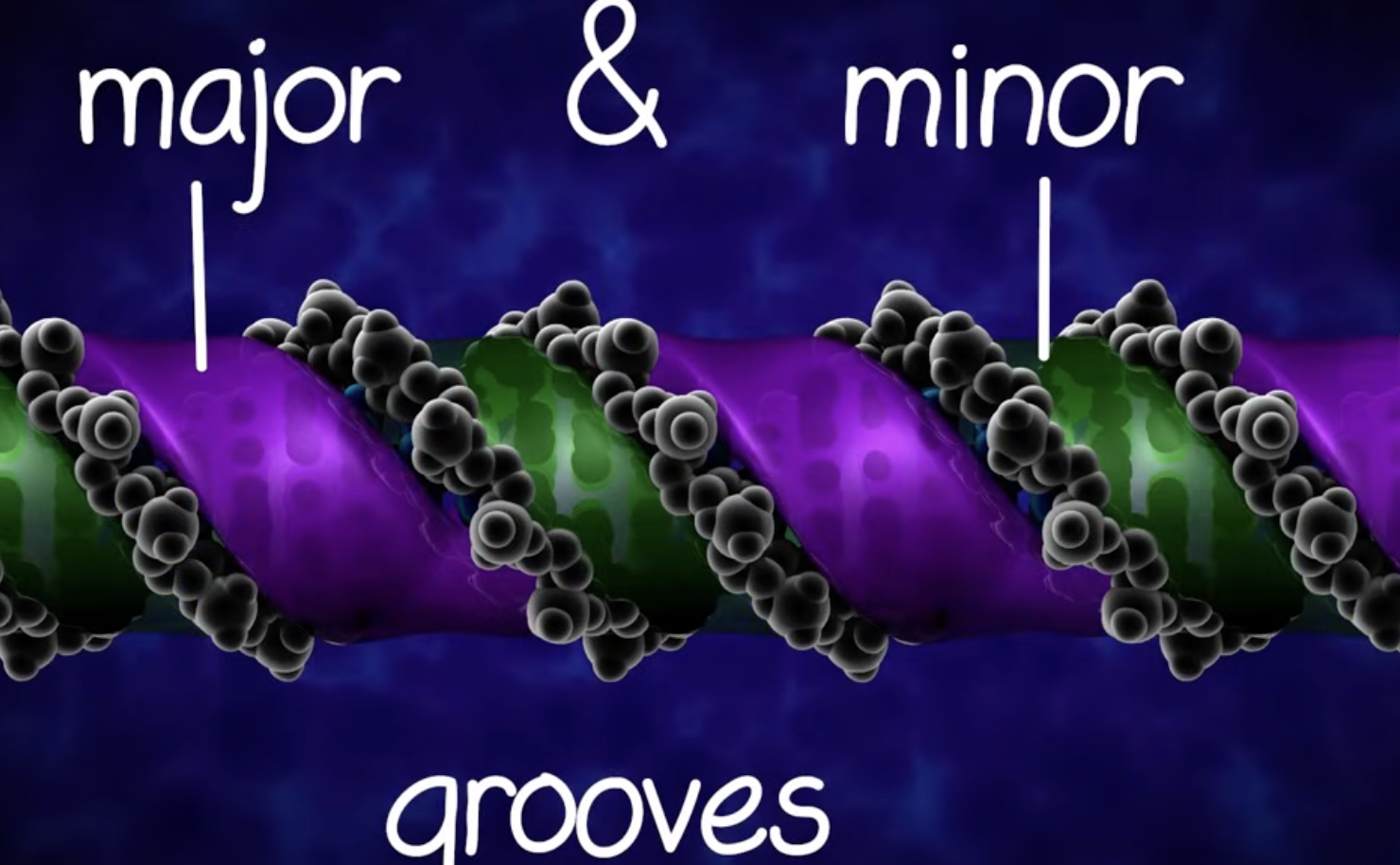
What are the major and minor grooves?
spaces in DNA that form due to DNA helix’s regularity
they are alternating
act as bp recognition and protein binding sites
major: has bp specific information
minor: is largely bp non-specific, due to patterns in H-bond acceptors and donors that proteins can interact with in the grooves
thus, DNA can be acted upon in sequence specific or nonspecific ways
allows proteins to position on DNA to carry tasks
How does RNA differ from DNA
uracil instead of thymine
ribose (has extra O on C2, making an OH group)
single strand (less stable)
3 types of RNA?
mRNA
carries instructions to make proteins
tRNA
carries brings AA for protein synthesis
rRNA
along with ribosomal proteins, makes up ribosomes to translate RNA
*there are other noncoding RNAs, like siRNA that degrades mRNA to stop gene expression
Ribosomes are…
ribozymes (a type of RNA that catalyzes reactions)
Define central dogma
a set of principles explaining how DNA contains instructions to make proteins and RNA
define gene
small pieces of DNA with specific instructions ot synthesize a fx product (usually protein) to do a job in the cell
Gene structure
has 3 different types of nucleotide sequences
introns
noncoding DNA
has info to make protein
exons
coding DNA
regulatory sequences
controls when a gene is used
*most of a gene isn’t even used to make a protein

What are the 3 stages (central dogma) to convert DNA to protein? what enzymes are involved
replication
DNA is copied before cell division so parent and daughter cells have full genome
uses DNA polymerase
transcription
part of DNA is copied into RNA to transport this info out of the nucleus for protein production
uses RNA polymerase
translation
RNA is translated from nucleotides into AA to make proteins
uses ribosome (enzyme)
Stages of DNA replication
initiation
elongation
termination
*DNA is semiconservative, so one parent strand DNA is the template for daughter strand
step 1 of DNA replication
initiation
dsDNA is split into single strands
happens at Orc (origin of replication) of DNA
1. DNA helicase and proteins bind to Orc
2. DNA helicase unwinds DNA, forming the replication fork and separating it into 2 strands
as helicase moves down DNA strand, so does the replication fork.
Requires energy
3. Now, each single strand is a template for synthesis of a new complementary strand
Primase adds RNA primers to the start of the strand —> enables DNA polymerase to work, since it needs several existing nucleotides at the start of the complementary strand to add new nucleotides

stage 2 in DNA replication
elongation
DNA polymerase elongates primers
2 principles:
Direction:
DNA polymerase adds nucleotides to the 3’ end
moves along parent strand 3’ to 5’
creates new strand 5’ to 3’
*DNa polymearse on parent strands move in opposite directions
Catalysis:
DNA polymerase catalyzes new phosphodiester bonds between incoming & existing nucleotides
also ensures new nucleotide is correct match
*to ensure final DNA doesn’t have RNA primers, an enzyme replaces it with DNA

what are leading and lagging strands? how does elongation differ?
a result of DNA polymerase only being able to move in 1 direction
refer to the new strands
leading
new strand made continuously
runs 3’ to 5’ on parent strand
moves same direction as replication fork
is built 5’ to 3’
can be elongated from 1 RNA primer
lagging
new strand made discontinuously
in Okazaki fragments (DNA fragments)
is built 5’ to 3’
DNA polymerase must always release and reattach as it moves away from replication fork
each time it reattaches, needs primase to make a new primer
How can damage be limited to a single stranded part of DNA? when does this occur?
SSBP (single stranded bining proteins) binds to lagging strand while not replicated
Occurs during synthesis of lagging strand

How are Okazaki fragments connected?
using ligase, which catalyzes phosphodiester bonds
seals gaps in DNA backbone
In detail, how does helicase/the replication fork work?
helicase binds to one strand at Orc
helicase binds to duplex DNA and unwinds it
this forms the start of replication fork


explain this more detailed diagram of DNA replication
lagging strand is looped
helicase is connected to 2 DNA polymerases —> which is held to DNA using a sliding clamp
as for lagging
DNA polymerase will continue synthesizing the strand until it reaches the primer from the previous okazaki fragment
what is step 3 in DNA replication
termination
Once all RNA primers removed, and replication fork reaches end of DNA molecule, there is a part a problem: there’s a part of DNA on the lagging strand that can’t be replicated
Since there’s not enough space for primase to add an RNA primer (thus DNA polymerase cannot work)
results in overhang (ss piece of uncopied DNA)
if left like this, there would be a small section of the parent/lagging strand DNA that is unreplicated and unpaired (3’ overhang)
Would be degraded as ss DNA is unstable
chromosomes would shrink
Solution to this:
telomeres

what are telomeres? how are they formed
long, noncoding sections of DNA added to ends of chromosomes
can be degraded without consequence
telomerase (an RNA dependent DNA polymerase)
adds telomeres
carries short RNA that binds to 3’ overhang and extends past DNA
the RNA it carries is a template to add a corresponding DNA strand to extend the parent strand
telomerase can make DNA using this RNA template
the 3’ overhang is now longer, with repetitive, non fx DNA
an RNA primer is added, and DNA polymerase works until there isn’t enough 3’ lead
chromosome lengthening
telomerase repeats this thousands of times to create long chromosome ends
now, DNA replication can recommence

what are the main proteins in transcription
RNA polymerase
actually synthesizes RNA from DNA
Has 3 types for eukaryotes:
RNA poly 1: synthesizes most rRNA for ribosomes
RNA poly 2: makes mRNA
RNA poly 3: synthesizes tRNA
transcription factors
def: a group of proteins that bind to specific DNA sequences to control rate of transcription from DNA to RNA
binds to the regulatory regions of a gene
signals which genes need to be expressed
can be an activator or repressor by altering RNA polymerase’s ability to start transcription
What is the first step of transcription
initiation
starts when transcription factors bind to a specific DNA sequence
which is found upstream (5’) to the gene, and is a regulatory region
This induces RNA pol II to bind to a gene’s DNA (promoter region)
Promoter region = the start site for transcription (TATA box) (5’ TA TAAA 3’)
The binding of transcription factors facilitates transcription by 3 mechanisms (creates a transcription complex):
1. Allows RNA pol II to be guided to correct DNA strand
2. unwind dsDNA enough for RNA pol II to access the gene being transcribed
3. activates RNA poly II by phosphorylating it twice
transcription begins
what is step 2 in transcription
elongation (the ovearll moving of the transcription complex forward)
as RNA pol II moves forward, it synthesizes mRNA by adding nucleotides to 3’ end of growing strand
as it continues, it extends mRNA in 5’ to 3’ while reading the DNA template strand
creates a transcription bubble, referring to the entire region of unwound DNA
its covered by the RNA pol II
protects the unwound ss DNA

what is step 3 for transcription
termination
it ends when RNA is cleaved from RNA pol II by an enzyme (past the gene’s coding sequence)
transcription bubble collapses
RNA pol II detaches from DNA
*RNA pol II does not have proofreading fx, so it makes several short RNA molecules until one has complementary H-bonds to match the template strand
not well understood in eukaryotes, since there are no defined methods to stop transcription
usually is induced by proteins binding to RNA pol II

List the 3 types of post-transcriptional RNA processing? whats the purpose
5’ methylguanosine cap
3’ polyadenylation
RNA splicing
occurs immediately after mRNA synthesis to preserve it, make it functional, and deliver it to the final location
(2 & 3 happen at the same time)
Purpose of post-transcriptional RNA processing
RNA is designed to be short lived but it still needs to last long enough
What is 5’ methylguanosine cap modification
occurs shortly after mRNA synthesis
helps initiate translation
protects mRNA from premature nuclease degradation
GTP is added to 5’ end of mRNA using 5’ to 5’ triphosphate linkage
methylation (CH3 added to guanosine base, 7. position of the GTP)

what is 3’ polyadenylation?
poly(A) polymerase adds ~200 nucleotides to 3’ end of mRNA after its cut from RNA pol II
creates a poly(A) tail (binds to proteins to transport mRNA out of nucleus, helps initiate translation)
what is RNA splicing?
removing introns (noncoding regions) from RNA, only leaving exons
performed by a protein/RNA complex called spliceosome
some genes use alternative splicing to create multiple mRNA from one gene, which can skip exons
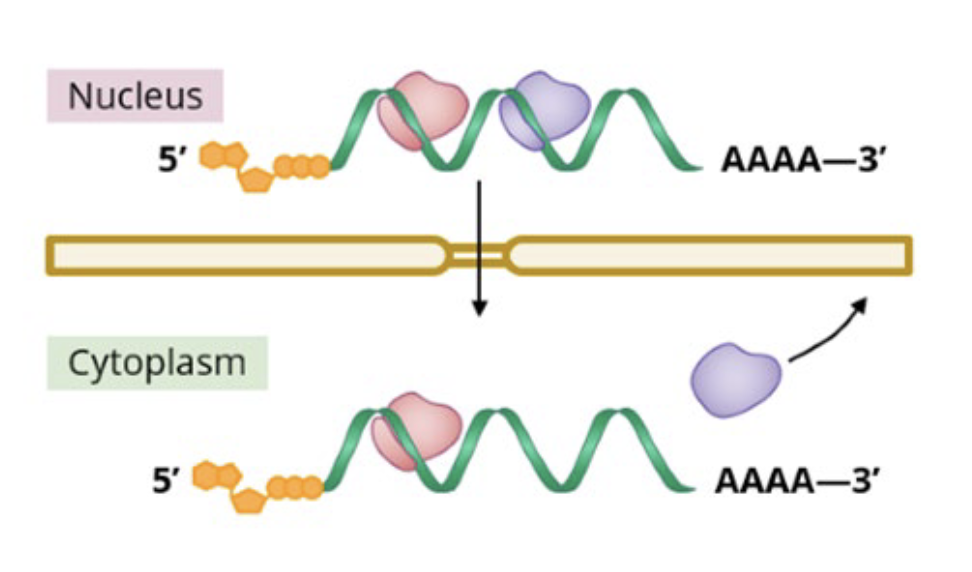
How is mRNA transported through nuclear pore complex
after post-transcriptional modifications, mRNA exists nucleus
protein complex binds to mRNA to do so, transporting out through a nuclear pore
some of these proteins will be recycled and transported back to nucleus, others help mRNA in trnalsation
What is an exception to central dogma?
viruses use RNA as genetic material
it uses RNA polymerase to make RNA, and RNA helicase (dsRNA)
list the 4 components to translation
mRNA
delivered from nucleus to cytoplasm
depending on the starting sequence it has, it either stays in cytoplasm or goes to ER
protein factors
transcription is initiated by initation factors that bind to mRNA (including the methyl-guanosine cap on 5’ end and polyA tail) which helps the small ribosomal subunit identify initiation site
EF (elongation factors) help elongate, so it can deliver tRNAs, GTP to ribosome
tRNA
delivers correct AA to peptide
contains anticodon which recognizes the codon
ribosome
large subunit: has 3 sites
small subunit: binds to mRNA

what is stage 1 of translation
Initiation (ribosome assembles around mRNA)
a) initiation factors help the small ribosomal subunit find AUG
first, it binds to mRNA, including 5’ cap binding factors, polyA binding protein (PABP), and another initiation factor binds to 3’ polyA tail
the small ribosomal subunit attaches to mRNA at 5’ end near methylguanosine cap, guided by initiation factors
then, attaches to initiator tRNA (carries methionine)
b) the small r subunit and i tRNA move until AUG is found
i tRNA binds to AUG
c) large ribosome subunit encloses mRNA
i tRNA is in P site
PABP falls off when translation begins

what is step 2 in translation
elongation
has multiple steps that moves as a loop, where each cycle adds 1 AA
needs GTP energy
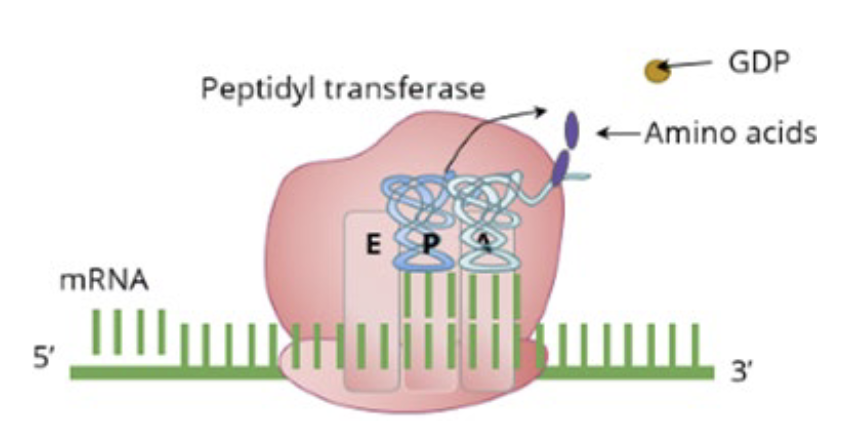
a) tRNA binding
aminoacyl tRNAs attach to A site, they carry GTP, and has an anticodon complementary to A site codon
b) peptide bond formation
GTP (on aminoacyl tRNA in A site) —> GDP
peptidyl transferase (enzyme in large r subunit) moves the peptide in P onto tRNA AA in A site
P site is where AA chain is removed from tRNA and added to next AA by a peptide bond in A site
c) translocation
ribosome translocate one codon down, moving mRNA and tRNA from A, P to P, E
also needs GTP
E site is where tRNA ejects
ribosome is ready for newly charged tRNA to enter A site
what is step 3 in translation
termination
stop codons are not connected to tRNA
they attract complementary release factors that fit on A site
These release factors have water instead of AA that attach to peptide on P site. Produces a -COOH and releases the peptide
after peptide releases, a ribosome release factor occupies A site
releases both ribosome subunits from mRNA to be recycled
2 times where DNA is repaired
during DNA replication
by DNA polymerase proofreading
throughout cell cycle
DNA repair proteins always scanning
If one N base is damaged…
use base excision repair
UV rays cause… while gamma/x rays cause…
nucleotides to stick together
severs DNA backbone
define mutation
any change in DNA that creates a variant that can be passed down to daughter cells
list 4 types of mutations
point
silent (no change)
missense (AA changes)
nonsense (a codon is replaced with a stop codon)
one nucleotide is changed
insertion
an extra or multiple bp is added
shifts the reading frame by one
results in frameshift mutation
deletion
1 or more bp is removed
also a frameshift
large scale deletion, insertion, recombination
involves entire chromosomes or parts of it
often lethal
What makes the genetic code useful in case of a mutation?
since AAs in a group have similar properties, even if a mutation occurs, it will have less impact on protein structure and function
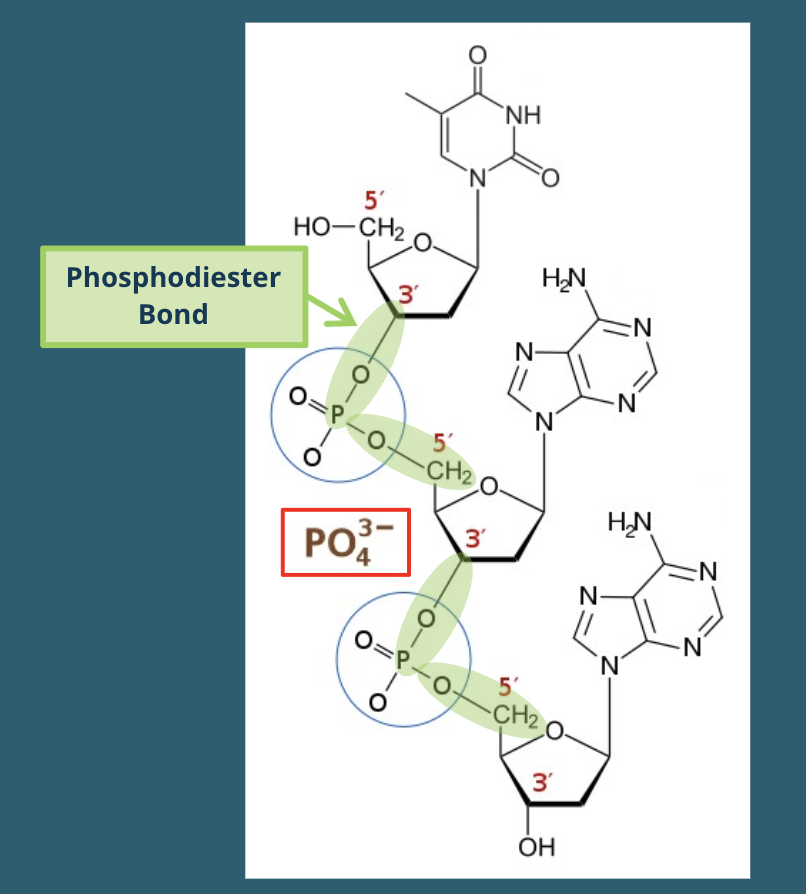
what is a phosphodiester bond?
in DNA, its a covalent bond joining a phosphate group to the 5’C of one sugar and the 3’C of another sugar
holds the sugar phosphate backbone together