Botany Exam 2
 Call Kai
 Learn
 Practice Test
 Spaced Repetition
 Match
 Flashcards
 Knowt Play
1/142

There's no tags or description
Looks like no tags are added yet.
143 Terms
standard deviation
the amount of variation or spread in the data
histogram
A graphical representation of the distribution of continuous data
normal distribution
the data is distributed symmetrically around a central mean, with no bias to the left or right
categorical/nominal variables
two or more categories with no intrinsic order
gender, leaf shape
ordinal variables
categories with an clear order (ranked) but no precise distance between categories
economic class, education class
Interval
categories with an order equally spaced values
income: 10k, 15k, 20k, 25k
qualatative variable
express a qualitative attribute (color, gender, type)
quantatative variable
measure as a number (height, age, weight)
discrete numerical variables
can only take on a finite number of values (shoe size, number of children) CAN COUNT THE VALUE
continuous numerical variables
can take on an infinite number of values (height, length)
null hypothesis
A prediction that there is no effect of the independent variable, no relationship between measured phenomena, or no association among groups
alternative hypothesis
A prediction that there is an effect of the independent variable, relationship between measured phenomena, or an association among groups
two-tailed hypothesis
a claim that there is a difference in the mean of the two samples, but make no claims about the direction of that difference.
one-tailed hypothesis
A one-tailed hypothesis is a claim that there is a difference in one direction in the mean of the two samples
hypothesis test choice diagram

t-test
Determine if two groups differ from each other on a single variable or if a single group varies around two variables
two sample t-test
no connection between the data, the samples are random and from normal populations with equal variance
paired t-test
there is a connection between the data, the difference between the pairs are normally distributed
t-value
what is produced at the end of a t-test, measure of the size of the difference between your samples relative to variation
the greater the t-value, the greater the evidence against the H0 is
ANOVA
analysis of variance, tells if there is a difference
H0: All variances are equal
H1: Not all variances are equal
one-way ANOVA
one categorical variable
Ex: Exam results based on income (low, med, high)
Height based on city of residence (Paris, New York, London, Toronto)
two-way ANOVA
two categorical variable, test for interaction
same assumptions, plus groups must have equal sample size
Ex: Do any of 5 fertilizers result in different growth in any of three varieties of corn
simple linear regression
Linear relationship between two continuous variables: one response (y) and one predictor (x).
Null Hypothesis: The independent variable (x) does not have an effect on the dependent variable (y).
Alternative Hypothesis: The independent variable (x) does have an effect on the dependent variable (y).
3 properties of water that make it unique
surface tension, adhesion and cohesion
cohesion
oxygen is negative and hydrogen is positive. Water sticks together and to other molecules
surface tension
downward pull of water molecules at the air-water interface, forms the meniscus
adhesion
water molecules adhere to the glass
water potential
the tendency of water to move to a new position
what is the water potential of pure water
0 MPa
describe how water moves based on potential
water will move from areas of high water potential to areas of low water potential
solute potential
tendency of water to move by osmosis in response to differences in solute concentration
pure water= 0 MPa (highest potential possible)
so anything with solute in it has a negative MPa
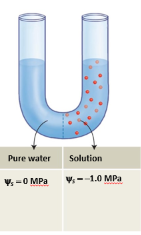
describe how water moves based on concentration
water will move from regions of low concentration solute to high concentrations of solute
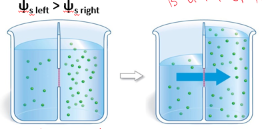
pressure potential
tendency of water to move due to physical pressure on the water
turgid cell
cells that are exerting enough turgor pressure to induce wall pressure
flaccid cell
cells that are not exerting enough turgor pressure to induce wall pressure
osmosis
water moves spontaneously from areas with less negative water potential (-0.3 MPa) to more negative water potential (-0.6 MPa)
apoplastic water movement
passage via cell walls, never crosses the membrane,
symplastic water movement
moving through the symplasm via the plasmodesmate
transcellular water movement
moving through the membranes
root pressure
minerals are absorbed at night and accumulate in vessels and tracheids, then because of the influx of solutes there is a decrease in water potential in the root and the water moves into the root, if the stomata are closed then the pressure will build up and force the water up the plant body
cohesion-tension theory
water is pulled up by transpiration and cohesion
transpiration
evaporation of water from the mesophyll cells surface. Water is pulled up from the roots to replace the water that is lost
xylem
dead at maturity, water moves through the pits and perforations in the cell wall
cohesion and adhesion in xylem
acts as a ladder and pulls the water up with it as it climbs, this is PASSIVE
cavitation
the expansion of air bubbles due to tension and it fills the space
happens because of injury or damage
halts water movement because it must move around it
embolism
gas-filled void in the vessel/tracheid, what gets left behind
halts water movement because it must move around it
torus
in conifers, can seal off the pit and prevent the spread of emboli
role of stomata
they will open when ion concentration increases inside of guard cells causing water to follow. Additionally, it increases the turgor pressure of the guard cells.
increases turgor pressure → opening of pore as guard cells bow apart
the two feedback loops
CO2 consumed during photosynthesis and protection against desiccation
CO2 consumed during photosynthesis
photosynthesis → decreased internal CO2
lowered internal CO2 starts the K+ pump into guard cells
K+ increase → stomata open because of turgor pressure
CO2 enters open stomate and diffuses to mesophyll cells
if photosynthesis drops → CO2 increases → stomata close

Protection against desiccation
desiccation (plant not getting enough water) → stimulates ABA synthesis in roots
ABA moves to guard cells
ABA → ions move out of guard cells
fewer ions → H2O diffuses out of guard cells → guard cells close because of lower turgor pressure

environmental factors affecting transpiration
atmospheric humidity: negative correlation
internal CO2 concentration: negative correlation
temperature: positive correlation
light intensity: positive correlation
wind: positive correlation
plant adaptations affecting transpiration
cuticle, trichomes, sunken stomata, and reduced surface area
C3 vs C4 vs CAM
C3: traditional photosynthesis
C4: more efficient photosynthesis
CAM: opens stomata at night
water use efficiency for xerophytes (dry environment plants)
1) endure drought: store water in special tissue
2) avoid drought: place roots deep into permanent water table
3) escape drought: grow only when water is available
CO2 level affects the number of stomata that plants produce
Number increases as atmospheric CO2 concentration falls
assimilate transport/ translocation
movement of substance in the phloem
moves bidirectionally
pressure flow model
how sucrose moves through the phloem
driving force is osmosis
assimilates move from sources (high pressure) to sinks (lower pressure) along a gradient of turgor pressure that developed osmotically
THIS IS ACTIVE
macronutrients
plants need in relatively large quantities: NPK
micronutrients
plants need in small quantities
nutrient uptake
proton pumps establish an electrochemical gradient
cations enter root hairs via channels
anions enter root hairs via cotransporters
ACTIVE PROCESS
passive exclusion
ions are excluded if no transporter is present
what happens when soils have too many nutrients
it has such a high mineral concentration that the water potential of the soil solution is extremely negative so the roots are unable to extract water from it
3 criteria for essentiality
the element must be necessary for complete, normal plant development through a full life cycle
a part of any molecule or constituent of the plant that is, itself, essential to the plant
the element must be acting within the plant, not outside of it
(3 main essential nutrients: C, H, O)
nutrient deficiency
common in nonnative species
signs:
chlorosis: the loss or reduced development of chlorophyll
accumulation of anthocyanin pigments: leaves become dark or purple
necrosis: leaf tips and margins die
immobile nutrients
remain in place after being incorporated into the plant tissue
boron, calcium, and iron
mobile nutrients
after they have been incorporated into a tissue, they can still be translocated to a younger tissue
chlorine, magnesium, nitrogen, potassium, and sulfur
mycorrhizae
mutualism between fungus and plant root to increase plant’s ability to uptake the essential elements, plants provide carbon to fungi
ectomycorrhizae
plant absorbs amino acids and phosphate ions and transfers sugars and complex carbon compounds to the hyphae (common in temperate areas)
arbuscular mycorrhizal fungi
hyphae grow into root cells and contact the plant cell plasma membrane (at least 80% of vascular plants enter into these relationships)
what enzyme converts nitrogen to its useful form
nitrogenase
what chemical attractant gets released if N is limited
flavenoids
then the rhizobia respond to this
lipochitinoligosaccharides
induce curling of the root hair
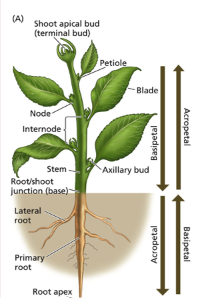
acropetal vs basipetal
acropetal goes from ground up and ground down
basipetal goes from shoot down and root up
hormones
organic chemicals produced in one part of the plant and transport to other parts of the plant where they initiate a response
6 major classes of hormones and their main function (on quiz)
auxin- Inhibits growth of lateral buds (maintains apical dominance)
gibberellins- Promotes stem elongation (mitigates dwarfism)
cytokins- Plays a role in the rapid response of roots to gravity
abscisic acid- Maintains developmental arrest (prevents premature seed germination)
ethylene- Promotes leaf abscission
brassinosteroids- Promotes normal growth and is not transported within plants
auxin active areas of synthesis
shoot tips, leaf primordia, embryos, young leaves
all are young growing tissue
polar movement
flowing only one way (auxin)
2 types of auxin
IAA and IAAH
polar transport steps
protonated IAAH moves in via diffusion
anion IAA moves in via active transport through influx carriers
IAAH disassociates due to higher pH in cytosol
only IAA can exit via efflux carriers
H+ are pumped out via proton pumps
what two things allow for polar transport
AUX1 and PIN protein distribution
PIN proteins
synthesized in the rough ER, have a short life
role of auxin
inhibits growth of lateral buds
cell elongation
cell division
apical dominance
vascular tissue differentiation
formation of adventitious roots
leaf senescence - delay
leaf and fruit abscission - delay
fruit setting and growth - promotes
Fruit ripening – delays
Flowering in Bromeliads
Growth of flower parts
Promotes femaleness in dioecious flowers
acid growth hypothesis
when elongating, a plant cell must deal with the wall which is currently preventing stretching
wall must be strong enough to counter turgor pressure yet flexible enough to allow growth
lower pH = greater extensibility (ability to stretch)
auxin lowers pH
IAA → lower pH → growth
apical dominance
auxin inhibits development of axillary buds
steps of abscission
1) actively growing leaves/fruits produce auxin, which is transported to the stem
2) environmental stimulus → decreased production of IAA
3) signal → cells in abscission zone to produce ethylene
4) cellulase and pectinase are enzymes that will disrupt connection to cells adjacent to abscission zone
5) cells separate, abscission occurs
where are gibberellins synthesized
immature seeds, shoot/root apices, and young leaves
they transport in all directions (not polar)
gibberellins function
stem growth: elongation and cell division
seed germination
promote phase change
bolting and flowering in biennial plants
fruit setting and growth
induction of maleness
green revolution
used gibberellins for a temporary solution to not having enough food for the increasing population
Norman Borlaug
incorporate dwarfing genes to get varieties of rice and wheat
3 phase changes in plant development
juvenile phase
adult vegetative phase
adult reproductive phase
phyllodes
adult leaves, flattened petioles that function as blades
rejuvination
reversion to juvenility (not ideal)
sex determination
affected the ethylene / GA ratio
cucumber: ethylene → stimulates female flowers;
gibberellins → male flowers
seed germination steps
GAs synthesized in embryo and released into the endosperm
GAs diffuse into aleuron layer
aleruon cells induced to secrete hydrolytic enzymes
effects of cytokins
cellular division
cotyledon division and expansion
organogenesis - roots and stems
senescence
mechanisms for cell division/expansion
increase in plasticity of cell wall
increase amount of sugars → osmotic pressure increases
abscisic acid
no direct affect on abscision
stomatal closure and dormancy in seeds
water stress in roots cause …
roots to make ABA which cause guard cells to close
stomatal closure
turgid guard cells, stomata open
flaccid guard cells, stoma closed
stomatal closure process
ABA binds to a receptor on the membrane
Ca2+ channels open
Ca2+ acts as a secondary messenger to open anion channels
Cl- and malate flow out of the cell and into cell wall
drops in electrical potential causes K+ channels to open
Flow of solutes from cytosol to cell wall decreases turgor pressure, causes stomata to close