ACTFL vocabulary
 Call Kai
 Learn
 Practice Test
 Spaced Repetition
 Match
 Flashcards
1/17

There's no tags or description
Looks like no tags are added yet.
18 Terms
performance
ability to use language that has been learned and practiced in an instructional setting

proficiency
ability to use language in real world situations in spontaneous interaction and non rehearsed context
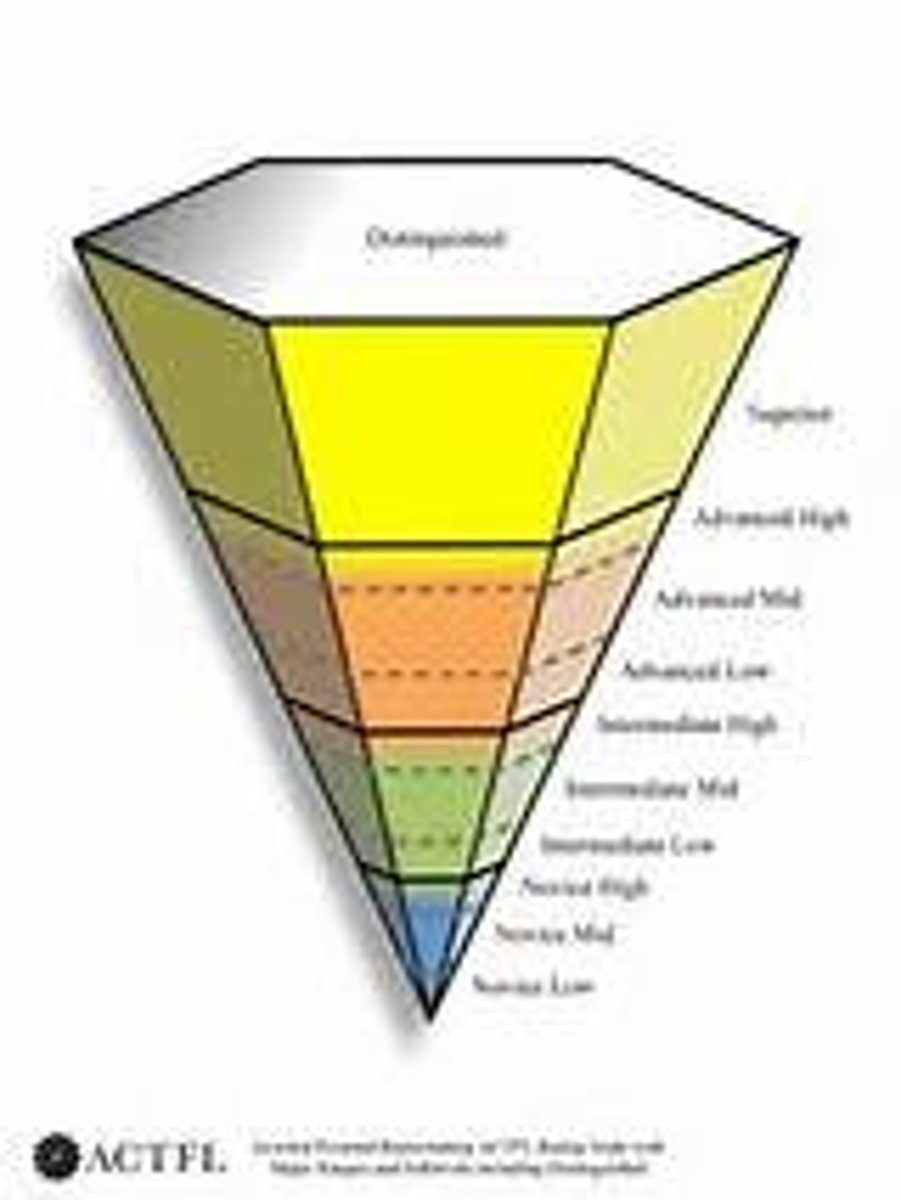
interpersonal communication
communication with active negotiation of meaning among individuals
interpretive communication
viewing, reading, or listening, one-way communication

presentational communication
one-way communication, rehearsed, polished, writing, speaking, or visually representing

functions of language
global tasks the learner can perform in the language (ask questions, initiate a conversation, narrate, etc.)
contexts of language
situations within which the learner can function
content of language
topics which the learner can understand or discuss
text type
examples are words, phrases, sentences, questions, strings of sentences, connected sentences, paragraphs
language control
how accurate is the language learner's language?
novice
at this level, students function as parrots
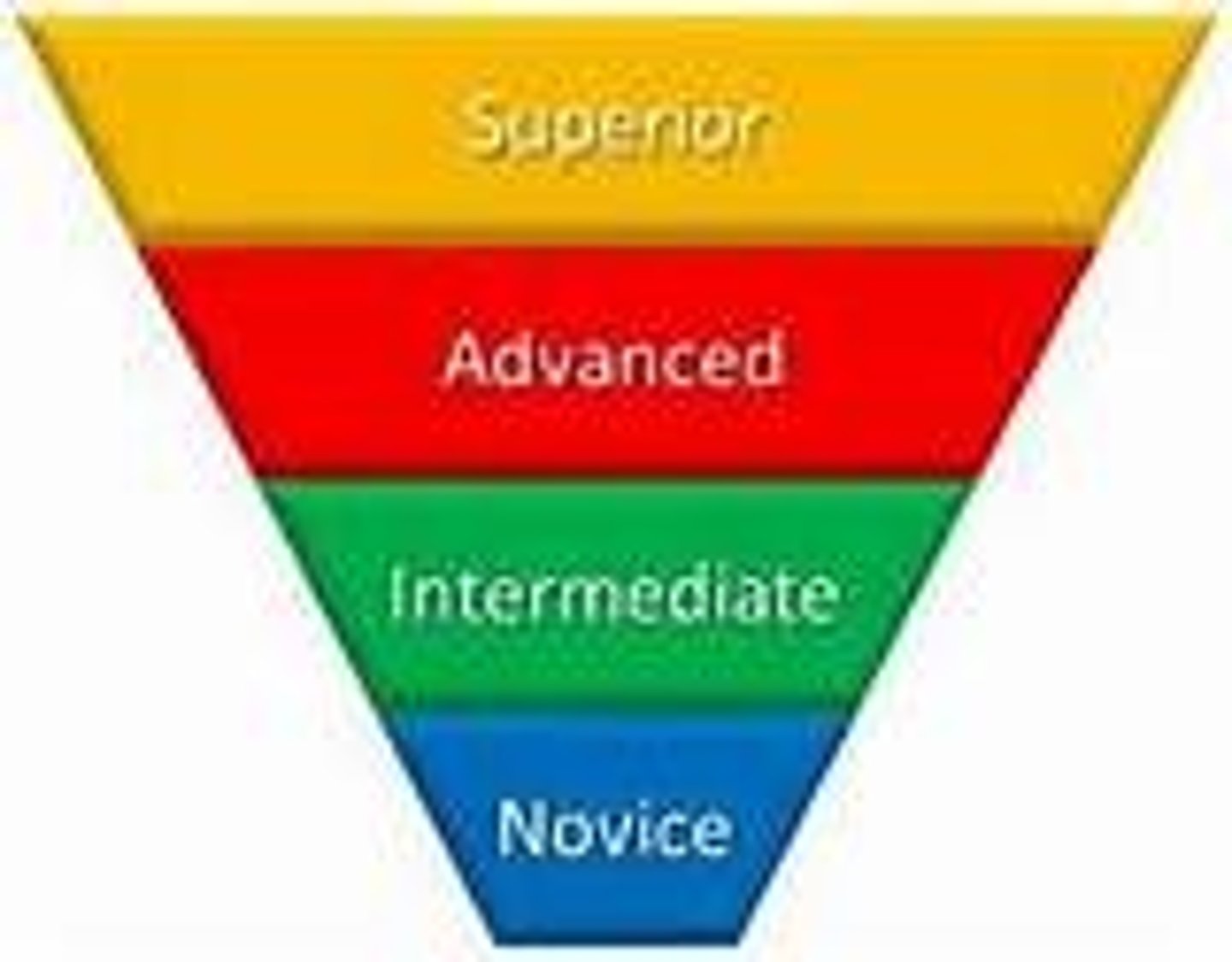
intermediate
as this level, students function as linguistic survivors
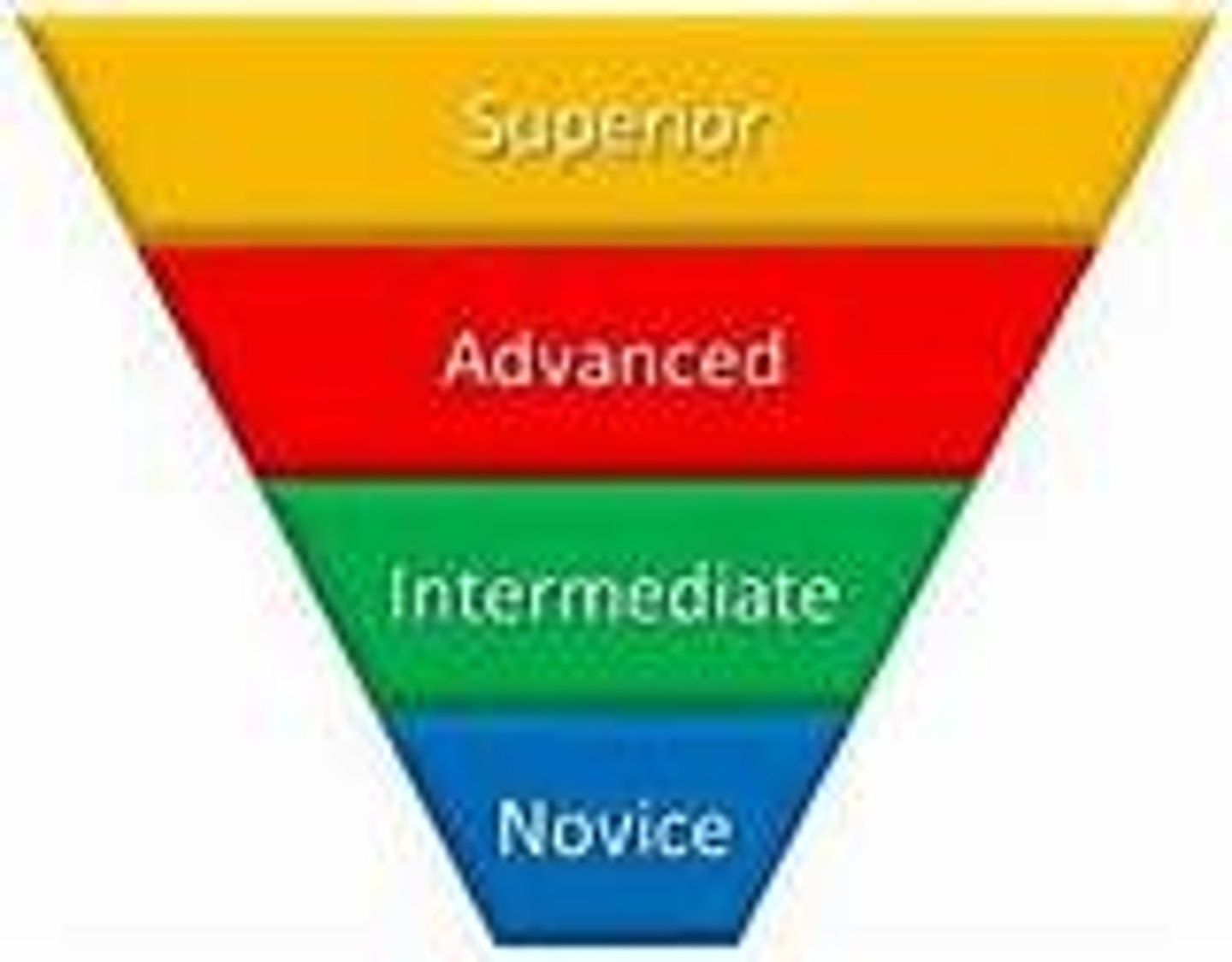
advanced
at this level, students function as reporters
ACTFL
American Council on the Teaching of Foreign Languages

performance descriptors
Discrete statements of specific competency that collectively reflect a performance level in the rubric.
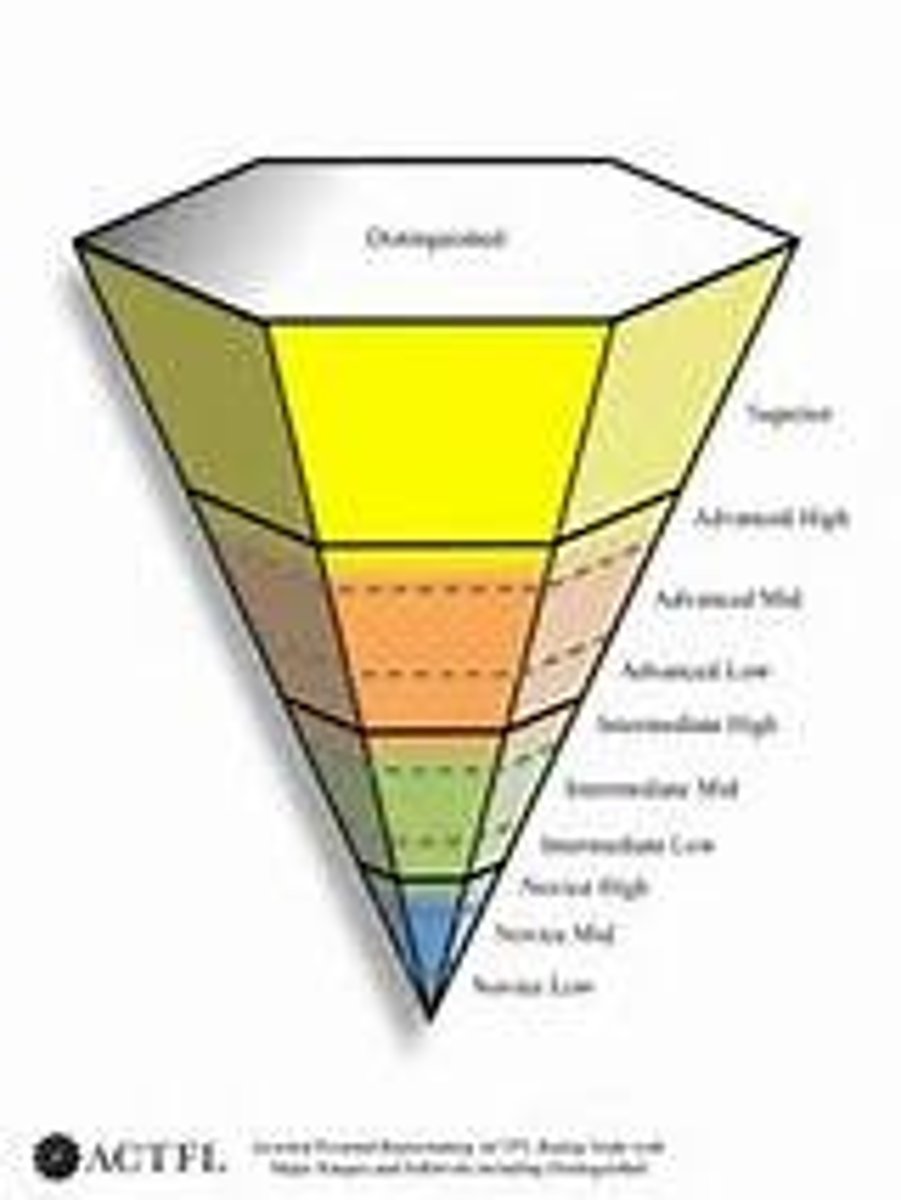
proficiency guidelines
for describing and measuring language competence
can do statements
Descriptors of language ability which reflect language competencies (i.e. ability to use language) rather than what learners know about the language.