PNB Exam 3 Module V-1 & 2

0.0(0)
Studied by 0 people
call kaiCall Kai
learnLearn
examPractice Test
spaced repetitionSpaced Repetition
heart puzzleMatch
flashcardsFlashcards
GameKnowt Play
Card Sorting

1/49

encourage image

There's no tags or description

Looks like no tags are added yet.

50 Terms

1
New cards

ANS control points

knowt flashcard image
2
New cards

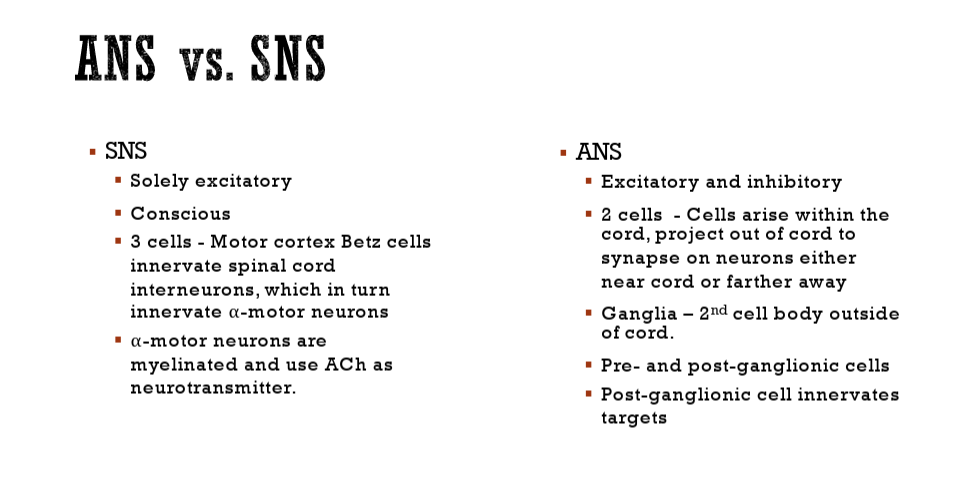
ANS vs SNS

knowt flashcard image
3
New cards

Sympathetic vs Parasympathetic General Structure

knowt flashcard image
4
New cards

Parasympathetic vs Sympathetic General Properties SLUD

knowt flashcard image
5
New cards

Sympathetic vs Parasympathetic General Structure on Spine

knowt flashcard image
6
New cards

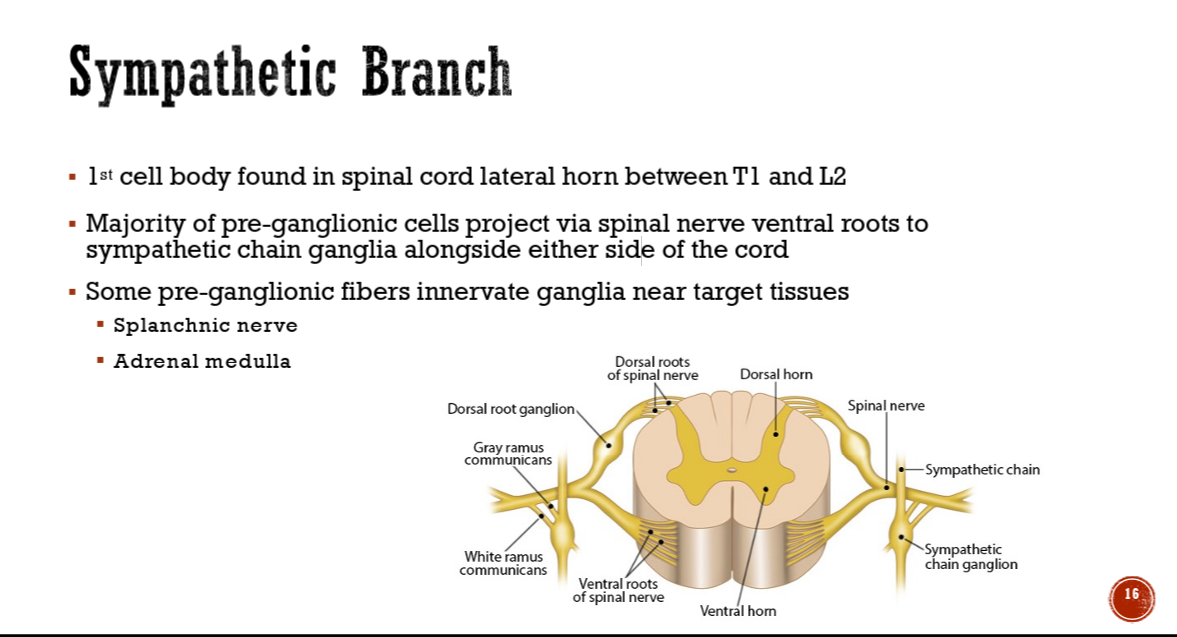
Sympathetic Branch

knowt flashcard image
7
New cards

Sympathetic Ganglia types

knowt flashcard image
8
New cards

Adrenal Medulla

knowt flashcard image
9
New cards

Parasympathetic Branch

knowt flashcard image
10
New cards

Do parasympathetic cells and sympathetic pathways innervate the same cells?

Yes, they just have different NT’s to cause different effects.

11
New cards

How many synapses are present in a target cell pathway thats innervated by both sympathetic and parasympathetic
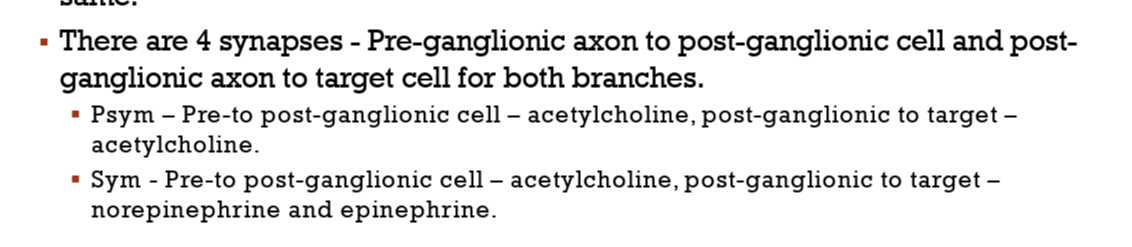
knowt flashcard image
12
New cards

Agonists/Antagonists

knowt flashcard image
13
New cards

Nicotinic Receptors

knowt flashcard image
14
New cards

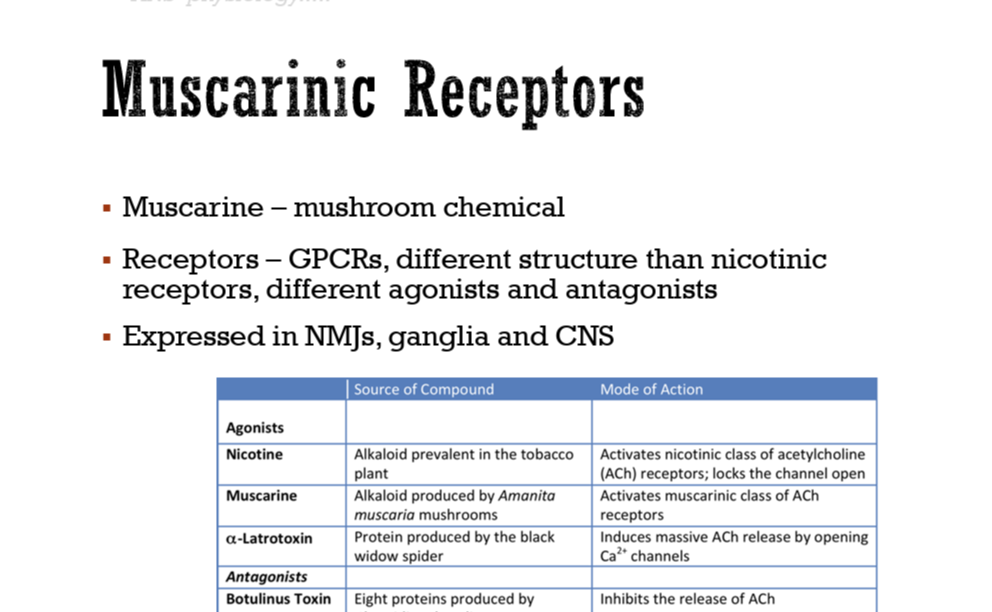
Muscarinic Receptors

knowt flashcard image
15
New cards

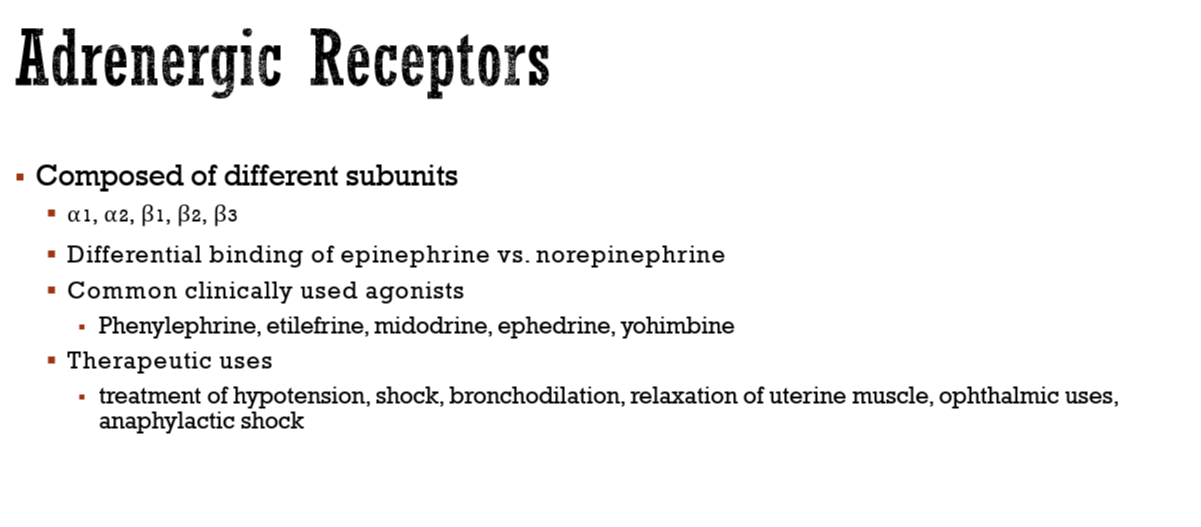
Adrenergic Receptors

knowt flashcard image
16
New cards

Adrenergic Subtypes

knowt flashcard image
17
New cards

Barorecepetor Reflex

knowt flashcard image
18
New cards

Pupil diameter pathway

knowt flashcard image
19
New cards

Lens Accomodation

knowt flashcard image
20
New cards

Micturition Reflex

knowt flashcard image
21
New cards

3 Types of Dual Innervation

2. Complementary — Different effects that contribute to the same function

Both systems contribute to the same overall process, but in different ways.

Example: Salivation

  • Parasympathetic: Produces large amounts of watery saliva.

  • Sympathetic: Promotes a smaller amount of thicker, protein-rich saliva.

3. Cooperative — Different actions that work together to achieve a goal

The two systems perform different but coordinated tasks necessary for an overall function.

Example: Male reproduction

  • Parasympathetic: Causes erection by promoting blood flow into erectile tissue.

  • Sympathetic: Controls emission and contributes to ejaculation by contracting reproductive ducts and associated smooth muscles.


<p>2. Complementary — Different effects that contribute to the same function</p><p>Both systems contribute to the same overall process, but in different ways.</p><p>Example: Salivation</p><ul><li><p>Parasympathetic: Produces large amounts of watery saliva.</p></li><li><p>Sympathetic: Promotes a smaller amount of thicker, protein-rich saliva.</p></li></ul><p>3. Cooperative — Different actions that work together to achieve a goal</p><p>The two systems perform different but coordinated tasks necessary for an overall function.</p><p>Example: Male reproduction</p><ul><li><p>Parasympathetic: Causes erection by promoting blood flow into erectile tissue.</p></li><li><p>Sympathetic: Controls emission and contributes to ejaculation by contracting reproductive ducts and associated smooth muscles.</p></li></ul><p></p>
22
New cards

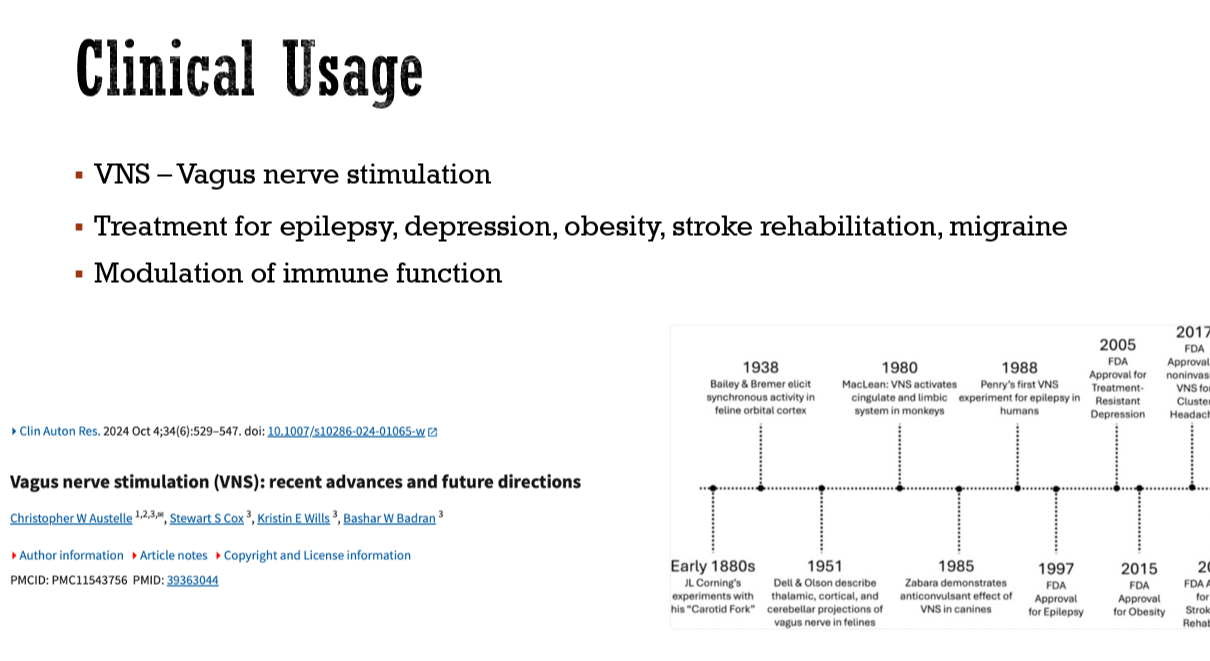
Vagus Nerve Stimulation

knowt flashcard image
23
New cards

Stimulus Pipeline, is the brain a super computer

knowt flashcard image
24
New cards

Detection

knowt flashcard image
25
New cards

Electrophysiology

knowt flashcard image
26
New cards

5 Main human sensory receptors

knowt flashcard image
27
New cards

Extero vs Intero Receptors

knowt flashcard image
28
New cards

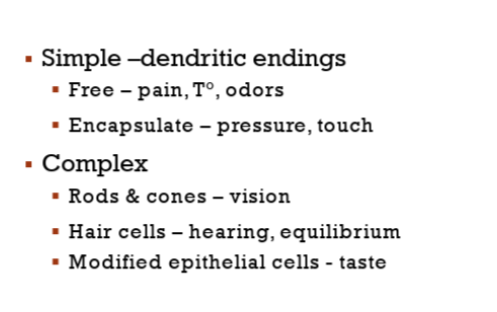
Simple vs Complex sensory.

knowt flashcard image
29
New cards

Sensitivity of Different Systems

knowt flashcard image
30
New cards

Stimulus Log Compression

Why? The range of environmental stimuli is too great for there to be a linear relationship between stimulus intensity and Ap firing rate

Consequences

Stimulus intensity of 10 = 1 Ap/sec

Stimulus intensity of 100 = 2 Ap/sec

Stimulus intensity of 1000 = 3 Ap/sec

<p>Why? The range of environmental stimuli is too great for there to be a linear relationship between stimulus intensity and Ap firing rate</p><p><strong>Consequences </strong></p><p>Stimulus intensity of 10 = 1 Ap/sec </p><p> Stimulus intensity of 100 = 2 Ap/sec </p><p>Stimulus intensity of 1000 = 3 Ap/sec</p>
31
New cards

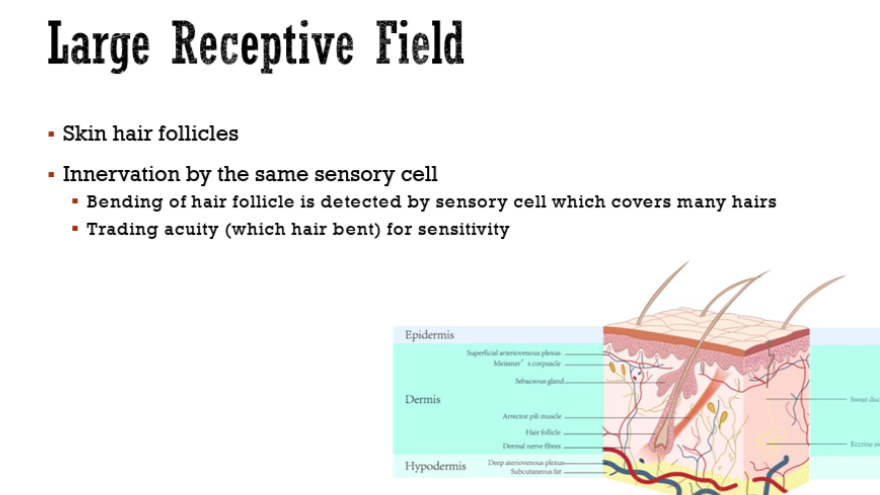
Large Receptive Field

knowt flashcard image
32
New cards

Range Fractionation

knowt flashcard image
33
New cards

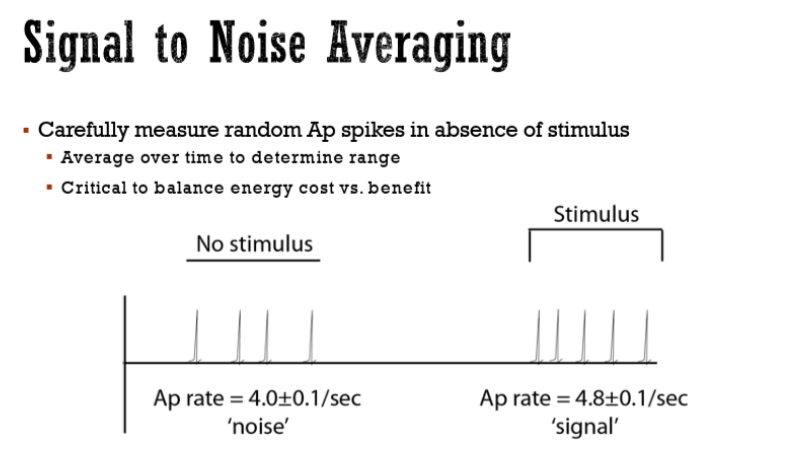
Signal To Noise Averaging

knowt flashcard image
34
New cards

Lateral Inhibition

knowt flashcard image
35
New cards

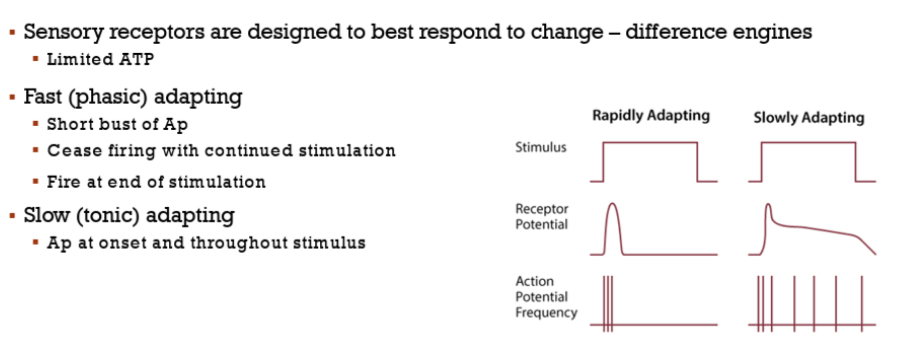
Slow vs Fast Adapting Receptors

knowt flashcard image
36
New cards

Type 1 vs Type 2 Receptive Fields

knowt flashcard image
37
New cards

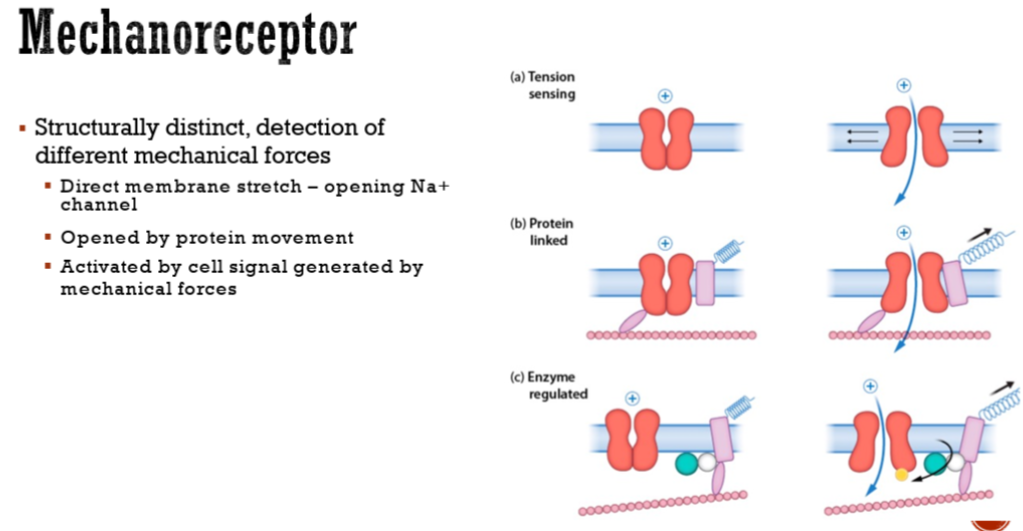
Mechanoreceptors

knowt flashcard image
38
New cards

Simple Branched Nerve Endings

knowt flashcard image
39
New cards

Merkel’s Disc

knowt flashcard image
40
New cards

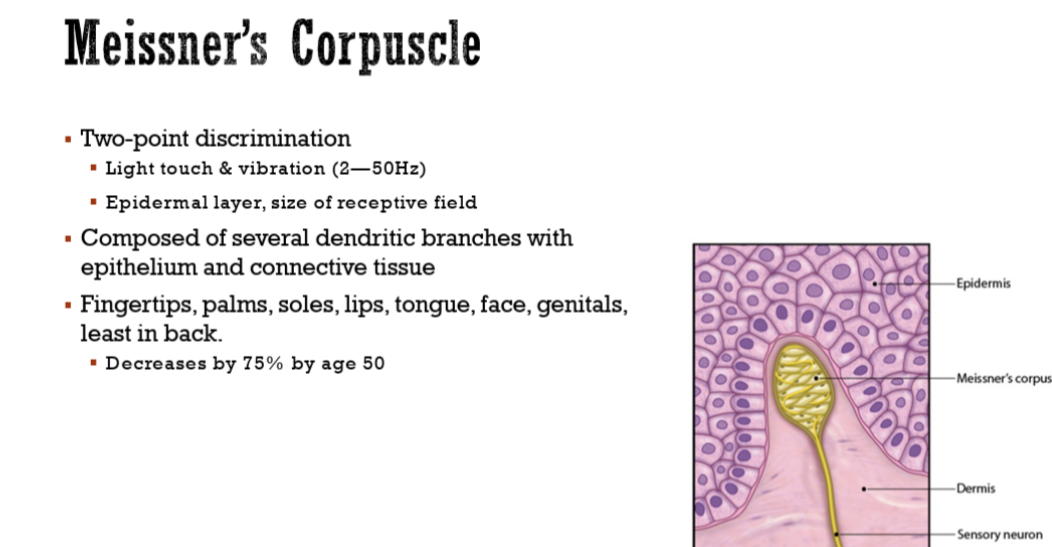
Meissner’s Corpuscles

Fast Adapting

<p>Fast Adapting</p>
41
New cards

Ruffini’s End Organs

Slow adapting

<p>Slow adapting</p>
42
New cards

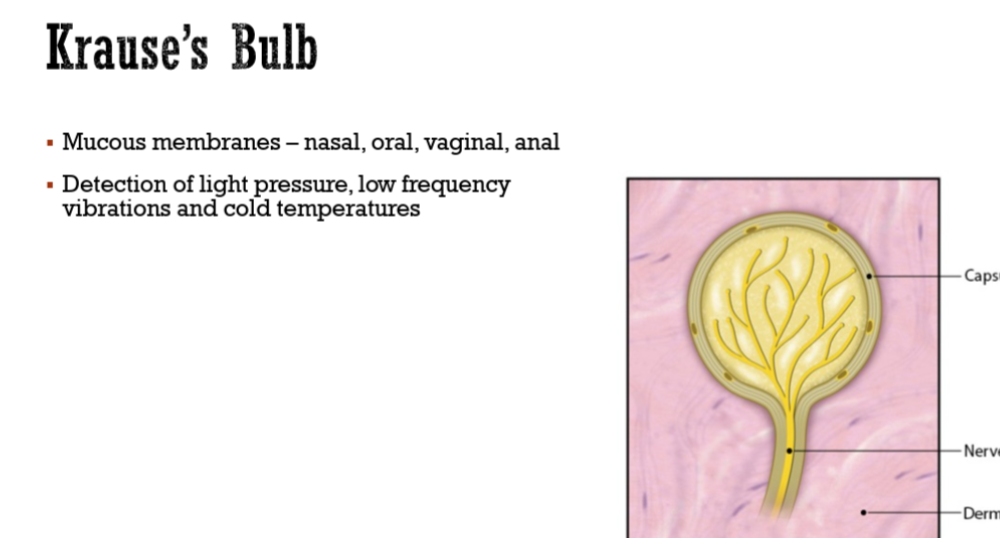
Krause’s Bulb

knowt flashcard image
43
New cards

Pacinian Corpuscle

Fast Adapting, Deep.

<p>Fast Adapting, Deep.</p>
44
New cards

Mechanoreceptor Type, compare and contrast

knowt flashcard image
45
New cards

Thermoreceptors

knowt flashcard image
46
New cards

Adrenergic Receptor α1-

Gq coupled, smooth muscle construction

47
New cards

Adrenergic Receptor α2

Gi coupled, inhibition of NE secretion

48
New cards

Adrenergic Receptor β1

increased heart rate, heart contractility

49
New cards

Adrenergic Receptor β2

Smooth Muscle Relaxation

50
New cards

Adrenergic Receptor β3

Lipolysis: Breakdown of Fats