Parasite Identification and recall! -- Practical pt. 2!
 Call Kai
 Learn
 Practice Test
 Spaced Repetition
 Match
 Flashcards
 Knowt Play
1/11

There's no tags or description
Looks like no tags are added yet.
12 Terms
Lice genus
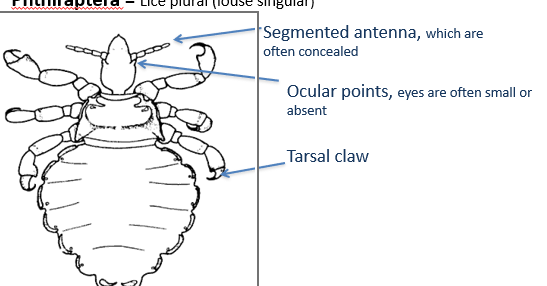
Phthiraptera
Pediculosis
A lice infestation
Lice life cycle type
Hemimetaboloa = INCOMPLETE metamorphosis + no pupal stage
2 key groups = Chewing lice + sucking live

HOw to identify A LOUSE
head thorax abdomen, 6 legs, insect.

Sucking or chewing louse?
head vs thorax


What genus and type is this louse?
Sucking louse,, Haematopinus…
Key Identification features
•Distinct ocular points behind the antennae,
•All legs of a similar size
•3-6mm in length
Host species
Species include the pig louse H. suis (the only species of louse found on pigs), H. asini on horses and H. eurysternus on cattle.

What genus and type is this louse?
Linognathus (long)
sucking louse..
Key Identification features
•Do not have eyes or ocular points,
•The second and third pair of legs are larger than the first, and end in stout claws
•Up to 2.5mm in length
Host species
found on sheep (L. ovillus) , goats, cattle (L. vituli ) and dogs (L. setosus).

Genus and type of louse?
Damalina
They are a chewing louse, but stick their heads in the ground and produce a ‘ DAM’
Key Identification features
•Damilina have rounded heads with 3 segmented antenna.
•The tarsi carry a single claw
•1-2mm in length
Host species
There are a number of similar host specific species the most important of which are Damaliniaovison sheep and D. bovis (sometimes called Bovicolabovis) on cattle also of interest are D. equi on horses and D. capraeon goats

Trichodectes - head is broader rather than longer..
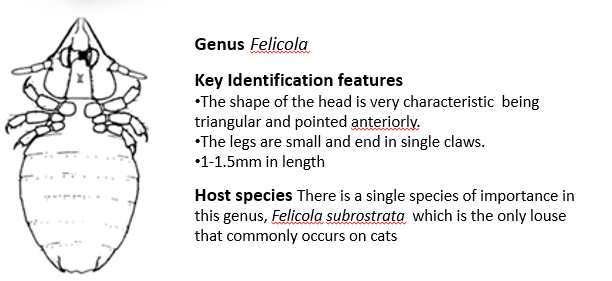
Felicola louse
3 typesof bird lice genus
liperurus
menacanthus
cuclotogaster
