Feline Lymphoma
 Call Kai
 Learn
 Practice Test
 Spaced Repetition
 Match
 Flashcards
 Knowt Play
1/43

There's no tags or description
Looks like no tags are added yet.
44 Terms
How was the FeLV vaccine impacted the more common types of lymphoma seen?
Pre FeLV: mediastinal/ multicentric lymphoma in young/adult cats
Post FeLV: GI lymphoma in geriatric cats
What is the most common intestinal tumour in cats?
GI lymphoma (followed by adenocarcinoma and MCT)
What viruses are factors that can increase risk of developing lymphoma?
FeLV>
FIV- more likely B cell lymphoma, and GI tract more affected
oncogenesis through immune suppression
What are some aetological factors of feline lymphoma?
Genetic predisposition
Altered expression of oncogenes, tumour suppressor genes (c-myc, N-ras)
Epigenetic modifications
Tobacco smoke
Chronic inflammatory conditions (i.e. IBD)
List the types of lymphoma in cats
Nodal lymphoma (multicentric)
Alimentary lymphoma
Mediastinal lymphoma
Extranodal lymphoma
Nasal/retrobulbar lymphoma (nasal discharge, epistaxis, obstruction, exopthalmos)
Laryngeal lymphoma (pharynx and trachea)
Renal lymphoma (malaise, anorexia, renomegaly (bilat.), azotaemia)
CNS lymphoma (signs depend on site)
Ocular lymphoma
Cutaneous lymphoma
How does nodal multicentric lymphoma present in cats?
True multicentric (symmetrical, generalised distribution)= rare
Regional lymphadenopathy more common (submandibular LN, medial iliac LN)
Middle aged
Non-painful lymph node enlargement
Anorexia
Depression
Non-specific malaise
Pyrexia
(PU/PD)
What may mimic lymphoma in cats?
Generalised lymphadenopathies
Young cats
histopathological phenomenon
generally resolve without treatment
poss retrovirus involvement
What are the differentials for nodal multicentric lymphoma?
Retroviral, viral, bacterial, fungal, mycobacterial and (protozoal), infections
(Other haemopoietic malignancies)
Immune mediated disease
Idiopathic forms
Metastatic disease (regional)
What are the clinical signs of mediastinal lymphoma?
Respiratory distress
Regurgitation/dysphagia
Weight loss
Lethargy, exercise intolerance
Cough (rare)
Palpable reduction in compressibility of cranial thorax
Decreased lung sounds
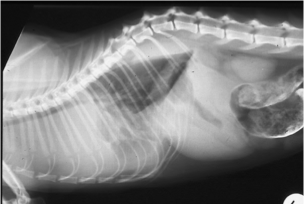
Younger cats?
What breed is predisposed to mediastinal lymphoma?
Siamese
What are the differentials for mediastinal lymphoma?
Thymoma (double pos CD4/CD8)
Other cranial mediastinal lymphadenopathy
Other causes of pleural effusion
Congestive cardiac failure
Pyothorax
FIP
(Haemothorax)
How does alimentary lymphoma usually present?
Older cats
Insidious weight loss
Anorexia
more common and severe in cats than dogs
Diarrhoea poss
Malabsorption/PLE (protein losing enetropathy)
Occasionally vomiting
gastric involvement, secondary gastritis
more common in cats than dogs
What are the ddxs for alimentary lymphom?
Many and various
Other causes of GI signs
All other causes of mesenteric lymphadenopathy
FIP
Peritonitis of other aetiologies
IBD
Metastatic neoplasia
Pancreatitis
Mycobacterial infection
What two forms of lymphoma are interrelated in cats?
High incidence of CNS involvement in cats with renal lymphoma
(add cytosine arabinoside in induction to cross BBB when tx)
What is the most common form of cutaenous lymphoma in cats?
Non-epitheliotropic
How do you treat cutaneous lymphoma in cats?
Generally don't respond well to chemo
Retinoids can ammelioriate C/S
How do you diagnose lymphoma in cats?
FNA (less likely diagnostic in cats)
flow cytometry (measure physical + chemical characteristics of pop of cells)
Biopsy
PARR
How does the diagnosis of lymphoma by FNA/ flow cytometry differ in cats cf to dogs?
Often low grade small cell or mixed so more difficult in cats- less likely to be diagnostic than dogs
esp multicentric/peripheral lymphomas
hard differentiate from reactive hyperplasia
Cranial mediastinal and extranodal may be higher grade so easier to diagnose on FNA
renal lymphoma often need biopsy
GI lymphoma - often high grade but FNA rarely diagnostic
What methods can be used to perform a biopsy for a lymphoma diagnosis?
Excision biopsy of node
Avoid trucut (except for renal) —> check coag
Wedge biopsy from extranodal lesion or enormous lode (impression smear)
If chance of mycobacterial disease (or fungal) keep some fresh tissue
What are the pros and cons of diagnosing with PARR? (PCR for antigen receptor rearrangements)
Pro
Clonality is a feature of neoplasia
Identify a clonal population in a background of normal lymphocytes
high specificity, a positive results support the diagnosis of lymphoma
Cons
Clonality is not only a feature of neoplasia (just suggestive)
Oligoclonality and monoclonality in inflammation
Negative result if no enough cells
Primers
Identify only 65-70% of lymphomas in cats
A negative result does not exclude lymphoma
What are the positive prognostic indicators for lymphoma in cats?
Achieving CR
Small volume extranodal disease (?)
Nasal lymphoma
What are the negative prognostic indicators for lymphoma in cats?
Failure to achieve CR
FeLV +ve status
?impact on chance or remission, but overall remissions shorter
How is lymphoma treated in cats?
Euthanasia (median survival without therapy = 4 wks)
Corticosteroids
Multi drug regimens
COP (high dose = best tx for cats)
CHOP (best tx for dogs)
COAP
Non continuous regimes
What drugs are involved in high dose COP regime?
Vincristine
Cyclophosphamide
Prednisolone

What are the side effects of chemo in cast?
Myelosuppressive agents
check haem prior to every bolus dose
tolerate neutropenia well
on low dose COP, check at appropriate intervals
Probably a good idea to intermittently check urine
?UTI
Hair loss (whiskers)
GI signs
How can alimentary lymphoma be treated?
Surgical excision of solitary mass (must biopsy nodes)
lymphoma is systemic dz so not curative
Follow up chemotherapy
Adequate supportive therapy (appetite stimulants, O tube, vit B12)
Staggered induction for case with extensive infiltration (reduced risk of perforation)
Gastric lymphoma very difficult to treat
large granular lymphocytes lymphoma has poor response to chemo
How can epitheliotropic lymphoma be tx?
Low grade “ epitheliotropic” tend to respond to chlorambucil and prednisolone only
What rescue therapy can be used in cats?
Single agent doxorubicin or lomustine
What is the prognosis in feline lymphoma?
Goal is to induce complete remission
Most cats will develop drug resistance and will relapse
consider radiation if local disease (e.g. nasal)
A small percentage of cases will be cured
How are leukaemia classified?
Acute vs chronic
Acute= rapidly progressive, fatal diseases
Lymphoid vs myeloid
What is recognised as a precursor to acute leukaemia in FeLV positive cats?
Myelodysplastic syndrome
How do acute leukaemias present?
Rapidly progressive, fatal diseases
High WBC counts
Concurrent pancytopenias
Poor prognosis (weeks-months) even with chemotherapy
What are Myelodysplastic syndromes characterised by?
cytopenias (RBCs, platelets, neutrophils) without circulating neoplastic cells
How is acute leukaemia treated?
Supportive therapy – very sick patients
Blood transfusion
Antibiotics
Barrier nursing
CSF?
Multi-agent chemotherapy protocols
COP vs CHOP
Addition of cytarabine infusions may improve response
What are chronic leukaemias?
Neoplastic proliferation of well differentiated cells
What are the features of chronic lymphoid leukaemia?
Proliferation of mature lymphocytes in bone marrow.
Rare (T cell > B cell > T-ve, B-ve)
Lymphocyte counts >30×109/L
Decision to treat based on the individual (presence of CS, degree of lymphocytosis)
How is chronic lymphoid leukaemia treated?
Prednisolone/chlorambucil
survival times of 1-3 yrs
What are the features of chronic myeloid leukaemia?
Proliferation of mature myeloid cells (normally neutophils) in bone marrow
Very rare
Have to exclude other causes of extreme neutrophilia; infection, immune mediated disease; paraneoplastic syndrome
May undergo blast crisis??
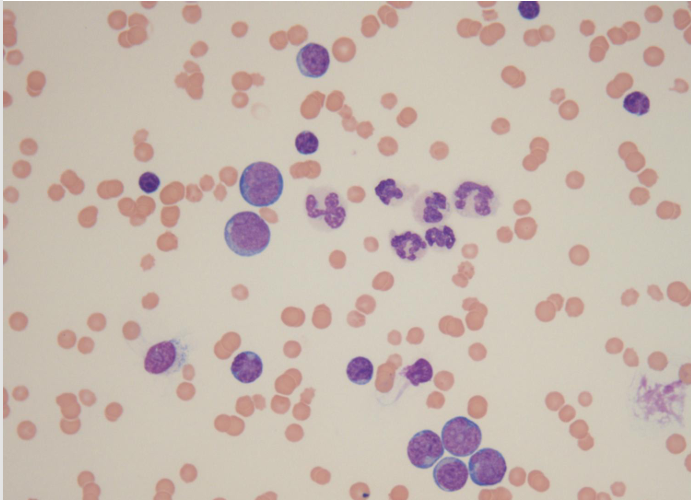
How is leukaemia diagnosed?
Haematology with manual differential and smear evaluation
Flow cytometry of peripheral blood
Staging to evaluate extent of disease
Thoracic radiographs
Abdominal ultrasound
Cytology of liver/spleen
Bone marrow biopsy (cytology + histology)
What are the features of multiple myeloma?
Myeloma related disorders
Systemic neoplastic proliferation of plasma cells results in overproduction of antibody (IgA, IgG)
Can start as extramedullary plasmacytoma which can progress to multiple myeloma
What can mutliple myeloma lead to?
Hyperproteinaemia can lead to hyperviscosity syndrome
Neurological symptoms, retinal detachment, congestive heart failure (cats > dogs), hypertension, coagulopathy
Cytopenia - due to bone marrow involvement
Renal disease present in a lot of these (multifactorial due to proteinuria, hypercalcaemia, renal infiltration, urinary infection).
How is multiple myeloma diagnosed?
Haematology, biochemistry, urinalysis
Non-specific, may see circulating plasma cells
Proteinuria (Bence-Jones proteins)
Hypercalcemia
Hyperglobulinemia
Serum protein electrophoresis
Monoclonal gammopathy
Diagnostic imaging
Hepatosplenomegaly
Osteolytic bone lesions
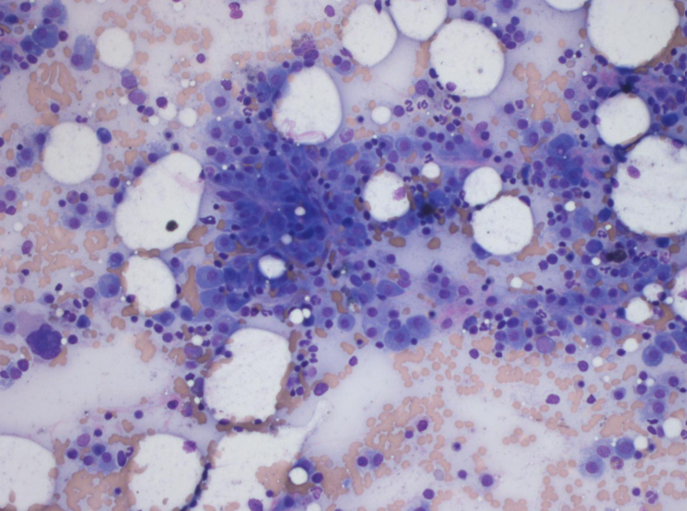
Cytology: Liver, spleen + bone marrow
Need to assess extent of disease to determine therapy
What criteria do dogs have to fulfill to be diagnosed with multiple myeloma?
2 of the following:
Monoclonal gammopathy
Radiographic evidence of osteolytic bone lesions
>5% neoplastic plasma cells or >10-20% plasmacytosis in the bone marrow
Bence-Jones proteinuria
feline myeloma related disorder rarely bone marrow involvement so should demonstrate plasma cell infiltration of visceral organs.
How is multiple myeloma treated?
Supportive care
Blood transfusions
Plasmaphoeresis
Antibiotics if secondary infection
Therapy for hypercalcaemia
Systemic disease
Prednisolone (~ 40 days)
Chemotherapy: Prednisolone and Melphanan
Cumulative myelosuppression is seen —> perform haematology
Local extramedullary plasma cell disease may be treated surgically if no systemic involvement