Speech and Hearing Science - Instrumentation Chapter 12
 Call Kai
 Learn
Learn Practice Test
 Spaced Repetition
 Match
Match Flashcards
 Knowt Play
1/35

Earn XP
Description and Tags
With the addition of relevant sections from chapter 4, 6, 7, 8
Name | Mastery | Learn | Test | Matching | Spaced | Call with Kai | Chat |
|---|
No analytics yet
Send a link to your students to track their progress
36 Terms
the main objective of any measurement is to
to minimize the measurement error
this involves acoustic measurement, aerodynamic measurement, and physiologic measurement
factors to be aware of during measurement
what is to be measure
determine what you are measuring
appropriate instrumentation of measurement
with what are we using to measure
calibration of instrument to ensure correct measurement
does it work correctly
clear and specific instructions for procedure
how/when/what to speak
it is important to be mindful that potential ___ of ___ may be beyond our control
potential sources of error
instruments use transducer. what’s that?
transduction! It is the process of changing one energy to another.
ex: microphone captures acoustic energy and convert it to electrical energy
the goal is to obtain a simulacrum as close as possible to the original signal
sensors for capturing speech
pressure sensor (microphone)
airflow sensor (pneumotachometer)
electrical activity sensor (EMG, EGG, ECG, EEG, ERP)
force, position, light, contact, ultrasound sensor
acoustic signal capture/processsing includes a microphone, explain the parts
microphone type - could be handheld, lavalier, or headset
head set is preferred. for handheld the distance might not be constant. friction noise may be present for handheld.
transducer type - could be dynamic (inductance) , or a condenser (capacitance)
condenser - laboratory setting. ex:electric microphone
dynamic - external noise is present
directionality - could be an omnidirectional, or cardioid. this would have the proximity effect which influences the flat frequency response
does the microphone pick up what’s right in front of it or picks up the full 360 degrees.
omni in laboratory setting. no external noise. 360
cardioid = picks up one direction. may not always be a flat frequency though!
connectors
xlr (for quality microphones) or trs
connects signal with comp
recording environment is important. ambient noise (measure by sound level meter) electromagnetic interference ( measure by oscilloscope)
sound treated rooms may not always be required! there are controlled sources of nosied makers (turning off fan, a.c, closing door)
frequency response for signal capturing. what is a good range of frequency fluctuation?
if its less than 2 dB fluctation across the frequency that is acceptable!
how much intensity level is required for the device to be trigger?
that is referred to as sensitivty
dynamic range is (max SPL to self noise)
***both metrics are important!
amplification
preamplifer (gain properities, freq response, dyna ic range)
the key is that the input is to the next level is a true representation of the imput of what the preamplier recieves
digitization
an (analog) signal converted to be analyzed (or digitized)
to be mindful
sampling frequency (4100 Hz in Praat) this should be twice the max frequency . this is Nyquist-Shannon theorem.
quantizations
how many steps (or bits) in a cycle will be consider/ will be lose? the higher the better. b = bits. 2b
erros are called quantization error, peak clipping //digital analog conversion (DAC)
datat storage referring to acoustic signal capturing
compressed - (used to be a necessity) - mp3, wma
uncompressed (better) - .wav and .aiff
*remember the position of microphone is important. it should be 45 degrees from breath stream, 3-4 cm from mouth. this is important because if you need to replicate it , everything should be exact
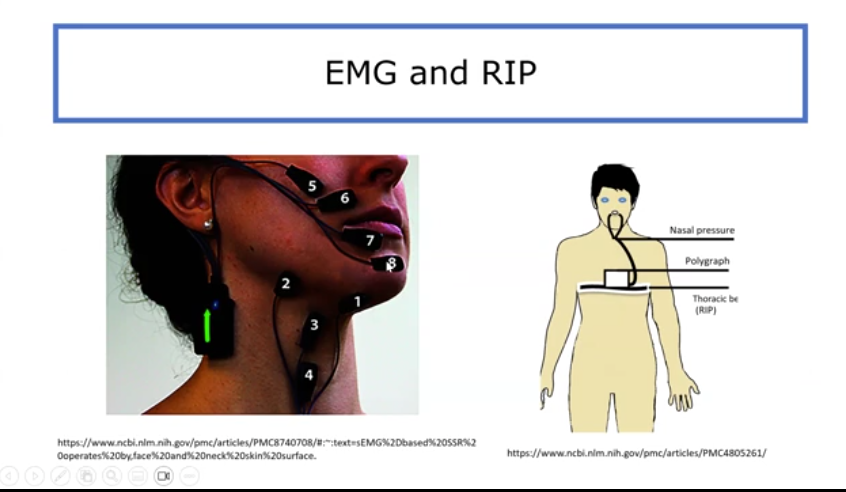
eletromyography
measures motor unit action potentials
electrical sensors
its surface. Includes needle and hooked-wire electrodes
provides patient feedback during therapy
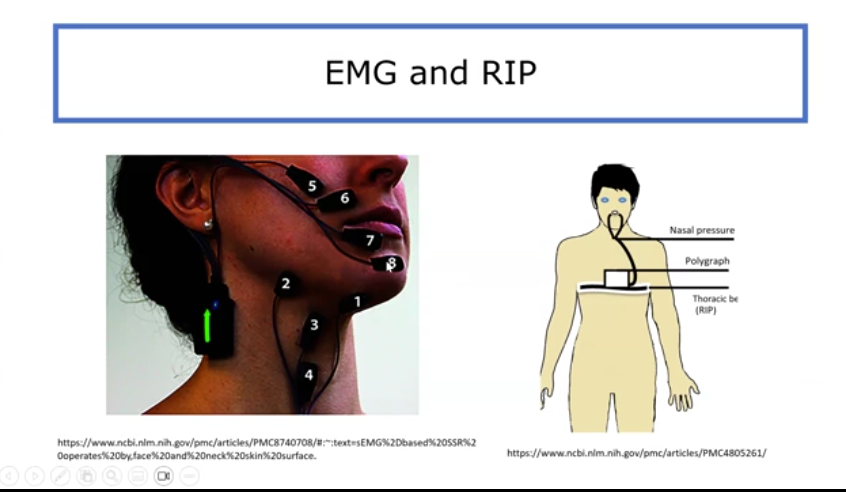
inductance plethysmography
measures changes in lung volume during breathing (and other relevant contributions of the abdomen and ribcage)
this involves chest wall kinematics
includes a band around chest
instrumentation for vocal folds
glottopgrahy
stroboscopy
high speed laryngelal imahing
glottography
analyses of vibratory movement of VF during phonation
glottal opening focus
stroboscopy
provides stimulate of VF vibration based on images with strobe light flickering at rate slower than rate of vibration
1 pic = 1 cycle of vibration
various stages of flickering to prevent pictures of exact same point in frequency

high speed laryngeal imaging
high speed photography
images at higher rates
good for irregular vibration cycles! (high jitter value)
videokymography
focuses at a midline of vibration of VF, what is happening.
high speed imaging
photoglottography
amount of light present through an endoscope light source passing through the vocal folds - measured by a light sensor placed externally on the neck just below the vocal folds’ level
electroglottography (EGG)
common for SLP
pair of surface electrodes on the thyroid lamina, how ell does the high freq low voltage current flow from one electrode to the other.
depending on how the current travels across VF we will get a specific measurement
EGG open phase vs closing phase
open - open to entire duration ration
speed - open to close
contact - contact to closed during entire duration ratio
sound spectrogrpahy
wide band - formants (praat)
narrow band - harmonics
spectral analysis
distribution of energy across frequencies at a given moment. plot frequencies on one axis and intensity at another axis.
Linear Perdictive Coding - formants and Fast Fourier Transformation harmonics
microphone is a
sensor and transfusers
all sensors are
transfusers
all transfusers are
not all sensors!
long term average spectrum (LTASS)
spectrum of energy over a window of vowel pronation, not just a specific point in time
another analysis of acoustics
harmonic to noise ration
harmonic energy needs to be higher than noise when using periodic signals.
cepstral measurement - good for aperiodic sources
ceptral peak performance - relative amplitude of the dominant cepstral peak
inverse filtering
information on glottal airflow is extracted by removing the vocal tract filter characteristics. estimation of glottal flow from the speech signal)
these measures use recorded speech to analyze phonation

vocal tract imaging
xrays!
computed tomography CT - uses narrow xray beam, distinguished tissues with similar density
MRI- posture of vocal tract. fMRI-functional neural imaging
ultrasonography (SLP fav) high freq sound waves particularly tongue mvtm
aerogynamics and articulation
pneumotachography - airflow msrmt , face mask, nasometer, spirometer
hypodermic needle (through CT membrane - connected to pressure sensor. lung pressure measure directly
intra-oral pressure transducer ( saying /p/ multiple times airway interruption method. pt speaks against a presusure it measured airflow that way)
spirometer what it looks like

articulators measured with
point trackers
xray microbeam with up to 100 pelletes positions per sec
electromagnetic midsagittal articulography
induced currents are measures. led sensors
OR
beams attached to strain gauges.
beams attached to rigid wired connected to lips/jaw
electropalatography
contact btwn tongue and soft palette
very important
touch sensitive electrodes embedded in a thin acrylic plate
limitation of intrusive methods= perturbation