Physics middle school
 Call Kai
 Learn
Learn Practice Test
 Spaced Repetition
 Match
Match Flashcards
 Knowt Play
1/24

There's no tags or description
Looks like no tags are added yet.
Name | Mastery | Learn | Test | Matching | Spaced | Call with Kai | Chat |
|---|
No analytics yet
Send a link to your students to track their progress
25 Terms
How is position measured
Meters
How is mass measured
Kg
How is velocity measured
meters per second (m/s)
What is a reference frame
The point of view that you observe and measure things from
Used to help define the motion or position of an object
What is the standard reference frame
Earth’s surfac
More force equals
More acceleration
More mass equals
Less acceleration
Equation for force mass and acceleration
F = M x A
What is net force
Sum of all forces acting upon an object
What are newton’s 3 laws?
For every force there is an equal and opposite reaction force.
An object at motion/at rest will remain in motion/at rest unless acted upon by another force (inertia)
F = M x A
Properties of gravitational forces
Attractive forces
Exists between all objects with mass
Depends on mass of objects and the distance between them
More mass = More force
More distance = Less force
Properties of electric forces
Non-contact force
Caused by charge (most things are neutral)
More charge = More force
More distance = Less force
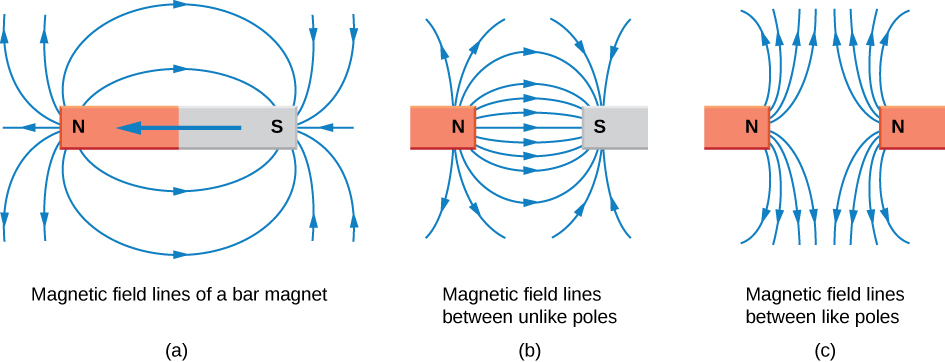
Properties of magnetic forces
Non-contact force
Attract and repel (N vs S)
More magnet quality = More force
More distance = Less Force
Properties of field forces:
Includes non-contact forces (electric, magnetic, gravitational)
Electric effects charged objects
Magnetic effects magnets
Gravitational effects objects with mass
Fields extend through space and influence other objects located within them.
Magnitude depends on strength of the field and distance from the source.
Direction of the force follows the lines of the field.
Electromagnetism
Electrical magnets
Temporary magnets in the presence of electricity
Higher current = More strength
More dense = Higher strength (spiral shaped = more strength)
Can change poles by changing the direction of the current
Can be turned on/off
A changing magnetic field can produce electricity (electromagnetic induction)
Properties of kinetic energy
Any object in motion has kinetic energy
More speed = more KE (more important)
Less mass = less KE
KE = (M x Vsquared) ½ measured in joules
Potential energy:
Potential energy is the stored energy an object has because of its position or condition.
Gravitational potential energy is relative to an items position on earth
Elastic potential energy has inside forces that try return to its original shape
Electric potential energy is based on charges
Magnet potential energy is based on poles
Energy cannot be created or destroyed…
Only changed from one form to another
Wave terms:
Wave
Period
Wavelength
Frequency
Speed
ergo, wave speed
Amplitude
Wave: A disturbance that can propagate
Transfers energy without transferring matter
Period: Measured in seconds (s), time it takes for a wave cycle to complete
Wavelength: Measured in meters (m), distance between identical points of adjacent waves
Frequency: Waves per second
Speed: Distance/time
So wave speed = wavelength / frequency (m/s), Wave type and medium in which it travels through effects the waves speed
Amplitude: Maximum change from the equilibrium
Mechanical waves
NEED a medium to travel through,
eg. sound needs air, but light doesn’t need a medium.
Transmission
When a wave passes from one material into another one
Eg. Sun → Space → Atmosphere → Sunglasses → Eyes
Depends on the wavelength and material. This changes how much and what is transmitted, eg. sunglasses block UV light and blue light

Refraction
Refraction occurs when a wave’s path bends at a boundary as it enters a new medium
Eg. For light waves, higher frequencies bend more than lower ones when passing through a medium like glass
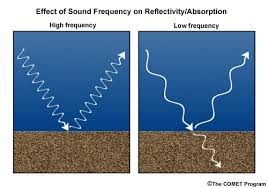
Reflection:
A wave bounces off of a boundary between two materials
Depends on type of wave, wave frequency and material
Absorption:
When a wave loses energy as it transmits into a material
Can happen in a medium, or at the boundary between two materials
When a wave is absorbed, the energy is transformed to another form of energy
Depends on type of wave, wave frequency and material
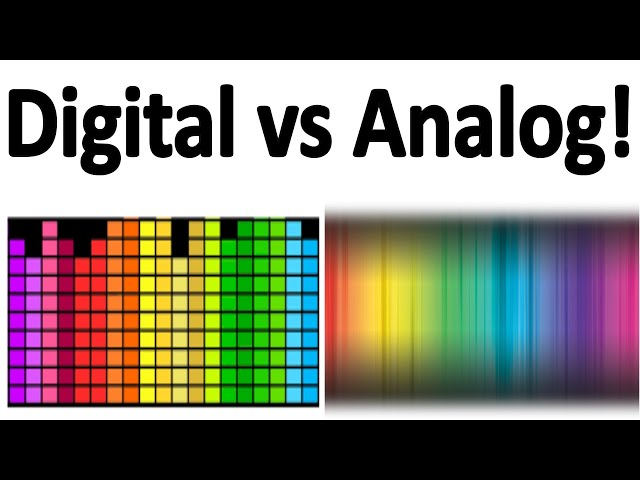
Analog vs Digital
Analog: Any value within a given range
Digital: A value represented by a number of discreet or separate levels
Analog: Can display anything
Digital: Can only display certain values