CIE A level Geography2027-Topic 2 Atmospheric processes and global climate change
 Call Kai
 Learn
 Practice Test
 Spaced Repetition
 Match
 Flashcards
 Knowt Play
1/48

There's no tags or description
Looks like no tags are added yet.
49 Terms
albedo effect
The amount of radiation a surface reflects back into space. anthropogenic

carbon dioxide
A gas composed of one atom of carbon and two atoms of oxygen, which is present in the Earth's atmosphere and traps heat.

concentration
The amount of a particular gas in the atmosphere.

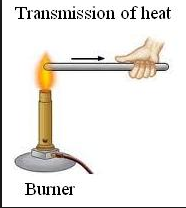
conduction
The process of heat moving from a high temperature area to a low temperature area.
convection currents
The movement of heat from one place to another by the mass movement of molten rock.

deficit
A state of net energy loss, where the amount of energy absorbed is less than the amount of energy radiated.

dew
The moisture that forms on cool surfaces, usually overnight, when water vapour condenses.

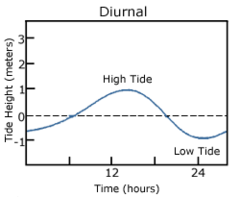
diurnal
The difference in the balance of energy going into the atmosphere and the energy leaving the atmosphere during the day and during the night.
El Nino Southern Oscillation
A periodic climate pattern where the sea surface temperature and atmospheric pressure fluctuates across the equatorial Pacific Ocean.

energy budget
The balance between the energy going into the atmosphere and the energy leaving the atmosphere.

enhanced greenhouse effect
A process where an increase in the amount of greenhouse gases in the atmosphere from human activities causes Earth to heat up, as less re-radiated heat from solar radiation escapes into space.

eruption
The expulsion of lava, gases and other materials from a volcano.

excess
A state of net energy surplus, where the amount of energy absorbed is larger than the amount of energy radiated.
F gases
Human-made compounds which contain fluoride and trap heat in the atmosphere.
Ferrel cell
An atmospheric circulation pattern which occurs between 30-60° latitude. It circulates warm air towards the poles, which then meets cold air and rises, forming an area of low pressure and unstable weather conditions.

fog
A thick cloud of small water droplets, suspended in the atmosphere near the Earth's surface.

frontal uplift
The process of a warm air mass meeting a cold air mass, and then rising and cooling to produce precipitation.

global warming potential
A measure of how much a greenhouse gas is estimated to contribute to global warming over a specific time period compared to carbon dioxide.

greenhouse gases
Gases in Earth's atmosphere that trap heat by absorbing infrared radiation, and warm the planet. Examples include carbon dioxide and methane.

Hadley cell
An atmospheric circulation pattern which occurs between the equator, where warm air rises, and 30° north and south, where the air cools and sinks. This forms a high-pressure zone.

hail
Small, hard balls of ice that fall from the sky as precipitation.

horizontal transfer
The sideways movement of energy through ocean currents from areas of warmer water to areas of cooler water.
Intergovernmental Panel on Climate Change
A global body, which is part of the United Nations, that aims to advance knowledge about human-caused climate change.

intertropical convergence zone
A band of low pressure near the equator where the trade winds of the northern and southern hemispheres meet.

latent heat transfer
The energy released or absorbed during the change of state of water, such as evaporation.

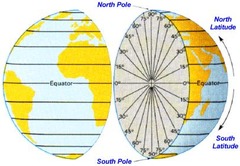
latitudinal / latitude
The distance north or south from the equator, given in degrees.
longevity
A long life or long lifecycle.
melting
The process of a solid changing to a liquid as the temperature increases.

Methane
A gas composed of one carbon atom and four hydrogen atoms, which is present in the Earth's atmosphere and traps heats.

natural greenhouse effect
A process where greenhouse gases naturally occurring in the Earth's atmosphere trap re-radiated heat from solar radiation, keeping the Earth warm.

nitrous oxide
A gas composed of two nitrogen atoms and one oxygen atom, which is present in the Earth's atmosphere and traps heat.

orographic uplift
The process of an air mass moving from an area of low elevation to an area of high elevation as rising terrain forces the air upwards.

outgoing radiation
The energy emitted by the Earth that escapes from the atmosphere into space.
Polar cell
An atmospheric circulation pattern which moves cold air from the poles towards the equator.

precipitation
Water falling from the air onto the land, for example, rain, snow, and hail.

pressure
The total weight of the air in the atmosphere pressing down on the Earth's surface. radiation

radiation
Energy emitted from the Sun.

reflection
The process of solar radiation hitting a surface and being sent backwards.

scattering
The process of solar radiation hitting small objects in the Earth's atmosphere and dispersing in different directions.

sensible heat transfer
The movement of heat from warmer to colder objects through the process of conduction or convection.

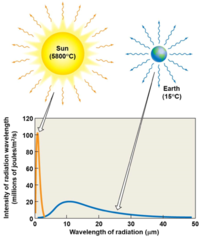
shortwave radiation
Energy emitted from the Sun with an ultraviolet, visible, or infrared wavelength.
snow
Ice crystals that fall from the sky as precipitation.

solar
Relating to the Sun.

sublimation
The process of a solid changing to a gas, without becoming a liquid.

surface absorption
The process of a surface, such as soil, taking in energy from solar radiation.

terrestrial radiation
The longwave radiation emitted by the Earth.

Tri-cellular model
A model which shows how energy moves around the atmosphere between three regions of air circulation: the Polar cell, the Hadley cell and the Ferrel cell.

volcanic
Relating to volcanoes, which are mountains with a crater or vent through which lava and gases erupt from the Earth's crust.

weather phenomena
Atmospheric events, such as precipitation.
