Week 5 Quiz 1 - GI Diseases & Drugs
 Call Kai
 Learn
 Practice Test
 Spaced Repetition
 Match
 Flashcards
 Knowt Play
1/19

There's no tags or description
Looks like no tags are added yet.
20 Terms
Match each definition in column A with the corresponding term in column B
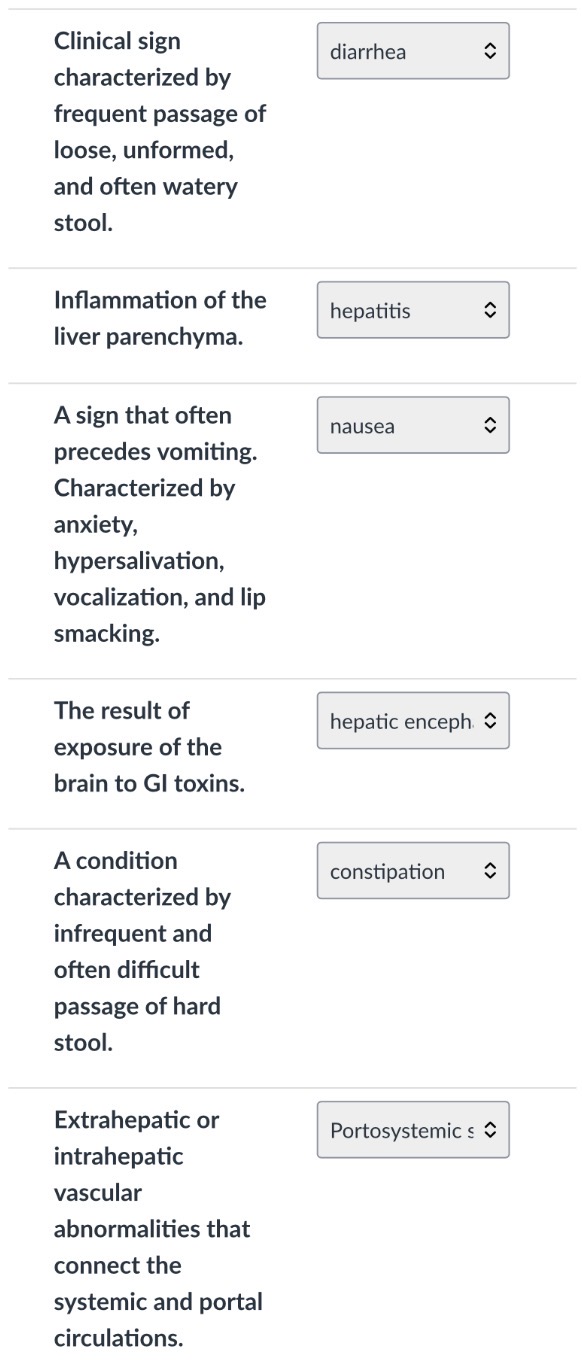
Match each description in column A with its corresponding disease or condition in column B

Difficulty eating is also referred to as
dysphagia
Which disease is caused by insufficient production of digestive enzymes by the pancreas?
exocrine pancreatic insufficiency
Anorexia is the loss of appetite
True
Hematochezia usually indicates a problem with the
Colon
Cholangitis refers to
Inflammation of the bile ducts
The loss of digestive enzymes leads to maldigestion and malabsorption of ingested nutrients causing clinical signs of polyphagia, weight loss and chronic pale, fatty, and voluminous diarrhea also known as:
steatorrhea
Chronic hepatitis indicates a history of liver disease for a prolonged period of time, usually greater than
4 to 6 months
Mirtazapine is used in dogs and cats to:
stimulate appetite
The premature activation of trypsin in the pancreas is associated with what condition?
pancreatitis
Exacerbation of neurological signs in a young dog after a high-protein meal may indicate
Portosystemic shunt
This is a picture of multiple small gastric ulcers in a dog. This image was obtained by endoscopy. You can see the dark focal spots on the lining of the stomach that represent bleeding in those areas of the stomach mucosa.
This dog is inappetent, vomiting, lethargic and painful.
Which drug/s would be contraindicated in the management of this dog's gastritis, gastric ulcers and pain? Check all that apply.

This is a radiograph of the abdomen of a cat in right lateral recumbency.
What is the white (radiopaque) material in the abdomen (not the skeletal structures) in the center of the radiograph?

This is an abdominal radiograph of Ralph, a 3-year-old intact male Standard Poodle.
History: Ralph was boarded over the weekend at a facility he has used previously and was fed his regular diet throughout the stay. He remained alert and exhibited normal behavior during boarding. Kennel staff report he ate dinner and consumed treats Sunday night, but declined breakfast Monday morning.
Upon pickup Monday, owners noted Ralph was not behaving normally. On arrival home, he was reluctant to move, preferring to remain recumbent on his bed, with observed ptyalism and panting. Owners elected to present to your practice rather than the emergency clinic due to same-day urgent care appointment availability. En route, Ralph exhibited repeated nonproductive retching.
On physical exam, the following were noted:
HR 140; RR panting; Temp 102.3
MM tacky, grayish-pink; CRT >2sec
Lethargic; BCS 5/9
Standing with back hunched up and neck outstretched. Distended abdomen is tense. Scant feces on rectal exam.

Match each description in column A with its corresponding disease or condition in column B
An indoor cat with a BCS of 8/9 is straining in the litterbox. The client is concerned about a urinary tract infection because the cat is vocalizing while straining in the box. The client has only one cat and there appears to be no change in the amount of urine in the litterbox lately.

In dogs, exocrine pancreatic insufficiency (EPI) is commonly caused by chronic pancreatitis
False

Please match the clinical sign or disease with the line item the doctor would want on a treatment plan for you, the RVT, to present to the client of the sick pet. Think about the least invasive test/s that would provide a good starting point in the diagnostic process.

A client called 10 minutes before closing on a Saturday to say that their 10 year old Australian Shepherd is vomiting bile and not wanting to eat for the last few days. The stool has been normal per owner until today and now the stool is really dark and sticky, like tar. In addition, the dog vomited up bile with dark brown "coffee ground" like material this morning after drinking a little bit of water. The dog has hip dysplasia and degenerative joint disease in the left hip. The dog is currently taking medication to help with the pain. The dog was taking carprofen for pain, but the client stopped a few days ago when the pet was not eating because she remembered that the dog was supposed to take the medication with a meal. Instead, the client switched the dog to OTC aspirin BID 2 days ago because the dog was so uncomfortable. The new receptionist asked you to take the call since you are an RVT and the doctor was busy with another case and your hospital is closing soon.