Week 5 - Integumentary
 Call Kai
 Learn
Learn Practice Test
 Spaced Repetition
 Match
Match Flashcards
 Knowt Play
1/94

There's no tags or description
Looks like no tags are added yet.
Name | Mastery | Learn | Test | Matching | Spaced | Call with Kai | Chat |
|---|
No analytics yet
Send a link to your students to track their progress
95 Terms
stage I
pressure ulcer with non-blanchable erythema of intact skin
stage II
pressure ulcer with partial-thickness skin loss involving the epidermis, dermis, or both.
stage III
pressure ulcer characterized by full-thickness skin loss involving damage or loss of subcut tissue
stage IV
pressure ulcer characterized by full-thickness skin loss with damage to muscle, bone, or supporting structures
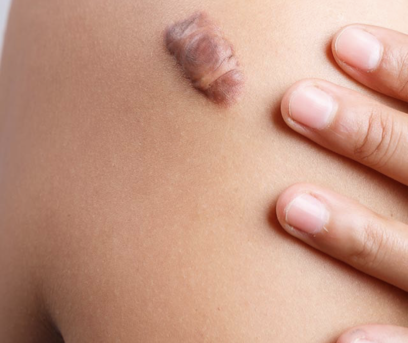
keloids
elevated, rounded, and firm clawlike skin tags that extend beyond original site of injury, more common in dark skin
pruritus
also known as itching, one of the most common symptoms of skin disorders and is triggered by chemical mediators like histamine
allergic contact dermatitis
a type IV delayed hypersensitivity rxn that occurs when skin is exposed to allergen which the person has been sensitized; response triggered by T cells and can lead to redness, swelling, and blistering of the skin.
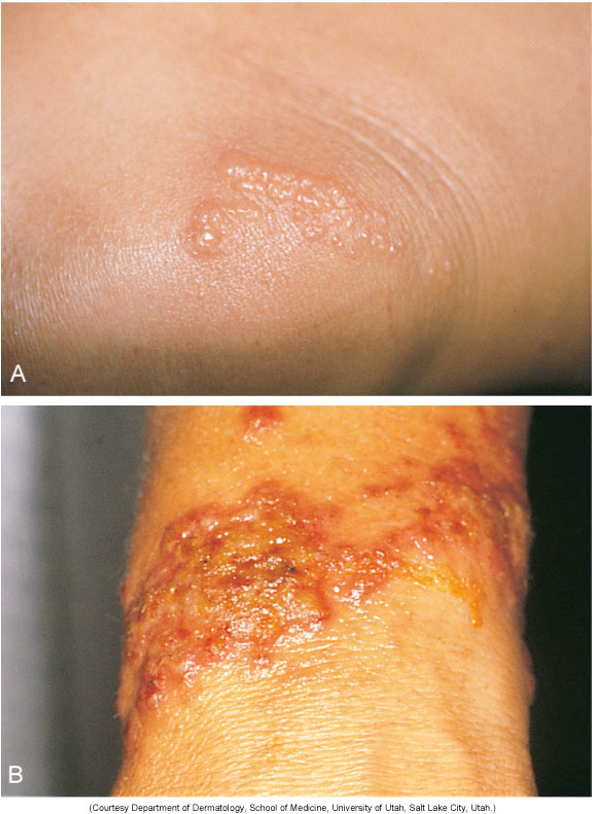
irritant contact dermatitis
nonimmune inflammatory rxn caused by direct damage from an irritating substance
stasis dermatitis
inflammatory condition caused by chronic venous insufficiency, most commonly affecting lower legs; venous pooling leads to inc. pressure, edema, and inflammation - think of nursing home; best treated with activity, elevation of limbs, and compression

seborrheic dermatitis (cradle cap)
chronic inflammatory condition affecting areas rich in sebaceous glands like scalp/eyelids/ears; characterized by flaking and greasy scales; treated with topical antifungals to decrease yeast like ketoconazole shampoo/cream or selenium sulfide

psoriasis
chronic immune-mediated disorder where T-cell activation causes inflammation and excessive proliferation of epidermal cells causing raised plaques/scales

mild psoriasis treatment
topical therapy = first line; includes corticosteroids (“-sone/-lone”) to reduce inflammation/excessive proliferation and vitamin D analogs (calcipotriene) to slow proliferation
moderate-severe psoriasis treatment
may require systemic therapy that target the abnormal immune response; commonly uses immunosuppressants, biologics, or Acitretin (teratogenic and dangerous for pregnancy)
pityriasis rosea
benign, self-limiting inflammatory disorder often begining with a “herald patch” followed by smaller lesions in a characteristic “Christmas tree” pattern; usually resolves on its own

lichen planus
chronic inflammatory disorder affecting skin and mucous membranes that is thought to involve a T-cell mediated immune response; characterized by intensely pruritic, purple/violet, flat-topped papules
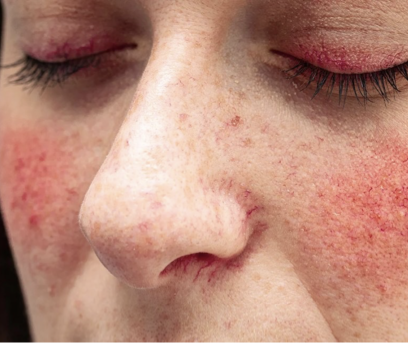
rosacea
chronic inflammatory disorder that primarily affects central face and is characterized by facial flushing, persistent erythema, visible small BVs, papules, and pustules; may also involve eyes and is triggered/worsens in the sun
rosacea treatment
topical treatments include metronidazole and azelaic acid to reduce inflammation; system treatments include doxycycline for severe cases
Discoid Lupus Erythematosus (DLE)
primarily affects the skin and is characterized by red, scaly, disk-shaped lesions that may cause scarring and changes in pigmentation
systemic lupus erythematosus (SLE)
systemic autoimmune disease that manifests on skin as a malar (“butterfly”) rash

Lupus treatment
sun protection, skin lesion treatments by topical corticosteroids/calcineurin inhibitors; hydroxychloroquine to reduce skin manifestations and disease activity but should be cautious of retinal toxicity
erythema multiforme
acute, immune-mediated inflammatory disorder most commonly triggered by herpes simplex (HSV); characterized by distinctive “target” or “bullseye” lesions; usually self-limiting but if associated with HSV, then antivirals

folliculitis
bacterial superficial infection of a hair follicle

furuncle (boil)
deeper bacterial infection of a hair follicle that forms a painful, pus-filled nodule

carbuncle
cluster of interconnected furuncles involving deeper skin and subcut tissue
cellulitis
bacterial infection of the dermis and subcut tissue that causes spreading erythema, warmth, swelling, and tenderness

impetigo
superficial, highly contagious bacterial infection that often produces honey-colored crusted lesions

erysipelas
superficial form of cellulitis with raised, sharply defined erythematous borders

Herpes Simplex virus (HSV)
viral oral/genital infection characterized by painful, grouped vesicles (blisters) that may rupture and ulcerate; after initial infection it becomes latent and periodically reactivates; treated with antivirals like acyclovir
Herpes Zoster
virus that causes shingles and occurs when varicella zoster (chickenpox) reactivates; causes painful vascular rash
warts
benign skin growths caused by HPV; there is verruca vulgaris (common _____) and condyloma acuminata (genital _____)
tinea infections
has dermatophytes which are fungi that infect keratinized tissues; dermatophyte infections are called _____ and are then named according to area of the body affected
candidiasis
fungal infection caused by Candida species that occurs do to an overgrowth of normal Candida in the body; risk factors include antibiotics, warm/moist environments, DM

cutaneous vasculitis
inflammation of small vessels of skin, often due to an immune-mediated response that damages vessel walls; characterized by palpable purpura and red-purple lesions that do not blanch with pressure

urticaria
characterized by hives and result from mast cell activation and histamine release; may be triggered by allergens/meds and is primarily treated with antihistamines

scleroderma
autoimmune connective tissue diease that causes thickening, hardening, and tightening of skin, swollen fingers, and raynaud phenomenon; systemic sclerosis may affect skin and internal organs
Crest syndrome
cutaneous systemic sclerosis that is caused by many different types of sclerosis happening at once
insect bites/stings
cause local rxns that result from inflammatory/allergic responses to saliva/venom, some may develop anaphylaxis in which Epi is used; antihistamines and corticosteroids to treat
(topical) corticosteroids
drugs that treat immune/inflammatory response
malaria
parasitic infection transmitted by infected mosquitoes, parasite infects and destroys RBCs causing life threatening organ complications
yellow fever
viral infection transmitted by infected mosquitoes and occurs primarily in Africa/South America; can only be treated with supportive care bc no known cure
dengue fever
viral infection transmitted by infected mosquitoes and is common in tropicak/subtropical regions; causes bleeding, shock, and organ dysfunctin and has no known cure
lyme disease
bacterial infection caused by B.burgdorferi that is transmitted through bite of infected ticks; characterized by erythema migrans (bullseye rash) and may be accompanied by fever, fatigue, headache and myo/joint aches; treated with antibiotics
zika virus
viral infection typically transmitted by mosquitoes but also through sex and transplacentally; may have mild/no symptoms but causes serious fetal complications w no known cure
seborrheic keratosis
benign skin growth that has a waxy, raised “stuck-on” appearance and is common with aging

nevi (moles)
benign growths of melanocytes that may be flat or raised and vary in color, changes in a mole should be evaluated

actinic keratosis
precancerous lesion caused by chronic UV sun exposure; rough scaly patch on sun exposed skin that may progress into squamous cell carcinoma

keratoacanthoma
rapidly growing, crater-shaped skin lesion that often occurs on sun-exposed skin; resembles squamous cell carcinoma and is typically removed/evaluated

basal cell carcinoma (BCC)
most common form of cancer that is slow-growing and barely metastasizes; often occurs on sundried skin

squamous cell carcinoma (SCC)
arises from keratinocytes and is often associated with chronic UV exposure; can invade surrounding tissue and metastasize

malignant melanoma
cancer of melanocytes that is less common but more likely to metastasize

kaposi sarcoma
vascular malignancy associated with HHV-8 and produces red, purple, or brown lesions; more common with significant immunosuppression

surgical removal
what is main treatment for all skin cancers?
superficial partial-thickness burns
involve epidermis and upper dermis and is red, moist, blistered, and very painful; usually heal without signifcant scarring
deep partial-thickness burns
extend deeper into dermis and may appear red/white, blistered, and less moist; pain may be decreased as nerve endings are damaged
full-thickness burns
destroy the epidermis and dermis, and may extend into deeper tissues; skin may appear white, brown, black, dry, or leathery; may be painless due to destroyed nerves
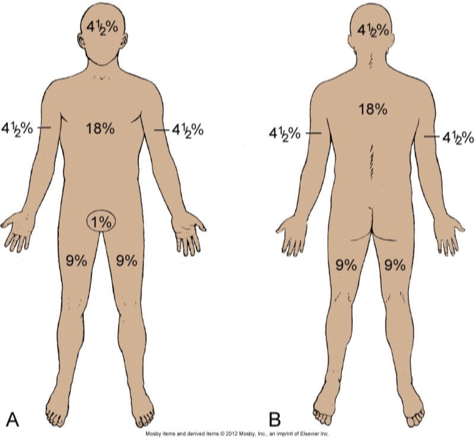
rule of nines
method used to assess the percentage of total body surface area affected by burn
burn shock
early response, extensive burns cause increased capillary permeability shifting fluids into tissues causing edema, hypovolemia, and elecrolyte imbalances
frostbite
freezing injury caused by prolonged exposure to cold, causes vasoconstriction and decreased tissue perfusion resulting in cell and tissue damage; treated by removing from cold and rapidly rewarming in running warm water
androgenic alopecia (male-pattern hair loss)
common/genetic hair loss that occurs because follicles have increased sensitivity to androgens (DHT), causing follicles to miniaturize and thin; treated with topical minoxidil (rogain) or oral finasteride
topical minoxidil (Rogaine)
promotes hair growth and slows hair loss, but continued use is necessary to maintain results
oral finasteride (propecia)
decreases conversion of testosterone to DHT which helps slow follicle miniaturization and hair loss; pregnant women should not use crushed/broken tablets
female-pattern alopecia
common form of progressive hair thinning in women that is influenced by genetic and hormonal factors, follicles gradually miniaturize, typically on crown and top of scalp; treated first-line with topical minoxidil (Rogaine)
alopecia areata
autoimmune, T-cell mediated disorder that targets hair follicles and causes sudden, well-defined patches of hair loss; treated with corticosteroids to suppress immune/inflammatory response
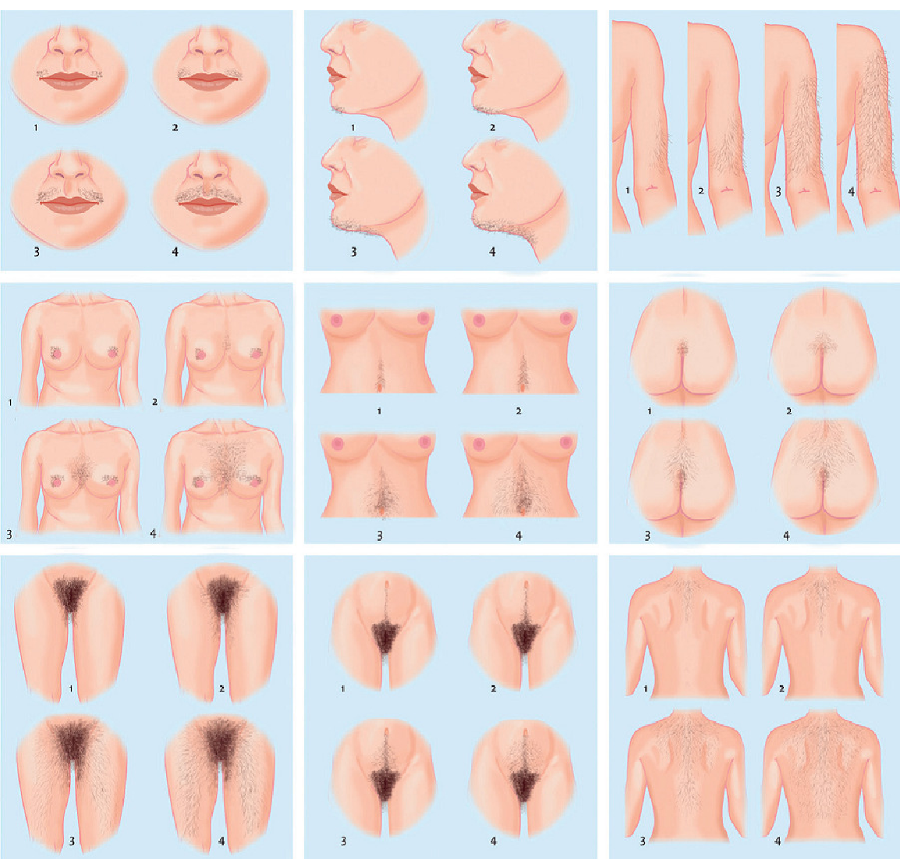
hirstuism
excessive growth of coarse, dark hair in women on androgen-dependant areas (i.e. beard/chest); treatment depends on underlying cause often involves hormonal therapy or cosmetic solutions.
paronychia
inflammation/infection of tissue surrounding the nail and may be acute (typically bacterial) or chronic; causes redness, swelling, tenderness, and sometimes pus

onychomycosis
fungal infection of nail that causes nails to become thickened, discolored, brittle, or distorted; treated with topical antifungals or oral terbinafine if extensive

acne vulgaris
common inflammatory disorder of pilosebaceous follicles and is most common in adolescence and early adulthood; primarily affects areas with many sebaceous glands; typically a result of bacteria C.acnes
noninflammatory ance
type of acne vulgaris characterized by open/closed comedones (pimples) caused by plugging of hair follicles
inflammatory acne
type of acne vulgaris where inflammation develops in/around plugged follicle and may include papules/pustules/nodules
causes of acne vulgaris (inflammatory)
follicular hyperkeratinization, increased sebum production, C.acnes proliferation, and inflammation
acne conglobata
rare, severe form of inflammatory acne characterized by large, painful nodules and abscesses, draining lesions, and scarring; requires dermatologic treatment with oral isotretinoin (Accutane)
topical retinoids
ex: tretinoin, adapalene; prevent follicular plugging and formation of comedones but may cause dryness, irritation, and photosensitivity; avoid during pregnancy
benzoyl peroxide
decreases C.acnes and inflammation and is available as a gel, cream, or wash; may cause dryness/irritation and bleach cloth
topical antibiotics
clindamycin is most commonly used for inflammatory acne, should be used with benzoyl peroxide to reduce development of bacterial resistance
oral antibiotics
may be used for moderate to severe inflammatory acne (ends in “-cycline”) and is usually combined with benzoyl peroxide and/or a topical retinoid; time spent using should be limited as much as necessary
moderate inflammatory acne treatment
oral tetracycline antibiotic used with benzoyl peroxide, continued topical retinoid treatment for long-term maintenance, and potential hormonal therapy in females
severe acne treatment
oral isotretinoin for severe, scarring, or resistant acne; is highly teratogenic so avoid during pregnancy
atopic dermatitis (eczema)
chronic, relapsing inflammatory disorder that involves skin-barrier dysfunction and an abnormal immune response characterized by intense pruritus, erythema/dry skin, crusting, and thickened skin

atopic dermatitis management
avoid triggers, maintain skin-hydration barrier, use topical corticosteroids for acute flares, topical calcineurin inhibitors, antihistamines, possible systemic/biologic therapy
dupilumab (Dupixent)
monoclonal antibody given by subcut injection, blocks IL-4 and IL-13 signaling to decrease inflammation; used for moderate-to-sever atopic dermatitis
oral JAK inhibitors
end in (“-citinib”) reduce inflammatory signaling involved in moderate-to-severe atopic dermatitis
diaper dermatitis
inflammatory skin rxn in diaper area that is most commonly caused by irritant contact dermatitis; prolonged exposure to moisture, urine, and feces damages the skin
staphylococcal scalded-skin syndrome (SSSS)
serious skin disorder caused by S.aureus where its exfoliative toxins cause separation of the superficial layers of epidermis (most common in infants/children); loss of skin barrier increases risk for fluid loss and infection; treated w prompt systemic antibiotics

molloscum contagiosum
contagious viral skin infection caused by a poxvirus and is spread by direct skin-to-skin contact or with contaminated objects; small, firm, dome-shaped papules; usually resolves within 6-18 months

rubella
viral infection spread through droplets and usually causing mild illness, esp in children; manifests as low-grade fever, postauricular/cervical lymphadenopathy, and fine pink/red maculopapular rash from face down; prevented with MMR vaccine
rubeola (measles)
highly contagious viral infection spread by airborne route and manifests as high fever, cough, runny nose, koplik spots (small white on buccal mucosa), and maculopapular rash from face down; prevented with MMR vaccine
roseola
viral illness occurring in infants/young children; characterized by sudden high fever that lasts days, pink/red macular rash from trunk to neck/extremities
scabies
contagious infestation caused by mite S.scabiei; spread primarily through prolonged skin-skin contact where female mites burrow and cause inflammation; first-line is Permethrin 5% cream and washing all clothes/sheets
pediculosis
parasitic infestation caused by lice that feed on human blood and spread primarily through close contact; treated with topical pediculicide and removing nits with fine toothed comb
flea bites
caused by fleas that infest animals, humans, and environment; occurs in clusters/groups (esp on lower legs/ankles) and manifests as intensely pruritic, red papules/wheals; treated by washing area, antihistamines, and topical corticosteroids
bed bugs
caused by blood-feeding insect C.lectularius and typically hides in mattresses, bedding, and furniture; bites cause inflammatory rxn that is typically not treated but all environmental infestations must be removed
infantile hemangiomas
benign vascular tumors caused by abnormal proliferation of blood vessels; shrink overtime but treated with oral propranolol (beta blocker) as first-line

port-wine stain (capillary malformation)
congenital capillary malformation present at birth; flat, pink to red/purple lesion on face or neck that doesnt fade spontaneously; laser therapy may be used

salmon patch (nevus simplex)
common, benign capillary malformation with flat, pink/red lesion that is present at birth but typically fade with time; common on nape of neck “stork bite” or eyelids “angel kiss”

miliaria (heat rash)
caused by blocked eccrine ducts which traps sweat within skin; common with heat, humidity, and excessive sweating; _______ crystallina is the most superficial form with little inflammation/redness while ________ rubra (“prickly heat”) is a deeper obstruction with inflammation
