AP Psychology Unit 1
 Call Kai
 Learn
Learn Practice Test
 Spaced Repetition
 Match
Match Flashcards
 Knowt Play
1/44

There's no tags or description
Looks like no tags are added yet.
Name | Mastery | Learn | Test | Matching | Spaced | Call with Kai | Chat |
|---|
No analytics yet
Send a link to your students to track their progress
45 Terms
Evolutionary Psychology
study of how psychological traits and behaviors have evolved over time to enhance survival and reproductive success
seeks to understand universal human behaviors and mental processes through the lens of evolutionary principles
Natural selection
organisms with traits that are better suited to their environment are more likely to survive and reproduce, passing on those advantageous traits to future generations.
Nature “genes”
biological and genetic factors that influence an individual’s psychological development: traits, behaviors, and cognitive abilities
concrete example:
how smart we are
genetic disorders
natural temperament
Nurture
environmental influences and experiences that shape an individuals psychological development; behaviors, traits and cognitive process
Concrete example:
culture
socioeconomic status
access to resources
exposure to media
Twin studies
examines similarities and differences between identical and fraternal twins to assess the relative influence of genetics and environment on traits and behaviors.
Concrete examples:
jim twin study
Adoption studies
examines similarities between adopted children and their biological and adoptive families to assess the impact of genetics verses environment on traits and behaviors.
Family studies
examines similarities and differences among family members, including parents and siblings, to understand the interplay of genetics and environment in shaping traits and behaviors within a family unit.
Heredity
transmission of genetic information from biological parents to offspring
concrete examples:
heritability: helps us figure out how much of our traits come from our genes and how much comes from our environment
Genetic predisposition
inherited likelihood of developing specific traits or conditions due to genetic factors from biological factors
concrete example:
anxiety
depression
Eugenics
The belief in improving the genetic quality of a human population by controlling reproduction to increase desirable traits and decrease undesirable ones
concrete example:
Nazi movement
selective breeding
mnemonic:
“good in birth”

Cerebal cortex
outer layer of the brain, responsible for higher-level cognitive functions, including thinking, perceiving, and decision-making
highly folded to increase it’s surface area, allowing for complex neural processing and integration of information and is divided into two hemispheres with four distinct lobes.
Concrete example:
grey matter is where the brain’s “thinking” happens containing the cell bodies of neurons
white matter acts as the brains wiring
mnemonics:
grey matter = processor
white matter= cables

Lobes of the brain
refer to the four main regions or sections into which the cerebral cortex, outer layer of the brain is divided
frontal, temporal, occipital, and parietal
FPOT
Association centers
parts of the brain that take information from all over the place- like what see, hear, smell, and touch and put it together to help us understand the world around us
Concrete examples:
primary motor complex
primary auditory area
primary visual cortex
Mnemonics
associates
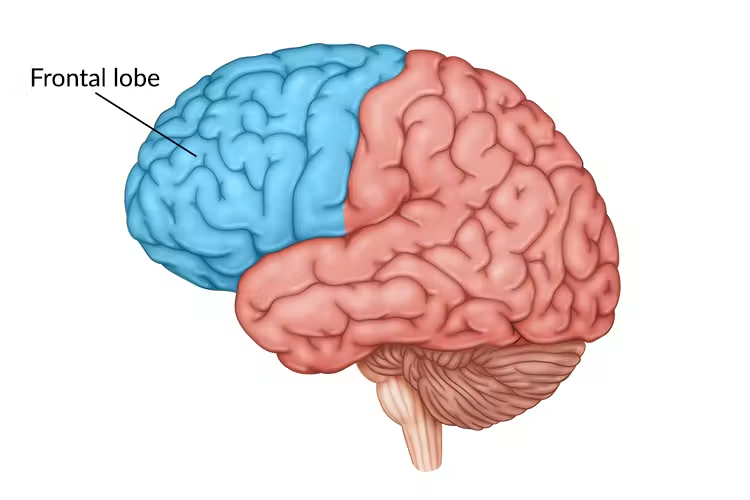
Frontal lobe (executive control center)
Located at the front of the brain and involved in high-level cognitive functions including decision- making, problem solving, planning, and personality expression

Prefrontal cortex
region of the brain located in the frontal lobe, responsible for higher-level cognitive functions and executive functioning
concrete examples:
plan
organize
regulate emotions
focus attention
manage time

Motor cortex
region of the brain located in the frontal lobe responsible for planning, executive, and controlling voluntary movements of the body
concrete examples
walking
talking
grasping
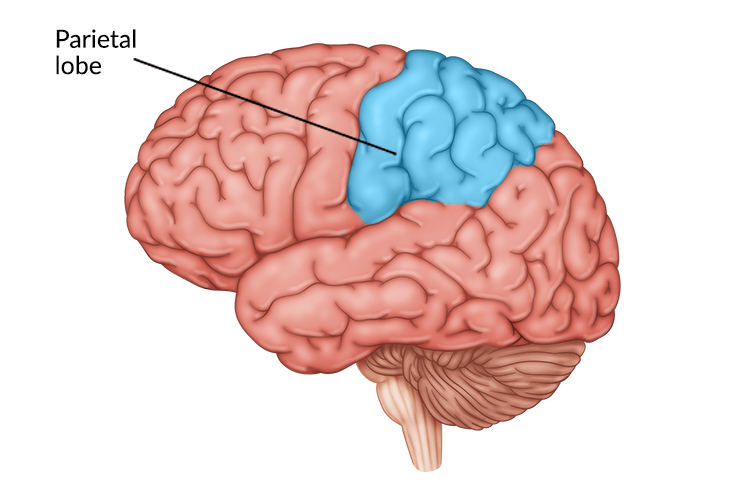
Parietal lobes (sensory processing hub)
located at the top of the brain and is primarily responsible for processing sensory info from the body such as touch, temperature, and spatial Awareness
mnemonic:
“GPS” for body awareness

Somatosensory cortex
region of the brain located in the parietal lobe, responsible for processing sensation from the skin, muscles, and joints
concrete examples:
walking on the beach
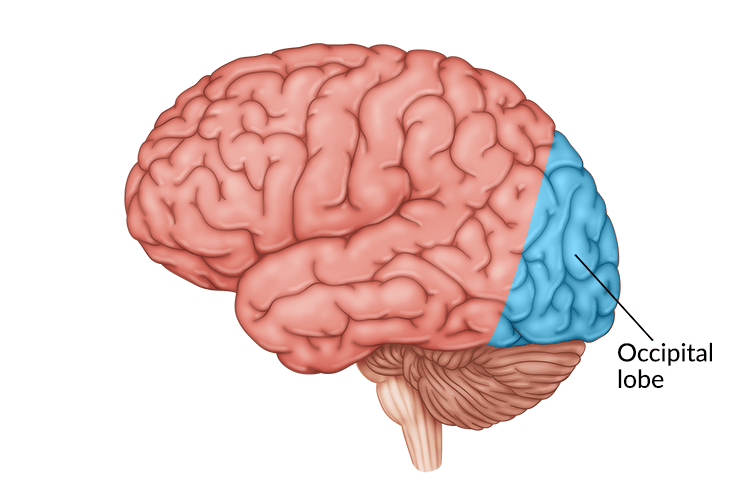
Occipital lobes (visual processing center)
located at the back of the brain and is primarily responsible for processing visual information received from the eyes
Mnemonic:
eyes in the back of your head

Temporal lobes (auditory center)
located on the sides of the brain and are involved in processing auditory info, language comprehension, and memory formation
interprets sound signals from the ears
houses memories, emotions, and language comp

Corpus callosum
thick band of nerve fibers that connects the left and right hemispheres of the brain, facilitating communication and info between the 2 hemispheres
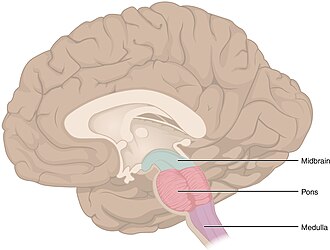
Brain stem
responsible for basic-life sustaining functions such as breathing, heart rate, and sleep wake cycles
divided into 3 structures stacked on top of other

Medulla
vital structure located at the base of the brain stem regulating functions such as heartbeat, breathing, and blood pressure

Reticular activating system
a network of neurons located in the brain stem that plays a critical role in regulating arousal, attention, and consciousness
concrete example:
waking up with alarm

Cerebellum
located at the back of the brain, below the cerebral hemispheres, responsible for coordinating movement, balance, and posture
Concrete examples
walking in a straight line

Limbic system
set of brain structures involved in emotions, memory, and motivation
Reward center
network of brain structures primarily located in the limbic system, that processes the pleasurable experiences and reinforces behaviors associated with them
concrete examples:
food

Thalamus
a relay station in the brain that processes and relays sensory info such as sight, sound, touch, and taste to the cerebral cortex

Hypothalamus
small structure located below the thalamus responsible for regulating various essential bodily functions, including hunger, thirst, body temperature, and sleep-wake cycle
Mnenomic:
TANHATS
Thirst
Apetite
Neurohypothesis
Hunger
Autonomic
Temperature
Sexual

pituitary gland
small pea-sized gland located at the base of the brain, referred to as the “master of gland” due to it’s central role in regulating hormone production and secretion throughout the body
concrete example
Lincoln and his abnormal height

Hippocampus
region of the brain located in the temporal lobe primarily responsible for forming and consolidating new memories
concrete examples:
studying for a test

Amygdala
small, almond shaped structure located deep withing the brain’s temporal lobes, involved in processing emotions, particular fear and aggression
concrete example:
fight or flight
Mnemonic:
fighting Aime
Nervous system
The body’s communication network consisting of a complex system of nerves, neurons, and specialized cells
Central Nervous System
Brain and spinal cord command the center of the body responsible for processing information, coordinating responses, and regulating bodily functions.
peripheral nervous system
consists of all the nerves and ganglia outside the brain and spinal cord. Serves as communication network transmitting sensory info to the CNS.
Autonomic nervous system
Division of the peripheral nervous that regulates involuntary bodily functions, it operates automatically, without conscious control. Contains two main branches: sympathetic nervous system and parasympathetic nervous system
Mnemonic:
Automatic
Sympathetic nervous system
Responsible for activating the body’s “fight or flight” response in times of stress or danger.
Concrete examples:
sweating
pupils dialate
muscle strength goes up
Parasympathetic nervous system
Responsible for promoting relaxation and restoring the body to a calm state after experiencing stress or danger
Mnemonics:
rest and digest
Somatic nervous system
Division of the peripheral nervous system responsible for controlling voluntary movements and relaying sensory info from the body to the CNS
Neurons
Specialized cells that serves as the building block of the nervous system, transiting electrical and chemical signals throughout the body. Consists of 3 main parts: the cell body, dentrities, and axon
Gilal cells
The “support cells” of the nervous system provide structural support, insulation, and nourishment to the neurons. Maintaining brain health and supporting neuronal function.
Mnemonic:
construction crew
Motor neurons
nerve cells that transmit signals from the central nervous system (brain and spinal cord) to muscles, glands, and organs, initiating and controlling voluntary and involuntary movements.
Mnemonic:
motor = message sender
sensory neurons
Specialized nerve cells that transmit sensory information from sensory receptors such as those in the skin, muscles, and organs to the CNS
Mnemonic:
message receivers
Interneurons
Nerve cells that serve as connectors within the CNS relaying signals between sensory neurons and Motor neurons
Mnemonic:
message processors
Reflex arc
neural pathway that controls reflex actions allowing for rapid, automatic responses to sensory stimuli without conscious thought