Amp II exam I blood + Practical
 Call Kai
 Learn
Learn Practice Test
 Spaced Repetition
 Match
Match Flashcards
 Knowt Play
1/47

There's no tags or description
Looks like no tags are added yet.
Name | Mastery | Learn | Test | Matching | Spaced | Call with Kai | Chat |
|---|
No analytics yet
Send a link to your students to track their progress
48 Terms
What is Blood composed of?
Plasma (46-63%)
Formed elements (37-54%)
What is plasma composed of?

What are form elements composed of?


Name these layers

What do all formed elements originate from?
pluripotent stem cells. These cells form many different structures in the body from skin to immune system to blood
They form hematopoietic stem cells • Common Myeloid Progenitor – red blood cells, granulocytes, monocytes, platelets • Common Lymphoid Progenitor - lymphocytes
What does WBC, RBC stand for?
# of white/red blood cells per volume blood analyzed
What does HGB stand for?
mass of hemoglobin found in a given volume of blood
What does HCT stand for?
hematocrit; %RBC by volume
What does MCV stand for?
mean corpuscular volume; approximates size of a typical red blood cell
What does MCH stand for?
mean cell hemoglobin; average amount of hemoglobin within each red blood cell
What does MCHC stand for?
mean corpuscular hemoglobin concentration; amount of hemoglobin in a packed volume of cells
What does RDW stand for?
red blood cell distribution width; approximates fluctuation in MCV from cell to cell
What does PLT stand for?
# of platelets per volume blood analyzed
What is the structure of red blood cells and how does it complement function?
• “Biconcave” shape allows RBCs to bend, fold and “stack” to prevent blockage in capillaries
• Biconcavity also increases surface area for gas exchange (O2 and CO2)
• Anucleate: non-mitotic, carry very little DNA, unable to synthesize proteins • Prone to apoptosis (average lifespan: 120 days)
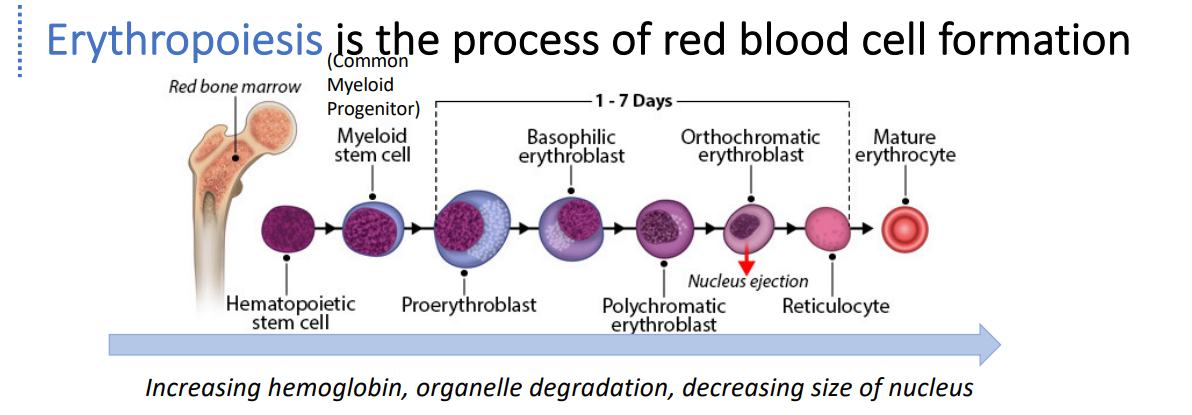
How do red blood cells form?
• Proerythroblast executes a gene transcription program that begins its conversion into a mature red blood cell.
• Basophilic erythroblast contains many ribosomes and begins producing proteins required by mature red blood cells (like hemoglobin).
• Intermediate cell types are characterized by the amount of hemoglobin, degree of organelle degradation, and size of nucleus (which gets continuously smaller).
• The nucleus is ejected at the Orthochromatic erythroblast stage.
• Reticulocytes are characterized by biconcave shape and eventually mature into erythrocytes.
How is erythropoiesis (production of red blood cells) regulated?
• Hypoxia and testosterone both signal EPO (erythropoietin hormone) release from kidneys
• EPO drives erythrocyte maturation
• “Blood doping”: artificially inducing polycythemia (abnormal increase in red blood cells) • Testosterone injections
• EPO supplementation
• Infusion of highly-packed RBC suspensions
• All of these are dangerous and not allowed in competitive sports

What is hemoglobin?
an iron-rich protein found in red blood cells that carries oxygen from your lungs to the rest of your body and returns carbon dioxide back to the lungs
• Globular, tetrameric protein • Each chain contains a heme group that binds oxygen using iron • Oxyhemoglobin = bound to O2
• Deoxyhemoglobin = no O2 bound • Binding sites for O2 are cooperative
• In addition to O2, hemoglobin can also bind to CO2 (good) and CO (bad)
• Affinity of O2 is higher than CO2 • Affinity of CO is higher than O2
How is iron recycled through the body?
Heme converted to biliverdin (spleen), then bilirubin (mostly liver) At the liver, some is incorporated into bile In intestine, some bilirubin is converted to stercobilin and incorporated into feces Iron is bound to transferrin, then transported to bone marrow for erythropoiesis Fate of Heme: Fate of Iron:

How are leukocytes classified?
Granulocyte and Agranulocyte
What leukocytes fall under Granulocytes?

What leukocytes fall under Agranulocyte?

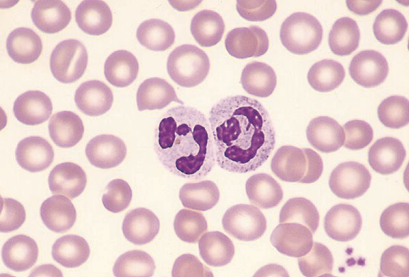
What type of leukocytes are these?
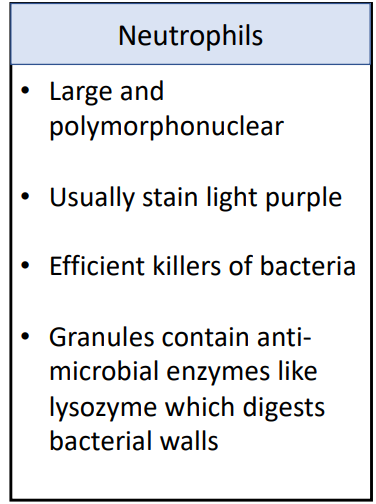
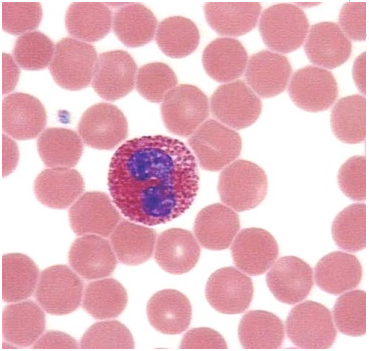
What type of leukocytes are these?


What type of leukocytes are these?
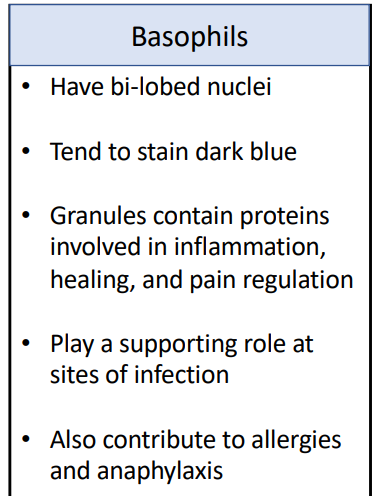
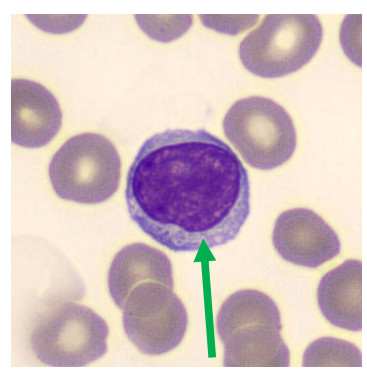
What type of leukocytes are these?


What type of leukocytes are these?
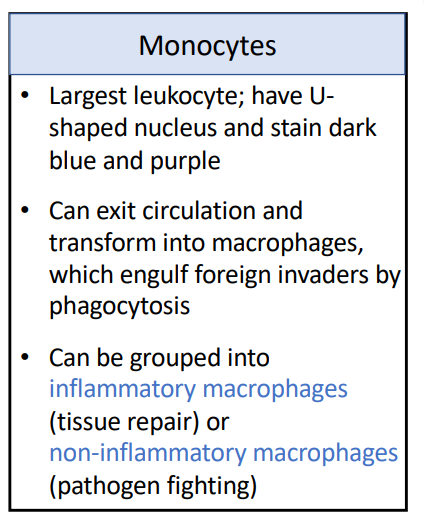
How are Granulocytes and Monocytes produced?
• Pluripotent stem cells > Hematopoietic stem cells > Common Myeloid Progenitor > Myeloblast
• For monocytes: •Myeloblasts become promonocytes on their way to becoming monocytes.
• For granulocytes: • Myeloblasts become myelocytes and begin to produce type-specific granules. • Myelocytes continue to differentiate, and nuclei elongate. Cells are known as band cells. • Band cells mature, the nuclei begin to take on the lobed shape characteristic of the fully mature cells.

How are Lymphocytes produced?
• Pluripotent stem cells > Hematopoietic stem cells > Common Lymphoid Progenitor > Lymphoblast
• Lymphoblasts destined to become B-cells will remain in the bone marrow to mature
• Lymphoblasts destined to become T-cells migrate to the thymus to mature (More on this later).


Remember dis

Remember dis

What are the stages to hemostasis? (repair of damaged blood vessels
Vascular Spasm: The damaged blood vessel walls narrow and constrict immediately to slow down blood flow.
Primary Hemostasis (Platelet Plug): Tiny cell fragments called platelets stick to the wound and group together to form a temporary plug.
Secondary Hemostasis (Coagulation): Proteins in the blood (coagulation factors) trigger a clotting cascade that creates a strong mesh of fibrin to permanently stabilize the plug.
WATCH A VIDEO ON THIS
What are the pathways leading to activation of clotting factors?
Intrinsic – damage to blood vessel only
• Extrinsic – damage to blood vessel and surrounding tissue
• Clotting factors are synthesized in the liver – vitamin K dependent process
• Factors secreted as zymogens (inactive enzyme) to avoid inappropriate clotting
• Both pathways lead to platelet recruitment and activation of thrombin
• Thrombin triggers activation of Fibrin

What is the function of plasma in blood?
Acts as a transport medium for nutrients, hormones, and respiratory gases; maintains blood pressure, osmotic balance, and body temperature
What is the function of red blood cells in blood?
Transport oxygen from the lungs to body tissues and carry away carbon dioxide back to the lungs.
What is the function of white blood cells in the blood?
Defend the body against pathogens, foreign invaders, and infections, and clean up cellular debris.
What is the function of platelets in the blood?
Initiate blood coagulation (clotting) by clumping together and working with plasma proteins like fibrinogen to seal damaged blood vessels and stop bleeding
What does water do in plasma?
Acts as the primary solvent and fluid medium. It suspends blood cells, regulates body temperature by absorbing and releasing heat, and maintains adequate blood volume and pressure for circulation
What do plasma proteins do in plasma?
Albumin: The most abundant plasma protein; maintains colloid osmotic (oncotic) pressure to keep fluid inside blood vessels and transports hormones, vitamins, and medications.
Globulins: Includes alpha, beta, and gamma globulins (antibodies/immunoglobulins). They transport lipids, iron, and fat-soluble vitamins, and play a critical role in immune defense against pathogens.
Fibrinogen: A crucial clotting factor that converts into a mesh of fibrin during tissue injury to stop bleeding
What do electrolytes do in plasma?
Importance: Maintain osmotic balance, support proper pH (acid-base) balance, and enable nerve signaling and muscle contraction.
What do nutrients and dissovled substances do in plasma?
Deliver essential fuel and building blocks directly to body cells and tissues.
What do hormones do in plasma?
Coordinate and regulate metabolic activity, growth, and stress responses across organ systems.
What is plasma?
the pale-yellow liquid part of your blood or a superheated, electrically charged gas that makes up most of the universe
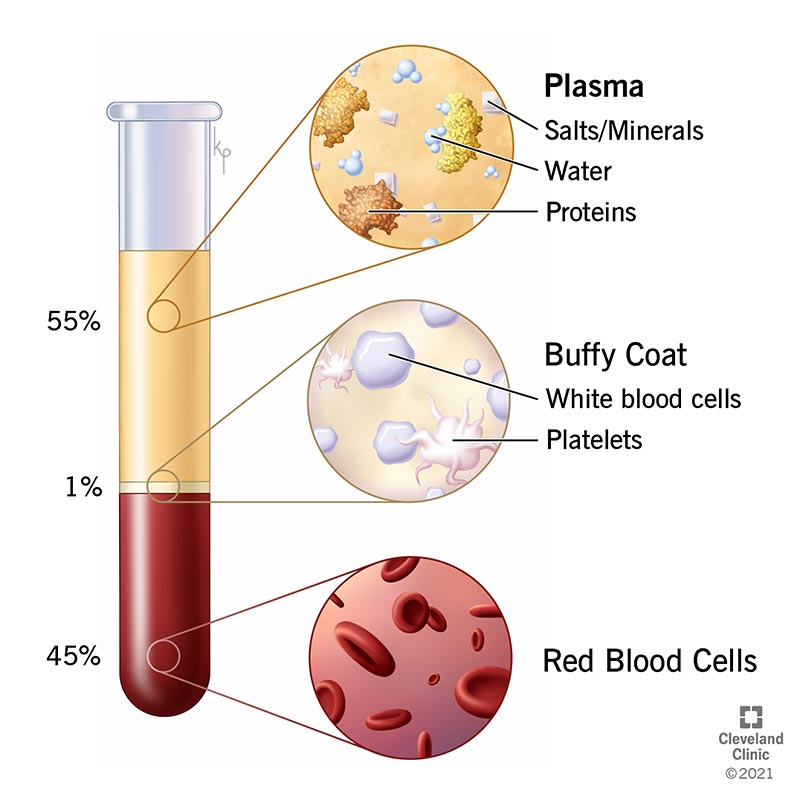
What are formed elements?
cellular components and cell fragments suspended in blood plasma

What is the buffy coat?
A buffy coat is a thin, pale middle layer of centrifuged blood that contains most of the white blood cells and platelets

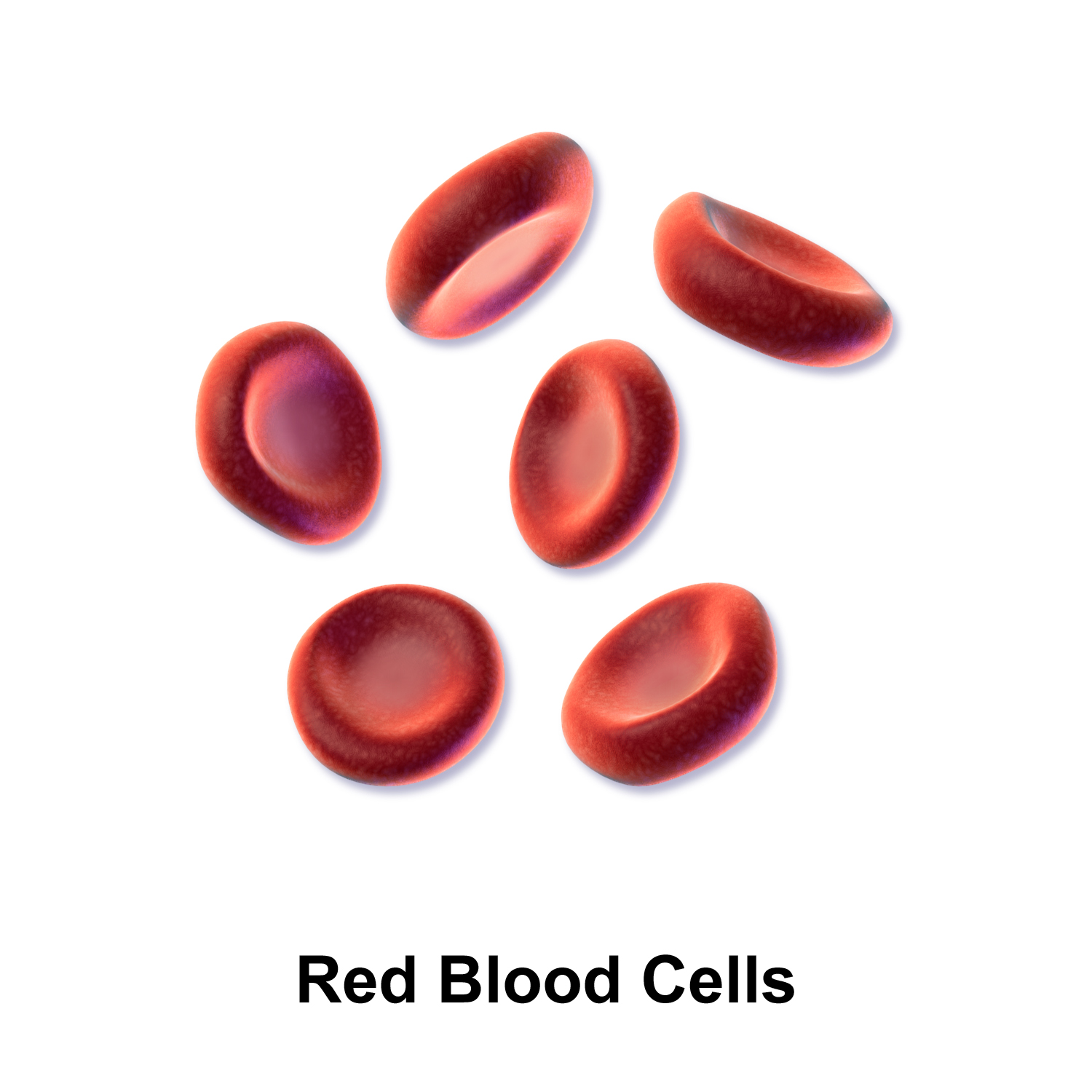
What are red blood cells?
microscopic, disc-shaped cells produced in your bone marrow that carry oxygen from your lungs to the rest of your body
What are Leukocytes?
white blood cells, are vital cells of the immune system produced in the bone marrow that protect the body against infections and diseases

What are Platelets?
are tiny cell fragments in your blood that stick together to stop bleeding when you are injured

Remember this
