anti anginal drugs (treatment of ischemic heart disease)
 Call Kai
 Learn
 Practice Test
 Spaced Repetition
 Match
 Flashcards
 Knowt Play
1/80

There's no tags or description
Looks like no tags are added yet.
81 Terms
verapamil brand name
Calan SR
verapamil therapeutic uses (4)/ dosage form
oral ER
1) hypertension
2) chronic stable angina
3) prinzmetals angina (variant angina)
4) av node-dependent supraventricular tachyarrhythmias (PSVT)
verapamil dosing frequency conventional vs er
2-3 times per day vs once
verapamil moa
non-selective block of L-type Ca channels
verapamil first pass metabolism with what enzyme to what product (inactive or active)
CYP3A4 to norverapamil which is active and contributes to efficacy
verapamil contraindications (2)
1) congestive heart failure (CHF) or with mild left ventricular dysfunction
being treated with B-blockers
2) Avoid use in patients with severe left ventricular dysfunction
verapamil warnings and precautions (4)
1) Can cause or worsen cardiac hypertrophy, heart failure and/or pulmonary edema
2) Can adversely impact cardiac conduction
3) Can induce hypotension
4) Can cause acute liver injury
verapamil adverse effect
pt’s with liver dysfunction shld be monitored for signs of “overdosage”
verapamil ddi’s compared to diltiazem
verapamil is worse
verapamil ddi’s (3)
– Caution when co-administering with B-blockers, antihypertensive drugs, anti-arrythmia agents
– Verapamil exposure can be increased if co-administered with CYP3A4 inhibitors
– Verapamil is a strong inhibitor of CYP3A
Can cause an increase in plasma levels of other drugs that are significantly metabolized by CYP3A4
diltiazem brand name
Cardizem CD/LA
diltiazem dosage form/ therapeutic uses (4)
oral ER
1) hypertension
2) chronic stable angina
3) variant angina
4) PSVT
dilitazem conventional vs er dosing
2-3 doses per day vs one
diltiazem moa
non-selective block of L-type Ca channels
diltiazem first pass metabolism/ metabolite
CYP3A4 to des-acetyl diltiazem (active, contributes to efficacy)
diltiazem contraindications (2)
1) Contraindicated for use in patients with congestive heart failure (CHF) or with agents that slow cardiac conduction (e.g., B blockers)
2) Avoid use in patients following acute myocardial infarction with pulmonary congestion
diltiazem warnings/precautions (3)
Can adversely impact cardiac conduction
Can induce hypotension
Can cause acute liver injury
diltiazem adverse effects
Generally well-tolerated and serious adverse reactions are rare
– Most frequent adverse effects include edema, headache, nausea, dizziness, rash and asthenia
diltiazem ddi’s (2)
1) Diltiazem exposure can be increased if co-administered with CYP3A4 inhibitors
2) Diltiazem is a moderate inhibitor of CYP3A
• Can cause an increase in plasma levels of other drugs that are significantly metabolized by CYP3A4
B1 blockers vs non DHPs first line for what
stable angina vs variant angina
2 beta blockers to know for angina
metoprolol and bisoprolol
metoprolol brand name
Toprol XL
metoprolol vs bisoprolol (selectivity, lipophilicity, half life, cns affects)
metoprolol is moderately selective for B1, bisoprolol is highly selective
B is more lipophilic/ longer half life
B doesn’t need a special formulation to be once daily dosing
both don’t have CNS effects
Endogenous NO is produced by how many cells and has roles within what other 4 system
many cells in the body; roles in platelets, immune, GI regulation, CNS signaling
production of NO by the vascular endothelium regulates what
blood flow
how is endogenous NO made
through nitric oxide synthase (NOS) from L arginine
the activity of NOS is dependent on what
Ca and calmodulin
how does NO exert its function (4 steps, what does it activate,etc)
1) diffuses into smooth muscle cells
2) binds to GC
3) GC turns GTP —> cGMP
5) regulates vascular relaxation somewhat by inhibiting CA entry into smooth muscle cells
deactivation of endogenous NO (2 ways)
1) binds to hemoglobin in blood and deactivated as a nitrate (NO3)
2) deactivated by intracellular oxidants
endogenous NO net half life
less than 5 secs
what deactivates cGMP
Phosphodiesterases (PDE)
what 3 ways can vascular relaxation be enhanced by in relation to NO
1) increasing NO bioavailability
2) directly activating/enhancing GC activity
3) inhibiting breakdown of cGMP by PDE’s
what mechanism do organic nitrate vasodilators use (of the 3) and what can this treat
increase NO bioavailability to treat angina
What are the GC stimulators and PDE5 inhibitors used for
GC: pulmonary arterial hypertension (PAH)
PDE5: PAH and erectile dysfunction
organic nitrate vasodilators are contraindicated to what drugs and why
GC stimulators/PDE5 inhibitors bc of severe hypotension (lot of cGMP)
organic nitrates are what type of drug and sources of what
ester prodrugs; sources of exogenous NO
other sources of exogenous NO
sodium nitroprusside and NO gas
primary CV effects of organic nitrates (3)
1) systemic vasculature
2) cardiac cells
3) coronary arteries
effect on systemic vasculature
vasodilatiion so decrease in pressure —> venous > arterial
effect on cardiac cells (2)
decrease in wall stress bc reduces afterload/preload, decreased o2 demand
effect on coronary arteries (3)
prevention/reversal of vasospasm, vasodilation/improvement of subendothelial perfusion, increase o2 supply
3 organic nitrates
nitroglycerin (GTN), isosorbide mononitrate (ISMN), isosorbide dinitrate (ISDN)
nitroglycerin prodrug conversion (where, what enzyme, what product)
reduced to 1,2-glyceryl dinitrate and nitrite (NO2 - ) in the mitochondria by ALDH-2
what happens to NO2- after to become NO (2)
NO2 - requires further bioactivation
1) reduction by the respiratory chain to yield NO
2) acidic disproportionation to yield NO
how are ISMN and ISDN bioactivated, and how many steps
1; by P450 enzyme(s) in the endoplasmic reticulum (smooth ER) directly yielding NO
when is nitroglycerin bioactivated in the smooth ER
at higher doses
nitroglycerin dosage forms and frequency
oral (spray, sublingual, buccal), transdermal, IV
2-4 times daily
ISMN dosage form and frequency
oral, ER formulation
twice daily for ER
ISDN dosage from and frequency
oral capsule, ER capsule
once daily for ER
organic nitrates most bioavailable to least
ISMN (100%), GTN (40%), ISDN (25%)
organic nitrates half life most to least
ISMN (5 hours), ISDN (1 hour), GTN (3 min)
GTN metabolism/excretion (turned into what and where)
reduced to less vasoactive dinitro/mononitro metabolites in liver, RBCs, and vascular wall
ISMN metabolism/excretion (where)
kidney - 100% of single dose excreted in 5 days
ISDN metabolism/excretion
Metabolized and excreted via formation of (active) mononitro metabolites
therapeutic uses of organic nitrates (2)
1) chronic stable angina
2) variant (prinzetal’s angina)
chronic stable angina drug preferred
GTN for rapid treatment/ acute prophylaxis before exertion/exercise
“long acting” nitrates (ISMN, ISDN, GTN ER) for prophylaxis in pt’s with more occasional episodes
drug preferred for Variant (Prinzmetal’s) Angina
Long-acting nitrates are used in combination with additional agents
toxicity and adverse effects of organic nitrates (frequency, and what)
rare, only from vasodilatory MOA
headache, hypotension, syncope, rash (less common)
what diminishes with frequent or continuous administration
the antianginal efficacy of organic nitrates
MOA of vascular tolerance to organic nitrates
Reduced capacity of vascular cells to produce NO from nitrate vasodilators
Increase in superoxide and peroxynitrite production contributes to vascular tolerance by decreasing NOS activity & inhibition of GC, ALDH2
MOA of pseudo-tolerance to organic nitrates
acute neurohormonal activation of vasoconstrictor signals and the response to an increase intravascular volume
one common way organic nitrates therapy is given to prevent tolerance
avoid high doses & interrupt therapy for 8-12 hours daily
GTN tolerance prevention
omit night doses with exertional (stable) angina; use patches to treat nocturnal angina
ISDN/ISMN way to prevent tolerance
manage tolerance via dose schedule
2 miscellaneous anti-anginal drugs
ivabradine and ranolazine
ivabradine therapeutic uses and what line of treatment
1) treatment of stable angina in patients in whom B−blockers are not tolerated or are not sufficiently efficacious (2nd line agent)
2) reduce morbidity and mortality risks of HFrEF (heart failure with reduced ejection fraction) (2nd line agent)
No benefit at reducing all-cause morbidity and mortality, but may reduce heart failure hospitalizations
ivabradine formulation
oral/solution
ivabradine MOA (blocks what to reduce what)
Selective block of cardiac HCN (Hyperpolarization-activated Cyclic Nucleotide-gated) channels to reduce heart rate, but not cardiac contractility -> reduced O2 demand
warnings/ contraindications (3)
1) Visual changes (“phosphenes”) can follow from effect on retinal HCN channels
2) Contraindicated to cardiac conduction syndromes, bradycardia, hypotension & use during pregnancy
3) Can cause and/or be a victim of CYP3A4-based drug-drug interactions
ranolazine formulation/ therapeutic uses/combos
oral ER
treatment of stable angina (2nd line)
can be combined with many other CV drugs
ranolazine MOA is not fully known, but what is known
Follows in part from the inhibition of several cardiac ion fluxes -> maintains Na+ , Ca++ homeostasis
is ADME similar between enantiomers
yes
warnings / contraindications
1) Can cause and/or be a victim of CYP3A4-based drug-drug interactions –2) Most frequent adverse effects are dizziness, headache, nausea, constipation
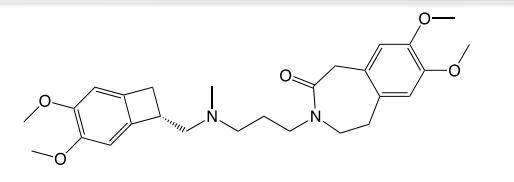
ivabradine

isosorbide mononitrate

ranolazine

nitroglycerin

isosorbide dinitrate
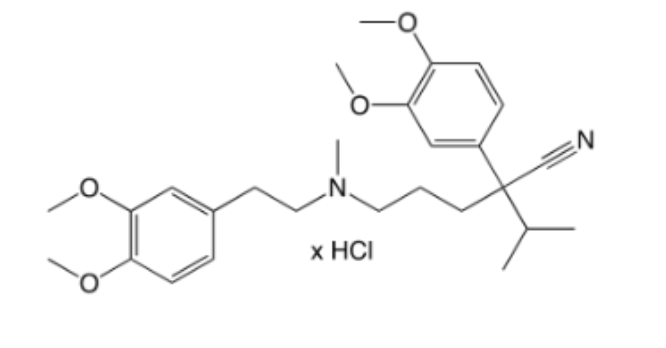
verapamil

diltiazem

metoprolol