Anatomy Unit 3
 Call Kai
 Learn
 Practice Test
 Spaced Repetition
 Match
 Flashcards
 Knowt Play
1/463

There's no tags or description
Looks like no tags are added yet.
464 Terms
The Respiratory System functions to ____
provide ventilation and the exchange of the gases
Oxygen is the gas that is
inhaled and used by the body to ultimately make ATP
Carbon Dioxide is a ___
waste product of cellular metabolism that must be exhaled

Frontal sinus

Sphenoid sinus

Nasal cavity

Nasal conchae
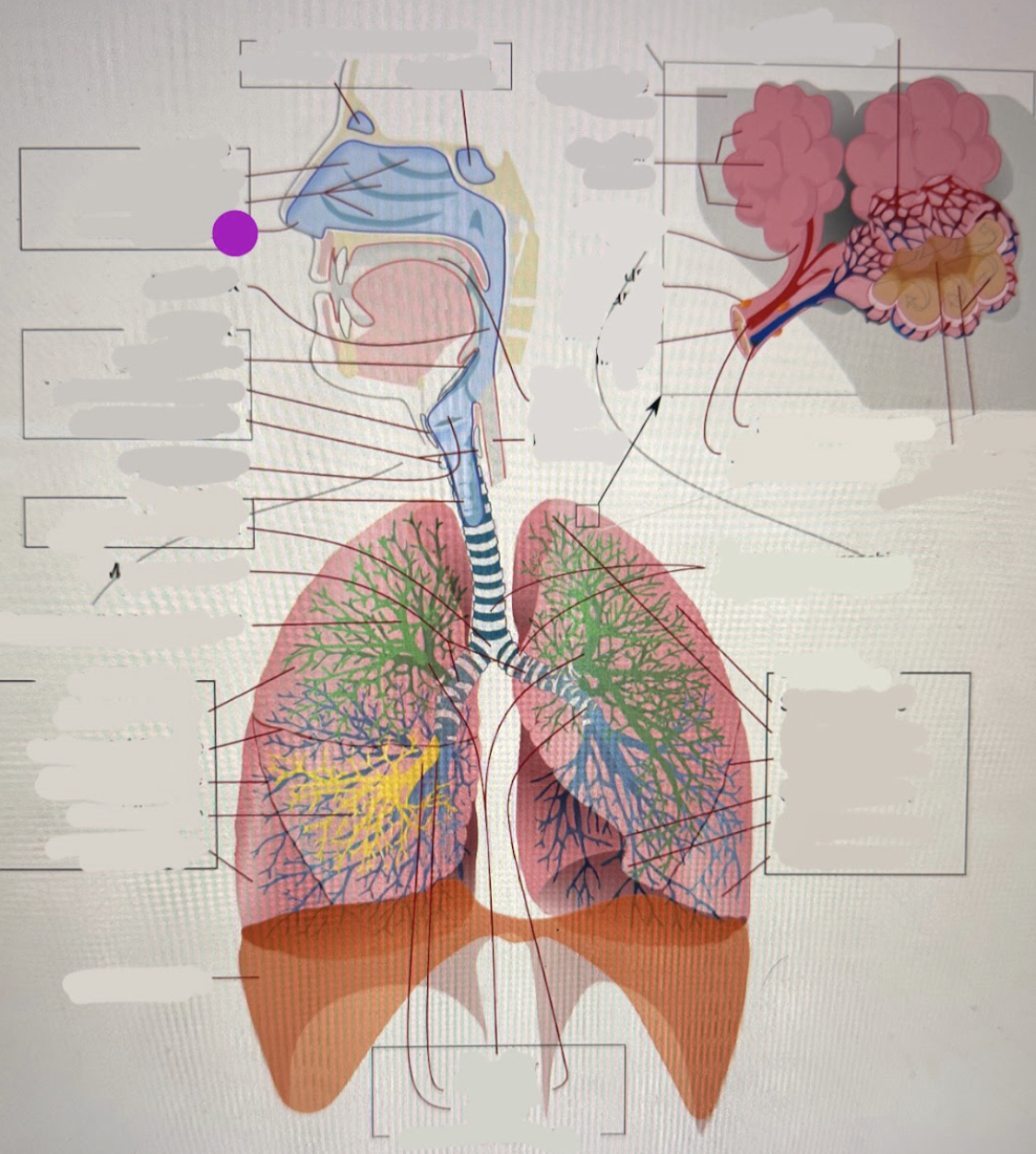
Nasal vestibule
Nose consists of
Nasal cavity
Nasal conchae
Nasal vestibule

Oral cavity

Esophagus

Pharynx
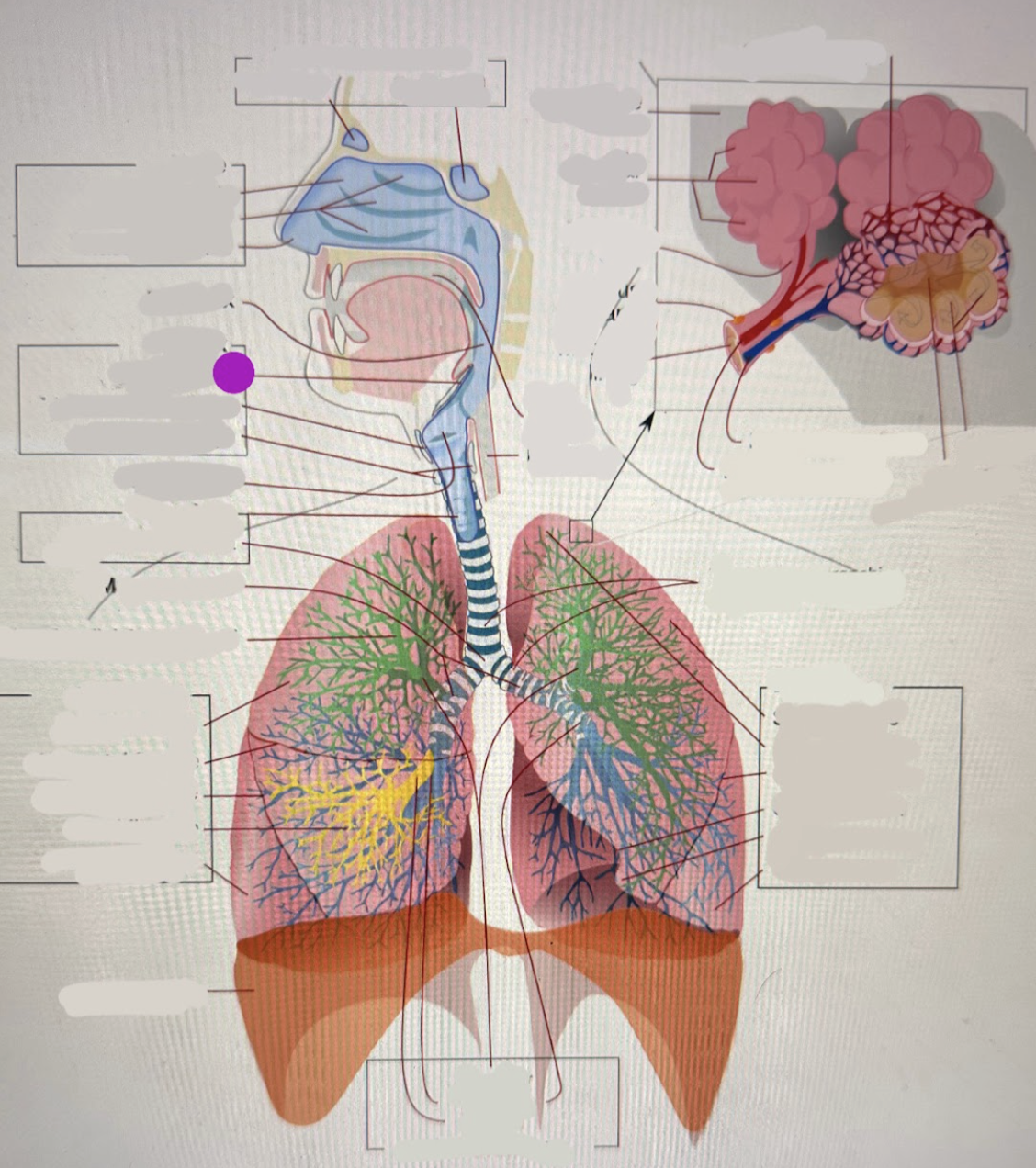
Epiglottis

Thyroid cartilage
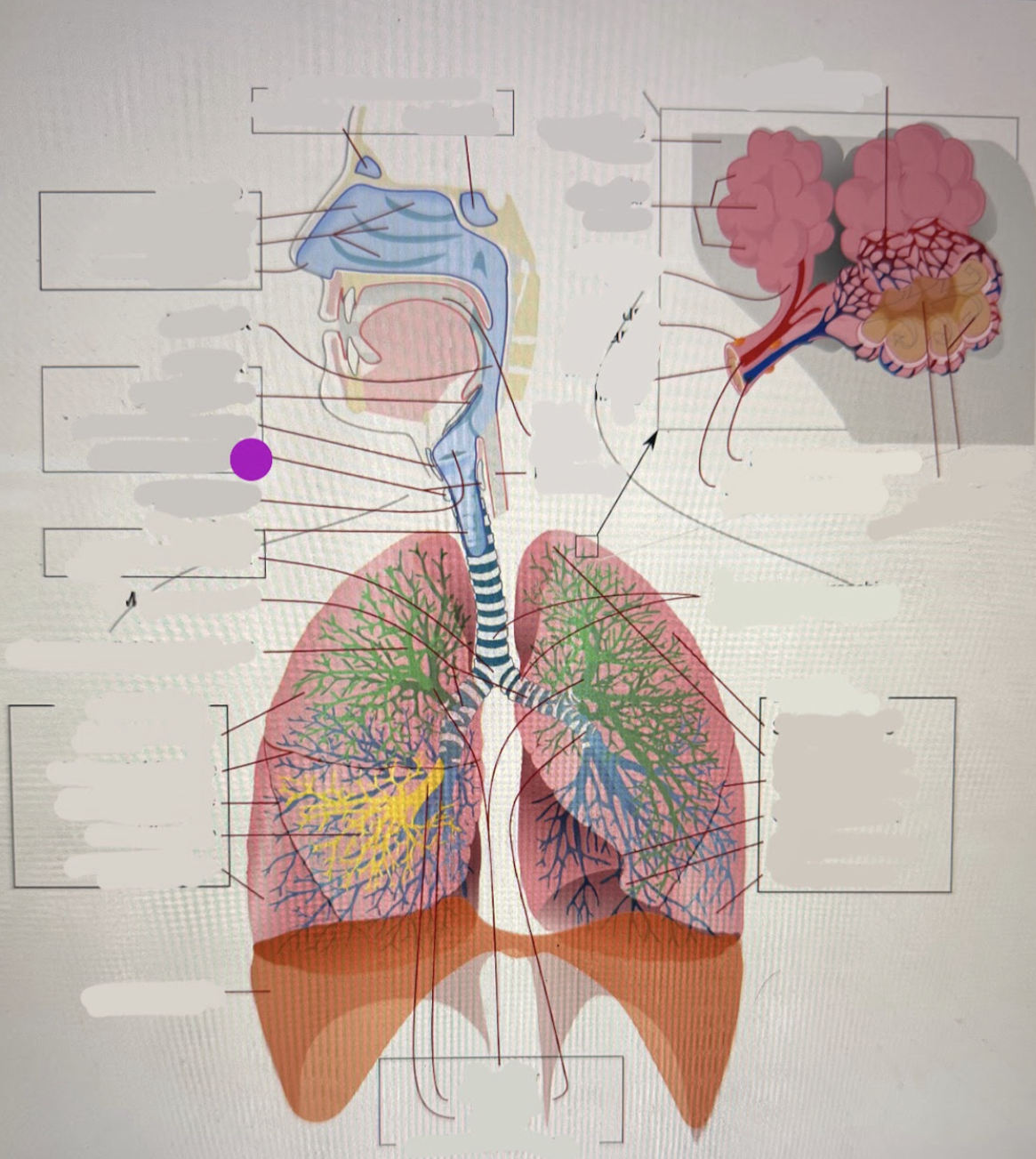
Cricoid cartilage
Larynx consists of
Epiglottis
Thyroid cartilage
Cricoid cartilage
Paranasal sinuses consists of
Frontal sinus
Sphenoid sinus

Vocal folds

Trachea

Carina of Trachea

Main bronchi
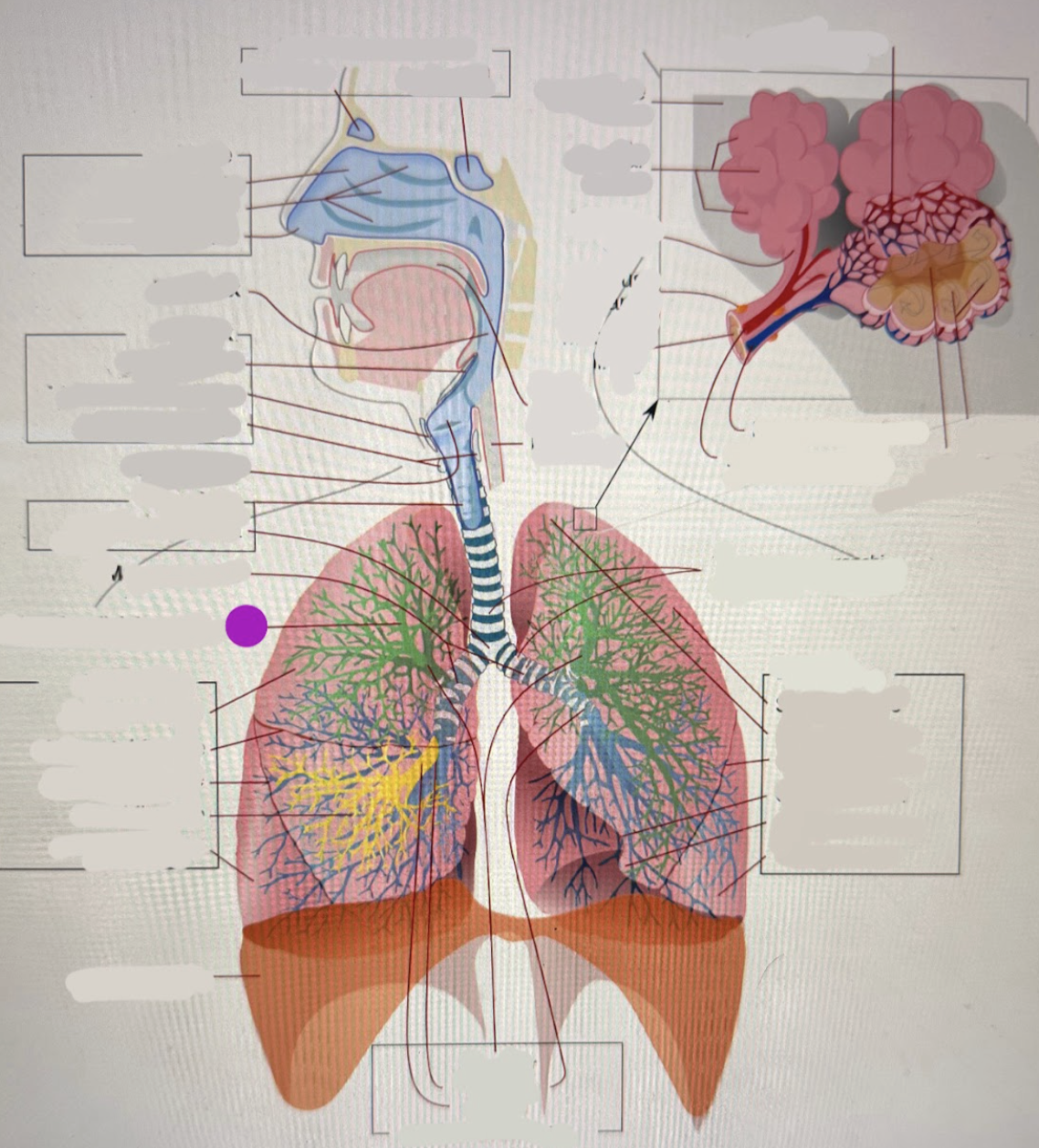
Lingular division bronchi

Superior lobe
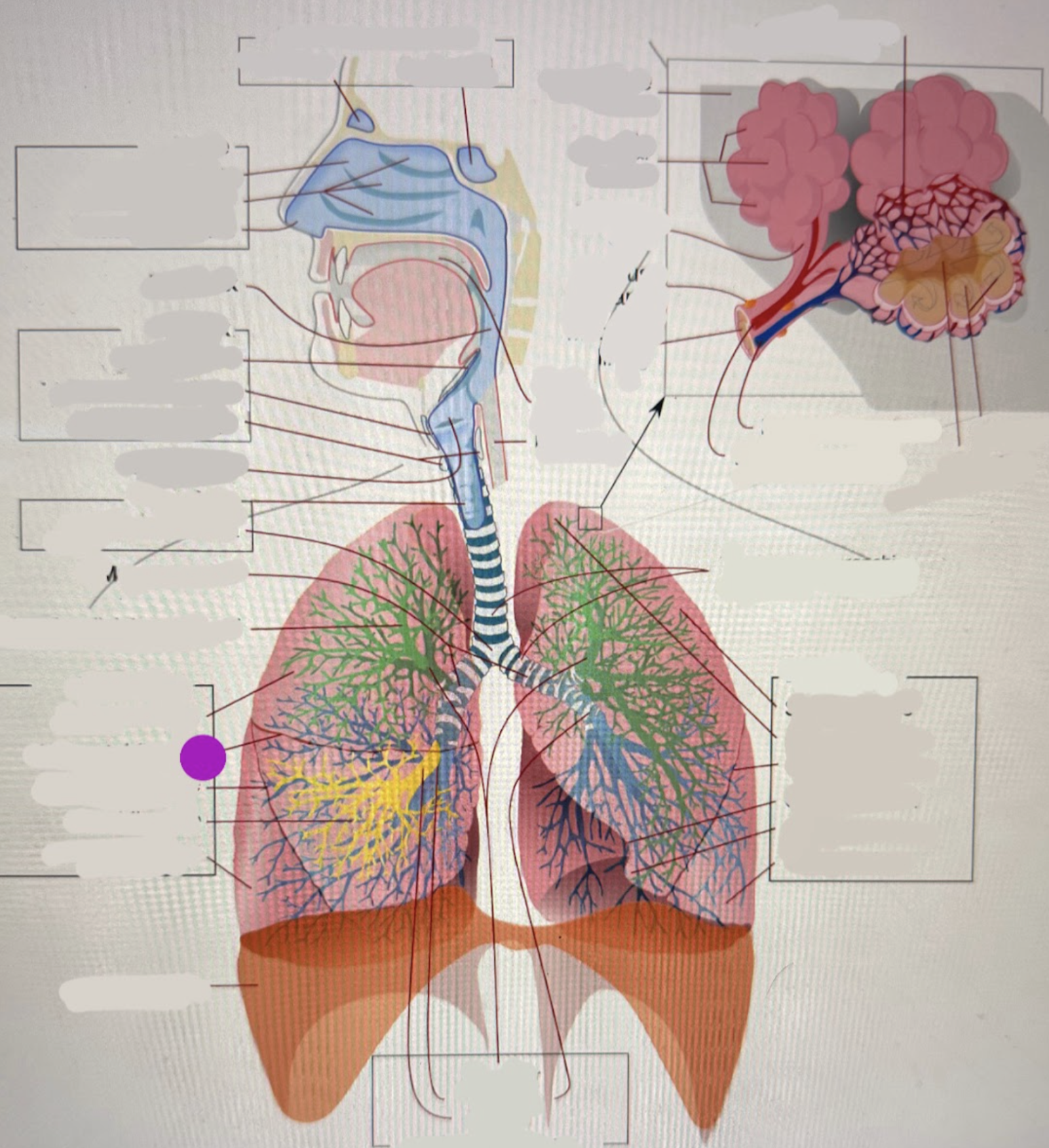
Horizontal fissure

Oblique fissure
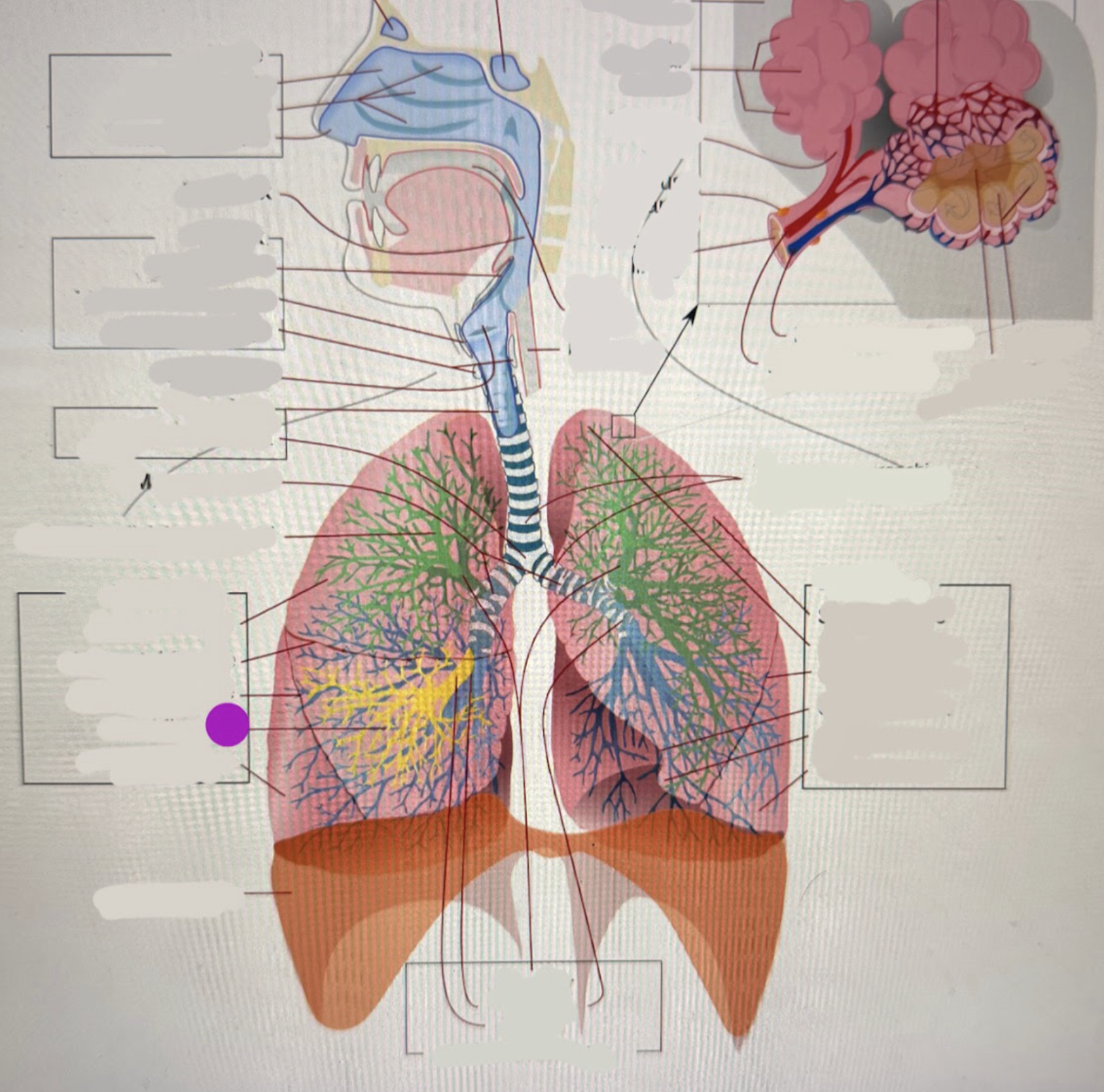
Middle lobe

Inferior lobe
Right lung consists of
Superior lobe
Horizontal fissure
Oblique fissure
Middle lobe
Inferior lobe

Diaphragm

Superior Lobar bronchus

Inferior lobar bronchus

Middle Lobar bronchus
Lobar bronchus consists of
Superior
Middle
Inferior
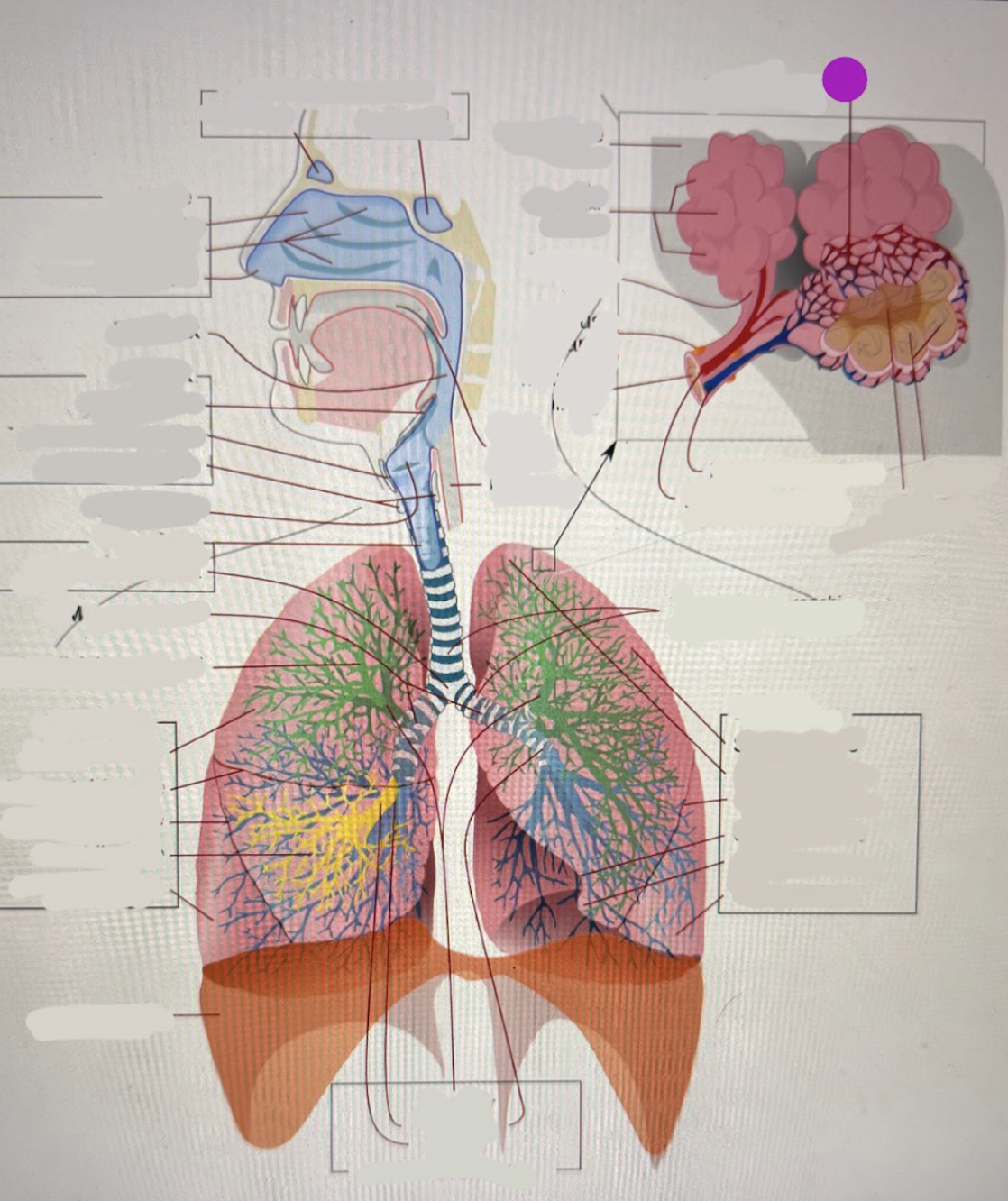
Capillary beds

Connective tissue

Alveolar sacs

Alveolar duct

Mucous gland

Mucous lining
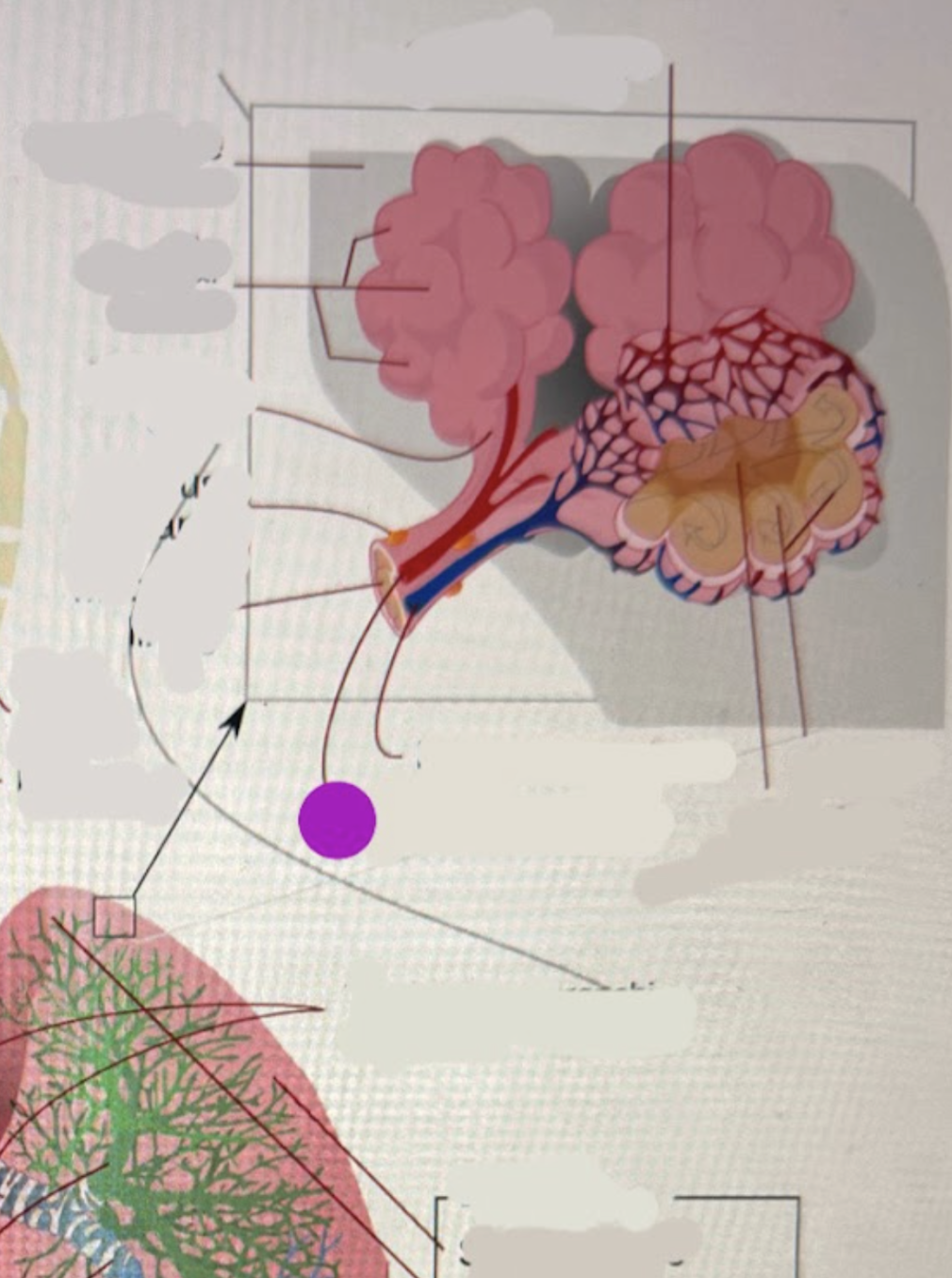
Pulmonary vein

Pulmonary artery

Atrium
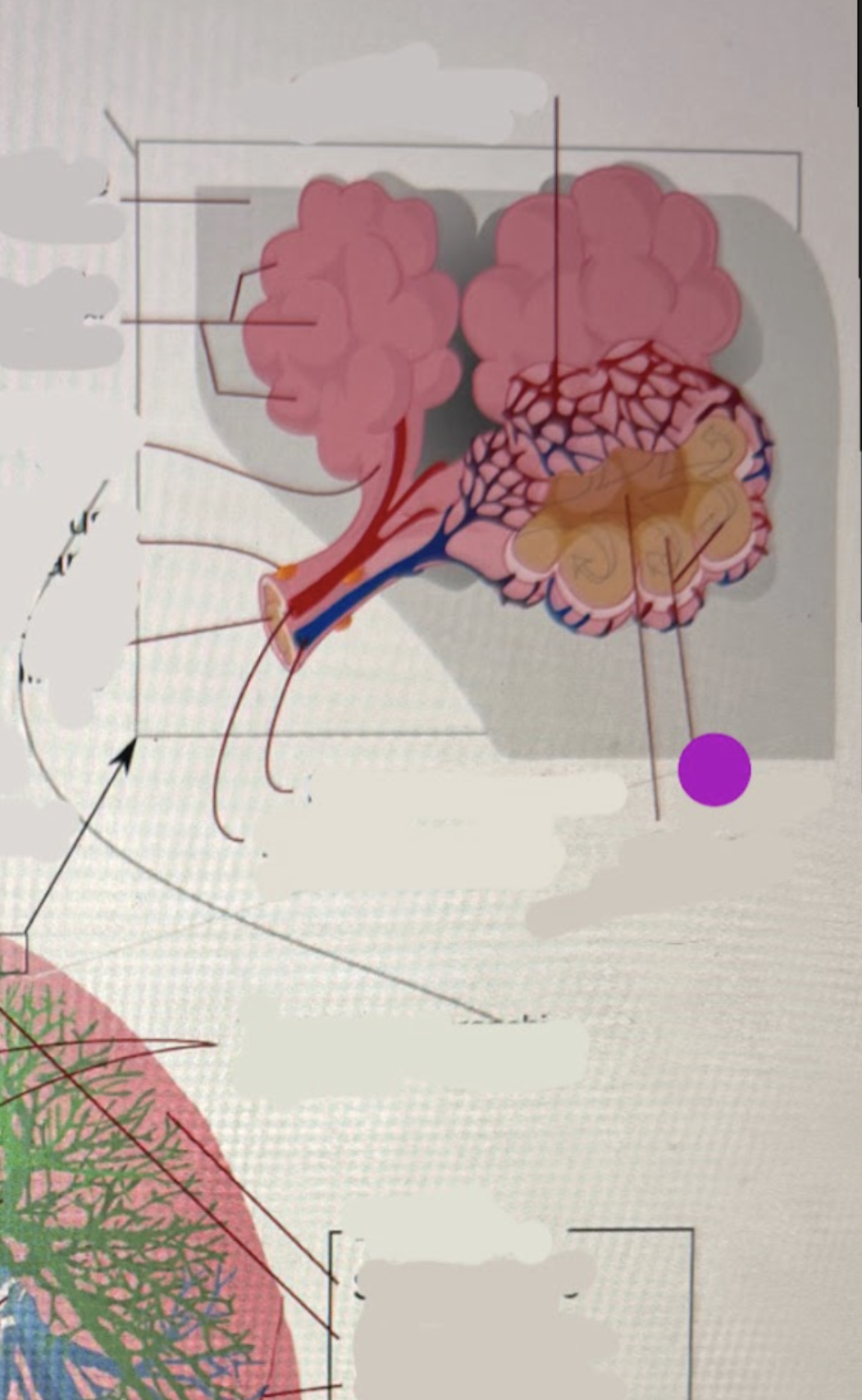
Alveoli

Tracheal and bronchi rings

Superior lobe

Apex of left lung

Oblique fissure

Cardiac notch

Lingula of lung
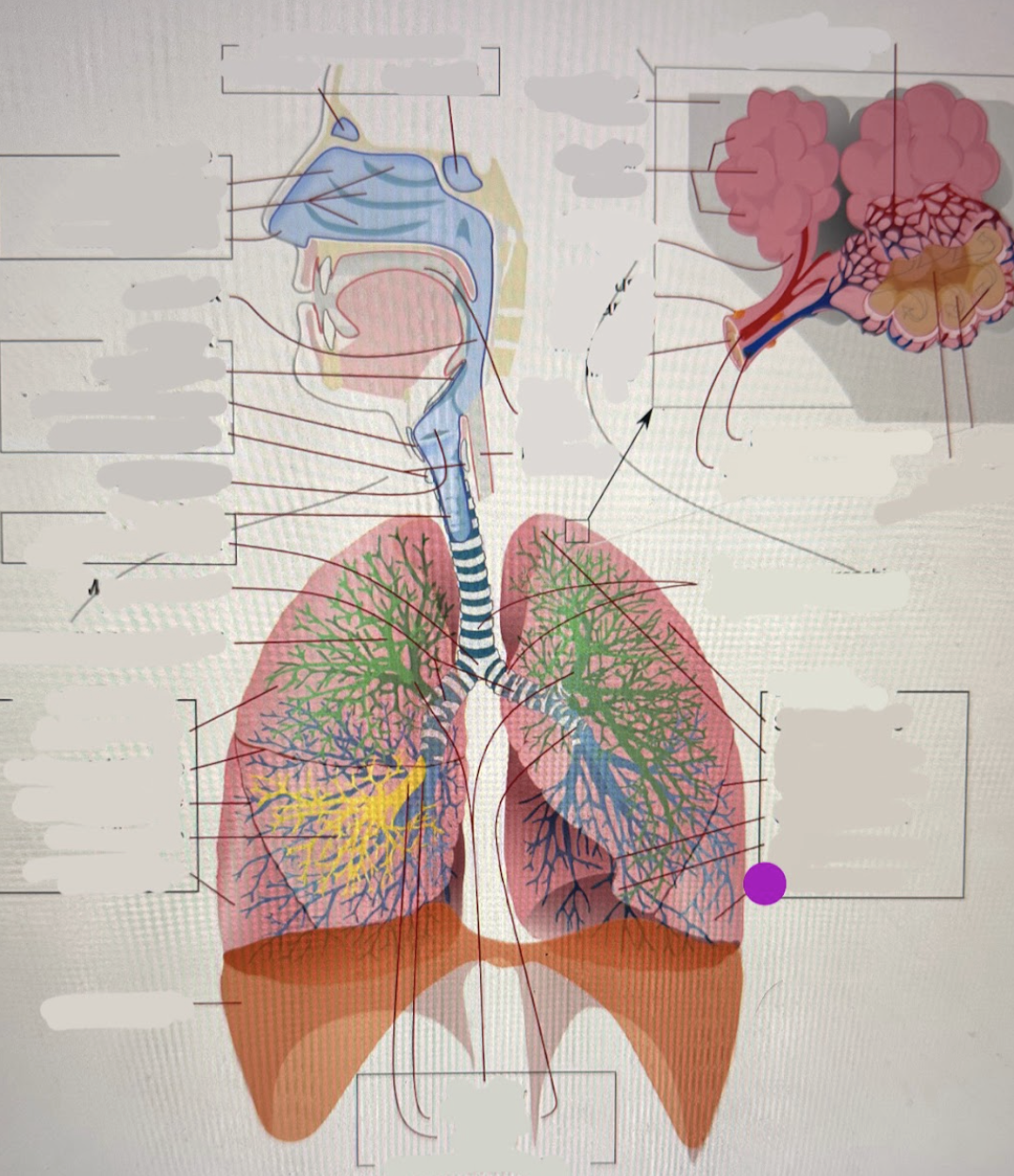
Inferior lobe
The Nasal Conchae are also called ____
Turbinate Bones
Spaces between conchae called Meatuses do___
Communicate with the sinuses
Inferior meatus directs most airflow
Slows air down and allows more humidification

Sphenoidal Sinus

Nasal meatuses (superior, middle, inferior)

Pharyngeal tonsil

Opening of auditory tube

Nasopharynx
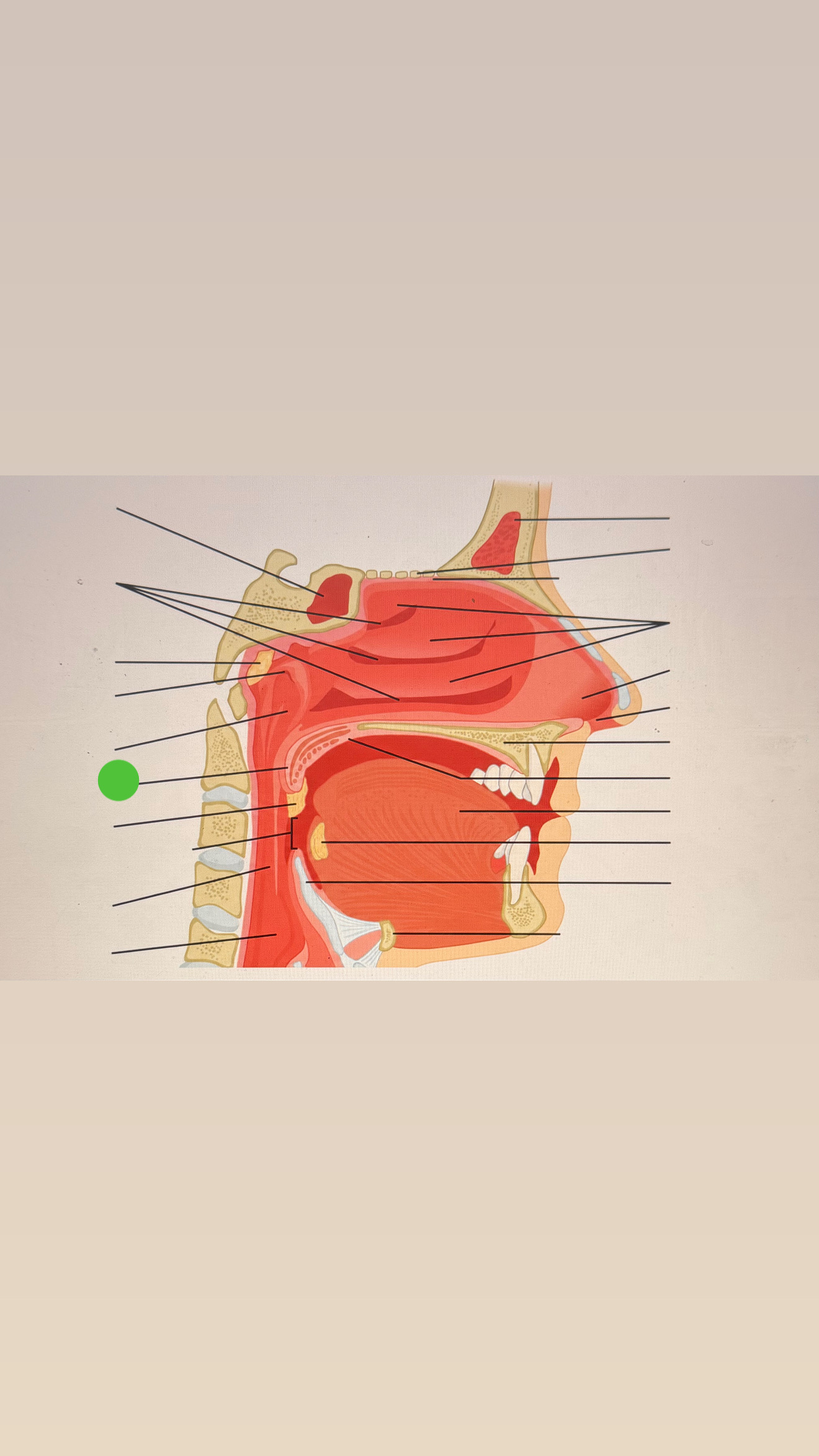
Uvula

Palatine tonsil

Oropharynx
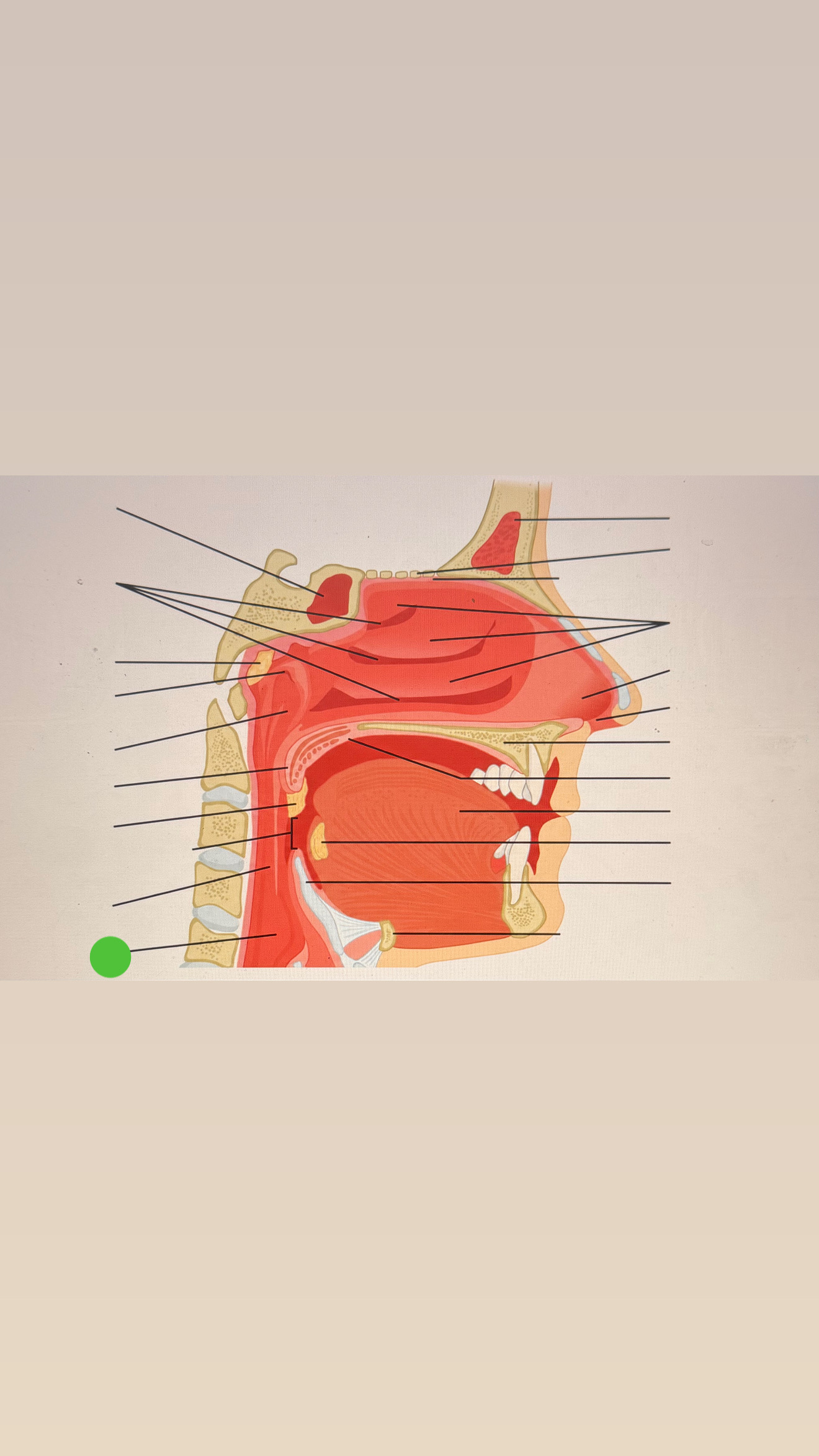
Laryngopharynx

Frontal sinus

Ethmoid bone

Nasal conchae

Nasal vestibule

Nostril

Hard Palate

Soft palate

Tounge

Lingual tonsil

Epiglottis
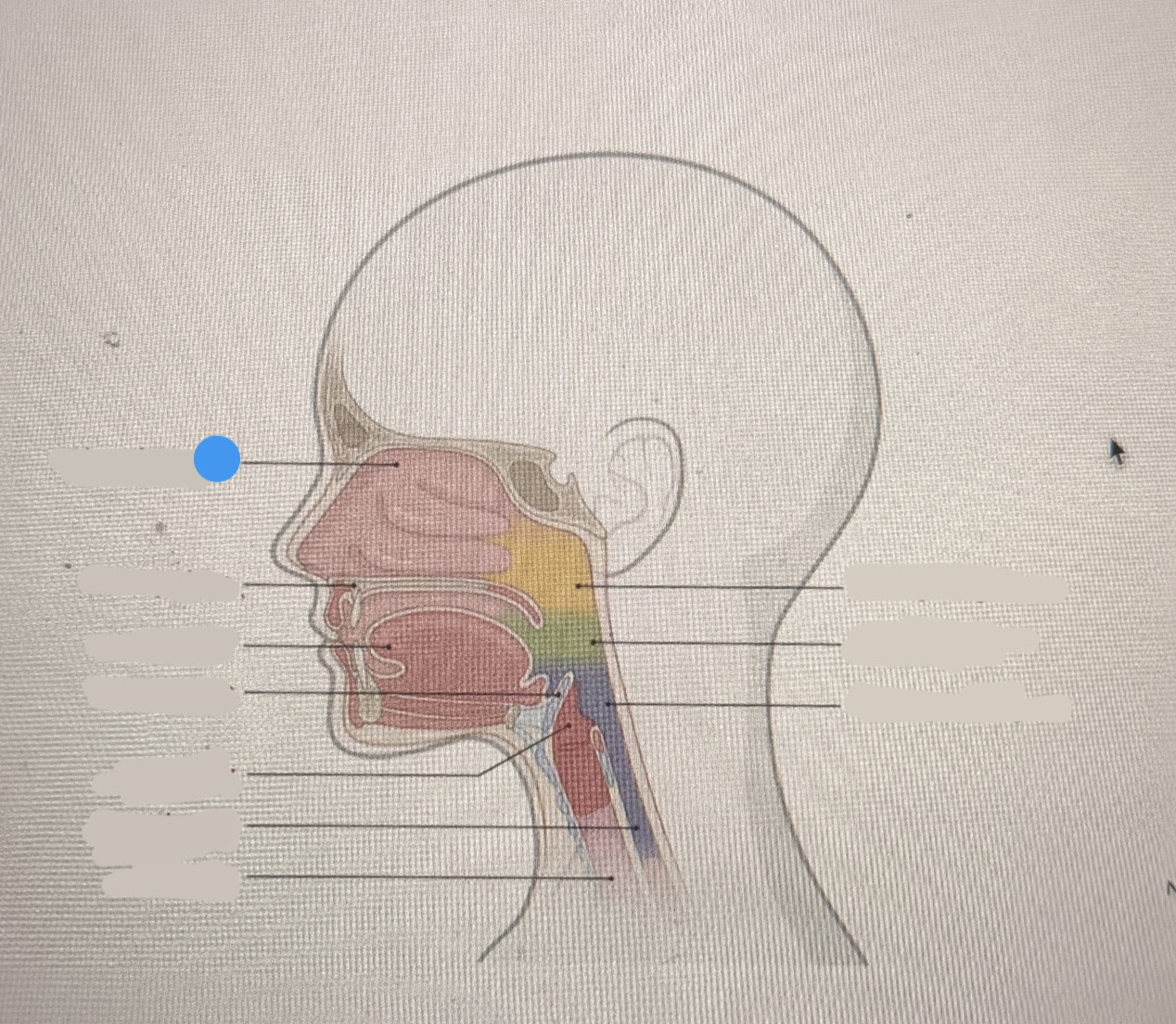
Nasal cavity

Hard palate

Tounge

Epiglottis

Larynx

Esophagus

Trachea

Nasopharynx

Oropharynx

Laryngopharynx

Sphenoid sinus

Frontal sinus

Superior nasal conchae

Middle nasal conchae

Inferior nasal conchae

Hard Palate

37
Frontal Sinus

38
Sphenoid Sinus

58
Superior Nasal Conchae (Turbinate)

59
Middle Nasal Conchae (Turbinate)
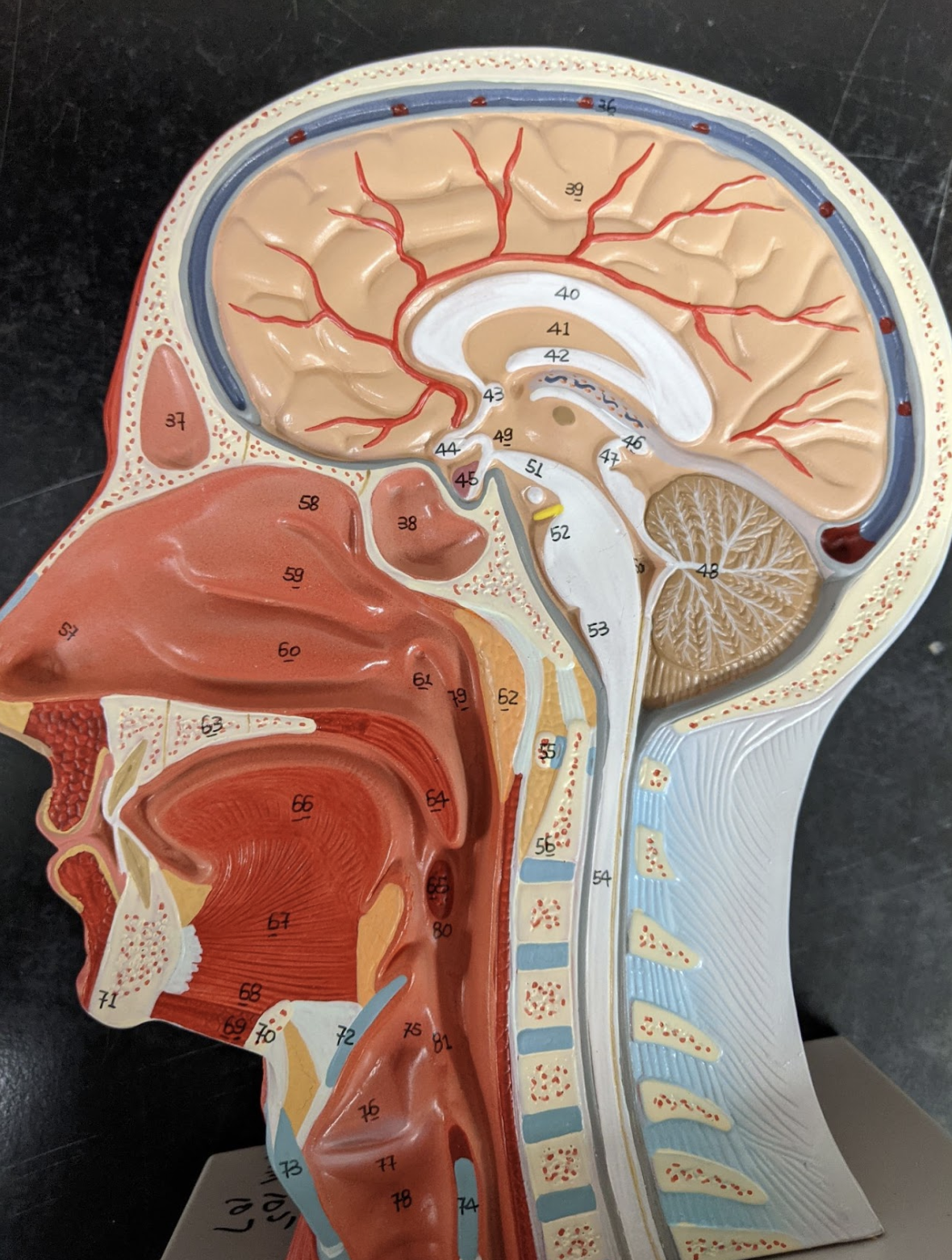
60
Inferior Nasal Conchae (Turbinate)

61
Opening of Eustachian Tube

76
Vestibular Folds (false vocal cords)

77
Vocal Folds (true vocal cords)
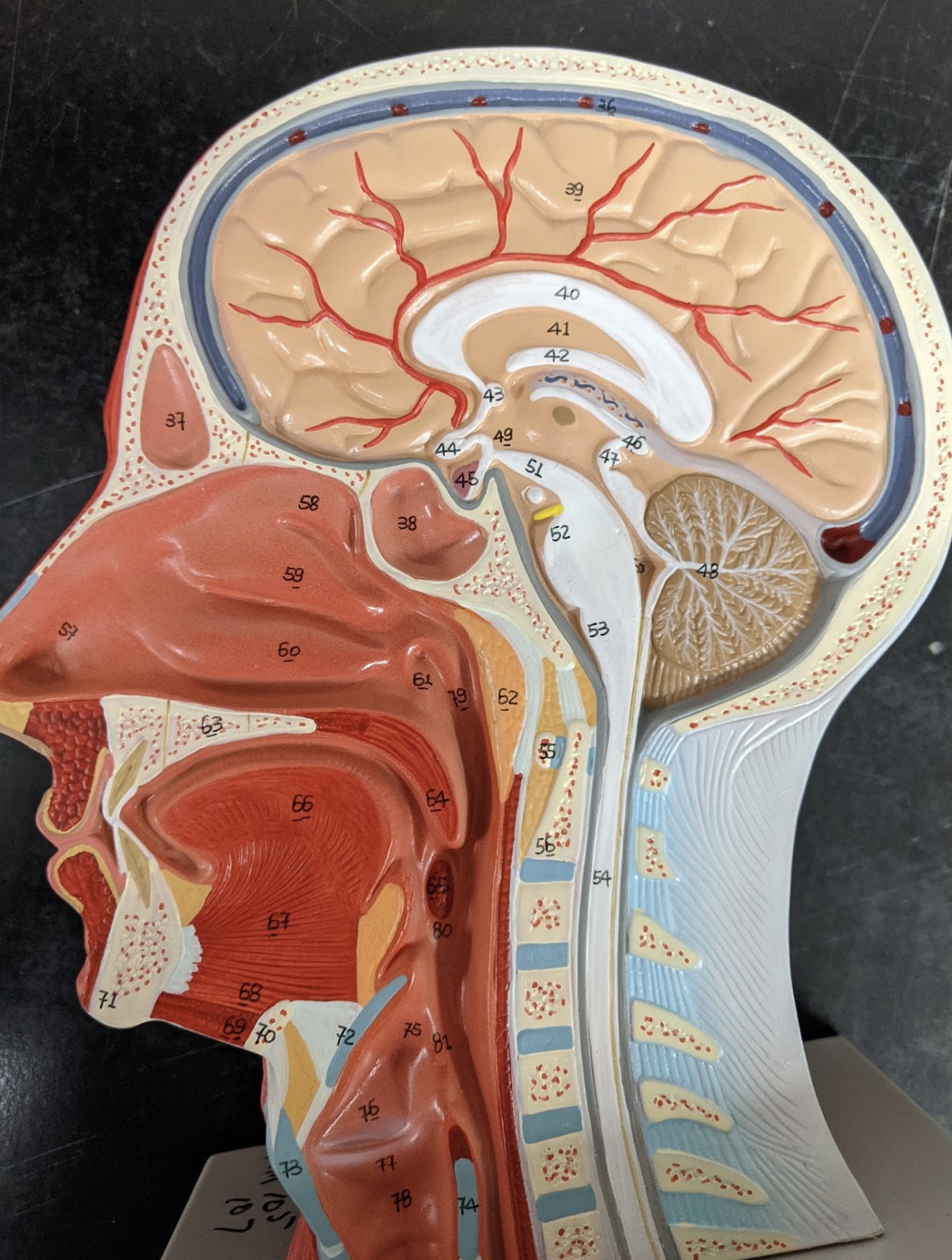
78
Larynx

79
Nasopharynx

80
Oropharynx

81
Laryngopharynx
All Paranasal sinuses can be implicated in ___
sinus infections