Developing Through the Lifespan
 Call Kai
 Learn
 Practice Test
 Spaced Repetition
 Match
 Flashcards
 Knowt Play
1/48

There's no tags or description
Looks like no tags are added yet.
49 Terms
What is developmental Psychology
Scientific study of patters of change and stability in human
Development
the pattern of change from conception throughout the life spam (womb to tomb)
How can we study genetic contribution to traits and behavior?
Behavioral genetic
heritability
Adoption studies
twin-studies
Behavioral genetics
study of genetics and environmental bases of individual differences in behavior and personality
heritabiliy
statistical estimate of contribution of heredity to individual differences
adoption studies
compare adopted children to adoptive families and biological families
twin studies
compare pairs of monozygotic and same-sex dizygotic twinsm
monozygotic twins (MZ)
share 100% genes
Dizygotic twins (DZ)
share 50% genes
Adoption twin studies
compare MZ twins separated in infancy and MZ twins reared together
The 3 types of development
Physical
Cognitive
Social
Reflexes
automatic responses to a specific stimulis
Piaget
theory of cognitive states
Cognitive Development (child) - piaget
Children make constant mental adaptations to new observations and experience
Assimilation
filling new information into present system of knowledge (schema)
Accommodation
as a result of new information, change existing schemaS
schema
cognitive framework or mental blueprint
birth to 2 years
Sensorimotor stage
Sensorimotor stage
looking, sucking, touching
object permanence
understanding that something continues to exist even when it cannot be seen
age 2 to 7
age 2 to 7
egocentric
only use own frame of reference
animistic thinking
attribute life to objects
Preoperational state
egocentric
animistic thinking
cannot grasp concept of conservation
conservation
understanding that physical properties do not change when appearance changes
Concrete Operations Stage
age 7-11
age 2 to 7
Preoperational stage
What happens during concrete operations stage?
Can understand conversation
Can understand reversibility
Can understand transitivity
reversibility
idea that a stimulus that has been changed can return to its original state
transitivity
understand how components in a series are related (if A>B and B>C, then A>C)
age 11 to adulthood
age 11 to adulthood
What happens during formal operations stage
abstract and systematic reasoning
thinking about future possibilities
Vygotsky’s theory of sociocultural influences
cognitive development results from guidance
Zone proximal development
scaffolding
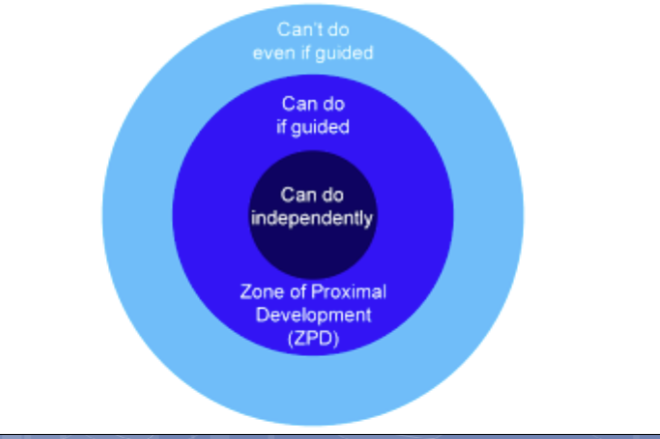
Zone of proximal development
level at which a child can almost perform a task independently
Scaffolding
teacher adjust amount of support to child’s level of development
Zone of Proximal development
Theory of mind
understanding of how other people think
Social development within a chilld
changes in interpersonal thought, feeling, and behavior
True or false: social development is lifelong
True
Attachment
enduring, emotional bond between infant and another person
Harlow
soft contact important
Attachment styles
secure
insecure - anxious/ambivalent (resistant
Insecure - avoidant
What causes insecure attachments?
temperament
stressful home life
parenting
Long-term effects of attachment
attachment security affects emotional, social, and cognitive competence
What can attachment effect?
Size of vocabulary
interpersonal interaction
emotions
Deprivation of attachments
Difficulty developing social bonds
Ethological theory (bowlby)
Babies have biologically programmed behaviors that prompt others to care for them
True or false: Infants that are more attractive get more affection, attention
true
Social development in an infant include:
Attachment
Harlow