Primate Diversity
 Note
 Call Kai
 Learn
 Practice Test
 Spaced Repetition
 Match
 Flashcards
 Knowt Play
1/19

There's no tags or description
Looks like no tags are added yet.
20 Terms
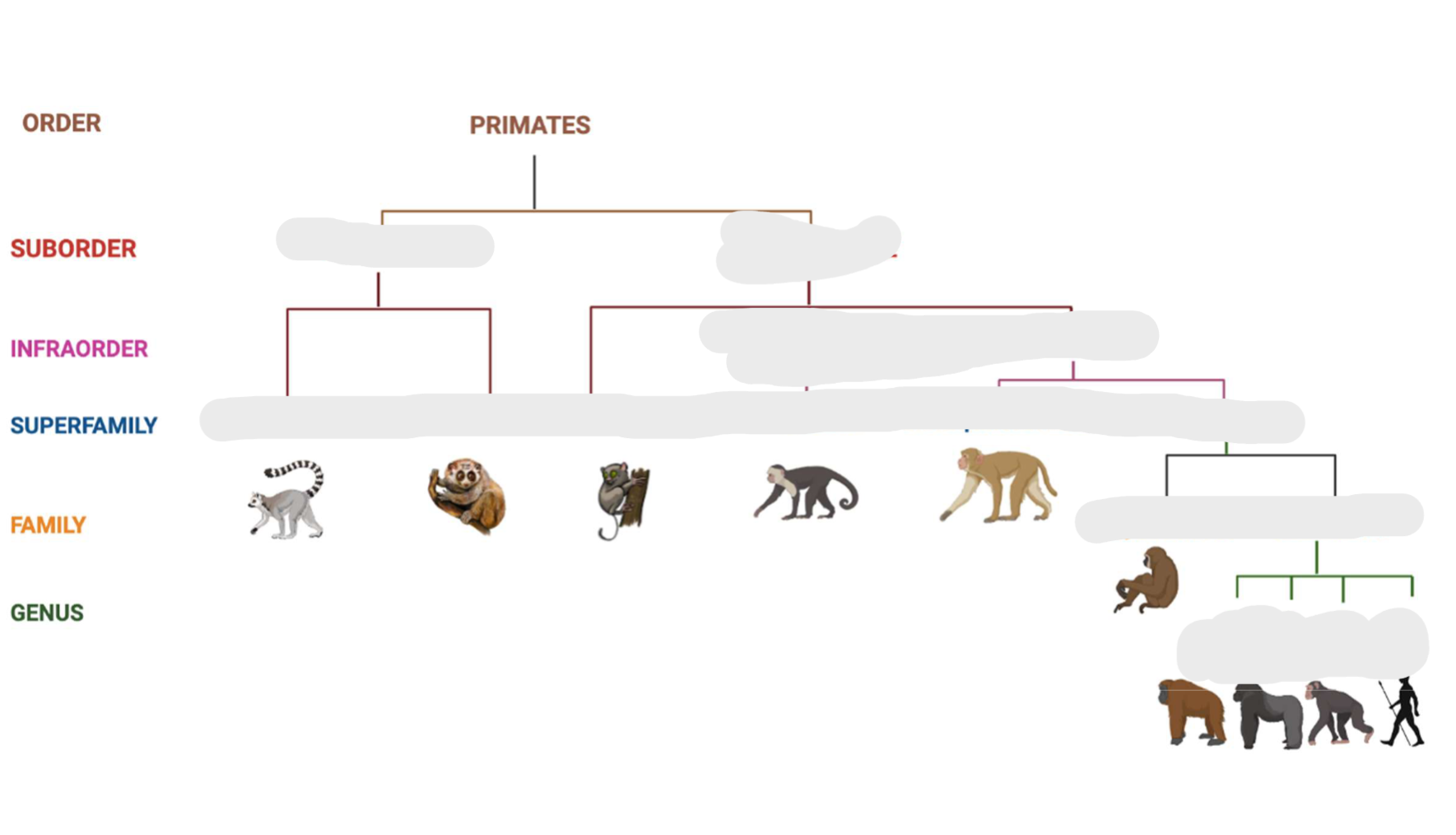
what is the group to the left of primates?
strepsirhine
What are the key features of strepsirhines?
Long snouts, wet noses, divided upper lip
Rely more on olfaction than other primates
Nocturnal (most)
Eyes reflect light (have tapetum, reflectiveness)
Solitary
Smaller body size
Smaller relative brain size
Faster life histories
give examples of strepsirhines with traits
lemurs
Only found in Madagascar, small bodied, nocturnal, solitary, reliant on scent
Aye-aye
Indri
Ring-tailed lemurs
Unusually social for a strepsirrhine, primarily diurnal, females generally dominate males
Slow loris
Only venomous mammal
Flesh rotting bite used in territorial defense
Single offspring
Nocturnal
Move really slow
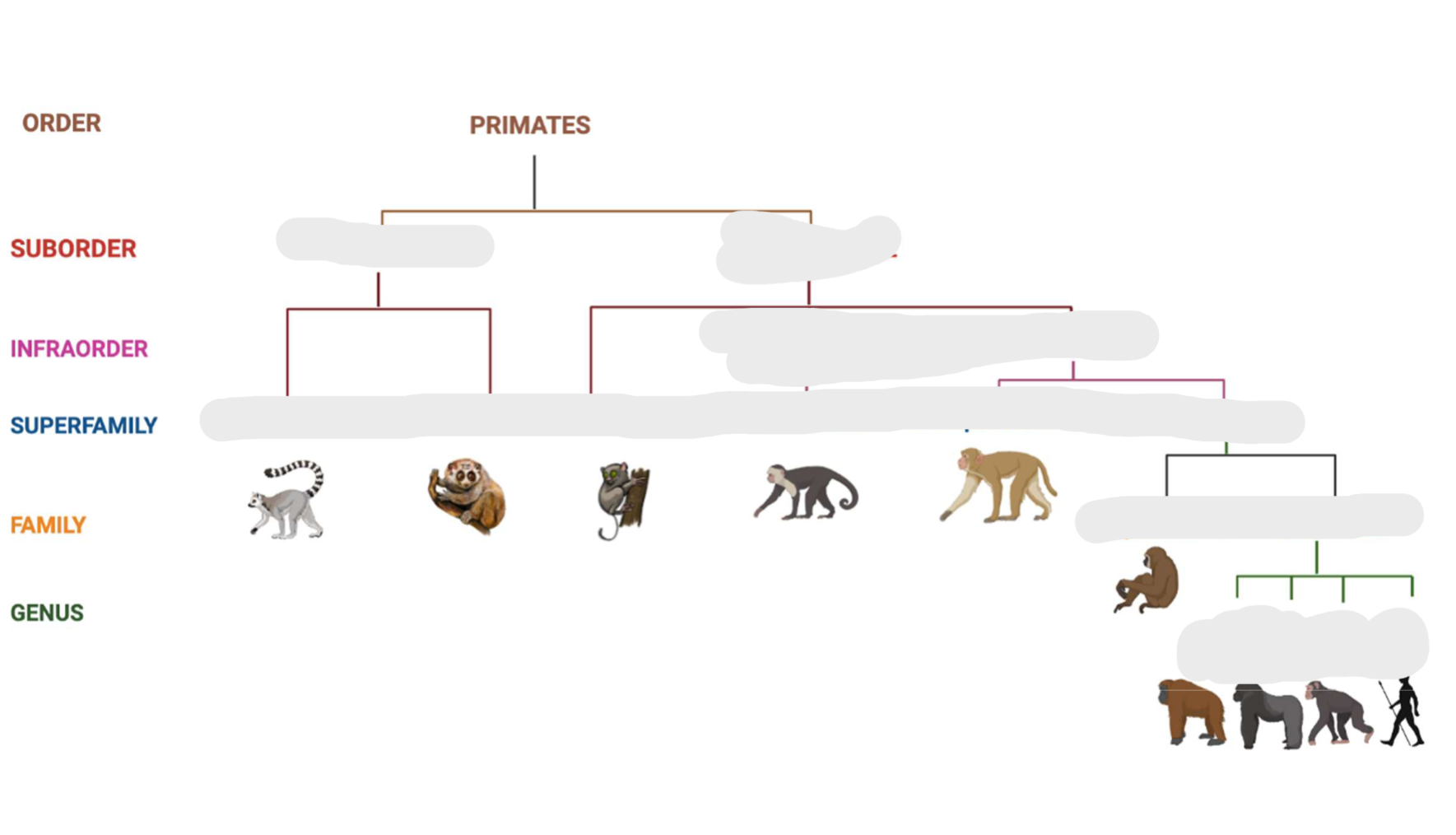
what group is to the right of primates?
haplorhine
what are traits of haplorhines?
Short snouts, dry noses, single upper lip
Diurnal (except tarsier and owl monkey)
Eyes lack a tapetum
Social (most)
Larger body size
Larger relative brain size
Slower life histories
how are tarsiers strepsirhines?
Nocturnal, small bodied, solitary
how are tarsiers haplorhines?
Lack tapetum
Huge eyes
Dry noes
Elongated tarsus, vertical clinging and leaping, insectivorous
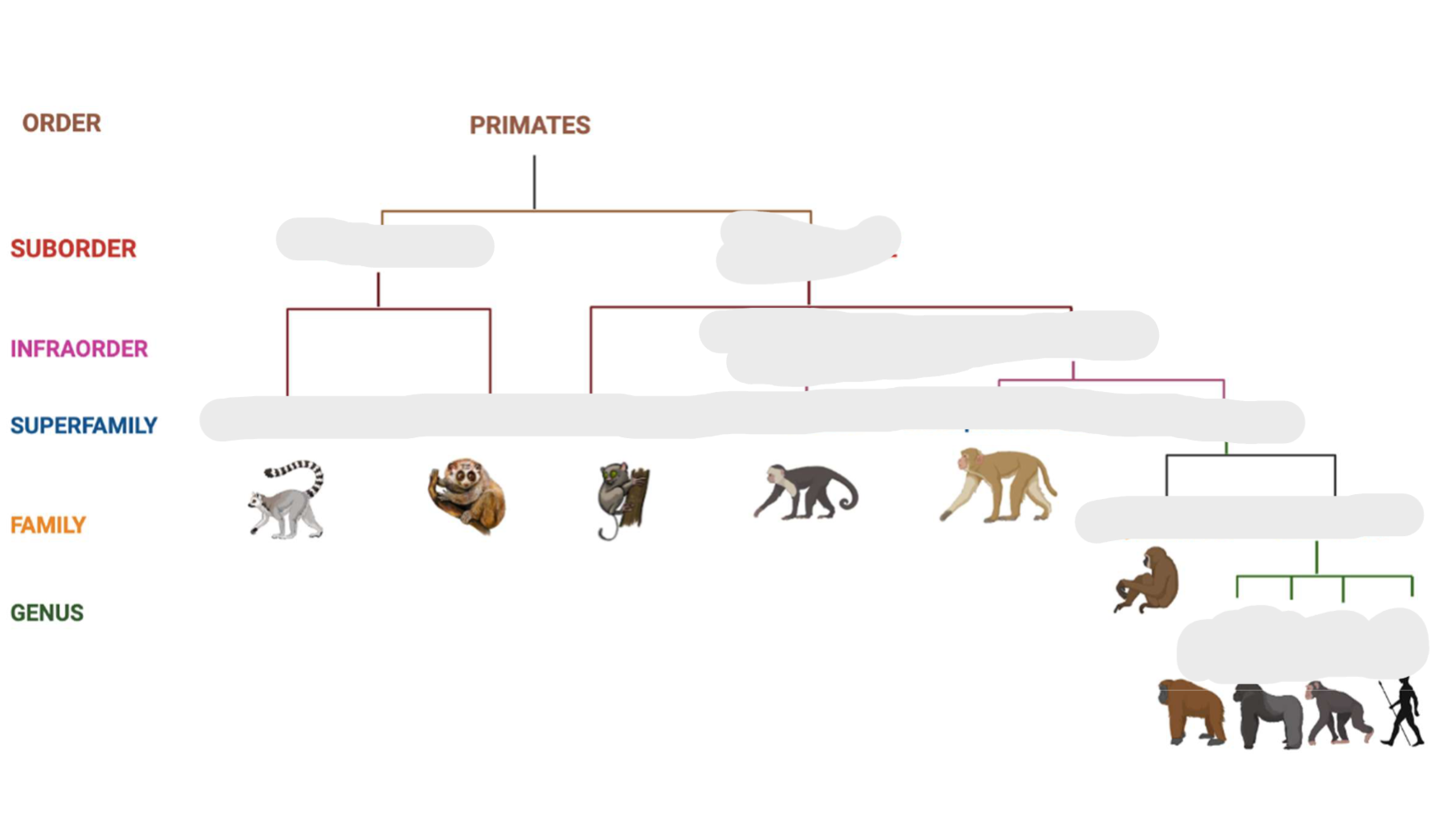
what is directly under haplorhines?
platyrrhines
what are traits of platyrrhines?
Broad nose, with outward-facing nostrils
Smaller body size
3 premolars in each quadrant of mouth
All are arboreal (live in trees)
Some, but not all have a grasping prehensile tail
Most have 2 color vision
where are platyrrhines located?
new world monkeys (central and south america)
what is an example platyrrhines and its traits?
ceboidea: Mostly arboareal small to medium bodies, monogamous to groups of 500 (lots of diversity), prehensile tails
Howlers, uakari, spider monkeys, owl monkeys (nocturnal), tamarins (always have twins),
Capuchins: prehensile tails, highly gregarious and intelligent, biggest brain relative to body size of any nonhuman prime, tool use, and social conventions
Have learned behaviors
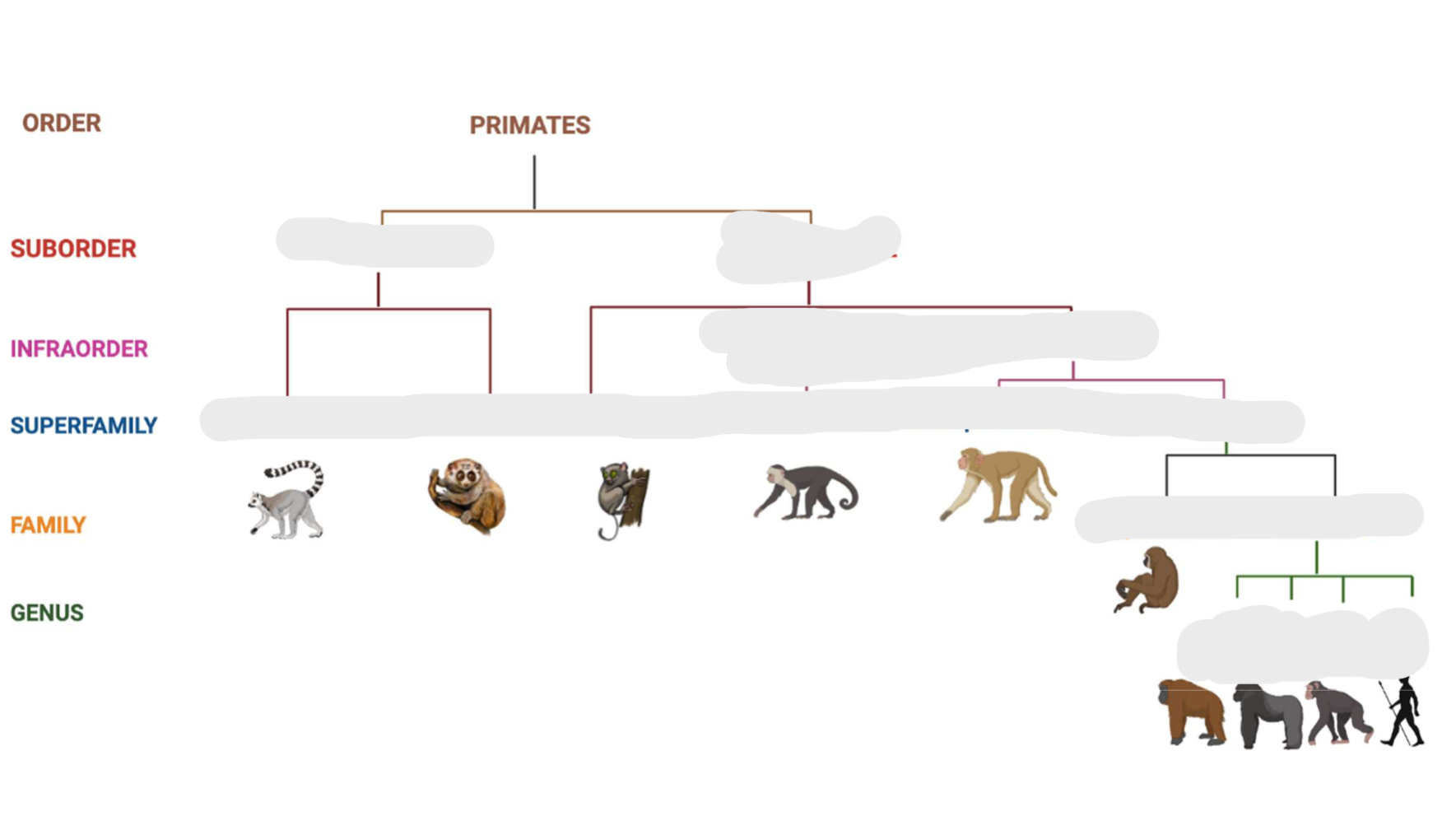
which group is to the far right of haplorhines and traits?
catarrhines: Narrow nose, downward facing nostrils
Larger body size
2 premolars in each quadrant of mouth
Arboreal and terrestrial
None have prehensile tails
All have 3 color vision
where are catarrhines located?
africa and asia (old world monkeys)
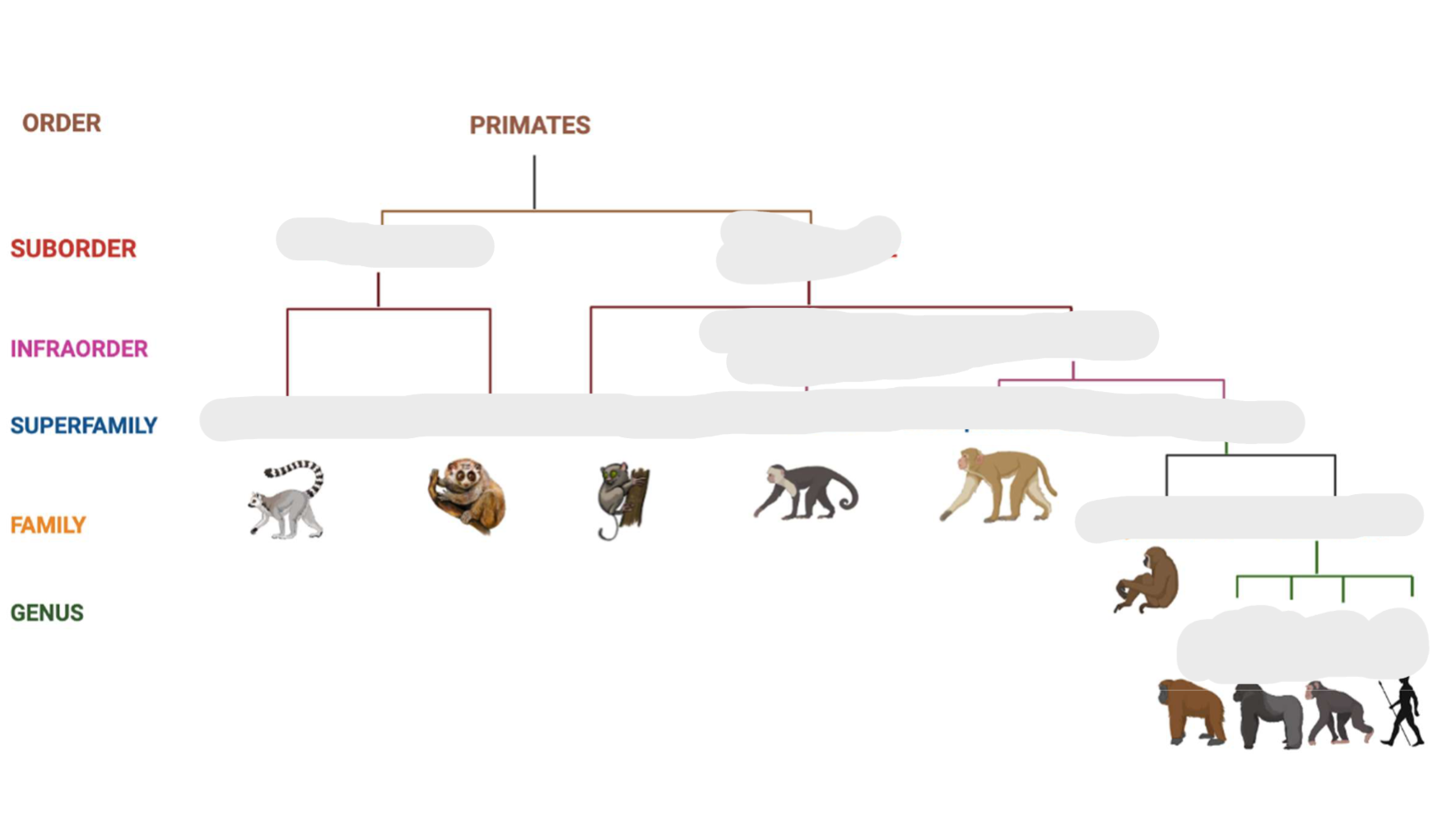
give the example of catarrhines to the left and its traits
cercopithecoidea: Mostly terrestrial, omnivorous, strong linear dominance hierarchies (matrilineal), strict matrilines, cheek pouches, sexual coloration and swellings, large social groups
Baboons, mandrills, maccaques, vervets, geunons, colobines,
Have a tail, smaller than apes, fixed shoulder joints, quadrapedal, above branch locomotion
what is an example of cercopithecoidea and its traits?
Geladas
Line in largest group of any nonprimate
Grass eating primate
Wide rank of vocalization, including sounds reminiscent of human speech
Fission-fusion, multi level society
Chest patch
what is the difference between old world and apes?
apes have…No tail
Large bodied, large barrel chest, flexible shoulder joints,
brachiators, below branch, (swinging with arms)
larger brains
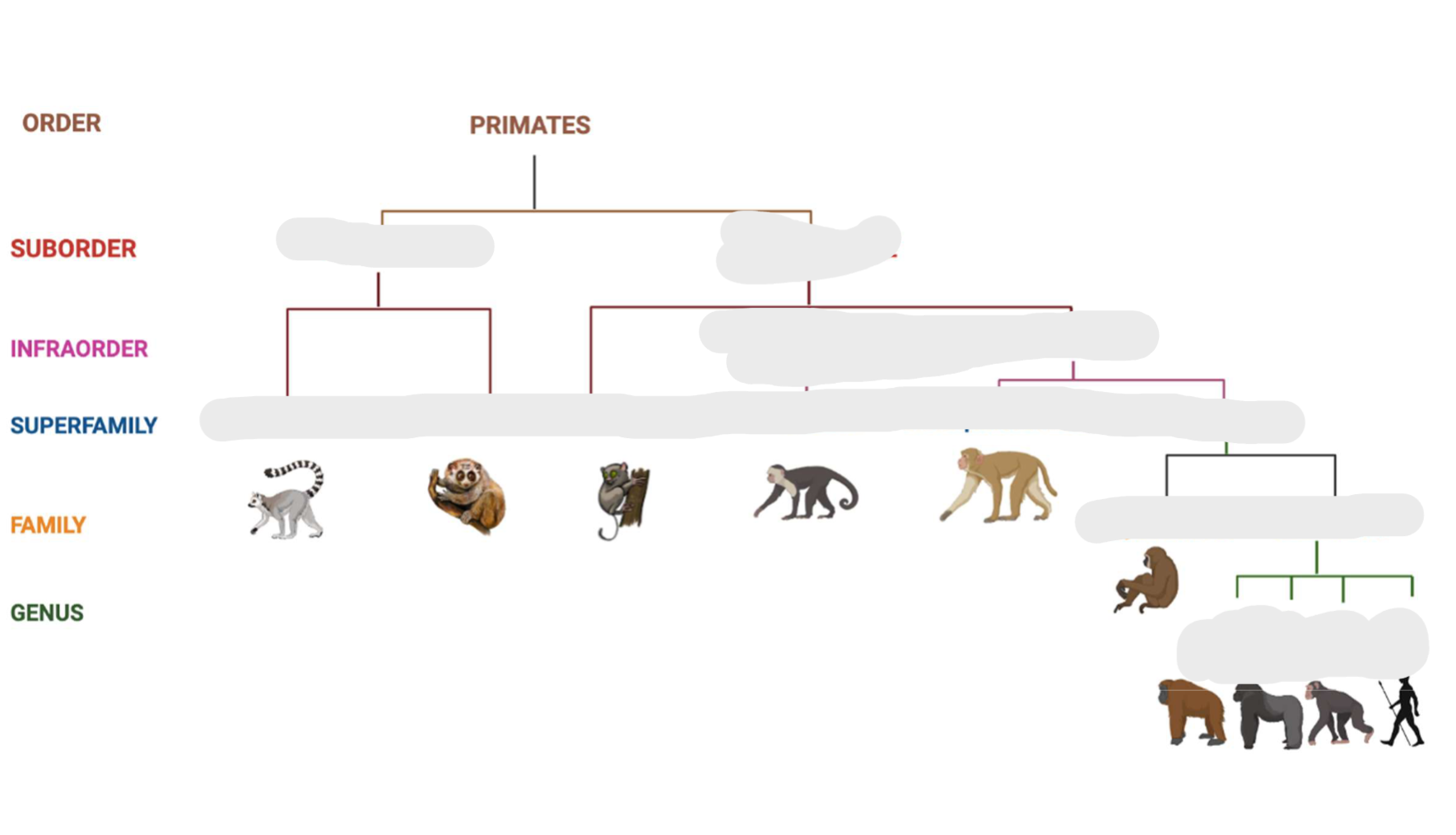
what is to the far right under catarrhines?
hominoidea (apes).
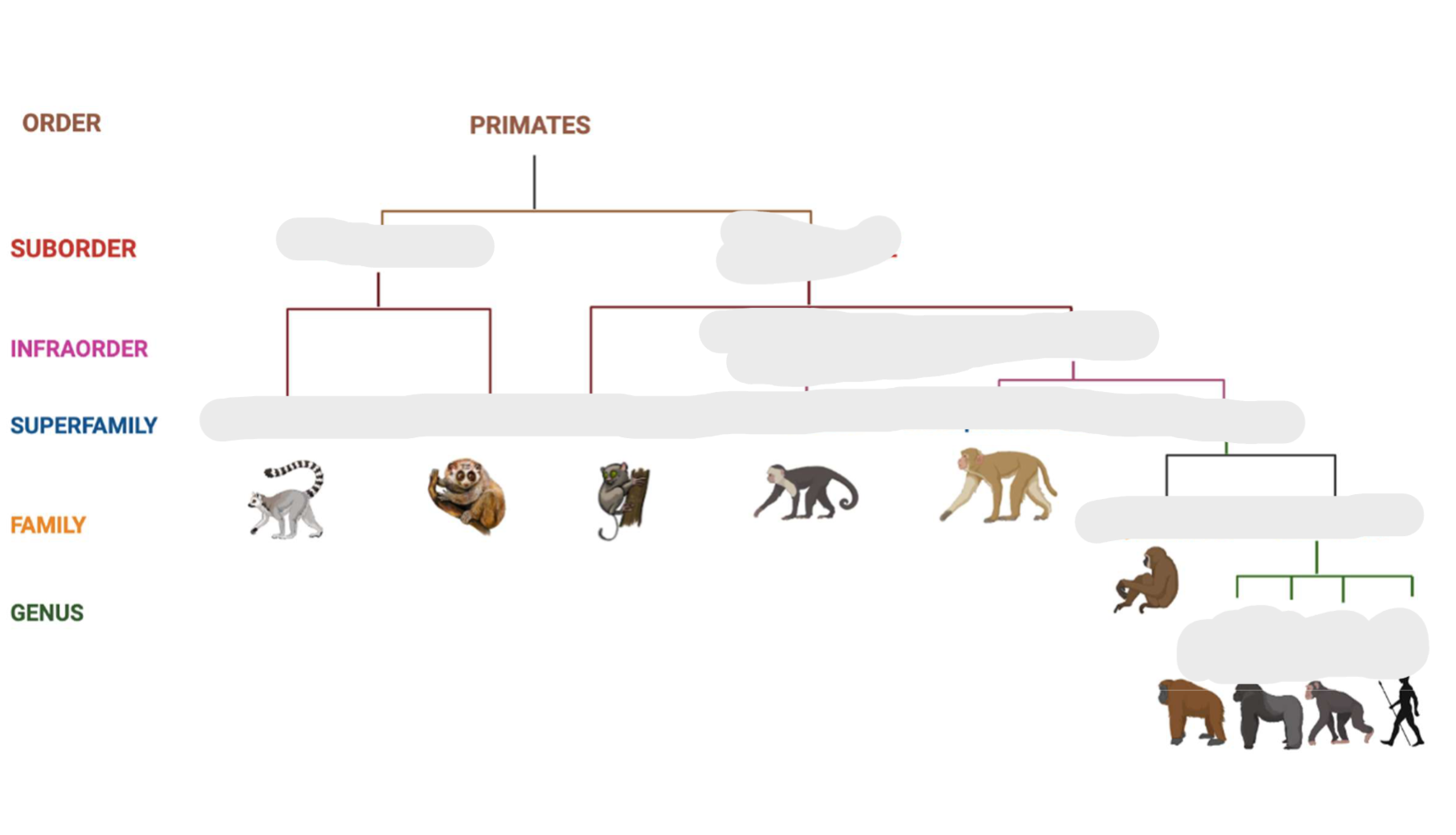
what is to the left under hominoidea and traits?
Hylobatidae (gibbon and siamang): Gibbons and siamang
Brachiators, lesser apes, monogamous pairs, found in SE asia
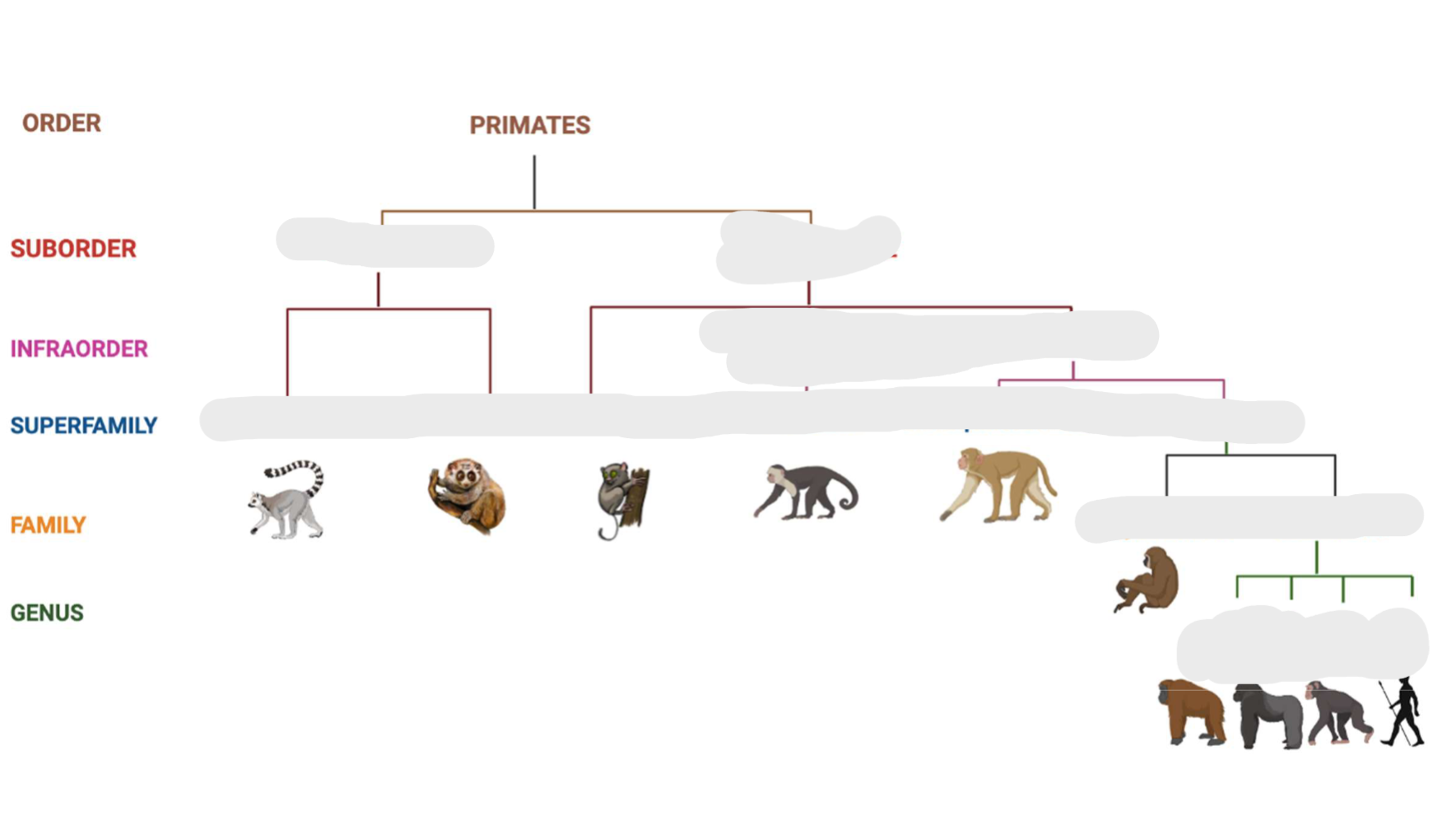
what is to the right under hominoidea and traits?
hominidae: Great apes, largest living primates with long life histories
Larger brains and intelligence (tool use, culture, communication)
Solitary to large social groups; friendships
Highly social (differentiated relationships, hunting, cooperation)
All endangered or critically endangered
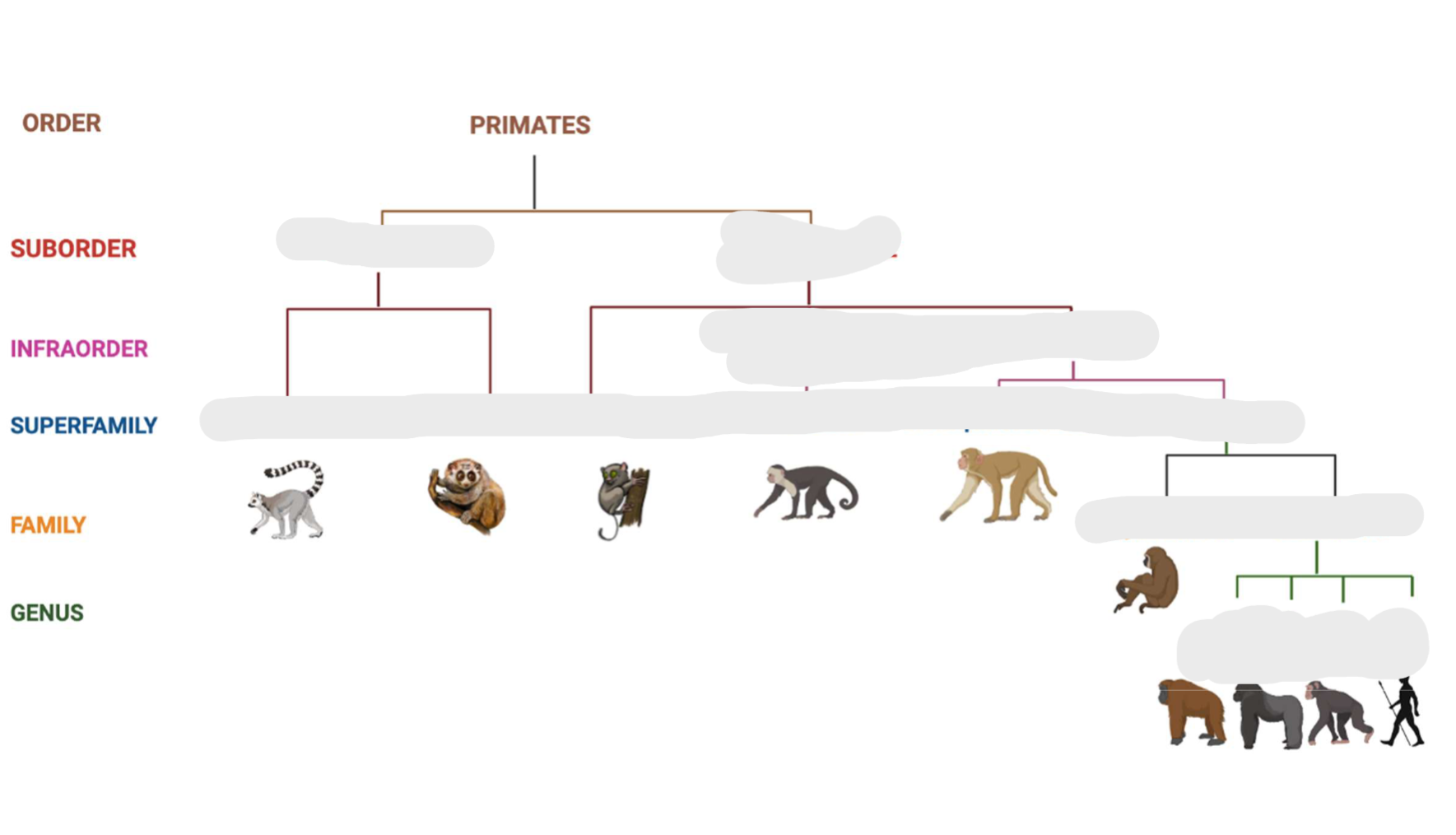
from left to right list the apes and their traits:
Genus Pongo
Orangutans (least related to us)
Most arboreal of great apes
Hips are like shoulders (high flexibility)
Mostly solitary
2 male mating strategies (dominant: develop flanges (cheek pads that may amplify sound), hormonally cute?, can mate with whatever female he wants vs sneaky (don’t develop secondary sexual characteristics, don’t scare away females and just go up to them)
Is a flexible strategy; can lose/gain the flanges
Slowest apes to reproduce
Lactation period: 7-8 years
Genus Gorilla
4 subspecies
Mountain gorilla, western gorillas, western lowland gorilla, cross river gorilla
Largest great ape
Knuckle walkers
Garem family groups with dominant silverback
folivores/frugivores
Large sexual dimorphism (males 2x size of females), males have large sagittal crest\
Genus Pan (diverged 6-8 mya)
Diverged again 1.5-2 mya to chimpanzees and bonobos
Closest living relatives (98.7% of DNA)
Highly cooperative and highly aggressive
Cognitively complex
Chimpanzees are more robust
Bonobos are taller
Similar physically
Chiimpanzees
Fission-fusion society (leave and join different groups throughout the day) (most communities up to 20-50 members)
Mostly frugivorous but supplement with meat (love meat),
cooperative and highly aggressive
Territory defense and border patrol results in brutal killing of outgroup members
Male dominated, male bonded, strong male alliances
Widespread tool use for multiple purpose
Population specific patterns (cultures)
Bonobos
Only found south of Congo ricer
Less sexual dimorphism, more gracile
Females form strong bonds and alliances against males
Females can be dominant to males
Reduced male hierarchies and aggression
Less outgroup aggression
Socio-sexual behaviors as glue for social bonds to reduce stress
Much less tool use, although adept tool-users in captivity
Have sex with everyone, not monogamous