Bio 110 Lab exam 1
 Call Kai
 Learn
Learn Practice Test
 Spaced Repetition
 Match
Match Flashcards
 Knowt Play
1/76

There's no tags or description
Looks like no tags are added yet.
Name | Mastery | Learn | Test | Matching | Spaced | Call with Kai | Chat |
|---|
No analytics yet
Send a link to your students to track their progress
77 Terms
Lecia Microscope Viewing
hundredths of a millimeter to one centimeter
Nikon Microscope Viewing
1/10 of micrometer to a few millimeters
magnification
making things bigger
resolution
distinguish two objects that are close together
contrast
when parts of an object absorb different amounts of light
bacillus
one pointer width at 400x
amoeba
5 pointer widths at 100x
embryo
one viewfield at 40x
total magnification vs apparent width of pointer
inverse relationship (higher mag = smaller “width”)
if a lymphocyte appears as 1mm under a microscope, what is the mag?
about 100x
if one single object is seen, how would you see if it is actually one or two
magnification
What influences protein migration in an electric field?
net electrical chargeI
If a protein is positivley charged, where will it move?
towards negative electrode
If a protein is negatively charged, where will it move?
towards positive electrode
What R-groups are responsible for this
aspartic acid and lysine
What does aspartic and glutamic have in their R-groups
COOH
What does lysine and arginine have in their R-groups?
NH2
What group does histisine have?
imino group
How does an imino group act?
similar to an amino group
What happens to aspartic acid and glutamic acid when they are at a high pH?
they lose protons and have a negative charge (COOH —> COO-)
What happens to lysine and arginine when they are at a high pH?
They lose protons and lose their charge (NH3+ —> NH2)
Why can different proteins have different net charges?
the amino acid compositions of the proteins are different
What is the isoelectric point of a protien?
environmental pH where the protien has no charge and will not migrate
If the pH of a solution is lower than the isoelectric point…
net + charge and move towards the - electrode
If the pH of a solution is higher than the isoelectric point…
net - charge and move towards the + electrode
What differs between pro and eukaryotes?
Pro do not have enclosed genetic material like eu
Differences in habitats between bacteria and archaea?
archaea are in hostile environments, bacteria in less strenuous environments
Cocci shape of bacteria
spherical
Spirilla shape of bacteria
helical
Bacilli shape of bacteria
rod-shaped
Autotrophic
make their own nutrients
heterotrophic
nourished by nutrients in their surrounds
Cyanobacteria
major group of photosynthetic bacteria
Domain Archaea
harsh habitats
Domain bacteria
peptidoglycan cell wall
alveolata
alveoli
alveoli
plasmodium (apicomplexan) Paramecium(ciliate) Peridinium (dinoflagellate)
Plasmodium (apicomplexan)
apical complex
Paramecium (ciliate)
cilia for movement
Peridinium (dinoflagellate)
chlorophyll a and c
Stramenopiles
fine hairs on flagella
Brown Algae (sargassum and fucus)
multicellular with fine hairs on flagella
Diatoms
silica shell in two parts with fine hairs on flagella
Rhizaria
slender pseudopods (Radiolaria)
Radiolaria
silica shell perforated with holes
Excavata
modified mitochondria
Trypansosome (euglenozoan)
kinetoplast with modified mitochondria
Giardia (diplomonad)
two nuclei with modified mitochondria
Amoebozoa
blunt pseudopods (Amoeba proteus)
Amoeba proteus
flexible pseudopods
Fungi
chitin cell walls
Rhizopus (Zygomycota)
reproduction by fusing hyphaeS
Saccharomyces (ascomycota)
reproduction by way of asci
Club mushroom (basidiomycota)
reproduction by way of basidia
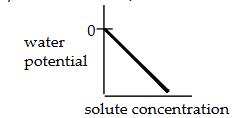
inverse relationship
How do you measure red blood cell membrane permeability?
ethanol??? the other two??

inverse relationship

inverse relationship, line at water control
Net Electrical charge versus membrane permeability
Charged particles cannot cross the membrance
CH/OH ratio of methanol
1:1
CH/OH ratio of 1-propoanol
3:1
CH/OH ratio of butanol
4:1
CH/OH ratio of pentanol
5:1
CH/OH ratio of 1 propanol
3:1
CH/OH ratio of 1, 2 propanediol
3:2
CH/OH ratio of 1, 2, 3 propanetriol
3:3
Permiability increases when…
molecular weight increases for series 4
CH/OH ratio is directly related to…
lipid solubility
More lipid soluble =
more permeable
Does concentration of pigment affect position of wavelength peaks?
No
Does concentration of pigment alter the absorbance of peaks?
Yes, diluted pigments decrease the amplitude of the peaks (height)
Concentration of pigment and relationship to height of peaks
direct relationship
How can you identify a substance based on a wavelength and absorbance chart?
by looking at the peak because they are unique for each substance
What would happen in photosynthesis if the chlorophyll molecule was transparent to light?
it would absorb no light and not be useful at all in photosynthesis
What significance does the color green have in chlorophyll?
it reflects green light but absorbs blue and red light.
What is the equation for energy?
2×10^-16 / wavelength
How do you find the photons captured energy?
3.2 × 10^-19/ E = %